Catholicism

Can someone please report on the real Ginni Thomas? The truth is out there

Can someone please report on the real Ginni Thomas? The truth is out there

If it’s late winter, it must be time to report on the U.S. Supreme Court, its upcoming decisions and particularly about its most senior justice, Clarence Thomas.

Thomas is also the lone Black justice, although that may change in that President Joe Biden is poised elect the first black woman to the high court.

Two investigative stories have come out recently about Ginni Thomas, the second wife of the Supreme Court justice, and how her political activities are allegedly compromising her famous husband. One was this New Yorker piece and the other is this lengthy New York Times Magazine piece. I’ll be critiquing the latter in a moment, but I do want to excerpt one paragraph from the New Yorker piece:

Ginni Thomas has complained that she and her husband have received more criticism than have two well-known liberal jurists with politically active spouses: Marjorie O. Rendell continued to serve on the appeals court in Pennsylvania while her husband at the time, Ed Rendell, served as the state’s governor; Stephen Reinhardt, an appeals-court judge in California, declined to recuse himself from cases in which the American Civil Liberties Union was involved, even though his wife, Ramona Ripston, led a branch of the group in Southern California.

She may have a point. When I read the adulation that that the Times accords to people like Justice Ruth Bader Ginsburg (who made no secret of her political leanings) or Hillary Clinton (who wrote the book on activist wives), Ginni Thomas may be justified in complaining.

This is not to say she doesn’t have her issues, even with her Republican friends, and I’m not objecting to the reporting on Ginni Thomas’ activities about town. Fair is fair, but I simply don’t see the same disdain and suspicion meted out to activist spouses on the Left. Whenever the latter is politically active, that’s laudable. But if it’s someone on the cultural Right –- well, they’re compromisers.

I am no expert on anything pertaining to the U.S. Supreme Court; I’ve covered two or three hearings in person over the years and that’s that. So I’ll stick to the religious content of the piece. Here are two paragraphs that appear in the middle of the piece:


Please respect our Commenting Policy

Behind #MeToo headlines: Denhollander keeps advising church leaders about sexual abuse

Behind #MeToo headlines: Denhollander keeps advising church leaders about sexual abuse

In this age of small-group ministries, most pastors would know how to handle a crisis that affected significant numbers of believers in their pews.

"If you had one in four members of your congregation actively battling cancer or one in four members … experiencing being widowed or losing a spouse, chances are that you would have some level of intentional ministry to those individuals," said Rachel Denhollander, in a recent Trinity Forum event focusing on how churches respond to sexual abuse. "Maybe you would have a support group or a Bible study for them. You would have meal trains to help provide for their physical needs."

But many sexual-abuse victims hesitate to speak out, she said, because churches act as if they don't exist. Thus, they have little reason to believe the sins and crimes committed against them will be handled in a way that offers safety and healing. Far too many religious leaders act as if they haven't grasped the magnitude of this crisis.

"There is an astonishing perception gap and it's really inexcusable at this point in time," she said, speaking to victims, clergy and activists online -- including participants in 24 nations outside the United States. "We've had the data, literally, for decades. … Even what we know is dramatically undercounted.

"The statistic has stayed right around one in four women, for sexual violence, by the time they reach age 18. … The rate continues to rise and there really isn't any excuse, at this point in time, for not knowing that data. But sometimes, it's emotionally easier to not know that data and all of us have that intrinsic desire to not have to see the darkness that's around us."

Sexual abuse is a hot-button issue everywhere, from small fundamentalist flocks to the Roman Catholic Church. Revelations from #MeToo scandals have rocked the careers of A-list players in entertainment, politics, sports, academia and business.


Please respect our Commenting Policy

That word always gets surprising media attention. What does biblical 'inerrancy' mean?

That word always gets surprising media attention. What does biblical 'inerrancy' mean?

THE QUESTION:

What does biblical "inerrancy" mean?

THE RELIGION GUY'S ANSWER:

A February article by Stephen Young of Appalachian State University in North Carolina pulls the "inerrancy" of the Bible into a surprising media spotlight.

Writing in the liberal ReligionDispatches.org, Young blames this concept for American Christian racism and "white patriarchy" that subjugates women. By coincidence, days before Young's posting Michael F. Bird of Ridley College, an Anglican seminary in Australia, contended via the interfaith Patheos.com that his fellow evangelicals in the U.S. advocate a version of inerrancy that's a bit skewed.

Hold those thoughts while the Memo sketches some background.

Merriam-Webster defines inerrancy as "exemption from error," with "infallible" as a synonym. However, the modern debate distinguishes between those two words, as we'll see below.

Churchgoers may simply view the Bible as trustworthy because, after all, it's the Word of God, but "inerrancy" is a more sweeping contention meant to cover every detail of the events depicted in the Bible.

Inerrancy came to the fore, especially among U.S. Protestants, through Princeton Theological Seminary professors such as B.B. Warfield (1851-1921) who believed Christianity had always taught the Bible is error-proof.

As theological "modernism" made inroads, the largest Presbyterian denomination in 1910 defined five tenets as "essential doctrine" required of clergy candidates. The first one stated that "the Holy Spirit did so inspire, guide and move the writers of the Holy Scriptures as to keep them from error." The 1910 platform evolved into the "five points of Fundamentalism," embraced by that militant new movement even as the Presbyterians themselves moved away from their requirement.


Please respect our Commenting Policy

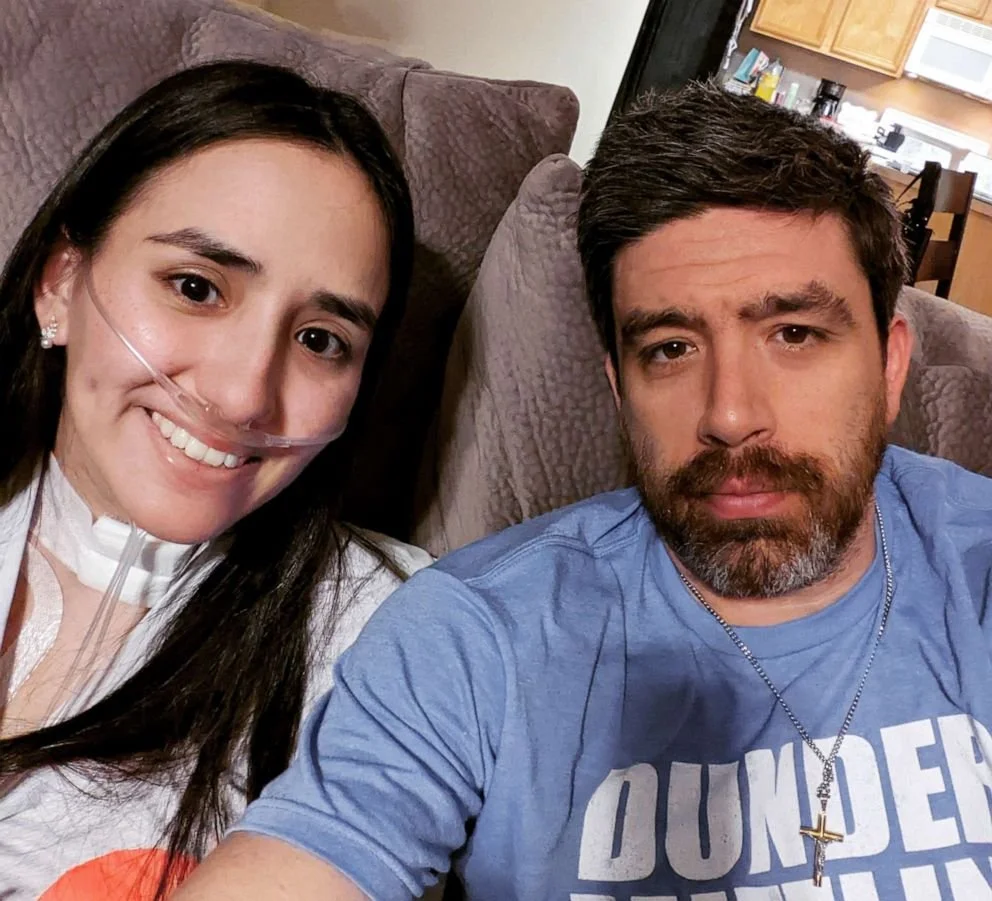
Texas couple survives journey through COVID hell, apparently without clergy help of any kind

Texas couple survives journey through COVID hell, apparently without clergy help of any kind

One of my closest friends is a veteran doctor in a town deep in the Bible Belt. I’ve had lots of conversations with him about this experiences during the coronavirus pandemic. He has had COVID and so have I.

One common theme in our conversations has been a sense of mystery that medical professionals, from the beginning, have had about this evolving disease. They understand why COVID hits some people hard, especially older patients and people who, for various reasons, have respiratory problems. The mystery is why this disease strikes with deadly force in some cases — but clearly not all — involving young, healthy adults. And why does COVID attack some hearts and not others?

Readers will collide with some of these mysteries while reading a stunning Washington Post story about a family’s 139-day hospital drama that has received quite a bit of attention in social media and the mainstream press. The headline: “Chris Crouch was anti-vaccine. Now his pregnant wife had covid, and he faced a terrible choice.” Here is the overture:

KINGWOOD, Tex. — Chris Crouch had had low expectations for online dating. He was a police officer in his 30s, almost a year out from a painful divorce, and, he said, the women he had met had been “playing games” in ways that left him dispirited.

Then he met her.

Diana Garcia Martinez was 24 and a busy single mom whose sister had set up her profile without her knowing. She was intelligent, empathetic and upfront, and by the third date, he was in love. “It was just a feeling. … I felt like I knew her my whole life,” he recalled explaining to his cousin Gilbert, knowing it was a cliche but also true.

What role does religious faith play in this story? That’s a complex question.

I mean, we are talking about people in Texas. No one should be surprised by frequent Godtalk and references to prayer.

However, as the son of a Texas Baptist pastor (who spend the last decade of his ministry as a hospital chaplain), I was very surprised that the word “church” is missing. Did this couple really go through this medical hell alone, without a pastor or friends who share a pew with them? Maybe this couple is in the “Nothing in particular” demographic, but I have my doubts.


Please respect our Commenting Policy

Pronoun wars? The 'usual suspects' quoted by the press skewed Baptism-gate coverage

Pronoun wars? The 'usual suspects' quoted by the press skewed Baptism-gate coverage

What is the role of journalism? Above all, it is to inform and educate. We know that reliable information is needed for any society to properly work. At the very least, readers deserve accurate information.

What happens when this isn’t the case? That’s the dilemma that befell many news organizations in recent days when a big Catholic news story came across their newsroom desks.

Yes, I’m referring to the botched baptism story out of Arizona last week that made so many headlines. And that’s hard to do considering the ongoing pandemic, the Beijing Olympics and Russia-Ukraine crisis.

Yes, baptism-gate has been all the rage. News coverage of it, however, not so good. More on that later.

To summarize: a priest named Andres Arango, following a church investigation, determined that he’d incorrectly performed thousands of baptisms over more than 20 years. It meant that those who had been baptized in Phoenix, and at his previous parishes in Brazil and San Diego, needed to be baptized again.

What did he do wrong? Arango, who has since resigned after making the mistake, used the wrong pronoun. Instead of saying, “I baptize you in the name of” he used “we.” After diocesan officials found out, they said people who Arango baptized aren’t officially Catholic. That means they weren’t eligible for other sacraments like Holy Communion.

This is where the news coverage got interesting. Once again, on an issue of great importance to Catholic readers and church leaders, secular news outlets assumed the views of one side were normative — even accurate — at the expense of church doctrine. Here at GetReligion, we have a name for that approach (click here for information).

Everyone from The New York Times and USA Today to NPR and local news outlets covered the story. What we learned from the coverage was telling. It was also largely one-sided and inaccurate.


Please respect our Commenting Policy

Plug-In: Canadian trucker protests echo U.S. Christian nationalism? Press says 'yes'

Plug-In: Canadian trucker protests echo U.S. Christian nationalism? Press says 'yes'

“Honk if you love Jesus.”

That headline on a recent story by the Ottawa Citizen’s Blair Crawford sets the scene as the Canadian newspaper explains “Why so many Evangelical Christians have joined the ‘Freedom Convoy.’”

Unfamiliar with the Freedom Convoy? The Wall Street Journal explains the protest in Canada’s capital city this way:

Since late January, downtown Ottawa has served as a parking lot for hundreds of heavy-duty trucks, pickup trucks and other vehicles, operated by individuals who say they are fed up with the social restrictions and vaccine mandates meant to contain the spread of Covid-19.

Back to the faith angle: The Ottawa newspaper notes:

At the ongoing demonstration … Jesus references and Bible quotes share space alongside “F*ck Trudeau” signs. The evangelical Christian message of love and peace clashes with reports of Ottawa residents being harassed for wearing masks, houses displaying the rainbow pride flag vandalized and the sight of Confederate flags and swastikas among the demonstrators. At one booth on Wellington Street you could get buttons with the yellow Star of David, likening the plight of Jewish people in Nazi Germany to the unvaccinated.

CBC News’ Jorge Barrera reports that “For many inside the freedom convoy, faith fuels the resistance.”

According to Barrera’s story:

Christian faith — with an overtly evangelical feel — flows likes an undercurrent through the Freedom Convoy in Ottawa.


Please respect our Commenting Policy

Yes, a cardinal with strong Pope Francis ties said church doctrines on LGBTQ issues are wrong

Yes, a cardinal with strong Pope Francis ties said church doctrines on LGBTQ issues are wrong

It isn't every day that a prince of the Roman Catholic Church, and a strategic Jesuit ally of the pope, openly rejects centuries of Christian teachings that clash with core doctrines of the Sexual Revolution.

"The Church's positions on homosexual relationships as sinful are wrong," said Cardinal Jean-Claude Hollerich of Luxembourg, in a recent interview with KDA, a German Catholic news agency. "I believe that the sociological and scientific foundation of this doctrine is no longer correct. It is time for a fundamental revision of Church teaching, and the way in which Pope Francis has spoken of homosexuality could lead to a change in doctrine. …

"In our archdiocese, in Luxembourg, no one is fired for being homosexual, or divorced and remarried. I can't toss them out, they would become unemployed, and how can such a thing be Christian? As for homosexual priests, there are many of these, and it would be good if they could talk about this with their bishop without his condemning them."

The latest unorthodox proclamations by Cardinal Hollerich commanded attention because he leads the Commission of the Bishops' Conferences of the European Union, as well as being the pope's choice as "relator general" for the October 2023 global Synod of Bishops, helping shape its work to weigh the church's future.

"This Cardinal seems to be claiming a private revelation which is contrary to scripture & the Catechism of the Catholic Church," tweeted Bishop Joseph Strickland, an outspoken conservative who is Bishop of Tyler, Texas. "Any private revelation that contradicts public revelation must be condemned."

However, the recent "Synodal Way" meetings of German Catholic leaders voted to approve draft texts that affirmed some of Cardinal Hollerich's beliefs, including overwhelming approval for a document entitled "Blessing celebrations for couples who love each other." Support was just as strong for a "Magisterial reassessment of homosexuality" text stating that official church teachings on chastity and homosexuality "should be revised."


Please respect our Commenting Policy

Thinking about Orthodox history and the complex West vs. East divisions in Ukraine

Thinking about Orthodox history and the complex West vs. East divisions in Ukraine

First things first, as I wade into “think piece” territory once again. I am, of course, a convert to Eastern Orthodox Christianity. I converted into parishes linked to the ancient church of Antioch (currently based in Damascus) and now attend a growing parish in the Orthodox Church in America, which grew out of the work of Russian Orthodox missionaries long ago.

Why clear that up? It’s important, in light of some of the complex issues linked to the threat of war in Ukraine. I have been to Kiev twice and was blessed to worship with monks in the Kiev Pechersk Lavra. I know more than a few Russian and Eastern European Orthodox believers and I don’t think I’ve met anyone who is overly fond of Vladimir Putin (to say the least). Attempting to understand what many Russians think and believe about Ukraine has nothing to do with approving of Putin or wanting to see an invasion by Russian troops.

Moving on. The other day I spent an hour or so on the telephone with GetReligion patriarch Richard Ostling, working through some of the unbelievably complex and explosive issues surrounding Ukraine and the churches therein. The results are in an Ostling “Memo” with this headline: “In reportage on Russia and Ukraine, don't neglect the importance of two rival churches.

May I encourage GetReligion readers to check that out or even, if you read this piece before, glance through the two sections of it, in light of ongoing events?

Ukraine's ecclesiastical history, like its political history, is highly complex. The saga began with the A.D. 988 "baptism of Rus" in Kyiv (Russians prefer "Kiev") when Prince Vladimir proclaimed Orthodoxy the religion of his realm and urged the masses to join him in conversion and baptism.

Russians see Christendom's entry into Eastern Europe as the origin of their homeland and the Russian Orthodox Church. Russian President Vladimir Putin cites this history to support his claim for Ukraine as a client area within greater Russia instead of a validly independent nation. His post-Soviet Kremlin maintains close bonds with the Russian Church's Moscow Patriarchate, which in turn has centuries of ecclesiastical authority within Ukraine.

The key to all of this is understanding that highly European (with Catholic roots) Western Ukraine is a radically different place — in terms of language and faith — than Eastern Ukraine, with strong ties to Russian history and culture.

Is there one Ukraine?


Please respect our Commenting Policy

Plug-In: No nostalgia -- some pandemic-weary souls want to reclaim Sunday as day of rest

Plug-In: No nostalgia -- some pandemic-weary souls want to reclaim Sunday as day of rest

In a hit song two decades ago, country music group Rascal Flatts offered banjo-tinged commentary on “the world spinning faster than it did in the old days.”

“Sunday was a day of rest,” the group proclaimed in its ode to a bygone era. “Now, it’s one more day for progress.”

Some of us are old enough to remember when most businesses — not just Chick-fil-A — closed on Sundays. It seems quaint now, but I did an Associated Press story in 2003 on Family Christian Stores — then the nation’s largest Christian retail chain — deciding to open on Sundays.

But in 2016, I was surprised during a reporting trip to North Dakota when I found an empty parking lot at a Bismarck Walmart — and then at Super Target — while looking to buy a few snacks and supplies before Sunday morning church.

I learned that for more than a century, the state had required most retailers to close from midnight to noon on Sundays. North Dakota finally became the last state to lift that ban in 2019.

I bring up this subject not just for nostalgia but because the day of rest — or the lack of it — is drawing renewed consideration nationally.

In a recent piece, Deseret News religion reporter Kelsey Dallas explains “why some political commentators and legal scholars are tweeting their support for taking a Sabbath”:

Even before the COVID-19 pandemic began, Americans were overworked and tightly wound. In the past two years, the situation’s only gotten worse.

Pandemic-related stress and a widespread desire for more time to rest are among the factors fueling the “Great Resignation.” They also help explain why some political commentators and legal scholars spent the weekend debating the Sabbath. …


Please respect our Commenting Policy