Catholicism

While most media ignore religious persecution, Al Jazeera devotes space and time to it

While most media ignore religious persecution, Al Jazeera devotes space and time to it

I remember when Al Jazeera was looking to hire folks in Washington, D.C., about the time they launched Al Jazeera English in 2006.

Some journalists about town weren’t sure about applying there, even though the money was said to be good and its connections within the Arabic-speaking world were light years better than any other news operation.

It was, of course, the whiff of Arab nationalism and Islamism that scared a lot of folks off. (Then again, in 2018, it was officially banned from more than one-third of all Arabic-speaking countries, so sometimes those connections exact a high price.)

Anyway, that was then. In 2008, it launched a human-rights desk in its newsrooms and began doing stories where such rights were violated. Being that religious groups were often the first targeted, Al Jazeera got into some serious religion reporting — covering all kinds of issues, often with a striking effort to be balanced, fair and accurate.

Fast forward to 2021, where they just won first place in the Excellence in Television News Magazine Religion Reporting category for the Religion News Writers annual contest. I am not sure what specific story won them that award but in recent years, they’ve done some quality religion pieces. Now they’re at the point where folks are writing academic papers based on their religion coverage.

I am not going to go into their reporting on Islam, which is a whole other topic. This post concerns their human rights-religious minorities coverage. One of their latest examples details how Myanmar has become “a living hell” for Christians — a story very few secular media are covering. Let’s start here:

Last month, Myanmar soldiers gunned down Cung Biak Hum, a 31-year-old Baptist pastor, while he rushed to help put out a fire caused by military shelling. As his town of Thantlang in Myanmar’s northwestern Chin State went up in flames, soldiers sawed off the pastor’s finger and stole his wedding ring.
Please respect our Commenting Policy

Biden says pope called him a 'good Catholic' and why (most) journalists took his word on that

Biden says pope called him a 'good Catholic' and why (most) journalists took his word on that

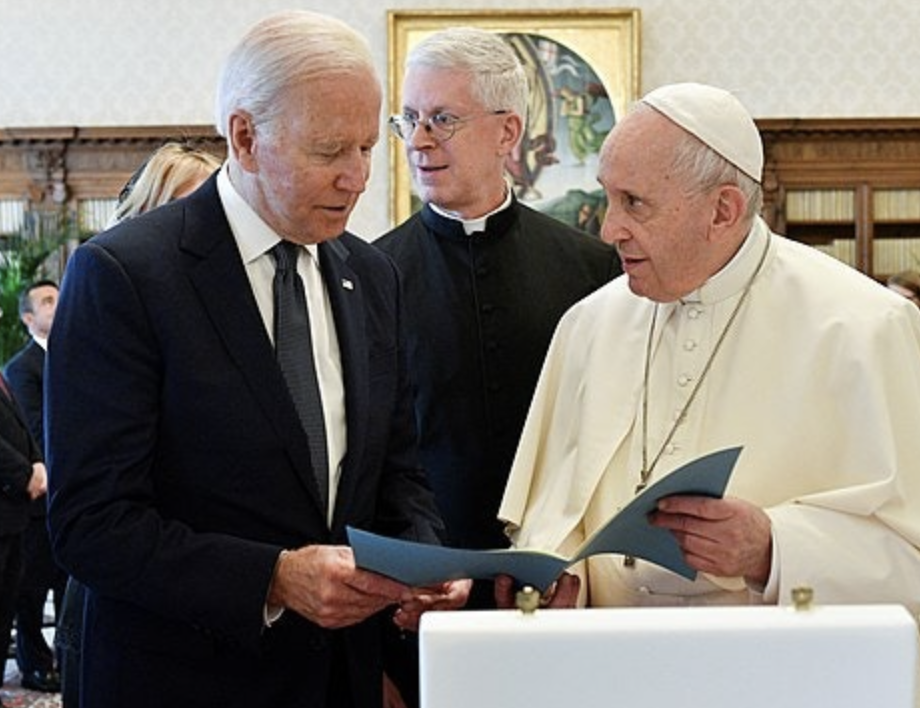
A funny thing happened when President Joe Biden visited Pope Francis at the Vatican.

The event actually made news, especially with Biden quotes about what allegedly happened in private.

In fact, it was big news across the media ecosystem — from the mainstream press to Catholic news sites — because of 20 words the president uttered to reporters in Rome after the face-to-face had already taken place.

“We just talked about the fact that he was happy I’m a good Catholic and I should keep receiving Communion,” Biden said.

With those words, Biden grabbed plenty of favorable headlines (much needed ones if you look at his sagging poll numbers as of late) online throughout the day and into the weekend. At the same time, it widened the rift between the pope and a group of U.S. bishops because of Biden’s support for abortion. Thus, it will lead to further conflict between Biden and those same bishops.

Given the love many in the press had given Biden even before the meeting, none of this should come as a surprise. The rush to accept Biden’s claim — while Vatican officials declined to confirm it — has shaped mainstream news coverage of this encounter.

Biden continued to get great headlines a day after the meeting and into Sunday when he boldly attended Mass at St. Patrick’s Church in Rome, where he received Communion. It’s worth noting that Biden was not given Communion by the pope during his private meeting. It’s also worth noting that the pope serves as the bishop of Rome.

Why all the glowing headlines, built on the acceptance of Biden’s second-hand quote from Pope Francis?

Biden’s words fit the popular news narrative on the Communion issue, beginning with the label that the president is a “devout Catholic,” even as his words and actions undercut Catholic doctrine. Far too many news accounts were happy to take Biden’s words at face value — perhaps because doing so validated their own beliefs on the issue. It amounted to a papal dispensation.


Please respect our Commenting Policy

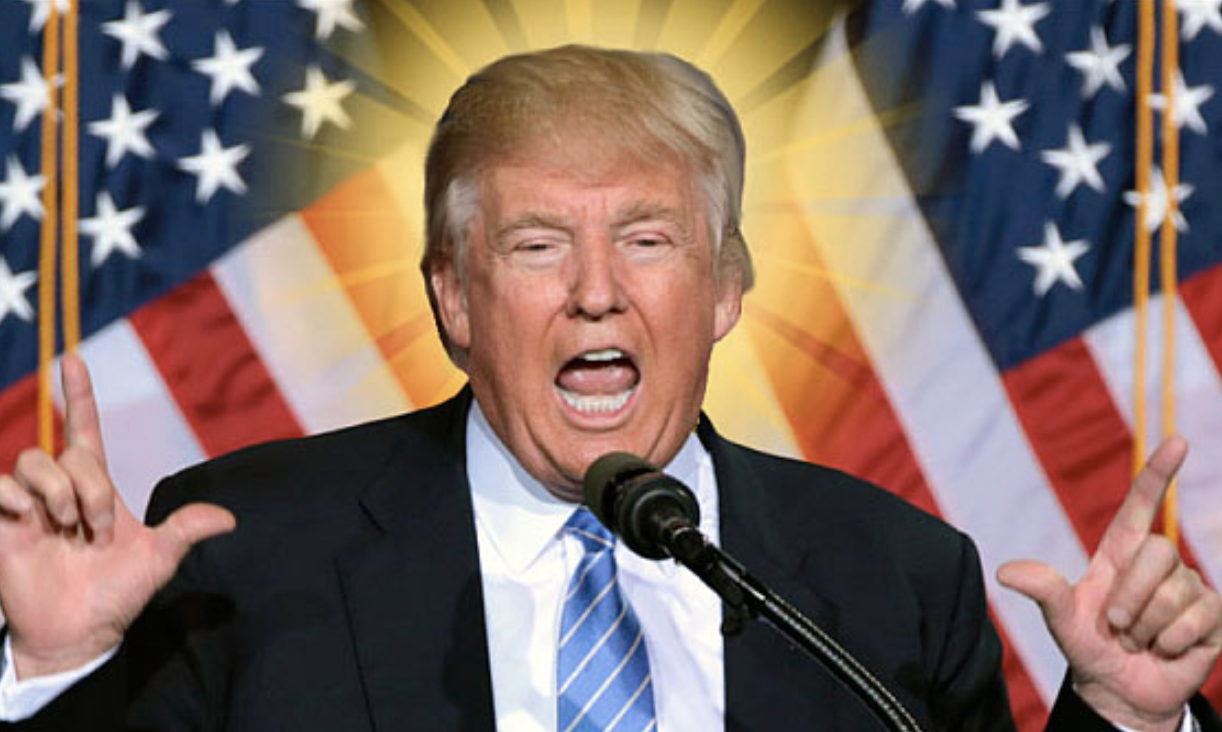
Is this statement accurate? All true evangelicals wanted to vote for Donald Trump -- period

Is this statement accurate? All true evangelicals wanted to vote for Donald Trump -- period

As a rule, your GetReligionistas strive to avoid writing about analysis features that are published in magazines such as The Atlantic.

However, when I keep hearing people asking questions about one of these “think pieces,” it’s hard not to want to add a comment or two to the discussion.

So first, let’s start with something that GetReligion team members have been saying for nearly two decades, as a reminder to readers who have never worked in mainstream newsrooms: Reporters/writers rarely write the headlines that dominate the layouts at the top of their pieces.

Case in point: The double-decker headline on that buzz-worthy Peter Wehner commentary piece at The Atlantic:

The Evangelical Church is Breaking Apart

Christians must reclaim Jesus from his church.

Yes, I know. There is no such thing as “the evangelical church.”

Do basic facts matter? There are, of course, denominations that are predominantly evangelical. Some of them disagree on all kinds of things — such as baptism or the ordination of women. There are Pentecostal denominations that share many, but not all, doctrines with flocks that are connected with the evangelical movement. There are lots of evangelicals who still sit — though many are quite unhappy — in liberal Protestant pews.

We won’t even talk about that second line: “Christians must reclaim Jesus from his church.”

You can get to the heart of this confusion by — if you are reading the Wehner piece online — glancing at the tagline that appears in the subject line in your computer browser. That semi-headline reads: “Trump is Tearing Apart the Evangelical Church.”

Ah, that’s the heart of this matter.


Please respect our Commenting Policy

A lion of evangelical Anglicanism -- seeking Christian unity -- elects to swim the Tiber

A lion of evangelical Anglicanism -- seeking Christian unity -- elects to swim the Tiber

As always, rumors swirled around the favorites in the 2002 race to become the 104th Archbishop of Canterbury.

Efforts to derail Bishop Michael Nariz-Ali of Rochester were different, in part because he was born in Pakistan -- fluent in Urdu and Farsi -- and was poised to become the first non-white leader of the Church of England. Others noted that he attended Catholic schools as a boy and practiced that faith.

Progressives warned that Nazir-Ali was too conservative on issues dividing Anglicans. He opposed the ordination of noncelibate gays and lesbians, while defending ancient teachings on marriage. He was a fierce critic of Sharia law and "radical Islam," while defending persecuted Christians around the world Most of all, critics noted that he was a strong evangelical leader in the global Anglican Communion.

Nazir-Ali insisted that he was "evangelical and Catholic," even as he lost his shot at the Throne of Canterbury.

That's the same label that he used when he stunned the Anglican world by announcing that he was returning to Roman Catholicism. He is expected to be ordained as a Catholic priest this Sunday (Oct. 30), serving in the Ordinariate of Our Lady of Walsingham, a canonical structure established in 2011 by Pope Benedict XVI that allows Anglicans to enter Catholicism while retaining many Anglican rites and traditions. The 72-year-old Nazir-Ali is married and has two children.

This move was necessary "because I believe that the traditional Anglican desire to adhere to the fullness of apostolic, patristic and conciliar teaching can now best be maintained in this way," the former bishop announced.

Writing in The Daily Mail, he called the decision a "bittersweet moment."

"Bitter, because I am deeply saddened that the Church of England is not the church I joined. There are many individual parishes, priests, and believers who remain committed to biblical faith and values. But as an institution it seems to be losing its way," he said. "Sweet, because I am excited about the opportunities that joining the ordinariate will bring: to uphold human rights and help millions of suffering Christians and others round the world."


Please respect our Commenting Policy

Looking for signs of life? Study the birth rates among religious faiths in America

Looking for signs of life? Study the birth rates among religious faiths in America

A team of economists from Wellesley College and the University of Maryland recently published a working paper that focused on a peculiar puzzle facing the United States: declining birth rates.

More particularly, the team of researchers was trying to understand why birth rates continued to fall even after the economy was recovering from the Great Recession of 2007. Those economists concluded that one of the biggest factors was shifting priorities among younger Americans — away from raising children and toward career and travel aspirations.

But fertility is obviously incredibly multifaceted. The decision to become a parent is often one that is made with a number of factors in mind. Young adults have to consider their educational plans, the amount of income they would have available to pay for a child and how to handle childcare responsibilities once they become parents.

One factor that can have a tremendous impact on this decision is religion.

Every major religious tradition on Earth encourages reproduction, and thus there can be a theological nudge for people to have children. But a local religious community can also make the decision easier for potential parents by offering up a safety net that can provide financial support or easy access to caregivers for babies and children in the congregation.

Clearly, it’s in the best interest of religious groups to encourage their young families to have children if they want to ensure the long-term viability of their traditions. It’s no secret that families with children are the easiest pathway to ensure that a church, mosque or synagogue will be able to sustain itself for decades to come. But which traditions are doing a good job of having children, and which ones aren’t? And what does that tell us about the future of American religion?


Please respect our Commenting Policy

New podcast: When popes and presidents meet, headlines may not tell the private stories

New podcast: When popes and presidents meet, headlines may not tell the private stories

Sometimes, the calendar isn’t friendly to columnists and podcasters.

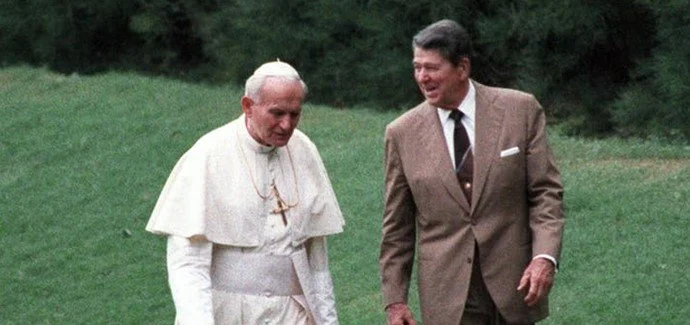
This week’s “Crossroads” podcast (click here to tune that in) was recorded before the lengthy, closed-door chat (with photo ops before and after) between Pope Francis and the “devout” Catholic President Joe Biden. Thus, host Todd Wilken and I took a kind of “tomorrow’s headlines” approach, surveying the advance coverage of the meeting and some fascinating features that looked at images and the realities of some previous pope-president meetings.

In this podcast I predicted that the headlines and public pronouncements would focus on their agreements about the environment, immigration, poverty and COVID-19 strategies.

Why? Well, the mainstream press believes that these meetings are, first and foremost, political events and these are political topics, even though they clearly have doctrinal content for those with the eyes to see that.

Biden and the pope agree on these subjects and, at this point, the progressive Pope Francis has little or no motivation to hurt a Catholic progressive in the White House. They have many of the same goals and they, to be blunt, have all the same enemies — especially among American Catholics who wear the red hats that mark them as cardinals (and those who have not received red hats).

Would anything significant happen in the private discussions?

That’s the kind of question that Catholic publications will probe and, here at GetReligion, I’ll leave commentary on that topic to Clemente Lisi (it helps that he is fluent in Italian).

If you are looking for a perfect summary of the elite press template for coverage of this meeting, and the ties that bind these two modern Catholics, this block of Washington Post material — from a political-desk story, of course — is pitch perfect:

… The resonance is also personal, given the similarities between the 84-year-old pope and the 78-year-old president, who have in a sense become allies. Both attained ultimate leadership late in their lives and quickly moved in a liberal direction. They have faced internal resistance. Both are treated warily by conservative American bishops.


Please respect our Commenting Policy

Familiar, but newsworthy, trends: Catholicism grows in Africa and Asia, while Europe fades

Familiar, but newsworthy, trends: Catholicism grows in Africa and Asia, while Europe fades

The number of Roman Catholics across Africa and Asia continues to grow, according to a new report highlighted by the Vatican.

That’s one news hook for coverage. Here is another: the number of Catholic believers in Europe continues to implode.

“If we keep the faith to ourselves, we will become weak, and if we keep the faith to a small group, it might become an elite group,” Cardinal Luis Tagle of the Philippines warned on Oct. 21 during a news conference held at the Vatican.

This new report, compiled by Fides News Service, serves as a statistical snapshot of the church’s global population and institutions. It compared 2019 with the prior year and was based on the latest available statistics.

The findings, akin to a Vatican census, did not take into account the pandemic and the impact COVID-19 had on faith and church attendance as a result of shutdown orders across much of the world. The report was released to coincide with World Mission Day, which is celebrated on the third Sunday of October each year.

Pope Francis, in a message posted to the Holy See’s official website, highlighted the day’s purpose.

“We recall with gratitude all those men and women who by their testimony of life help us to renew our baptismal commitment to be generous and joyful apostles of the gospel,” he wrote. “Let us remember especially all those who resolutely set out, leaving home and family behind, to bring the gospel to all those places and people athirst for its saving message.”

Overall, the total number of Catholics throughout the world grew by 15.4 million people.


Please respect our Commenting Policy

Don't neglect the Supreme Court's potentially weighty case on religious schools funding

Don't neglect the Supreme Court's potentially weighty case on religious schools funding

Media eyes are trained on the U.S. Supreme Court's December 1 argument on Mississippi's abortion restrictions, preceded by a fast-tracked November 1 hearing about the stricter law in Texas. But don't neglect the Court's December 8 hearing and subsequent decision on tax funding of religious schools in the potentially weighty Carson v. Makin case (docket #20-1088).

University of Baltimore law Professor Kimberly Wehle certainly wants us to pay heed, warning October 14 via TheAtlantic.com that this is a "sleeper" appeal that "threatens the separation of church and state." In her view, the high court faces not just the perennial problem of public funding for religious campuses. She believes the justices could decide "religious freedom supersedes the public good" by aiding conservative Christian schools that, based on centuries of doctrine, discriminate against non-Christian and LGBTQ students and teachers.

Journalistic backgrounding: Thinly-populated Maine provides an unusual context for this story because the majority of its 260 school districts do not operate full K-12 systems and instead pay tuition for public or private schools that families choose for upper grades. Religiously-affiliated schools are included, but not if Maine deems them "sectarian."

Notably, the parents' plea for tuition is backed by major institutions of the Catholic Church, the Southern Baptist Convention and other evangelical Protestants, the Church of God in Christ (the nation's largest African-American denomination), Latter-day Saints (formerly called "Mormons") and Orthodox Judaism, alongside the 63-campus Council of Islamic Schools. A reporter's question: Has such a religious coalition ever formed in any prior Supreme Court case?

Of further interest, the case engages a major religious-liberty theorist, Michael W. McConnell, director of Stanford University's Constitutional Law Center and former federal judge on the 10th Circuit Court of Appeals. He wrote that circuit's 2008 opinion in Colorado Christian University v Weaver (.pdf here), which tossed out a law that barred "pervasively sectarian" colleges from a state scholarship program.

In Carson, McConnell filed a personal brief September 8 that hands the Supreme Court a history lesson (.pdf here) on religious freedom as conceived when the Constitution's First Amendment was framed. He has explored this ground since a significant Harvard Law Review article in 1989.


Please respect our Commenting Policy

All those fast-growing Christian schools: Are they really bastions of racism, intolerance?

All those fast-growing Christian schools: Are they really bastions of racism, intolerance?

Usually most New York Times’ pieces about anything conservative and (particularly) Christian gets reams of nasty remarks in the comments section. But a recent story on the rapid growth of private Christian schools drew a wider range of constructive responses.

I’m talking about Ruth Graham’s piece about a Christian school in an obscure corner of southwestern Virginia (drive west of Richmond, then head south) and how such schools are booming around the country in the wake of COVID-19 realities.

It’s a trend that a lot of us have seen coming. The key question, for GetReligion readers, is how the story handled the “Why?” factor looming over this trend. We will start at the beginning:

MONETA, Va. — On a sunny Thursday morning in September, a few dozen high school students gathered for a weekly chapel service at what used to be the Bottom’s Up Bar & Grill and is now the chapel and cafeteria of Smith Mountain Lake Christian Academy.

Five years ago, the school in southwestern Virginia had just 88 students between kindergarten and 12th grade. Its finances were struggling, quality was inconsistent by its own admission, and classes met at a local Baptist church.

The Smith Mountain Lake real estate market is the largest marketplace for lake property in Virginia unless you can afford expensive beachfront to the east.

Now, it has 420, with others turned away for lack of space. It has grown to occupy a 21,000-square-foot former mini-mall, which it moved into in 2020, plus two other buildings down the road.

Smith Mountain Lake is benefiting from a boom in conservative Christian schooling, driven nationwide by a combination of pandemic frustrations and rising parental anxieties around how schools handle education on issues including race and the rights of transgender students.

Homes in Franklin County, which includes Smith Mountain Lake, are selling at 35% above assessed value, so people are definitely moving to this exurb because, well, they can.

Everyone is working remote these days and if you don’t HAVE to live near a place like Washington, DC (about a four-hour drive to the north), why would you?


Please respect our Commenting Policy