Catholicism

Faith and politics: It's hard to tell true believers from those who are simply 'self-identified'

Faith and politics: It's hard to tell true believers from those who are simply 'self-identified'

When political scientists and pollsters discuss faith and politics, one of their biggest challenges is separating the true believers from those who merely say they are believers.

It's kind of like distinguishing between "football fans" and "FOOTBALL FANS," said John C. Green of the University of Akron, who for decades has been a trailblazer in studies of politics, pulpits and pews.

"Lots of people say they're football fans and they like to watch games on television," said Green. "Then there are the people who buy jerseys and get decked out in their team colors. They never miss a home game and everything that goes with that. You can just look at them and know that they're really FOOTBALL FANS."

In terms of faith and politics, oceans of ink have been spilled describing the beliefs and goals of evangelical Protestants, Catholics and members of other religious groups, he said. The problem is that there are "self-identified" evangelicals and then there are truly faithful evangelical Christians. There are plenty of people who tell pollsters they attend worship services every week and that their faith shapes their lives. Then there are those who truly walk that talk.

"All religious communities have lots of highly committed people, and all religious communities have their share of marginal members whose faith isn't all that active," said Green. For pollsters, the challenge is asking questions that help draw lines between "self-identified believers and those who are truly active" in their faith groups, he added.

The American Bible Society, in its "State of the Bible" surveys, has tried to document ways in which beliefs about the Bible, and personal interactions with scripture, separate "practicing Christians" from "self-identified Christians." This matters, in part, because religious groups containing a high percentage of committed believers usually maintain their members, or even make converts, while other groups struggle to survive.

The most recent ABS survey (.pdf here) was completed last January, with data collected from 3,354 online interviews with adults in all 50 states and the District of Columbia. The American Bible Society began studying these kinds of issues as early as 1812.

In this survey, a "practicing Christians" was defined as someone who "identifies as a Christian, attends a religious service at least once a month" and states that "faith is very important" in his or her life.

Please respect our Commenting Policy

People have been asking: Is the COVID vaccine the Bible's sinister 'mark of the beast'?

People have been asking: Is the COVID vaccine the Bible's sinister 'mark of the beast'?

THE QUESTION:

Is the COVID vaccine the biblical "mark of the beast"?

THE RELIGION GUY'S ANSWER:

Many odd anti-vaccination rumors with murky origins are floating around social media, alarming healthcare workers as they combat a virus that has killed 720,000 Americans and counting.

Take the "mark of the beast" claim. The Guy can confidently answer "no" to this question, based upon the strong consensus among Bible experts, both those who take the Bible portion at issue -- Revelation chapter 13 -- literally and those who follow symbolic interpretations.

The beast, identified with the famously sinister number "666" and the "mark," is found in the final book of the Bible, whose images have always been subject to a wide variety of fanciful interpretations. Over the centuries, some have identified the beast as the pope, Napoleon, Stalin, Hitler and many other leaders.

Let's clear the ground just a bit.

There are five basic ways to understand the last 18 chapters of this "revelation of Jesus Christ" to "his servant John."

* A "preterist" says the imagery depicts past events that faced early Christians living under the Roman Empire.

* The "historical" school sees church scenarios across the centuries.

* A "futurist" insists these are literal events that still lie ahead of us.

* The "spiritual" school advocates a symbolic presentation of realities with no specific historical application, past, present, or future.


Please respect our Commenting Policy

Fallout from Pelosi's Roman holiday continues: More proof journalistic objectivity is dead?

Fallout from Pelosi's Roman holiday continues: More proof journalistic objectivity is dead?

Debates about the concept of objectivity in news coverage have been around for a long time — but now they are heating up to shockingly intense levels.

Objectivity, as it pertains to reporting, refers to fairness and nonpartisanship on the part of journalists and news organizations in the way they cover stories. An emphasis on objectivity is also linked to journalistic standards for balance, accuracy and showing respect for citizens on all sides of public debates.

This so-called “American model of the press” (click here for background) first evolved in the post-Civil War era and in the early 20th century as a way for U.S. newspapers to report and disseminate information to a wide, diverse body of readers. It allowed for a consistent method of testing that information so that personal and cultural biases would not undermine accuracy.

In a polarized digital age, the practice has been criticized and objectivity is all but dead as news outlets test new business models for struggling newsrooms. As a result, alternatives have emerged, most notably, in the form of a more partisan press that preaches to choirs of digital subscribers.

That brings us — no surprise — to the latest news story to inflame U.S. Catholics.

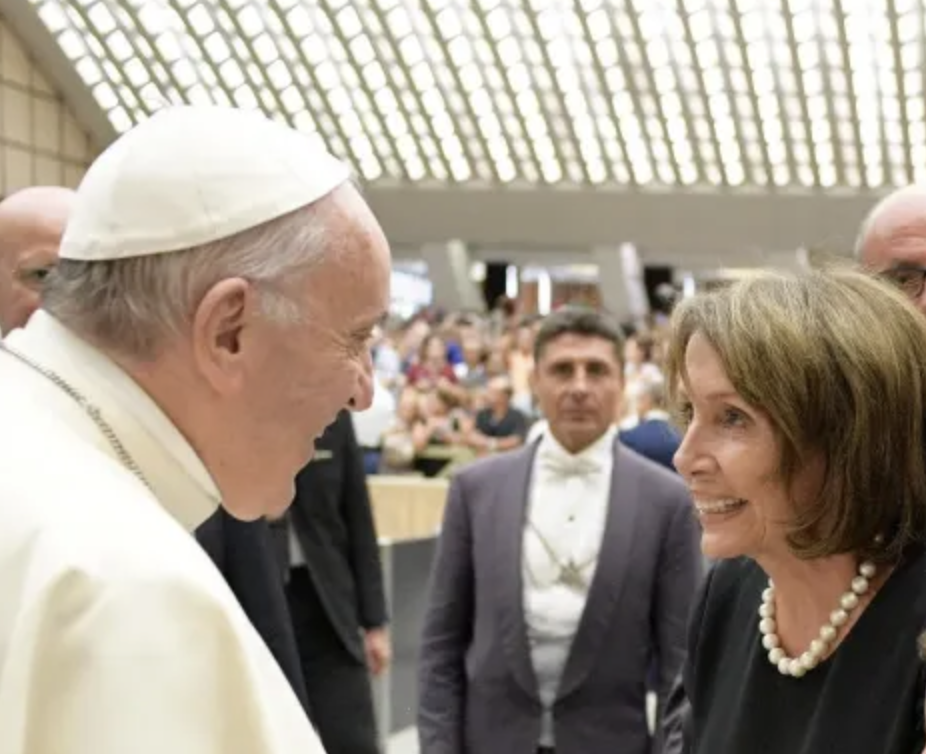
Despite it being almost two weeks since House Speaker Nancy Pelosi met with Pope Francis at the Vatican, the fallout and reaction from that October 9 private audience continues to reverberate across the American political landscape, especially among Catholics across the doctrinal spectrum. Naturally, some are concerned about how the news media we consume has covered it all.

If facts are what matters here, it’s obvious that San Francisco Archbishop Salvatore Cordelione should play a major role in these debates — since he is Pelosi’s bishop. Thus, he plays a crucial role in determining her sacramental status in the church. Who included his voice in this discussion and who didn’t?


Please respect our Commenting Policy

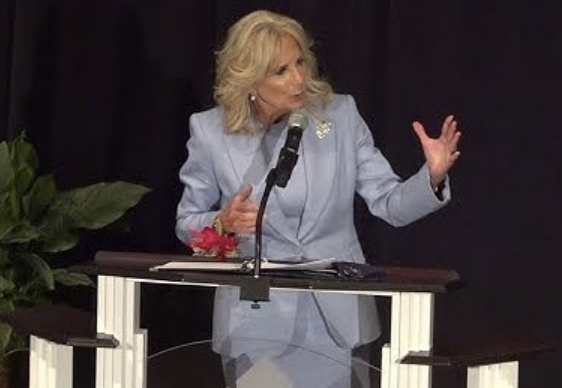
Jill Biden's reborn Christian faith: Washington Post dug for some key details (AP didn't)

Jill Biden's reborn Christian faith: Washington Post dug for some key details (AP didn't)

Since I grew up Southern Baptist, I have heard many, many people give “testimonies” about how they embraced faith and were “born again.” Now that I am Eastern Orthodox, I have heard many people tell similar stories about how they came to embrace ancient Christian doctrines and beauty of sacramental worship.

Most of the time these stories include some details about history of the person’s faith or lack thereof. One part of telling the point to which a believer has travelled is to share some background information about where the journey started.

I would certainly think that this would be true when the person who is “testifying” is America’s current First Lady. Thus, I had a few expectations when I started reading the Associated Press report that ran with this headline: “Jill Biden says SC ‘prayer partner’ helped change her life.”

The hook for this story was the surprise visit that President Joe Biden and First Lady Jill Biden made to West Columbia, S.C., to honor the 50th anniversary of the Rev. Charles B. Jackson becoming the pastor of Brookland Baptist Church. The focus of the story, however, was on Jill Biden’s “prayer partner” relationship with the pastor’s wife, Robin. Here is the crucial passage in this AP report:

The first lady doesn’t usually speak publicly about her faith but said Sunday that “it’s always been an important part of who I am.” She recalled being a teenager who “fell in love with the peace of the quiet wooden pew,” the “joy of the choir” and the “deep wisdom of the Gospels.”

She said prayer helps her “connect to the people that I love and to the world around me.”

“But in 2015, my faith was shaken,” the first lady said, her voice breaking as she described watching “my brave, strong, funny, bright young son fight brain cancer.”

“Still, I never gave up hope,” she said. “Despite what the doctor said, I believed that my son would make it. In the final days, I made one last, desperate prayer and it went unanswered.”


Please respect our Commenting Policy

Police kept priest from saying Last Rites for stabbed politician. News story? (Yes, in UK)

Police kept priest from saying Last Rites for stabbed politician. News story? (Yes, in UK)

The basic facts are clear and powerful: A member of of the UK Parliament is stabbed to death by a terrorist during an open, low-security town-hall meeting with citizens in Essex.

It also appears that religion is part of this story.

The key question, apparently, was whether to mention that Conservative MP David Amess was Catholic. This created the following equation — the more “Catholic” details, the more “conservative” the story. This is especially true about a poignant, and some would say outrageous, fact about police actions that prevented a priest from being able to say Last Rites for the victim. Hold that thought.

Believe it or not, it was possible to find a faith-free version of this story, as in this report from ABC News. Then there was this watered-down fact paragraph way down in the Reuters report:

Amess, married with five children, was first elected to parliament to represent the town of Basildon in 1983, and then nearby Southend West in 1997. He was knighted by Queen Elizabeth for his public service in 2015.

His website listed his main interests as "animal welfare and pro-life issues".

Then there was this chunk of background material from the BBC:

A Conservative backbencher for nearly forty years, Sir David entered Parliament in 1983 as the MP for Basildon. He held the seat in 1992, but switched to nearby Southend West at the 1997 election.

Raised as a Roman Catholic, he was known politically as a social conservative and as a prominent campaigner against abortion and on animal welfare issues. He was also known for his championing of Southend, including a long-running campaign to win city status for the town.

Wait — he was “raised” as a Catholic?


Please respect our Commenting Policy

Plug-In: Clashes between religion and COVID-19 vaccines are (#DUH) not fading away

Plug-In: Clashes between religion and COVID-19 vaccines are (#DUH) not fading away

Where to begin this week?

“As they impose COVID-19 vaccine mandates, company leaders across the country are facing a flood of requests for religious exemptions,” the Deseret News’ Kelsey Dallas reports in a story explaining how employers judge such requests.

“As the Biden administration prepares a federal vaccine mandate and more states and companies impose them to help accelerate the pandemic's end, letter-writing efforts by religious leaders (supporting exemptions) are being reinforced by legal advocacy groups such as Liberty Counsel,” according to Reuters’ Tom Hals.

“The prelate who oversees Catholics in the U.S. military issued a statement Tuesday (Oct. 12) supporting service members who have refused to get vaccinated against COVID-19 on religious grounds,” Religion News Service’s Jack Jenkins notes.

Here we go again.

For the seventh time in the last year (yes, I counted), news of religion and the COVID-19 vaccines tops the latest Weekend Plug-in. See previous installments here, here, here, here, here and here.

Why does Plug-in keep focusing on this subject? Because it remains major news. And it likely will for a while.

Here are a few more related stories that caught my attention this week:

Latino Catholics are among the most vaccinated religious groups. Here’s why. (by Alejandra Molina, RNS)

‘It’s not Satanism’: Zimbabwe church leaders preach vaccines (by Farai Mutsaka, Associated Press)

The pandemic has helped religion’s reputation. Do religious vaccine resisters put this progress at risk? (by Kelsey Dallas, RNS)


Please respect our Commenting Policy

Progressive Catholic cardinal of Washington, D.C., pours praise on America's embattled press

Progressive Catholic cardinal of Washington, D.C., pours praise on America's embattled press

With a controversial Catholic in the White House, there was no way for Cardinal Wilton Gregory to face a pack of Beltway journalists without fielding political questions.

Job 1 was addressing President Joe Biden's statement: "I respect them -- those who believe life begins at the moment of conception and all -- I respect that. Don't agree, but I respect that."

The leader of the Catholic Archdiocese of Washington, D.C., has made it clear that Biden can receive Holy Communion. However, Gregory also noted: "The Catholic Church teaches, and has taught, that life -- human life -- begins at conception. So, the president is not demonstrating Catholic teaching."

That was the big headline after this event, but this wasn't the topic Gregory came to the National Press club to discuss. In his recent address, he poured praise on America's mainstream press, especially journalists who -- during this "anxious time" -- have openly pushed for change on issues linked to racism and social justice.

"You are the ones we rely on to keep us informed, updated and connected as a global community of various faith traditions," said Gregory, America's first Black cardinal. "Like all industries, journalism has certainly changed over the years. Technology has expanded your reach and abilities to share our life stories, our dreams and our hopes.

"You are the professionals with just the right words, who immerse yourselves in a community, a situation or even a crisis -- to bring us the facts, the people and the takeaways that can help us work toward living in true peace and equality for all, without the threat of violence or harm."

According to a sobering blast of data from Gallup, the cardinal's critique of the national press would ring true for Democrats and political progressives -- but not for Republicans and cultural conservatives. Catholics can be found in both of those camps, of course.

In their Sept. 1-17 poll, Gallup researchers asked: "In general, how much trust and confidence do you have in the mass media -- such as newspapers, TV and radio -- when it comes to reporting the news fully, accurately and fairly -- a great deal, a fair amount, not very much or none at all?"


Please respect our Commenting Policy

Thinking about covering news about exorcisms? Journalists need this kind of book

Thinking about covering news about exorcisms? Journalists need this kind of book

This is typically the time of year when book publicists love to send out press releases about new books that have something to do with Oct. 31.

Halloween has become one of those festivities that have grown in popularity over the last few decades. Once relegated to just being a night for children to dress up and go trick-or-treating, Halloween has grown into a commercial holiday right up there with Christmas. For many, it is the centerpiece of the fall season.

For publishers, it’s also the chance to push books that have to do with evil, demons, witches, witchcraft, ghosts and the supernatural in general. Even Roman Catholic publishers have gotten into this game. Thus, see this book: “Diary of an American Exorcist” (Sophia Institute Press) by Father Stephen Rossetti, a priest and well-known exorcist.

Yes, exorcism. This is frequently a subject that shows up in news coverage, as well as popular culture. Every few years, it seems like we see another wave of headlines about the Roman Catholic Rite of Exorcism. Here’s a recent example — an Associated Press report on exorcism rites after civic violence.

Reporters who want to cover this topic need some basic facts, prayers and scriptures. Thus, it would help to have a reference book or two. It’s not enough to have seen the 1973 horror film “The Exorcist,” one of the scariest movies ever made.

Back in April 2020, I reviewed the fascinating book “The Devil is Afraid of Me: The Life and Works of the World’s Most Famous Exorcist” by Gabrielle Amorth, a famous Catholic priest who performed scores of exorcisms over his lifetime.

In this new book, Rossetti details his experiences after having taken part in hundreds of exorcisms. As a press release with the book noted, “The point of this book isn’t to entertain. No: It’s to inform the American people — Catholic and non-Catholic alike — about the reality of the preternatural, and the tangible dangers posed by the evil beings that populate our world just outside our sensory perception.”

I know what some of you might be thinking. Exorcism? In 2021? Come on.


Please respect our Commenting Policy

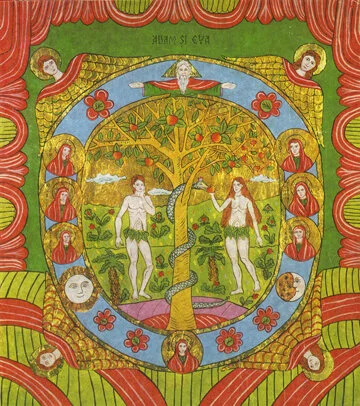
On the news budget once again: New Evangelical debates about Adam and Eve

On the news budget once again: New Evangelical debates about Adam and Eve

It's hard to beat William Lane Craig for conservative evangelical credentials.

This influential author and philosophy professor teaches at Houston Baptist University, where faculty members "must" believe in the Bible's divine inspiration and "that man was directly created by God." He's simultaneously a visiting scholar at California's Talbot School of Theology, where teachers commit to the beliefs that the Bible is "without error or misstatement" in its "record of historical facts" and that Adam was created by God and "not from living ancestors."

Craig is also a longtime member in good standing of the Evangelical Theological Society, whose members are required to affirm that the entire Bible is "the Word of God written and is therefore inerrant" as originally written. Trinity Evangelical Divinity School, where he formerly taught, likewise proclaims that the Bible is "without error."

But exactly how do those vows apply to the early chapters of the Bible's Book of Genesis?

Debates about this issue are frequently hooks for news stories, energized over and over again. Evolution and the creation of Adam and Eve have been allergic issues among evangelical Protestants in the 162 years since Darwin published "On the Origin of Species"?

So there's eye-opening stuff in Craig's article titled "The Historical Adam" in the current First Things magazine.

In Genesis 1-11, he asserts, those "fantastic lifespans" of primeval humans starting with Adam indicate "we are not dealing here with straightforward history."

Yet it's not simple fiction either, but rather an amalgam he calls "mytho-history, not to be taken literally," though there could be some overlap between the "the literary Adam of Genesis" over against the "historical Adam." He further explains that in the New Testament, Jesus and Paul were talking about that non-literal "literary Adam."

Given current science, Craig figures Adam and Eve lived 750,000 to a million years ago at the point of separation between Neanderthals and our own species of homo sapiens, with the latter endowed by God to surpass human-like animals that lacked rational thought. On that understanding, "the mythic history of Genesis is fully consistent with current scientific evidence concerning human origins."


Please respect our Commenting Policy