Catholicism

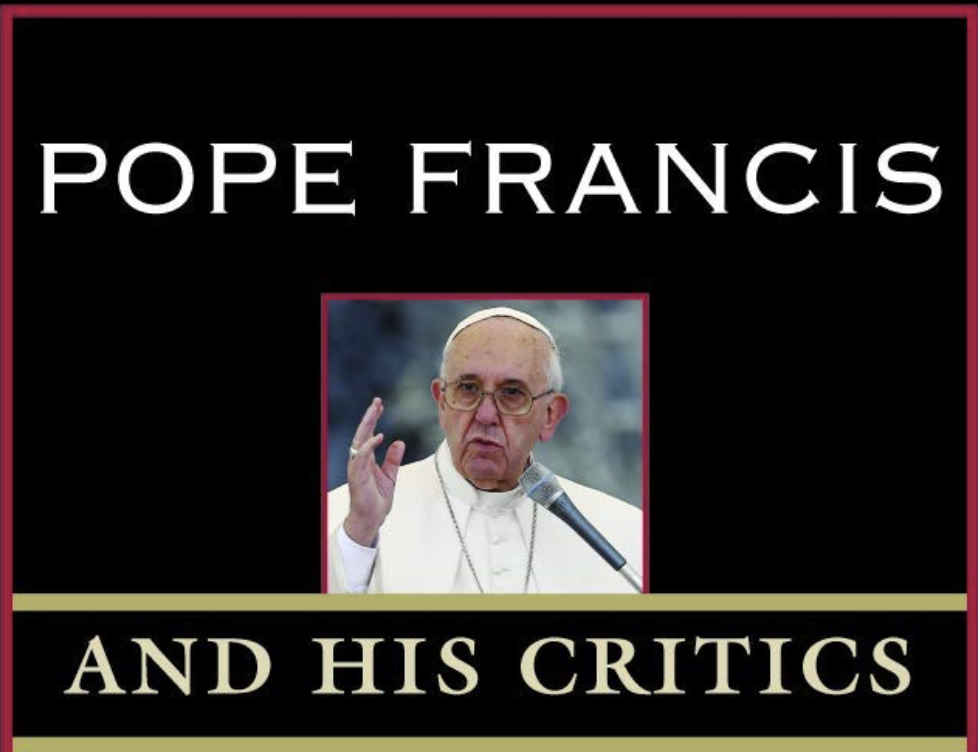
Pope Francis lashes out at conservative Catholic press, calls its criticism 'work of the Devil'

Pope Francis lashes out at conservative Catholic press, calls its criticism 'work of the Devil'

Pope Francis is no fan of press criticism — especially when it comes from Roman Catholic news outlets on the doctrinal right.

So here we go again, with another round of tensions in the growing world of Catholic media.

The 84-year-old Argentinian-born pontiff was caught in a candid moment during his recent trip to Slovakia when he was asked about his health after a recent operation.

“Still alive,” the pope replied, “even though some people wanted me to die.”

The shocking statement came in a meeting the pope had with 53 Jesuits from Slovakia on Sept. 12 in Bratislava. Antonio Spadaro, a priest and editor-in-chief of the Rome-based Jesuit magazine La Civiltà Cattolica, was present at the meeting and on Sept. 21 published the full transcript of the conversation.

The comments immediately sparked a Catholic media war that again highlighted how polarized Catholics have become during Francis’ papacy, as have the official and independent church media that a large swarth of parishioners choose to read.

Asked by another Jesuit at the same gathering how he felt by those who view him with suspicion, Francis replied:

There is, for example, a large Catholic television channel that has no hesitation in continually speaking ill of the pope. I personally deserve attacks and insults because I am a sinner, but the church does not deserve them. They are the work of the devil. I have also said this to some of them.

The TV channel to which he referred is EWTN, according to the National Catholic Reporter.

The Eternal World Television Network was founded in 1980 by a nun named Mother Angelica and began broadcasting a year later from a garage at the Our Lady of the Angels Monastery in Irondale, Alabama. Since then, it has grown to become one of the largest and most influential Catholic news organizations in North America and around the world.

Please respect our Commenting Policy

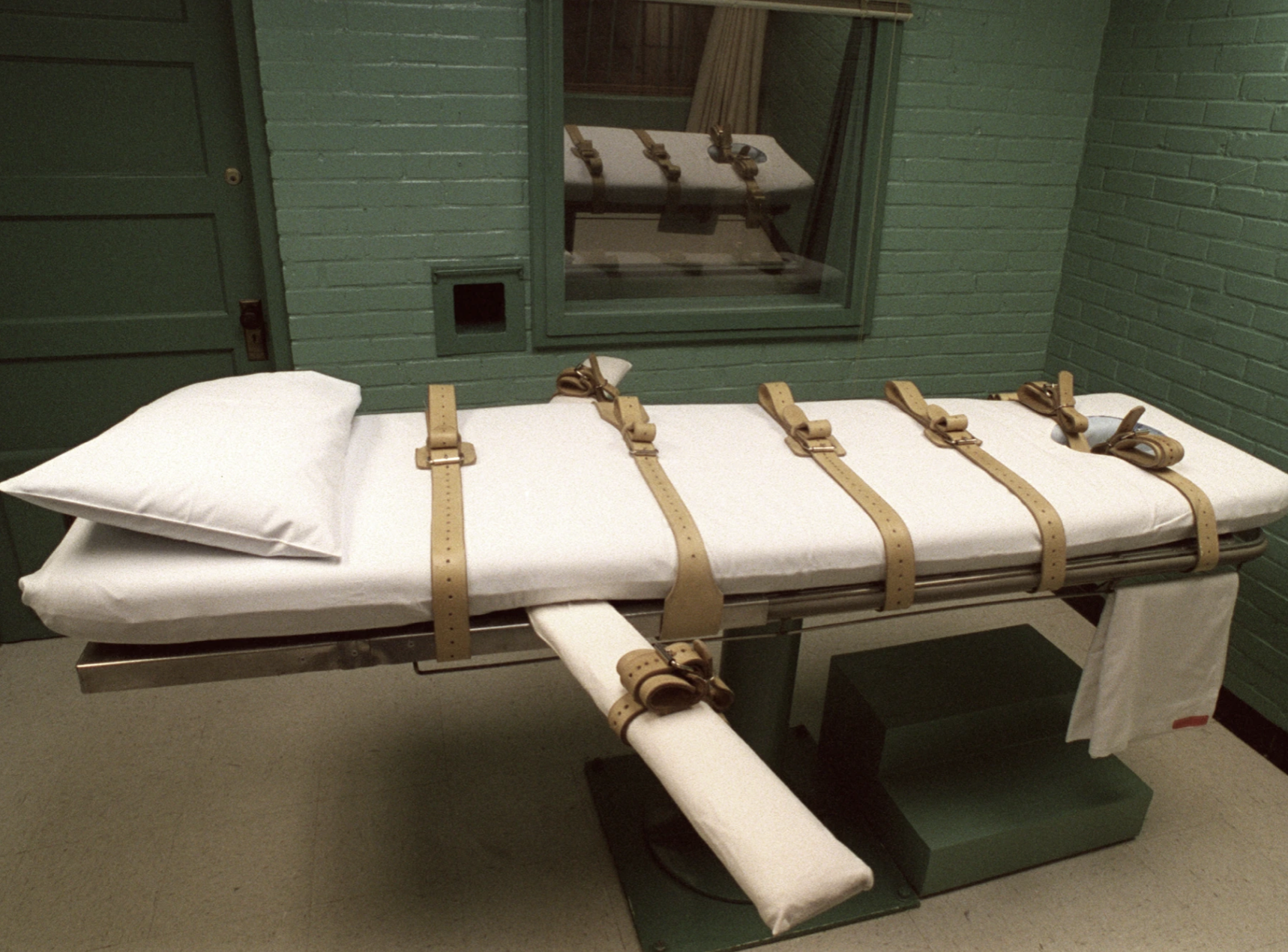
Thinking about prayers at executions: These stories offer glimpses of an old church-state unity

Thinking about prayers at executions: These stories offer glimpses of an old church-state unity

This is a “feeling guilty” post. For quite some time now, I have been planning to examine the coverage of some important religious-liberty cases that have been unfolding in the death-row units of prisons.

The decisions are worthy of coverage, in and of themselves. At the same time, these cases have demonstrated that it is still possible, in this day and age, for church-state activists on the left and right to agree on something. Maybe I should have put a TRIGGER WARNING notice at the start of that sentence.

Like I said the other day in this podcast and post — “Covering a so-called 'religious liberty' story? Dig into religious liberty history” — this kind of unity in defending religious freedom has become tragically rare (from my point of view as an old-guard First Amendment liberal). Indeed, to repeat myself, “America has come a long way since that 97-3 U.S. Senate vote to approve the Religious Freedom Restoration Act of 1993.”

The problem is that you rarely, if ever, see reporters catch this church-state angle in these decisions. The key is to look at who filed legal briefs in support of the religious liberty rights of the prisoners.

This brings me to an important Elizabeth Bruenig essay that ran the other day at The Atlantic, under this dramatic double-decker headline:

The State of Texas v. Jesus Christ

Texas’s refusal to allow a pastor to pray while holding a dying man’s hand is an offense to basic Christian values.

Here is the meaty overture:

Devotees to the cause of religious liberty may be startled to discover during the Supreme Court’s upcoming term that the latest legal-theological dispute finds the state of Texas locked in conflict with traditional Christian practice, where rites for the sick, condemned, and dying disrupt the preferences of executioners.


Please respect our Commenting Policy

Big question right now: What religious groups oppose vaccination, even during epidemics?

Big question right now: What religious groups oppose vaccination, even during epidemics?

THE QUESTION:

What religious groups oppose vaccination -- even during epidemics?

THE RELIGION GUY'S ANSWER:

Judges and public officials will be coping with the issue of vaccination mandates that President Joe Biden, states and employers are imposing to counter spread of the stubbornly contagious and virulent COVID-19 virus. This again raises the issue of religious-liberty claims for exemption from required vaccination.

Pastor Greg Locke of the independent Global Vision Bible Church in suburban Nashville has just been permanently banned from social media postings on Twitter after demanding that Christians shun vaccination (as well as preaching that Biden is a usurper and not a legitimately elected president).

Also, the Washington Post highlighted Pastor Jackson Lahmeyer of Tulsa, Oklahoma (who's running against devoutly evangelical U.S. Senator James Lankford in next year's Republican primary). Lahmeyer offers exemption letters for anyone who donates at least $1 to become an online member of his charismatic Sheridan Church. So far 30,000 supplicants have downloaded his exemption letter.

The president's new policy has already sparked a significant upswing in religious exemption requests. So, what are the facts on religious groups and opposition to vaccination?

A bit of history: Major religious objections arose with the first vaccination experiments in the American Colonies. But influential Congregationalist Cotton Mather championed scientific progress and defended smallpox experiments using adult volunteers. Eminent theologian Jonathan Edwards agreed and set an example as a vaccination volunteer when president of the school we know as Princeton University. He died as a result in 1758. Edward Jenner only achieved vaccination safety 38 years later.

Since then, official Christian or Jewish protests have generally been rare to non-existent as vaccinations are required to enter U.S. public schools, military service or particular jobs, or for foreign travel.


Please respect our Commenting Policy

New podcast: Covering a so-called 'religious liberty' story? Dig into religious liberty history

New podcast:  Covering a so-called 'religious liberty' story? Dig into religious liberty history

Believe it or not, America’s commitment to the First Amendment and religious liberty wasn’t dreamed up by the Religious Right.

However, at some point — mainly during press coverage of clashes between the Sexual Revolution and traditional forms of religion — religious liberty turned into “religious liberty” or even “so called ‘religious liberty’ ” and other language to that effect. America has come a long way since that 97-3 U.S. Senate vote to approve the Religious Freedom Restoration Act of 1993.

Now we are seeing waves of valid news coverage of religious liberty disputes linked to people seeking exemptions from mandates requiring COVID-19 vaccines. During this week’s “Crossroads” podcast (CLICK HERE to tune that in) I suggested that it would help for journalists to dig into the details of how courts have handled earlier religious liberty cases.

Consider this recent Washington Post headline, involving a White evangelical leader in Oklahoma: “This pastor will sign a religious exemption for vaccines if you donate to his church.” Here’s the overture:

A pastor is encouraging people to donate to his Tulsa church so they can become an online member and get his signature on a religious exemption from coronavirus vaccine mandates. The pastor, Jackson Lahmeyer, is a 29-year-old small-business owner running in the Republican primary challenge to Sen. James Lankford in 2022.

Lahmeyer, who leads Sheridan Church with his wife, Kendra, said Tuesday that in the past two days, about 30,000 people have downloaded the religious exemption form he created.

“It’s beautiful,” he said. “My phone and my emails have blown up.”

This minister isn’t alone in thinking this way. Here is a New York Daily News story about an African-American Pentecostal leader: “A Brooklyn preacher’s blessing is a pox upon his flock.”


Please respect our Commenting Policy

Push comes to shove on climate change. What more can clergy and religion reporters do?

Push comes to shove on climate change. What more can clergy and religion reporters do?

Imagine, if you dare, being forcibly parachuted into Taliban-ruled Afghanistan, the world’s current hell-hole du jour.

Suddenly you’re forced to shelter and feed your family and you’re at a loss as to how to do this.

Now consider how the increasingly dramatic consequences of human-accelerated climate change might make your already dire situation worse.

A recent New York Times piece attempted to paint this picture.

It was not pretty. Here’s its opening graphs.

Parts of Afghanistan have warmed twice as much as the global average. Spring rains have declined, most worryingly in some of the country’s most important farmland. Droughts are more frequent in vast swaths of the country, including a punishing dry spell now in the north and west, the second in three years.

Afghanistan embodies a new breed of international crisis, where the hazards of war collide with the hazards of climate change, creating a nightmarish feedback loop that punishes some of the world’s most vulnerable people and destroys their countries’ ability to cope.

And while it would be facile to attribute the conflict in Afghanistan to climate change, the effects of warming act as what military analysts call threat multipliers, amplifying conflicts over water, putting people out of work in a nation whose people largely live off agriculture, while the conflict itself consumes attention and resources.

Just like that, a regional hell hole turns into a global tragedy that should be generating global headlines. Powerful nations half-a-world away scramble to deal with the situation — or should I say scramble to look like they’re dealing with it.

Nor is Afghanistan the only failed state suffering from ongoing political violence complicated by climate change’s frightening uncertainties. “Of the world’s 25 nations most vulnerable to climate change, more than a dozen are affected by conflict or civil unrest, according to an index developed by the University of Notre Dame,” The Times article reported.


Please respect our Commenting Policy

Why mainstream newsrooms can't be bothered to cover USCCB church vandalism report

Why mainstream newsrooms can't be bothered to cover USCCB church vandalism report

Abortion debates continue to dominate American politics. A Texas law banning most abortions after six weeks of pregnancy went into effect just three weeks ago, something that resulted in widespread national news coverage, with many of the stories showing familiar media-bias patterns.

Despite the 1973 Supreme Court decision that made abortion legal, this law makes attaining an abortion in Texas among the most restrictive in the country after the U.S. Supreme Court ruled 5-4 on Sept. 2 not to block it. This unleashed debate and further political animus between Democrats and Republicans as arguments over abortion in this country now stretch into a fifth decade.

The fallout from all this may have increased animosity against the Catholic church. The church’s stand — ancient and modern — against abortion has placed it at the forefront of this cause, along with many other traditional Christian denominations and organizations.

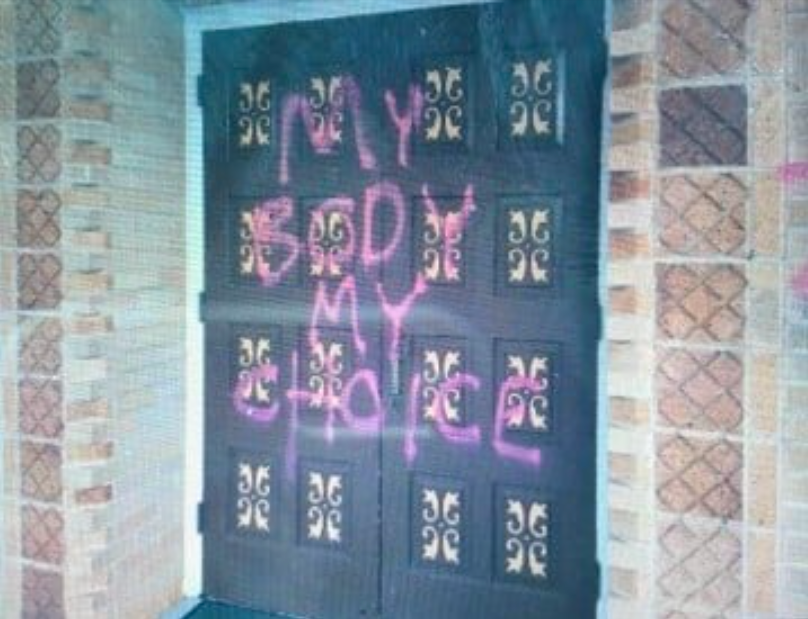
Some of this animosity has led to vandalism against U.S. churches. A Catholic church in Colorado was vandalized with graffiti showing support for legalized abortion days after the Supreme Court decision. This is how The Christian Post recently reported the story. This is long, but essential:

St. Louis Catholic Church, located in the Boulder suburb of Louisville, became the target of vandalism from abortion activists over the weekend. The doors to the church were spray-painted with the declaration “My body, My choice,” a common refrain among pro-choice activists. Church members discovered the graffiti when they gathered for worship on Sunday morning.

In addition to spraying the phrase “My body, my choice” on the church's doors, vandals targeted a marker on the property that read “Respect Life,” replacing the word “Life” with the phrase “Bodily Autonomy.” Additionally, the sign at the front of the church was defaced with the phrase “bans off our bodies.”

In a Facebook post on Monday, the Louisville Police Department noted that a surveillance camera recorded three individuals on the church property at 1:30 a.m. local time Sunday and asked the public for help with identifying them.

The Christian Post, as the name states, is a niche news source. The question here — once again — is why vandalism cases of this kind receive so little attention in the mainstream press.


Please respect our Commenting Policy

Francis tacks again: Did press catch pope's whole message on abortion and Eucharist?

Francis tacks again: Did press catch pope's whole message on abortion and Eucharist?

How does a ship’s captain sail against a headwind?

The maneuver is called “tacking” and it consists of steering the ship back and forth, at roughly 45 degree angles across the chosen course. The question — with all the left and right turns — is this: What is the course that runs through the middle? Where is the captain trying to go?

It’s impossible to figure that out by studying only the turns to the left or to the right. Dare I say that this task is even more difficult if the captain of the ship is a modern Jesuit?

So what was the course Pope Francis was trying to sail the other day during his in-flight Shepherd One press conference about abortion, Communion and the pastoral needs of Catholics (including, perhaps, powerful politicians)? In the mainstream press, the big turns were all to the left, with the pope warning U.S. bishops not to meddle in the state of President Joe Biden’s soul. Readers had to turn to Catholic publications to find any hint that Pope Francis was, perhaps, seeking a middle course.

This was best seen in the piece that ran in the “Politics Section” (#DUH) of the New York Times. The headline stated the basics:

Pope Weighs In on Calls to Deny Communion to Biden Over Abortion

“What must the pastor do?” Francis said when a reporter asked him about the subject. “Be a pastor, don’t go condemning.”

Everything readers needed to know, from the doctrinal point of view of the Times, was right up top:

ROME — Pope Francis weighed in on Wednesday on a debate roiling the Roman Catholic Church in the United States, where conservative bishops are pushing for guidelines that would deny communion to politicians, like President Biden, who support abortion rights.

“I have never refused the eucharist to anyone,” Francis said, though he added that he did not know of any instance when such a politician had come to him for communion.

Later, there was this:

“What must the pastor do?” he asked. “Be a pastor, don’t go condemning. Be a pastor, because he is a pastor also for the excommunicated.”


Please respect our Commenting Policy

Thinking with Ryan Burge (and one of his critics) about abortion and evangelical voting

Thinking with Ryan Burge (and one of his critics) about abortion and evangelical voting

If you follow political scientist Ryan Burge on Twitter (which you should do, of course), then you know that he sends out waves of poll information, creatively sifted, in the form of charts.

From time to time, people have been known to bounce questions back to him, seeking clarification or more specific numbers on some strange angle of the topic at hand. I confess that I have been known to do that.

Burge is relentlessly helpful in that online setting. However — imagine this — there are people who argue with him? On Twitter, of all places! Some disagree with his interpretations. On Twitter!

I’m being sarcastic, to make a point linked to this weekend’s pair of “think pieces.” I’m one of those guys who disagrees with Burge from time to time. That happens, when someone is delivering and then interpretting lots of information in a public forum. The difference with Burge is that he is relentlessly candid, even when dealing with numbers and trends that challenge lots of common news templates.

Recently, Burge wrote a commentary piece — backed with some of his charts — for Religion News Service, flashing back to some polling from 2018. The piece ran with this double-decker headline:

Abortion just isn’t the motivating issue for evangelicals it once was

Studies show white evangelicals, by and large, do not have a hard-line approach to abortion — other issues like immigration and race are taking priority over advocating for the unborn.

Whatever your stance on “life” issues, don’t you want to read more about that claim? Here is a key (and quite long) section of that:


Please respect our Commenting Policy

New podcast: Where is the elite news coverage of tensions between Pelosi and her bishop?

New podcast: Where is the elite news coverage of tensions between Pelosi and her bishop?

Here is a political science question for you, but it’s relevant to an important religion-beat story.

The vice president of the United States is No. 2, in terms of the presidential line of succession, just ahead of the Speaker of the House of Representatives. But in terms of real, day-by-day power, who has more clout in America’s system of government, the vice president or the speaker?

If you have lived and worked on Capitol Hill (as I did for a decade or more), I think you would agree the speaker has more dollars-and-cents clout, as opposed to the largely symbolic “one heartbeat away” status given to the vice president.

With that in mind, let’s turn to an important news story that ran in July at Crux, under this headline: “SF Archbishop says Pelosi can’t call herself a ‘devout Catholic’.” This story was at the heart of the discussion during this week’s “Crossroads” podcast (click here to tune that in). Here is the overture of that piece:

NEW YORK – Archbishop Salvatore Cordileone of San Francisco, the home archdiocese of House Speaker Nancy Pelosi, has insisted that “devout Catholics” can’t support abortion, just after Pelosi had described herself in precisely those terms.

“Let me repeat: No one can claim to be a devout Catholic and condone the killing of innocent human life, let alone have the government pay for it,” Cordileone said in a statement. “The right to life is a fundamental — the most fundamental ­— human right, and Catholics do not oppose fundamental human rights.”

Hours earlier, at her weekly press conference, Pelosi stated her support for repealing the Hyde Amendment, which prohibits federal funding of abortion, “because it’s an issue of health for many women in America,” and she also emphasized her Catholic faith.

“As a devout Catholic and mother of five in six years, I feel that God has blessed my husband and me with our beautiful family,” Pelosi said. “But it’s not up to me to dictate that’s what other people should do, and it’s an issue of fairness and justice for poor women in our country.”

This leads us to that op-ed by Cordileone that ran the other day at The Washington Post, with this headline: “Our duty to challenge Catholic politicians who support abortion rights.

Here is the top of that piece. Read carefully and look for an important term that is showing up in more and more statements by some, repeat “some,” U.S. Catholic bishops:


Please respect our Commenting Policy