Catholicism

How will this Supreme Court decide, or sidestep, pivotal religious liberty questions?

How will this Supreme Court decide, or sidestep, pivotal religious liberty questions?

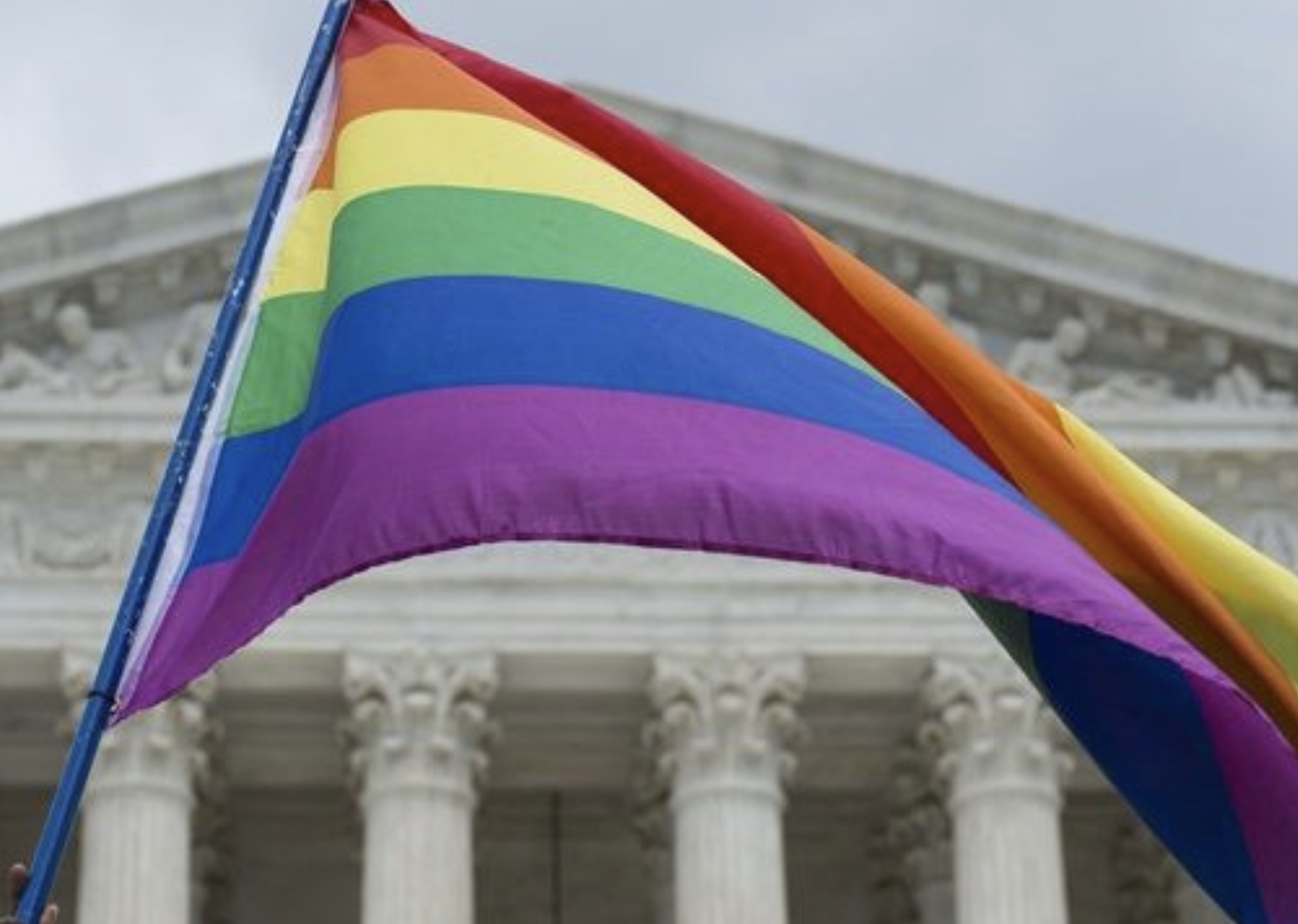
The major U.S. Supreme Court ruling in Fulton v. Philadelphia (.pdf here) allows a Catholic agency to avoid placing foster-care children with same-sex couples. Importantly, the Catholics will place gay children and will place children with gay singles since there's no conscience crisis over defying the church's doctrines on marriage.

For decades there's been confusion and acrimony over the court's applications of the Constitution's ban on government "establishment of religion," but now disputes over the religious "free exercise" clause grab the spotlight. The Fulton ruling sidestepped the heart of this generation's conflagration between religious rights and LGBTQ+ rights and, thus, may even have added logs to the fire.

The justices backed the Catholic claim with what The Economist's headline correctly labeled "The 3-3-3 Court." The narrow technical grounds for the decision enabled the three liberals (Stephen Breyer, Elena Kagan, Sonia Maria Sotomayor) to make the ruling unanimous. The conservatives were split between three demanding a thorough overhaul of "free exercise" law (Justice Samuel Alito, in a vigorous 77 pages, joined by Neil Gorsuch and Clarence Thomas) and three unwilling to take the plunge at this time (Chief Justice John Roberts and the two newest members, Brett Kavanaugh and Amy Coney Barrett).

Similar caution apparently underlies the court's majority decision this week not to review transgender student Gavin Grimm's victory against his Virginia school over bathroom access.

Journalists should prepare for more years of extensive -- and expensive -- politicking and litigation before the Supreme Court defines -- or decides not to define -- how First Amendment guarantees apply in 21st Century culture.

For those on the religion beat, it is easy to see that this case has hardened the related conflict among major denominations.

Please respect our Commenting Policy

Plug-In: Generations of indigenous children snatched from families and churches took part

Plug-In: Generations of indigenous children snatched from families and churches took part

For 120 years, Canada took Indigenous children from their families and forced them into residential schools run by Christian denominations — a practice that didn’t end until 1996.

Now, the discoveries of hundreds of unmarked graves at two former residential schools have rocked America’s northern neighbor, and the aftershocks have spread to the U.S.

Last month, the Tk’emlúps te Secwépemc First Nation announced that it had found the remains of 215 children near the former Kamloops Indian Residential School in British Columbia. And this week, the Cowessess First Nation reported locating more than 600 unmarked graves at the former Marieval Indian Residential School in Saskatchewan.

The discoveries have brought a national reckoning over what Canadian Prime Minister Justin Trudeau characterizes as “a dark and shameful chapter” of the nation’s history.

“I’m ashamed as a White Christian. I’m ashamed of what we did,” Kevin Vance, a minister in Regina, Saskatchewan, told me earlier this month. “I’m ashamed of all the racism and genocide that we concocted and that we did it in the name of Jesus. That’s just unbelievable to me.”

But the dark history isn’t limited to Canada: The news there “has magnified interest in the troubling legacy both in Canada and the United States,” according to The Associated Press.

As Susan Montoya Bryan of the Associated Press reports, the U.S. government “will investigate its past oversight of Native American boarding schools and work to ‘uncover the truth about the loss of human life and the lasting consequences’ of policies that over the decades forced hundreds of thousands of children from their families and communities.”

In the U.S. — as in Canada — Christian denominations are an important part of the story, notes veteran religion writer G. Jeffrey MacDonald, who wrote about American church-run boarding schools in 2018.

“The churches were not just complicit. They were participatory,” Christine Diindiisi McCleave, chief executive officer of the National Native American Boarding School Healing Coalition, told MacDonald then. “They received federal funding and helped carry out the policy.”


Please respect our Commenting Policy

Newsy thinking about SCOTUS, sports images, religious liberty and the Sexual Revolution

Newsy thinking about SCOTUS, sports images, religious liberty and the Sexual Revolution

Wait, you mean there was another important religion story during the traffic jam of stories about the right vs. further right showdown at the Southern Baptist Convention and America’s Catholic bishops arguing about Holy Communion, the Catechism and liberal Catholic politicos?

Obviously, I noticed headlines such as this one in the Washington Post: “Supreme Court unanimously rules for Catholic group in Philadelphia foster-care dispute.”

The word “unanimous” is certainly important, in the fractured age in which we live. But look for the other crucial word in the overture on that story:

The Supreme Court ruled unanimously … that Philadelphia was wrong to end a Catholic group’s contract to provide foster-care services because the organization refused to work with same-sex couples.

It was the latest victory for religious organizations at the increasingly conservative court, and the second time it has ruled against governments trying to enforce an anti-discrimination law protecting LGBTQ rights against those claiming religious liberty.

But the opinion, written by Chief Justice John G. Roberts Jr., was narrow enough to draw the support of the court’s three liberals — and the consternation of its three most conservative members for not going further.

Obviously, the crucial word is “but.” This ruling encouraged some church-state conservatives, but also provided some hope for those who believe that the Sexual Revolution will, more often than not, trump the free exercise of religion.

So, it’s time for two think pieces that explore the degree to which this ruling was a win for religious liberty.

No surprise here: Religious liberty pro David French, of The Dispatch, was encouraged: “Four Things You Need to Know After a Huge Day at SCOTUS — ‘Good night, Employment Division v. Smith. Good work. Sleep well. I’ll most likely kill you in the morning​.’ “ Here is his reaction, at the level of SCOTUS personalities:


Please respect our Commenting Policy

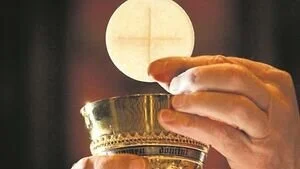
New podcast: What are the future news hooks as U.S. bishops wrestle with Holy Communion?

New podcast: What are the future news hooks as U.S. bishops wrestle with Holy Communion?

Let’s say that, at some point in the future, multimedia crews manage to discover where President Joe Biden was attending Mass on a given Sunday.

As the president attempts to leave, journalists shout an obvious question, something like: "Mr. President! The U.S. bishops are almost done with the final draft of their document on abortion, politics and Holy Communion. Are you concerned about this?”

Recently, Biden responded to a similar question by saying: "That's a private matter and I don't think that's going to happen."

This kind of language, that specific doctrinal issues are “personal” or “private,” has been part of American Catholic code ever since the famous 1984 address at the University of Notre Dame by the late New York Gov. Mario Cuomo. But let’s say — as I suggested in this week’s “Crossroads” podcast (CLICK HERE to tune that in) — that Biden decides to tweek this reply at some point in the future.

What would happen if he said this: “That’s between me and my father confessor, so I will have no response at this time.”

This response would have several implications. First of all, it would mean that Biden is saying that he (a) has a father confessor, (b) that he has gone to confession, (c) that he has confessed his sins, (d) that his confessor has assigned him some for of penance and (e) absolved him of his sins. That last part, of course, could be assumed if Biden is receiving Holy Communion.

Oh, and there’s one implication here: That this is happening with a blessing, to one degree or another, from the bishop in authority over Biden’s father confessor. Ah, there is the main news hook.

The bishop and the priest would not, of course, discuss the contents of the president’s confessions. The bishop, however, could say that Biden’s ongoing actions clashing with church doctrines — linked to abortion, same-sex marriage, trans advocacy or some other issue — require the denial of Holy Communion since these actions are, under Catholic doctrines, a threat to the president’s eternal soul.

After all, as the journalists (and canon lawyers) at The Pillar recently noted:


Please respect our Commenting Policy

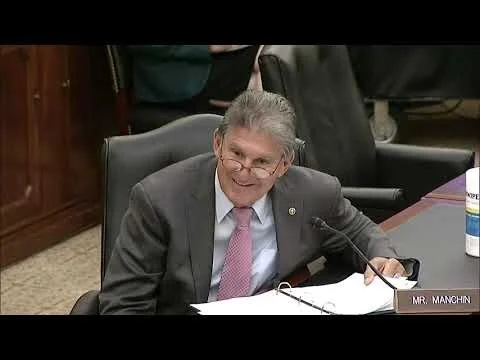
Why does no one, including the New Yorker, want to address the Catholicity of Joe Manchin?

Why does no one, including the New Yorker, want to address the Catholicity of Joe Manchin?

The New Yorker always has interesting profiles and I got to reading one about West Virginia Sen. Joe Manchin, a conservative Democrat who is the one bulwark in the U.S. Senate against a Republican majority.

That is, in a Senate divided 50/50, Manchin is the swing vote on the Democratic side. And he has been known to oppose the hopes and dreams of the Democratic Party’s center-left coalition.

So lots of people are writing about him, including the New Yorker, which bent over backward to avoid talking about one of the inner strengths that Manchin has: His determination to be a Catholic politician, even in an age in which compromise is all but impossible.

Tmatt has covered Manchin beforehand and these days, Manchin is very much in the headlines these days because if anything, the diference between two major parties is massive.

The story begins with a near-fatal accident involving two Senators, one of them Manchin.

In another year, the prospect of losing two Democratic senators overboard in an ice storm might be greeted with a certain wry resignation among Washington’s political class. This year, it inspires panic, at least among Democrats: in a 50-50 Senate, the Party’s agenda is only one vote — or one heartbeat — from oblivion. Manchin, in particular, holds extraordinary power.

As perhaps the Senate’s most conservative Democrat, he often breaks from the Party, which gives him a de-facto veto over a large swath of the Administration’s agenda. In the first months of Joe Biden’s Presidency, Manchin tanked the nomination of Neera Tanden as budget director (he disapproved of her tweets), opposed raising the corporate tax rate to twenty-eight per cent (he preferred twenty-five per cent), and single-handedly narrowed unemployment benefits in a COVID-relief bill.

Over and over, Manchin said that he was driven by a fundamental faith in bipartisanship, a belief that Democrats could and must find Republican support for their legislation—a posture so at odds with the present hostilities in Washington that it evoked a man hoisting his glass for a toast while his guests lunged at one another with steak knives…

Biden and Manchin have obvious points in common—two white, Catholic Joes, in their seventies, both former football players who take pride in their working-class roots, long after becoming wealthy.

What drives Manchin, what gives him the courage to stand alone as he so often does?


Please respect our Commenting Policy

U.S. Catholic bishops OK drafting Communion guidelines: Press asks about politics -- period

U.S. Catholic bishops OK drafting Communion guidelines: Press asks about politics -- period

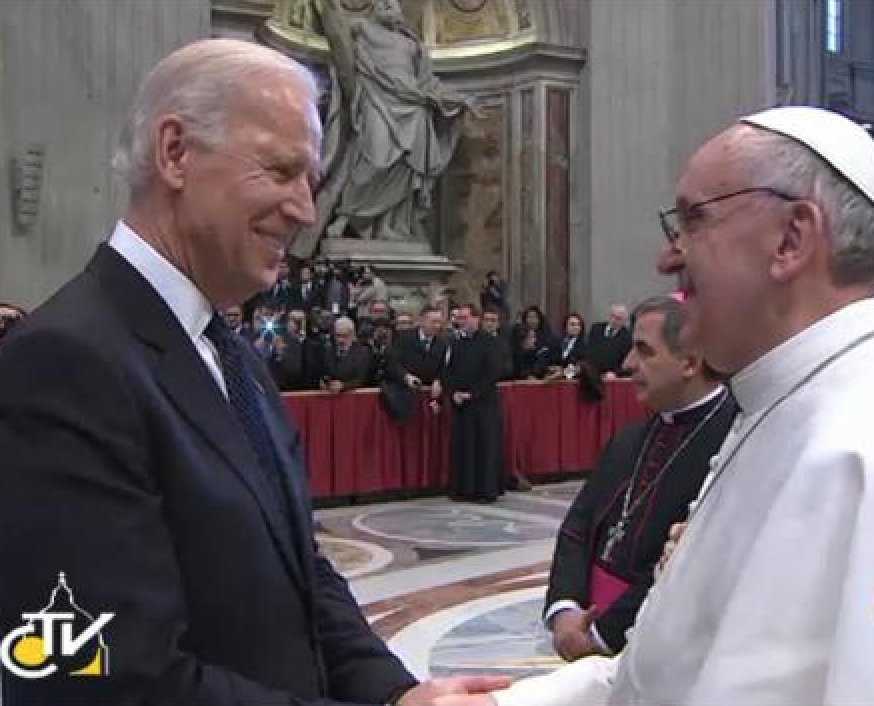
Any short list of classic Pope Francis remarks about abortion would have to include the 2018 speech in which he asked, using a Mafia image: “Is it just to resort to a contract killer to solve a problem?”

There was more: “Interrupting a pregnancy is like eliminating someone. Getting rid of a human being is like resorting to a contract killer to solve a problem.” While some people support abortion rights, Francis added: “How can an act that suppresses innocent and defenseless life as it blossoms be therapeutic, civil or simply human?”

Or how about this quote, drawn from a 2020 address to the United Nations?

“Unfortunately, some countries and international institutions are also promoting abortion as one of the so-called ‘essential services’ provided in the humanitarian response to the pandemic. … It is troubling to see how simple and convenient it has become for some to deny the existence of a human life as a solution to problems that can and must be solved for both the mother and her unborn child.”

While there is no question that Pope Francis is a progressive on many issues linked to economics, immigration and other political topics, he has continued — sometimes in blunt language involving evil and the demonic — to defend the basics of Catholic moral theology.

So what are readers supposed to make of the Sunday New York Times story that opens with this summary statement:

WASHINGTON — Pope Francis and President Biden, both liberals, are the two most high-profile Roman Catholics in the world.

But in the United States, neither of these men is determining the direction of the Catholic Church. It is now a conservative movement that decides how the Catholic Church asserts its power in America.

Perhaps that is a bit simplistic?

The context, of course, was the decision by U.S. Catholic bishops — after three days of contentious debate — to approve a measure on to draft a statement that could deny Holy Communion to pro-abortion-rights politicians like President Joe Biden.


Please respect our Commenting Policy

Thinking about 1962: Catholic politicos, an archbishop, excommunication, doctrine and race

Thinking about 1962: Catholic politicos, an archbishop, excommunication, doctrine and race

The equation was rather remarkable.

First you had some Catholic politicians who — in words and deeds — kept defying church teachings on an important and controversial topic in public life.

Then you had an archbishop who faced a tough decision about whether to do anything, beyond verbal warnings, to show them he was willing to defend these church teachings on moral theology and the sacraments.

When the archbishop stepped up and punished the politicos, denying them Holy Communion and more, the mainstream press — CBS and The New York Times, even — openly backed his actions with positive coverage.

Wait, what was that last thing?

Right now, the U.S. Catholic bishops are headed deeper into a showdown over the status of President Joe Biden and other Catholics who openly — through word and deed — defy church teachings on abortion, marriage, gender and other issues in which doctrines are defined in the Catholic Catechism and centuries of church tradition.

As part of the discussion this past week, America magazine — a strategic voice for Catholic progressives — can this fascinating essay: “What a 60-year-old excommunication controversy tells us about calls to deny Biden Communion.” It was written by Peter Feuerherd, a journalism professor at St. John's University in New York City. Here’s the overture:

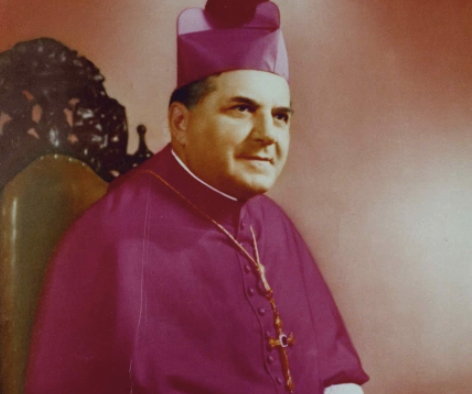
In April 1962, Archbishop Joseph Rummel of New Orleans not only denied Communion to three Catholics in his archdiocese; he went a step beyond. At 86 years of age and in ill health — he would die two years later — he formally excommunicated the three, who vehemently opposed his efforts to desegregate Catholic schools.


Please respect our Commenting Policy

UFO buzz raises (once again) big religion question: Will aliens erase belief in Christianity?

UFO buzz raises (once again) big religion question: Will aliens erase belief in Christianity?

THE QUESTION:

Would proof that intelligent life exists on distant planets overturn the Christian religion?

THE RELIGION GUY'S ANSWER:

Religious skeptics say very likely yes.

Why? They argue that given the unimaginably vast number of planets throughout space, there seem to be heavy odds that life would have evolved on some or many of them. If so, we earthlings no longer stand at the center of God's plan for the cosmos, and that overturns the biblical viewpoint.

The answer is “no,” according to the consistent view of Christian thinkers who've pondered this since ancient times. The Bible naturally focuses on homo sapiens, not theoretical species elsewhere.

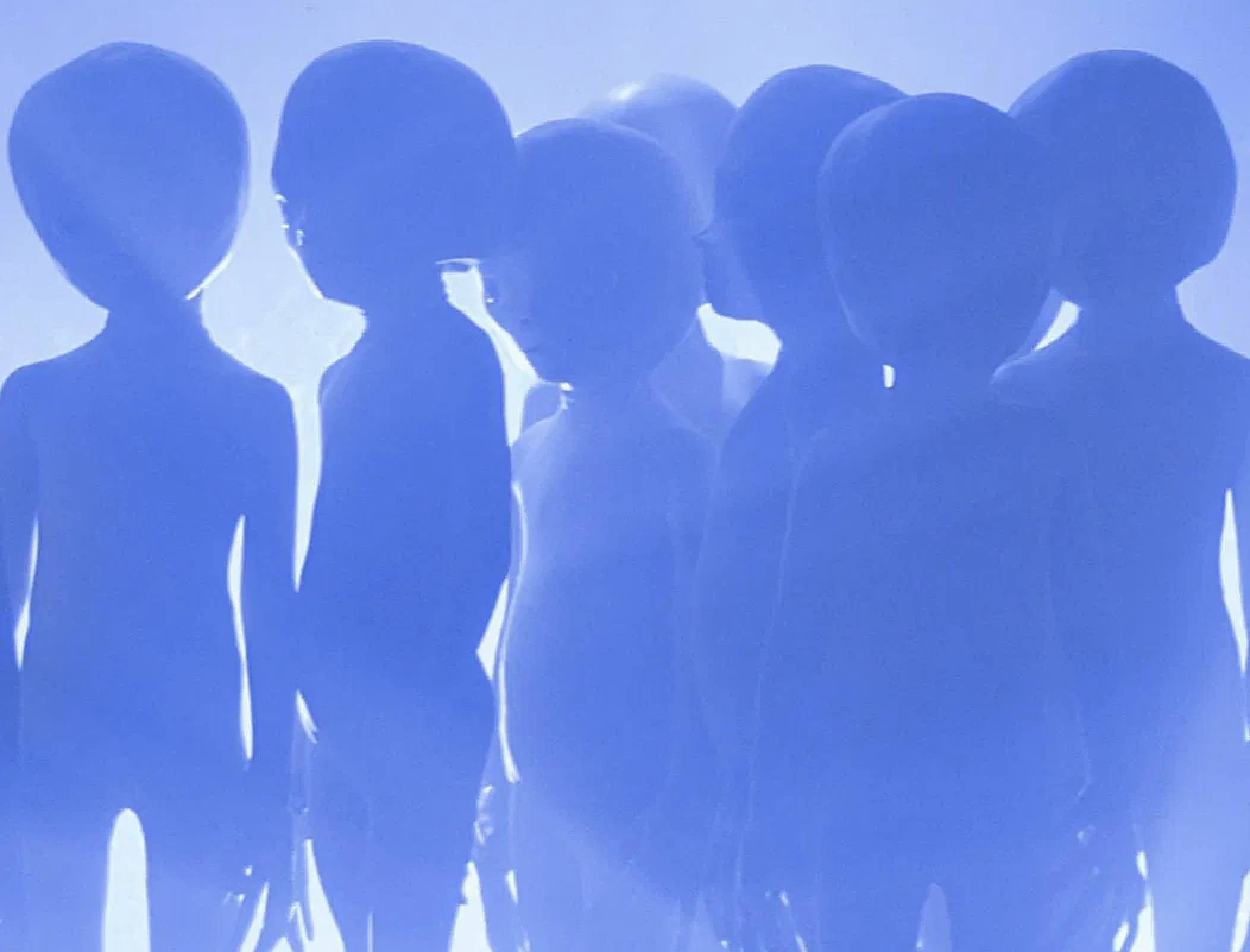
Space is red hot just now. It's Roswell 1947 all over again. The latest fuzzy videos and reports from the Pentagon suggest something may be going on up there that's not merely the stuff of science fiction novels. Are we no longer alone in the universe? Are aliens from another galaxy spying on us from those UFOs (Unidentified Flying Objects)? Is SETI (the Search for Extra-Terrestrial Intelligence) poised for its devoutly desired breakthrough?

Even strict Bible literalist Ken Ham of Answers in Genesis sees a chance because "the Bible does not state whether life exists elsewhere in the universe," though he "strongly" suspects it does not.

University of Rochester astrophysicist Adam Frank pooh-poohs the current UFO buzz because the real story is that super telescopes may well bring us proof of life by other means, for instance spotting light gleaming on the dark sides of distant planets. He also poses a common-sense objection. If we're really being visited by aliens "why don't they just land on the White House lawn and announce themselves?"

That "I" in SETI is all-important.


Please respect our Commenting Policy

What to read, and why, as Catholic bishops mull plan to deny Biden Holy Communion

What to read, and why, as Catholic bishops mull plan to deny Biden Holy Communion

This is a week that could change Catholic life in this country. That is not an exaggeration when you consider what the bishops will be debating.

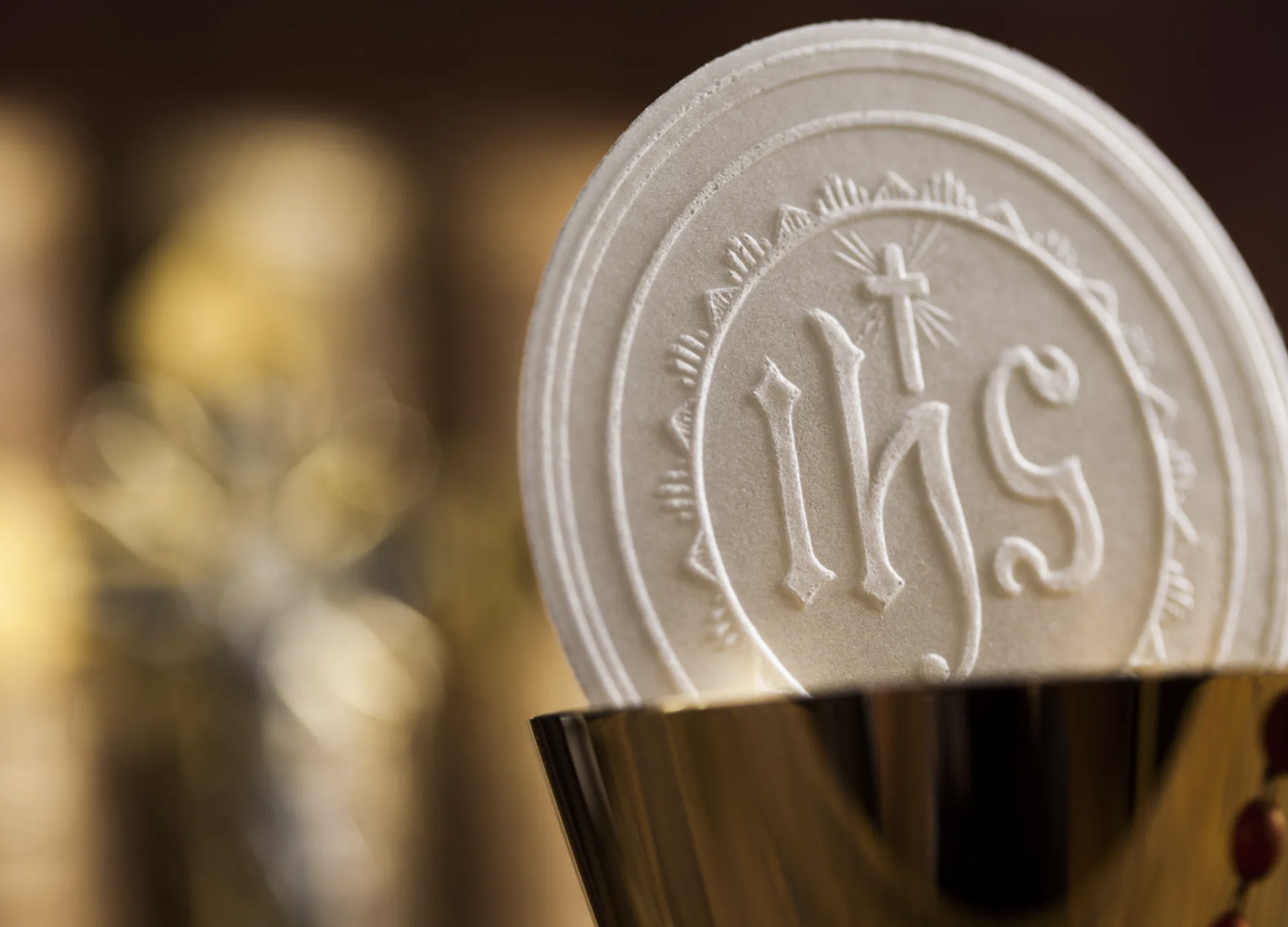
Barring an intervention from Pope Francis himself, the U.S. bishops will consider, and vote on Thursday, a plan for a document about Holy Communion that includes denying the sacrament to politicians who repeatedly support policies advocating abortion rights. That includes President Joe Biden, only the country’s second Catholic commander in chief ever.

The United States Conference of Catholic Bishops will gather virtually for their three-day Spring General Assembly starting tomorrow. The public sessions are available on the USCCB website for all to watch. While the bishops will have a busy agenda ahead of them, the biggest issue — in terms of news coverage — is this question of whether the sacrament of Communion can be denied to Catholic politicians with a history of backing abortion rights.

What can we expect from the news coverage?

This has been an issue that was pushed to the forefront by many bishops following Biden’s election last November. This is an issue that has been covered by both the mainstream press as well as Catholic media. The arguments and decisions made this week will have a lasting impact on Catholicism and those who practice it. The opinions many will form this week will come directly from the coverage they read.

Here is the debate in a nutshell: Some bishops want politicians who identify as Catholic to hold public policy positions that are not at odds with church teaching on abortion, marriage, LGBTQ rights and other issues in moral theology. Others argue that these politicians can hold political positions that clash with the church — while expressing private support for church teachings — and continue to attend Mass and receive Holy Communion.

That this division also happen to match with how these Catholics vote will dominate the coverage. it also comes at a time when the Supreme Court will take up a major abortion rights challenge.


Please respect our Commenting Policy