Catholicism

Plug-In: COVID-19 vaccines are still creating buzz on religion beat -- pro and con

Plug-In: COVID-19 vaccines are still creating buzz on religion beat -- pro and con

After sticking close to home for over a year, I’ve returned to in-person worship at my church in Oklahoma.

I’ve joined my sons and 2-year-old grandson in watching a game at my beloved Texas Rangers’ splashy new ballpark.

I’ve boarded an airplane and — for the first time since the pandemic hit — made a reporting trip (to Minneapolis this past weekend after Derek Chauvin’s conviction in George Floyd’s murder).

For millions, the COVID-19 vaccines have brought joy and hope, and I count myself among them after receiving my two Moderna shots.

Weekend Plug-in has covered various angles related to the vaccines and religion — from whether the shots are “morally compromised” to efforts to overcome skepticism among wary African Americans.

Still, the topic remains timely and important, as evidenced by interesting stories published just this past week:

COVID-19 has hit the Amish community hard. Still, vaccines are a tough sell (by Anna Huntsman, NPR)

Francis Collins urges evangelicals: ‘Love your neighbor,’ get COVID-19 vaccine (by Adelle M. Banks, Religion News Service)

At Orange County mosques, they come for the halal tacos and stay for the vaccination (by Alejandra Molina, RNS)

Churches, Christian universities hosting COVID-19 vaccine clinics (by Chellie Ison, Christian Chronicle)

For evangelical leader Jamie Aten, advocating for vaccines led to a death threat (by Bob Smietana, RNS)

Also, in case you missed it last week, Ryan Burge offers fascinating analysis here at ReligionUnplugged on data showing White evangelicals and Catholics are more likely to get the vaccine than religious “nones” and the general public. Yes, you read that right.

Please respect our Commenting Policy

2020 revisited: Repeat after me, White Catholic voters, White Catholic voters ...

2020 revisited: Repeat after me, White Catholic voters, White Catholic voters ...

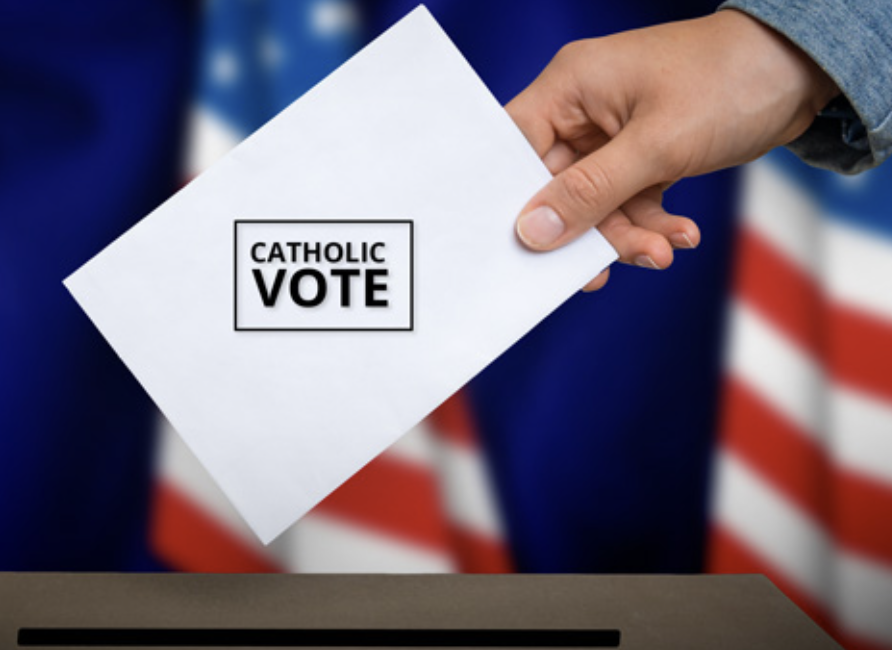
The two main November exit polls showed Joseph Biden, the first Catholic elected U.S. president since John F. Kennedy, won either 52% or 49% support among Catholics over-all.

That's quite the plummet from 1960, when the Gallup Poll found J.F.K. scored 78 percent.

Reporters covering either politics or religion pay heed: Other remarkable data appear in the first batch of 2020 findings from the Harvard University-based Cooperative Election Study (CES), with more due in July. Though Hispanic and other minority Catholics went only 30% for Donald Trump (up from 26% in 2016), white Catholics gave the Republican impressive 59% support over their fellow church member, up a notch from 57% in 2016.

The massive CES sample of 61,000 allows good breakdowns by religion (also a highly useful feature with many Pew Research surveys). The CES data were explored for Religion Unplugged by ubiquitous political scientist Ryan Burge, a GetReligion contributor.

The Guy once again preaches to the U.S. media that those white Catholics are the nation's largest chunk of swing voters who can decide competitive elections except in Protestant tracts of the Southeast, and that they deserve more attention than the lavishly covered white "evangelicals," perennial knee-jerk Republicans who may edge up or down but never "swing."

That was true in 2016. It was true again in 2020. It’s especially interesting to look for patterns among generic “Catholic voters” and voters who are active, Mass-attending Catholics.


Please respect our Commenting Policy

Stunning AP photos of mass cremations in India: But what about religious traditions?

Stunning AP photos of mass cremations in India: But what about religious traditions?

Draw up a list of the world’s most religious nations and India (population 1.4 billion) will almost always be somewhere near the top — especially if you focus on the world’s largest nations, in terms of population.

What makes India unique, however, is its incredible religious complexity. While Hindu believers make up about 80% of the population, 15% of the population is Muslim. In terms of sheer numbers, India has the world’s second largest Muslim population (after Indonesia). India has small, but historically important, Christian communities, mostly Catholic and Anglican.

The tensions between India’s various traditions are quite stunning and complex. But so are they way that the major faith groups overlap and blend into a larger whole. The bottom line: There are very few issues in this amazing land that are not, to some degree, touched by religious traditions — even if people struggle to describe the details.

This brings me to a stunning Associated Press photo feature that ran with this headline: “Mass funeral pyres reflect India’s COVID crisis.

Pause for a minute and ponder this question: How many story angles — some of them quite controversial — can you imagine that are linked to funeral pyres and Hindu traditions? Now, imagine the complex issues that waves of COVID-19 deaths would create in India’s faith communities, with their unique traditions linked to death and dying.

Now imagine dedicating a mere one sentence to only one of those angles. Here is the overture, describing the larger crisis:

NEW DELHI (AP) — Delhi has been cremating so many bodies of COVID-19 victims that authorities are getting requests to start cutting down trees in city parks for kindling, as a record surge of illness is collapsing India’s tattered health care system.

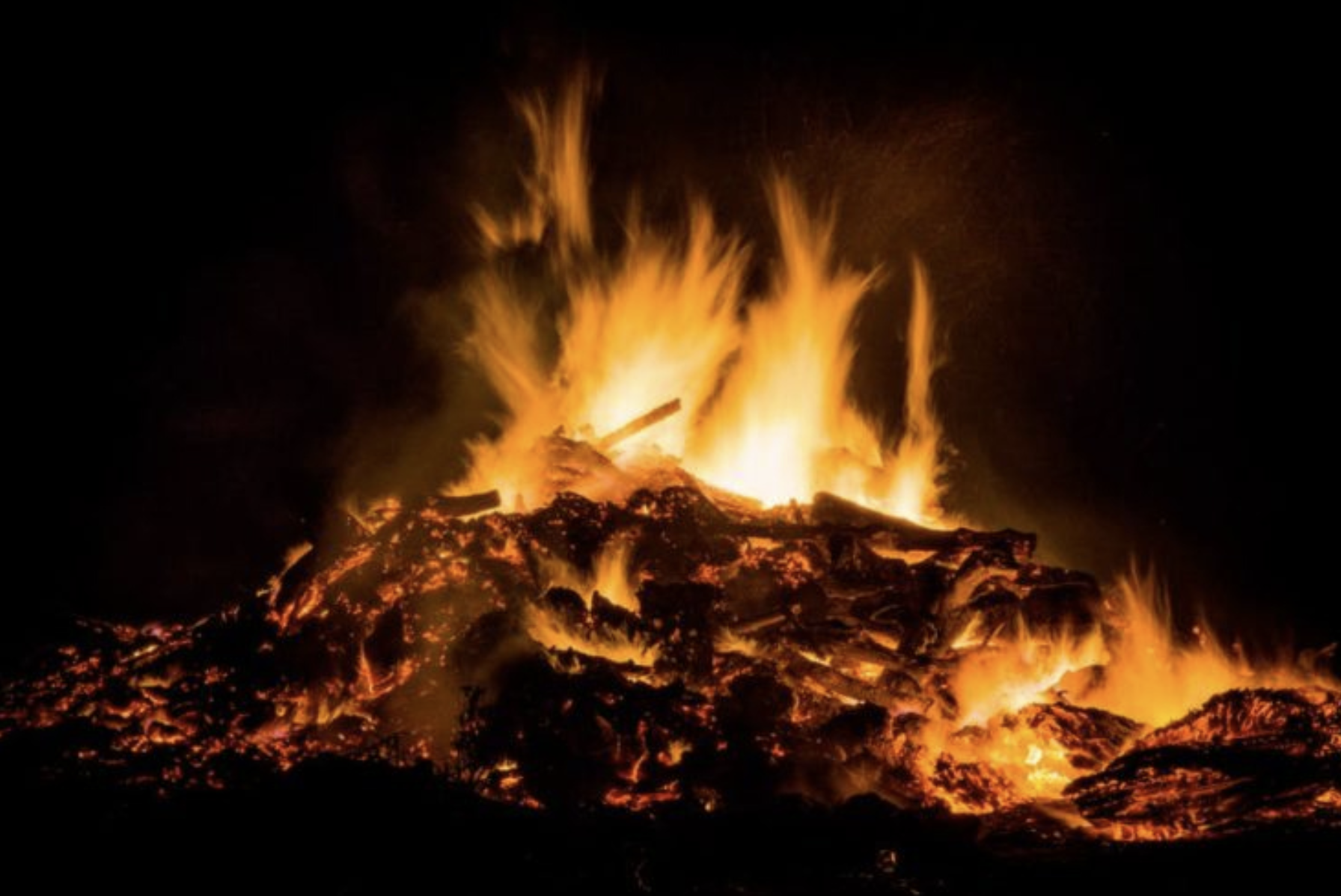
Outside graveyards in cities like Delhi, which currently has the highest daily cases, ambulance after ambulance waits in line to cremate the dead. Burial grounds are running out of space in many cities as glowing funeral pyres blaze through the night.


Please respect our Commenting Policy

Plug-In: Murder convictions in death of George Floyd -- why faith angles were important

Plug-In: Murder convictions in death of George Floyd -- why faith angles were important

Guilty. Guilty. Guilty.

This week’s big news — former Minneapolis police officer Derek Chauvin’s conviction on all counts in George Floyd’s murder — is a story about police brutality. And racial justice. And yes, the power of faith.

USA Today captures this powerful scene:

George Floyd's brother Philonise Floyd was sitting with his head bowed and his hands folded in front of his face in prayer before the verdict was read. As each verdict was read, his hands increasingly shook and his head nodded up and down.

"I was just praying they would find him guilty. As an African American, we usually never get justice," Floyd said.

The exceptional coverage by the Minneapolis Star-Tribune’s Chao Xiong and Paul Walsh contains this important highlight:

As news spread of the verdicts — guilty on all counts — social media sites reposted the Minneapolis Police Department's initial report that Floyd died of a medical event at the scene, an assertion that might never have been contradicted so forcefully were it not for a teenage girl, Darnella Frazier, walking by and recording Floyd's death last May 25 on her cellphone and posting it for the world to see.

"I just cried so hard. This last hour my heart was beating so fast, I was so anxious, anxiety [busting] through the roof," Frazier, who was 17 at the time, posted on Facebook after the verdict. "But to know GUILTY ON ALL 3 CHARGES !!! THANK YOU GOD THANK YOU … George Floyd we did it!! Justice has been served."

The Los Angeles Times’ Kurtis Lee recounts this scene:


Please respect our Commenting Policy

Thinking about 'Uncle Ted' McCarrick's rise and fall: Did Catholic leaders learn anything?

Thinking about 'Uncle Ted' McCarrick's rise and fall: Did Catholic leaders learn anything?

If you have followed the career of fallen cardinal Theodore “Uncle Ted” McCarrick, you know that for a decade or two he was probably the most influential Catholic leader in the United States — especially with journalists (think “Team Ted”) and gatekeepers in the church hierarchy.

With McCarrick, it wasn’t enough to discuss his evil deeds. That was a tragic, hellish story, but it wasn’t the most important story.

The big question was how he managed to land a cardinal’s “red hat” and a throne in Washington, D.C. — even while, behind closed doors, warning lights were flashing and sirens were sounding in America and in the power centers of Rome.

Once journalists have asked that question, they need to ask (a) who promoted McCarrick, (b) who protected him and (c) who were the McCarrick disciples who used their connections with him to climb the ladders of Catholic power?

This brings us to a think piece at The Catholic Herald in England that received some attention in social media and probably deserved more. The headline: “How McCarricks Happen.”

The big idea: Are we talking about a “bad apple” or about multiple “bad barrels” that consistently produce rotten apples? Thus:

Barrels influence apples, sure: how big the barrel, how tightly packed, one’s position within it, who one’s neighbors are, how regularly the apples get mixed, removed, or replenished. But the apples themselves, good or bad, influence both each other, and collectively, the barrel environment as a whole. Furthermore, while barrels come in different shapes, sizes and materials – as whisky connoisseurs know, outwardly indistinguishable single casks can produce subtly different drops – there are significant commonalities between them.

This is precisely why, to leave barrels behind for a bit, when reading exposés of high-profile sexual predators (and we’ve read more over the past several years than is probably mentally healthy) they start to feel a little samey.


Please respect our Commenting Policy

New podcast: German priests plan huge rite to bless gay unions? Time for time travel ...

New podcast: German priests plan huge rite to bless gay unions? Time for time travel ...

I don’t know about you, but this Crux headline sounds like a big story to me: “German Catholics plan huge blessing of gay unions on May 10.

I mean, think of the global ramifications of that kind of event, when connected to other doctrinal developments on the Catholic left in German and Europe in general. Remember that recent Memo to journalists that GetReligion patriarch Richard Ostling, the one with this headline: “With open talk of schism, will German bishops mar the rest of Pope Francis's reign?

But there seems to be some question about whether the plans for this event are worthy of mainstream media coverage. Why is that? That was the topic of this week’s “Crossroads” podcast (click here to tune that in or sign up for the podcasts with iTunes).

One crucial detail jumped out at me in the overture of this Crux report (see if you can spot it):

ROME — Continuing to openly challenge the Vatican, several Catholic leaders in Germany are openly supporting the blessing of same-sex couples, with a massive blessing service scheduled for May 10, in direct opposition to Rome’s chief doctrinal office.

Bishop Franz-Josef Overbeck of Essen said that the priests in his diocese will face no canonical consequence if they decide to bless gay and lesbian couples next month as part of the event called “Love wins, blessing service for lovers.” …

His comments came in an interview with WDR earlier this week, and follow his comments on Easter, when he argued that there are “many blessings for gay couples” in Germany. He also said that the Catholic Church is not supposed to reject gay people but “find ways for homosexuals to be able to live together.”

Note: We are not talking about one or two rebellious priests. There is a bishop who plans — in a rather passive-aggressive manner — to support the event by refusing to discipline his priests if they take part.

Obviously, Bishop Overbeck is not the only man in a mitre in Europe who has gone on the record in opposition to that recent headline-fueling Vatican ruling against same-sex marriages. Check out my “On Religion” column on that ruling and the aftermath on the Catholic left: “Did Pope Francis undercut that Vatican ruling on blessings for same-sex couples?”

There are many, many Catholic priests (and other activists) in the German Parish Priests Initiative who have signed a petition in support of same-sex blessings.


Please respect our Commenting Policy

Catholic news site proving to be a 'Pillar' when it comes to religion journalism

Catholic news site proving to be a 'Pillar' when it comes to religion journalism

I teach journalism at The King’s College in New York City. I have for the past four years. GetReligion readers may recall that tmatt used to teach there, as well.

Among the many classes I enjoy teaching is one called “Entrepreneurial Journalism and the Future.” It is a class that teaches aspiring journalists the importance of the business side of the profession and how technology has disrupted the traditional distribution methods by which people consume news.

We all know that the number of people who read a daily newspaper — in paper form that is — has dropped dramatically over the last decade as more people use iPads and smartphones to connect to information. The news ecosystem has grown to envelope legacy news organizations such as The New York Times and Washington Post to digital-only sites like Buzzfeed and Vice.

The Catholic news world has also seen its share of startups since the internet has changed the news industry. It’s these changes that have brought more issues like fake news and misinformation, but also allowed journalists to become entrepreneurs and build start-ups of their own.

Journalists have found news and innovative ways — like the growing subscription platform Substack — to tell stories and do great journalism.

One of the bright spots of 2021 so far has been The Pillar. Founded by journalists (and canon lawyers) J.D. Flynn and Ed Condon who have experience at a variety of places like Catholic News Agency, The Pillar says its “a Catholic media project focused on smart, faithful, and serious journalism, from committed and informed Catholics who love the Church.”

This is what else they claim to be:

Our focus is on investigative journalism, which is how we’ll spend most of our time. We think investigating stories that matter can help the Church to better serve its sacred mission, the salvation of souls.


Please respect our Commenting Policy

With open talk of schism, will German bishops mar the rest of Pope Francis's reign?

With open talk of schism, will German bishops mar the rest of Pope Francis's reign?

Conservative Catholic news outlets have thoroughly covered growing turmoil in Germany's Catholic Church, making available solid backgrounding for "mainstream" media who've generally been sluggish in picking up on this story.

That neglect presumably won't last, considering factors The Religion Guy will now underscore for colleagues' consideration.

A significant phalanx of German bishops, united with prominent lay activists, seem intent on revisionist change to come from their "Synodical Way" project, which the Vatican has sought to suppress, so far without success.

The German go-it-alone demands set up an inevitable showdown with the Holy See. The global repercussions were captured in a blunt Wall Street Journal headline April 16: "Can Pope Francis Head Off a Schism?" One week earlier a headline in the conservative National Catholic Register declared that "U.S. Theologians Echo Fears of Schism in Catholic Church in Germany."

The Religion Guy proposes a different hed that uses the P-word rather than the S-word: Will German Catholicism Go Protestant, Five Centuries Late?

Peg-hunting reporters will want to watch the "wires" (to use an anachronistic term) May 10 for the latest pageant of defiance. On the heels of the Vatican's papally-approved statement reaffirming opposition to church blessings and marriages for same-sex couples, a large network of German Catholics — with clergy involved — plan to stage same-sex blessing ceremonies across the nation. Watch for how many bishops are silent, or even pleased, when their priests are willing to participate.

The LGBTQ issue is only one aspect of the German imbroglio that dates from the 2019 launch of the "synodical" process, which is co-sponsored by the German Bishops' Conference and the Central Committee of German Catholics, an influential group of lay activists.


Please respect our Commenting Policy

Coronavirus pandemic provided an 'acid test' for financial issues in Catholic parishes

Coronavirus pandemic provided an 'acid test' for financial issues in Catholic parishes

Catholic leaders often whisper about "Christmas and Easter Catholics," as in people whose names are found on parish membership rolls but it's rare to see them in pews -- except during crowded Christmas and Easter rites.

Thus, any study of the COVID-19 pandemic's financial impact on America's nearly 17,000 parishes had to start with the early lockdowns that turned Easter 2020 into a virtual event, with millions of Catholics stuck at home, along with their wallets and checkbooks.

Journalists at The Pillar, an independent Catholic website, collected online materials from 100 parishes in 10 strategic church provinces and found that total offerings were 12% lower in 2020 than the previous year. It was clear when the crisis became real.

Data researcher Brendan Hodge noted donations at Christmas -- "perhaps in combination with secular notions both of making donations before the end of the tax year and of making resolutions for better tithing in the new calendar year" -- and then Easter.

"But in 2020 the normal Easter surge in giving was reversed: the very lowest weeks of tithing came during the Lent and Easter weeks when nearly all U.S. parishes were closed," he noted, in the first of two investigative reports.

After the Easter collapse tithes and offerings seemed to find a new "normal," with a consistent pattern of giving that mirrored 2019 numbers -- only about 12% lower. Clearly, many faithful Catholics stayed the course, offering their usual financial support while taking part in online services and whatever in-person rites could be held under social-distancing regulations.

This raised an old issue: Why are some Catholics -- in good times and bad -- more loyal than others? This question is part of a pattern religious leaders have seen for decades, with about 80% of the work and support in most congregations coming from 20% of their members.


Please respect our Commenting Policy