Catholicism

Prayers and bloodshed during Lent: Catholic bishops cry out for help in Nigeria

Prayers and bloodshed during Lent: Catholic bishops cry out for help in Nigeria

Another day, with yet another funeral.

Catholics in Nigeria had buried many priests and believers killed in their country's brutal wars over land, cattle, honor and religion. But this was the first time Bishop Matthew Hassan Kukah of the Sokoto Diocese had preached at the funeral of a seminarian.

A suspect in the crime said 18-year-old Michael Nnadi died urging his attackers to repent and forsake their evil ways.

"We are being told that this situation has nothing to do with religion," said Kukah, in remarks distributed across Nigeria in 2020. "Really? … Are we to believe that simply because Boko Haram kills Muslims too, they wear no religious garb? Are we to deny the evidence before us, of kidnappers separating Muslims from infidels or compelling Christians to convert or die?"

The bishop was referring to fierce debates -- in Nigeria and worldwide -- about attacks by Muslim Fulani herders on Christian and Muslim farmers in northern and central Nigeria. The question is whether these gangs have been cooperating with Boko Haram, Al-Qaeda and the Islamic State.

The conflict has claimed Catholics, Anglicans, Pentecostal Christians and many others, including Muslims opposed to the violence. Prominent Muslim leaders have condemned Boko Haram and church leaders have condemned counterattacks by Christians. In recent years it has become next to impossible to keep track of the number of victims, including mass kidnappings of school children and the murders of clergy and laypeople, including beheadings.

"Religion is not the only driver of the mass atrocities," said Nina Shea of the Hudson Institute's Center for Religious Freedom, in December testimony before members of the House Foreign Affairs Committee. "Not all 40 million members of the Fulani ethnic group in the region are Islamic extremists. However, there is evidence that some fraction of the Fulani have an explicit jihadist agenda. …

"A mounting number of attacks in this region also evidence deep religious hatred, an implacable intolerance of Christians, and an intent to eradicate their presence by violently driving them out, killing them or forcing them to convert."

In a sobering Feb. 23 statement (.pdf here), the Catholic Bishop's Conference of Nigeria warned that the "nation is falling apart."

Please respect our Commenting Policy

Local news? Tricycle's Western Buddhism essay shows how religions adapt to new environs

Local news? Tricycle's Western Buddhism essay shows how religions adapt to new environs

Religions evolve and accommodate as they migrate around the globe. What works in one time and place may not in another for a host of cultural and political reasons, forcing adjustments that facilitate their establishment or survival.

Historical examples abound. Not the least of which are the monumental transformations that occurred within early Christianity as it migrated across the Roman world from the Levant, and within early Islam as it spread from the Arabian Peninsula west to the Atlantic coast and east across Asia.

Here are two more recent examples of religious accommodation.

The first occurred in the late 19th Century when the Church of Jesus Christ of Latter-day Saints made a corporate decision to jettison its public practice of polygamous marriage to smooth the way for Utah’s full acceptance into the expanding United States. This despite plural marriage remaining part of the church’s scriptural doctrine to this day. The practice, though illegal under secular law, is still followed by some breakaway Mormon sects.

The second example was the melding of Roman Catholicism and West African tribal beliefs in the Caribbean and South America by Black slaves and their descendants. This gave rise to syncretic faiths such as Santeria and Voodoo. They persist today side by side with the church in ways that would scandalize the hierarchy, were it happening on a similar scale in the United States.

It’s not unusual for Mass-going Cuban, Haitian and Brazilian Catholics to also draw meaning from West African-derived rituals that to outsiders might appear hard to reconcile with core church beliefs.

A contemporary religious travel story is the Westernization of Asian Buddhism. Tricycle, a leading American Buddhist publication, deconstructed the phenomenon in its Spring 2021 issue.

The piece is well worth the time of journalists interested in moving beyond today’s often superficial religion headlines. To understand a group’s sociology is to better understand why members act as they do in the public square, journalism’s primary purview.

I suggest you view the Tricycle essay — which weighs in at more than 3,600 words — as a sort of crash course in the adaptation of religions to new circumstances. This will help reporters spot stories in the communities served by their newsrooms.


Please respect our Commenting Policy

3D chess in Rome? Pope Francis approves Vatican decree affirming doctrines on marriage

3D chess in Rome? Pope Francis approves Vatican decree affirming doctrines on marriage

All together now: Is the pope Catholic?

Actually, in this age of conspiracy theories — on right and left — the question of the day appears to be: Is THIS pope Catholic? I am referring, of course, to the Vatican’s decision to affirm centuries of Christian doctrine stating that sex outside of marriage is (trigger warning) “sin” and that the sacrament of marriage is limited to the union of a man and a woman.

But, but, but, clearly Pope Francis must be playing some kind of three-dimensional chess with this action, moving the doctrinal pieces in some subtle way that will become clear in “reforms” at a later date? This was a case in which one could catch whiffs of disappointment and even conspiracy thinking on both the Catholic left and right (and in the press).

To see this in print, check out the overture in this Washington Post report: “Pope Francis says priests cannot bless same-sex unions, dashing hopes of gay Catholics.” The headline assumes, of course, that all gay Catholics oppose the church’s teachings on this matter but, well, nevermind.

ROME — Pope Francis has invited LGBT advocates to the Vatican. He has spoken warmly about the place of gay people in the church. He has called for national laws for same-sex civil unions.

But Monday, Francis definitively signaled the limits to his reformist intentions, signing off on a Vatican decree that reaffirms old church teaching and bars priests from blessing same-sex unions.

The pronouncement, issued at a time when some clerics were interested in performing such blessings, leans on the kind of language that LGBT Catholics have long found alienating — and that they had hoped Francis might change. It says that same-sex unions are “not ordered to the Creator’s plan.” It says acknowledging those unions is “illicit.” It says that God “cannot bless sin.”

The decree shows how Francis, rather than revolutionizing the church’s stance toward gays, has taken a far more complicated approach, speaking in welcoming terms while maintaining the official teaching. That leaves gay Catholics wondering about their place within the faith, when the catechism calls homosexual acts “disordered” but the pontiff says, “Who am I to judge?”

Let’s see. We have the standard use of the word “reform” to prejudge this matter. We have a sense of yearning that Pope Francis is taking a “more complicated approach” to this doctrinal issue.


Please respect our Commenting Policy

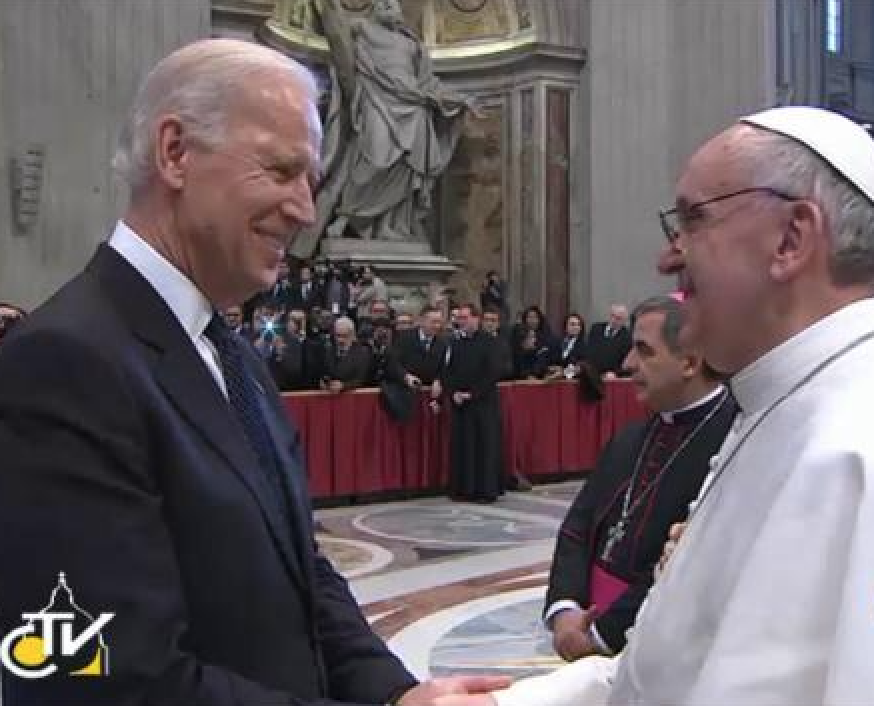
Does President Joe Biden need 'Catholic safe spaces' in order to receive Communion?

Does President Joe Biden need 'Catholic safe spaces' in order to receive Communion?

Whether some Catholic politicians can receive Holy Communion has been a matter of debate for decades.

The election of Joe Biden — a man constantly identified as as a “devout Catholic” by his staff and, thus, the mainstream press — has put a hot spotlight on this familiar issues. The key is whether his Catholic piety is compatible with his statements and actions that are rooted in progressive politics.

This issue has come into greater focus during Biden’s first 100 days in office. The Atlantic, in a piece written by Emma Green, detailed how some key U.S. bishops — and “many conservative laypeople” — think the president should be denied access to Holy Communion.

Green’s well-reported feature detailed the ongoing battle between Catholics across this country and the current occupant of the Oval Office, a fight that’s expected to worsen over the next four years. Here’s the thesis:

If some Catholic leaders had their way, Biden wouldn’t be able to take Communion at all. A committee of bishops recently gathered to examine the “difficult and complex situation” of a Catholic president who publicly supports expanding abortion rights, contrary to the faith’s teachings. Later this year, a representative of that group will likely offer guidance on Biden’s future ability to take Communion. For now, the cardinal who oversees Washington, D.C., Wilton Gregory, has said the president is welcome to attend any Mass in his archdiocese. “I don’t want to go to the table with a gun,” Gregory told Religion News Service.

Biden, the second Catholic president in American history, is a man of faith who cites Saint Augustine and hymns in his speeches and carries a rosary that belonged to his son Beau. His presidency is a historic opportunity for the Catholic Church. But he’s also a symbol of a Church at political war with itself; Catholic voters are nearly evenly divided between the parties, and the bishops have been squabbling in public over how to deal with his administration. Sinners abound in politics. The question facing the Catholic hierarchy is whether to offer the most famous Catholic sinner in America an invitation to closeness with God, or to withhold Communion until the president falls fully in line with his Church’s teachings.

The story opened with Biden’s arrival at Holy Trinity Catholic Church in Washington, D.C. to attend Mass, the same place he attended when vice president.

A key detail: Father Kevin Gillespie “checked with Gregory” to make sure he had the cardinal’s backing.


Please respect our Commenting Policy

Christians, Jews, Muslims and lobbyists left and right fret over SCOTUS 'donor privacy' case  

Christians, Jews, Muslims and lobbyists left and right fret over SCOTUS 'donor privacy' case   

What cause could ever possibly unite Christian Right activists, the Council on American-Islamic Relations, the Zionist Organization, "pro-family," "pro-life," "pro-choice" and gun-rights lobbies, Mitch McConnell, the American Civil Liberties Union, Chamber of Commerce, Judicial Watch, NAACP, People for the Ethical Treatment of Animals, Planned Parenthood, Southern Poverty Law Center, Columbia University's First Amendment institute and religious-liberty advocates?

Answer: These and many more are allied in the Americans for Prosperity Foundation v. Becerra case (#19-251), which the U.S. Supreme Court put on its upcoming docket January 8.

Yes, that Becerra is Xavier, as in President Biden's controversial pick for secretary of Health and Human Services, acting in his previous role as California's attorney general. Moreover, this situation implicates the track record of his predecessor as A.G., Kamala Harris — now U.S. vice president and a major 2024 presidential prospect.

At issue is "donor privacy." Non-profit groups cannot operate or raise money in the state of California unless they give its attorney general the names and addresses of their major donors, the same list that's required as an appendix to their federal IRS returns. The non-profits argue that this violates their right to freedom of association under the Constitution's First Amendment.

Obviously this is something for alert media eyes, including pros on the religion beat.

Adding to news interest, this case displays contrasting beliefs of the U.S. Department of Justice in its Trump Administration brief filed last November (.pdf here) versus its revised stance under the new Biden Administration (.pdf here). The Trump brief strongly backs non-profit interest groups. The Biden brief dodges the question and asks the court to bounce the case for further investigation.

Religion specialists note: The Supreme Court consolidated the Americans for Prosperity case, raised by the libertarian political foundation established by the Koch brothers, with a second appeal from the Thomas More Law Center. This second agency provides free legal representation for "people of faith" to uphold "the religious freedom of Christians, time-honored family values and the sanctity of human life."


Please respect our Commenting Policy

Papal splash: Persecuted Iraqi Christians get long-awaited spotlight with Francis visit

Papal splash: Persecuted Iraqi Christians get long-awaited spotlight with Francis visit

By the time this runs, the pope will have flown home from Iraq after a historic trip that apparently went without a hitch. Popes John Paul II and Benedict XVI both wanted to go to Iraq; Francis actually went and did it.

There were so many reasons not to go: The pandemic, the security situation and the potential for misunderstanding or disaster. But Iraq put on an impressive show, keeping the pope safe, creating venues at which he spoke (the tableau in Mosul was particularly dramatic) and accommodating a press corps of several dozen reporters.

Which leads to mentioning how difficult covering a papal trip really is. I’ve covered two U.S. papal trips (John Paul II in 1987 and Benedict XVI in 2008); one papal election in Rome (Benedict, 2005) and spent plus two weeks in northern Iraq (July 2004), so I have a feel for the conditions. Covering a pope is a succession of 18-20-hour days spent getting checked over by security, traveling to the event, covering it and then filing your story and doing the research for the next day’s story.

Even the timing was tricky. The pope had to dodge major religious holidays along with national ones such as Nowruz, the Persian new year that’s also observed in Iraq and is on the first days of spring. He also had to avoid coming much past April as that part of the world is scorching for half of the year. (When I was there in July, it was 111 degrees).

Listen here to CNN’s Vatican correspondent Delia Gallagher as she talks about waiting in Rome for the papal plane with 75 other journalists, all of whom, she said, were vaccinated. Notice the band playing the hymn “Joyful, Joyful We Adore Thee” when the pontiff came down the stairs to the tarmac. I’m sure that tune was a new one for the Baghdad airport.

I also caught this NBC report about reporters taking an Iraqi military plane to get to Ur. I hope to hear more about what it was like to report from Iraq.

News outlets with Baghdad and Rome bureaus understandably had the best ringside seats to the visit and it was the foreign correspondents, not these outlets’ religion beat reporters, who got to cover the trip.

Even Religion News Service’s and the Associated Press’ Vatican reporters had to cover the event from Rome, so I am very curious as to who these 75 journalists were who actually got on the plane.

Putting on such a trip was quite the production, according to a detailed 25-minute special report by alJazeera, which informed us that Iraq employed 10,000 members of its security forces to make sure nothing went wrong.

I’ll open with the Washington Post’s account of the pope’s arrival.


Please respect our Commenting Policy

Why are Latinos veering into GOP? It's all about money, money, money (and zero faith)

Why are Latinos veering into GOP? It's all about money, money, money (and zero faith)

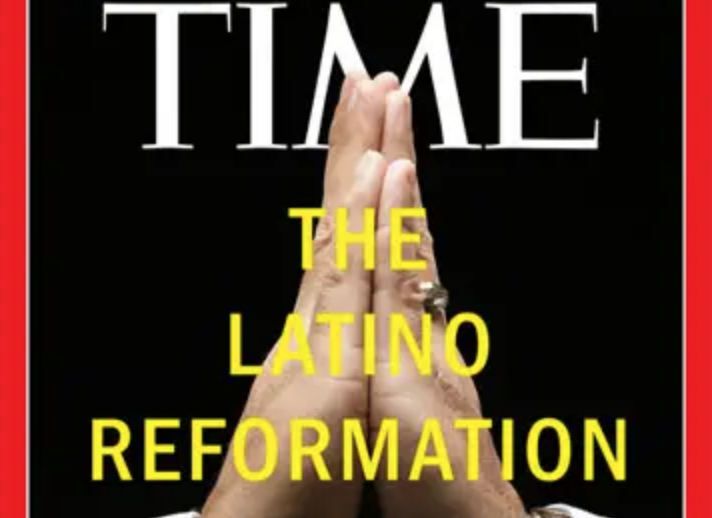
I know, I know. If you have read GetReligion for the past four-plus years, you know that we’re convinced that the rise of the Latino evangelical voter (often paired with traditional Catholic Latino voters) is an emerging story in American public life.

Part of this story is the rise of Pentecostalism in the Spanish-speaking world (classic Pew Research Center study here) and another part is linked to the defense of Latino family values (to use a loaded phrase).

There’s much more to this story than the role these voters played in Donald Trump’s surprising (to some) showings in some Florida and Texas zip codes. Click here (“New York Times listens to Latino evangelicals: 'Politically homeless' voters pushed toward Trump”) and then here (“Concerning Hispanic evangelicals, secret Trump voters and white evangelical women in Georgia”).

To be blunt about it, it appears that political-desk reporters are struggling with this issue, in part because it undercuts some themes in long-predicted demographic trends backing Democrats. You can see that in the recent, oh-so-predictable New York Times story that ran with this massive double-decker headline:

A Vexing Question for Democrats: What Drives Latino Men to Republicans?

Several voters said values like individual responsibility and providing for one’s family, and a desire for lower taxes and financial stability, led them to reject a party embraced by their parents.

The story is getting some Twitter attention because of this magisterial statement of woke Times doctrine:

Some of the frustrations voiced by Hispanic Republican men are stoked by misinformation, including conspiracy theories claiming that the “deep state” took over during the Trump administration and a belief that Black Lives Matter protests caused widespread violence.

But it’s more important to focus on the bigger picture, which is that this trend is all about Latino men wanting to get rich by being part of the American dream. The overture is long, but essential:


Please respect our Commenting Policy

Another shot of controversy: New Catholic questions about Johnson & Johnson vaccine

Another shot of controversy: New Catholic questions about Johnson & Johnson vaccine

My wife has lupus and autoimmune diseases that make her high-risk if infected with COVID-19. Because of that, we’ve adhered strictly to masking, distancing and other safety precautions. For nearly a year, we’ve not attended an in-person worship assembly or eaten inside a restaurant.

After reporting from all 50 states and 15 nations in my career, I’ve done all my work from home since flying to Tennessee to cover deadly tornadoes last March. That was right before the coronavirus lockdown hit America in the middle of that month.

Last week, I mentioned my excitement to roll up my sleeve for the first of two Moderna shots. And on Thursday, our family got an extra dose of hope: Tamie received a Johnson & Johnson single shot, the coronavirus vaccine recommended by her rheumatologist because of her life-threatening reactions to medications last year.

Ironically, my wife was able to schedule her last-minute appointment on the same day that Religion Unplugged managing editor Meagan Clark and I moderated an online panel on the COVID-19 vaccines and religion.

A key focus of the panel: conflicting and sometimes confusing statements issued by U.S. Catholic bishops on the morality of the newly approved Johnson & Johnson shot.

“Leaders at the U.S. Conference of Catholic Bishops are discouraging Catholics from using the new Johnson & Johnson COVID-19 vaccine if given a choice, citing the use of cells with a distant link to abortion in the development of the vaccine,” reported Religion News Service national reporter Jack Jenkins, one of the panelists.

Jenkins offered excellent insight on the diversity of Catholic responses to the vaccine debate, from individual bishops to the Vatican.

Panelist Clemente Lisi, who analyzes Catholic news for Religion Unplugged, noted: “Unless you’re a scientist, this is a very difficult thing to understand. … I think most people are getting this (news) through headlines, through Twitter, and I think it may cause some misunderstanding.”

Many Americans have no choice which COVID-19 vaccine to receive, Lisi stressed. Stopping the virus’ spread, he added, could itself be construed as a pro-life act.


Please respect our Commenting Policy

New podcast: Yes, cover RFRA; but Equality Act coverage has also been quiet on local stories

New podcast: Yes, cover RFRA; but Equality Act coverage has also been quiet on local stories

What we have here is a logical question that journalists (and news consumers) should be asking at this point in coverage of debates about the Equality Act. It’s also one of the questions that “Crossroads” host Todd Wilken and dissected during this week’s podcast (click here to tune that in).

That question: How many religious health organizations, schools, recreation centers, homeless shelters, campgrounds, day-care centers and other forms of faith-driven ministries and nonprofit groups are located in the zip codes covered by the newsrooms of your local media outlets?

Earlier this week, I wrote a post (“Puzzle: Many reporters ignoring Equality Act's impact on this crucial Schumer-Kennedy legislation”) noting that a few mainstream news organizations have covered the ways in which the Equality Act would edit or even crush the Religious Freedom Restoration Act (RFRA) of 1993, which passed in the U.S. Senate vote of 97-3. That vote symbolized both the bipartisan nature of that legislation and stunning left-right coalition of sacred and secular groups that supported it.

That remains a valid angle for coverage. However, the more I thought about this topic, and the more Equality Act reports that I read, the more I focused in on another “quiet zone” in the mainstream news coverage — including at the local and regional levels.

For starters, let’s look at two pieces of a major New York Times report on the Equality Act:

It was the second time the Democratic-led House had passed the measure, known as the Equality Act, which seeks to amend the Civil Rights Act of 1964 to add explicit bans on discrimination against lesbian, gay, bisexual and transgender people in both public and private spaces.

Now, that’s remarkably broad language. What kinds of groups and institutions, pray tell, are included under “both public and private places”? And remember this old journalism mantra: All news is local.

Later on, the story adds:

In a landmark decision in June, the Supreme Court ruled that the 1964 civil rights law protects gay and transgender people from workplace discrimination, and that the language of the law, which prohibits discrimination on the basis of sex, also applies to discrimination based on sexual orientation and gender identity. House Democrats sought to build on that ruling with the Equality Act, which would expand the scope of civil rights protections beyond workers to consumers at businesses including restaurants, taxi services, gas stations and shelters.


Please respect our Commenting Policy