Catholicism

New podcast: There's more to Lent 2021 than virtual-ash selfies and giving up (fill in the blank)

New podcast: There's more to Lent 2021 than virtual-ash selfies and giving up (fill in the blank)

It happened every year that I worked in a mainstream newsroom. Apparently, there was a law somewhere that official newsroom “advance calendars” should include a note about the beginning of Lent.

Thus, an editor would ask me a question that sounded something like this: “So where are we sending a photographer this year on Ash Wednesday?”

This was, you see, the official way to handle Lent and it would be followed, of course, by some kind of sunrise-and-lilies photo when Easter rolled around. There might be an Easter story of some kind, but that was always a problem since the goal was to have the story in print on that Sunday, which meant the story and photograph needed to be done early. It’s so hard to cover a holy day that hasn’t happened yet.

But Ash Wednesday photographs, backed with a sentence of two about Lent, seem to be a news-culture tradition. That reality was the hook — sort of — for this week’s “Crossroads” podcast (click here to tune that in).

Thus, it was easy to anticipate this COVID-19 era variation on a familiar theme, care of Religion News Service: “Celebrating Ash Wednesday in a pandemic? There’s an app for that.

There are filters that blur “imperfections” in photos and filters that turn lawyers into cats on Zoom.

Now there are filters to help Christians safely display the very visible Ash Wednesday mark on social media.

Many Catholic and other liturgical churches observe Ash Wednesday by smudging ashes on congregants’ foreheads as a sign of repentance and a reminder of one’s mortality. That practice presents a problem during a season when health experts fighting COVID-19 have advised people to avoid touching their faces or coming in close proximity to others. …

In a year when so much of life has been lived virtually, Catholic prayer and meditation app Hallow has also taken the tradition online with an “AshTag” photo filter on both Facebook and Instagram.

That’s a valid story, even if it does fit a now familiar pandemic pattern — lots of coverage of virtual faith in these troubled times, as opposed to a few stories about the creative efforts of analog people to observe their traditions within the parameters of social-distancing guidelines.


Please respect our Commenting Policy

Ryan Burge day: Political tensions rise as secularism grows (yet faith numbers stay strong)

Ryan Burge day: Political tensions rise as secularism grows (yet faith numbers stay strong)

Anyone who has followed GetReligion for nearly two decades knows that we have — over, and over, and over — stressed that the safe middle ground in American life seems to be vanishing.

This is true in religion and it is certainly true in politics.

Now, journalists and news consumers can prepare to dig into two books related to these trends — both linked to the work of names that will be familiar to GetReligion readers.

The first, by GetReligion contributor Ryan Burge, is entitled, “The Nones: Where They Came From, Who They Are, and Where They Are Going.” It will hit the market March 9th. We will come back to Burge in a moment, with links to some of his omnipresent charts and commentary.

The second book is entitled, “Secular Surge: A New Fault Line in American Politics,” and it was written by David Campbell, Geoffrey C. Layman and (here’s the familiar name to most GetReligion readers) John C. Green.

Yes, that John C. Green, the man from the 2007 seminar at the Washington Journalism Center who told a circle of journalists from around the world about emerging research about “religiously unaffiliated” Americans and how this would impact politics and, in particular, the shape of the Democratic Party. The line-graph he sketched on our write-on-wall that day was a foretaste of the stunning 2012 Pew study on the rapid rise of the “nones.”

The key was that the “nones” were the natural political partners of secular voters and believers in the shrinking world of the Religious Left. At some point, however, he said there would be tensions with moderate and even conservative Democrats in the Black church and in Hispanic pews, both Catholic, evangelical and Pentecostal. As I wrote in an On Religion column:

The unaffiliated overwhelmingly reject ancient doctrines on sexuality with 73 percent backing same-sex marriage and 72 percent saying abortion should be legal in all, or most, cases. Thus, the “Nones” skew heavily Democratic as voters — with 75 percent supporting Barack Obama in 2008. The unaffiliated are now a stronger presence in the Democratic Party than African-American Protestants, white mainline Protestants or white Catholics.

“It may very well be that in the future the unaffiliated vote will be as important to the Democrats as the traditionally religious are to the Republican Party,” said Green, addressing the religion reporters. “If these trends continue, we are likely to see even sharper divisions between the political parties.”


Please respect our Commenting Policy

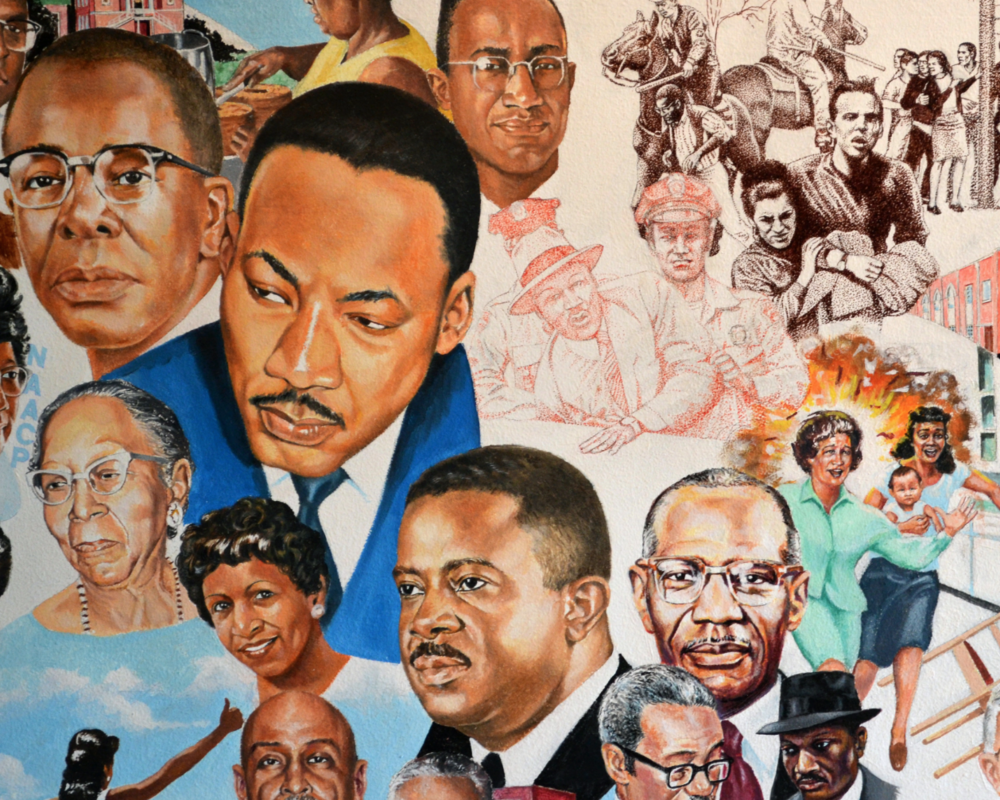
Ryan Burge day: Black church believers and Black ‘nones’ show little Ideological divide

Ryan Burge day: Black church believers and Black ‘nones’ show little Ideological divide

There are a number of narratives that have emerged from the 2020 election season, many of which will take years to fully unpack.

One of the most important actually began to take root in December 2017 when Alabama held a special election to fill the Senate seat vacated by Jeff Sessions who became Attorney General in the Donald Trump administration. Alabama, one of the most conservative states in the nation, elected a Democrat — Doug Jones — to a statewide office for the first time in 25 years.

The reason for the victory was quickly attributed to the African-American community who turned out in large numbers for the Democrats. This same thread has run through coverage of the 2020 presidential election, when Joe Biden bested Trump in Georgia. Observers noted that the deep history of civil rights activism in the state energized the African-American base to repudiate the Trump presidency.

That bore out again on Jan. 5, 2021 when the Democrats won both Senate run-off elections in the state, defeating two Republican incumbents.

The Rev. Raphael Warnock’s win has garnered the most headlines. The pastor of one of America’s most historic churchesEbeneezer Baptist — Warnock’s sermons featured prominently in the campaign. One of the results of this coverage is that it pulled back the curtain a bit on the Black church experience for many White Americans who have never had a lot of exposure to other religious traditions.

Yet, despite the fact that a lot of the chatter about the Black vote has centered on people of faith — it’s important to recognize that the Black community is not a religious monolith. While the largest share of African-Americans identify as Christian (63.5%), nearly a quarter indicate that they have no religious affiliation (22.1%) and another 15% identify as part of another faith group (Muslims, Buddhists, Hindus, etc.)

While these religious differences generate huge political divides among the White community, is the same true for Black Americans? The data indicates that race generates a unifying identity for Black Americans much more so than it does for White America, and religious differences at the ballot box are often small or non-existent when comparing Black Americans of different faith traditions.

In terms of political partisan and ideology — the differences between Black Christians, Black Nones and those of other faith traditions is relatively small. However, it’s worth pointing out that Black Christians are clearly the most likely to identify with the Democratic Party.


Please respect our Commenting Policy

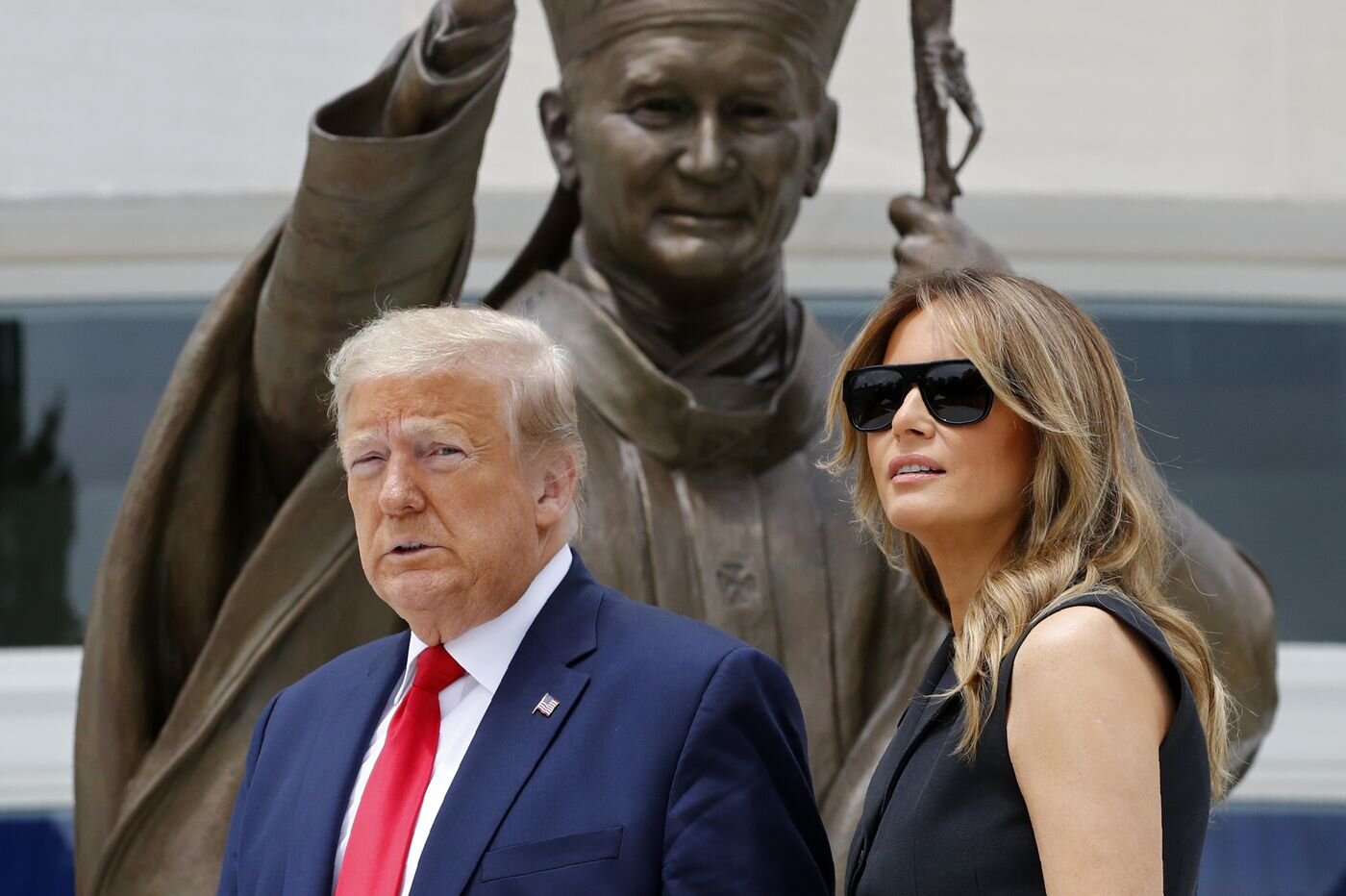
Con Don: Why some conservative Catholic news sites were duped by Donald Trump

Con Don: Why some conservative Catholic news sites were duped by Donald Trump

Now that Donald Trump is no longer president, the discussion about his time in office and legacy is something that has become a media preoccupation despite Joe Biden being inaugurated last month.

That’s because Trump upended much of the way government worked. Add to that a media that can’t quit him (some outlets saw a huge increase in readers and viewers since 2016) and the U.S. Senate impeachment trial, and you can see why Trump remains a focal point.

The U.S. Capitol riot on Jan. 6 is the coda to the Trump presidency and the reason why he remains a news cycle fixture. You may no longer see the former president on Twitter, but The New York Times and CNN — to name just two mainstream news organizations — continue to give him plenty of coverage.

This brings us to another development in today’s evolving news-media marketplace: Catholic media also blossomed during the Trump years.

What has been the result of some Catholic news websites giving Trump any form of editorial support?

Catholic news sites across the doctrinal spectrum should have done a better job calling out both sides — something the mainstream press no longer does, especially on moral, cultural and religious issues. Most often, they don’t run opposing opinion pieces and it appears that the selection of news stories and their arguments are often guided by politics.

However, if we have learned anything over the past four years it is that marrying one’s faith to a political ideology can be a form of idolatry. How else would you explain the zeal of some Catholics who argued that Trump should remain in office?

Catholics have been seduced by the concept that the government can remedy the nation’s problems. They weren’t duped by Trump in as much as they tried to find a solution for what ails society, from their point of view, by supporting an imperfect man. Catholics, like many people of other Christian denominations, wanted to believe Trump. They had too much invested in him and his policy decisions.

Where right-wing Catholics news sites, in particular, go from here remains to be seen.


Please respect our Commenting Policy

Joe Biden era puts transgender rights atop newsroom agendas (which creates religion news)

Joe Biden era puts transgender rights atop newsroom agendas (which creates religion news)

Among American "social issues," freedom of abortion is long-settled as a matter of law, so foes largely nibble at the edges. Courtroom victories for gays and lesbians have put dissenters on the defensive seeking to protect conscience claims.

Meanwhile, in the Biden-Harris era the transgender debate -- emotion-laden, multi-faceted and religiously weighty -- is moving to the top of the news agenda. {The Guy admits at the start he brings no psychological insight to this complex terrain and has personal knowledge of only two such situations.}

Democrats' zeal is the major new factor. President Joe Biden has said that he believes "transgender equality is the civil rights issue of our time. There is no room for compromise." Last year, Donald Trump appointee Neil Gorsuch made the case for "gender identity" rights in the Supreme Court's Bostock ruling, but this covered only secular employment. During his first hours in office, President Biden issued an executive order that extends this outlook across the board.

The president declared, for instance, that school kids shouldn't have to worry about their "access to the restroom, the locker room, or school sports," nor should adults be mistreated "because how they dress does not conform to sex-based stereotypes." He directed each government agency to spend the next 100 days reframing all gender policies accordingly.

Los Angeles Archbishop Jose Gomez, elected leader of the U.S. Conference of Catholic Bishops, immediately responded that on this and other matters like abortion, America's second Catholic president "would advance moral evils and threaten human life and dignity." Chicago's Cardinal Blasé Cupich assailed Gomez's Inauguration Day statement as "ill-considered." (Click here for GetReligion post and podcast on this topic.)

Then New York's Cardinal Timothy Dolan and four other chairmen of bishops' committees jointly declared that by reaching beyond the Supreme Court ruling Biden "needlessly ignored the integrity of God's creation of the two complementary sexes, male and female," and threatened religious freedom. This protest echoed the 2019 Vatican pronouncement "Male and Female He Created Them (.pdf here).”

A second Biden executive order Feb. 4 defined the new "LGBTQI+" approach in U.S. foreign policy. He directed 15 Cabinet departments and agencies to press other countries to comply with America's new stance, using diplomacy and, as needed, financial sanctions or visa restrictions. The State Department is to report annually on problem nations.


Please respect our Commenting Policy

Once again, AP accuses big Catholic bosses of abusing government coronavirus relief efforts

Once again, AP accuses big Catholic bosses of abusing government coronavirus relief efforts

There they go again.

In this case, “they” refers to whoever is in charge of religion-news coverage these days at the Associated Press. Someone there needs to take a remedial course in (a) church history, (b) church-state law in the United States or (c) both.

Let’s start by flashing back about six months, when the AP rolled out an investigation of what its editors clearly thought was a scandal of epic proportions. Does anyone remember this lede, and this GetReligion dissection (“AP explains why it was wrong for local-level Catholic employees to get coronavirus relief money“), of the expose)?

NEW YORK (AP) — The U.S. Roman Catholic Church used a special and unprecedented exemption from federal rules to amass at least $1.4 billion in taxpayer-backed coronavirus aid, with many millions going to dioceses that have paid huge settlements or sought bankruptcy protection because of clergy sexual abuse cover-ups.

That was a bizarre, but honest, opener. The entire story was built on the assumption that there is such a thing — corporately and legally speaking — as a “U.S. Roman Catholic Church.”

As I said at the time, this is “like saying that there is an ‘American Public School System,’ as opposed to complex networks of schools at the local, regional and state levels.” One could also note that there is a Planned Parenthood of America. However, government coronavirus aid in the paycheck-support program went to 37 regional and local Planned Parenthood groups.

The Associated Press has now produced a sequel, with this headline: “Sitting on billions, Catholic dioceses amassed taxpayer aid.” While the editors avoided the “U.S. Roman Catholic Church” label this time around, this lengthy story is built on a similar misunderstanding of what happened when Catholic parishes, schools, nonprofits and other ministries applied for coronavirus aid.

As readers can see in the headline, in the sequel AP leaders focused on finances at the diocesan level, as opposed to a mythical national Catholic structure. This is closer to the truth, but it still misses the mark. While many issues of church authority are linked to local bishops, in local dioceses, the crucial issue here was paycheck-relief money reaching staff members in individual parishes, schools and ministries that had been rocked by falling donations during the COVID-19 crisis. Let’s start with the overture:


Please respect our Commenting Policy

President Joe Biden's a Pope Francis fan, but does that mean the pope's a fan of Biden?

President Joe Biden's a Pope Francis fan, but does that mean the pope's a fan of Biden?

Pope Francis appears to be a big supporter of President Joe Biden.

A majority of the U.S. Catholic bishops are not.

At least that’s a prominent narrative concerning America’s second Catholic president (after John F. Kennedy).

To wit: The headline on a Los Angeles Times news story this week declared: “Pope Francis is a Biden fan, but some U.S. Catholic leaders give president a frosty reception.”

My sincere question: Is it accurate to characterize Francis as a Biden fan?

“While Pope Francis has enjoyed a warm relationship with Biden from time spent together in both the U.S. and at the Vatican, it would be wrong to classify him as a partisan player in U.S. politics,” Christopher White, national correspondent for the National Catholic Reporter, told me. “His approach to any world leader is to try to find common ground and see where there’s work to be done together.”

Clemente Lisi analyzes Catholic news for Religion Unplugged.

“I’d say the pope seems cordial to Biden, and the two have met a few times,” Lisi said in response to my question. “There seems to be a fascination in the media to lump these two men together.”

The Los Angeles Times is, of course, just the latest major news outlet to contrast the difference in tone between how the Vatican and top U.S. bishops — notably Los Angeles Archbishop José H. Gomez — have greeted Biden’s inauguration.

The prominent West Coast paper suggests:

The rift stems from opposition by many in the church to abortion and same-sex marriage, while others see a broader interpretation of the sanctity of life, promoted by Francis, to include climate change, immigration and fighting poverty.

Biden “keeps a picture in the Oval Office of himself with Pope Francis,” the story notes. But does that picture mean as much to Francis? The paper doesn’t say.


Please respect our Commenting Policy

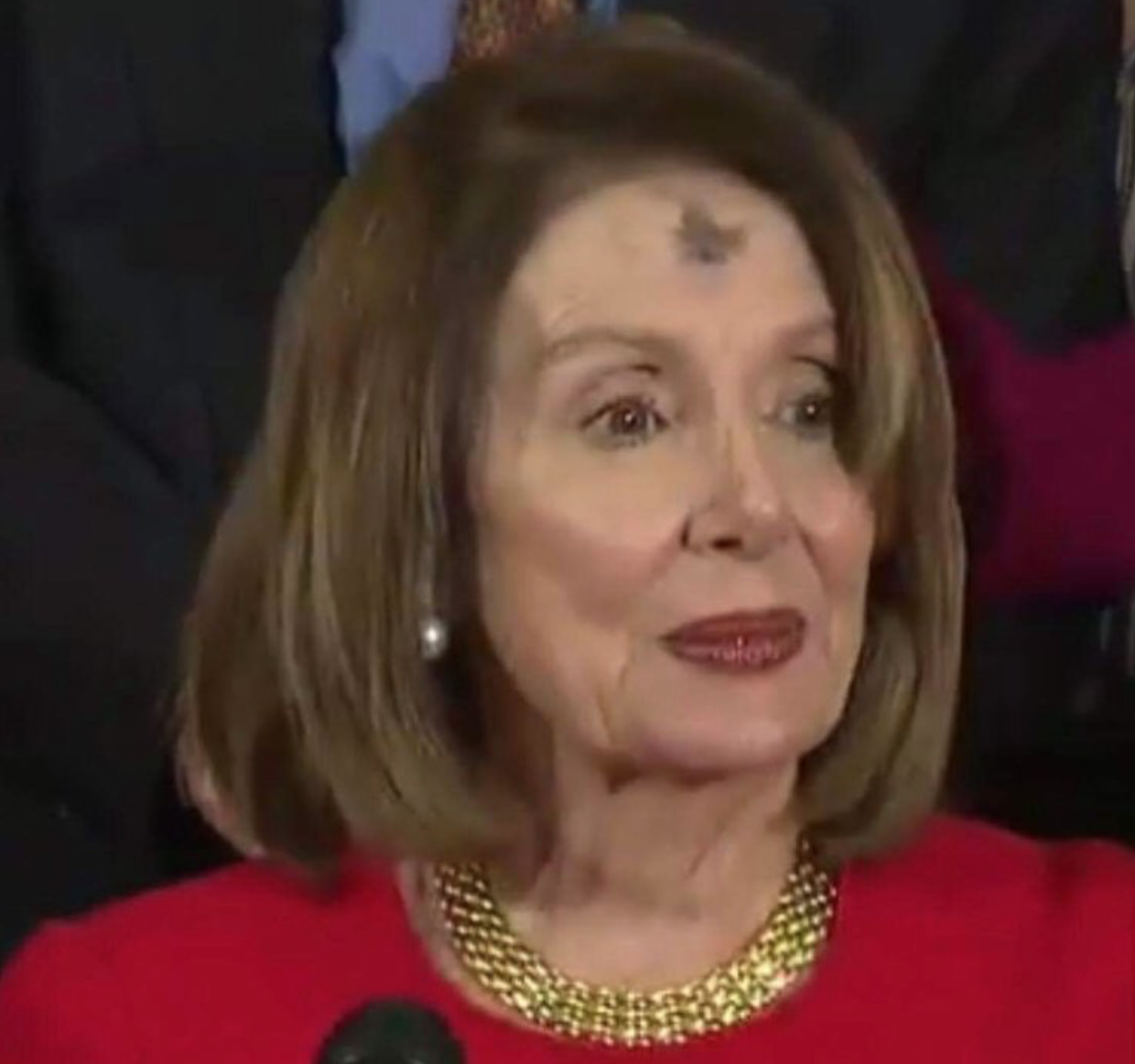
New podcast: Are tensions between Speaker Pelosi and her archbishop a valid news story?

New podcast: Are tensions between Speaker Pelosi and her archbishop a valid news story?

The following is not a hypothetical case or a parable. This is the heart of the news story that was the hook for this week’s “Crossroads” podcast (click here to tune that in).

Step one: Speaker Nancy Pelosi was a guest on Hillary Clinton’s “You and Me Both” podcast. As you would expect, since this was recorded a week after the stunning January 6th attack on the U.S. Capitol, they spent some time discussing their views on the Donald Trump years.

This led to a discussion about the choices made by pro-life voters in the 2016 election. Here is some crucial material from a Catholic News Agency story about the exchange.

… House Speaker Nancy Pelosi (D-Calif.) said that support of pro-life voters for former President Donald Trump was an issue that “gives me great grief as a Catholic.”

“I think that Donald Trump is president because of the issue of a woman’s right to choose,” she said of abortion, implying that pro-life voters boosted Trump to victory in 2016. She added that these voters “were willing to sell the whole democracy down the river for that one issue.”

Other than the “sellout” implication, the key phrase there is “as a Catholic.”

Step two: The archbishop who — canonically speaking — is charged with overseeing Pelosi’s life as a Catholic believer was not amused by this assertion. Here is another chunk of that CNA report.

“No Catholic in good conscience can favor abortion,” said Archbishop Salvatore Cordileone of San Francisco, Pelosi’s home diocese. … “Our land is soaked with the blood of the innocent, and it must stop.”

Pelosi has long supported abortion despite her Catholic faith. In 2008, she said on NBC’s “Meet the Press” regarding when life begins, “over the centuries, the doctors of the church have not been able to make that definition.” She said that her Catholic faith “shouldn’t have an impact on a woman’s right to choose.” …

Archbishop Cordileone clarified that "Nancy Pelosi does not speak for the Catholic Church. … And on the question of the equal dignity of human life in the womb, she [Pelosi] also speaks in direct contradiction to a fundamental human right that Catholic teaching has consistently championed for 2,000 years.” …

Step three: Write a mainstream news story?


Please respect our Commenting Policy