Catholicism

Watch what Biden does, not what he says: Executive orders will widen rift within U.S. bishops

Watch what Biden does, not what he says: Executive orders will widen rift within U.S. bishops

Can you feel the unity yet? That’s the joke among political conservatives as the Biden administration closed out its first week.

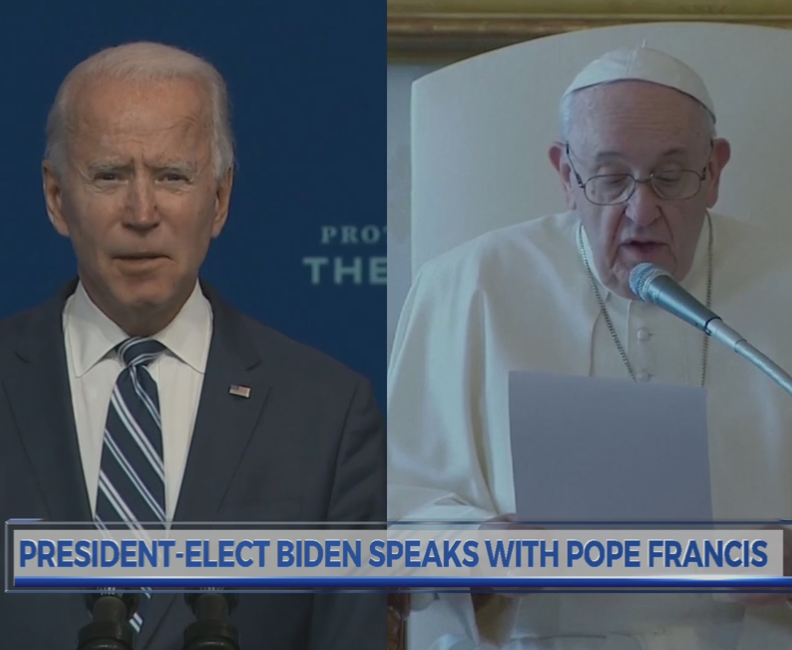
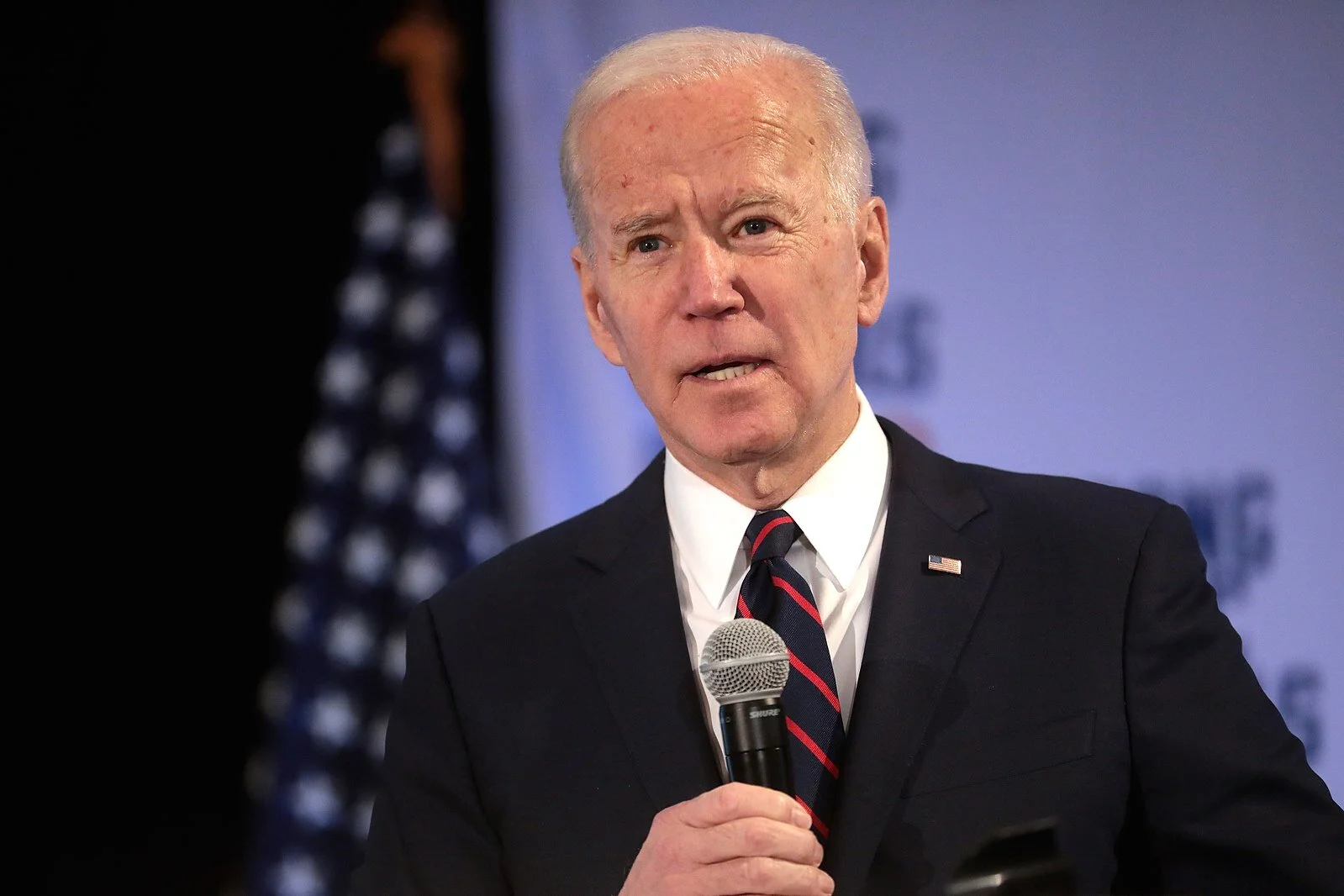
Within hours of taking the oath of office on his family’s massive Bible, President Joe Biden signed a raft of executive orders — something that went on in the ensuing days — to undo strategic executive moves during Donald Trump’s presidency. During that process, Biden fan afoul of traditional Catholic teachings and, once again, placed the spotlight on his Catholic faith.

Political and religious conservatives (not always the same thing) can agree that Biden’s actions over the past week didn’t foster unity. If anything, this blitz of activity highlighted the differences between two ever-divergent Catholic camps in this country, something that revealed itself on Day 1 among the U.S. bishops and across the Atlantic Ocean in Rome as a result of dueling statements and the polemics it unleashed, all of which pointed to old fights and old wounds. Can you say “Theodore McCarrick”?

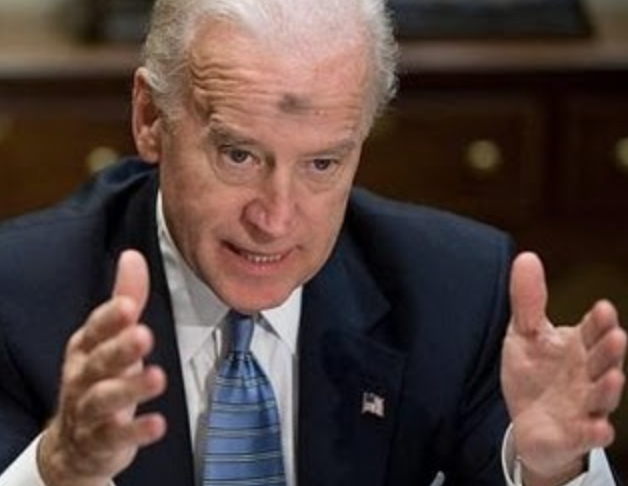
Biden, the first Roman Catholic president since John F. Kennedy in 1960, is often identified as “devout” (click here for background), when journalists describe his faith. Of course, the doctrinal side of Biden’s piety isn’t something journalists dig into. We don’t know what is in Biden’s heart or even his head.

But here is the key point for journalists and news readers: What we do know — as is the case with every politician — is what he does and says. Options about church teachings on marriage and sexuality are one thing. Biden’s decision to perform an actual gay union rite represented open conflict with the teachings of his church.

Journalists can (and should) report and show where there is overlap regarding church teachings and where there is clear contradiction. The Religious Left will soon learn that it shouldn’t hitch their wagon to any political ideology. The Religious Right learned that the hard way with Trump — something that could take years to unspool when it comes to credibility.

With Biden being a Democrat, however, I don’t expect the mainstream press to do any of this. Instead, we see puff pieces from The New York Times calling Biden “perhaps the most religiously observant commander in chief in half a century.” Guess they forgot that George W. Bush was a born-again Christian who regularly attended services. What about Jimmy Carter’s decades teaching Sunday school?

Here’s the key excerpt from that very feature that ran this past Saturday:

Please respect our Commenting Policy

'Hamilton,' the prophets and liberal Catholicism: Poet Amanda Gorman took her shot

'Hamilton,' the prophets and liberal Catholicism: Poet Amanda Gorman took her shot

After Inauguration Day, everyone was buzzing -- obviously -- about weary Sen. Bernie Sanders and his mittens, as well as Lady Gaga's massive social-distance enforcing dress. Commentators explored the socio-political importance of the various shades of purple worn by female Democrats, while Garth Brooks raised eyebrows with blue jeans and maskless-hugs of assorted presidents.

Oh, and President Joe Biden belted out an address that was Bill Clinton-esque in terms of length.

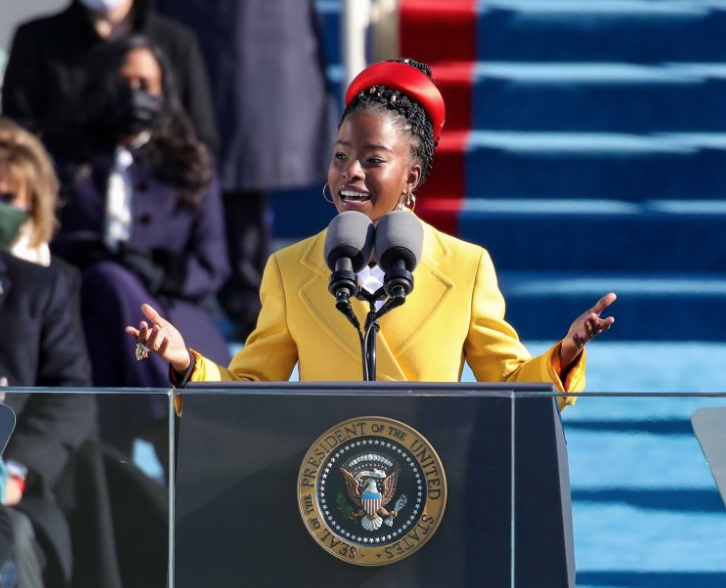
But there was no question that the day’s rising star was Amanda Gorman, the young poet in the canary-yellow coat who certainly didn’t throw away her shot. The question, for GetReligion readers, was whether there was a religion angle in her work that meshed with the rest of the Inauguration Day celebration of the Gospel according to the Religious Left.

Anyone with a computer-based device and a search engine could easily learn that the answer was, “Yes.”

As one would expect, the New York Times offered the definitive faith-free story: “Amanda Gorman Captures the Moment, in Verse.” Now, it was totally valid that the overture underlined the role that the January 6th conspiracy-theory apocalypse played in the creation of the poem. The question is whether this young Catholic woman’s faith was part of her response to it.

Two weeks ago, the poet Amanda Gorman was struggling to finish a new work titled “The Hill We Climb.” She was feeling exhausted, and she worried she wasn’t up to the monumental task she faced: composing a poem about national unity to recite at President-elect Joseph R. Biden Jr.’s inauguration.

“I had this huge thing, probably one of the most important things I’ll ever do in my career,” she said in an interview. “It was like, if I try to climb this mountain all at once, I’m just going to pass out.”

Gorman managed to write a few lines a day and was about halfway through the poem on Jan. 6, when pro-Trump rioters stormed into the halls of Congress, some bearing weapons and Confederate flags. She stayed awake late into the night and finished the poem, adding verses about the apocalyptic scene that unfolded at the Capitol. …

At one point, this Times piece came close to exploring the DNA of key passages in her poem. Of course, the “Hamilton” influence was relevant (hold that thought). Then there was this:


Please respect our Commenting Policy

Hotter than inauguration! Christian financial guru Dave Ramsey burns religion-beat pro

Hotter than inauguration! Christian financial guru Dave Ramsey burns religion-beat pro

Joe Biden’s inauguration as America’s 46th president produced a ton of religion news. We’ll get to all that in a moment.

First, though, the most jaw-dropping Godbeat story of the week comes not from the Beltway but from the Bible Belt, courtesy of Religion News Service national writer (and gainfully employed) Bob Smietana.

Last Friday, RNS published Smietana’s 4,150-word investigative piece on the “cultlike environment” inside Christian financial guru Dave Ramsey’s $42 million headquarters in Franklin, Tenn., south of Nashville. That piece followed a December story by Smietana on Ramsey’s for-profit enterprise defying COVID-19 precautions such as wearing masks.

Ramsey Solutions didn’t take kindly to Smietana’s latest questions, responding with a sarcastic email that said, “Who would have guessed that an unemployed guy, oh I am sorry, a ‘freelance reporter’ would be the one to show us how horrible we are so we can change and to let the world know of our evil intent, secrets, and complete disregard for decency…..but YOU did it, you with all your top notch investigative skills have been able to weave together a series of half-truths to expose our evil ways. You are truly amazing.”

It’s unclear why Ramsey Solutions thinks one of the nation’s top religion correspondents is unemployed. But the statement proceeded to dox Smietana, sharing his email address, phone number and hometown with pastors, business leaders and the entire Ramsey team.

In a Religion Unplugged online panel discussion, Smietana talked about his coverage of Ramsey and the company’s response to him.

Also offering their insight were Cheryl Mann Bacon, retired journalism chair at Abilene Christian University; Meagan Clark, managing editor of Religion Unplugged; Holly Meyer, religion writer for The Tennessean; and Warren Cole Smith, president of Ministry Watch.

“If I were teaching PR Principles this semester, we would start with that as an example of how to never, ever, ever do public relations,” Bacon said of the email. “It just violated all of the basic principles of ethical public relations.”


Please respect our Commenting Policy

New podcast: Why the infamous 'McCarrick doctrine' haunted U.S. Catholic bishops this week

New podcast: Why the infamous 'McCarrick doctrine' haunted U.S. Catholic bishops this week

It was a great week to be a Cardinal Theodore McCarrick Catholic.

Now, before anyone gets mad, let me stress that the McCarrick mentioned during this week’s “Crossroads” podcast (click here to tune that in) was not the “Uncle Ted” McCarrick known for bunking with seminarians or the trusted priest or bishop accused of fondling teen-aged boys from families that trusted him.

No, it was Cardinal McCarrick, the consummate networker, trusted fundraiser, ecclesiastical kingmaker and media manipulator. This was the man who, as archbishop of Washington, D.C., created the so-called “McCarrick Doctrine” that protected national-level Catholic politicians whose faith was a crucial part of their lives and images, even if many ancient doctrines didn’t mesh well with their political agendas. This McCarrick also claimed — in a public speech — to have helped elect Pope Francis.

This was the McCarrick whose legacy helped shape the remarkable war inside the U.S. Conference of Catholic Bishops that jumped into clear view on Inauguration Day.

It was easy to see this coming. I wrote about it several weeks ago in this “On Religion” column: “Joe Biden and the U.S. Catholic bishops — Tensions remain about Holy Communion.” And Catholic-press veteran J.D. Flynn clearly knew something big was coming when, a day before the Biden inauguration, he wrote an analysis — “Biden and the bishops. This probably will not go well” — for his new (and essential) website called The Pillar. Check out this lede:

Shortly after President Joe Biden begins his term of office, the U.S. bishops will be derided as culture warriors and abortion obsessives, unwilling to find common ground with the administration of the second Catholic U.S. president.

Sure enough, the elected leader of America’s Catholic bishops issued a letter (hold that thought) criticizing Biden’s actions supporting abortion rights, while hinting at clashes over religious liberty (Hello, Little Sisters of the Poor) and church doctrines on marriage and sex.

This drew an angry social-media response from Catholic progressives — including key men wearing red hats. Their outcry led to this headline in The Washington Post: “As Biden is sworn in, president of U.S. bishops assails him over abortion.”

In a bombshell report, The Pillar noted that the Vatican tried to ban the distribution of the USCCB statement by Gomez — at least until team Pope Francis could release a more politically nuanced letter. That headline: “Vatican intervened to spike US bishops’ Biden statement release.”

But back to the Post. The overture for that report says exactly what one would expect it to say:


Please respect our Commenting Policy

UK ready to welcome waves of Hong Kong residents (Yes, BBC ignored religion angles)

UK ready to welcome waves of Hong Kong residents (Yes, BBC ignored religion angles)

On the night of the Hong Kong handover to China, I walked through that great city’s old airport — noting the many residents who sat, passports in hand, preparing to leave. I was leaving after a small international gathering of journalists and academics focused, naturally, on religion and the news.

I talked to a few of the solemn people I saw that night in 1997. Some said they were leaving for good. Others said they were going abroad to explore the legal and economic hurdles they would need to clear if or when they decided to leave. I didn’t hear a single optimistic voice.

Like the people I interviewed for the two “On Religion” columns I researched during that stey, they said that they expected that, in a few years, the Chinese authorities would crack down on dissent, free speech and, yes, some mentioned freedom of religion. Here are those columns: “Silence and tension in Hong Kong” and “Hong Kong II: There’s more to life than $.”

I bring this up because of an important story that is unfolding, in slow motion, in the United Kingdom. Here is the top of a long BBC website story with this headline: “The Hong Kong migrants fleeing to start new lives in the UK.

The UK will introduce a new visa at the end of January that will give 5.4 million Hong Kong residents — a staggering 70% of the territory's population — the right to come and live in the UK, and eventually become citizens.

It is making this "generous" offer to residents of its former colony because it believes China is undermining Hong Kong's rights and freedoms.

Not everyone will come. Some of those eligible to leave have expressed their determination to stay and continue the fight for democracy.

In the end, Britain estimates that about 300,000 will take up the visa offer over the next five years.

As you would expect, the story introduces a family that is already in the UK, exploring their reasons for making the leap. Any signs of religion here?

Readers are told that Andy Li and his wife Teri Wong moved to York in October, just after the announcement of plans for this policy change. They said, no surprise, that they were thinking about their children, daughter Gudelia, 14, and son Paul, 11.

"We feel that the things we treasure about Hong Kong — our core values — are fading over time," said Mr Li. "So we decided we needed to provide a better opportunity for our children, not only for their education, but also for their futures."


Please respect our Commenting Policy

Catholic press braces for Biden presidency: How it will further polarization on doctrine

Catholic press braces for Biden presidency: How it will further polarization on doctrine

Inauguration Day this year comes two weeks after pro-Trump rioters descended on the U.S. Capitol before President-elect Joe Biden’s victory was certified by lawmakers. It was the latest — and most stark — demonstration of how our nation’s media ecosystem is in a state of decay and under attack.

Two weeks removed from that awful day, it’s worth taking stock in where we are, how we got here and, more importantly, what can we expected over the next four years under Biden.

This road, more than a decade in the making, was exasperated by Donald Trump’s presidential run and election in 2016. At the same time, citizens on the left and right have grown increasingly weary of institutions (the press being one of them) and that’s made violence an acceptable means for retribution.

As a result, the political, cultural and religious polarization that has taken place over the past four years, ignited further last year amid a pandemic and the presidential election, can’t be undone. The violence on Jan. 6 in Washington, D.C. is the latest tangible example of where we are as a country. The National Catholic Register made this observation in the wake of the riot:

The United States is troubled today by something deeper: At its core this is a spiritual and cultural crisis, even more than a political one.

The Founding Fathers worried about the same factionalism we saw on full and ugly display at the Capitol. But in the past, as Alexis de Tocqueville observed in Democracy in America, shared religious values have provided a glue that allowed for peaceful coexistence in our strikingly individualistic nation, while reminding us that politics was not ultimate.

Today, that is no longer the case. The system of Judeo-Christian values that grounded our political and civic life for more than two centuries has eroded and not been replaced. The ensuing vacuum means our national tendency toward factionalism has no “ballast” to steady the ship of state at turbulent moments, such as this disputed presidential transition.

The events of the last six months and how they have been covered by news organizations — spanning the COVID-19 lockdowns and #BlackLivesMatter protests to the presidential race and the attack on the Capitol — mark an end to an era in press history. It would appear that the American Model of the Press is dead and that reality has become mangled as Americans get their news through a prism of advocacy, partisan media sources.

This journalism earthquake has shaken Catholic media, as well. Hold on, because that’s where we are headed.


Please respect our Commenting Policy

State and federal elections spotlight America's diversity and (yet again) religious nones

State and federal elections spotlight America's diversity and (yet again) religious nones

The mayhem at the U.S. Capitol last week did not prevent Congress's ceremonial tally of the Electoral College victories of the nation's second Catholic president, Joseph Biden, and of Kamala Harris, the first African-American, first Asian-American and first female vice president.

Simultaneously, diversity was also demonstrated in the two Georgia runoff wins that give Democrats control of the U.S. Senate. Jon Ossoff is this heavily Protestant state's first Jewish senator. Baptist pastor Raphael Warnock makes history as only the South's second African-American senator elected since the Reconstruction era. The first is Republican Tim Scott in neighboring South Carolina.

OK. The press has reported all that.

Less noticed are some diverse Democrats newly elected to state legislatures, as featured in the "mainline" Protestant magazine Christian Century. Colorado, Delaware, Florida, Wisconsin and Oklahoma all elected their first-ever Muslim lawmakers, and the Oklahoman, Mauree Turner, is also America's first legislator to identify as non-binary. Episcopal priest Kim Jackson becomes the first openly lesbian member of Georgia's Senate. Kirk White, founder of the Wiccan Church of Vermont, joins that state's Assembly.

Journalists should also be reflecting on the societal change reflected in the religious makeup of the new U.S. Congress, documented in Pew Research Center's latest biennial report, drawn from CQ Roll Call data. Pew's report page is here and for future reference note you can click on "Detailed Table" for a listing of each member's religious identity.

Religious affiliations do not necessarily define members' policies and voting records. Consider all those Democrats who call themselves Catholic but are pro-choice on abortion -- churchgoer Biden among them. But the numbers tell the media something about society's broad religious trends.

Diversity rundown: Way back when, Congress was exclusively Christian and heavily Protestant. The new House and Senate have 33 Jews, three Muslims, three Hindus and two Buddhists. Like Jews, Unitarian Universalists are over-represented relative to the U.S. population with three members, while Pentecostalists are under-represented, with only two members.

Several organizations have compiled religious censuses of Congress over the years. Pew Research issued its first after the 2008 election.


Please respect our Commenting Policy

Big symbols, big story: Pope Francis changes church law to put women 'on the altar' in robes

Big symbols, big story: Pope Francis changes church law to put women 'on the altar' in robes

It’s not every day that the pope changes canon law. Pope Francis did just that in allowing women a larger role during Mass.

The pope said, using a powerful phrase in Catholic thought, that this headline-grabbing change was based on “a doctrinal development” seen in the recent life of the church.

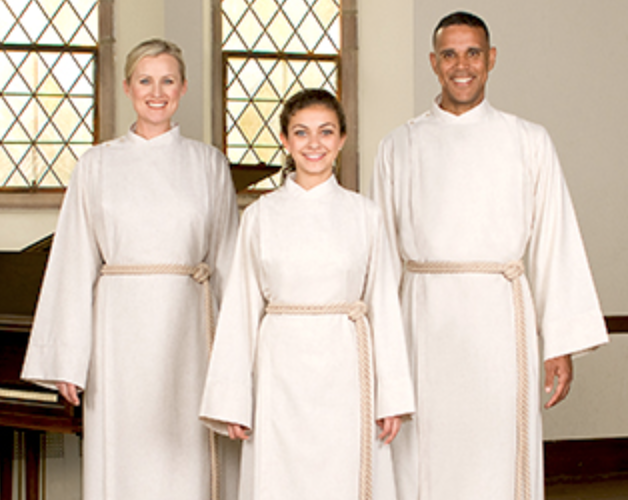
The move — in the wake of a decades-old priest shortage — will grant “non-ordained ministers” the chance to serve as lectors, read scripture, act as eucharistic ministers and, in a crucial symbolic change, wear robes while serving in the sacred space around the altar. The changes, however, will continue to forbid women from being made deacons or ordained priests.

The pope changed canon law to read: “Lay people who have the age and skills determined by decree of the Episcopal Conference, they can be permanently assumed, through the established liturgical rite, to the ministries of lectors and of acolytes; however this contribution does not give them the right to support or to remuneration by the church.”

For the sake of comparison, the law had previously read: “Lay men who possess the age and qualifications established by decree of the conference of bishops can be admitted on a stable basis through the prescribed liturgical rite to the ministries of lector and acolyte.”

In other words, this codifies into the canon the role of women as part of Roman liturgical rite. The announcement, however, caused lots of confusion, especially among many Catholics who have already witnessed women in some of these roles for decades.

The Associated Press headline on the story read, “Pope says women can read at Mass, but still can’t be priests.” That vague language didn’t clarify matters.

In a letter that accompanied the changes, the pontiff said he wanted to bring “stability” and “public recognition” to women already serving during the Mass. Beyond the headline, the AP, in its reporting of the announcement, said that the pope had “amended” church law “to formalize and institutionalize what is common practice in many parts of the world: Women can be installed as lectors, to read Scripture, and serve on the altar as eucharistic ministers. Previously, such roles were officially reserved to men even though exceptions were made.”

The original AP story caused even more confusion when it initially reported that women could read the Gospel during Mass.


Please respect our Commenting Policy

New podcast: Who stands in the middle of American politics? Often, that's a religion question

New podcast: Who stands in the middle of American politics? Often, that's a religion question

There were two major stories in American life this week, when it seemed like the world turned in a matter of minutes.

The riot at the U.S. Capitol grew out of yet another legal Donald Trump rally, with its familiar mix of hero worship, populist rage and, yes, rhetoric and symbols used by conservative, often Pentecostal, Christians. Fired up by a truly radical message from the president, many (not all) of these protestors marched to Capitol and turned into an illegal mob, crashing through security fences and then through doors and windows. Yes, some of the Christian banners and signs went with them.

We will be learning more about the makeup of that mob as participants are identified, arrest and tried — perhaps under (irony alert) Trump’s June 26th executive order authorizing a “penalty of up to 10 years’ imprisonment for the willful injury of Federal property.”

There have been waves of statements by religious leaders condemning the violence, including many by evangelicals who (a) opposed Trump, (b) reluctantly voted for him or (c) enthusiastically backed him. I expect more coverage on all of that (I’m collecting material for an “On Religion” column). Readers can start with this piece from the left, care of HuffPost.com: “Trump’s Evangelical Allies Condemn Violence At The Capitol.” It focuses on evangelicals who are still finding it hard to attack Trump, while — almost hidden at the end — noting views from some of condemned both the violence and the president’s role in it.

Let me know, via comments or email, if you see more religion-driven riot coverage.

Meanwhile, this week’s “Crossroads” podcast (click here to tune that in) centered on a GetReligion post that was written about two hours before the riots began: “Life after Georgia — Questions about a pro-life Democrat in U.S. Senate and other issues ...

The key is that victories by two Democrats (one a liberal Baptist pastor) put a very interesting conservative (and Catholic) senator at the middle of America’s increasingly divided and even bloody political map.

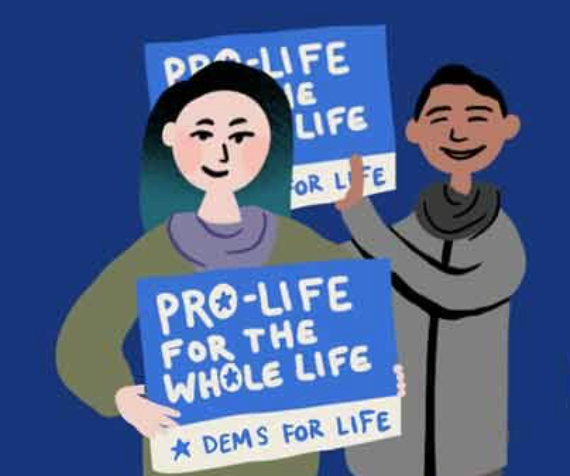
That man, Sen. Joe Manchin of West Virginia, is a living symbol of what used to be a major force in American politics — the white Southern Democrat. Although he has been endorsed by Democrats For Life, his pragmatic political views on that topic will not be found in the Democratic or Republican platforms, but do resemble the views of millions of centrist Americans.

Many Democrats, in the past, have insisted that Manchin is not really a Democrat. Well, how many want to toss him out of the party right now (with that 50-50 Senate split)?


Please respect our Commenting Policy