Books

A Jewish book that Christian strategists (and reporters) should be reading right now

A Jewish book that Christian strategists (and reporters) should be reading right now

Much of organized Judaism in the U.S. is “crumbling” and destined to suffer even worse decline in coming years, contends Rabbi Danny Schiff in his new book “Judaism in a Digital Age: An Ancient Tradition Confronts a Transformative Era” (Palgrave Macmillan).

Christian strategists face much the same cultural upheaval and should pay attention to this examination, alongside Jews and religion-beat journalists. Echoes of the “Mainline” Protestant plight are especially noteworthy. And consider the stakes for Judaism when the United States has 70% of the world Jewish population.

Schiff, a scholar with the Jewish Federation of Greater Pittsburgh, focuses on the two branches that dominated U.S. Judaism over the past century. Reform Judaism is devoutly liberal, with broad individual choice on belief and practice. Conservative Judaism is more tradition-minded — but has lately floated in Reform’s direction. The book pays less notice to the faith’s growing third main branch, Orthodoxy, because it is relatively stable as it resists modern pressures.

Here’s the situation in a numerical nutshell: As of 1990, 73% of U.S. Jews identified with these two main non-Orthodox branches. By Pew Research Center’s major Jewish survey in 2020, their combined following was down to 54%, while 32% of Jews reported “no particular identity” in terms of religion. (The Orthodox were a 9% minority that will grow due to higher birth rates.)

For Schiff, the years around 1990 were the end of an era when “partial emancipation” from past social barriers and prejudice turned to “hyper-emancipation.” Antisemitism, though still existing, was extinct in polite society.

A related sign was the prevalence of intermarriage with non-Jews, once relatively rare. By the 2010-2020 decade, 72% of marriages by the non-Orthodox were with non-Jews. Inexorably, that lowered the odds that children would follow in Judaism as adults. Added problems were widespread divorce, less marriage and lower birth rates. Finally, “barriers to leaving Jewish life are virtually non-existent.”

Please respect our Commenting Policy

Who are America's most influential women in religion? Why do they get so little ink?

Who are America's most influential women in religion? Why do they get so little ink?

International Women’s Day last week led to — naturally — a lot of news features about the female half of the human race.

The Washington Post did a piece on women in Afghanistan (as did the New York Times); Agence France Presse wrote on women who work for the Roman Curia; the Jewish Telegraph Agency covered Orthodox women who get around their religion’s prohibition against women chanting Hebrew scriptures to mixed audiences.

I would have liked to have something more diverse and wider-ranging, such as a list of top women who exert influence not only within their own religions, but who have spoken to needs or issues in the general culture. In effect, they have transcended their faith groups.

In short, who are the most influential women in American religion?

Time magazine asked a similar question about evangelicals and the magazine’s list of America’s 25 most influential evangelicals is still referred to 18 years later. Most of those named were men; if there were women, they were paired with their husbands. The only two women who made the list on their own merits were televangelist Joyce Meyer and the late Diane Knippers, president of the Institute on Religion and Democracy.

I have spent much of my professional career profiling women in religion. The first time I put together such a list was in 2014 when I was so frustrated at how so many gifted evangelical women didn’t get near the top billing in the media that men do. In a post titled “Great Women Who Will Never Be Famous,” I wrote about Miriam Adeney, Nancy Pearcey, Robin Mazyck, Susan Wise Bauer, Sarah Zacharias Davis and Dale Hanson Bourke.

I’ve now updated that list to include other religions. I avoided women who got where they are because of their husbands. I am not denigrating their accomplishments, but simply focusing elsewhere.

I do realize that women in many traditions aren’t allowed into formal religious positions, which is why my list includes activists, bloggers and others who work outside regular boundaries.

It’s a sticky wicket, this list. Should one stick with women who have the largest numbers of books written, most news coverage or most impressive social media standings? How about lesser-known women who represent important constituencies?

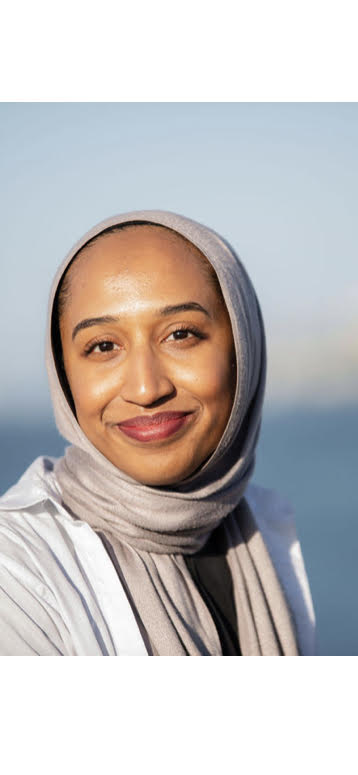
For instance, many of you may not know Nailah Dean, 30, a black/Latina California lawyer and Muslim feminist who speaks out on what she calls the “Muslim marriage crisis.”


Please respect our Commenting Policy

Do the Math: Reporters use labels all the time, but religious life is more complex than that

Do the Math: Reporters use labels all the time, but religious life is more complex than that

Everything I do on social media is a trade-off.

That’s the nature of data visualization. You have to take an incredibly complex and often messy social world and distill it into a rather straightforward graph that the average person scrolling Twitter can understand in five seconds or less. Not an easy task.

One of the ways in which social scientists have tried to make the concept of age more palatable is through the use of generations — Boomers, Gen X, Millennials, etc. There have been several pieces published in the last few years that have exhorted social scientists to stop using these concepts because they mean very little from an empirical perspective.

One reason is that they are completely arbitrary. Born in December of 1979 — you are a Gen X. Born just one month later — you’re a Millennial. And consider the fact that you can be born in 1981 or 1995 and are part of the same generation. That’s just nonsensical the more you think about it.

One way around is to use five-year birth cohorts.

Instead of 15 or 20 year spans for generations, a birth cohort can be just those born between 1940 and 1945. This helps to further isolate the impact of age on religious trends. I’ve been making graphs using this cohort strategy for a while now and they can provide a lot of illumination about American religion and politics.


Please respect our Commenting Policy

Podcast: Women in ministry remains a hot topic in SBC life, especially at the pulpit level

Podcast: Women in ministry remains a hot topic in SBC life, especially at the pulpit level

Any controversy linked to the Rev. Rick “Purpose Driven Life” Warren is, by definition, going to be a big news story. I mean, that mega-bestseller has been translated into 100-plus languages and is so omnipresent that it’s most famous quote ended up in a Marvel Comic Universe movie.

Meanwhile, any controversy that involves conservatives opposing the ordination of “moderate” or “progressive” Baptist women is going to be a big news story, because — for most mainstream journalists — that is a good vs. evil story, and that’s that.

Thus, it’s no surprise that there has been quite a bit of ink about the vote by the Southern Baptist Convention’s executive committee declaring that the giant Saddleback Church, founded by Warren, is no longer “in friendly cooperation” with America’s largest non-Catholic flock.

Yes, that’s SBC lingo. We are dealing with a “convention” of autonomous congregations, not a “denomination,” and it’s primary source of national giving/income is called the “Cooperative Program.” So, has Saddleback been “ousted,” “expelled” or “kicked out” of SBC life for good? We will see.

GetReligion readers will not be surprised that we ended up discussing all of these issues during this week’s “Crossroads” podcast (CLICK HERE to tune that in). The good news, in this case, is that the most important stories about this case were written by experienced religion-beat pros. Here’s the top of the Associated Press report:

The Southern Baptist Convention … ousted its second-largest congregation — Saddleback Church, the renowned California megachurch founded by pastor and best-selling author Rick Warren — for having a woman pastor.

The vote by the convention’s Executive Committee culminates growing tension between the nation’s largest Protestant denomination — which officially opposes women as pastors — and a congregation whose story has been one of the biggest church-growth successes of modern times.

The committee cited Saddleback’s having “a female teaching pastor functioning in the office of pastor,” an allusion to Stacie Wood, wife of the current lead pastor of Saddleback, Andy Wood.

But the controversy began in 2021, when Warren ordained three women as pastors, prompting discussions within the denomination about possibly expelling the megachurch.

What is going on here? There are several important clues in that material.


Please respect our Commenting Policy

Tradition, custom, religious law: How should worn-out Bibles or Qurans be disposed of?

Tradition, custom, religious law: How should worn-out Bibles or Qurans be disposed of?

THE QUESTION:

How should worn-out Bibles or Qurans be disposed of?

THE RELIGION GUY’S ANSWER:

Due to occasional news about Muslim riots when a copy of the Quran is believed to be mistreated, you’re probably aware that Islam takes very seriously the way its sacred book is handled, about which more below.

But The Guy has rarely if ever heard of such discussion about a printed Bible and therefore was intrigued this past week when Joe Carter (a GetReligion alumnus) responded online on behalf of the Gospel Coalition to a reader who asked, “How do you dispose of a worn-out Bible? Is there a protocol like with a flag?”

As the question indicated, federal law states that an American flag “in such condition that it is no longer a fitting emblem for display should be destroyed in a dignified way, preferably by burning.” Patriotic groups often provide public boxes to collect discarded flags that are then burned in formal ceremonies.

As for the Bible, the book itself contains no rules on proper disposal, so the Coalition regards this as “a matter of personal preference.” But many people naturally feel that respect for Scripture rules out simply tossing the holy book into the trash alongside cookie wrappers and egg shells.

As a conservative Protestant resource, the Coalition warns against any “unconscious sense that the printed pages of a Bible gain something of the spiritual essence of God’s Word,” which “could easily slip into a superstitious, or even idolatrous, view of print Bibles.”


Please respect our Commenting Policy

OK, we get it: That whole 'Christian nationalism' thing is hot, right now. But what is it?

OK, we get it: That whole 'Christian nationalism' thing is hot, right now. But what is it?

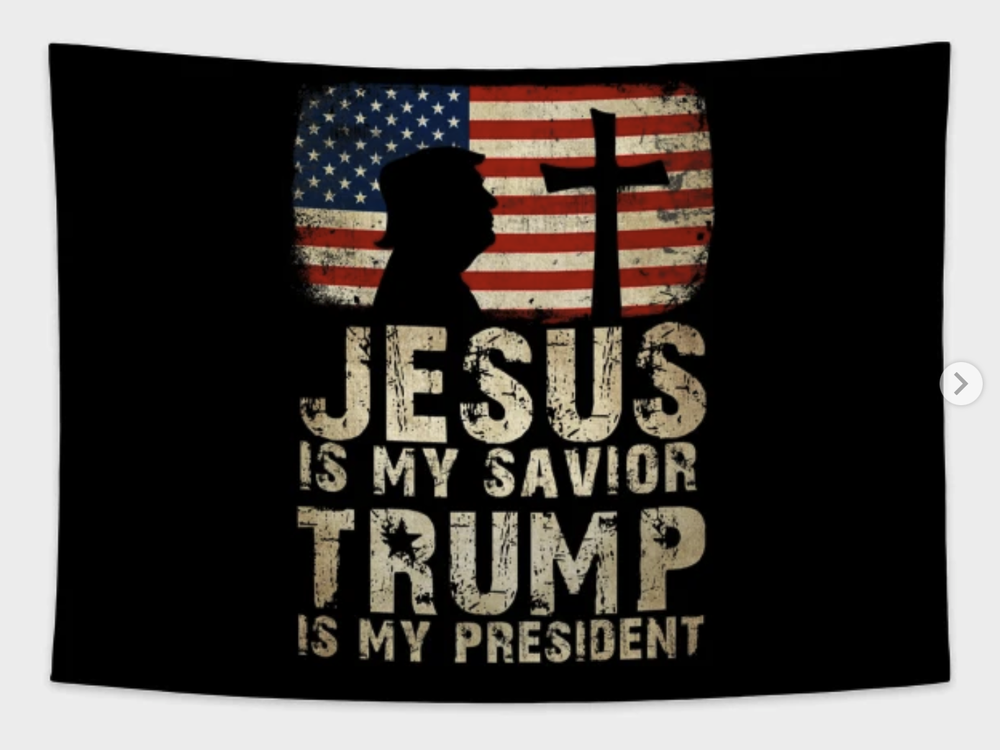
By all indications, urgent warnings against “Christian nationalism” (CN) will continue as a major media theme through Election Day 2024.

Journalists will need to be careful with a tricky label that’s mostly shunned by supposed participants in the CN movement and employed by opponents (as with “fundamentalist” or “ultra-“ or “cult”). How complex is the fighting about this term? Click here to tune in some of the YouTube debates.

Critics’ typical definition comes from attorney Amanda Tyler, who leads Christians Against Christian Nationalism (with a large “N”) and the proudly progressive Baptist Joint Committee for Religious Liberty. She says CN “seeks to merge American and Christian identities, distorting both the Christian faith and America’s constitutional democracy.” Its “mythological” view of founding of a “Christian nation” means America is singled out “to fulfill God’s purposes on earth.” Further, CN “demands a privileged place for Christianity in public life, buttressed by the active support of government at all levels.”

Writers could pursue this sort of theme sideways by reviewing or collecting pro and con reactions to “How to Be a Patriotic Christian: Love of Country as Love of Neighbor,” the latest book by middle-roading evangelical Richard Mouw of Calvin University, formerly president of Fuller Theological Seminary.

Otherwise, here's a rundown to guide journalists on some of the notable CN chatter since The Guy took a whack at the definition issue last year year at GetReligion.

Hang on, because this gets complex. For starters, ambiguity abounded in an October Pew Research survey.

Some 60% of adults think -- yes -- the founders intended the U.S. to be a “Christian nation,” and 45% think it actually “should be” such, though for many that means only generalized moral guidance while only 18% think the phrase indicates Christian-based governance. Importantly, a 54% majority had never even heard of CN.

That belief the U.S. “should be” a Christian nation was favored by fully 65% of Black Protestants (compared with e.g. only 47% of Catholics). Yet University of Texas political scientist Eric McDaniel wrote for TheConversation.com that CN believes the only “true” Americans are “white, Christian and U.S.-born and whose families have European roots.”


Please respect our Commenting Policy

That timely AP interview: What, precisely, did Pope Francis say about homosexual 'sin'?

That timely AP interview: What, precisely, did Pope Francis say about homosexual 'sin'?

Let’s say that Pope Francis decides to sit down for an Associated Press interview, thus guaranteeing coverage that will appear in the maximum number of mainstream publications around the world.

The basic headline is generic, but points to newsworthy topics: “Pope discusses his health, critics and future papacy.” As you would expect, editors just love a papal interview addressing the potential for a political horse race before a Vatican election (with armies of dangerous right-wing “critics” in the wings).

Now, what angle of this interview would you expect to immediately jump into headlines and social media? Maybe something like, “The AP Interview: Pope says homosexuality not a crime.”

Obviously, the reaction have been different if AP editors had used this accurate headline (written by me), based on this interview: “The AP interview — Pope says homosexual acts are sins, not crimes.”

Hold that thought. First of all, I would like to know more about the backstory for this interview. The timing is interesting, in light of recent news linked to the death of Pope Benedict XVI (“Pope Francis meets Benedict's top aide as memoir rattles Vatican") and yet another powerful conservative leader (“Cardinal Pell authored controversial memo critical of Pope Francis, journalist reveals”).

It is also possible that the timing of this interview is linked to headlines such as this one, at The Telegraph: “ ‘Gay clubs’ run in seminaries, says Pope Benedict in posthumous attack on Francis: New book by the late pontiff makes extraordinary claims about the Catholic Church under his progressive successor.”

Say what? You haven’t seen coverage of this story in your local newspapers or on evening newscasts? Here is a sample of that report:

In a blistering attack on the state of the Catholic Church under his successor’s papacy, Benedict, who died on Dec 31 at the age of 95, said that the vocational training of the next generation of priests is on the verge of “collapse”.

He claimed that some bishops allow trainee priests to watch pornographic films as an outlet for their sexual urges.


Please respect our Commenting Policy

Notable 2022 deaths, as chosen by a notable (and honored) religion-beat colleague

Notable 2022 deaths, as chosen by a notable (and honored) religion-beat colleague

As 2022 starts to fade into memory, let’s highlight significant religious figures who died during the year, a useful way for reporters to contemplate where the field has been heading. For this we’ll tap the personalities chosen by religion-beat veteran Adelle M. Banks, who is currently projects editor and national reporter for Religion News Service.

But first, a point of personal privilege. December 10 was a huge moment for our oft-neglected religion beat as the Washington Association of Black Journalists gave Adelle its first Lifetime Achievement Award. Quite the honor when you consider D.C.’s journalistic talent pool! Before joining RNS 27 years ago, Adelle worked at (The Guy’s hometown) Binghamton Press & Sun-Bulletin, Syracuse Herald-Journal (R.I.P.), Providence Journal and Orlando Sentinel.

Though Adelle has skillfully covered an amazing variety of religious groups, she has paid special attention to all-too-thinly-covered African-American faiths. She’s a worthy successor to The Guy’s late friend William A. Reed of the Nashville Tennessean, in whose honor the Religion News Association named its own Lifetime Achievement Award.

In her RNS report, Adelle paid tribute to deceased beat colleagues Richard Dujardin of the Providence daily and Cecile Holmes of the Houston Chronicle. Both were Religion News Association presidents, as was Reed. The headline on that feature: “Remembering faith leaders who died in 2022: preachers, writers and interpreters of faith.”

The hugely newsworthy death of the conservative Pope Benedict XVI, the first pope to resign in centuries, occurred on New Year’s Eve after the release of Adelle’s article. Here are the others on her list:

* Madeleine Albright, who only learned after becoming U.S. Secretary of State that her family background was Jewish, including members who died in Holocaust concentration camps.

* Anne van der Bijl, a.k.a. “Brother Andrew,” Dutch smuggler of Bibles into Communist-run European nations who founded Open Doors to help and monitor persecuted Christians worldwide.

* Stuart Briscoe, the Brit-born pastor who built Elmbrook Church in suburban Milwaukee into Wisconsin’s largest; also noted author, speaker, and radio preacher.

* Frederick Buechner, one of the generation’s most thoughtful novelists, a non-religious youth captivated by a Presbyterian sermon who attended seminary and eventually led Philips Exeter Academy’s religion department.


Please respect our Commenting Policy

The complex legacy of Benedict XVI: Defender of tradition who opened door to Pope Francis

The complex legacy of Benedict XVI: Defender of tradition who opened door to Pope Francis

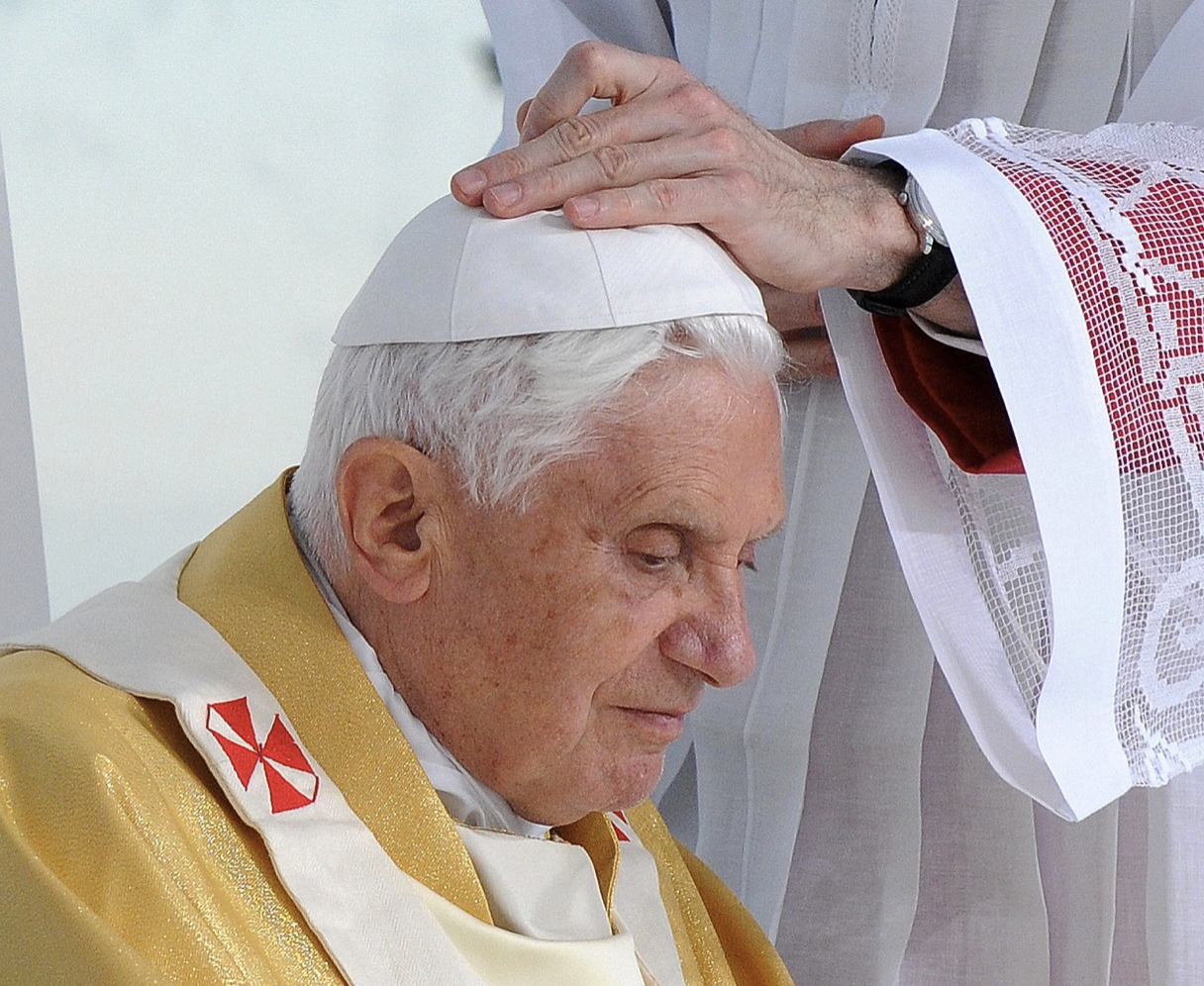
Pope Emeritus Benedict XVI, who served as head of the Roman Catholic church from 2005 until his surprise resignation in 2013, has died and his passing has fueled renewed debates about several newsworthy trends in the modern Catholic Church.

The scholarly Benedict, a former theology professor, was known for his writings and defense of traditional values to counter the increased secularization of the West. Benedict’s death at age 95 was announced by the Vatican. Pope Francis will preside over the funeral Mass on Jan. 5 at St. Peter’s Square.

Benedict XVI broke several records during his papacy, including being the first pontiff to have a Twitter account. In recent years, however, press coverage stressed his resignation from the papacy.

On February 11, 2013, the Vatican confirmed that Benedict XVI would resign at the end of that month as he neared his 86th birthday, becoming the first pope to step down since Gregory XII in 1415. His resignation ushered in the papacy of Francis, leaving Catholics around the world to grapple with the idea of two living pontiffs. In September 2020, Benedict became the longest-living pontiff — at 93 years, four months and 16 days — surpassing Pope Leo XIII, who died in 1903.

As for Benedict’s legacy, it remains mixed and complex. In the press coverage, it is crucial to note how journalists handle his childhood in Nazi Germany, his move from German liberalism to conservative thinking on doctrine and his public and private actions when handling church scandals.

Vatican observer John L. Allen, in a piece for the National Catholic Reporter in 2013, wrote:

“A legacy, of course, is partially in the eye of the beholder. For many feminists, gays, dissident theologians, liberal Catholics of various stripes, and victims of clerical abuse, Benedict simply wasn’t the pope they wanted. Others will be inclined to celebrate Benedict not so much for what he did, but what he represented. …

“For his part, Benedict probably won't be terribly interested in the discussion. He is, after all, a man who once joked to a French friend after the Paris papers had been hard on one of his speeches, ‘I’m like the cellist Rostropovich — I never read the critics.’”

A voracious writer and theologian, Benedict penned 66 books during his lifetime. Among the most notable are “Introduction to Christianity” (1968), “Called to Communion: Understanding the Church Today” (1996) and “Last Testament: In His Own Words” (2016). He also wrote a trilogy of popular books — written for the laity — on the life of Jesus. The Vatican has reported that his final words were: “Jesus, I love you.”


Please respect our Commenting Policy