Books

Americans think highly of Jesus: But modern Christians get rather harsh reviews

Americans think highly of Jesus: But modern Christians get rather harsh reviews

When it comes to exploring what Americans think about Jesus, a new study offers Christian leaders both good news and bad news.

The good news is that 76% of Americans affirm the "historical existence" of "Jesus of Nazareth," although it's also interesting to note that if 89% of self-identified Christians embraced that statement, the implication is that 11% are not sure.

Meanwhile, 84% of participants in a new "Jesus in America" study -- conducted by the global Ipsos research company for the Episcopal Church -- agreed that "Jesus was an important spiritual figure."

The bad news? While 50% of "not religious" Americans accepted this "important spiritual figure" language, they were much less impressed with the believers who represent Jesus.

When asked, "What characteristics do you associate with Christians in general?", the nonreligious selected these words from the poll's options -- "hypocritical" (55%), "judgmental" (54%) and "self-righteous" (50%). Next up: "arrogant," "unforgiving" and "disrespectful."

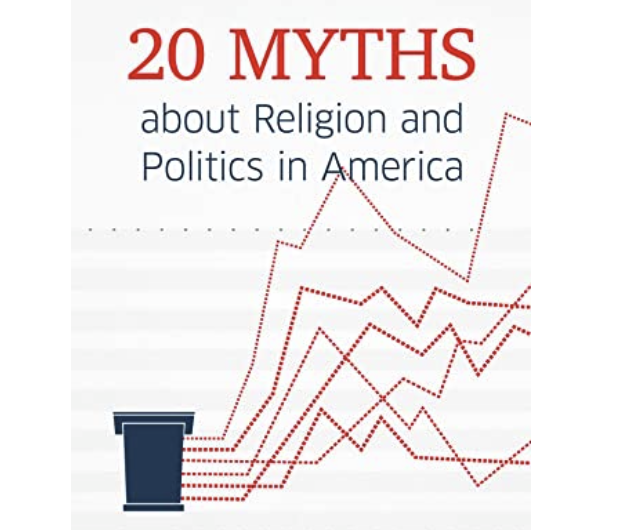
It appears that one of the goals of this poll -- with questions about racism, social justice and last year's attack on the U.S. Capitol -- was to see if nonbelievers have different attitudes about liberal and conservative Christians, said political scientist Ryan Burge of Eastern Illinois University, author of the new book "20 Myths about Religion and Politics in America." He is co-founder of the Religion in Public website and a contributor at GetReligion.org, which I have led since 2004.

"This is the million-dollar question," said Burge, who is also a pastor in the progressive American Baptist Church. "If non-religious people are turned off by what they see as the stricter faith of many Christians, evangelicals in particular, then wouldn't it make sense for them to seek more flexible alternatives?

"If there's all kinds of room in mainline Protestant churches these days, and that's putting it mildly, then why aren't these kinds of people filling up some of those pews?"
Please respect our Commenting Policy

There goes that Ryan Burge guy, again: Myths about evangelicals, Catholics and others

There goes that Ryan Burge guy, again: Myths about evangelicals, Catholics and others

During my years as a journalism professor (now over), I must have told my students the following a thousand times: Pay close attention when one of your sources consistently offers information and insights that (a) fit the actual facts on the ground, yet (b) anger (or at least puzzle) people on both sides of the hot-button issues that make headlines.

For several decades, my classic example of this phenomenon has been political scientist John C. Green of the University of Akron, best known for years of consulting work with the Pew Forum team. A few years ago, I added religious-liberty specialist David French to that list. Sociologist James Davison Hunter, author of that “Culture Wars” classic? Ditto. How about the notorious scholar Karen Swallow Prior?

Then that Ryan Burge guy (@RyanBurge) started lighting up Twitter with chart after chart backed with data on religion and public life. He’s been a GetReligion contributor, in a variety of ways, for several years now and was a big hit when he Zoomed into a December religion-news program at the Overby Center at Ole Miss.

If you agree with Burge on everything, then you aren’t paying attention. That’s a compliment. Like Green, Burge is a man of the mainline-church world, but he’s consistently candid about the trends that he sees on left and right.

How he has another book out — “20 Myths about Religion and Politics in America” — and readers are sure to disagree with one or more of his myths. But the numbers he spotlights are always worthy of attention, especially for journalists who cover religion, culture and politics.

I’ll note some new Burge appearances on audio and video podcasts, as they roll out in the weeks ahead — starting with the one at the top of this post. He also did a Religion News Service Q&A the other day with Jana Riess that ran with this provocative headline: “Evangelicalism isn’t dying, and Catholics are going Republican.”

The first question is exactly what you’d expect, if you’ve been following Burge in recent years:

Your first chapter says that rumors of evangelicalism’s death are premature. Could you talk about that?


Please respect our Commenting Policy

Podcast: Return of the SBC civil war? That'd be a huge development in American religion

Podcast: Return of the SBC civil war? That'd be a huge development in American religion

In the early 1980s, the Religion Newswriters Association (now the Religion News Association) held many of its annual meetings in the days just before the Southern Baptist Convention’s big national gatherings .

With good cause: The SBC was in the midst of a spectacular, painful civil war — “moderates” fighting the armies of “biblical inerrancy” — for control of America’s largest non-Catholic flock Big headlines were a certainty, year after year. Religion reporters knew their editors — back in the days when more newsrooms had travel budgets for this sort of thing — would pay to get them to the SBC front lines.

Thus, the trip was a twofer. Religion-beat pros arrived early and started work during the meetings that preceded the actual convention, such as the Pastors’ Conference (a preaching festival featuring rising SBC stars) and the Women’s Missionary Union. The RNA would work its own seminars into the gaps.

One of my favorite memories was in New Orleans in 1982. Religion-beat patriarch Russell Chandler of the Los Angeles Times and some other scribes got into a convention-hotel elevator, carrying a box of wine and liquor for an RNA social hour. The elevator was packed with WMU women, who didn’t like the looks of that box.

When the RNA folks got off the elevator, one of the women said, under her breath: “Well, they’re not here for the Southern Baptist Convention.” Over his shoulder, Chandler replied: “Oh, yes we are.”

I bring this up because there’s plenty of evidence that the Southern Baptists are about to have a second civil war. As I argued during this week’s “Crossroads” podcast (CLICK HERE to tune that in), that would be a big news story for at least three reasons.

Before we get to those, here’s a few key passages from a Religion News Service story by Bob Smietana describing a big SBC domino that tipped over this week: “SBC President Ed Litton won’t run again — to focus on racial reconciliation instead.” Here’s the overture:

Saying he wants to spend his time focusing on racial reconciliation, Southern Baptist Convention President Ed Litton announced via video Tuesday (March 1) that he would not seek a second term in office.

Litton will become the first SBC president in four decades to not seek reelection after his first one-year term.


Please respect our Commenting Policy

Behind #MeToo headlines: Denhollander keeps advising church leaders about sexual abuse

Behind #MeToo headlines: Denhollander keeps advising church leaders about sexual abuse

In this age of small-group ministries, most pastors would know how to handle a crisis that affected significant numbers of believers in their pews.

"If you had one in four members of your congregation actively battling cancer or one in four members … experiencing being widowed or losing a spouse, chances are that you would have some level of intentional ministry to those individuals," said Rachel Denhollander, in a recent Trinity Forum event focusing on how churches respond to sexual abuse. "Maybe you would have a support group or a Bible study for them. You would have meal trains to help provide for their physical needs."

But many sexual-abuse victims hesitate to speak out, she said, because churches act as if they don't exist. Thus, they have little reason to believe the sins and crimes committed against them will be handled in a way that offers safety and healing. Far too many religious leaders act as if they haven't grasped the magnitude of this crisis.

"There is an astonishing perception gap and it's really inexcusable at this point in time," she said, speaking to victims, clergy and activists online -- including participants in 24 nations outside the United States. "We've had the data, literally, for decades. … Even what we know is dramatically undercounted.

"The statistic has stayed right around one in four women, for sexual violence, by the time they reach age 18. … The rate continues to rise and there really isn't any excuse, at this point in time, for not knowing that data. But sometimes, it's emotionally easier to not know that data and all of us have that intrinsic desire to not have to see the darkness that's around us."

Sexual abuse is a hot-button issue everywhere, from small fundamentalist flocks to the Roman Catholic Church. Revelations from #MeToo scandals have rocked the careers of A-list players in entertainment, politics, sports, academia and business.


Please respect our Commenting Policy

That word always gets surprising media attention. What does biblical 'inerrancy' mean?

That word always gets surprising media attention. What does biblical 'inerrancy' mean?

THE QUESTION:

What does biblical "inerrancy" mean?

THE RELIGION GUY'S ANSWER:

A February article by Stephen Young of Appalachian State University in North Carolina pulls the "inerrancy" of the Bible into a surprising media spotlight.

Writing in the liberal ReligionDispatches.org, Young blames this concept for American Christian racism and "white patriarchy" that subjugates women. By coincidence, days before Young's posting Michael F. Bird of Ridley College, an Anglican seminary in Australia, contended via the interfaith Patheos.com that his fellow evangelicals in the U.S. advocate a version of inerrancy that's a bit skewed.

Hold those thoughts while the Memo sketches some background.

Merriam-Webster defines inerrancy as "exemption from error," with "infallible" as a synonym. However, the modern debate distinguishes between those two words, as we'll see below.

Churchgoers may simply view the Bible as trustworthy because, after all, it's the Word of God, but "inerrancy" is a more sweeping contention meant to cover every detail of the events depicted in the Bible.

Inerrancy came to the fore, especially among U.S. Protestants, through Princeton Theological Seminary professors such as B.B. Warfield (1851-1921) who believed Christianity had always taught the Bible is error-proof.

As theological "modernism" made inroads, the largest Presbyterian denomination in 1910 defined five tenets as "essential doctrine" required of clergy candidates. The first one stated that "the Holy Spirit did so inspire, guide and move the writers of the Holy Scriptures as to keep them from error." The 1910 platform evolved into the "five points of Fundamentalism," embraced by that militant new movement even as the Presbyterians themselves moved away from their requirement.


Please respect our Commenting Policy

When ancient texts meet high tech, behold, will we get near-instant Bibles? 

When ancient texts meet high tech, behold, will we get near-instant Bibles? 

The Religion Guy has touted the investigative chops of the Ministry Watch website and its usefulness as a story source for journalists. Let’s re-up that message.

Along with assorted financial and moral scandals, President Warren Cole Smith has been examining what he calls the "Bible translation industry" (which prefers to call itself a "ministry"). This is a very popular cause among U.S. Protestants, with revenues of around $500 million a year. The biggest group, Wycliffe Bible Translators, took in $227 million in 2020.

In articles here (“Outsourcing Bible Translation?”), here (“Translation Service Providers Could Be Paradigm-Changing For Bible Translation Industry”) and finally here (“Just How Broken Is the Bible Translation Industry?”) Smith has been criticizing translation groups for taking so long and spending so much money to produce a Bible translation in a new language when the need is so great.

To force a massive speedup, Smith promotes the fascinating idea of applying the technology used widely by businesses and governments for necessary rapid translations of contracts, diplomatic exchanges, scientific articles, movie scripts and the like. Such biblical projects are already under way, and that provides a solid feature idea for reporters to pursue.

A consortium of traditional Bible translation organizations, illumiNations, figures the planet has around 7,000 languages currently being spoken, of which 3,700 have little or no scripture. It seeks to fill that gap by 2033, and states that it typically takes seven years to render the New Testament and 16 years for a complete Bible. At the present rate, Smith comments, the task will take till at least A.D. 2150.

As a former business executive, Smith argues that Christian donors should reasonably expect 10 times the new Bibles than are actually being produced and, while chiding groups for lack of financial transparency, estimates it takes not only many years but many millions of dollars to produce a new translation. He says the current experimental phase of the new high-tech scheme indicates radically shortened time frames are possible at a cost of a mere $350,000 per new Bible.

Big, if true. That’s a news story.


Please respect our Commenting Policy

Podcast: Religion News Service offers new story about an old trend called 'Sheilaism'

Podcast: Religion News Service offers new story about an old trend called 'Sheilaism'

One of the problems with covering the same religion-beat topics for multiple decades (in other words, I am old) is that you tend to see many “new” news stories as pieces of puzzles that are actually quite old.

Consider, for example, the Religion News Service feature that was the hook for this week’s “Crossroads” podcast (CLICK HERE to tune that in).

The headline on that RNS piece stated: “A 300-year-old church hopes to connect with spiritual but not religious neighbors.” Here is the overture from this story by religion-beat veteran Bob Smietana:

For three centuries, Trinity Episcopal Church has tried to meet the spiritual needs of the small community of Southport, Connecticut, about an hour and a half outside of New York.

As more and more of the church’s neighbors ditch organized religion but not faith, leaders at Trinity hope a new initiative will help them find meaning and purpose in life even if they never attend a Sunday service.

The church recently launched the Trinity Spiritual Center, which offers lectures, classes on meditation and contemplation, and a sense of community during a trying time, said the Rev. Margaret Hodgkins, the rector of Trinity Church.

We will come back to some of the specifics of this piece — details that link it to several trends that are (#SIGH) decades old in the aging, shrinking world of mainline Protestantism and, to a lesser extent, parts of Roman Catholicism, Eastern Orthodoxy, liberal Judaism and other established religious “brands.”

The Big Idea in this RNS piece is that an Episcopal parish that has some resources to spend has decided to help spiritual seekers find their own paths to the top of Mt. Eternity without proclaiming any of those narrow, tacky doctrines linked to 2,000 years of Christian faith and practice. You know, all that stuff about the Resurrection of Jesus, eternal salvation or moral theology (warning: veiled reference to the “tmatt trio”).

In other words, the goal appears to be a sort-of parish in honor of St. Sheila, the patron saint of “Sheilaism.”


Please respect our Commenting Policy

'Final solution' logic: Was there more to the Wannsee Conference than mere bureaucracy?

'Final solution' logic: Was there more to the Wannsee Conference than mere bureaucracy?

It’s a blunt New York Times headline about a story that — here is the horror of it all — focused on German bureaucrats doing what governments pay bureaucrats to do, which is plan things.

Read this headline without shuddering: “80 Years Ago the Nazis Planned the ‘Final Solution.’ It Took 90 Minutes.

Actually, the death squads of the Third Reich were already at work. The following summary material makes that clear:

The host on that January day in 1942 was Reinhard Heydrich, the powerful chief of the security service and the SS, who had been put in charge by Hermann Göring, Hitler’s right-hand man, of a “final solution” and coordinating it with other government departments and ministries.

The men Heydrich invited were senior civil servants and party officials. Most of them were in their 30s, nine of them had law degrees, more than half had Ph.D.s.

When they convened around a table overlooking Lake Wannsee, the genocide was already underway. The deportations of Jews and mass killings in eastern territories had begun the previous fall but the meeting that day laid the groundwork for a machinery of mass murder that would involve the entire state apparatus and ultimately millions of Germans in different roles.

Here is my question and, I will admit, that there is more to it than mere journalism. Is it possible to write about this subject in a way that does not discuss evil with a Big E?

I’ve been thinking about that question ever since I read historian John Toland’s “Adolf Hitler: The Definitive Biography.” That’s a 1,000-page classic that will earn you some stares as you read it, day after day, on mass transit. The key was that Toland interviewed many, many people who knew Hitler at different stages of his life. Thus, as the 1976Times review put it, the author allowed readers to “draw their own conclusions about what made Hitler as he was, ‘a warped archangel, a hybrid of Prometheus and Lucifer.’ “

In the end, however, Toland was forced to contemplate how a symbolic element of the Holocaust rulebook — “the choice” — was an offense to German efficiency.


Please respect our Commenting Policy