Books

Modernized New Revised Standard Bible is surefire news, landing amid today's language wars

Modernized New Revised Standard Bible is surefire news, landing amid today's language wars

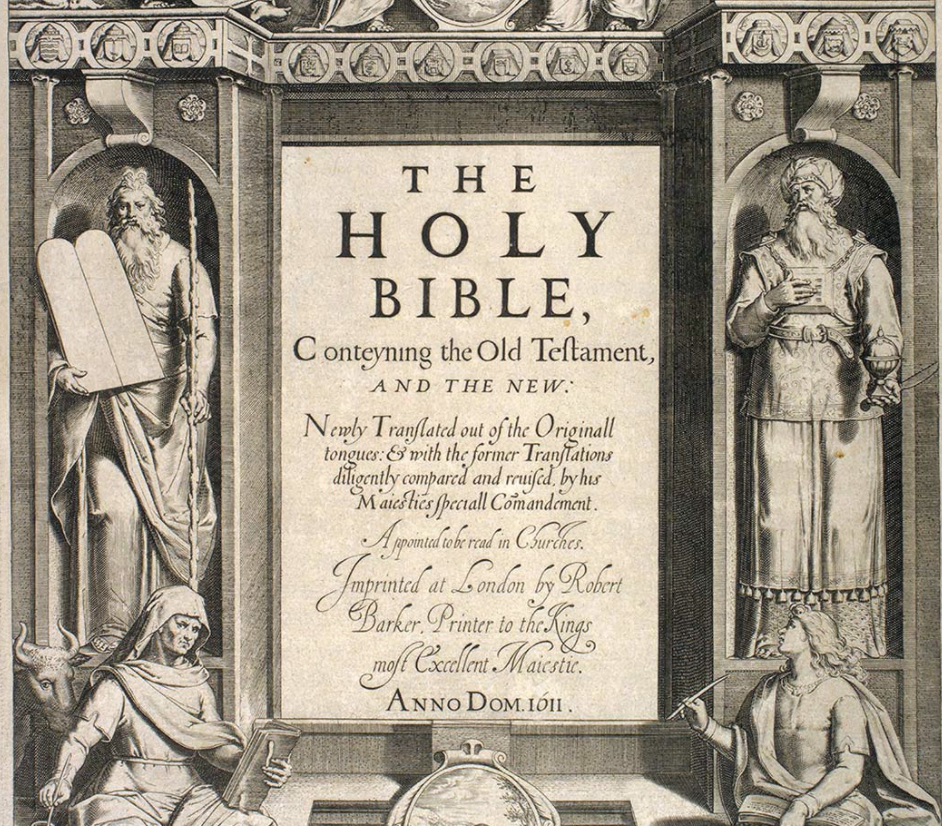
As religion writers (and historians) know, the 1611 King James Version of the Bible begat the 1952 Revised Standard Version, which begat the 1989 New Revised Standard Version which now begets the new "Updated Edition" of the NRSV.

It’s the "NRSVue" — a surefire news topic. This Bible will be available in ebook format by Christmas and in print around next May 1.

Media might issue advance articles about this production or wait for reactions to the complete text from reviewers or local clergy and parishioners. A 36-page media memo provides an advance look, accessible here. For further queries contact Friendship Press at info@friendshippress.org or CEO Joseph Crockett at joseph@frienshippress.org.

The NRSV copyright is held by the National Council of Churches, a cooperative body of the “Mainline” Protestant and Orthodox denominations. It assigned this rewrite to the Society of Biblical Literature, a professional guild of university and seminary scholars, whose 63-member team made approximately 12,000 "substantive" changes and thousands more that are trivial. The team consulted African-American church leaders, a group said to be "historically excluded" from prior Bible translation projects.

The result "improves" upon the original NRSV policy "to eliminate masculine-oriented language when it can be done without altering passages that reflect the historical situation of ancient patriarchal culture." The church council says both of its versions seek to be "as free as possible from the gender bias inherent in the English language."

A typical example is saying "brothers and sisters" when the original Greek literally said only "brothers" but was referring generally to people of both genders. The update omits footnotes that specify what the Greek said. Plural pronouns will abound, which depending on the translation can occasionally make the antecedent unclear or miss the direct force of a singular pronoun. In the rewrite, the Bethlehem "wise men" are now "magi."

Both the 1989 and 2021 renditions leave language about God undisturbed. "He" is still permitted and He remains the "Lord" and "Father."

Please respect our Commenting Policy

From Off Broadway to movie screens: The complicated conversion story of C.S. Lewis

From Off Broadway to movie screens: The complicated conversion story of C.S. Lewis

While historians argue about what C.S. Lewis did or didn't say, it can be stated with absolute certainty that the Oxford don never patted down his rumbled, professorial tweed jacket before exclaiming, "Where's my phone?"

That line occurs at the start of "The Most Reluctant Convert," as actor Max McLean enters a movie set preparing for the first scene. Seconds later, the camera follows him into the real Oxford, England, where Lewis was a scholar and tutor at Magdalen College.

At first, the famous Christian writer explains how he became an atheist. When he walks into the real White Horse pub, he orders two pints of beer, with one for the viewer. Soon, scenes from his memories spring to life, with Lewis striding through them as a narrator.

"Lewis is in his imagination. He's personified in his thoughts. … I do think that the structure emerged out of the fact that Lewis had a lot to say," said McLean, laughing.

Thus, director Norman Stone -- a BAFTA winner for BBC's "Shadowlands" -- let the "voice of Lewis articulate his struggle, his passion. He is one of those rare individuals where one's intellect, one's emotions and one's spirituality are completely intertwined," said McLean.

All of this is second nature to McLean since the film covers much of the same territory as his own "C.S Lewis Onstage." This was a one-man show at the Fellowship for Performing Arts in New York City, an off-Broadway company McLean founded and guides as artistic director. It has staged other Lewis works, such as "The Screwtape Letters" and "The Great Divorce," drawing warm reviews from The New York Times and other major publications.

The first-person narration, explained McLean, was primarily drawn from Lewis' autobiography, "Surprised by Joy," and the many volumes of his personal letters.

The jump from stage to screen, of course, allowed the film's creators to seek permission to film in some of the most important sites linked to Lewis' life.


Please respect our Commenting Policy

Many like to speculate: What was the biblical 'thorn in the flesh' that plagued St. Paul?

Many like to speculate: What was the biblical 'thorn in the flesh' that plagued St. Paul?

THE QUESTION:

What was the biblical "thorn in the flesh" that so plagued St. Paul?

THE RELIGION GUY'S ANSWER:

We'll never be sure. But the question is perennially fascinating.

"Thorn in the flesh" is one of many commonplace phrases we take from the Bible. It appears in 2 Corinthians chapter 12, where St. Paul writes that he knew "a man" -- modestly referring to himself -- who was "caught up into Paradise and heard things that are not to be told." He describes the aftermath of his powerful experience in verses 7-9:

To keep me from being too elated, a thorn was given me in the flesh, a messenger of Satan to torment me, to keep me from being too elated. Three times I appealed to the Lord about this, that it would leave me, but he said to me, “My grace is sufficient for you, for power is made perfect in weakness.” So, I will boast all the more gladly of my weaknesses, so that the power of Christ may dwell in me. (New Revised Standard Version)

Other English translations say "arrogant," "conceited," "lifted up," "proud" or "exalted" instead of "elated."

Christians through history have pondered what so plagued this New Testament writer and Christian founder (though we can imagine his close colleagues knew). Some say it was a interior spiritual or psychological challenge, while others see opponents, obstacles or persecution his pioneer missionary work coped with.

Many focus on the telltale word "flesh" and insist it must have been some physical malady.


Please respect our Commenting Policy

People have been asking: Is the COVID vaccine the Bible's sinister 'mark of the beast'?

People have been asking: Is the COVID vaccine the Bible's sinister 'mark of the beast'?

THE QUESTION:

Is the COVID vaccine the biblical "mark of the beast"?

THE RELIGION GUY'S ANSWER:

Many odd anti-vaccination rumors with murky origins are floating around social media, alarming healthcare workers as they combat a virus that has killed 720,000 Americans and counting.

Take the "mark of the beast" claim. The Guy can confidently answer "no" to this question, based upon the strong consensus among Bible experts, both those who take the Bible portion at issue -- Revelation chapter 13 -- literally and those who follow symbolic interpretations.

The beast, identified with the famously sinister number "666" and the "mark," is found in the final book of the Bible, whose images have always been subject to a wide variety of fanciful interpretations. Over the centuries, some have identified the beast as the pope, Napoleon, Stalin, Hitler and many other leaders.

Let's clear the ground just a bit.

There are five basic ways to understand the last 18 chapters of this "revelation of Jesus Christ" to "his servant John."

* A "preterist" says the imagery depicts past events that faced early Christians living under the Roman Empire.

* The "historical" school sees church scenarios across the centuries.

* A "futurist" insists these are literal events that still lie ahead of us.

* The "spiritual" school advocates a symbolic presentation of realities with no specific historical application, past, present, or future.


Please respect our Commenting Policy

Thinking about covering news about exorcisms? Journalists need this kind of book

Thinking about covering news about exorcisms? Journalists need this kind of book

This is typically the time of year when book publicists love to send out press releases about new books that have something to do with Oct. 31.

Halloween has become one of those festivities that have grown in popularity over the last few decades. Once relegated to just being a night for children to dress up and go trick-or-treating, Halloween has grown into a commercial holiday right up there with Christmas. For many, it is the centerpiece of the fall season.

For publishers, it’s also the chance to push books that have to do with evil, demons, witches, witchcraft, ghosts and the supernatural in general. Even Roman Catholic publishers have gotten into this game. Thus, see this book: “Diary of an American Exorcist” (Sophia Institute Press) by Father Stephen Rossetti, a priest and well-known exorcist.

Yes, exorcism. This is frequently a subject that shows up in news coverage, as well as popular culture. Every few years, it seems like we see another wave of headlines about the Roman Catholic Rite of Exorcism. Here’s a recent example — an Associated Press report on exorcism rites after civic violence.

Reporters who want to cover this topic need some basic facts, prayers and scriptures. Thus, it would help to have a reference book or two. It’s not enough to have seen the 1973 horror film “The Exorcist,” one of the scariest movies ever made.

Back in April 2020, I reviewed the fascinating book “The Devil is Afraid of Me: The Life and Works of the World’s Most Famous Exorcist” by Gabrielle Amorth, a famous Catholic priest who performed scores of exorcisms over his lifetime.

In this new book, Rossetti details his experiences after having taken part in hundreds of exorcisms. As a press release with the book noted, “The point of this book isn’t to entertain. No: It’s to inform the American people — Catholic and non-Catholic alike — about the reality of the preternatural, and the tangible dangers posed by the evil beings that populate our world just outside our sensory perception.”

I know what some of you might be thinking. Exorcism? In 2021? Come on.


Please respect our Commenting Policy

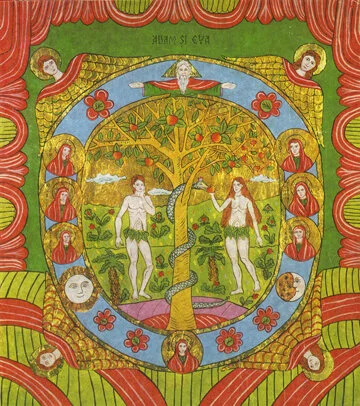
On the news budget once again: New Evangelical debates about Adam and Eve

On the news budget once again: New Evangelical debates about Adam and Eve

It's hard to beat William Lane Craig for conservative evangelical credentials.

This influential author and philosophy professor teaches at Houston Baptist University, where faculty members "must" believe in the Bible's divine inspiration and "that man was directly created by God." He's simultaneously a visiting scholar at California's Talbot School of Theology, where teachers commit to the beliefs that the Bible is "without error or misstatement" in its "record of historical facts" and that Adam was created by God and "not from living ancestors."

Craig is also a longtime member in good standing of the Evangelical Theological Society, whose members are required to affirm that the entire Bible is "the Word of God written and is therefore inerrant" as originally written. Trinity Evangelical Divinity School, where he formerly taught, likewise proclaims that the Bible is "without error."

But exactly how do those vows apply to the early chapters of the Bible's Book of Genesis?

Debates about this issue are frequently hooks for news stories, energized over and over again. Evolution and the creation of Adam and Eve have been allergic issues among evangelical Protestants in the 162 years since Darwin published "On the Origin of Species"?

So there's eye-opening stuff in Craig's article titled "The Historical Adam" in the current First Things magazine.

In Genesis 1-11, he asserts, those "fantastic lifespans" of primeval humans starting with Adam indicate "we are not dealing here with straightforward history."

Yet it's not simple fiction either, but rather an amalgam he calls "mytho-history, not to be taken literally," though there could be some overlap between the "the literary Adam of Genesis" over against the "historical Adam." He further explains that in the New Testament, Jesus and Paul were talking about that non-literal "literary Adam."

Given current science, Craig figures Adam and Eve lived 750,000 to a million years ago at the point of separation between Neanderthals and our own species of homo sapiens, with the latter endowed by God to surpass human-like animals that lacked rational thought. On that understanding, "the mythic history of Genesis is fully consistent with current scientific evidence concerning human origins."


Please respect our Commenting Policy

How is SBC supposed to work? Executive Committee ignites firestorm with sex-abuse logjam

How is SBC supposed to work? Executive Committee ignites firestorm with sex-abuse logjam

Welcome to Nashville, Liam Adams.

Enjoy the journalistic whiplash.

Adams, The Tennessean’s new religion writer, has received quite an introduction to the Godbeat in Music City.

Upon starting his new job last week, Adams immediately found himself covering two days of high-profile meetings by the Southern Baptist Convention’s executive committee.

He’s back at it this week, reporting on the committee again delaying “action on a third-party investigation into the committee’s handling of sexual abuse claims.”

“So I’m going to take a guess that this isn’t normally what happens in the Southern Baptist Convention, right?” Adams joked on Twitter. “Asking for a friend who just so happens to be in his second week reporting the news on all of this.”

Elsewhere, Religion News Service’s Yonat Shimron and Bob Smietana report that the “presidents of all six Southern Baptist seminaries have issued statements or tweets expressing their dismay at the Executive Committee’s unwillingness to act at the convention’s direction.”

According to Baptist News Global’s Mark Wingfield, new details have emerged about the committee’s handling of the investigation, “as outrage mounts among other Southern Baptist leaders.”

Read additional coverage by The Associated Press’ Holly Meyer (Adams’ predecessor at The Tennessean) and Christianity Today’s Kate Shellnutt.

For more context, see our past Plug-ins — here, here and here — focused on the Southern Baptist controversy.


Please respect our Commenting Policy

Death of a post-theist shepherd: The unorthodox faith of Bishop John Shelby Spong

Death of a post-theist shepherd: The unorthodox faith of Bishop John Shelby Spong

Newark Bishop John Shelby Spong never stuck "Why Christianity Must Change or Die" on the doors of Canterbury Cathedral, since it was easier to post a talking-points version of his manifesto on the Internet.

"Theism, as a way of defining God is dead," he proclaimed, in 1998. "Since God can no longer be conceived in theistic terms, it becomes nonsensical to seek to understand Jesus as the incarnation of the theistic deity."

Lacking a personal God, he added, it was logical to add: "Prayer cannot be a request made to a theistic deity to act in human history in a particular way."

Spong's 12-point take on post-theism faith emerged after spending years on the road, giving hundreds of speeches and appearing on broadcasts such as "The Oprah Winfrey Show" and "Larry King Live." While leading the Episcopal Diocese of Newark, within shouting range of New York City, he did everything he could to become the news-media face of liberal Christianity.

By the time of his death at the age of 90, on Sept. 12 at his home in Richmond, Va., Spong had seen many of his once-heretical beliefs -- especially on sex and marriage -- normalized in most Episcopal pulpits and institutions. However, his doctrinal approach was too blunt for many in the mainline establishment, where a quieter "spiritual but not religious" approach has become the norm.

Spong called himself a "doubting believer" and said he had no problem reciting traditional rites and creeds because, in his own mind, he had already redefined the words and images to fit his own doctrines. He also knew when to be cautious, such as during Denver visit in the late 1980s -- an era in which the Diocese of Colorado remained a center for evangelical and charismatic Episcopalians.

After a lecture at the liberal St. Thomas Episcopal Church, I asked Spong if he believed the resurrection of Jesus was an "historic event that took place in real time."

"I don't think that I can say what the disciples believed they experienced. I'll have to think about that some more," he said, moving on to another question.


Please respect our Commenting Policy

New York Times dares to interview Stephen Strang, a major player in Pentecostal media

New York Times dares to interview Stephen Strang, a major player in Pentecostal media

On the Sunday I was returning to the United States from an international trip, the New York Times ran a surprising story on a religion beat insider that, frankly, I never thought they’d touch.

All sorts of folks were sending me links to a business story on Stephen Strang, someone who is widely known in the charismatic universe but not so well known in wider Christian circles.

Yet, Times freelancer Sam Kestenbaum swooped down and delivered an informative, timely piece, which started as follows:

This spring, the media mogul Stephen E. Strang made an unusual apology to readers in the pages of his glossy magazine.

Mr. Strang presides over a multimillion-dollar Pentecostal publishing empire, Charisma Media, which includes a daily news site, podcasts, a mobile app and blockbuster books. At 70, he is a C.E.O., publisher and seasoned author in his own right. Despite all that, Mr. Strang worried something had gone awry.

“I’ve never been a prophet,” he wrote in a pleading March editor’s note. “But there were a number of prophets who were very certain that Trump would be elected.”

This had not come to pass. Mr. Strang continued, “I hope that you’ll give me the grace — and Charisma Media the grace — of missing this, in a manner of speaking.”

That was a back entrance into a story on the “Trump prophets,” which were dozens of well-known Pentecostal personalities who falsely prophesied that President Donald Trump would win a second term. Although a few apologized when it was clear Joe Biden would be taking the oath of office on Jan. 20, many refused, succumbing to fantasy theories that the election had been stolen.

(I’ve been covering the prophets story since late last year and earlier this year for GetReligion here, here and here, plus begging other religion writers to get up to speed with modern-day Pentecostalism and the way Pentecostals and their sister movement, the charismatics, was the spirituality of choice in the Trump White House.

Kestenbaum specializes in religion-news-of-the-weird pieces for the Times , and maybe, to him, Strang is weird. Oddly, the story (whose news hook is Strang’s newest book) ended up in the business section. My fav quote in the whole piece:

Mr. Strang seems to have discovered that one way to handle being publicly wrong is to change the subject and to pray readers stick around.

Yes, that’s what the whole prophecy movement has been doing since January. The next chunk of copy is the why-you-should-read-this part:

Beyond the spiritual test of unrealized prophecies, there are very earthly stakes here: Under Mr. Strang’s stewardship, Charisma had grown from a church magazine to a multipronged institution with a slew of New York Times best sellers, millions of podcast downloads and a remaining foothold in print media, with a circulation of 75,000 for its top magazine.

It is widely regarded as the flagship publication of the fast-growing Pentecostal world, which numbers over 10 million in the United States. With its mash-up of political and prophetic themes, Charisma had tapped a sizable market and electoral force. In 2019, one poll found that more than half of white Pentecostals believed Mr. Trump to be divinely anointed, with additional research pointing to the importance of so-called prophecy voters in the 2016 election.

His numbers are way too low; Pew Forum says charismatics and Pentecostals comprise about 23 percent (you heard that right) of the American population, so we’re talking about 65 million people. If that sounds like a lot of people, remember, this number includes charismatic Catholics.

As I read through the piece, I thought Kestenbaum hit it square on the nose many times.


Please respect our Commenting Policy