Books

When the FBI infiltrates a Bible study, why does CNN say it was a fake 'Bible study'?

When the FBI infiltrates a Bible study, why does CNN say it was a fake 'Bible study'?

Every so often, one comes across a news story that’s beyond odd.

Ever since the Jan. 6 attack on the U.S. Capitol, law enforcement has been trying to get to the bottom as to who and what were the planners for all this. We all know that. But this time around, the FBI infiltrated something new — a Bible study in Alexandria.

Or, as many media are saying, a “Bible study.”

Look at this part of a CNN piece. The key is to try to find some information on a specific religious institution or movement linked to this activity:

The FBI has infiltrated a "Bible study" group in Virginia that after the January 6 riot had members discussing surveilling the US Capitol and their wish for secession from the US, and investigators closely followed one member's plans to build and test Molotov cocktails, according to recently unsealed court records.

The newly disclosed criminal case against Virginia man Fi Duong -- who also goes by "Monkey King" and "Jim," according to the court record -- arose after Duong interacted with undercover law enforcement officers several times on January 6 and into recent months, when the FBI ultimately gained access to his group in Virginia then accompanied him to an old jail as Duong allegedly pursued bomb-building.

Looks like an FBI agent befriended Duong and began hanging out with him and his friends.

Duong told the FBI agent that his group tried to be "cloak and dagger" and wanted to "build resistances," according to court records. The agent then attended what the group members called a "Bible study" meeting at an Alexandria, Virginia, house in February, where the group members discussed the Bible and secession, weaponry and combat training, and using methods to make their communications private, according to court records.

One person in the group commented at the meeting about creating "a semi-autonomous region" for Virginia. "I like the Constitution; I don't like the Democratic sh*t this region keeps voting for," the person said, according to the FBI.

I’m curious why the scare quotes are put around this Bible study group when it’s obvious there really was discussion about the Bible at this gathering. I listened to CNN’s video alongside the article and the reporter called the gathering “a so-called Bible study meeting.”


Please respect our Commenting Policy

Once again, U.S. Supreme Court chooses to punt on a major religious liberty case

Once again, U.S. Supreme Court chooses to punt on a major religious liberty case

Florist Barronelle Stutzman and Robert Ingersoll have shared many details from the 2013 conversation that changed their lives and, perhaps, trends in First Amendment law.

For nine years, Ingersoll was a loyal customer at Arlene's Flowers in Richland, Wash., and that included special work Stutzman did for Valentine's Day and anniversaries with his partner Curt Freed. Then, a year after the state legalized same-sex marriages, Ingersoll asked her to design the flower arrangements for his wedding.

Stutzman took his hand, Ingersoll recalled, and said: "You know I love you dearly. I think you are a wonderful person, but my religion doesn't allow me to do this."

In a written statement to the Christian Science Monitor, Ingersoll wrote: "While trying to remain composed, I was … flooded with emotions and disbelief of what just happened." He knew many Christians rejected gay marriage but was stunned to learn this was true for Stutzman.

As stated in recent U.S. Supreme Court documents: "Barronelle Stutzman is a Christian artist who imagines, designs and creates floral art. … She cannot take part in or create custom art that celebrates sacred ceremonies that violate her faith."

This legal drama appears to have ended with Stutzman's second trip to the high court and its July 2 refusal to review a Washington Supreme Court decision the drew a red line between a citizen's right to hold religious beliefs and the right to freely exercise these beliefs in public life. Supreme Court justices Clarence Thomas, Samuel Alito and Neil Gorsuch backed a review, but lacked a fourth vote.

"This was shocking" to religious conservatives "because Barronelle seemed to have so many favorable facts on her side," said Andrew T. Walker, who teaches ethics at Southern Baptist Theological Seminary.

Stutzman is a 76-year-old grandmother and great-grandmother who faces the loss of her small business and her retirement savings. She has employed gay staffers. She helped Ingersoll find another designer for his wedding flowers. In the progressive Northwest, her Southern Baptist faith clearly makes her part of a religious minority.

"Barronelle is a heretic because she has clashed with today's version of progressivism," said Walker.


Please respect our Commenting Policy

New podcast: When preachers copy preachers -- is this an old story or something new?

New podcast: When preachers copy preachers -- is this an old story or something new?

As longtime GetReligion readers may know, my father was a Southern Baptist minister, spending his whole career in Texas pulpits and hospitals.

I heard him, from time to time, gently correct people who called him “preacher.” He would note that he wasn’t a “preacher,” he was a pastor. Brother Bert’s life and ministry were not defined by his pulpit work, although I always admired his ability to teach the Bible to laypeople.

Like it or not, preaching is the crucial skill — almost a Darwinian performance art — in the world of megachurches and evangelical power. Superstar clergy, about 99% of the time, are known for their preaching skills, even in liturgical-church traditions. The styles may differ, from one church brand to another, but growing churches usually have orators who can pull people into the pews.

That was the subject looming over this week’s “Crossroads” podcast (click here to tune that in), which focused on a strong Religion News Service report about the #Sermongate controversy surrounding the new leader of the Southern Baptist Convention. The headline: “New SBC President Ed Litton apologizes for using JD Greear sermon quotes without credit.” Here is some crucial material right up top:

A video posted on YouTube Thursday (June 24) showed clips of a ­­­January 2020 sermon on the New Testament book of Romans from Litton and clips from a January 2019 sermon on the same Bible passage from J.D. Greear, whose term as SBC president ended in June.

At several points, the comments from the two preachers are nearly identical. … The two pastors also say very similar things about homosexuality, which both believe is sinful.

But they each say Christians have erred by treating sexual sin as if it is worse than other sins — and singling out LGBT people as the worst of sinners.

What does “nearly identical” look like?


Please respect our Commenting Policy

Chris Hillman of the Byrds on fame, faith and the roots-music ties that bind

Chris Hillman of the Byrds on fame, faith and the roots-music ties that bind

The Byrds' classic "Turn! Turn! Turn!" didn't sound like anything on the radio when it hit No. 1 on the Billboard charts in 1965.

For starters, the lyrics came from the Book of Ecclesiastes, noting "there is a season, and a time for every purpose, under Heaven. A time to be born, a time to die. A time to plant, a time to reap. A time to kill, a time to heal. A time to laugh, a time to weep."

What critics failed to realize, said Byrds co-founder Chris Hillman, was that covering the late Pete Seeger's classic was a logical move for musicians steeped in American roots music. Songs about struggle, glory, sacrifice and faith were common in early '60s folk concerts.

"Where did all of our music come from? Blues and Gospel. … White church, black church, the music all came from church," said Hillman, in a recent interview. "With the Byrds, we went right to that well. We didn't think twice about it. We didn't say, 'We can't do a Christian song.' "

Hillman's musical roots became more obvious as the Byrds ventured into what many started calling "country rock," especially with the landmark "Sweetheart of the Rodeo" album in 1968. Bluegrass, country and Gospel themes played a larger role as Hillman began writing songs for the Byrds and his later bands.

While the Byrds put him in the Rock & Roll Hall of Fame, it was Hillman's grassroots connections that made history, according to the legend who produced his "Bidin' My Time" solo project in 2017. The late Tom Petty said: "Chris was a true innovator -- the man who invented country rock. Every time the Eagles board their private jet, Chris at least paid for the fuel."

That musical and spiritual journey is clear in Hillman's recent autobiography, "Time Between," with its mix of rock lore and personal reflections. Rather than offering a tell-all about sex, drugs and rock 'n' roll, Hillman focuses on lessons he learned along the way and his love for the musicians who, flaws and all, helped him.


Please respect our Commenting Policy

Demographics make news: How will religion shape the oncoming Birth Dearth and vice versa?

Demographics make news: How will religion shape the oncoming Birth Dearth and vice versa?

A Newsweek magazine feature back in 1975 was headlined "The Cooling World." (Journalists beware: The supposed 1977 Time magazine cover story "How to Survive the Coming Ice Age" is among the countless frauds that infest the Internet.)

Eventually, cultural concern shifted instead to "global warming" (which was then rebranded as "climate change").

Seven years before Newsweek's freeze alarm, Stanford University biologist Paul Ehrlich published his apocalyptic "The Population Bomb," which sold in the millions and updated Thomas Malthus's dire demographic predictions from 1798. Ehrlich warned, for example, that due to global overpopulation, in the 1970s "hundreds of millions of people are going to starve to death." He then helped found the Zero Population Growth organization (since rechristened Population Connection).

Now comes The New York Times with a major page-one May 23 feature headlined "Long Slide Looms for World Population, With Sweeping Ramifications." We're told fertility rates are falling most everywhere except Africa south of the Sahara Desert, and that experts project the first population decline in world history will take hold by the end of this century. Click here for tmatt’s podcast and first take on some of the religion hooks in that story.

Stagnant and shrinking populations will thrill a segment of environmentalists, but these trends also destabilize society — which creates news. Whether with the shared responsibilities families have always assumed, or modern-day governments' social security systems, humanity must have enough younger workers carrying older people to sustain itself.

To keep the population stable, a society needs 2.1 children in the average nuclear family. A survey in The Lancet last year predicted that 183 of the world's 195 nations and territories are on a path to fall below that mark.

The particulars are staggering. The United States is well below that replacement number, and India and Mexico are nearly there, but South Korea has plummeted to a remarkable 0.92.


Please respect our Commenting Policy

Plug-In: Tulsa Massacre centennial -- focusing on repentance, reconciliation, reparations

Plug-In: Tulsa Massacre centennial -- focusing on repentance, reconciliation, reparations

TULSA, Okla. — Today marks the 100th anniversary of the Tulsa Race Massacre, a truly dark moment in America’s history.

At the centennial, a prayer room at a downtown Tulsa church focuses on the sins of 1921 while asking God to bring healing, as I report here at ReligionUnplugged.com.

In separate dispatches for The Christian Chronicle, I explain how faith drives two leading advocates fighting for massacre justice and detail the racial unity effort by two Tulsa-area ministers — one Black, one White.

New Associated Press religion writer Peter Smith reports from Tulsa on how houses of worship commemorated the massacre Sunday.

At The Oklahoman, longtime faith editor Carla Hinton and her colleagues offer in-depth coverage, including a compelling story on how a modern-day Moses helped rebuild Tulsa’s Mount Zion Baptist Church.

A strong narrative piece by AP’s Aaron Morrison opens with a scene from Vernon African Methodist Episcopal Church, a congregation involved in a massacre reparations lawsuit that Religion News Service’s Adelle M. Banks highlights.

Check out the Tulsa World, too, for the latest developments, including a last-minute cancellation of a planned centennial event featuring John Legend and Stacey Abrams.


Please respect our Commenting Policy

Did Winston Churchill believe in God? Why did Churchill urge his nation to pray?

Did Winston Churchill believe in God? Why did Churchill urge his nation to pray?

THE QUESTION:

Did Winston Churchill believe in God?

THE RELIGION GUY'S ANSWER:

Sorta. Maybe. Depends what you mean.

The question and that answer are raised in the new book "Duty & Destiny: The Life and Faith of Winston Churchill" (Eerdmans) by Grove City College historian Gary Scott Smith, whose prior works include "Faith and the Presidency from George Washington to George W. Bush."

It's fair to say that during World War Two Churchill saved the United Kingdom and with that the broader prospects for democracy and the defeat of tyranny. In the prior century, the Civil War President Abraham Lincoln had saved the United States and the very possibility of democracy. These two great statesmen, the subjects of an immense number of books, are rather similar -- and similarly mysterious -- when it comes to religious faith.

Lincoln's story is well told in "Abraham Lincoln: Redeemer President" (also from Eerdmans) by Princeton Professor Allen Guelzo. Never a baptized church member and a youthful skeptic, Guelzo wrote, Lincoln when leading the nation through unprecedented crisis experienced a spiritual turn. This convinced him that only a moral revolution to end slavery could bring meaning to the war's horrid slaughter.

Thus he wrought the Emancipation Proclamation, announced in 1862 and proclaimed in 1863 and then, definitively, the 13th Amendment, which abolished slavery as of December 6, 1865, after he had been assassinated.

Churchill (1874-1965) underwent conventional baptism and confirmation in the Church of England. In the upper-crust mode, his neglectful and non-religious parents left his upbringing to boarding schools (with their mandatory chapels) and especially to his beloved nanny. Elizabeth Everest, a devout Christian, immersed the lad in prayer and study of the Bible, which through life he would quote at length by memory.


Please respect our Commenting Policy

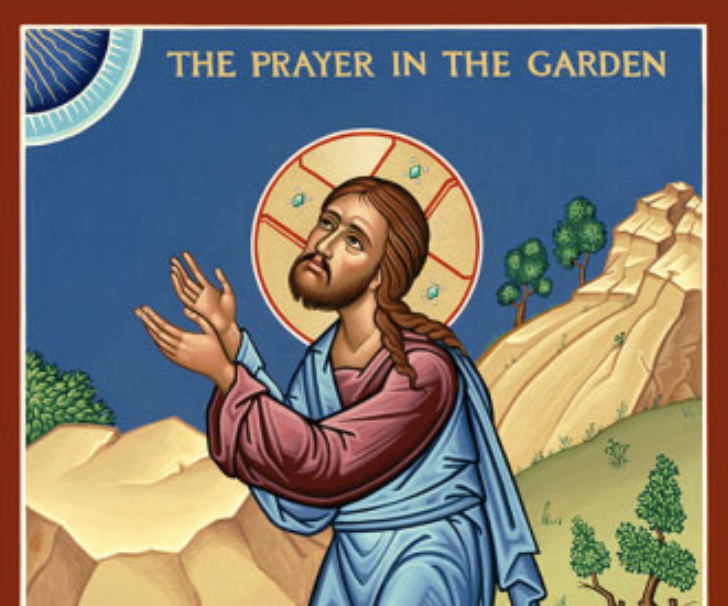
Was Jesus truly without sin? Did he have doubts? Do these questions matter to anyone?

Was Jesus truly without sin? Did he have doubts? Do these questions matter to anyone?

THE QUESTIONS:

Was Jesus Christ totally without sin? Does it matter?

THE RELIGION GUY'S ANSWER:

Christian tradition says yes, and yes.

This month, related discussions with weighty implications popped up online, so The Religion Guy takes a look at this belief, which dates from the very earliest days of church history. But we begin with the fact, perhaps surprising to Christians, that Jesus' sinlessness is also taught by Islam. These two faiths combined engage upwards of 4 billion people.

In the Quran's account of Jesus' birth, older English translations of verse 19:19 say the child is "holy," but modern versions by Majid Fakhry (endorsed by the authoritative Al-Azhar University), A.S. Abdel Haleem, and Seyyed Hossein Nasr's team understand the Arabic adjective to mean the somewhat stronger "pure."

The Muslim belief is reinforced by a standard hadith saying of the Prophet Muhammad that "no child is born but that Satan touches, but when it is born it starts crying loudly because of being touched by Satan, except Mary and her Son.: (Sahih Al-Bukhari, 6.65.4550). Muslim commentators explain that Jesus, Muhammad and the other prophets may have made simple human mistakes but never sinned, that is, consciously violated the will of God.

Muhammad's mention of Mary befits Catholicism's Immaculate Conception, made mandatory dogma by Pope Pius IX in 1854. The Catholic Catechism states that "from the instant of her conception, she was totally preserved from the stain of original sin and she remained pure from all personal sin throughout her life."

Protestants dissent. But all Christians unite on Jesus' sinlessness, which is taught in four of the New Testament books:

-- "For our sake he [God] made him [Jesus Christ] to be sin who knew no sin, so that in him we might become the righteousness of God" (2 Corinthians 5:21).

-- "We have not a high priest who is unable to sympathize with our weaknesses, but one who in every respect has been tempted as we are, yet without sin" (Hebrews 4:15).

-- "He committed no sin" (1 Peter 2:22).


Please respect our Commenting Policy

'Nothing in particular' is the growing American religion niche few are studying

'Nothing in particular' is the growing American religion niche few are studying

While working on the 1985 book "Habits of the Heart," the late sociologist Robert N. Bellah met "Sheila," who described her faith in words that researchers have quoted ever since.

"I can't remember the last time I went to church," she said. "My faith has carried me a long way. It's Sheilaism. Just my own little voice." The goal was to "love yourself and be gentle with yourself. … I think God would want us to take care of each other."

A decade later, during the so-called "New Age" era, researchers described a similar faith approach with this mantra -- "spiritual but not religious."

Then in the 21st Century's first decade, the Pew Research Center began charting a surge of religiously unaffiliated Americans, describing this cohort in a 2012 report with this newsy label -- "nones."

Do the math. "Nones" were 10% of America's population in 1996, 15% in 2006, 20% in 2014 and 26% in 2019. This stunning trend linked many stories that I have covered for decades, since this past week marked my 33rd anniversary writing this national "On Religion" column.

Obviously, these evolving labels described a growing phenomenon in public and private life, said political scientist Ryan Burge of Eastern Illinois University, author of the new book, "The Nones: Where They Came From, Who They Are, and Where They Are Going."

But hidden under that "nones" umbrella are divisions that deserve attention. For example, the 2018 Cooperative Congressional Election Study found that 5.7% of the American population is atheist, 5.7% agnostic and 19.9% "nothing in particular."

"When you say 'nones' and all you think about is atheists and agnostics, then you're not seeing the big picture," said Burge, who is a contributor at the GetReligion.org website I have led since 2004. "Atheists have a community. Atheists have a belief system. They are highly active when it comes to politics and public institutions.

"But these 'nothing in particular' Americans don't have any of that. They're struggling. They're disconnected from American life in so many ways."


Please respect our Commenting Policy