Baptists

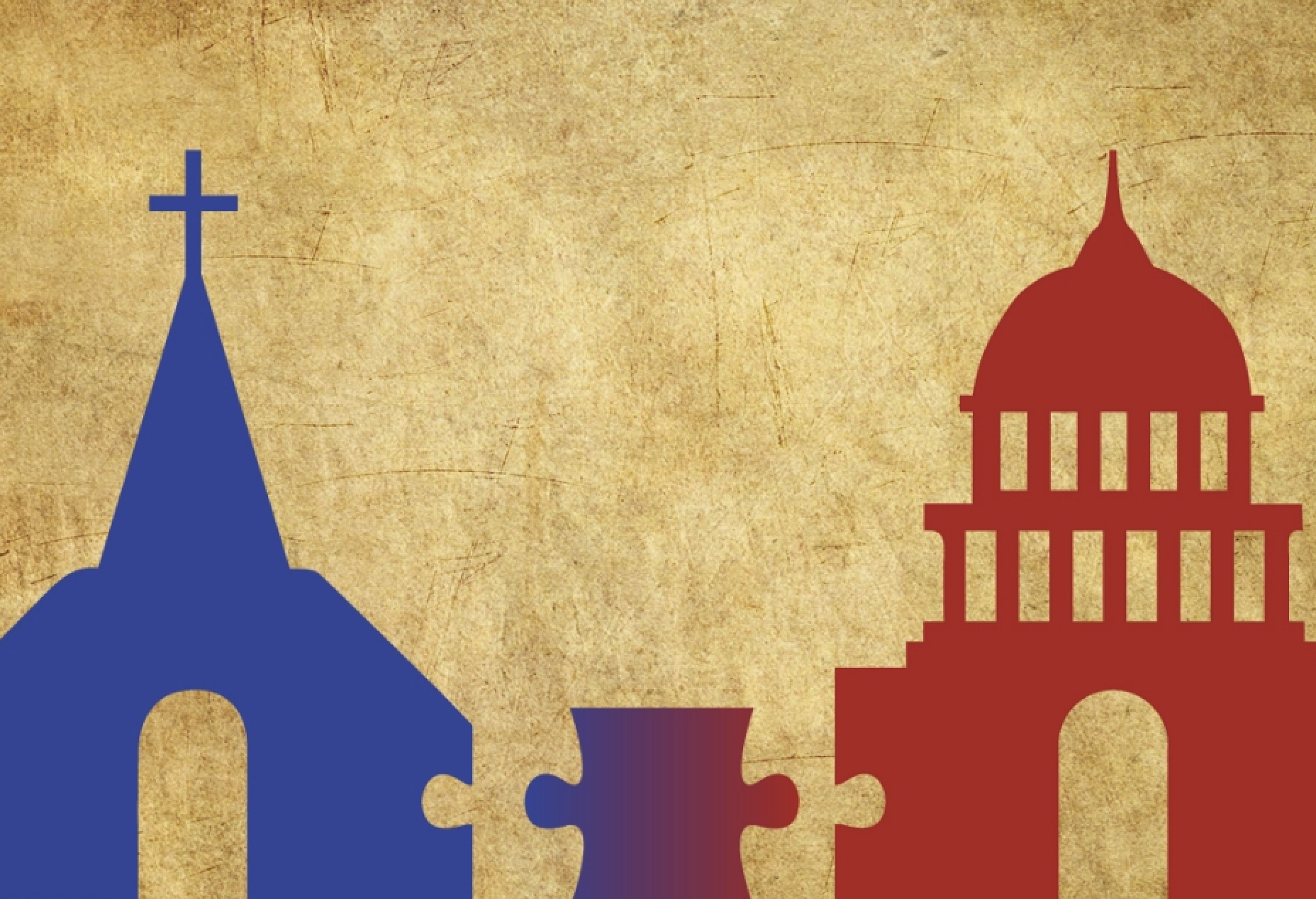
What kind of believers want to sit in pews surrounded by their political allies?

What kind of believers want to sit in pews surrounded by their political allies?

Just over half of churchgoing American Protestants went into the tense midterm elections believing that the people in the pews around them would vote the same way they did.

A Lifeway Research online survey in September found that 50% of those in its national panel agreed with the statement, "I prefer to attend a church where people share my political beliefs, while 55% agreed that "My political views match those of most people at my church." At the same time, 10% were not sure about the first question and 22% the second.

"What we are seeing is a pretty complex situation," said Scott McConnell, executive director at Lifeway Research. While churchgoers are divided on the need for political uniformity in their pews, there are enough believers who take that stance to prove that "this is not one or two people that pastors need to talk to and try to understand. This is a GROUP of people in most of our churches and that's something pastors have to deal with now."

This new survey began with questions used in 2017, he noted, and while the results are similar some new trends are clear. In the earlier survey, 51% of the respondents felt their church was politically homogenous, with only 11% "strongly" agreeing. Now, 21% strongly agree. Also, a rising number of believers assume they can predict the politics of others in their churches. In 2017, 30% were unsure if they shared the views of others in their congregations, but that number dropped to 22% this time.

In a survey result clashing with a popular stereotype, those with evangelical beliefs (44%) were less likely than non-evangelicals (54%) to say they wanted a church in which believers shared their political views. The survey defined "evangelical" in doctrinal terms, stressing beliefs such as, "The Bible is the highest authority for what I believe" and "Only those who trust in Jesus Christ alone as their Savior receive God's free gift of eternal salvation." Other significant results included:
Please respect our Commenting Policy

Podcast: More ink about crazy churches sinking down (maybe) into partisan politics

Podcast: More ink about crazy churches sinking down (maybe) into partisan politics

I’m hiding in a different set of mountains this week, but it’s my understanding that important political stuff has happened. Was that the midterm elections or something like that?

I also understand — based on reading stories on my smartphone — that those nasty evangelical churches had a bad week, in terms of getting “their candidates” elected. I know that because I wrote a post about that topic earlier this week, right before I fired up the electric car and rushed off to hide in the hills. That headline: “Crazy political stuff happening in churches right now, but which events get the elite ink?

We revisited that topic in this week’s “Crossroads” podcast (CLICK HERE to tune that in), as a way of dipping a toe into the churning midterm waters. The key to the discussion was trying to discern whether political-beat reporters — religion-beat pros tend to do much better work — understand what religious leaders are allowed to do when talking about “political” topics and politicos who are running for office.

This happens on the Religious Right and (#triggerwarning) even more on the Religious Left (click here for more on that from Baptist progressive Ryan Burge). But most of the political-beat coverage is built on scary passages like this one from a piece at The Guardian that ran with the headline, “He was chosen’: the rightwing Christian roadshow spreading the gospel of Trump.” The coverage focus on the ReAwaken rallies that blend lots of Donald Trumpian talk with nondenominational evangelical-speak. That sounds like this:

Mark Trudo, who runs his own swimming pool construction company near St Louis, is more optimistic, saying: “Right now I’m hopeful, I think things are going to turn around, a great awakening is taking place.”

Like most of his ReAwaken peers, he sees the current politics in apocalyptic terms: “The country is being taken away from us from within. This is good versus evil.”

Actual evil? As in satanic evil?

“Is God real, is Satan real? Yes, I believe they are,” he says.

Is Biden satanic?


Please respect our Commenting Policy

Crazy political stuff happening in churches right now, but which events get the elite ink?

Crazy political stuff happening in churches right now, but which events get the elite ink?

It’s that time, once again. It’s time for the mainstream press to be terrified of that fact that, for millions of Americans, the content of their religious beliefs frequently has implications for what happens inside voting booths on Election Day.

This happens all the time on both the Religious Left and the Religious Right, although it appears to be more common in sermons on the political left (click here for more on that from Baptist progressive Ryan Burge).

If you have any doubts about press concerns about this issue, see this recent collection of headlines from one of those daily Pew Research Center emails about religion in the news:

* Churches are breaking the law and endorsing in elections, experts say. The IRS looks the other wayProPublica

* Virginia pastor investigated for campaigning during church services — The Associated Press

* The senator-pastor from Georgia mixes politics and preaching on the trailThe New York Times

* Black church tradition survives Georgia’s voting changes — The Associated Press

* ‘We need to make America godly again.’ The growing political influence of Latino evangelicals — CNN

* Battle for Catholic vote inflames Pa. governor’s racePittsburgh Post-Gazette

Remember that GetReligion mantra: Politics is the true faith of most elite-newsroom professionals, who — functionally — believe that politics is the only answer If you want to get something done in the real world. Politics is real. Religion? Not so much. Thus, it is logical that religious faith is important to the degree that it affects politics.

Is the blue-zip-code press more worried about political influence on the conservative side of this equation? Of course, especially this soon after an earthquake like the fall of Roe v. Wade. I would also admit that, at the moment, the stunning rise of nondenominational, independent evangelical and Pentecostal churches has made it even harder for reporters to cover what is and what is not happening in the institutions that define conservative Christianity..

This brings me to that ProPublica investigation that hit social-media the other day: “Churches Are Breaking the Law by Endorsing in Elections, Experts Say. The IRS Looks the Other Way.


Please respect our Commenting Policy

Baptist life in Texas: Where did all of those Southwestern Baptist Seminary students go?

Baptist life in Texas: Where did all of those Southwestern Baptist Seminary students go?

I have no idea who said the following quote. But, somewhere in my young Texas Baptist life, I heard someone say: “Texas is the wallet on which the Southern Baptist Convention sits.”

OK, I cleaned up the grammar on that. It was probably: “Texas is the wallet Southern Baptists sit on.”

But the big idea was that there were so many Baptists in the Lone Star state — and so many different KINDS of Southern Baptists — that nothing could happen in the national SBC without taking into account the financial and statistical clout of Texas. Baptist diversity? Once upon a time, more than a few Texas Baptist preachers were basically Universalists with better preaching skills.

Thus, it’s important that, for the past quarter century or so, there have been TWO competing Southern Baptist conventions in the state — the conservative Southern Baptists of Texas and the old-guard Baptist General Convention of Texas. My father worked for the BGCT when I was in elementary school.

I can remember the old days when the state’s ink-on-paper Baptist Standard newspaper had legions of out-of-state subscribers, because many pastors wanted to scan the announcement pages to see when there were open jobs in Texas pulpits. Most of those readers were, logically enough, graduates of the then-massive Southwestern Baptist Theological Seminary.

This brings me to a much-discussed headline in the Nashville Tennessean: “Why a prominent Southern Baptist seminary is on the verge of 'crisis' after leadership upheaval.” This is a calm, factual story that, well, shows admirable restraint when it comes to some hot-button issues causing SBC tensions. These two names are missing, for example — Donald Trump and retired Judge Paul Pressler. But there is also a rather important hole linked to the Texas Baptist clout I mentioned earlier. Hold that thought.

First, here is the overture:

A prominent Southern Baptist seminary is taking corrective action as it reels from a cascade of financial mismanagement and reputational hits spanning several presidential administrations.


Please respect our Commenting Policy

The rise of nondenominational churches, a big news trend that's really hard to cover

The rise of nondenominational churches, a big news trend that's really hard to cover

Maybe the biggest story in American Christianity over the last 40 years is the incredible rise in
the share of Americans who identify as nondenominational Protestant Christians.

In the 1970s, they were just a rounding error in the religious landscape. That was then.

Today it’s impossible to ignore the number of nondenominational churches — the vast majority of which are evangelical or Pentecostal — that have sprouted up in every city, suburb and rural area in the United States.

There are likely more nondenominational Protestants in the United States today than Southern Baptists and mainline Protestants combined. Yet, they are somewhat of an enigma to those reporters who cover religion.

Why? Because it’s impossible to make a lot of generalizations about this movement. It’s hard to pin them down, even when doing basic research.

The religious groups that are part of this non-movement movement don’t have annual meetings that are easy to track and for journalists to cover. They don’t have national spokespersons.

What makes it even more difficult is that many of these churches are, to some degree, still aligned with a denomination, but don’t publicize that on their websites or make mention of that in worship services.


Please respect our Commenting Policy

Bobby Ross, Jr., tweets and tweets and tweets bonus coverage of that new SBC president

Bobby Ross, Jr., tweets and tweets and tweets bonus coverage of that new SBC president

Just a note from tmatt, even though the byline on this piece says Bobby Ross, Jr.

There’s a good reason for that.

The Rev. Bart Barber has certainly been in the news, of late — “Yes, Southern Baptists are talking about '60 Minutes' (while Ryan Burge keeps doing the math)” — and, as it turns out, chart-master Ryan Burge wasn’t the only GetReligionista who has been talking with him or about him.

Bobby wrote a profile piece on Barber the other day for the Associated Press (this has been happening more often, methinks) and, as it turns out, he had material left over from that interview that he put in lots, and lots, and lots of tweets.

A Bobby Ross tweetstorm?

You got it.

All of these short punchy sentences, in Ross style, means it’s time to let the tweet-storm begin.

Roll tweets, in this bonus Ross piece.

Ready?


Please respect our Commenting Policy

Story of 2022 finalists (hello Julia Duin) to speak at Religion News Association awards

Story of 2022 finalists (hello Julia Duin) to speak at Religion News Association awards

The Religion News Association will present its 2022 Awards for Religion Reporting Excellence in a ceremony next week at Columbia Journalism School in New York.

Finalists, for work produced in 2021, were announced in August. See the full list.

Wednesday night’s hybrid in-person and online event will feature a panel discussion by finalists for Religion Story of the Year, including:

• GetReligion’s own Julia Duin, for “The Christian prophets who say Trump is coming again,” for Politico. And click here for a post noting Duin’s work on this topic over the years.

Deepti Hajela (representing a team that included Luis Andres Henao and Mariam Fam), for “Two decades after 9/11, Muslim Americans still fighting bias,” for The Associated Press.

Emily Kaplan, for “The rise of the liberal Latter-day Saints,” for The Washington Post.

Marie-Rose Sheinerman, “‘Second class citizens’: LGBTQ students allege culture of alienation and fear at Yeshiva University,” for The Forward.

I plan to watch the ceremony and report on the winners in next week’s Plug-in. In case you missed it, ReligionUnplugged.com’s own Paul Glader and Michael Ray Smith earned third place for Religion Story of the Year last year for “God and guns: Why American churchgoers are packing heat.”

In other contest news, the American Academy of Religion has announced the recipients of its 2022 journalism awards: Peter Manseau, Dawn Araujo-Hawkins and Ken Chitwood for best in-depth newswriting and Mike Cosper, Monique Parsons and Kylie McGivern for best in-depth multimedia journalism. Read about all the winners.


Please respect our Commenting Policy

Podcast: Are (all) evangelicals the only folks tempted to gloss over candidates' sins?

Podcast: Are (all) evangelicals the only folks tempted to gloss over candidates' sins?

Oh my. It appears that editors at the New York Times has veered back into what could be called “evangelical voter monolith mode” once again.

I base that comment on the thesis paragraphs of a recent Times report that ran with the headline, “‘Saved by Grace’: Evangelicals Find a Way Forward With Herschel Walker.” That story was the hook for this week’s “Crossroads” podcast (CLICK HERE to tune that in). I will return to the Walker drama in a minute.

But before we go there, let’s pause and flash back to a Gray Lady report from a few months ago that ran with this headline: “As a ‘Seismic Shift’ Fractures Evangelicals, an Arkansas Pastor Leaves Home.” It’s the first half of that headline that interests us, right now. Here is some of the crucial language:

Across the country, theologically conservative white evangelical churches that were once comfortably united have found themselves at odds over many of the same issues dividing the Republican Party and other institutions. …

Michael O. Emerson, a sociologist at the University of Illinois Chicago, described a “seismic shift” coming, with white evangelical churches dividing into two broad camps: those embracing [Donald] Trump-style messaging and politics, including references to conspiracy theories, and those seeking to navigate a different way.

That’s accurate, of course. Anyone who has followed evangelical debates in the Trump era knows that the big story is rooted in tension, pain and divisions — not monolithic unity about how to approach politics.

At the same time, evangelicals are still facing a crushing binary reality when they approach election-day decisions — trying to decide, in some cases, between what they view as flawed GOP candidates and Democratic candidates whose stances on First Amendment and sanctity-of-life issues put them in a “can’t go there” category.

Evangelicals of various kinds do not agree on how to handle that, falling into camps that resemble the 2016 and 2020 national elections.

Thus, here is a flashback to my Trump-era evangelical voter typology from several years ago. When reading it this time, simply substitute “Walker” for “Trump” and apply these camps to White, Black (they exist) and Latino (they exist) evangelical/charismatic voters in Georgia.


Please respect our Commenting Policy

Yes, Southern Baptists are talking about '60 Minutes' (while Ryan Burge keeps doing the math)

Yes, Southern Baptists are talking about '60 Minutes' (while Ryan Burge keeps doing the math)

One thing is certain, if you follow political scientist Ryan Burge on Twitter. You are going to read quite a few things that you agree with and quite a few things with which you will disagree.

Here’s the key to that statement: It really doesn’t matter who “you” are. You can be a liberal mainline Protestant and you will read things that please you and things that infuriate you. Ditto, if you are Southern Baptist Convention leader.

If you are a religious “none,” in Pew Research Center terms, then Burge is mapping your life and beliefs, one chart after another. If you are a nondenominational, independent evangelical/charismatic leader, Burge was one of the first researchers who grasped that your world is now the fastest growing corner of the marketplace of American religion.

Burge makes many Southern Baptists mad. He also makes many Episcopalians and liberal mainliners mad, even though Burge is, himself, a progressive Baptist pastor/thinker as well as a political science professor at a state university. I would imagine, however, that leaders on the right and the left are learning that they are going to have to study the trends shown in all of those Burge charts on Twitter (and in his books).

To be honest with you, I can’t remember when I spotted Burge’s byline and I’m not sharp enough, in terms of computer skills, to spot the oldest item in the nearly 4,000 items that show up in a Google search for “Ryan Burge” and “Terry Mattingly.” I’m guessing 2018 or so. However, Burge has been cooperating with GetReligion for several years now, with me retweeting, oh, hundreds of his tweets with a “Yo. @GetReligion” slug. He also has allowed me to re-publish some of the essays he has written for the Religion in Public weblog (and for Religion Unplugged).

I bring all of this up for two reasons.

(1) Many news consumers who continue to follow legacy media may have seen him featured last night in a “60 Minutes” feature about the Rev. Bart Barber, the new president of the Southern Baptist Convention.

(2) Burge and I recently agreed on the format for a new GetReligion feature that we will call “Do the Math,” in which he will take four or five of his data-backed tweets and then connect them to spotlight trends that journalists need to follow.


Please respect our Commenting Policy