Baptists

Top U.S. evangelical seminaries, and seminaries in general, face critical financial issues

Top U.S. evangelical seminaries, and seminaries in general, face critical financial issues

On Memorial Day weekend in 1944 an adventurous group of evangelical Protestants filled the rented Orchestra Hall to launch "Chicagoland Youth for Christ."

The preacher for that day was an unknown greenhorn from a modest suburban church, the Rev. Billy Graham by name. Soon Youth For Christ was staging rallies every week at the Michigan Avenue musical shrine, with Graham as its first full-time evangelist. On Memorial Day weekend 1945, an even more audacious breakthrough event drew 60,000 or more to Soldier Field.

What was the origin of America's oft-rambunctious, complex and remarkably successful evangelical Protestant movement as we have come to know it?

Some will cite the 1942 formation of the National Association of Evangelicals by conservatives — including many in mainline Protestant churches — fleeing the old "fundamentalist" brand. But The Guy contends it was those Chicago spectacles leading into a nationwide "parachurch" organization with Graham as its charismatic leader.

The media and their audiences tend to see evangelicalism in terms of star preachers, megachurches, media, music, missions and more recently immersion in Republican political wars. Oh, yes, and scandals.

But the movement cannot possibly be understood apart from its beliefs as propounded by thinkers at graduate-level divinity schools and the students they trained. Their impact has been profound, and global in scope.

Three multi-denominational seminaries led the way, and their current woes — part of negative trends in theological education as a whole — are worth substantive journalistic analysis.

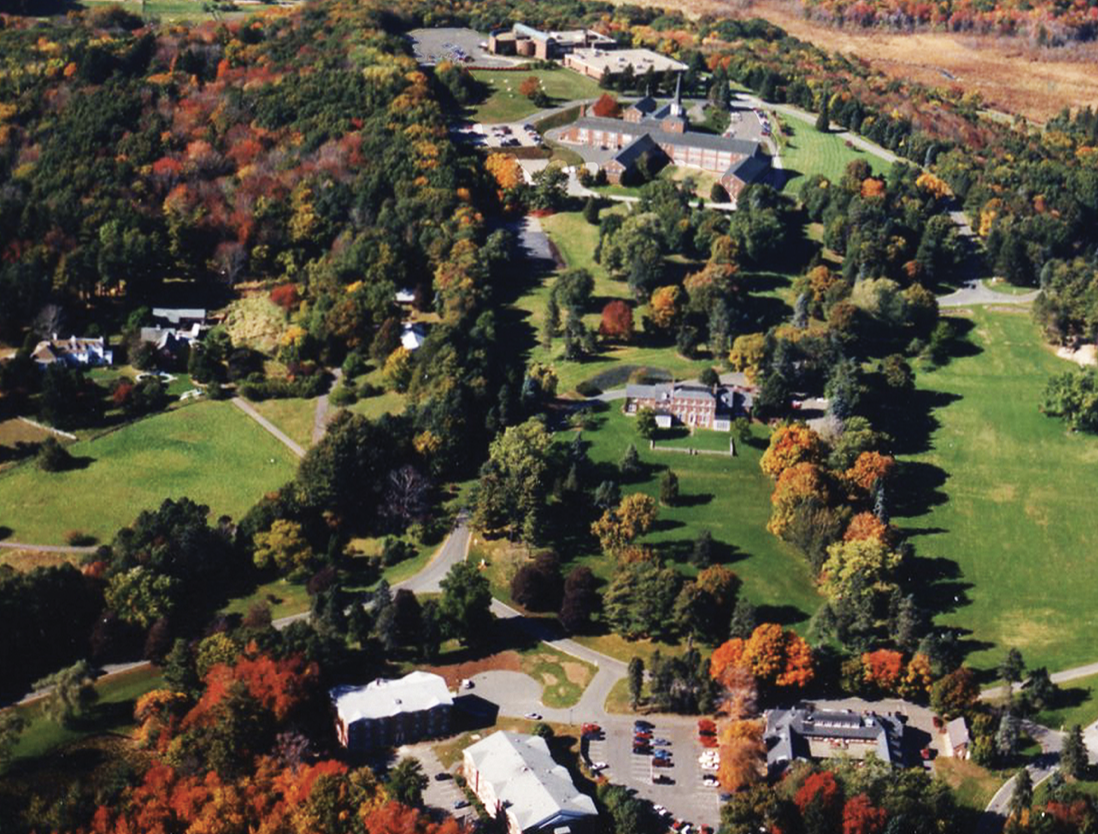
* Fuller Theological Seminary in Pasadena, California was the pioneer, founded in 1947, with Graham as a long-time backer and board member.


Please respect our Commenting Policy

Plug-In bonus: Southern Baptist sexual-abuse probe uncovers apocalyptic sins and crimes

Plug-In bonus: Southern Baptist sexual-abuse probe uncovers apocalyptic sins and crimes

“It is an apocalypse,” declares Russell Moore, former president of the Southern Baptist Convention’s Ethics and Religious Liberty Commission.

It is “far worse” than anything the Rev. Ed Litton, the 13.7 million-member denomination’s president, had anticipated, report the New York Times’ Ruth Graham and Elizabeth Dias.

It is a “bombshell” (per the Houston Chronicle’s Robert Downen and John Tedesco). It is “historic” (The Tennessean’s Liam Adams). It is a “blockbuster report” (Religion News Service’s Bob Smietana).

If you cheered for the movie Spotlight when it won an academy award, you will want to read this.

"Bombshell 400-page report finds Southern Baptist leaders routinely silenced sexual abuse survivors." https://t.co/GbTbd6M91f via @Froomkin

— Jay Rosen (@jayrosen_nyu) May 23, 2022

Sunday brought the long-awaited release of an independent investigation into sexual abuse in the Southern Baptist Convention, and damning might be too feeble a word to characterize the findings.

The bottom line, according to Guidepost Solutions’ 288-page report:

An unprecedented investigation of the Southern Baptist Convention’s top governing body found that an influential group of Baptist leaders systematically ignored, belittled and intimidated survivors of sexual abuse for the past two decades while protecting the legal interests of churches accused of harboring abusers.

The claims are “expected to send shock waves throughout a conservative Christian community that has had intense internal battles over how to handle sex abuse” (Washington Post’s Sarah Pulliam Bailey).


Please respect our Commenting Policy

Yes, NPR editors, Holy Communion isn't a semi-Baptist 'symbolic' rite for Catholic believers

Yes, NPR editors, Holy Communion isn't a semi-Baptist 'symbolic' rite for Catholic believers

If you read an early version of the National Public Radio story with this headline — “An archbishop bars Pelosi from Communion over her support for abortion rights” — you may have done a spit take of whatever beverage you were drinking and, thus, damaged your computer keyboard. How much damage does this do to smartphones and iPads? Beats me.

Clearly, some personnel in the NPR newsroom — perhaps pros at the politics desk — need refresher courses on church-history basics. It appears that someone at NPR thinks that Catholic doctrines about the mysteries of Holy Communion are very similar to Baptist beliefs about the ordinance that is usually called the Lord’s Supper.

Let’s start at the beginning.

The Catholic archbishop of San Francisco says that U.S. House Speaker Nancy Pelosi is no longer allowed to receive Communion because of her vocal support for abortion rights.

Salvatore Cordileone, the conservative archbishop, said he'd previously made his concerns known to Pelosi, D-Calif., in an April 7 letter after she promised to codify into federal law the right to abortion established by the Supreme Court in Roe v. Wade. Cordileone said he never received a response from Pelosi.

Here comes the crucial language that launched quite a few tweets, along with several heated emails to GetReligion:

Cordileone notified members of the archdiocese in a letter on Friday that Pelosi must publicly repudiate her support for abortion rights in order to take Holy Communion — a ritual practiced in Catholic churches to memorialize the death of Christ, in part by consuming a symbolic meal of bread and wine.

The key word there is “symbolic.”

That’s a very low-church Protestant word in this context. Ditto for the word “memorialize.”


Please respect our Commenting Policy

Left and right: Where do U.S. religious groups stand on abortion-rights issues?

Left and right: Where do U.S. religious groups stand on abortion-rights issues?

THE QUESTION:

Where do major U.S. religious groups stand on the contentious abortion issue?

THE RELIGION GUY’S ANSWER:

If the U.S. Supreme Court enacts that draft decision leaked to Politico, within weeks abortion policies will be returned to the 50 states for decision, adding to contention. Religious groups often consider the claims of the two lives, mother and unborn fetus, rather than this as simply a woman’s “decisions about her own body” per Vice President Kamala Harris’s formulation. Here are summaries of some major religious views.

It’s well-known that the Catholic Church, the largest religious body in the U.S. (and worldwide), profoundly abhors abortion, A 1965 decree from the world’s bishops at the Second Vatican Council declares that “from the moment of its conception, life must be guarded with the greatest care,” and calls abortion and infanticide “unspeakable crimes” against humanity. The church’s Catechism says the same and dates this belief back to Christianity’s first century (citing Didache 2:2 and Epistle of Barnabas 19:5).

These statements do not permit any exceptions. But a 1993 ruling from the Vatican office on doctrine, approved by Pope John Paul II, allowed removal of a woman’s uterus (hysterectomy) in “medically indicated” cases that “counter an immediate serious threat to the life or health of the mother” even though sterilization results. A 2019 follow-up defined other rare cases. Since abortion is only the directly intended killing of a fetus, some moral theologians would apply this principle when loss of a fetus is a “secondary effect” of necessary surgery.

America’s Eastern Orthodox hierarchy has joined with Catholic leaders to affirm “our common teaching that life begins at the earliest moments of conception” and is “sacred” through all stages of development. However, America’s 53-member Assembly of Canonical Orthodox Bishops acknowledges “rare but serious medical instances where mother and child may require extraordinary actions.”

At the opposite end of the spectrum, the Unitarian Universalist Association (UUA) advocated nationwide abortion on demand fully a decade before the Supreme Court’s Roe v. Wade liberalization, stating that limitations are “an affront to human life and dignity.” It specifically endorsed abortion rights in cases of “grave impairment” of the mother’s “physical or mental health,” a child’s “serious physical or mental defect,” rape or incest, or any “compelling reason — physical, psychological, mental, spiritual or economic.”


Please respect our Commenting Policy

Did the Washington Post profile of Karen Swallow Prior help critics understand her or not?

Did the Washington Post profile of Karen Swallow Prior help critics understand her or not?

It’s hard to do a critique of an elite-media feature about someone who is a real online friend.

But, in this case, there’s an issue that — at least to me — cannot be avoided in the glowing Washington Post religion-desk feature that ran the other day with this headline: “Karen Prior has worked for Roe's overturn for decades. This isn't what she'd hoped to feel.

Most fans of the “Notorious KSP,” I would imagine, loved this piece.

At the same time, I’m sure her worst critics loved it as well — for reasons linked to the journalism issue that I would like to spotlight in this post. It helps to understand that Prior has critics (and friends) who disagree with some things that she says and does and then she has critics that basically don’t want her to exist.

Meanwhile, anyone — worthy critics and supporters — who has followed KSP’s work through the years with any kind of an open mind knows the strength of her logic and (dare I say it) art when defending centuries of Christian doctrines about life issues, as well as marriage and sexuality. But to grasp that side of her life, and how it fits into the total package of her apologetics, people need to actually read or hear her address those topics.

This Post piece focuses, for the most part, on her actions and beliefs that have fueled controversy about her among some evangelicals (like me, she was #NeverTrump #Never Hillary in 2016). A more balanced profile of her would have included quoted material that would have — with good cause — offended, well, most Post readers and editors. Hold that thought, because I will come back to it.

The piece starts with Prior’s feelings of elation at the news that the U.S. Supreme Court appears to be poised to overturn Roe v. Wade.

Prior was shocked and thrilled. But within minutes the deep divisions and differences in priorities among antiabortion advocates came into view. After being put aside for decades as they worked together to overturn Roe, they had become impossible to ignore. While Chief Justice John G. Roberts Jr. took pains to say the leaked opinion may not be the final one, experts on abortion in America say even the potential of Roe’s demise is a turning point for the movement. If Roe falls, what does it mean to be for life now?

For Prior, it means much more than overturning Roe. It means more support for child care and pregnant women as well as supporting sex abuse victims, vaccinating as many people as possible against the coronavirus, and helping start and run an inner-city high school in Buffalo. But not all antiabortion activists agree and lately have begun splintering over next steps, such as whether to classify abortion as homicide and restrict contraception, as well as whether issues outside of reproduction even qualify as part of the “pro-life” cause.

Once again, this is an old, old story that is presented as something essentially new and, thus, linked to COVID-19, the Trump era and all kinds of “now” things. In reality, debates among evangelicals, and especially Catholics, about what it means to be “consistently pro-life” go back to the 1980s or earlier.


Please respect our Commenting Policy

Bravo! The New York Times reports that evangelicals are divided, not united on politics

Bravo! The New York Times reports that evangelicals are divided, not united on politics

If you stop and think about it, the latest New York Times feature about those dreaded White evangelicals includes a few signs of progress.

The good news is that the story focuses on the many ways White American evangelicals are divided, these days. That’s progress, since it undercuts the dominant news narrative of the years since 2016. You know the one: That White evangelicals from sea to shining sea just love Donald Trump and that’s that.

The truth was always more complex than that, but many blue-checkmark experts on Twitter really needed someone to blame for Trump. White evangelicals were the answer, of course, since it would have required a great deal of introspection to blame the Democratic Party for nominating Hillary Clinton — perhaps the only opponent that scared millions of depressed Americans more than Trump.

But back to the key truth in this Times report — which is that White evangelicals are divided, which is true, and that is certainly not the same thing as the myth of monolithic unity. For background, see this 2018 post: “Complex realities hidden in '81 percent of evangelicals' love Trump myth.”

At the heart of this story is a character that will be familiar to some news consumers — a conservative religious leader whose beliefs would normally cause heart attacks in blue-zip-code newsrooms, but this leader is shown to deserve sympathy because believers who are much worse are attacking him/her. (The irony in this case is that this particular pastor seems very familiar to me since he appears to represent the evangelicalism in which I was raised and that I greatly respect.)

The headline: “As a ‘Seismic Shift’ Fractures Evangelicals, an Arkansas Pastor Leaves Home.” Here’s the overture:

FORT SMITH, Ark. — In the fall of 2020, Kevin Thompson delivered a sermon about the gentleness of God. At one point, he drew a quick contrast between a loving, accessible God and remote, inaccessible celebrities. Speaking without notes, his Bible in his hand, he reached for a few easy examples: Oprah, Jay-Z, Tom Hanks.

Mr. Thompson could not tell how his sermon was received. The church he led had only recently returned to meeting in person. Attendance was sparse, and it was hard to appreciate if his jokes were landing, or if his congregation — with family groups spaced three seats apart, and others watching online — remained engaged.

So he was caught off guard when two church members expressed alarm about the passing reference to Mr. Hanks.


Please respect our Commenting Policy

Plug-In: Déjà Vu all over again, as religion plays big role in fight over Disney and sex ed

Plug-In: Déjà Vu all over again, as religion plays big role in fight over Disney and sex ed

I’ve never visited Walt Disney World, but I did make it to Disney church one Sunday.

Mickey, Minnie and friends are, as you might have noticed, key actors in the nation’s latest culture war skirmish.

Over the last week, the fight over Florida’s Parental Rights in Education bill — or, as critics call it, the “Don’t Say Gay” law — has made front-page headlines in the New York Times, the Wall Street Journal and the Los Angeles Times.

Call it Disney déjà vu.

The Los Angeles Times’ Ryan Faughnder asserts:

It’s a battle that, to people who have followed Disney’s history, has a familiar ring. The current conflict is just the latest clash to reveal underlying tensions that have existed between Disney and religious conservatives for decades as the company has increasingly embraced the LGBTQ community.

It has strong echoes of the anti-Disney protests of the late 1990s, when religious leaders criticized the extension of health benefits to the partners of LGBTQ Disney employees, the coming out of Ellen DeGeneres on her sitcom on Disney-owned ABC and unofficial “Gay Day” celebrations at the theme parks.

Religious broadcaster Pat Robertson, host of “The 700 Club,” warned the city of Orlando that it risked hurricanes by tolerating Gay Days. The Southern Baptist Convention in 1997 called for a Disney boycott after the nondenominational American Family Assn. campaigned against the Burbank entertainment giant by sending thousands of protest packets to pastors. The difference now is that, instead of brochures, there’s Fox News and Twitter.

A major development in the current brawl came Thursday, as the Wall Street Journal’s Arian Campo-Flores and Robbie Whelan report:

Florida lawmakers gave final approval to a bill that would end a special tax district that allows Walt Disney Co. DIS 0.07% ▲ to govern the land housing its theme parks, escalating a weekslong dispute with Disney over its public opposition to a Florida bill that limits classroom instruction on gender and sexuality.

The measure now goes to Republican Gov. Ron DeSantis, who has made clear he would sign it.

In a twist, Southern Baptists have been “offering discounted Disneyland tickets for families traveling to Anaheim this June for the denomination's big annual meeting,” as the Tennessean’s Liam Adams reported earlier this month.


Please respect our Commenting Policy

Just in time for Easter media and academic discussions: Did Jesus Exist?

Just in time for Easter media and academic discussions: Did Jesus Exist?

THE QUESTION:

Did Jesus Exist?

THE RELIGION GUY'S ANSWER:

Yes.

It would be the ultimate blow to the Christian religion if Jesus, and with him the entirety of the New Testament, is totally fictional.

However, the strong consensus among historians, including non-Christians and skeptics, is that, yes. Jesus was an actual person of the 1st Century (Anno Domini!!). Yet an Ipsos poll for the Episcopal Church, released last month, showed only 76% of Americans "believe in the historical existence" of Jesus, with 89% of self-identified Christians, 43% for adherents of other religions and 38% among the non-religious.

Among scholars, across the years certain "mythicists" have contended that he never existed.

University of North Carolina Professor Bart Ehrman, author of "Did Jesus Exist?" (2012) and rather skeptical himself, knows of only one such thinker among thousands of scholars with Ph.D. degrees who are working in the New Testament field. He's Robert Price, a onetime Baptist minister, member of the radical "Jesus Seminar," and author of "The Historical Bejeezus" who teaches at Johnnie Coleman Theological Seminary, a "New Thought" school.

Other mythicists have included Frank Zindler, a science educator, Jesus Seminar participant, and an editor with American Atheists. In 1970, Doubleday published an eccentric book by Britain's John M. Allegro, who thought there never was a Jesus and Christianity originated as a drug cult. John Remsburg, a 19th Century superintendent of public instruction for Kansas, backed mythicism by listing 42 ancient authors never wrote about Jesus. (A newsman like The Guy would figure that's what you'd expect with an itinerant teacher executed as a criminal in a backwater of the Roman Empire.)

But Remsburg raised an interesting question. Let's say for the sake of argument we totally exclude the New Testament as evidence (which historians would never do in judging the existence of other figures from ancient times). Do we have any other relevant documentation?


Please respect our Commenting Policy

Is evangelical Protestantism breaking into five factions in the United States of America?

Is evangelical Protestantism breaking into five factions in the United States of America?

Let’s start with two quotes.

A weary grievance from the Bible: "Of making many books there is no end" (Ecclesiastes 12:12). The same can be said about endless journalistic articles trying to figure out what's with U.S. evangelical Protestantism in the age of Donald Trump -- saith The Religion Guy himself.

"A successful political movement must incorporate both elites and the people. Only intermittently, however, has the American right been able to achieve such a synthesis. That is why its victories have been so tenuous." So writes Matthew Continetti in "The Right," his new opus about U.S. political conservatism.

The Guy has taken Continetti's view regarding U.S. conservative Protestantism and is far more interested in the gap between its intellectual elite and the grassroots than e.g. the current hullabaloo over The New York Times describing worship mingling with Trumpified politicking by a segment of evangelicals (see tmatt post here).

Which brings us to a must-read article entitled "The Five Emerging Factions in Evangelical Higher Education" by Daniel K. Williams (contact: 678-839-6034 and dkwillia@westga.edu). He's a history professor at the University of West Georgia and author of "God's Own Party" (2010), and "The Politics of the Cross" 2021).

Williams reflects on the recent convention of the Conference on Faith and History, an association of Christians who teach this subject at both secular and religious colleges. Crucial: He writes only about diverse camps among evangelical scholars and schools. But does this breakdown characterize U.S evangelicalism as a whole? He depicts five factions.

Culture warriors -- These political conservatives actively oppose socialism, critical race theory, feminism, the new sexuality and "cultural liberalism in all its forms," while embracing "Trumpist conservative partisanship." Such teachers at e.g. Bob Jones, Liberty and Regent Universities; Patrick Henry and Saint Andrews Colleges; and elsewhere rarely interact with "the rest of Christian academia."

Anti-nationalists -- These evangelicals mostly agree with the culture warriors on the issues but don't want to be "adjuncts of the Republican Party" and are anti-Trump.


Please respect our Commenting Policy