Baptists

Think pieces: Why are evangelicals evolving on doctrines linked to LGBTQ issues?

Think pieces: Why are evangelicals evolving on doctrines linked to LGBTQ issues?

Yes, this is an unusual “think piece,” in part because it is best to consider it an online debate between two major voices shaping debates in contemporary evangelicalism.

One one side is the Rev. Denny Burk, a biblical studies professor at Boyce College, which is linked to the giant Southern Baptist Theological Seminary in Louisville.

On the other side is historian and gender-studies specialist Kristin Kobes Du Mez of Calvin University, who is best known as the author of the much-discussed book “Jesus and John Wayne: How White Evangelicals Corrupted a Faith and Fractured a Nation.”

Let’s start with a short comment from Burk, who posted:

… I had an important exchange with Kristin Kobes Du Mez on social media. I won’t rehash the entire back and forth here. Some of it is linked below for your reference if you are interested in following the threads. If you boil it all down, she asked me a question, and I asked her one. She asked me whether I thought her book Jesus and John Wayne contains false teaching (to which I answered “yes”), and I asked her if she believes that homosexuality is sinful (to which she answered that she doesn’t know yet).

Hers is my question: What does it mean to state that “homosexuality is sinful”? Is this a discussion of homosexual orientation or of sexual behavior?

In other settings, people have been arguing about whether it is sinful, or perhaps simply spiritually dangerous, for celibate LGBTQ Christians to publicly and enthusiastically proclaim a gay identity. Thus, their sexual behavior does not violate centuries of Christian doctrine.

There are important lines between each of these stances and, frankly, other variations on these themes.
Please respect our Commenting Policy

New podcast: Baptisms are in the headlines, at the moment, for better and for worse

New podcast: Baptisms are in the headlines, at the moment, for better and for worse

Believe it or not, baptism is in the news.

In this case, we have some good news and some bad news.

What do you want to hear first, the good news or the bad news? In this week’s “Crossroads” podcast (click here to tune that in) we went with the good news first.

When I say “good news,” I am referring to a New York Times story that is kind of fun and contains tons of good information. However, this is a story that takes a trend in some of those giant, modernized evangelical megachurches and tries to turn it into a Big Idea piece. Hold that thought.

The headline: “Horse Troughs, Hot Tubs and Hashtags: Baptism Is Getting Wild.” Here is a big block of the thesis material:

Performing the age-old Christian ritual in a more informal style “conveys this isn’t your grandmother’s church,” said Drake Osborn, pastor of teaching and liturgy at Grace Church in Waco, Texas. His congregation moved into a former bowling alley in 2016 but never considered installing a built-in baptistery. Instead, Grace Church uses a foam model bought online for about $2,500.

The shift has taken place as many pre-21st-century symbols of church life have fallen out of fashion in evangelical culture, especially among churches that are expanding or building new facilities. Sanctuaries are now “worship centers,” and steeples and stained glass are out. Natural light is often eschewed in favor of a black-box theater aesthetic optimized for flashy audiovisual experiences and online streaming.

It is not just the architecture that is changing. Contemporary evangelical baptisms are often raucous affairs. Instead of subdued hymns and murmurs, think roaring modern worship music, fist pumps, tears and boisterous cheering. There are photographers, selfie stations and hashtags for social media. One church in Texas calls its regular mass baptism event a “plunge party.”

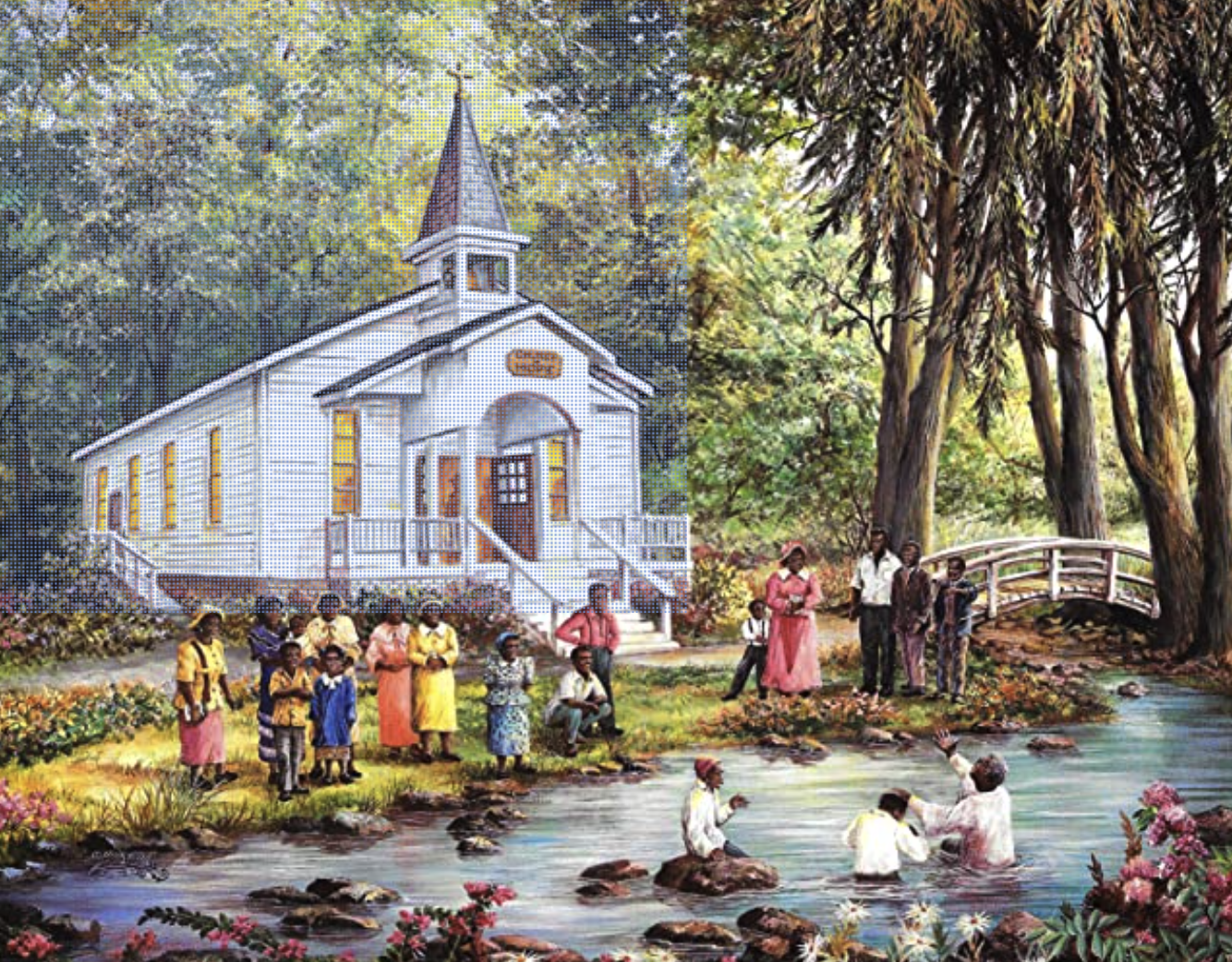
Well now. It may be true that “evangelical baptisms” are getting a little bit “raucous,” but that’s a rather strange statement to make in light of baptism traditions down the years in Black evangelical and Pentecostal churches.


Please respect our Commenting Policy

About that RNS/AP series on women leaders: Aren't most religions 'male-led'?

About that RNS/AP series on women leaders: Aren't most religions 'male-led'?

Unless your local media runs articles by the Associated Press or Religion News Service, you might not be aware of their current series on “women’s roles in male-led religions.”

Most religions are pretty patriarchal, aren’t they, unless you count numerous female deities as making Hinduism women-friendly. But wait — there was that whole thing about female temple prostitutes — so maybe even Hinduism favors the guys as well.

So let’s look some news about issues linked to this.

In 2018, the Lilly Endowment Inc. put together a $4.9 million grant to fund 13 new positions at The Associated Press, Religion News Service and The Conversation in an effort known as the Global Religion Journalism Initiative.

Since then, evidence of this collaboration have been sparse, so this new series that premiered last week is one of the first major efforts on that front.

First out of the blocks was a Dec. 8 piece in The Conversation by Deborah Whitehead of Religion News Service giving a summation of womens’ efforts –- over a broad swath of denominations and religions -- to either be ordained or attain more power in their congregations. The main holdouts, she said, were Orthodox Jews, Latter-day Saints, Roman Catholics and Southern Baptists.

I’m not sure why she didn’t mention Eastern Orthodox Christians, who likewise don’t ordain women but once had a tradition — in the distant past – of female deacons. See here for a debate among two Orthodox scholars about the matter.

The way Whitehead’s piece –- and indeed the entire series that I’ve seen to date — is that women’s ordination is the logical, progressive next step. The sub-headlines that describe the opposing point of view include “Opposition to change” and “Other forms of discrimination,” so it’s not hard to see where this series is headed. This is advocacy journalism, especially when it comes to changing the priesthood in ancient churches


Please respect our Commenting Policy

About that Southern Baptist 'binder' story: What do Black biblical 'inerrantists' say about CRT?

About that Southern Baptist 'binder' story: What do Black biblical 'inerrantists' say about CRT?

Reporters receive all kinds of bizarre things in the mail (analog or digital). Religion-beat reporters have been known to have some really, really bizarre items come out of nowhere.

My all-time “favorite” (I am using that term loosely) was a 35-page, handwritten manifesto detailing why — using lots of biblical references — Barbra Streisand was the Antichrist. I filed that one away. That wasn’t the case, however, with the typed, unsigned note in a plain white envelope that pointed to public documents detailing the arrest of a prominent clergyman for a sex crime committed in a public bathroom.

Journalists offered hot documents have to ask two questions:

(1) Can this information be verified as accurate?

(2) What are the motives of the person sharing the information? That question leads to another: How can those motives be explained to readers without identifying the person who provided the documents?

It goes without saying that documents from an on-the-record source will be trusted — by informed readers and “stockholders” in the story — more than those from a source demanding anonymity. The key is to give as much information as possible about the source of the information as possible, including why anonymity was acceptable in this case.

This leads us to the Nashville Tennessean story that rocked the world of Southern Baptist Convention social media, the one with this headline: “Inside the Southern Baptist Convention's battle over race and what it says about the denomination.

The entire story pivots on documents linked to a former SBC president, the Rev. James Merritt, and the Rev. J.D. Greear, the convention’s leader at the time of the events described in the story. It also helps to know that Merritt was the chair of the national convention resolutions committee in 2021.

All of this focuses on efforts to pass a 2021 SBC resolution that condemned “critical race theory” outright — by name and with no qualifications, as desired by leaders of the SBC’s most conservative churches. Here is a key passage:


Please respect our Commenting Policy

Plug-In: Americans favor religious exemptions for COVID-19 vaccine mandates — sort of

Plug-In: Americans favor religious exemptions for COVID-19 vaccine mandates — sort of

What a difference a year makes.

Or not.

Fifty-two weeks ago, this news topped Weekend Plug-in.

Sound familiar?

Trump calls COVID-19 vaccine ‘a medical miracle,’ but many religious people are skeptical

Guess what? Many religious people remain highly skeptical of the vaccines, despite their strong effectiveness at preventing serious illness, hospitalization and death from COVID-19.

Which leads us to this week’s news: a new public opinion poll on religious exemptions to the vaccines.

Religion News Service’s Jack Jenkins reports:

WASHINGTON (RNS) — A new poll reveals most Americans are in favor of offering religious exemptions for the COVID-19 vaccines, yet express concern that too many people are seeking such exemptions. In the same survey, more than half of those who refuse to get vaccinated say getting the shot goes against their personal faith.

The poll, conducted by the Public Religion Research Institute and Interfaith Youth Core and released Thursday (Dec. 9), investigated ongoing debates about COVID-19 vaccines as well as emerging divisions over whether religious exemptions to the shots should even exist.

According to the survey, a small majority (51%) of Americans favor allowing individuals who would otherwise be required to receive a COVID-19 vaccine to opt out if it violates their religious beliefs, compared with 47% who oppose such religious exemptions.

See additional coverage of the poll by the Washington Times’ Mark A. Kellner, a former contributor at GetReligion, and NPR’s Megan Myscofski.


Please respect our Commenting Policy

About Southern Baptist wars and the Merritt family: Here's some inside baseball worth covering

About Southern Baptist wars and the Merritt family: Here's some inside baseball worth covering

I rarely write about Southern Baptist affairs unless one of their annual conventions is at hand, but I can’t resist commenting on a fascinating sideshow happening between the highly symbolic Merritt family and their fellow conservatives.

Jonathan Merritt is the openly gay (and I assume celibate, based on previous comments) son of the Rev. James Merritt, a former president of the Southern Baptist Convention. It’s been a tough ride for the past 10 years as the younger Merritt has tried to reconcile his sexuality with his faith, while working as a news- columnist. His father has been under immense pressure as well.

The latest fracas, with a hat tip to JulieRoys.com, has to do with the elder Merritt walking away from his position as a visiting professor at Southeastern Baptist Theological Seminary in Wake Forest, N.C. The whole affair has gone unnoticed by many newsrooms, even though this is a topic that is newsworthy for a variety of reasons. Here is what Roys wrote:

Former Southern Baptist Convention President James Merritt resigned last week as a visiting professor at Southeastern Baptist Theological Seminary over controversy sparked by Merritt’s decision to share a sermon online by his son who’s gay. …

The decision came after Merritt, who’s also pastor of Cross Pointe Church in Duluth, Georgia, tweeted a link to a sermon by his son, Jonathan Merritt. The younger Merritt is a graduate of Southeastern Baptist and an author, journalist, and popular speaker. In August, Jonathan Merritt announced on Instagram that he’s gay.

“I don’t agree with my loved son @JonathanMerritt on everything to be sure,” James Merritt tweeted November 22. “But I encourage you to listen to his message on Mark 13. It is both brilliant and faithful to the gospel and the coming of Jesus!”

After that, things got really interesting. Here is the chronology:

Nov. 22 — James Merritt publishes his tweet.

Nov. 23 — The Conservative Baptist Network, a group of some 6,000 members based in Memphis, issues a statement with the headline: “Promoting homosexual preachers is not loving, biblical or Baptist.” The elder Merritt responds that same day.


Please respect our Commenting Policy

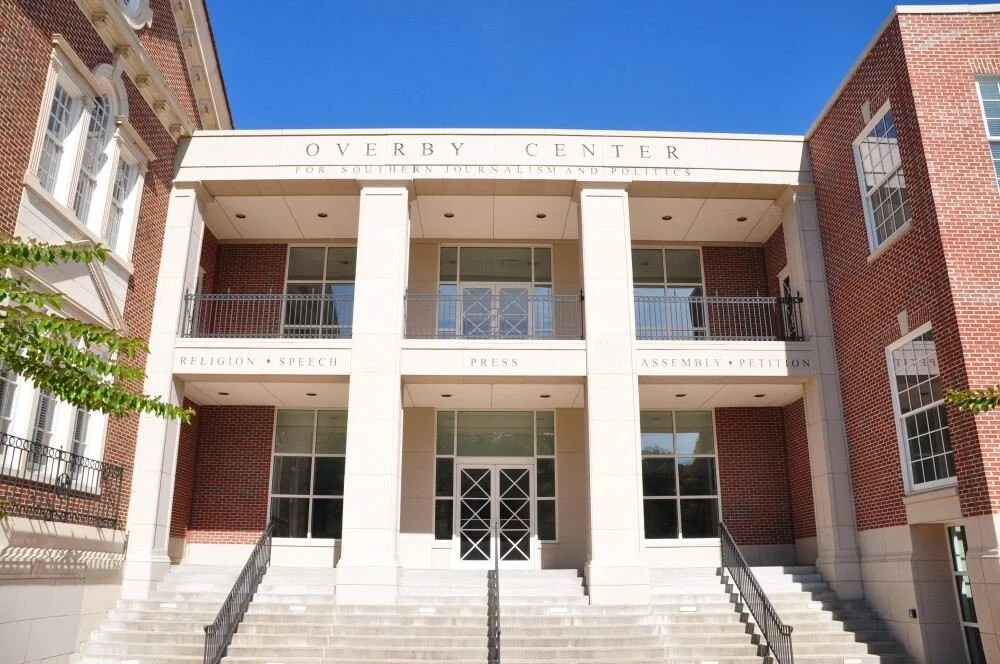
Finally, another Overby Center program: Why religion was one big factor in vaccine wars

Finally, another Overby Center program: Why religion was one big factor in vaccine wars

I have strong memories, to say the least, of the first Overby Center program in which I was able to participate, as a senior fellow for the center and as editor of GetReligion.

The topic was the role that religion would play in the 2020 presidential election. Religion-beat patriarch Richard Ostling was there and both of us stressed that, while journalists were pouring oceans of ink into coverage of (#TriggerWarning) white evangelicals, Catholic voters would play the pivotal role in swing states. I also noted the little-covered 2016 impact of Latino evangelicals and, especially, Pentecostal believers in Florida. I didn’t think to predict a starring 2020 role these Latino voters in Texas.

When was that program? Here’s a clue. As I drove home, I stopped for lunch in Jackson, Tenn. As I pulled back onto the interstate headed east, I heard a radio report noting that the mysterious virus that was causing havoc in Wuhan, China, had now been detected in Europe and, perhaps, in New York City.

Days later, the whole world turned upside down.

With social-distancing, masks and vaccines in mind, we recently gathered in Oxford for a forum addressing a logical topic — why religion was a key factor (but not the only one or even the dominant one) in America’s wars over COVID-19 vaccines. Click here to watch the event on YouTube.

In addition to Center founder Charles Overby, I was joined by three logical voices on this subject.

First, political scientist (and GetReligion contributor) Ryan Burge Zoomed in with several crucial charts full of relevant info. Take this post, for example: “Thinking about white evangelicals, COVID-19 vaccines and VERY popular headlines.” Then there was Marquita Smith of the University of Mississippi faculty, a journalist I came to know while she was teaching at John Brown University on the edge of the Ozarks. She is now the assistant dean of graduate programs at the Ole Miss J-school.

The final panelist was the Rev. Daniel Darling, who was recently named director of the Land Center for Cultural Engagement at Southwestern Baptist Theological Seminary in Fort Worth, Texas.

Then again, Darling may be better known in religion-beat circles because of this New York Times headline: “Fired After Endorsing Vaccines, Evangelical Insider Takes a Leadership Role.”


Please respect our Commenting Policy

Plug-in: Supreme Court questions inmate's demand for vocal prayers in Texas death chamber

Plug-in: Supreme Court questions inmate's demand for vocal prayers in Texas death chamber

Last week, we set the scene for the U.S. Supreme Court’s hearing of a religious freedom case involving a Texas death-row inmate.

This week, we summarize the mixed response justices gave in that inmate’s case.

Christianity Today’s Daniel Silliman lays out the plot aptly:

If you give a man in a Texas execution chamber the right to a prayer, is he entitled to two?

Can he ask for candles?

Or Communion?

If the United States Supreme Court says a condemned man has the religious right to have his pastor touch his foot while the state injects a lethal dose of chemicals into his veins, then will the court also have to allow a pastor to touch a man’s hand, his head, or even the place where the needle pierces the skin?

The justices quizzed attorney Seth Kretzer about the slippery slope of death penalty prayer on Tuesday morning, as they weighed whether the First Amendment and the Religious Land Use and Institutionalized Persons Act (RLUIPA), passed by Congress in 2000, give 37-year-old John Henry Ramirez the right to have his pastor lay hands on him and pray aloud when the state of Texas puts him to death.

The high court was skeptical of the inmate’s “demand that his pastor be allowed to pray out loud and touch him during his execution,” according to The Associated Press’ Jessica Gresko.

Justice Clarence Thomas raised concerns “about inmates ‘gaming the system’ by asserting dubious religious claims that served to delay their executions, notes the Wall Street Journal’s Jess Bravin.

The court “seemed divided,” explains the Washington Post’s Robert Barnes, who produced a “deeply reported and evocative” advance piece on the case, reporting from Corpus Christi, Texas.


Please respect our Commenting Policy

New podcast: Left, right, middle? Two giant U.S. seminaries are pro-vaccine, but anti-mandate

New podcast: Left, right, middle? Two giant U.S. seminaries are pro-vaccine, but anti-mandate

Let’s do a COVID-19 religion-news flashback, looking at a storyline or two near the start of the pandemic.

I’m doing this in order to analyze how the press is framing a major new development — the federal-court lawsuit filed by Southern Baptist Theological Seminary and Asbury Seminary challenging the Biden administration’s vaccine mandate. These are, by the way, two of the largest seminaries in the United States and, while other seminaries are collapsing, these two are growing.

Coverage of this lawsuit was the hook for this week’s “Crossroads” podcast. (CLICK HERE to tune that in.)

So now the flashback. Remember when I was writing — at GetReligion and in my national “On Religion” column for the Universal syndicate — about the vast majority of American religious groups who were caught in the middle of the “shelter in place” and lockdown wars linked to COVID-19?

Remember the Catholic priests in Texas who were trying to hear confessions out in the open air (in a big field and parking lot), while following guidelines for social distancing? Or how about the churches that were under attack for holding services in drive-in movie theaters, with the faithful in cars, while it was OK for folks to be in parking-lot scrums at liquor stores and big box super-marts? Then you had the whole casinos are “essential services” while religious congregations were not “essential.”

I argued, at that time, that this was way more complicated than religious people who cooperated with the government and those who didn’t. This was not a simple left vs. right, good vs. bad situation. In fact, there were at least FIVE different groups to cover in these newsy debates:

They are (1) the 99% of religious leaders who cooperated and took worship online, (2) some religious leaders who (think drive-in worship or drive-thru confessions) who tried to create activities that followed social-distancing standards, (3) a few preachers who rebelled, period, (4) lots of government leaders who established logical laws and tried to be consistent with sacred and secular activities and (5) some politicians who seemed to think drive-in religious events were more dangerous than their secular counterparts.

That’s complicated stuff.

The problem is that, in the world of American politics, things have to be crushed down into left and right templates or even, there for a few years, into pro-Donald Trump and the anti-Donald Trump. I’m sure we’re past that last part. Right?


Please respect our Commenting Policy