Baptists

Plug-in: Ransom demands and prayers -- 17 with Anabaptist mission group kidnapped in Haiti

Plug-in: Ransom demands and prayers -- 17 with Anabaptist mission group kidnapped in Haiti

As a journalist who covers religion, I’ve been blessed to report firsthand from countries such as Israel, Mexico, Nicaragua and South Africa.

As a result, when violence and war flare in those places, the news doesn’t seem a million miles away. Instead, I envision real people and places.

The same is true of Haiti, where I reported on a well-drilling ministry in 2018. We took safety precautions, but I never felt unsafe as I traveled with a U.S. mission team in the capital of Port-au-Prince.

Three years later, circumstances have changed in that impoverished Caribbean nation, rocked in recent months by a presidential assassination and natural disasters.

The latest: a gang’s kidnapping of six men, six women and five children working with Christian Aid Ministries, a global missionary organization based in Millersburg, Ohio. A gang leader has threatened to kill the hostages if a ransom of $1 million per head is not paid.

Coverage of the mission group by the New York Times’ Ruth Graham and Elizabeth Dias resonates with me.

”Christian missionary workers typically labor in obscurity, running medical clinics, building wells and delivering Bibles without fanfare — until crisis erupts,” Graham and Dias write.

Here at ReligionUnplugged.com, Michael Ray Smith talks to missions leaders about the surging number of kidnappings in Haiti, where gangs have gained control of roughly half the capital.

Other related stories that help explain what’s happening:

As abductions in Haiti increase, churches and ministries find themselves in the crosshairs (by Jamie Dean, World)

An around-the-clock prayer effort to save the Haiti hostages (by Elizabeth Dias and Ruth Graham, New York Times)
Please respect our Commenting Policy

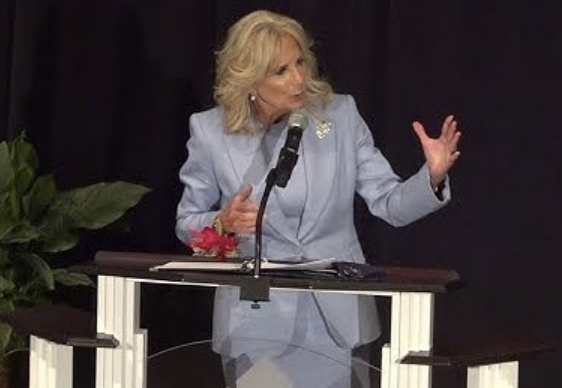
Jill Biden's reborn Christian faith: Washington Post dug for some key details (AP didn't)

Jill Biden's reborn Christian faith: Washington Post dug for some key details (AP didn't)

Since I grew up Southern Baptist, I have heard many, many people give “testimonies” about how they embraced faith and were “born again.” Now that I am Eastern Orthodox, I have heard many people tell similar stories about how they came to embrace ancient Christian doctrines and beauty of sacramental worship.

Most of the time these stories include some details about history of the person’s faith or lack thereof. One part of telling the point to which a believer has travelled is to share some background information about where the journey started.

I would certainly think that this would be true when the person who is “testifying” is America’s current First Lady. Thus, I had a few expectations when I started reading the Associated Press report that ran with this headline: “Jill Biden says SC ‘prayer partner’ helped change her life.”

The hook for this story was the surprise visit that President Joe Biden and First Lady Jill Biden made to West Columbia, S.C., to honor the 50th anniversary of the Rev. Charles B. Jackson becoming the pastor of Brookland Baptist Church. The focus of the story, however, was on Jill Biden’s “prayer partner” relationship with the pastor’s wife, Robin. Here is the crucial passage in this AP report:

The first lady doesn’t usually speak publicly about her faith but said Sunday that “it’s always been an important part of who I am.” She recalled being a teenager who “fell in love with the peace of the quiet wooden pew,” the “joy of the choir” and the “deep wisdom of the Gospels.”

She said prayer helps her “connect to the people that I love and to the world around me.”

“But in 2015, my faith was shaken,” the first lady said, her voice breaking as she described watching “my brave, strong, funny, bright young son fight brain cancer.”

“Still, I never gave up hope,” she said. “Despite what the doctor said, I believed that my son would make it. In the final days, I made one last, desperate prayer and it went unanswered.”


Please respect our Commenting Policy

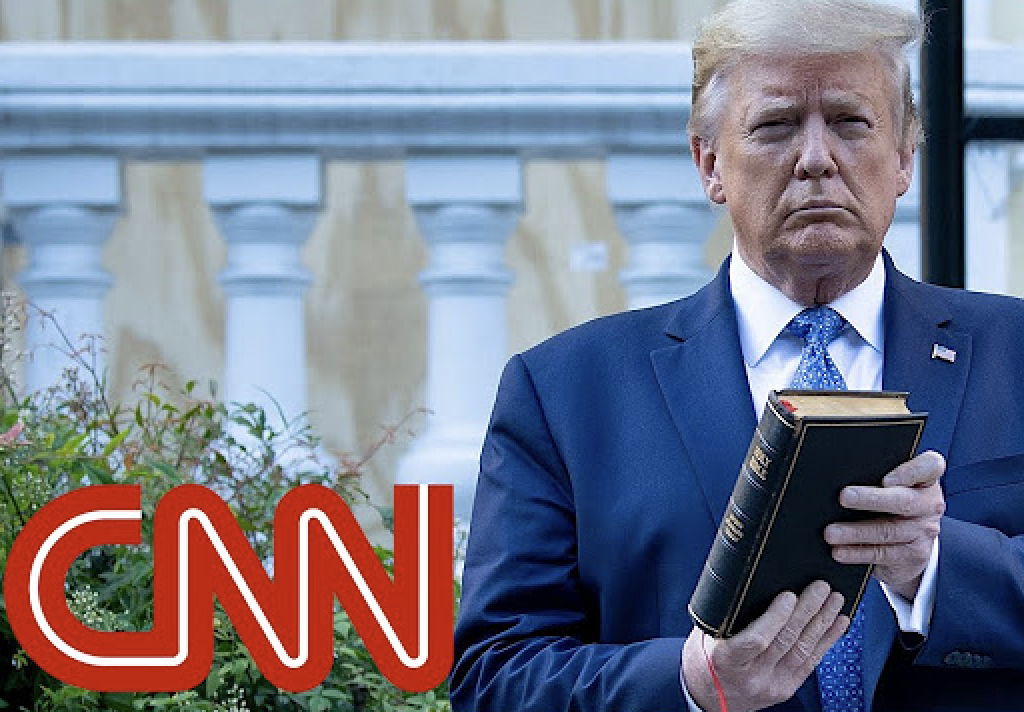
Concerning evangelical elites, Donald Trump and the press: The great crack-up continues

Concerning evangelical elites, Donald Trump and the press: The great crack-up continues

Ah, yes, those omnipresent American evangelical Protestants.

Love ‘em or hate ‘em, the media can't avoid ‘em. And in case anyone doubts media fascination, consider last Sunday's episode of NBC's influential, anachronistically-named gabfest "Meet the Press."

In the midst of a hyper-clogged October political agenda, the show devoted a major segment to what host Chuck Todd called "the debate among evangelicals about Donald Trump and whether he represents their values." Click here for the transcript. This was excerpted from a 30-minute piece that's streaming on Peacock.

The segment led off with a visit to the nondenominational, independent Patriot Church outside Knoxville, where the Ken Peters averred: "I think President Trump is a miracle. I think God picked Donald Trump, an imperfect vessel, to be the champion of His people." This is a congregation that has inspired almost as many headlines as it has members.

Yes, Pew Research tells us Trump scored 84% with white evangelical voters in 2020. But politicized preacher Peters is hardly representative of the sprawling and diverse network of evangelical clergy, churches, denominations, campuses and agencies.

An older-style evangelical pastor, the Rev. Phil Nordstrom of Knoxville's Life Church, told NBC that "we're trying to not fight the culture wars from the pulpit." Todd then interviewed the Rev. Russell Moore, former Southern Baptist social-issues spokesman turned "public theologian" at Christianity Today magazine, who fretted over Trump-era politicization of the evangelical image.

A prior Guy Memo weighed the possibility that a newsworthy evangelical crack-up is upon us, while another Memo focused on the related Donald Trump political angle. Now there are further developments.

In case journalists are gathering string for a broad state-of-the-evangelical-union article, The Guy looked for perspective in a real period piece from 1977, our Time magazine Christmas cover story, "That Old Time Religion: The Evangelical Empire."

Now this feature was written just before the advent of Jerry Falwell's Moral Majority, Ronald Reagan's presidency, Pat Robertson's Christian Coalition and presidential run, the rightward doctrinal lurch by the Southern Baptist Convention, the rise of anti-abortion militancy and all the rest that would gobble up headlines in succeeding decades.


Please respect our Commenting Policy

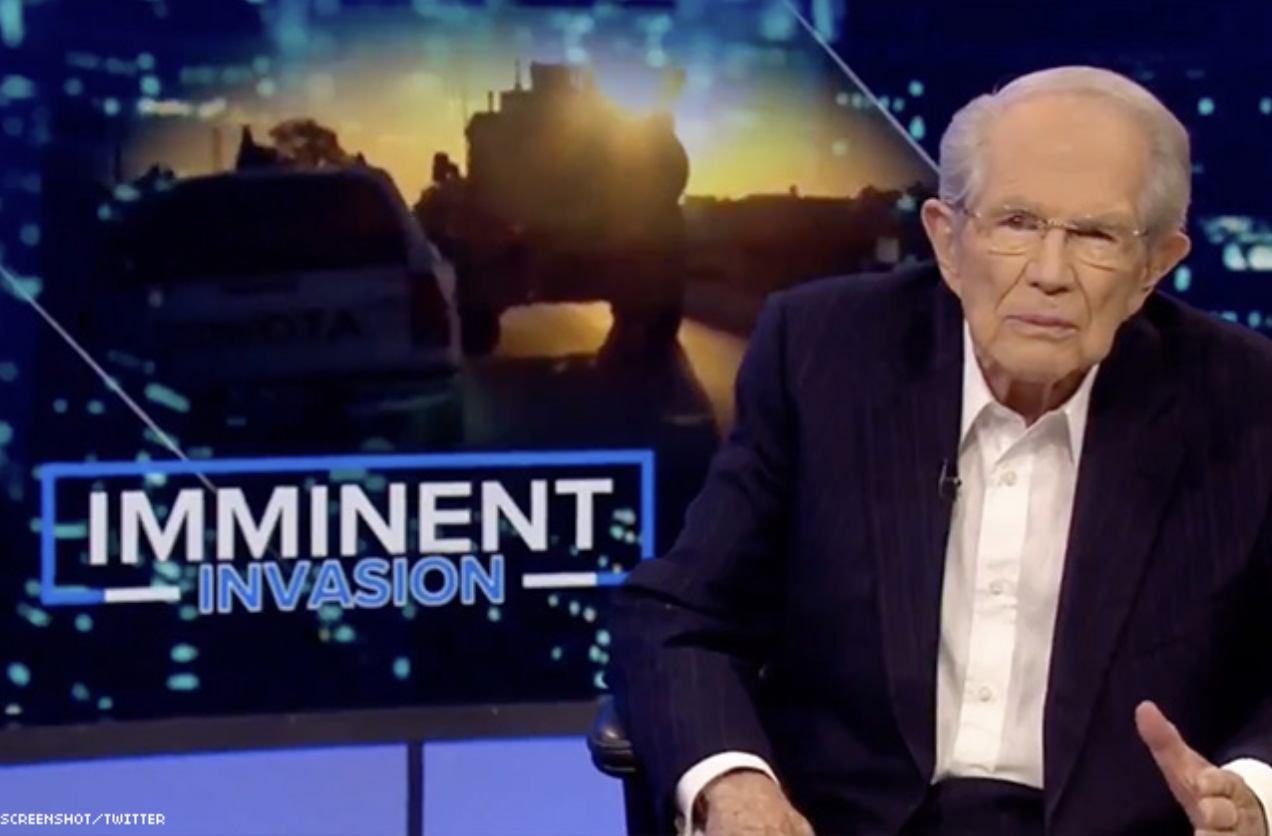
New podcast: Did the mainstream press ever figure out why Pat Robertson was important?

New podcast: Did the mainstream press ever figure out why Pat Robertson was important?

If you look at the headline and the art for this post, it’s obvious that this week’s “Crossroads” podcast (click here to tune that in) focused on media coverage of the Rev. Pat Robertson’s retirement as host of the “700 Club.”

Try to forget that. Work with me here, for a moment.

What if I told you that the man at the heart of this story grew up in Washington, D.C., as the son of a U.S. Senator. Then he did his undergraduate work at a quality school known for its academic rigor, graduating magna cum laude while studying history at Washington and Lee University.

Later, he earned a Yale Law School degree. After that — think low New York bar exam scores and a big religious conversion — he earned an MDiv degree from New York Theological Seminary.

Somewhere in that mix, he served in the U.S. Marines. Later, he founded a multi-million-dollar broadcasting empire and started a graduate-school university and a law school.

Does it sound like someone with a pretty good shot at having an impact on American life and culture?

Well, that’s Pat Robertson — sort of. It's clear that, for most journalists, this resume doesn’t have much to do with the man’s life and work. This is, after all, the religious broadcaster (as opposed to televangelist) who, for decades, served up “spew your coffee” soundbites that launched waves of embarrassing headlines and late-night TV jokes. He was important because this was the kind of wild man who helped lead the Religious Right further into the heart of Republican Party politics.

The minute anything crazy or scary happened in the world — from politics and pop culture to hurricanes and earthquakes — the press turned to Robertson for what was billed as semi-official “evangelical” reactions, even as his words frequently left mainstream evangelical leaders sad, puzzled or furious.

Robertson was one of the official alpha-male media voices of evangelicalism, even after he women and men had emerged who had more clout and connections in the movement.

I was never a Robertson fan. However, it was always clear to me — thinking in terms of church history — that he wasn’t really an “evangelical,” strictly defined, even though he was an ordained Southern Baptist minister. The key is that he was a leader in the rising tide of charismatic and Pentecostal Christianity in America and the world at large (see this Pew Research Center resource page).

Does that matter? Well, Pentecostal Christianity very diverse, in terms of race and class, and is the fastest growing for of religious faith on the planet.


Please respect our Commenting Policy

It's hard to write SBC news reports when key players keep hanging up their phones

It's hard to write SBC news reports when key players keep hanging up their phones

What are reporters supposed to do when key actors on one side of a controversy in a major religious group keep refusing to respond to calls and other contacts seeking their input and information?

I ask this because of the challenges that reporter Liam Adams is facing as (welcome to the religion-news beat) he tries to cover the legal questions and accusations swirling around the executive committee of the Southern Baptist Convention — America’s largest non-Catholic flock.

I can imagine a scenario in which some readers read this recent Nashville Tennessean story — “Resignations follow Baptist vote on privilege” (text is behind a high paywall) — and asked themselves: Hey, where are the quotes from people on the more conservative (if that’s the right word in battles over sexual abuse) side of this story? And why are there so many quotes from someone like Ed Stetzer, a hero of the current SBC leadership?

This story is so complex that it’s hard to pull out individual chunks of material, but lets try this long passage::

After two failed attempts at meetings on Sept. 21 and 28, the Southern Baptist Convention’s executive committee met for a third time Oct. 5 and voted to waive privilege. The committee acts on behalf of the convention when it is not in session.

In response, at least 10 executive committee members resigned either just before vote or shortly after — including some who are supporters of the Conservative Baptist Network. …

Conservative Baptist Network’s supporters on the executive committee all voted against allowing third-party investigators access to privileged files.

“It’s hard to see the correlation between the CBN and the objection to the waiver of privilege,” said Ed Stetzer, executive director of the Wheaton College Billy Graham Center. 'But there is clearly a correlation.'

In a news release last week, the Conservative Baptist Network said the group desired '“ruth and integrity.”


Please respect our Commenting Policy

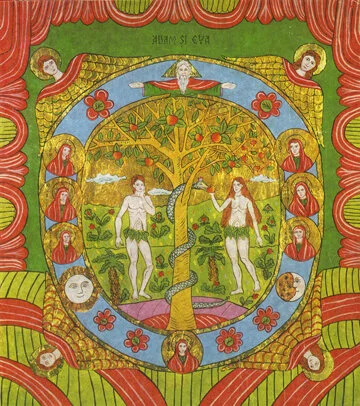
On the news budget once again: New Evangelical debates about Adam and Eve

On the news budget once again: New Evangelical debates about Adam and Eve

It's hard to beat William Lane Craig for conservative evangelical credentials.

This influential author and philosophy professor teaches at Houston Baptist University, where faculty members "must" believe in the Bible's divine inspiration and "that man was directly created by God." He's simultaneously a visiting scholar at California's Talbot School of Theology, where teachers commit to the beliefs that the Bible is "without error or misstatement" in its "record of historical facts" and that Adam was created by God and "not from living ancestors."

Craig is also a longtime member in good standing of the Evangelical Theological Society, whose members are required to affirm that the entire Bible is "the Word of God written and is therefore inerrant" as originally written. Trinity Evangelical Divinity School, where he formerly taught, likewise proclaims that the Bible is "without error."

But exactly how do those vows apply to the early chapters of the Bible's Book of Genesis?

Debates about this issue are frequently hooks for news stories, energized over and over again. Evolution and the creation of Adam and Eve have been allergic issues among evangelical Protestants in the 162 years since Darwin published "On the Origin of Species"?

So there's eye-opening stuff in Craig's article titled "The Historical Adam" in the current First Things magazine.

In Genesis 1-11, he asserts, those "fantastic lifespans" of primeval humans starting with Adam indicate "we are not dealing here with straightforward history."

Yet it's not simple fiction either, but rather an amalgam he calls "mytho-history, not to be taken literally," though there could be some overlap between the "the literary Adam of Genesis" over against the "historical Adam." He further explains that in the New Testament, Jesus and Paul were talking about that non-literal "literary Adam."

Given current science, Craig figures Adam and Eve lived 750,000 to a million years ago at the point of separation between Neanderthals and our own species of homo sapiens, with the latter endowed by God to surpass human-like animals that lacked rational thought. On that understanding, "the mythic history of Genesis is fully consistent with current scientific evidence concerning human origins."


Please respect our Commenting Policy

Plug-In: Big winners, and some surprises, in Religion News Association's annual awards

Plug-In: Big winners, and some surprises, in Religion News Association's annual awards

For the second year in a row, the Religion News Association’s annual awards were presented in virtual fashion because of the COVID-19 pandemic.

Kudos once again to Jeff Diamant, RNA’s contest guru, for a fun and informative presentation of winners Thursday night. You can watch it all here.

For regular Weekend Plug-in readers, many of the first-place recipients’ names will be familiar, including the New York Times’ Elizabeth Dias, the Pittsburgh Post-Gazette’s Peter Smith, The Atlantic’s Emma Green, The Tennessean’s Holly Meyer and the Chattanooga Times Free Press’ Wyatt Massey. (By the way, Smith and Meyer now work for The Associated Press.)

But there were surprises, too, in some of the major categories.

Britta Lokting and Sam Adler-Bell of Jewish Currents won the Story of the Year prize for “Welcome to Lammville: How the Hasidic housing crisis led to the largest case of federal voter fraud in modern American history.”

Dan Stockman of the Global Sisters Report earned top honors for reporting at online-only outlets for a series on Catholic women. And Peter Clowney, John DeLore, Abigail Keel, Ash Sanders, Sarah Ventre and Amy Westervelt received the Gerald A. Renner Award for Excellence in Enterprise Religion Reporting for their podcast "Unfinished: Short Creek."

Congrats to ReligionUnplugged.com’s own honorees: Alexandra Radu took first place for a photo from Malaysia, and the “God and Guns” project by Paul Glader and Michael Ray Smith (with videos by Micah Danney) received third place both for Story of the Year and online-only reporting.

Check out the full list of winners here.


Please respect our Commenting Policy

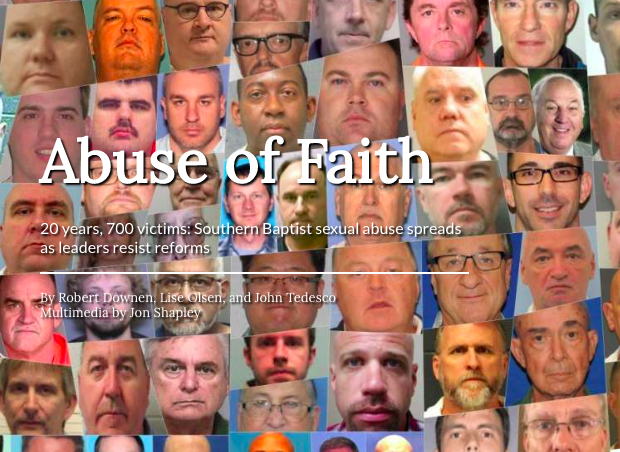
New podcast: Those Southern Baptist sex-abuse battles are not just about Southern Baptists

New podcast: Those Southern Baptist sex-abuse battles are not just about Southern Baptists

The Southern Baptist Convention’s ongoing fights about how to handle sexual-abuse claims against ministers and other church personnel and volunteers is a perfect example of the kind of story that drives newspaper editors crazy.

It’s big and complicated and it seems like something crazy or important (or both) happens every other day. But it also seems like it’s impossible to yank a big, dramatic headline out of this sprawling, complicated story.

The story never seems to end and the amount of background material needed — in story after story after story — makes it impossible to cover this stuff in tidy 500-word stories. But if a newsroom skips a few of the major developments, that makes it even harder to get back in the game and explain to readers what is happening. Oh, and did I mention that newsroom managers pretty much have to assign a reporter to this story full-time or near full-time? That’s expensive in this day and age. Obviously, this reporter has to have religion-beat experience and speak fluent Southern Baptist.

At the same time, in my experience, there will almost always be one or two editors who say (or think) something like this: “I know the SBC is huge and there are billions of dollars involved and we have lots of Southern Baptist churches (and maybe a college) in our news territory, but … I don’t ‘get’ why this story really matters to average readers. I mean, it’s not about sports or politics or something important (to me).”

As a Charlotte editor once told me, when I was poised to break a national-level SBC story in the early 1980s: Nobody reads this stuff but fanatics and every time you write about it we get too many letters to the editor.

This brings us to this week’s “Crossroads” podcast, which focuses on why the SBC’s struggles with sexual-abuse are important, and NOT just to Southern Baptists (click here to tune that in). The key is to identify major stories LINKED to sexual-abuse scandals that involve ethical, moral, legal and theological issues that can be seen in religious groups of all kinds (and many secular nonprofits and organizations as well). To illustrate this, let me tell you a story about an important evangelical counseling pioneer — the late Dr. Louis McBurney, founder of the Marble Retreat Center in Colorado.


Please respect our Commenting Policy

How is SBC supposed to work? Executive Committee ignites firestorm with sex-abuse logjam

How is SBC supposed to work? Executive Committee ignites firestorm with sex-abuse logjam

Welcome to Nashville, Liam Adams.

Enjoy the journalistic whiplash.

Adams, The Tennessean’s new religion writer, has received quite an introduction to the Godbeat in Music City.

Upon starting his new job last week, Adams immediately found himself covering two days of high-profile meetings by the Southern Baptist Convention’s executive committee.

He’s back at it this week, reporting on the committee again delaying “action on a third-party investigation into the committee’s handling of sexual abuse claims.”

“So I’m going to take a guess that this isn’t normally what happens in the Southern Baptist Convention, right?” Adams joked on Twitter. “Asking for a friend who just so happens to be in his second week reporting the news on all of this.”

Elsewhere, Religion News Service’s Yonat Shimron and Bob Smietana report that the “presidents of all six Southern Baptist seminaries have issued statements or tweets expressing their dismay at the Executive Committee’s unwillingness to act at the convention’s direction.”

According to Baptist News Global’s Mark Wingfield, new details have emerged about the committee’s handling of the investigation, “as outrage mounts among other Southern Baptist leaders.”

Read additional coverage by The Associated Press’ Holly Meyer (Adams’ predecessor at The Tennessean) and Christianity Today’s Kate Shellnutt.

For more context, see our past Plug-ins — here, here and here — focused on the Southern Baptist controversy.


Please respect our Commenting Policy