Baptists

New podcast: Indie fundamentalist near Nashville shows how to punch Washington Post buttons

New podcast: Indie fundamentalist near Nashville shows how to punch Washington Post buttons

For decades, I have felt a strange mix of anger and mild amusement whenever I heard news consumers, when complaining about something that upset them, say that journalists write and print “bad” stories “just to sell newspapers.”

“Bad,” of course, meant stories that they thought were biased, inaccurate or simply silly, perhaps something that in our digital age would be called “clickbait.” Of course, clickbait is clickbait because there’s digital evidence that readers consistently click on certain types of stories, which increases traffic and that helps the newsroom generate money (sort of like selling more newspapers).

Produce enough stories that please the faithful readers of a given publication — down South we call this “preaching to the choir” — and you can turn those readers into digital subscribers. That’s the Holy Grail, the ultimate goal, in the business-model crisis that has dominated American journalism for a decade or more.

This brings me to this unusual Washington Post headline that I saw the other day: “Evangelical pastor demands churchgoers ditch their masks: ‘Don’t believe this delta variant nonsense’.”

Now, was this pastor the leader of an important congregation somewhere in Beltway-land? Well, the answer is “no.”

If he wasn’t local, was he a prominent member of a major, powerful evangelical Protestant denomination or network of megachurches? Again, “no.” Was he connected, somehow, to an influential evangelical college, seminary, publishing company or parachurch ministry? A third time, “no.”

In other words, to ask the question that drove this week’s “Crossroads” podcast, why did editors decide that this story worthy of coverage by a reporter at the Post? (Click here to tune in this episode.)

Well, I think it’s safe to say that this stereotype-packed piece of simplistic, shallow, clickbait was produced because it punched all kinds of buttons that pleased digital niche-audience Post subscribers. In other words (I feel guilty typing these words), they did it to sell newspapers. Here is the overture:

Since the early months of the coronavirus pandemic, Greg Locke, the pastor at a Nashville-area church, has repeatedly called covid a hoax, undermined emergency mandates and refused to comply with guidance from public health officials.
Please respect our Commenting Policy

Devil is in the details, when covering battles inside the powerful McLean Bible Church

Devil is in the details, when covering battles inside the powerful McLean Bible Church

When I hear of a hostile takeover in a church, I think back to around 2006 when conservative Episcopalians were breaking free of their denomination, reclaiming the name “Anglican” and trying to take their church properties with them.

Usually they failed with conservative and liberal sides accusing each other of malfeasance. The lawyers got paid, of course.

This time around, the headlines are about conflict inside the largest evangelical church in the Washington, D.C., area and because it’s in northern Virginia, where so many inside-the-Beltway workers live, its problems have gotten a lot of press interest. It didn’t hurt that then-President Donald Trump visited the place on June 2, 2019, which stirred up lots of people.

Here’s a Washington Post piece that tries to explain what’s going on:

The leaders of McLean Bible, one of the D.C. region’s largest and most high-profile evangelical churches, are facing attempts from its own members to spread disinformation to take control of the church, Pastor David Platt warned the congregation in a sermon earlier this month.

Last month, the church was supposed to vote in new elders who oversee the church, and a group tried to shore up enough votes to block the appointed leaders. In a sermon on July 4, Platt said the group told other church members as they were walking into the meeting that the new elders would try to persuade church leadership to sell the church’s building in Vienna, Va. to local Muslims who would build a mosque.

McLean Bible — which is seen as a conservative evangelical congregation and once had more than 16,000 attendees — has long been an important church in Washington with four locations near the city. But threatening McLean now is a group that has spread all kinds of rumors, Platt said.

OK, so a local megachurch is having a catfight. How does one make such a story interesting to the rest of the world?

Simple: Make it about a greater issue, such as the generational conflict or politics, which is what NPR did in calling the place “a hub for Republican senators and Bush aides.”


Please respect our Commenting Policy

Old Southern Baptist stereotypes? Journalists need to update some information

Old Southern Baptist stereotypes? Journalists need to update some information

Anyone looking for Baptists should head to Greenville, S.C.

"People here say you can throw a rock in one direction and hit a Southern Baptist church and if you throw a rock in the other direction you'll hit an independent Baptist church," said Nathan A. Finn, provost of North Greenville University.

Finn's school -- with strong Southern Baptist ties -- isn't the only brand of "Baptist" life in town. There's the progressive Furman University, as well as the independent Bob Jones University, known for its rock-ribbed Baptist defense of fundamentalism.

The Baptist world is extremely complex and hard for many outsiders to navigate. Some of this confusion, said Finn, affects life inside the most prominent Baptist flock -- the Southern Baptist Convention -- and perceptions of SBC conflicts.

"Lots of people need to understand that Southern Baptists are far more diverse, ethnically and culturally, than they think we are," he said, in a telephone interview. "At the same time, we're more uniformly conservative that we often appear, especially since we spend so much time fighting with each other over some of the small points of theology on which we differ."

With some of these stereotypes in mind, Finn recently fired off a dozen Twitter messages describing different images of real "Southern Baptist" churches that are common today. The goal, he said, was to create "composites of what different kinds of SBC congregations look like" and he gave them "names that are common with certain types of real churches."

There is, of course, a "First Baptist Church" which Finn described as "a downtown church that runs 500 in worship. The church is affluent, which is reflected in their beautiful building. The worship service is traditional. There are lots of programs & committees" and the congregation is known for big donations to the SBC's shared "Cooperative Program" budget.

Then there is one of the megachurches that have dominated the American religious marketplace in recent decades. While the word "Baptist" is missing in its name, Finn noted: "CrossWay Church is a suburban church that runs 1400 in two services. The 'feel' of each service is laid back & contemporary. CrossWay has excellent recreational facilities" and its leaders are "considering launching a second campus."

These big churches frequently make headlines.


Please respect our Commenting Policy

Thinking about evangelicals and January 6: DIY independents are (still) not the whole story

Thinking about evangelicals and January 6: DIY independents are (still) not the whole story

How many Protestant denominations are there?

That’s a question I’ve been hearing as long as I have walked the religion beat. People used to toss around crazy numbers like 32,000 or 23,000, but no one takes those numbers seriously anymore. At the same time, a number like 200 sounds way low to me.

Denominations — large and small, formal and informal — remain an important part of the religion marketplace, but they are not really where the action is these days. Have you been reading the Julia Duin posts (start here and here) exploring the post-Donald Trump arguments among the Pentecostal and charismatic “prophets”? Is the clout of these emerging doctrinal tribes limited by their lack of historic brand names?

Hang in there with me for a moment. I am trying to connect an important moment in January 6th hearings on Capitol Hill with an important piece that former Southern Baptist leader Russell Moore wrote just after the riot (and has not re-upped on Twitter). Here is the crucial passage from a Washington Post report describing a key moment in the hearing that, with good cause, has provoked some debate.

In emotional testimony that recounted the abuse he received while defending the Capitol on Jan. 6, D.C. police officer Daniel Hodges said he was struck by the flags carried by members of the mob, whom he characterized as “terrorists.”

“To my perpetual confusion, I saw the thin blue line flag, a symbol of support for law enforcement more than once being carried by the terrorists as they ignored our commands and continued to assault us,” Hodges said.

He nodded to the conflict between the beliefs represented by the flags, and the actions of those holding them.

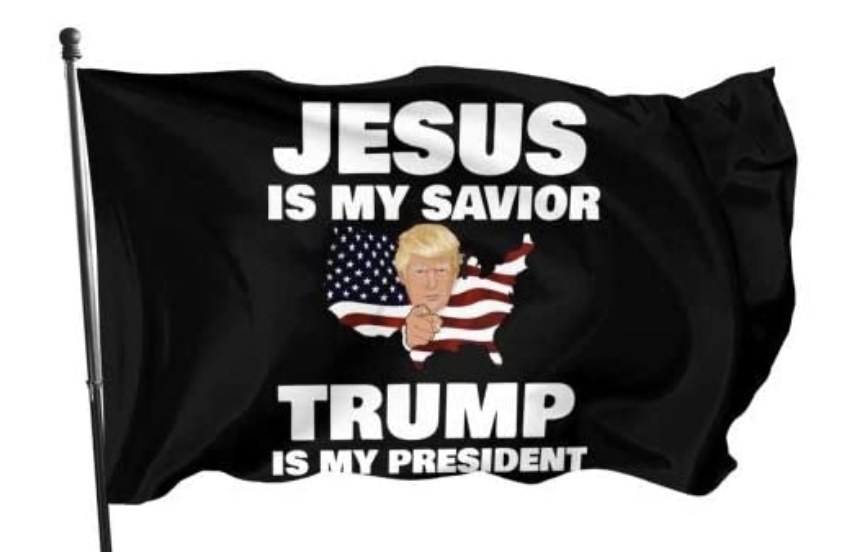
“It was clear the terrorists perceived themselves to be Christians. I saw the Christian flag directly to my front, another ‘Jesus is my savior.’ ‘Trump is my president.’ Another ‘Jesus is king,’ ” Hodges continued.

No doubt about it, lots of those marchers and the rioters who attacked the Capitol (two different groups, in terms of the legality of their actions) can accurately be called “white evangelicals” — in large part because “evangelical” has become a term with almost zero historic or doctrinal content.

The question, from the start, is whether evidence would emerge in trials indicating that any of these lawbreakers were linked to powerful evangelical Protestant denominations, ministries, schools, etc.


Please respect our Commenting Policy

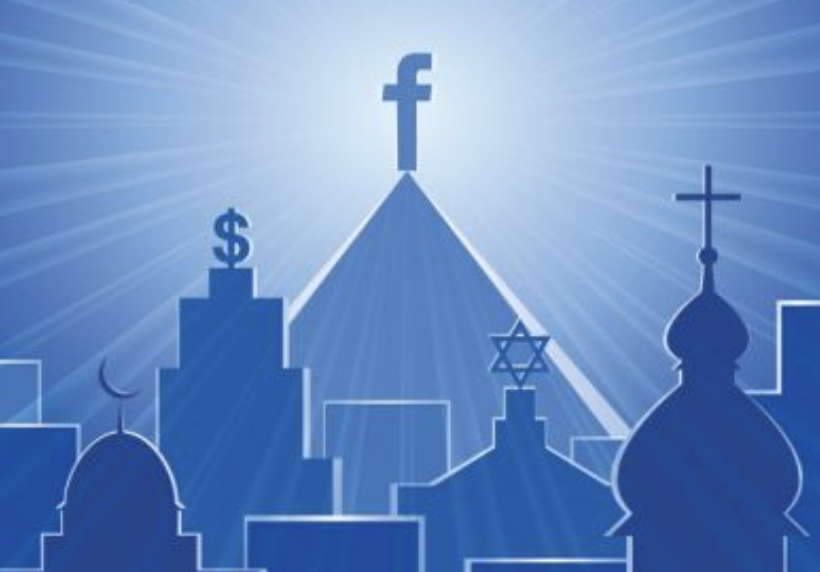
New podcast: What could go wrong? NYTimes explores Facebook's religious ambitions

New podcast: What could go wrong? NYTimes explores Facebook's religious ambitions

Truth be told, I am not prone to flashbacks — even though I did come of age in the late 1960s and early 1970s.

Anyway, I had a big flashback recently while reading a very interesting New York Times feature that ran with this headline: “Facebook’s Next Target: The Religious Experience.” In this case, the subhead is also crucial:The company is intensifying formal partnerships with faith groups across the United States and shaping the future of religious experience.”

Whoa. What does “shaping the future of religious experience” mean? I imagine that to learn details, readers would have to hear from some of the participants in this trailblazing online work. But there’s a problem with that. When asked about some specifics, an official with the Atlanta branch of the trendy Hillsong Church couldn’t answer, because “he had signed a nondisclosure agreement.”

Don’t you hate it when that happens?

Anyway, here’s the passage the stirred up lots of conversation, and my multi-decade flashback, during the recording of this week’s “Crossroads” podcast (click here to tune that in).

A Facebook spokeswoman said the data it collected from religious communities would be handled the same way as that of other users, and that nondisclosure agreements were standard process for all partners involved in product development.

Many of Facebook’s partnerships involve asking religious organizations to test or brainstorm new products, and those groups seem undeterred by Facebook’s larger controversies. This year Facebook tested a prayer feature, where members of some Facebook groups can post prayer requests and others can respond. The creator of YouVersion, the popular Bible app, worked with the company to test it.

Now, combine that mind-spinning information with this passage, which very gently raises the issue that millions of Americans — on the cultural right and left — are convinced that the Facebook gods have lost control of much of the information that is located on their platform:

The company’s effort to court faith groups comes as it is trying to repair its image among Americans who have lost confidence in the platform, especially on issues of privacy. Facebook has faced scrutiny for its role in the country’s growing disinformation crisis and breakdown of societal trust, especially around politics, and regulators have grown concerned about its outsize power.

This brings me to my flashback to a graduate-school class at the University of Illinois in Urbana-Champaign that changed my life.


Please respect our Commenting Policy

Plug-In: Who is the alleged Baptist minister accused in Haiti's presidential assassination?

Plug-In: Who is the alleged Baptist minister accused in Haiti's presidential assassination?

In 2018, I was blessed to visit Haiti with an American mission team and write about a Christian humanitarian aid organization that drills water wells around the world.

I keep thinking about that trip — and the amazing people I met — as I read about the latest turmoil facing that Caribbean island nation.

This week, I hand off the top part of my column to ReligionUnplugged’s managing editor, Meagan Clark. She found an interesting detail about the self-described pastor accused in the Haitian president’s assassination:

By Meagan Clark

An American suspect in Haiti’s presidential assassination, Christian Emmanuel Sanon, 63, was arrested at his gated home in Port-au-Prince by Haitian police last week.

Sanon identifies himself on social media as a “Medical Doctor and Christian Minister.” The Sun Sentinel of Fort Lauderdale, Florida, may have been the first to unearth that Sanon did not have a license to practice medicine in Florida. At ReligionUnplugged, we wondered about his faith background, credentials and motivations.

The New York Times, TIME and others reported that Sanon attended Midwestern Baptist Theological Seminary, citing the Florida Baptist Historical Society. But when I called Midwestern, the registrar’s office said the school has no records of Sanon ever attending, online or in-person.

A Florida Baptist Society representative told ReligionUnplugged that Sanon wrote in a biographical profile of himself that he attended Midwestern, and the society relies on honesty to compile its biographies. The representative said that in fact, the society has since learned that Sanon attended a training course that Midwestern sponsored, not the seminary itself. The Florida Baptist Society has updated its website.


Please respect our Commenting Policy

Did January 6 attack on Capitol highlight 'D.I.Y. Christianity' as decade's next big thing? 

Did January 6 attack on Capitol highlight 'D.I.Y. Christianity' as decade's next big thing? 

As investigations of the January 6 U.S. Capitol riot proceed, there's an intriguing religion angle for the media to explore. Welcome to the emerging prominence of "D.I.Y. Christianity" (that is, Do It Yourself).

After some of the Capitol rioters uttered odd prayers and waved religious placards, The New York Times reported that they demonstrated "some parts of white evangelical power." GetReligion boss tmatt then asked whether the mob included any representatives of actual "power" seen in the denominations, megachurches, parachurch ministries, schools or even the flocks of well-publicized Trumpite preachers.

(Despite the absence of evangelical leaders, freelancer Steve Rabey reports that several obscure Protestant pastors do face charges over January 6.)

Washington Post stalwart Michelle Boorstein revisited January 6 as a religious phenomenon and caught the moment by applying the D.I.Y. label not just for certain Capitol rioters but a broader trend emphasized by Adam Greenway, president of Southwestern Baptist Theological Seminary.

The D.I.Y. phenomenon could become the decade's next big thing in religion, a sizable groundswell of extremely individualistic or eccentric Americans who identify as Christians but are disconnected from conventional churches or even any definable religious fellowship or tradition.

Such radical individualism follows, of course, years of significant growth for non-denominational local congregations that are rigidly independent and lack ties or accountability with other Christians. This growing segment of U.S. evangelical Protestantism is nearly impossible to count accurately and thus its significance has often been neglected by journalists and scholars. GetReligion has been underlining the importance of this trend for years.

The Post cited analysts who believe one element on January 6 was that "institutional religion is breaking apart, becoming more individualized and more disconnected from denominations, theological credentials and oversight."


Please respect our Commenting Policy

Newsy question that won't go away: Should Southern Baptist Convention change its name?

Newsy question that won't go away: Should Southern Baptist Convention change its name?

THE QUESTION:

After 176 years, does the Southern Baptist Convention need a new name?

THE RELIGION GUY'S ANSWER:

This question has simmered over the years within the Southern Baptist Convention (SBC), which is by far America's largest Protestant body. How long? Check out the video at the top of this post (and note the name of the local pastor who was interviewed).

Discussions heated up a decade ago and are now more pertinent than ever, in part due to the growth of African-American churches in the SBC. Some Baptists hope this step toward a fresh new image might help overcome public relations disasters over SBC mishandling of sexual abuse cases, misogyny, racial insensitivity and partisan politicizing of the Gospel -- at a time when slow membership decline follows decades of impressive growth.

One reason to keep the old name is that the SBC has had what historian Bill Leonard calls "a powerful denominational self-consciousness" more than other Protestants. Its clear identity has long been associated with biblical conservatism in belief and energetic evangelistic effort at home and abroad. And yet the SBC faces the general move of U.S. Protestants away from loyalty and identity with a particular denomination. Some SBC congregations no longer emphasize their affiliation or even shun "Baptist" in their name.

Then again, is the Southern Baptist Convention even “southern” any longer? If not, the name is misleading even as it announces a narrowly sectional identity.

The answer to this is “yes” and “no.”

On the one hand, for a generation domestic missionaries and southern expatriates have extended the SBC's presence across the North and West to create a truly nationwide denomination. On the other, about four-fifths of members still live in the traditional turf extending southward from the arc of Virginia, Kentucky, Missouri and Oklahoma.


Please respect our Commenting Policy

Scripture, faith, race, politics: Mississippi Today on the story behind the state's new flag

Scripture, faith, race, politics: Mississippi Today on the story behind the state's new flag

Every newsroom in which I worked kept a large hardback Bible in the copy desk’s collection of reference books (this was pre-Internet, of course).

I often wondered why this was true, since almost every time I used long quotes in a news story or column in which believers talked about the specifics of their beliefs — because the material was directly linked to crucial facts or their motivations — most newsroom pros rolled their eyes. Those quotes tended to get shortened and, sometimes, edited out. This was especially true when politicians talked about their religious beliefs, for whatever reason.

I thought of this recently when I read a strong Mississippi Today feature — part one of a five-story series — about the role that Speaker of the House Philip Gunn played in changing that state’s controversial flag.

This was a story that centered on a public action, as seen in the headline: “Why Philip Gunn became the first prominent Republican to call for changing the state flag.”

Yes, the word “Republican” is important. But the key word there is “why.” Here is block of material early on that begins to link the political action with the beliefs behind it.

Less than a week before in South Carolina, a young white man walked into a Black church in Charleston and brutally murdered nine worshippers. Because the gunman had publicly documented his obsession with the Confederate battle emblem, the murders inspired debate across the country about the government-sanctioned use of the Confederate symbol.

The TV reporter asked Gunn about the Mississippi state flag, which was the last in the nation containing the Confederate battle emblem. While the camera rolled, Gunn advocated for a new flag.

As soon as Gunn left the fundraiser, he called Nathan Wells, his then-chief of staff and longtime top political adviser. The two had been privately talking for years about their shared disdain of the state flag and how they could work to change it.

“He said, ‘Nathan, uh, I think we need to release a statement,’ ” Wells recounted to Mississippi Today in an interview earlier this year.

That official statement in 2015 said:


Please respect our Commenting Policy