Baptists

A 'gospel of grievances:' Christianity Today tries to unravel racial divisions at Cru

A 'gospel of grievances:' Christianity Today tries to unravel racial divisions at Cru

It’s no huge secret that debates about race are causing many big stories on the religion beat these days.

Witness how, the Rev. Russell Moore, the just-resigned head of the Ethics and Religious Liberty Commission for the Southern Baptist Convention, named “blatant gutter-level racism” as one of his top reasons for leaving the ERLC and, eventually, the denomination itself.

The Southern Baptists aren’t alone. What’s been less reported on are the arguments among other evangelicals on whether concerns about race issues are taking over whole organizations and diluting their work.

Christianity Today just broke the most intriguing story about the knife fight going on in Cru –- the college ministry formerly known as Campus Crusade –- about the backlash against the organization’s attempts to address racism. At issue is a series of national conferences that have left its white staff feeling like they’ve been hit by a truck.

The Cru conflict is a microcosm of the stand-off between younger, more culturally liberal staff and older conservative ones. A major sticking point is critical race theory (CRT), which posits that America’s legal structure aids and abets racist practices. While many debate the meaning of this term, CRT seeks to rebalance the power structure by forcing the majority culture to experience reverse bias, reverse ethnic shaming, reverse stereotyping and so on.

Ever since the killing of George Floyd last year, some say that CRT has morphed into a way to pin all racial evils on White people or “White fragility.” (Some Whites from impoverished backgrounds have published essays saying that it was news to them that their poor childhoods were evidence of “white privilege.”) Some of this sentiment has attracted the attention of conservative media such as Fox News, according to this Atlantic magazine article.

The CT article continues:

The debate over critical race theory has landed at Cru, one of the country’s most prominent parachurch ministries, where a 179-page letter alleging an overemphasis on racial justice has exacerbated tensions that have been quietly brewing within the organization for years.


Please respect our Commenting Policy

That SBC powderkeg: Clearly, executive committee is bitterly divided on sexual-abuse issues

That SBC powderkeg: Clearly, executive committee is bitterly divided on sexual-abuse issues

Several decades ago, early in the media coverage of the Catholic clergy sexual abuse scandals, a veteran Catholic educator gave me some sobering advice.

When dealing with stories about sexual abuse, he stressed, the usual doctrinal and cultural labels do not apply. There wasn’t a “left” or a “right” side of the story because there were people hiding their sins on both sides. When dealing with sexual abuse, most conflicts centered on issues of honesty and integrity and, most of all, a willingness to repent and admit that these sins and crimes were real.

I thought of that the other day when reading the Religion News Service story that started dominos falling in America’s largest non-Catholic flock: “Leaked Russell Moore letter blasts SBC conservatives, sheds light on his resignation.” (I apologize for getting to this story late, due to a week of travels with family, followed by a painful health crisis that has me rather drugged and could return me to an emergency room at any moment.)

Journalists and SBC insiders were not surprised that RNS scribe Bob Smietana was involved in breaking that story, in part because of his years of experience in the Nashville market at The Tennessean, as well as five years with Lifeway Research, an organization linked to Southern Baptist life. This is one of those cases in which a reporter can build on years of experience and contacts in a complex, massive organization and, thus, Smietana has been landing one SBC scoop after another in recent years. It’s crucial that this RNS story was supported by a post featuring the full text of the 4,000-word Moore letter.

The next key story, by Sarah Pulliam Bailey, ran in The Washington Post: “Newly leaked letter claims Southern Baptist leaders 'covered up' sex abuse allegations.” Click here (.pdf file) for a full text of this second Moore letter. It’s packed with material from crucial voices on both sides of this conflict, with most of them speaking on the record. This is another MUST read report.

The ink will be flying fast and furious, I imagine, as combatants prepare for the 2021 national Southern Baptist Convention, which will be held June 15-16 in Nashville, with preliminary gatherings two days earlier.

As Moore stated in the letter posted by RNS, many people will assume that this conflict centers on his highly public opposition to the presidential candidacy of Donald Trump. However, he stressed that he is convinced the main lightning rod was his efforts to fight sexual abuse inside the SBC, along with his bridge-building efforts to Black congregations, a growing and strategic network in the convention.


Please respect our Commenting Policy

Plug-In: Southern Baptists brace for biggest annual meeting in a quarter-century

Plug-In:  Southern Baptists brace for biggest annual meeting in a quarter-century

The Southern Baptist Convention’s annual meeting is a hot ticket once again.

Flash back to 1985: At the height of the battles between the denomination’s conservatives and moderates, 45,000 Southern Baptists flocked to Dallas.

But by 2001 — when I covered my first SBC annual meeting for The Oklahoman — the typical number of “messengers” sent by local congregations had dipped below 10,000. I actually wrote a front-page story from New Orleans that year headlined “Baptists share united voice.”

For years, the meetings were a big draw for national and regional journalists who cover religion. But as Southern Baptists gathered in Orlando, Florida, in 2010, Cathy Lynn Grossman, then the religion writer for USA Today, asked, “Who's watching Southern Baptists debate their future?”:

The wire services are walking the beaches of Pensacola with President Obama and religion reporters — what's left of us — are hobbled by lack of travel budgets and the rigidly local focus of many media.

The Tennessean’s Bob Smietana, now with Religion News Service, was one of perhaps only two mainstream reporters (along with the Arkansas Democrat-Gazette’s Frank Lockwood) who flew to Florida for that meeting.

At the time, I opined that not just a lack of travel budgets — but a shortage of news woven through the lens of sex and politics — was to blame.

Not to fear: No such shortage of news exists anymore. (Thank Donald Trump. Or Russell Moore. Or if you prefer, Beth Moore.)


Please respect our Commenting Policy

New podcast: Among waves of Tulsa Massacre ink, a fine AP religion story pointed forward

New podcast: Among waves of Tulsa Massacre ink, a fine AP religion story pointed forward

The 100th anniversary of the Tulsa Race Massacre is one of those stories that punches every button that can be pushed in news coverage today, especially after months of news about the complex Black Lives Matter movement and its impact on American life.

Obviously, this is a story about history and the voices of the few survivors who are alive to talk about the impact of this event on their lives and their community. In many parts of America, this is a story that can be linked to similar horrors from the past. For starters, there were the Red Summer riots of 1919 here in Knoxville, Tenn., and elsewhere.

Obviously, this is a legal and political story right now as efforts continue to pull the details of the Tulsa Massacre into the light of day. Consider the top of this remarkable multi-media report from The New York Times: “What the Tulsa Race Massacre Destroyed.”

Imagine a community of great possibilities and prosperity built by Black people for Black people. Places to work. Places to live. Places to learn and shop and play. Places to worship.

Now imagine it being ravaged by flames.

In May 1921, the Tulsa, Okla., neighborhood of Greenwood was a fully realized antidote to the racial oppression of the time. … Brick and wood-frame homes dotted the landscape, along with blocks lined with grocery stores, hotels, nightclubs, billiard halls, theaters, doctor’s offices and churches.

Yes, many of the 13 churches in Greenwood were destroyed or damaged, as 35 square blocks were burned down. No one truly knows how many people died, but the estimate of 300 is almost certainly low, with reports of mass graves and bodies tossed in the Arkansas River. As many news reports noted, no one has ever been prosecuted the crimes linked to the massacre in and around what was known as America’s Black Wall Street.

Did the major news coverage of the anniversary — some of it staggering in its complexity and depth — cover the many religion angles of this story? Yes and no. As always, political voices and news hooks received the most attention.

But there was one Associated Press story in particular — “Tulsa pastors honor ‘holy ground’ 100 years after massacre” — that we discussed, and praised, during this week’s “Crossroads” podcast (click here to tune that in).


Please respect our Commenting Policy

Plug-In: What 'Never Trumper' Russell Moore's departure from ERLC means for SBC

Plug-In: What 'Never Trumper' Russell Moore's departure from ERLC means for SBC

Religion News Service national writer Bob Smietana picked up one Moore big scoop this week.

Back in March, Smietana broke the internet with news of Beth Moore no longer identifying as a Southern Baptist.

This week, Smietana — one-time “longhaired, hippy wannabe songwriter” turned highly content religion reporter — was the first to confirm the embattled Russell Moore leaving the Southern Baptist Convention’s Ethics and Religious Liberty Commission.

The ERLC’s president since 2013 will join Christianity Today, the influential evangelical magazine founded by the late Rev. Billy Graham in 1956. He’ll “serve as a full-time public theologian for the publication and … lead a new Public Theology Project.”

At the Washington Post, religion writers Sarah Pulliam Bailey and Michelle Boorstein point out that Russell Moore “blasted former president Donald Trump and his evangelical fans.” His ERLC resignation prompts questions about the SBC’s future:

Moore’s departure from the convention’s Ethics & Religious Liberty Commission (ERLC) follows other high-profile exits from the denomination, including popular Bible teacher Beth Moore (no relation) and Black pastors. Some evangelicals are wondering what their departures signal about the direction of the convention, which has included louder voices on the far right in recent years.

Read additional coverage from The Tennessean’s Holly Meyer, the Wall Street Journal’s Ian Lovett and GetReligion’s Terry Mattingly.

Also, if you can’t get enough of Smietana and the Southern Baptists, check out this piece on “the grievance studies hoaxer and atheist” who is “on a crusade against what he sees as a ‘woke’ invasion of the nation’s largest Protestant denomination.”


Please respect our Commenting Policy

When covering Moore's exit from SBC power, scribes should ponder what made him 'liberal'

When covering Moore's exit from SBC power, scribes should ponder what made him 'liberal'

This may be a strange place to start when discussing early news coverage of the Rev. Russell Moore moving from the Ethics & Religious Liberty Commission — the crucial Southern Baptist camp in Beltway land — to what looks like a Christianity Today think tank on theology and public life.

So be it. This is where we will start — with the whole Moore is “too liberal” thing.

What does “liberal” mean in that curse that has been tossed about in Baptist social media?

Remember that one of Moore’s primary duties in Washington, D.C., has been to help Southern Baptists defend against attacks on religious liberty and the First Amendment in general. With that in mind, let me return to a question that I have been asking here at GetReligion — while focusing on the role that labels play in American journalism — for a decade or so. This is from a 2015 post:

What do you call people who are weak in their defense of free speech, weak in their defense of freedom of association and weak in their defense of religious liberty (in other words, basic First Amendment rights)?

The answer: I don't know, but it would be totally inaccurate — considering the history of American political thought — to call these people "liberals."

So what do you call someone, like Moore, who has been defending free speech, defending the freedom of association and defending religious liberty?

Wait. For. It. You can accurately call him a “liberal” in that context. In this framework, the New York Times editorial pages and, in many cases, the American Civil Liberties Union, are now — what? What is the accurate term, these days?

Note that this struggle to define “liberal” was at the heart of the celebrated clash between Bari Weiss and the Times. I would argue that it was part of the newsroom warfare that led to the ousting of Liz Spayd as the Times public editor (when she dared to ask if the newspaper was committed to fair, accurate coverage of half of America). It’s at the heart of the growing tensions between gay-rights icon Andrew Sullivan and the LGBTQ establishment. I could go on and on.

But back to another cluster of issues linked to Moore.


Please respect our Commenting Policy

First Baptist in Dallas works to promote COVID-19 vaccines: Was this a big news story?

First Baptist in Dallas works to promote COVID-19 vaccines: Was this a big news story?

If you have followed news coverage of debates about COVID-19 vaccines, you know that the leaders of churches and major religious denominations — Black and White — have been walking a tightrope on this issue.

Once this subject became politicized — like everything else in American life — there was almost no way to tackle it without causing more tension in their flocks.

Nevertheless, the vast majority of major religious leaders have been doing everything they can to make it possible for more people to safely return to the pews. These efforts have received quite a bit coverage at the local level.

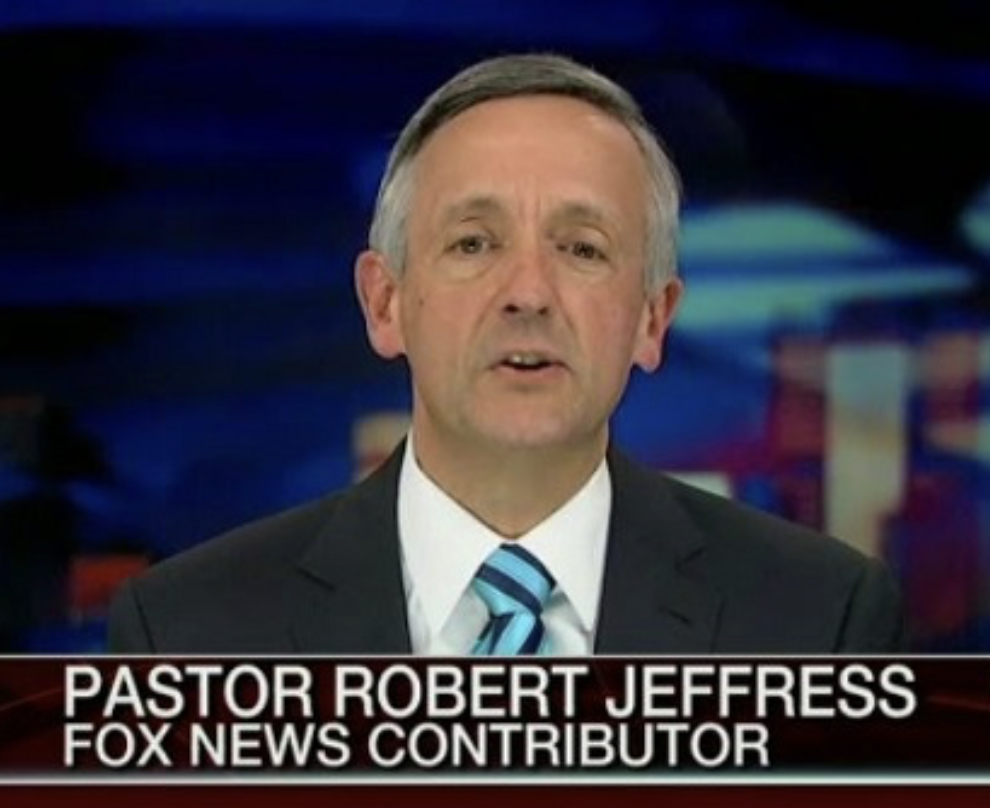
Take, for example, this recent headline in The Dallas Morning News: “Robert Jeffress hopes to combat vaccine fears with First Baptist Dallas’ COVID-19 vaccination effort.” Here is the overture:

To combat vaccine hesitancy among Christian evangelicals, First Baptist Church in Dallas will have a COVID-19 vaccination clinic. …

Senior pastor Robert Jeffress said he hopes the move will encourage people to get shots so more of his 14,000 congregants can come and worship in person.

“Our church will never be what it needs to be until you’re back. The greater risk is the spiritual danger of staying isolated,” Jeffress said in a recent sermon. “I’m not forcing anybody to get the vaccine. That’s your choice. But what I am saying is if you are not back yet, and would like to come back, one option is to take the vaccine, and therefore you don’t have to worry about what other people do or don’t do here in the church.”

Like I said, this was a totally normal local story on this issue.

However, stop and think about this question: Would this have been a bigger story — attracting coverage from TV networks and elite newsrooms such as The New York Times — if Jeffress had taken a stance against the vaccines?

You know it would have been a national story, in part because of this preacher’s past support for former President Donald Trump.


Please respect our Commenting Policy

New podcast: Religious wars over vaccines? They're more complex than those headlines

New podcast: Religious wars over vaccines? They're more complex than those headlines

Once again, it’s time for some time travel on the religion beat — as we ponder the current state of news coverage about the COVID-19 mask-and-vaccine wars.

Think back to Easter a year ago. Church leaders were wrestling with the real possibility that they would not be able to worship during Holy Week and on the holiest day on the Christian calendar. This was got lots of ink from the press, with good cause. There appeared to be two camps: (1) Crazy right-wingers (many journalists saw Donald Trump looming in the background) who wanted face-to-face worship at any cost and then (2) sensible, sane clergy willing to move to online worship and leave it at that.

The reality was more complex, especially since some (not all) government leaders seemed to think that worship was more dangerous than other forms of public life. During this week’s “Crossroads” podcast (click here to tune that in), host Todd Wilken and I discussed how it’s easy to see the same patterns in news reports on bitter battles over COVID-19 vaccines. For some on the left — see this fascinating Emma Green piece at The Atlantic — super-strict coronavirus rules have evolved into faith-based dogma.

Now for that early COVID-19 flashback. In a post and podcast a year ago, I argued that this wasn’t really a simplistic story about two groups (good churches vs. bad churches), but one in which there were at least five camps to cover:

Those five camps? They are (1) the 99% of religious leaders who cooperated and took worship online, (2) some religious leaders who (think drive-in worship or drive-thru confessions) who tried to create activities that followed [government] social-distancing standards, (3) a few preachers who rebelled, period, (4) lots of government leaders who established logical laws and tried to be consistent with sacred and secular activities and (5) some politicians who seemed to think drive-in religious events were more dangerous than their secular counterparts.

Say what? … Why were drive-in worship services — with, oh, 100 cars containing people in a big space — more dangerous than businesses and food pantry efforts that produced, well, several hundred cars in a parking lot?

These five camps still exist and we can see them in the vaccine wars.


Please respect our Commenting Policy

Sports Illustrated almost asks: Is Trevor Lawrence too serious about his faith to be a great QB?

Sports Illustrated almost asks: Is Trevor Lawrence too serious about his faith to be a great QB?

If you’re into sports, you know that the National Football League player draft took place a few days ago. And if you’re into football — college or professional — you know that the name called as the first pick in this draft was a foregone conclusion.

The Jacksonville Jaguars won the race to the bottom of the 2020 standings, which allowed them to select one of the most highly rated quarterback prospects ever — Trevor Lawrence of Clemson, a 6-foot-6, 220-pound superstar who lost a total of two games in college.

The assumption was that Lawrence had everything that any NFL executive or coach would want.

Then again, maybe not. Shortly before the crowning ceremony, Sports Illustrated published an eyebrow-raising feature on the quarterback with this double-decker headline:

The Unrivaled Arrival of Trevor Lawrence

The best quarterback to come into the draft in nearly a decade, Lawrence will enter the NFL with the billing of a generational signal-caller, a keen sense of self and a burning desire to prove absolutely nothing.

Now, what did that final phrase mean, the statement that Lawrence had a “burning desire to prove absolutely nothing”?

Maybe it had something to do with his father saying that he told his gifted son: “God has given you a great gift. But you know, at some point when the game’s taken more from you than it’s giving to you, you need to step away.” Or maybe it was this statement by his high-school coach in Georgia: “[Trevor] will play as long as God wants him to.”

Clearly religious faith was a problematic part of this young man’s mental and emotional make-up.


Please respect our Commenting Policy