Baptists

Once again, AP accuses big Catholic bosses of abusing government coronavirus relief efforts

Once again, AP accuses big Catholic bosses of abusing government coronavirus relief efforts

There they go again.

In this case, “they” refers to whoever is in charge of religion-news coverage these days at the Associated Press. Someone there needs to take a remedial course in (a) church history, (b) church-state law in the United States or (c) both.

Let’s start by flashing back about six months, when the AP rolled out an investigation of what its editors clearly thought was a scandal of epic proportions. Does anyone remember this lede, and this GetReligion dissection (“AP explains why it was wrong for local-level Catholic employees to get coronavirus relief money“), of the expose)?

NEW YORK (AP) — The U.S. Roman Catholic Church used a special and unprecedented exemption from federal rules to amass at least $1.4 billion in taxpayer-backed coronavirus aid, with many millions going to dioceses that have paid huge settlements or sought bankruptcy protection because of clergy sexual abuse cover-ups.

That was a bizarre, but honest, opener. The entire story was built on the assumption that there is such a thing — corporately and legally speaking — as a “U.S. Roman Catholic Church.”

As I said at the time, this is “like saying that there is an ‘American Public School System,’ as opposed to complex networks of schools at the local, regional and state levels.” One could also note that there is a Planned Parenthood of America. However, government coronavirus aid in the paycheck-support program went to 37 regional and local Planned Parenthood groups.

The Associated Press has now produced a sequel, with this headline: “Sitting on billions, Catholic dioceses amassed taxpayer aid.” While the editors avoided the “U.S. Roman Catholic Church” label this time around, this lengthy story is built on a similar misunderstanding of what happened when Catholic parishes, schools, nonprofits and other ministries applied for coronavirus aid.

As readers can see in the headline, in the sequel AP leaders focused on finances at the diocesan level, as opposed to a mythical national Catholic structure. This is closer to the truth, but it still misses the mark. While many issues of church authority are linked to local bishops, in local dioceses, the crucial issue here was paycheck-relief money reaching staff members in individual parishes, schools and ministries that had been rocked by falling donations during the COVID-19 crisis. Let’s start with the overture:
Please respect our Commenting Policy

It was hard to edit God out of Cicely Tyson's epic story, but some journalists gave it a try

It was hard to edit God out of Cicely Tyson's epic story, but some journalists gave it a try

It was hard to listen to Cicely Tyson talk about her life without recognizing the strong undercurrent of Christian faith in her words, deeds and also in her art. While remaining a proud, private, dignified woman, her faith was not something that she tried to hide.

The question here at GetReligion, of course, was whether any of that imagery and information would make it into the news coverage surrounding her death at the age of 96.

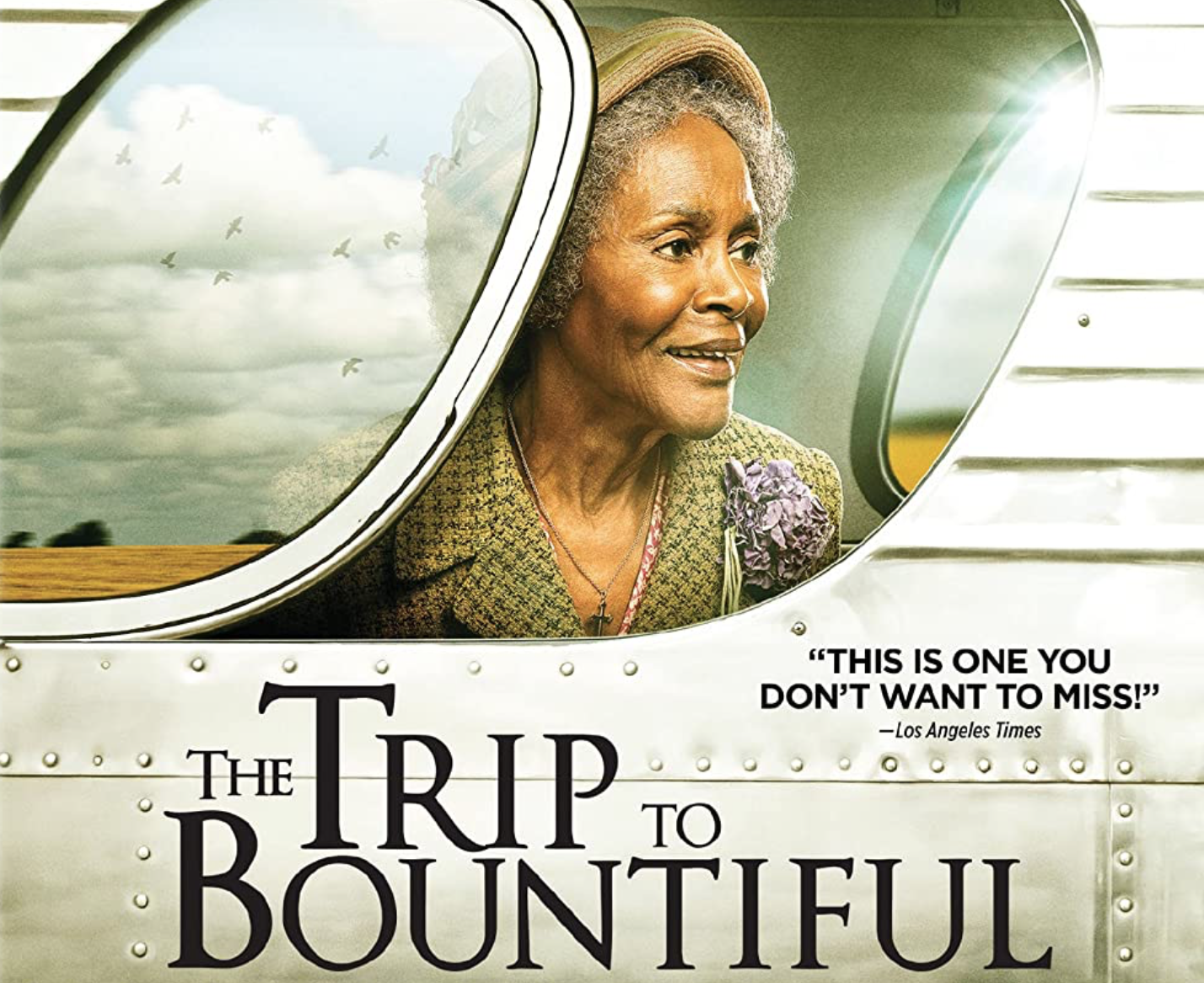
The answer was, of course, “yes” and “no.” Many of the obituaries mentioned her Tony-winning return to Broadway in 2013, at the age of 88, to play the unstoppable matriarch in Horton Foote’s classic, faith-driven play, “The Trip to Bountiful.” The show-stopping moment, night after night, was when Tyson would sing — joined by many in the audience — the classic hymn “Blessed Assurance.” It’s hard to avoid the content of lyrics such as these:

Blessed assurance, Jesus is mine; Oh, what a foretaste of glory divine!
Heir of salvation, purchase of God; Born of His Spirit, washed in His blood.

This is my story, this is my song, Praising my Savior all the day long.

If you were looking for the faith-free version of Tyson’s life, the natural place to turn was The New York Times.

This story did a great job of capturing her impact on American culture, especially in terms of the sacrifices she made to portray African-American life with style, power and dignity. Here are two crucial summary paragraphs on that essential theme:

In a remarkable career of seven decades, Ms. Tyson broke ground for serious Black actors by refusing to take parts that demeaned Black people. She urged Black colleagues to do the same, and often went without work. She was critical of films and television programs that cast Black characters as criminal, servile or immoral, and insisted that African-Americans, even if poor or downtrodden, should be portrayed with dignity.

Her chiseled face and willowy frame, striking even in her 90s, became familiar to millions in more than 100 film, television and stage roles, including some that had traditionally been given only to white actors. She won three Emmys and many awards from civil rights and women’s groups, and at 88 became the oldest person to win a Tony, for her 2013 Broadway role in a revival of Horton Foote’s “The Trip to Bountiful.”

But the only reference to her Christian faith — negative, of course — came in this bite of biography:


Please respect our Commenting Policy

Evangelical 'power' and U.S. Capitol rioting: What about Franklin Graham and Falwell Jr.?

Evangelical 'power' and U.S. Capitol rioting: What about Franklin Graham and Falwell Jr.?

As a rule, I don’t use GetReligion posts to respond to feedback from readers. But several people — in emails, for the most part — have raised two crucial, and valid, questions about last week’s “Crossroads” podcast and post: “New York Times says 'Christian nationalism' tied to white 'evangelical power'.”

Actually, it’s the same question asked in two different ways. Hold that thought.

In the podcast and post, I argued that a much-read New York Times piece (“How White Evangelical Christians Fused With Trump Extremism“) did a fine job while offering illustrations that conspiracy theories such as the QAnon gospel have soaked into many pews and a few pulpits, especially in independent (and often small) charismatic and evangelical churches. My question was whether the feature provided solid evidence for this thesis:

The blend of cultural references, and the people who brought them, made clear a phenomenon that has been brewing for years now: that the most extreme corners of support for Mr. Trump have become inextricable from some parts of white evangelical power in America. Rather than completely separate strands of support, these groups have become increasingly blended together.

The key word was “power,” as in “some parts of evangelical power” becoming “inextricable” from the “most extreme” forms of Trump support — which has to be a reference to those who planned, not the legal National Mall rally for Trump, but the illegal armed attack on the U.S. Capitol.

In response, I wrote:

… Anyone who studies “evangelicalism” — white or otherwise — knows that we are talking about a movement based on the work of powerful denominations (this includes megachurches), parachurch groups, publishers (and authors) and major colleges, universities and seminaries.

This led to several people asking this valid question: What about the Rev. Franklin Graham? Others asked: What about Jerry Falwell, Jr., and Liberty University?

These are certainly examples of evangelical brand names — Graham and Falwell.


Please respect our Commenting Policy

After the U.S. Capitol riot: Personality cults do not mix well with traditional Christian faith

After the U.S. Capitol riot: Personality cults do not mix well with traditional Christian faith

Year after year, thousands of Americans attend the March for Life, marching past the U.S. Capital on a late January date close to the anniversary of Roe vs. Wade.

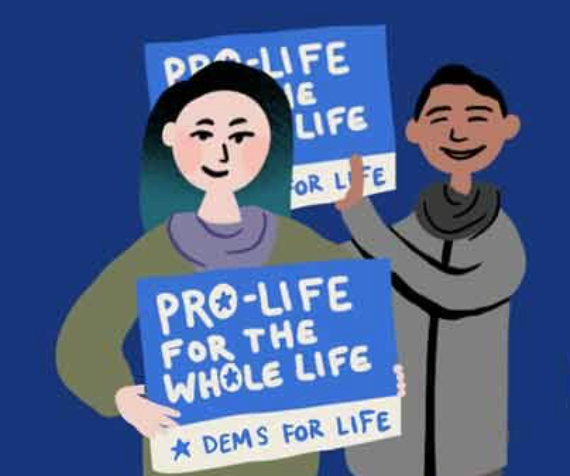
Most of the marchers are young and come by bus from Catholic and evangelical schools. While most of the groups present are conservative, there are smaller groups like Secular Pro-Life and Democrats for Life. Most of the banners contain slogans such as, "Abortion Hurts Women," "Love Life, Choose Life" or "We are the Pro-Life Generation."

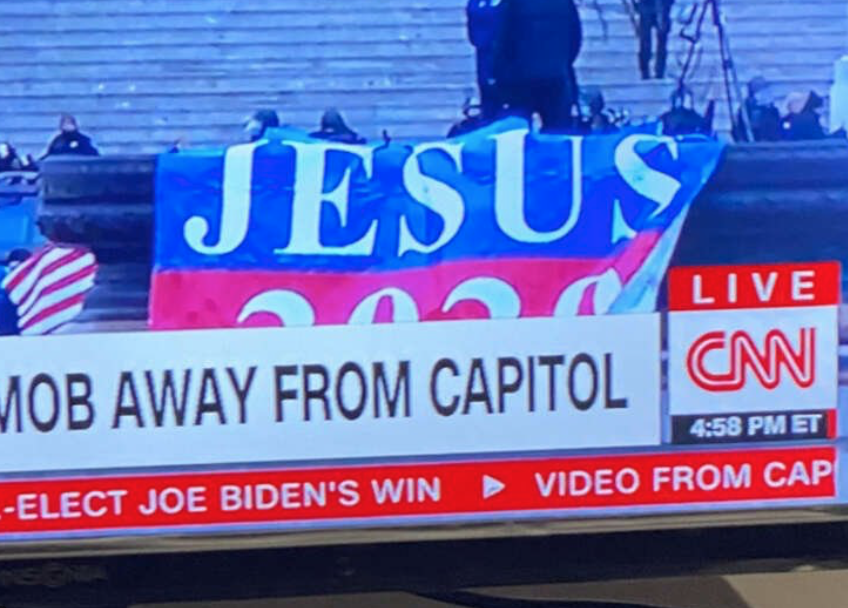
Things were different at the Save America March backing President Donald Trump's efforts to flip the 2020 election. Some banners contained messages like "Jesus is my Savior, Trump is my President." But many more proclaimed "Stand with Trump!" or "Trump 2020: No More Bulls--t."

It's one thing to march for a cause. It is something else to hail a political leader as the key to saving America, said Southern Baptist Seminary President R. Albert Mohler, Jr., a central figure in evangelical debates about Trump.

"The American experiment in ordered liberty is inherently threatened by a cult of personality. And we saw the results of that. … So many of those who were there as protestors explicitly said that they were there in the name of Donald Trump," said Mohler, in a podcast the day after U.S. Capitol riot. "It was Trump that was the name on the banners. They were not making the argument about trying to perpetuate certain political principles or even policies or platforms."

History shows that personality cults -- left or right -- are dangerous, he stressed. After this "American nightmare," Christians should soberly ponder the "way sin works" and its impact on powerful leaders who are tempted to become demagogues.

"Demagoguery simply means that you have a character who comes to power on the basis of emotion, rather than argument, and passion rather than political principles," said Mohler.

It's crucial to know that, in 2016, Mohler was numbered among evangelical leaders who opposed Trump's candidacy. When the New York City billionaire clinched the GOP nomination, Mohler tweeted: "Never. Ever. Period."

But in 2020 he said he would vote for Trump in support of the Republican Party, thus opposing the Democratic Party platform.


Please respect our Commenting Policy

New podcast: New York Times says 'Christian nationalism' tied to white 'evangelical power'

New podcast: New York Times says  'Christian nationalism' tied to white 'evangelical power'

At the 2016 Southern Baptist Convention, messengers from churches across the nation approved a resolution calling for Americans to “discontinue the display of the Confederate battle flag as a sign of solidarity of the whole Body of Christ.”

The speaker of the Mississippi House of Representatives, Philip Gunn, was there (full Baptist Press report here) as chair of the Southern Baptist Seminary board of trustees. He went home determined to help do something about his state’s flag. Mississippi’s new flag dropped the Confederate symbolism of the old, replaced by a magnolia blossom and the phrase “In God We Trust.”

This is clearly an example of a major evangelical institution using its clout — “power,” if you will.

This brings us — using a back door, I will admit — to this week’s “Crossroads” podcast (click here to listen to that), which focuses on the waves of coverage about Christians symbols and banners among participants in both the “Save America March” backing Donald Trump and the deadly riot outside and inside the U.S. Capitol. How did some F-bomb screaming rioters end up chanting “Hang Mike Pence!” while others nearby played loud Contemporary Christian Music?

The hook for this rather complicated podcast discussion with host Todd Wilken was one of those voice-from-on-high, magisterial New York Times passages — with zero attribution to sources — that speaks for the Acela Zone ruling elites. The double-decker headline proclaimed:

How White Evangelical Christians Fused With Trump Extremism

A potent mix of grievance and religious fervor has turbocharged the support among Trump loyalists, many of whom describe themselves as participants in a kind of holy war.

Are we talking about ALL Trump loyalists? Or is it simply MANY of them? Hold that thought, because we will return to it shortly.

But here is the key passage that needs to be read carefully, more than once:

The blend of cultural references, and the people who brought them, made clear a phenomenon that has been brewing for years now: that the most extreme corners of support for Mr. Trump have become inextricable from some parts of white evangelical power in America. Rather than completely separate strands of support, these groups have become increasingly blended together.


Please respect our Commenting Policy

The role that religion played in shaping President Donald Trump's stunning last stand

The role that religion played in shaping President Donald Trump's stunning last stand

“Is it possible to be astonished and, at the same time, not surprised?”

A colleague recalled that quote — by fictional President Josiah Bartlet on a 2005 episode of the Emmy Award-winning political drama “The West Wing” — as a real-life mob of Donald Trump supporters stormed the U.S. Capitol on Wednesday.

A Capitol Police officer this morning became the fifth person to die as a result of the insurrection.

How does religion figure in the tragic last stand of the nation’s conspiracy theorist-in-chief?

Let us count the ways, as highlighted by Religion Unplugged contributors:

• As thousands of protesters gathered outside the Capitol building claiming election fraud, some installed a giant wooden cross on the lawn, Hamil R. Harris notes.

• Others in the crowd carried flags and banners with Christian symbols and messages such as “Jesus Saves.” Kimberly Winston explains the history behind the array of flags.

• Christian leaders — some of whom have backed President Donald Trump because of his anti-abortion stance — condemned the pro-Trump mob and called for peace, Jillian Cheney reports.

In other noteworthy coverage, Religion News Service’s Jack Jenkins explores the “two forms of faith on display” amid the chaos. The Atlantic’s Emma Green weighs in on “Storming the Capitol for God and Trump.”

Another must read: Houston Chronicle religion writer Robert Downen interviews Southern Baptist leader Albert Mohler, who says he’s “genuinely shocked and horrified” by what happened Wednesday but stands by his Trump vote. (Click here for the GetReligion post and podcast about that piece and Mohler’s own podcast on the topic.)

Looking ahead, President-elect Joe Biden has invited Jesuit priest Leo O'Donovan, former president of Georgetown University, to deliver the invocation at Biden’s Jan. 20 inauguration, the National Catholic Reporter’s Christopher White reports.

Power Up: The Week’s Best Reads

1. ‘Only in America’: Raphael Warnock’s rise from poverty to U.S. senator: Associated Press writer Russ Bynum profiles the progressive reverend who — as explained by Religion News Service’s Adelle M. Banks — plans to remain senior pastor of his Atlanta church.


Please respect our Commenting Policy

Courage vs. civility? It doesn't help when believers join mobs in social media

Courage vs. civility? It doesn't help when believers join mobs in social media

It seemed that whenever the Rev. Daniel Darling ventured into social media, he saw the same red flags -- so he posted a commentary on "Christians and Conspiracy Theories."

"Because it's online, doesn't mean it's true," he noted. "Because a story is advanced by someone whose ideology I agree with, doesn't mean it's true. …

"For some reason, we are a people who want to believe there is a big plot behind every single thing that happens. … If you watch enough cable TV, depending on your political persuasion, you will come to think that behind every act in Congress there is a string of connected dots that go back to either George Soros (liberal) or the Koch brothers (conservative)."

This wasn't a hot take on QAnon letters or rumors of shredded Georgia ballots.

Darling wrote those words a decade ago, while leading an evangelical church near Chicago. Now he's a crucial voice for the National Religious Broadcasters and author of a book -- "A Way with Words: Using Our Online Conversations for Good" -- pleading for believers to think twice about their online lives.

"I'm not saying we should run away and hide," said Darling, in a telephone interview. "There's no way to avoid the fact that social media is a crucial part of American life. I don't think Christians have any choice about whether or not to be engaged. …

"What we need to do is be more careful when deciding where to draw lines and take stands. But, unless you're Amish, I don't see anyone sitting this one out."

It's especially important for religious leaders to warn their followers not to join the online "mobs" that are destroying America's ability to have sane public debates. In some cases, digital attacks are also threatening lives and reputations.

Consider, for example, the woke social-media attacks that fueled inaccurate mainstream news reports about Covington Catholic High School students at the 2019 March for Life. Then there were the conservative social-media warriors who embraced #pizzagate conspiracy theory claiming that prominent Democrats were linked to a global child-trafficking ring.

Did Russia steal the White House in 2016? Yes, there were mainstream-news reports. Did China, Cuba, Venezuela or some other evil force steal the 2020 election? Yes, there have been headlines on the other side of America's partisan media wars.

The result is anger and pain that has reached many pews and some pulpits.


Please respect our Commenting Policy

Thinking about, and with, Al Mohler: America's 'ordered liberty' was set afire -- by Trump

Thinking about, and with, Al Mohler: America's 'ordered liberty' was set afire -- by Trump

If you have followed the divisions inside the Southern Baptist Convention since 1979, or even earlier, you know this name — R. Albert Mohler, Jr. He was — for some — a L’enfant terrible among the conservatives in the early biblical inerrancy wars who (like him or not) grew, as president of Southern Baptist Theological Seminary, into one of the most important Southern Baptist voices of the late 20th and early 21st centuries.

It would be hard to describe the degree to which many Southern Baptists in the defeated “moderate” establishment detest Mohler, for a variety of theological, cultural and political reasons. At the same time, in the Donald Trump era, there are many in the ranks of far-right Southern Baptist life who view him as a traitor or even “politically correct.”

This is not an easy era in which to lead conservative religious institutions, even those with clout and many supporters. And it’s crucial to know that Southern Baptists leaders were, like evangelical leaders in general, sharply divided on whether to support the rise of Trump in 2015-2016. (Click here for the GetReligion typology describing six different evangelical views of Trump.)

Out of the tsunami of important statements by religious leaders following the U.S. Capitol riot, I have selected — as this weekend’s “think piece” — two articles by and about Mohler, Trump and the hellish scenes of January 6th. The first is a Houston Chronicle interview with Mohler by Robert “wut is happening?” Downen, an emerging religion-beat force in Texas and American in general. The headline: “Evangelical leader Albert Mohler says he’s horrified by chaos at Capitol, but stands by Trump vote.”

Downen notes that:

Mohler is the longtime president of the Southern Baptist Convention’s flagship seminary in Louisville, Ky., and is a contender to lead the SBC when the faith group elects a new president in June.

The evangelical leader has forcefully condemned Trump over the last half-decade, characterizing him as a sexual predator at one point and, after Trump clinched the Republican Party nomination in 2016, Tweeting simply: “Never. Ever. Period.”


Please respect our Commenting Policy

New podcast: Who stands in the middle of American politics? Often, that's a religion question

New podcast: Who stands in the middle of American politics? Often, that's a religion question

There were two major stories in American life this week, when it seemed like the world turned in a matter of minutes.

The riot at the U.S. Capitol grew out of yet another legal Donald Trump rally, with its familiar mix of hero worship, populist rage and, yes, rhetoric and symbols used by conservative, often Pentecostal, Christians. Fired up by a truly radical message from the president, many (not all) of these protestors marched to Capitol and turned into an illegal mob, crashing through security fences and then through doors and windows. Yes, some of the Christian banners and signs went with them.

We will be learning more about the makeup of that mob as participants are identified, arrest and tried — perhaps under (irony alert) Trump’s June 26th executive order authorizing a “penalty of up to 10 years’ imprisonment for the willful injury of Federal property.”

There have been waves of statements by religious leaders condemning the violence, including many by evangelicals who (a) opposed Trump, (b) reluctantly voted for him or (c) enthusiastically backed him. I expect more coverage on all of that (I’m collecting material for an “On Religion” column). Readers can start with this piece from the left, care of HuffPost.com: “Trump’s Evangelical Allies Condemn Violence At The Capitol.” It focuses on evangelicals who are still finding it hard to attack Trump, while — almost hidden at the end — noting views from some of condemned both the violence and the president’s role in it.

Let me know, via comments or email, if you see more religion-driven riot coverage.

Meanwhile, this week’s “Crossroads” podcast (click here to tune that in) centered on a GetReligion post that was written about two hours before the riots began: “Life after Georgia — Questions about a pro-life Democrat in U.S. Senate and other issues ...

The key is that victories by two Democrats (one a liberal Baptist pastor) put a very interesting conservative (and Catholic) senator at the middle of America’s increasingly divided and even bloody political map.

That man, Sen. Joe Manchin of West Virginia, is a living symbol of what used to be a major force in American politics — the white Southern Democrat. Although he has been endorsed by Democrats For Life, his pragmatic political views on that topic will not be found in the Democratic or Republican platforms, but do resemble the views of millions of centrist Americans.

Many Democrats, in the past, have insisted that Manchin is not really a Democrat. Well, how many want to toss him out of the party right now (with that 50-50 Senate split)?


Please respect our Commenting Policy