Anglicanism

Yes, there were overlooked religion angles in today's biggest U.S. political news story

Yes, there were overlooked religion angles in today's biggest U.S. political news story

Well what do you know. Evangelical Anglicans and the Salvation Army had a big night in the Commonwealth of Virginia.

That’s probably not the first thing that leaps to mind today, for political junkies who spent most of the night (the World Series finale was a big deal) watching political pundits express shock and, sometimes, grief watching a Republican newcomer upset name-brand Democratic Party candidate.

Lots of people talked about Donald Trump, of course. Some people dug a bit deeper and focused on how governor-elect Glenn Youngin managed to affirm some themes from the Trump revolution, while striving to stay as far away as possible from personal contact with Orange Man Bad.

This brings me to a headline this morning at A Journey Through NYC Religions, which is one of those niche-news websites that many religion-beat pros have in their browser favorites — because of its heady mix of hard facts and hard-to-label commentary.

Here’s the headline: “Faith trumps Trump in Virginia.”

Say what?

I think many journalists would assume — if they thought about religion angles in the Virginia race — that the members of the victorious GOP team probably came from White megachurches. But that’s not what veteran editor Tony Carnes found when he looked for the ties that bind, in this case. Here is his overture:

Most of the media attention in the Virginia elections has been on Trump and his influence. The Democratic candidate Terry McAuliffe tried unsuccessfully to tag his opponent Glenn Youngkin as a Trumper.

However, under the surface of politics, there was a deeper spiritual culture and social network that connected the top three candidates in Virginia. This characteristic made the GOP effort in Virginia more winsome (indeed, that is the first name of Winsome Sears, the next Lieutenant Governor.)
Please respect our Commenting Policy

A lion of evangelical Anglicanism -- seeking Christian unity -- elects to swim the Tiber

A lion of evangelical Anglicanism -- seeking Christian unity -- elects to swim the Tiber

As always, rumors swirled around the favorites in the 2002 race to become the 104th Archbishop of Canterbury.

Efforts to derail Bishop Michael Nariz-Ali of Rochester were different, in part because he was born in Pakistan -- fluent in Urdu and Farsi -- and was poised to become the first non-white leader of the Church of England. Others noted that he attended Catholic schools as a boy and practiced that faith.

Progressives warned that Nazir-Ali was too conservative on issues dividing Anglicans. He opposed the ordination of noncelibate gays and lesbians, while defending ancient teachings on marriage. He was a fierce critic of Sharia law and "radical Islam," while defending persecuted Christians around the world Most of all, critics noted that he was a strong evangelical leader in the global Anglican Communion.

Nazir-Ali insisted that he was "evangelical and Catholic," even as he lost his shot at the Throne of Canterbury.

That's the same label that he used when he stunned the Anglican world by announcing that he was returning to Roman Catholicism. He is expected to be ordained as a Catholic priest this Sunday (Oct. 30), serving in the Ordinariate of Our Lady of Walsingham, a canonical structure established in 2011 by Pope Benedict XVI that allows Anglicans to enter Catholicism while retaining many Anglican rites and traditions. The 72-year-old Nazir-Ali is married and has two children.

This move was necessary "because I believe that the traditional Anglican desire to adhere to the fullness of apostolic, patristic and conciliar teaching can now best be maintained in this way," the former bishop announced.

Writing in The Daily Mail, he called the decision a "bittersweet moment."

"Bitter, because I am deeply saddened that the Church of England is not the church I joined. There are many individual parishes, priests, and believers who remain committed to biblical faith and values. But as an institution it seems to be losing its way," he said. "Sweet, because I am excited about the opportunities that joining the ordinariate will bring: to uphold human rights and help millions of suffering Christians and others round the world."


Please respect our Commenting Policy

Death of a post-theist shepherd: The unorthodox faith of Bishop John Shelby Spong

Death of a post-theist shepherd: The unorthodox faith of Bishop John Shelby Spong

Newark Bishop John Shelby Spong never stuck "Why Christianity Must Change or Die" on the doors of Canterbury Cathedral, since it was easier to post a talking-points version of his manifesto on the Internet.

"Theism, as a way of defining God is dead," he proclaimed, in 1998. "Since God can no longer be conceived in theistic terms, it becomes nonsensical to seek to understand Jesus as the incarnation of the theistic deity."

Lacking a personal God, he added, it was logical to add: "Prayer cannot be a request made to a theistic deity to act in human history in a particular way."

Spong's 12-point take on post-theism faith emerged after spending years on the road, giving hundreds of speeches and appearing on broadcasts such as "The Oprah Winfrey Show" and "Larry King Live." While leading the Episcopal Diocese of Newark, within shouting range of New York City, he did everything he could to become the news-media face of liberal Christianity.

By the time of his death at the age of 90, on Sept. 12 at his home in Richmond, Va., Spong had seen many of his once-heretical beliefs -- especially on sex and marriage -- normalized in most Episcopal pulpits and institutions. However, his doctrinal approach was too blunt for many in the mainline establishment, where a quieter "spiritual but not religious" approach has become the norm.

Spong called himself a "doubting believer" and said he had no problem reciting traditional rites and creeds because, in his own mind, he had already redefined the words and images to fit his own doctrines. He also knew when to be cautious, such as during Denver visit in the late 1980s -- an era in which the Diocese of Colorado remained a center for evangelical and charismatic Episcopalians.

After a lecture at the liberal St. Thomas Episcopal Church, I asked Spong if he believed the resurrection of Jesus was an "historic event that took place in real time."

"I don't think that I can say what the disciples believed they experienced. I'll have to think about that some more," he said, moving on to another question.


Please respect our Commenting Policy

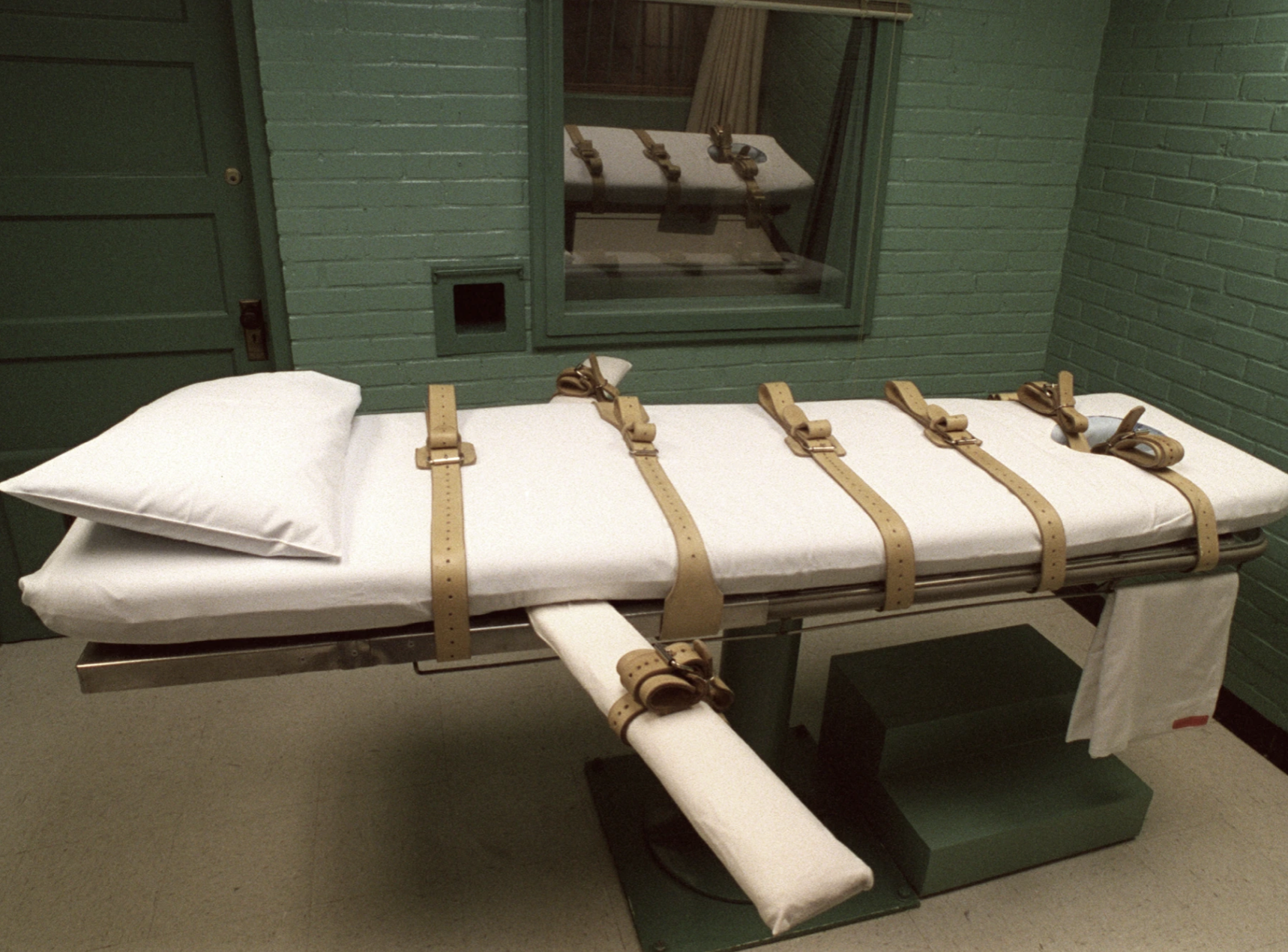
Thinking about prayers at executions: These stories offer glimpses of an old church-state unity

Thinking about prayers at executions: These stories offer glimpses of an old church-state unity

This is a “feeling guilty” post. For quite some time now, I have been planning to examine the coverage of some important religious-liberty cases that have been unfolding in the death-row units of prisons.

The decisions are worthy of coverage, in and of themselves. At the same time, these cases have demonstrated that it is still possible, in this day and age, for church-state activists on the left and right to agree on something. Maybe I should have put a TRIGGER WARNING notice at the start of that sentence.

Like I said the other day in this podcast and post — “Covering a so-called 'religious liberty' story? Dig into religious liberty history” — this kind of unity in defending religious freedom has become tragically rare (from my point of view as an old-guard First Amendment liberal). Indeed, to repeat myself, “America has come a long way since that 97-3 U.S. Senate vote to approve the Religious Freedom Restoration Act of 1993.”

The problem is that you rarely, if ever, see reporters catch this church-state angle in these decisions. The key is to look at who filed legal briefs in support of the religious liberty rights of the prisoners.

This brings me to an important Elizabeth Bruenig essay that ran the other day at The Atlantic, under this dramatic double-decker headline:

The State of Texas v. Jesus Christ

Texas’s refusal to allow a pastor to pray while holding a dying man’s hand is an offense to basic Christian values.

Here is the meaty overture:

Devotees to the cause of religious liberty may be startled to discover during the Supreme Court’s upcoming term that the latest legal-theological dispute finds the state of Texas locked in conflict with traditional Christian practice, where rites for the sick, condemned, and dying disrupt the preferences of executioners.


Please respect our Commenting Policy

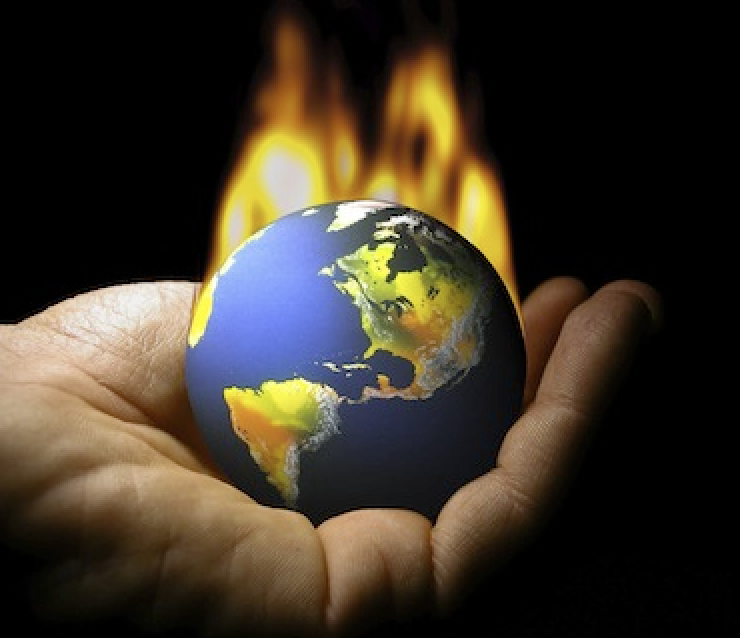
Push comes to shove on climate change. What more can clergy and religion reporters do?

Push comes to shove on climate change. What more can clergy and religion reporters do?

Imagine, if you dare, being forcibly parachuted into Taliban-ruled Afghanistan, the world’s current hell-hole du jour.

Suddenly you’re forced to shelter and feed your family and you’re at a loss as to how to do this.

Now consider how the increasingly dramatic consequences of human-accelerated climate change might make your already dire situation worse.

A recent New York Times piece attempted to paint this picture.

It was not pretty. Here’s its opening graphs.

Parts of Afghanistan have warmed twice as much as the global average. Spring rains have declined, most worryingly in some of the country’s most important farmland. Droughts are more frequent in vast swaths of the country, including a punishing dry spell now in the north and west, the second in three years.

Afghanistan embodies a new breed of international crisis, where the hazards of war collide with the hazards of climate change, creating a nightmarish feedback loop that punishes some of the world’s most vulnerable people and destroys their countries’ ability to cope.

And while it would be facile to attribute the conflict in Afghanistan to climate change, the effects of warming act as what military analysts call threat multipliers, amplifying conflicts over water, putting people out of work in a nation whose people largely live off agriculture, while the conflict itself consumes attention and resources.

Just like that, a regional hell hole turns into a global tragedy that should be generating global headlines. Powerful nations half-a-world away scramble to deal with the situation — or should I say scramble to look like they’re dealing with it.

Nor is Afghanistan the only failed state suffering from ongoing political violence complicated by climate change’s frightening uncertainties. “Of the world’s 25 nations most vulnerable to climate change, more than a dozen are affected by conflict or civil unrest, according to an index developed by the University of Notre Dame,” The Times article reported.


Please respect our Commenting Policy

Friends of Friendless Churches: Trying to save sacred pieces of past in England and Wales

Friends of Friendless Churches: Trying to save sacred pieces of past in England and Wales

The structure of St. Baglan's Church in North Wales is simple, with plastered stone walls and whitewashed timbers between the slate slabs of its roof and floor.

The 13th Century sanctuary was rebuilt in the 1800s, but the carved doorway lintel dates from the 5th or 6th century. An adjacent field contains the 7th Century well of St. Baglan and for ages the faithful sought healing in its waters.

"This church was built on the site of an earlier church and there were sanctuaries here before that. People in Wales have been coming to sites like this for worship back into pre-Christian times," said Rachel Morley, director of the Friends of Friendless Churches since 2018.

During a visit to Llanfaglan parish in Wales, this tiny, abandoned sanctuary was surrounded by sea mists and low clouds from the mountains, she said. Then the sunset light over the Irish Sea "shot under the eaves and the church lit up inside with golden light. It was a complete sensory overload. That had to mean something."

Was this church designed so that this light would illumine the prayers of evensong? That's the kind of question members of the Friends of Friendless Churches have been asking since 1957, when Welsh journalist Ivor Bulmer-Thomas founded the charity with the help of poet T.S. Eliot, artist John Piper, British politician Roy Harris Jenkins and others.

The goal was to preserve historic, "significant" churches "threatened by demolition, decay, or inappropriate conversion." By the end of 2021, the charity will control 60 churches in England and Wales, almost all of them Anglican sanctuaries.

Year after year, the Friends of Friendless Churches watch as 30 or so truly historic churches go on sale and "there could be many more closed at any time," said Morley, reached by telephone.


Please respect our Commenting Policy

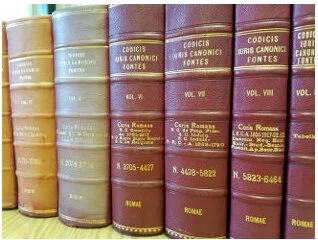
Boris Johnson's Catholic wedding: Why didn't the New York Times consult a Canon lawyer?

Boris Johnson's Catholic wedding: Why didn't the New York Times consult a Canon lawyer?

When preparing news reports about a chess match, it really helps if reporters quote one or more experts on the rules of chess.

The same thing is true when covering the FIFA World Cup. At some point, it would help to have an expert define “offsides” and some of soccer’s other more complicated rules.

When covering the U.S. Supreme Court, it helps to have a reporter on the team with a law degree and some serious experience covering debates in elite courtrooms.

This brings me that New York Times article the other day about that eyebrow-raising wedding at Westminster Cathedral between the current prime minister of England and his latest of many lady friends. The double-decker question covered many essential facts:

Why Could Boris Johnson Marry in a Catholic Church?

The British prime minister was married twice before, but the church didn’t recognize those unions because they were not Catholic.

Now, this article did some things very well, including offering a crisp, clear summary of Johnson’s complicated history as a husband and lover. Read that, if you wish.

However, I was struck by two words that were missing in this article — that would be, “Canonical” and “form” — even though discussions of this legal term was all over Catholic Twitter once the secret wedding was made public.

What, pray tell, is “Canonical form”? We will get to that in a moment.

In terms of journalism basics, the crucial point is that it really would have helped if the Times team had interviewed one or two Catholic Canon lawyers who understand this term and the history behind the church’s teachings on this subject. As things turned out, readers ended up knowing more about how this rite offended the sensibilities of Catholic LGBTQ activists than the specifics of the church laws that allowed the wedding to take place.


Please respect our Commenting Policy

Did Winston Churchill believe in God? Why did Churchill urge his nation to pray?

Did Winston Churchill believe in God? Why did Churchill urge his nation to pray?

THE QUESTION:

Did Winston Churchill believe in God?

THE RELIGION GUY'S ANSWER:

Sorta. Maybe. Depends what you mean.

The question and that answer are raised in the new book "Duty & Destiny: The Life and Faith of Winston Churchill" (Eerdmans) by Grove City College historian Gary Scott Smith, whose prior works include "Faith and the Presidency from George Washington to George W. Bush."

It's fair to say that during World War Two Churchill saved the United Kingdom and with that the broader prospects for democracy and the defeat of tyranny. In the prior century, the Civil War President Abraham Lincoln had saved the United States and the very possibility of democracy. These two great statesmen, the subjects of an immense number of books, are rather similar -- and similarly mysterious -- when it comes to religious faith.

Lincoln's story is well told in "Abraham Lincoln: Redeemer President" (also from Eerdmans) by Princeton Professor Allen Guelzo. Never a baptized church member and a youthful skeptic, Guelzo wrote, Lincoln when leading the nation through unprecedented crisis experienced a spiritual turn. This convinced him that only a moral revolution to end slavery could bring meaning to the war's horrid slaughter.

Thus he wrought the Emancipation Proclamation, announced in 1862 and proclaimed in 1863 and then, definitively, the 13th Amendment, which abolished slavery as of December 6, 1865, after he had been assassinated.

Churchill (1874-1965) underwent conventional baptism and confirmation in the Church of England. In the upper-crust mode, his neglectful and non-religious parents left his upbringing to boarding schools (with their mandatory chapels) and especially to his beloved nanny. Elizabeth Everest, a devout Christian, immersed the lad in prayer and study of the Bible, which through life he would quote at length by memory.


Please respect our Commenting Policy

The complicated, often painful, Orthodox roots of Prince Philip's faith journey

The complicated, often painful, Orthodox roots of Prince Philip's faith journey

The first nun the Bolsheviks threw into the abandoned mineshaft was best known as the Grand Duchess Elizabeth Feodorovna, the sister of the Russian Empress Alexandra.

After the 1905 assassination of her Grand Duke husband, Elizabeth became an Orthodox nun, giving away her wealth to build hospitals and orphanages. She was executed, in 1918, along with others linked to her doomed brother-in-law, Tsar Nicholas II.

When the nuns didn't drown, a soldier used a grenade. He later testified that "we heard talking and a barely audible groan. I threw another grenade. And what do you think -- from beneath the ground we heard singing! … They were singing the prayer: 'Lord, save your people!' "

Finally, there was silence. The body of St. Elizabeth the New Martyr was buried in 1920 at the Church of St. Mary Magdalene on the Mount of Olives in Jerusalem. Her life inspired many, including her grieving niece, the Greek Princess Alice of Battenberg. Alice was the great-granddaughter of Queen Victoria of England and the mother of Prince Philip, Duke of Edinburgh and for 73 years the husband of Queen Elizabeth II.

The complicated history of the royals, past and present, loomed over the short, dignified funeral for Prince Philip in St. George's Chapel, Windsor -- with only 30 mourners due to COVID restrictions. The prince's liturgical choices shaped an Anglican rite that stressed images of service, eternal hope and the beauties of God's creation.

The man many Brits called the "grandfather of the nation," was born on the Greek island of Corfu in 1921, the fifth child and only son of Prince Andrew of Greece and Princess Alice. He was baptized Greek Orthodox, before his life was rocked by wars and revolutions that shattered his family.


Please respect our Commenting Policy