Abortion

What questions must reporters ask, when faith and violence are twisted together?

What questions must reporters ask, when faith and violence are twisted together?

This may seem like a bit of a reach, but does anyone out there remember the story about the mad, misogynic gunman at the Planned Parenthood facility in Colorado Springs? Does the name Robert L. Deal, Jr., ring any horrible bells? How about Pastor Garrett Swasey?

Yes, at the time Issues Etc. host Todd Wilken and I were recording this week's "Crossroads" podcast (click here to tune that in), the Colorado Springs story was still being discussed -- a lot. We spent much of our time discussing the religious angles of that event and, in particular, what kinds of questions mainstream reporters needed to be asking if their goal was to find facts that would or would not link Deal to any particular religious group or tradition, let alone the mainstream pro-life movement.

While we were recording, Syed Rizwan Farook and his wife Tashfeen Malik were on the run after attacking Farook's co-workers at a holiday party at the San Bernardino County Health Department.

You will not hear about that in this podcast. However, you will hear us discussing PRECISELY the kinds of questions that reporters are now asking about the forces that may or may not have shaped the lives and worldviews of Farook and Malik.

What kinds of questions could possibly apply to both Deal and to this terrorist couple in San Bernardino? Well, questions like these.

How did they spent their time and money?


Please respect our Commenting Policy

Concerning the Planned Parenthood shooting suspect: Did the Devil make him do it?

Did the Devil make him do it?

In a massive front-page story today, The New York Times delves deeper into the background of Robert L. Dear Jr., the suspect in last week's shooting rampage at a Planned Parenthood facility in Colorado Springs, Colo.

Earlier this week, GetReligion highlighted the two prevailing media streams concerning Dear and the "Why?" factor in an attack that left three dead and nine wounded.

In today's report, that dichotomy of certifiable lunatic vs. religious anti-abortion warrior prevails again. The Times paints an in-depth portrait of "an angry and occasionally violent man who seemed deeply disturbed and deeply contradictory."

The Times opens with a focus on Dear's religion:

CHARLESTON, S.C. — The man she had married professed to be deeply religious. But after more than seven years with Robert L. Dear Jr., Barbara Micheau had come to see life with him as a kind of hell on earth.
By January 1993, she had had enough. In a sworn affidavit as part of her divorce case, Ms. Micheau described Mr. Dear as a serial philanderer and a problem gambler, a man who kicked her, beat her head against the floor and fathered two children with other women while they were together. He found excuses for his transgressions, she said, in his idiosyncratic views on Christian eschatology and the nature of salvation.
“He claims to be a Christian and is extremely evangelistic, but does not follow the Bible in his actions,” Ms. Micheau said in the court document. “He says that as long as he believes he will be saved, he can do whatever he pleases. He is obsessed with the world coming to an end.”

But then the story moves to Dear's views on abortion:


Please respect our Commenting Policy

Washington Post visits the enemy's camp: Oh those wild, dangerous Ben Carson voters

If you read journals of political news and opinion, then you are very familiar with a feature-story format that I like to call "visiting the house (or camp) of the enemy." What kind of advocacy publication are we talking about? Let's say the old New Republic or Rolling Stone, on the left, or The Weekly Standard or National Review on the right.

In this story, a reporter -- acting like a National Geographic staffer -- visits a strange and exotic type of person and tries to describe them and their tribe in their natural habitat, talking about their strange and maybe scary customs and beliefs.

A key element of this format is that they rarely include the voices of people on the other side of controversial issues that are discussed. The members of the exotic tribe talk and talk and talk and there is never really a response.

Why is this? Because the reporter is the representative of the opposing side and everything the members of the enemy tribe say is being filtered through the worldview of their opponents, framed in ways that make the words extra threatening or ridiculous. You are reading the Rolling Stone version of a gathering of pro-life activists or The Weekly Standard version of a gathering of postmodern gender-studies scholars.

Let me stress that I know this format well because I read, and appreciate, these kinds of publications. When you read In These Times you are reading a liberal point of view that is so strong that it often makes the left uncomfortable. Ditto for World magazine on the right. I appreciate this kind of journalism.

The question for today is this: What is this format doing in The Washington Post?

With these issues in mind, let's look at a few passages from a classic "visiting the house of the enemy" feature that ran under the headline: "Fear, faith and the rise of Ben Carson." Let's start with the lede, which takes a member of the Post national enterprise team deep into the wilds of the Bible Belt:


Please respect our Commenting Policy

It's God-and-country time for the Billy Graham Evangelistic Association

  It's God-and-country time for the Billy Graham Evangelistic Association

The new year will bring a significant strategic shift for the Charlotte-based Billy Graham Evangelistic Association, which remains influential among U.S. conservative Protestants and has $371 million in assets.

Since 2000 the BGEA has been led by the great evangelist’s son Franklin, who kicks off the new look in Des Moines on Jan. 5.

That’s when Franklin launches his politically-tinged “Decision America Tour" series of prayer rallies that starts off in Iowa and includes the other early voting states of New Hampshire (Jan. 19) and South Carolina (Feb. 9). He plans to preach and tweet his way through all 50 states by Election Day.

Though Billy Graham has befriended politicians and uttered socio-political comments over the decades, his revival meetings always focused hard on appeals for attendees to personally accept Jesus Christ as their savior from sin or to renew such commitments. Franklin will likewise “preach the Gospel.” But he’ll also be urging the Lord’s people not only to pray for the nation but “take action” by being sure to register and vote at all levels of government, and to consider runs for office.

The campaign will also ask Americans to sign a pledge that “where possible” they’ll vote for candidates who “uphold biblical principles, including the sanctity of life and the sacredness of marriage.” Franklin cites these biblical proof texts: Psalm 139:13 and Proverbs 24:11 on abortion, Matthew 19:4-6 on marriage, and Proverbs 14:34 on civic duty.

Perhaps with the BGEA tax exemption in mind, Franklin won’t be endorsing specific candidates and presents the tour as non-partisan, declaring:


Please respect our Commenting Policy

A tale of two Colorado Springs media streams: crazed gunman vs. anti-abortion soldier

In the wake of Friday's shooting rampage at a Planned Parenthood facility in Colorado Springs, Colo., there seem to be two major media streams going when it comes to the gunman and any link that he has to the "why?" factor in this story. 

The last two front pages of The New York Times are a perfect place to see what I'm talking about.

First is the stream that focuses on actual facts known about Robert L. Deal Jr., the man accused of killing three people and wounding nine in Colorado's second-largest city.

Yes, there is some religion in there if you dig deep. For example, Sunday's Times delved into Deal's bizarre personal history but found no institutional links between him and either organized religion or the pro-life movement.

Readers did learn a few details about Deal's religious background, as the Times quoted Deal's former wife, Pamela Ross (no relation to this writer):

Mr. Dear was raised as a Baptist, Ms. Ross said in an interview in Goose Creek, S.C., where she now lives. He was religious but not a regular churchgoer, a believer but not one to harp on religion. “He believed wholeheartedly in the Bible,” she said. “That’s what he always said; he read it cover to cover to cover.” But he was not fixated on it, she added.

Later in the story, religion figured tangentially as the newspaper recounted Deal's interesting, to say the least, Internet postings:

He seemed to have a separate life online. An online personals ad seeking women in North Carolina interested in bondage and sadomasochistic sex showed a picture that appeared to be Mr. Dear and used an online pseudonym associated with him. The same user also appeared to have turned to online message boards to seek companions in the Asheville area with whom he could smoke marijuana.


Please respect our Commenting Policy

Colorado Springs motives? So far, one is clear: Pro-life pastor/officer died defending life

Colorado Springs motives? So far, one is clear: Pro-life pastor/officer died defending life

Faced with headlines about violence at an abortion facility, the late Cardinal John O'Connor of New York City took to the pulpit and, digging into the writings of the Catholic Catechism, Pope John Paul II and Gandhi, stated the obvious. Do you remember that very candid quote?

"If anyone has an urge to kill someone at an abortion clinic, they should shoot me," said the late Cardinal John O'Connor, preaching to his New York City flock in 1994. "It's madness. It discredits the right-to-life movement. Murder is murder. It's madness. You cannot prevent killing by killing."

The cardinal added, in an online forum:

"Where does this spiral end? How is it limited? Surely, we are all as tired of abortion as we are tired of murder. But we must fight murder without conforming to it or condoning it," wrote the cardinal. ... Let us attend to God's revelation: 'Do not be conquered by evil, but conquer evil with good' (Romans 12: 21).

Now, I bring this up as law officials in Colorado Springs begin the process of digging into the history of the man arrested as the gunman in the horrifying standoff at a Planned Parenthood. Apparently, Robert Lewis Dear has a previous criminal record.

And what about motive? Here is a recent update, as posted at The Colorado Springs Gazette:

The Associated Press reports Colorado Springs Mayor John Suthers says authorities aren't ready to discuss a possible motive of the gunman who attacked a Planned Parenthood clinic there, but says people can make "inferences from where it took place."
Suthers says investigators have interviewed Dear, but that authorities still want to learn more about him, suggesting that his mental health was part of the investigation.

Now in this case, the tragic reality is that it is much easier to articulate the motives of the local police officer who was one of the first responders and lost his life in the fighting.

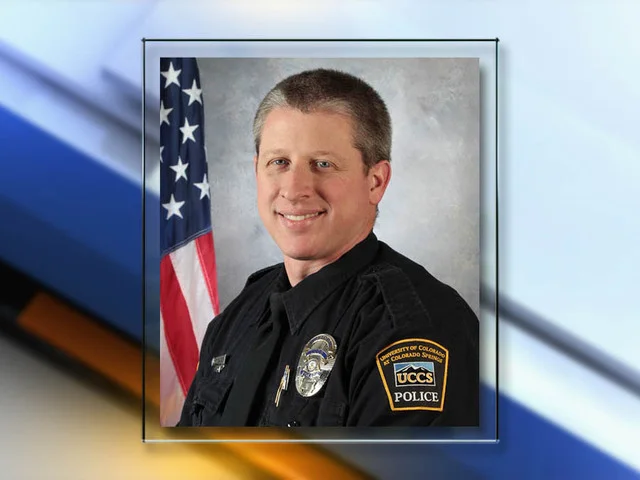
The officer's name: The Rev. Garrett Swasey.

Are you seeing that title -- "The Rev." -- in front of his name?


Please respect our Commenting Policy

Pope Francis in Kenya: AP gets some details, but misses the 'big idea,' in his message

Pope Francis has been on the road, again, which means that it's time for more stories about the political implications of his sermons and off-the-cuff remarks to the flocks of people who gather to pray and worship with him.

This is business as usual, of course. Want to play along and see how this works in a typical Associated Press report?

OK, first we'll look at the many excellent details from one of the Kenya talks that made it into the AP report, which ran in The Washington Post with this headline: "Pope calls slum conditions in Nairobi an injustice."

As you read several chunks of the story, ask yourself this big-idea question: What does this pope believe is the ultimate cause of this injustice?

NAIROBI, Kenya -- Visiting one of Nairobi’s many shantytowns on Friday, Pope Francis denounced conditions slum-dwellers are forced to live in, saying access to safe water is a basic human right and that everyone should have dignified, adequate housing. ...
In remarks to the crowd, Francis insisted that everyone should have access to water, a basic sewage system, garbage collection, electricity as well as schools, hospitals and sport facilities.
“To deny a family water, under any bureaucratic pretext whatsoever, is a great injustice, especially when one profits from this need,” he said.

Now, I think it is fair to ask: Is safe water the "big idea" in this talk, or is the pope saying that safe water is a symptom of larger problems? Hold that thought, as we head back to the AP text:


Please respect our Commenting Policy

Might this be the lede? Democrats allow pro-life Catholic to run (and win) in Louisiana

Please raise your hand if you are getting more and more tired of political labels, especially when they are linked to issues of religion, culture and morality. Can I get a witness?

During the recent elections in that crazy alternative universe called Louisiana, Republicans struggled to pin a liberal label, of some kind, on the Democrat who was willing to be the latest sacrificial victim in the race for governor. Everyone knows that Louisiana is a deep red, culturally conservative state, so the Democrat was given little chance to win.

It helped, of course, that the heavily favored Republican U.S. Sen. David Vitter did almost everything he could to self destruct. Cue up that campaign ad at the top of this post.

So the Democrat won. How did The Washington Post choose to label this unlikely victory

Completing a long-shot bid that ran counter to the conservative tide sweeping the Southern states, Democratic state Rep. John Bel Edwards was elected governor of Louisiana on Saturday, defeating his Republican rival, U.S. Sen. David Vitter. ...
A jubilant crowd of Edwards supporters greeted news of the Democrat’s win at the venerable Monteleone Hotel in New Orleans’s French Quarter as a brass band led an impromptu “second line” celebration through the packed ballroom.
Addressing the crowd, Edwards said, “I did not create this breeze of hope that’s blowing across our state, but I did catch it.” He reached out to supporters of his Republican opponent, pledging to be a governor “for all the people of Louisiana,” and congratulated voters for not giving in to the “deep cynicism about our politics and our future.”

So what was the key in this victory?


Please respect our Commenting Policy

Orthodox couple fights for 22-week-old son but the Seattle Times doesn't make the connection

I get news alerts from the Seattle Times, which is why I saw this piece posted Saturday afternoon. Sure enough, the story showed up smack in the middle of Sunday’s front page (here’s the PDF), which shows you that the editors must have thought it pretty important.

The headline: “Premature decisions?” It’s about how hospitals are struggling with whether to use drastic measures to save the lives of 22-week-old babies. We’re talking more than four months premature here.

At the center of this particular story is a couple who fought to have one local hospital recognize that their son deserved to live. Read further:

When Gabriel Ruthford was born at Seattle’s Swedish Medical Center in 2012, he was so premature that doctors seriously doubted they could save him -- and almost didn’t try.
The Maple Valley boy arrived at 22 weeks, six days -- one day shy of 23 weeks, then regarded as the lowest threshold at which medical crews should attempt resuscitation. He was so early that in some states, he legally could have been aborted.
Gabriel’s parents, Eric and Miri Ruthford, wanted intensive interventions to save their baby -- including help breathing and keeping his heart beating -- but say they encountered a medical system that actively discouraged such care.


Please respect our Commenting Policy