This is still news? Mainline Protestantism, once central in U.S. culture, keeps collapsing

This is still news? Mainline Protestantism, once central in U.S. culture, keeps collapsing

Until the 1960s, more than half of Americans identified with the “Mainline” Protestant churches that “have played an outsized role in America’s history,” says a Sept. 13 report from the Public Religion Research Institute (PRRI).

No longer, as is well known among clergy and parishioners who pay attention, scholars and religion journalists.

Is this news? Throughout America’s history, no religious community has suffered anything remotely like the Mainliners’ unremitting collapse (click here for waves of Ryan Burge ink) over the past six decades — even as the national population grew.

Several recent reports indicate that this remarkable situation is continuing, and well worth updating.

Definition: “Mainline” denominations, the most prominent of which are known to sociologists as the “Seven Sisters,” have roots in the Colonial or Early Republic eras, memberships that are mostly white and relatively affluent and well-educated, affiliated with the National Council of Churches and World Council and share a doctrinal commitment to pluralism or liberalism that contrasts sharply with conservative and “evangelical” Protestant groups (including many believers in their own pews).

Last week, bishops of the Episcopal Church discussed the latest statistics during an online meeting. Though offering income has held steady, there was a 6% drop in membership from 2021 to 2022, the worst ever, and that total is down 23% over the past decade to the current 1,584,685. Average worship attendance nationwide rose a bit to 373,000, a slight bump as the COVID-19 crisis waned, but down 43% over the decade. The median local congregation now has 111 members and Sunday attendance of 35.

This denomination maintains and issues good statistics, and The Guy suggests a more thorough look would cover tell-tale indexes of vitality such as trends in infant and adult baptisms, weddings, Sunday School enrollment, ordinations and foreign mission staffs and spending. For additional info on this, see this new post from Burge: “The State of the Episcopal Church in 2022.”
Please respect our Commenting Policy

Film legend Martin Scorsese -- no surprise -- talks about his latest movie (and Jesus)

Film legend Martin Scorsese -- no surprise -- talks about his latest movie (and Jesus)

Since Day 1 — almost 20 years ago — your GetReligionistas have talked about the religion “ghosts” that haunt many mainstream news stories.

The basic idea is that journalists without religion-beat skills often omit religious facts, history and beliefs when writing many stories in which it’s almost impossible to understand what is going on without reporting these religion angles. Thus, we say these stories are “haunted” by religion “ghosts.”

From time to time, we hear from critics who claim that we want journalists to “force” religion into stories in the arts, sports, politics, business, etc. In the vast majority of cases, these critics are not arguing with us — but with easily available information about the lives of the people involved in these stories. Remember that classic 2016 case with mainstream news coverage (hello ESPN) of NBA superstar Kevin Durant?

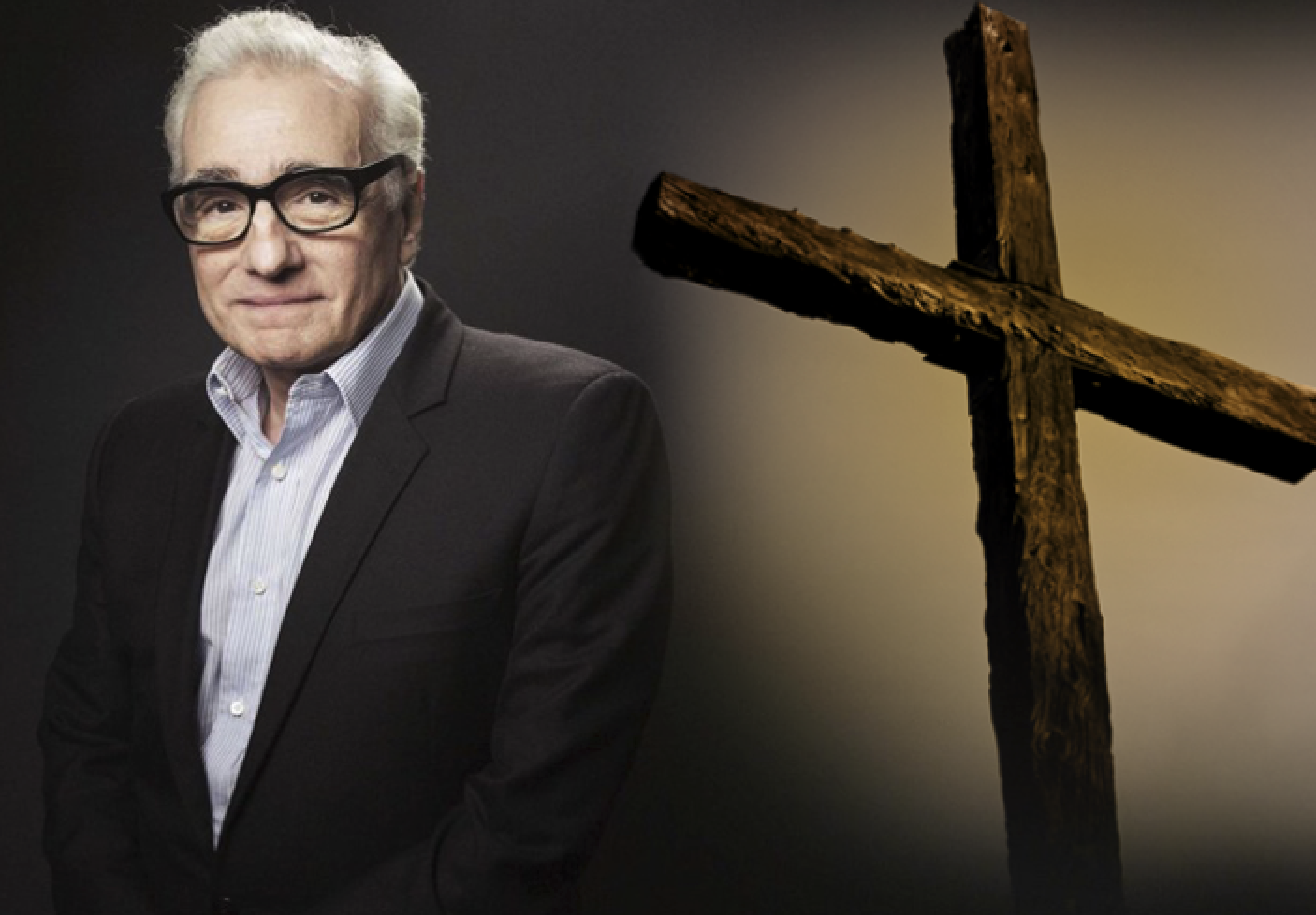
This brings me to a recent Time magazine feature that ran with this headline: “Martin Scorsese Still Has Stories to Tell.” On one level, reporter Stephanie Zacharek faced a familiar entertainment-beat story, as in doing a junket-related feature with a Hollywood player who is promoting his or her new movie.

However, what we ended up with is a positive example of a journalist weaving accurate, valid, material about a newsmaker’s religious history into a mainstream news report.

Let me note that, in terms of film-studies doctrine, there is no such thing as an “orthodox” view of the role Catholic faith plays in this superstar director’s life and work. That’s fine. There’s way more to this man’s story than ongoing (in my view valid) arguments about “The Last Temptation of Christ.

Catholics can, and do, argue about what “kind” of Catholic he is, in terms of beliefs and practice of the faith. Film scholars can debate which of his movies are “Catholic,” which ones have faith soaked into the images and which ones seem to clash with Catholicism.

But everyone agrees on one thing: It’s impossible to talk about Scorsese and leave his Catholicism out of the mix.

Thus, Zacharek’s feature is not an example of a journalist “forcing” religion into a story about a mainstream artist. It’s an example of a story that asks relevant questions about Scorsese and then let’s him talk about his life and art. Thus, it contains quite a bit of valid Godtalk.

At first this is a rather normal arts-beat feature. For example, near the top:

Scorsese’s encyclopedic knowledge of film has made him the patron saint of film bros, and though it’s a title he most certainly never asked for, he’s happy to talk about movies for as long as you like.


Please respect our Commenting Policy

Mormon psychic involved with the very successful 'Sound of Freedom' film? Read on ...

Mormon psychic involved with the very successful 'Sound of Freedom' film? Read on ...

Operation Underground Railroad, the Utah-based organization that inspired the hit indie movie “Sound of Freedom,” has no shortage of problems right now.

There’s a news organization (Vice.com) that is constantly running exposés on it; the unexpected resignation of its telegenic CEO, Tim Ballard, in June due to allegations of sexual misconduct; a criminal investigation (since closed with no charges filed) by the Davis County attorney’s office; and a dust-up with the Church of Jesus Christ of Latter-day Saints.

Also, a Utah Fox News outlet — which was totally fed up with Ballard’s antics — ran this story about the called-off criminal investigation. Shortly thereafter, the attorney’s office released a bunch of documents. At that point, newsrooms pounced.

The latest piece of news sounds like a tabloid title. “Operation Underground Railroad Child Rescue Missions Were Based on Psychic Intelligence,” was the Vice headline last week.

Before quoting from that piece, I want to note that the media pile-on over “Sound of Freedom” exaggerated claims about Ballard’s heroic role in stopping child sex trafficking does mystify me. This isn’t the first movie out there to take major liberties with the original story, while bringing “reality” to the screen. Look at what “The Sound of Music” did to the real Von Trapp family.

A key piece of the Vice story:

It was a tense day in February 2016 for Tim Ballard and operatives working for Operation Underground Railroad, the anti-human trafficking group he founded. They were on what would prove to be a bumbling and ineffective mission to save a trafficked child Ballard believed was being held in a village on the border of Haiti and the Dominican Republic. 

This wasn’t just any mission, however. The child they were searching for was Gardy Mardy, a missing Haitian boy whose abduction Ballard has portrayed as “the case that led us to found OUR.” Joining him and his team of elite operatives was Janet Russon — a psychic medium from Utah whose supposed visions were guiding the mission.

Vice News has had OUR in its crosshairs for some time, including a large investigative piece that ran in 2021 followed by several more articles. The gist of the 2021 piece alleged sloppy training done by OUR for its operatives; that OUR chose its workers more on the basis of how much they donated to the organization and that some of its methods were making the sex-trafficking industry worse.


Please respect our Commenting Policy

Hey, Tennessean folks: Has SBC President Bart Barber changed theologically? Yes or no?

Hey, Tennessean folks: Has SBC President Bart Barber changed theologically? Yes or no?

This is a strange one. In a recent profile of the Rev. Bart Barber — the current president of the Southern Baptist Convention — the Nashville Tennessean team did something that was both unusual and totally predictable.

Unusual? My state’s dominant newspaper used a theological term when it needed to find an accurate political term, of some kind. Yes, you read that right. I just urged some journalists — in this case — to use accurate “political” language instead of mangled doctrinal language.

Predictable? The abused theological term was “fundamentalist.”

To make matters even more complicated, the Tennessean used an ACCURATE historical-political reference in the headline — “Bart Barber defied the Conservative Resurgence. How it is now shaping his SBC leadership” — and then turned around and used “fundamentalist” in the overture.

Dang it! (I will also ask: Is the pronoun “it” in the headline a reference to Barber’s decisive act of defiance or to the Conservative Resurgence itself?) Here’s that flawed overture:

Bart Barber defied the top brass.

In May 2018, the Texas pastor and his fellow trustees at Southwestern Baptist Theological Seminary in Fort Worth fired seminary president Paige Patterson, the architect of the fundamentalist takeover of the Southern Baptist Convention. Following years of financial-related controversies, revelations about Patterson mishandling reports of sexual abuse pushed Southwestern’s board past a point of no return.

Barber, once a loyal foot soldier in Patterson’s movement, was a decisive vote in Patterson’s dismissal, thereby severing his allegiance. 

The emphasis on the “Conservative Resurgence” as a movement inside the SBC is accurate, since that is a commonly used term among historians. The Tennessean kind of explained that term later in the story, and we will get to that.

After making that wise choice, why use the church-history term “fundamentalist” at the top of the story? That’s a word that fit with some Southern Baptists who supported (as opposed to leading) the “Conservative Resurgence,” but not to all. Using that term also suggested that Barber has changed some of his theological beliefs, as opposed to his stance on crucial issues in SBC politics.

I see zero evidence in this news report that Barber has changed theologically. It that is the case, then ask him hard questions about that and then report the answers.


Please respect our Commenting Policy

Plug-In: Here's the latest sex and money news from the Southern Baptist Convention

Plug-In: Here's the latest sex and money news from the Southern Baptist Convention

After a week away, it’s nice to be back. Making headlines this week: A U.S. senator is demanding to know if the Christian aid organization World Vision is funding terrorism, Ken Chitwood reports for Christianity Today.

Pope Francis is going to Marseille to talk migration, but will Europe listen as it scrambles to stem an influx? The Associated Press’ Nicole Winfield, Trisha Thomas and Sylvie Corbet tackle that question. And Jerry Falwell Jr.’s latest legal battle with Liberty University — and his brother — has escalated, according to Religion News Service.

This is our weekly roundup of the top headlines and best reads in the world of faith. We start with the latest news — and there’s a lot of it — from the Southern Baptist Convention.

What To Know: The Big Story

Is sin a private matter?: A lawsuit filed by the Rev. Johnny Hunt, a former Southern Baptist Convention president, against the SBC’s Executive Committee and Guidepost makes that claim, Religion News Service’s Bob Smietana reports. But legal experts are skeptical, Smietana notes.

The longtime megachurch pastor is upset over the disclosure that he covered up his sexual misconduct for a decade, according to the RNS story.

Moments that made the Rev. Bart Barber: The Conservative Resurgence that the SBC’s current president defied is now shaping his leadership, The Tennessean’s Liam Adams writes.

In other coverage, Adams notes that a top SBC committee documented a former CEO’s “professional fraud” but won’t pursue legal action. And Southern Baptist leaders are promoting strength even as a top committee faces increased instability.


Please respect our Commenting Policy

A United Methodist bishop faces the big questions surrounding his own terminal cancer

A United Methodist bishop faces the big questions surrounding his own terminal cancer

There was nothing unusual, in the early 1970s, about a student hearing one of his professors preach during chapel.

But one sermon – "How Would You Like to Die?" -- impressed the seminarian who would later become United Methodist Bishop Timothy Whitaker of Florida. Theologian Claude H. Thompson had terminal cancer and, a few months later, his funeral was held in the same chapel at the Candler School of Theology in Atlanta.

"What hit me was that he calmly preached on that subject -- even while facing his own death," said Whitaker, reached by telephone. "It hit me that that, if death is one of the great mysteries of life, then that needs to be something that the church openly discusses. …

"Yes, we live in a culture that is reluctant to talk about death. But I decided that it's important for us to hear from our elders who are facing this issue, head on."

Thus, soon after doctors informed him that his own cancer is terminal, Whitaker wrote a lengthy online meditation, "Learning to Die." The 74-year-old bishop is retired and receiving hospice care, while living in Keller, a small town near the Virginia coast.

"Being a pastor, I considered it a privilege and also an education to linger beside many deathbeds. I have tried to never forget that, unless I die abruptly in an accident or with a heart attack or stroke, sooner or later the subject of death will feel very personal to me," he wrote. Now, "in the time that remains for me I have one more thing to learn in life, which is to die. … I had always hoped that I would be aware of the imminence of my death so that I could face it consciously, and I am grateful that I have the knowledge that I am going to die soon."

Certainly, Whitaker noted, the Orthodox theologian Father Thomas Hopko was correct when he quipped, while facing a terminal disease: "This dying is very interesting."

Dying is also complicated -- raising myriad theological questions about eternity, salvation and the mysteries of the life to come, he noted. The Bible, from cover to cover, is packed with relevant stories, passages and images. The same is true of the writings of early church leaders who preached eternal hope, even when suffering persecution and martyrdom.


Please respect our Commenting Policy

A question that skeptics have raised for centuries: Why did the Bible accept slavery?

A question that skeptics have raised for centuries: Why did the Bible accept slavery?

QUESTION:

Why did the Bible accept slavery?

THE RELIGION GUY’S ANSWER:

There’s been intense discussion of this never-ending issue in 2023, as we’ll see.

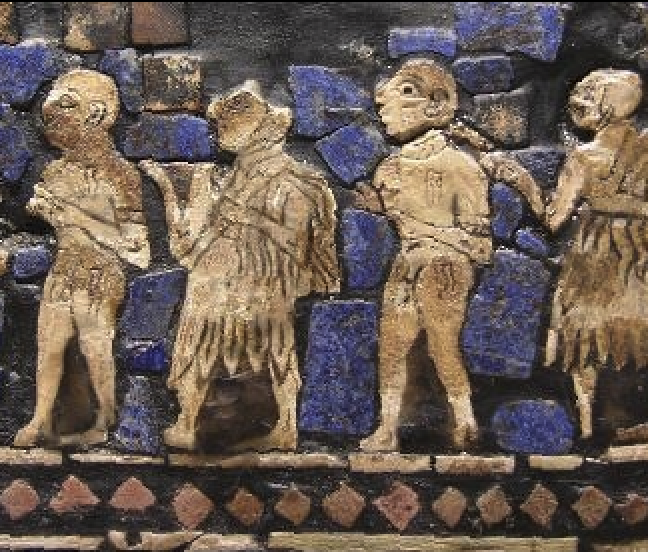
In essence, defenders of the Bible explain that slave-holding was a fundamental aspect of society as far back as the earliest written annals we have, well before biblical times. Due to the existence of that powerful reality, the Bible did not and could not attempt to overthrow the sinful system but worked against its evils. Fact is, slavery was so ingrained that it was not outlawed till recent times, nearly 3,000 years after the Old Testament laws were written and 2,000 years after the New Testament dealt with the problem.

However, skeptics question the moral stature of the Jewish and Christian heritage because the Bible is outwardly neutral toward the practice of owning fellow human beings as property. After all, today slavery is considered a contemptible blight, as in the 1948 Universal Declaration of Human Rights from the United Nations: “No one shall be held in slavery or servitude; slavery and the slave trade shall be prohibited in all their forms.”

Recent events show how contentious the interpretation of slave history can be. Witness the July furor when a sentence in new Florida public school history guidelines said American slaves “developed skills which, in some instances, could be applied for their personal benefit.”

Catholics’ debate over their history has been revived this year. Some background: The pioneering 4th Century Bishop Gregory of Nyssa (in present-day Turkey) preached against slavery in the Roman Empire, but his was a lonely voice. The influential 13th Century theologian Thomas Aquinas taught that “nothing is so repugnant to human nature as slavery,” which amounts to “civil death.” And yet some people have “eminence of reason” that makes them “by nature masters” over those who have “deficiency.”


Please respect our Commenting Policy

Podcast: Another sexy version of the old New Age arrives, with the 'Secular Sabbath'

Podcast: Another sexy version of the old New Age arrives, with the 'Secular Sabbath'

This podcast post really needs a soundtrack. So, please click on this Secular Sabbath video and leave it running. Then open the GetReligion post in a second browser window and start reading. This will help with the content — I promise.

This week’s “Crossroads” discussion (CLICK HERE to tune that in) focused on a timely, solid feature at The Free Press with this catchy headline: “Can You Find God in a Bikini?” The story was timely because, in many ways, this is a news story that has been with us for decades (if not for centuries, viewed from a theological, pre-electronic-trance-music point of view).

To understand my thinking here, it helps to follow a timeline linking a few books on this topic.

Let’s start here, with “Understanding the New Age,” which was researched in the late 1980s by the great religion-beat pro Russell Chandler. The key to this vague New Age thing, he said, is the movement’s “view of the nature of reality, which admits to no absolutes” and, thus, all “standards of morality” are “relative.”

In the mid-1990s, linked to another burst of New Age media buzz, I interviewed Chandler and the resulting “On Religion” column included this thesis:

A few years ago, most generic bookstores had a "New Age" section. Today, this is rare. But this doesn't mean that the wave of religious trends that crested in the 1980s simply vanished. Truth is, it soaked in.

"You don't see New Age shelves anymore because you can find New Age books in almost every part of the store," said Russell Chandler, an award-winning religion writer best known for his 18 years at the Los Angeles Times. "They're in the psychology section and over on the women's shelf. You'll find them under self-help, stress, holistic health and the environmental, too."

The day of New Age cover stories in news magazines may have passed, but that's beside the point. New Age faith, said Chandler, has "become so visible that it's now all but invisible."

Reading Chandler led me to New Age preachers such as Marianne Williamson (yes, she is seeking — again — the White House as a Democrat) and her bestselling book “A Return to Love: Reflections on the Principles of A Course in Miracles.


Please respect our Commenting Policy

What's the news impact of the intense racism investigation at Wheaton College?

What's the news impact of the intense racism investigation at Wheaton College?

History matters with everything touching upon morality and religion. And so it is with the dramatic racial reckoning in a candid and thorough self-examination released Sept. 14 by Wheaton College in Illinois.

The implications command news media attention because the 163-year-old school is among the most highly influential and respected institutions in U.S. evangelical Protestantism. This is, after all, the alma mater of the Rev. Billy Graham.

By coincidence, the power of history was underscored the very next day at an emotional worship service to commemorate the 60th anniversary of the racist terror bombing at the 16th Street Baptist Church in Birmingham, Alabama, which killed four girls ages 11 to 14 as they donned Sunday choir robes. Perhaps more than any other episode of the civil rights era, this eroded white southern churchgoers’ remaining tolerance toward Jim Crow segregation.

History is “our best teacher,” said the service’s keynote speaker, Ketanji Brown Jackson, the first Black woman on the U.S. Supreme Court (video here starting at 1:30), who quoted I Corinthians 15:10 and Hebrews 11:1 and said “with God’s grace” ongoing racial justice efforts will succeed. Though “parts of this country’s story can be hard to think about” and “difficult to remember and re-live,” she said, “it is dangerous to forget them.”

Precisely for that reason, Wheaton’s Historical Review Task Force, recommended by President Philip Ryken and approved by its Board of Trustees, began investigating past campus race relations in October, 2021. The result is the 122-page accounting that the trustees endorsed and issued last week (click here for text).

The report is important because, as the student newspaper reported, “Wheaton is one of the first Christian colleges to conduct such a review” of the sort seen at some non-religious campuses. One notable predecessor was the 2018 report (document here) on the racial history of Louisville’s Southern Baptist Theological Seminary, a school that’s one year older than Wheaton.

The task force, made up of trustee, faculty, administration, student and alumni representatives, declared, “We repent of all forms of racism and favoritism in our institutional history, whether conscious or unconscious” and pledged follow-up actions.

The first big example is the trustees’ decision to immediately remove from the library the name that honored J. Oliver Buswell Jr., in response to long-running student protests.


Please respect our Commenting Policy