Growing Haredi numbers poised to alter global Judaism. Maybe press should cover this?

Growing Haredi numbers poised to alter global Judaism. Maybe press should cover this?

The Holocaust devastated European Jewry. The most strictly religious among them — the mystical-oriented Hasidic followers of historic rabbinic lineages and the mitnagdim, Hasidism’s more intellectually focused religious critics — suffered some of the worst losses.

Their insularity and suspicion of the larger world served them poorly at a time when maneuverability and adaptability might have helped them flee Nazi Europe for safety. Instead, they turned their noses up at non-Orthodox Jews and avoided dealing with non-Jews as much as possible.

This was true for both Hasidic and mitnagdim Jews, who are often lumped together by outsiders under the rubric “ultra-Orthodox.”

It’s a label many of them reject; they argue there’s nothing “ultra” about them and that they’re only adhering closely to what they think of as “normative” rabbinic Judaism.

In Hebrew, they’re called Haredi or Haredim, the plural. That’s how I’ll refer to them in this post.

Samuel Heilman, an American academic expert on Haredi life, wrote the following on the subject for a PBS show on Hasidic Jews.

The three things the rebbes told their Hasidim to do led to their being blown away. The rebbes said: "Don't go to America, the treyfe medina (the unclean country), and don't go to the Zionist state, Palestine. Don't change your clothes or learn the surrounding language." So they couldn't disguise themselves or pass as gentiles. And, the rebbes said, "Stay close to me." They did stay close to the rebbes, but many of the rebbes [the Belzer, the Satmar, the Gerer] ran off and left all their people to die.

David Ben-Gurion, the secular Jewish Zionist leader who was Israel’s first prime minister, was convinced that circumstances following World War II would further depress Haredi numbers. Back then, the Haredim comprised just 5 percent of Mandatory Palestine’s pre-state Jewish population.

However to gain United Nations backing for an independent Jewish state, Ben-Gurion believed he had to show full Jewish unity for such a move. That included Haredi support.


Please respect our Commenting Policy

Pro-abortion rights activists hit Catholic churches, but you probably didn't read about it

Pro-abortion rights activists hit Catholic churches, but you probably didn't read about it

If there was ever a doubt that Americans are living in two, separate news universes, then the past two weeks certainly crystallized that reality even more than the polarizing presidential elections of 2016 and 2020.

Americans who lean left politically, comfortable with reading just The New York Times or Washington Post, have been treated to apocalyptic news stories and opinion pieces — it is often hard to tell which is which — stemming from the leak of the draft decision that could overturn Roe v. Wade.

Did you know that gay marriage is now at risk? Did you know that this incarnation of the U.S. Supreme Court is illegitimate? For these elite news organizations and their readers, reversing the right to abortion is just the first attack by fascist Republicans — you wait and see.

On the right, conservatives who watch opinion shows on Fox News Channel or read Brietbart can’t get enough of how President Joe Biden has been an abject failure, particularly when it comes to inflation.

Have you seen how high gas prices are? Did you read about the baby formula shortage? To those news organizations, it’s all about fixing these problems by “owning the libs” by getting the GOP in control of the House and Senate in the November midterm elections.

I have friends on both sides of the political aisle and it’s shocking to me how much one side doesn’t know about what the other is reading and thinking. It often takes weeks for stories that one side repeatedly reported on to ever make it into the pages and onto screens of the other side.

It’s not a failure of our politics. Those have always been polarized. This is a failure of journalism.

Let me explain how these two news universes (while great for the bottom line of news organizations catering to their bases) led to a major news story being totally ignored by many mainstream news sites.

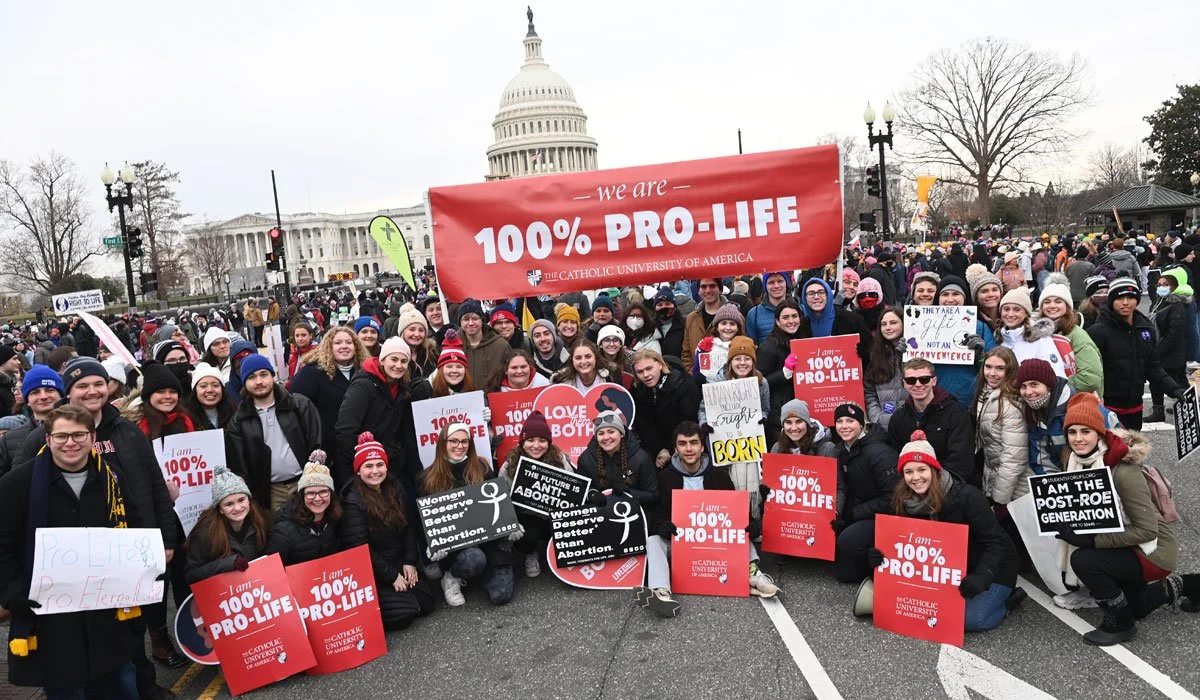
The protests — deemed an issue with “a lot of passion” by the White House — over abortion spilled over into houses of worship, especially Catholic churches. Is the First Amendment right to protest on private property more important than freedom of religion? Not according to the Constitution, and that’s what the news media should be concerned with reporting, not with managing narratives.

It’s therefore not a surprise that pro-abortion rights folks protesting outside churches — and in some cases disrupting Mass — received little to no coverage in most mainstream national news organizations.


Please respect our Commenting Policy

Concerning the new converts to Eastern Orthodoxy: Are they MAGA clones or worse?

Concerning the new converts to Eastern Orthodoxy: Are they MAGA clones or worse?

Yes, to all of those who have written — I have seen the National Public Radio feature that ran with this headline: “Orthodox Christian churches are drawing in far-right American converts.”

It would be hard to imagine a more vicious, one-sided propaganda piece than this one and, if you want to see a blow-by-blow breakdown, read this post by Orthodox convert Rod Dreher: “The Cathedral Vs. The Orthodox Church.”

Rod is using the term “cathedral” as a reference to a particular set of elite media and cultural institutions on what used to be called the “left.” Needless to say, NPR — like the editorial pages of The New York Times — plays a crucial doctrinal role in this cathedral. Dreher (a close friend for nearly 30 years) notes, right up top, concerning this NPR sermon:

… I concede that it is based on a kernel of truth: some outsiders are finding their way to Orthodoxy, thinking that it will be the far right at prayer. A friend who attends a large parish told me last year that they are seeing some young men showing up with that in mind, only to find out otherwise. Let me be clear at the start of this essay that I concede that this phenomenon is not invented out of whole cloth.

In my own small parish, we have seen a surge of young inquirers, but they are coming not with far-right politics in mind, but because they are looking for something more stable and deeper than the churches they had been attending. And yes, it is true that some come because they correctly sense that Orthodoxy is much less likely to surrender to the wokeness that is infesting many Protestant and Catholic congregations. Note well, though, that to NPR, all of this is “far-right.”

Veteran GetReligion readers will know that I am a convert to Eastern Orthodoxy, as well — coming from a Texas Baptist family with several members in the center of Southern Baptist life. If you want to know more about my own journey, see this lecture/essay from 2006: “What do the converts want?”

When people ask why I converted, my short response is that I was seeking a beautiful, conservative, ancient form of Christian tradition that didn’t include ties to American fundamentalism. Since my conversion 23 years ago, I have talked to — conservative estimate — several hundred converts in various settings, including my own parishes.

I would like to focus on the most obvious errors of omission and commission in the NPR piece — an important detail or two about the actual history of the “convert era” in “American” Orthodoxy, which began in the 1980s (click here for link to a crucial book). But first, here is the overture:


Please respect our Commenting Policy

Political reporter says journalism has made him a better Christian. He's not alone

Political reporter says journalism has made him a better Christian. He's not alone

Say what?

Jon Ward, chief national correspondent for Yahoo! News, writes in an essay for Christianity Today that his profession has made him a better Christian.

Ward knows many of his fellow Christians may find that hard to believe:

Conservative Christians are far more hostile toward the media now than they were when I was growing up. Some of my own family members have told me I should be ashamed of myself for doing my job. In fact, most people don’t like the media — and that’s bad for society. The media shares some of the blame for that, as I’ve written recently for Yahoo! News.

But he explains the profession’s role in his own life:

Journalism has empowered many of the most noble, the most Christian elements of my character. I have been discipled for two decades in how to discern what is true and false, and — probably more importantly — how to discern when there are no easy answers or solutions. I have been trained in pursuing truth without regard to whom it offends.

I have also been given a sense of humility about what we can know for sure and how often we need to acknowledge that our point of view is limited and incomplete. This is sometimes called “epistemological modesty,” and it is a quality that we badly need more of in our discourse.

Hey dude, you’re preaching to the choir.

Seriously, I authored a recent Christian Chronicle editorial that focused on the faith of one of my journalistic heroes: Jerry Mitchell, a Mississippi investigative reporter whose stories helped put four Klansmen and a serial killer behind bars.

From that editorial:

Mitchell recalled that a radio show host asked him once, “How can you be a Christian and a journalist?”


Please respect our Commenting Policy

Naomi Judd: 'It's scary to show that part of you that is the not so smart, not so together side'

Naomi Judd: 'It's scary to show that part of you that is the not so smart, not so together side'

Naomi Judd thought she understood the ties that bind country-music stars and their audience -- then one aggressive fan went and joined the Pentecostal church the Judd family called home.

"It really burdened me," said Judd, after signing hundreds of her "Love Can Build a Bridge" memoir back in 1993. "I just don't sign autographs at church. The best way I can explain it to children … is to say, 'Honey, Jesus is the star.' "

After a year of this tense standoff, Judd became concerned and wrote the fan. "I said, 'I want you to really get away by yourself and read this letter and answer this question honestly: Do you come to church to see The Judds or do you come to church to see God?' She never came back to church. But she was in the autograph line today."

Through it all, Judd and her brash daughter Wynonna have talked openly about their triumphs and their struggles. Many fans identified with their failures just as much as the messages about faith and family.

At the time of that 1993 interview, Naomi Judd had battled through waves of anxiety attacks to address some dark realities -- such as rape, crisis pregnancy and her deadly battle with hepatitis C that retired the The Judds.

What she hadn't discussed at that time was the sexual abuse in her childhood that led to treatment-resistant depression. Judd's April 30th death, at age 76, focused new attention on blunt passages in her 2016 book "River of Time," in which she said had been tempted by suicide. "I wanted to be completely honest that if someone took out a gun and killed me on stage, they would be doing me a favor," she wrote.

The Judds were inducted into the Country Music Hall of Fame the day after Naomi's death and her shaken daughter Ashley Judd told the crowd, "I'm sorry that she couldn't hang on until today." Writing in USA Today, the actress expressed gratitude for her mother's legacy, but added: "Perhaps it's indecorous to say, but my heart is filled with something else, too. Incandescent rage. Because my mother was stolen from me by the disease of mental illness, by the wounds she carried from a lifetime of injustices that started when she was a girl."


Please respect our Commenting Policy

Catholic doctrine has always rejected abortion: But what about Catholics in pews today?

Catholic doctrine has always rejected abortion: But what about Catholics in pews today?

It may be the most important U.S. Supreme Court decision of the last fifty years.

A leaked draft of a majority opinion, written by Justice Samuel Alito, would effectively dismantle the legal framework around abortion that was established in the 1973 decision Roe v. Wade. In its wake, states would have almost complete freedom to regulate abortion however they saw fit, including enacting a total prohibition.

Among those who study American religion and politics, it’s long been established that the earliest political voices seeking to restrict access to an abortion were members of the Catholic Church. For centuries, the catechism has taught that life should be protected at all stages — from conception to natural death. Thus, the tens of millions of American Catholics should be the standard bearers for the pro-life movement in the United States.

But here is an important question for journalists: Will most Catholics applaud the end of Roe? The data tells a nuanced story about how the average Catholic thinks about the issue of abortion access. As always, it’s important to note if polls pay any attention to how often Catholics attend Mass.

Looking back to the time period immediately after the Roe v Wade decision in 1973, it’s clear that the vast majority of Catholics were not comfortable with the concept of a woman obtaining an abortion for any reason, which not was out of step with how the average American felt.

For instance, in 1985 about 35% of Catholics were in favor of abortion demand. It was 39% of the general public. In the 1990s and 2000s, abortion opinion was relatively stable, but then things began to shift in 2010. From that point forward, the share of Catholics who supported abortion began to rise, which paralleled a shift in the overall opinion of the American public.

By 2021, fifty-three percent of Americans supported abortion on demand along with forty-five percent of Catholics. But, it’s worth noting that the contours of the two lines run in almost perfect unison. As the country moved left on abortion, so did the average Catholic.


Please respect our Commenting Policy

Podcast: A growing post-Roe divide between 'Jesusland' and the 'United States of Canada'?

Podcast: A growing post-Roe divide between 'Jesusland' and the 'United States of Canada'?

Over the past week or so, I have received several emails — while noticing similar messages on Twitter — from people asking: “Why is The Atlantic publishing the same story over and over?” Some people ask the same question about The New York Times.

It’s not the same SPECIFIC story over and over, of course. But we are talking about stories with the same basic Big Idea, usually framed in the same way. In other words, it’s kind of a cookie-cutter approach.

The key word is “division,” as in America is getting more and more divided or American evangelicalism is getting more and more divided. A new Ronald Brownstein essay of this kind at The Atlantic — “America’s Blue-Red Divide Is About to Get Starker” — provided the hook for this week’s “Crossroads” podcast (CLICK HERE to tune that in).

The villains in these dramas are, of course, White evangelicals or, in more nuanced reporting, a radical wing of the White evangelicals. Just this week, I praised the New York Times for running a feature that offered a variation on one of these templates: “Bravo! The New York Times reports that evangelicals are divided, not united on politics.” That piece showed progress, in part, because it undercut the myth of the evangelical political monolith on issues such as Donald Trump, COVID vaccines, QAnon, etc.

Let me make this personal. There is a reason that all of these stories written by journalists and blue-checkmark Twitter stars sound a big familiar to me. You see, people who have been paying attention know that the great “Jesusland” v. the “United States of Canada” divide is actually at least three decades old. It’s getting more obvious, methinks, because of the flamethrower social-media culture that shapes everything,

So let’s take a journey and connect a few themes in this drama, including summary statements by some important scribes. The goal is to collect the dots and the, at the end, we’ll look at how some of these ideas show up in that new leaning-left analysis at The Atlantic.

First, there is the column I wrote in 1998, when marking the 10th anniversary of “On Religion” being syndicated (as opposed to the 33rd anniversary the other day). Here’s the key chunk of that:

… In 1986, a sociologist of religion had an epiphany while serving as a witness in a church-state case in Mobile, Ala.


Please respect our Commenting Policy

While polls show ambivalence, SCOTUS striking down Roe would let each state decide

While polls show ambivalence, SCOTUS striking down Roe would let each state decide

According to the Gallup Poll, 49% of American adults called themselves "pro-choice" last year versus 47% "pro-life," with the second designation chosen by 73% of those who attend worship weekly and 74% of Republicans.

The over-all population posted the same virtual tie in each of the prior three years. Journalists, by the way, should note that Gallup's question defied the widely-followed Associated Press Stylebook, which despite some criticism rejects both of those familiar labels in favor of "abortion-rights" versus "anti-abortion" while disallowing "pro-abortion."

After last week's leak to Politico of a Supreme Court draft opinion that would return abortion policy-making to each state, the Pew Research Center (media contact 202-419-4372) released poll results that are vitally important for media analysis.

Here’s where the stories will be found: The Pew team warns against Gallup's two-sided breakdown above, since "relatively few" Americans "take an absolutist view" for or against legality in all circumstances.

Much ambivalence is evident. Fully 33% of Pew respondents believed that whether to abort should "belong solely to the pregnant woman" (and 72% among Americans over-all) AND at the same time believed that "human life begins at conception so a fetus is a person with rights" (held by a 56% majority of Americans).

The Pew data fill a 78-page report, titled "America's Abortion Quandary." As typical with Pew, the new survey stands out for the precision and variety of questions, special skill in defining religious sectors (though this project does not distinguish between Hispanic and non-Hispanic Catholics), the huge sample of 10,441 (compared with 1,016 for that Gallup poll) and consequently a remarkably high response rate of 89% among members of Pew's ongoing American Trends Panel.

Another technical note on polls. Regarding political races they are often more accurate on the national level than with state races. And the Supreme Court draft indicates abortion policy will be returned to each individual state — so that's where legal and political fireworks will occur unless efforts in Congress succeed.


Please respect our Commenting Policy

Bravo! The New York Times reports that evangelicals are divided, not united on politics

Bravo! The New York Times reports that evangelicals are divided, not united on politics

If you stop and think about it, the latest New York Times feature about those dreaded White evangelicals includes a few signs of progress.

The good news is that the story focuses on the many ways White American evangelicals are divided, these days. That’s progress, since it undercuts the dominant news narrative of the years since 2016. You know the one: That White evangelicals from sea to shining sea just love Donald Trump and that’s that.

The truth was always more complex than that, but many blue-checkmark experts on Twitter really needed someone to blame for Trump. White evangelicals were the answer, of course, since it would have required a great deal of introspection to blame the Democratic Party for nominating Hillary Clinton — perhaps the only opponent that scared millions of depressed Americans more than Trump.

But back to the key truth in this Times report — which is that White evangelicals are divided, which is true, and that is certainly not the same thing as the myth of monolithic unity. For background, see this 2018 post: “Complex realities hidden in '81 percent of evangelicals' love Trump myth.”

At the heart of this story is a character that will be familiar to some news consumers — a conservative religious leader whose beliefs would normally cause heart attacks in blue-zip-code newsrooms, but this leader is shown to deserve sympathy because believers who are much worse are attacking him/her. (The irony in this case is that this particular pastor seems very familiar to me since he appears to represent the evangelicalism in which I was raised and that I greatly respect.)

The headline: “As a ‘Seismic Shift’ Fractures Evangelicals, an Arkansas Pastor Leaves Home.” Here’s the overture:

FORT SMITH, Ark. — In the fall of 2020, Kevin Thompson delivered a sermon about the gentleness of God. At one point, he drew a quick contrast between a loving, accessible God and remote, inaccessible celebrities. Speaking without notes, his Bible in his hand, he reached for a few easy examples: Oprah, Jay-Z, Tom Hanks.

Mr. Thompson could not tell how his sermon was received. The church he led had only recently returned to meeting in person. Attendance was sparse, and it was hard to appreciate if his jokes were landing, or if his congregation — with family groups spaced three seats apart, and others watching online — remained engaged.

So he was caught off guard when two church members expressed alarm about the passing reference to Mr. Hanks.


Please respect our Commenting Policy