Yes, a cardinal with strong Pope Francis ties said church doctrines on LGBTQ issues are wrong

Yes, a cardinal with strong Pope Francis ties said church doctrines on LGBTQ issues are wrong

It isn't every day that a prince of the Roman Catholic Church, and a strategic Jesuit ally of the pope, openly rejects centuries of Christian teachings that clash with core doctrines of the Sexual Revolution.

"The Church's positions on homosexual relationships as sinful are wrong," said Cardinal Jean-Claude Hollerich of Luxembourg, in a recent interview with KDA, a German Catholic news agency. "I believe that the sociological and scientific foundation of this doctrine is no longer correct. It is time for a fundamental revision of Church teaching, and the way in which Pope Francis has spoken of homosexuality could lead to a change in doctrine. …

"In our archdiocese, in Luxembourg, no one is fired for being homosexual, or divorced and remarried. I can't toss them out, they would become unemployed, and how can such a thing be Christian? As for homosexual priests, there are many of these, and it would be good if they could talk about this with their bishop without his condemning them."

The latest unorthodox proclamations by Cardinal Hollerich commanded attention because he leads the Commission of the Bishops' Conferences of the European Union, as well as being the pope's choice as "relator general" for the October 2023 global Synod of Bishops, helping shape its work to weigh the church's future.

"This Cardinal seems to be claiming a private revelation which is contrary to scripture & the Catechism of the Catholic Church," tweeted Bishop Joseph Strickland, an outspoken conservative who is Bishop of Tyler, Texas. "Any private revelation that contradicts public revelation must be condemned."

However, the recent "Synodal Way" meetings of German Catholic leaders voted to approve draft texts that affirmed some of Cardinal Hollerich's beliefs, including overwhelming approval for a document entitled "Blessing celebrations for couples who love each other." Support was just as strong for a "Magisterial reassessment of homosexuality" text stating that official church teachings on chastity and homosexuality "should be revised."


Please respect our Commenting Policy

Thinking about Orthodox history and the complex West vs. East divisions in Ukraine

Thinking about Orthodox history and the complex West vs. East divisions in Ukraine

First things first, as I wade into “think piece” territory once again. I am, of course, a convert to Eastern Orthodox Christianity. I converted into parishes linked to the ancient church of Antioch (currently based in Damascus) and now attend a growing parish in the Orthodox Church in America, which grew out of the work of Russian Orthodox missionaries long ago.

Why clear that up? It’s important, in light of some of the complex issues linked to the threat of war in Ukraine. I have been to Kiev twice and was blessed to worship with monks in the Kiev Pechersk Lavra. I know more than a few Russian and Eastern European Orthodox believers and I don’t think I’ve met anyone who is overly fond of Vladimir Putin (to say the least). Attempting to understand what many Russians think and believe about Ukraine has nothing to do with approving of Putin or wanting to see an invasion by Russian troops.

Moving on. The other day I spent an hour or so on the telephone with GetReligion patriarch Richard Ostling, working through some of the unbelievably complex and explosive issues surrounding Ukraine and the churches therein. The results are in an Ostling “Memo” with this headline: “In reportage on Russia and Ukraine, don't neglect the importance of two rival churches.

May I encourage GetReligion readers to check that out or even, if you read this piece before, glance through the two sections of it, in light of ongoing events?

Ukraine's ecclesiastical history, like its political history, is highly complex. The saga began with the A.D. 988 "baptism of Rus" in Kyiv (Russians prefer "Kiev") when Prince Vladimir proclaimed Orthodoxy the religion of his realm and urged the masses to join him in conversion and baptism.

Russians see Christendom's entry into Eastern Europe as the origin of their homeland and the Russian Orthodox Church. Russian President Vladimir Putin cites this history to support his claim for Ukraine as a client area within greater Russia instead of a validly independent nation. His post-Soviet Kremlin maintains close bonds with the Russian Church's Moscow Patriarchate, which in turn has centuries of ecclesiastical authority within Ukraine.

The key to all of this is understanding that highly European (with Catholic roots) Western Ukraine is a radically different place — in terms of language and faith — than Eastern Ukraine, with strong ties to Russian history and culture.

Is there one Ukraine?


Please respect our Commenting Policy

Podcast: Religion News Service offers new story about an old trend called 'Sheilaism'

Podcast: Religion News Service offers new story about an old trend called 'Sheilaism'

One of the problems with covering the same religion-beat topics for multiple decades (in other words, I am old) is that you tend to see many “new” news stories as pieces of puzzles that are actually quite old.

Consider, for example, the Religion News Service feature that was the hook for this week’s “Crossroads” podcast (CLICK HERE to tune that in).

The headline on that RNS piece stated: “A 300-year-old church hopes to connect with spiritual but not religious neighbors.” Here is the overture from this story by religion-beat veteran Bob Smietana:

For three centuries, Trinity Episcopal Church has tried to meet the spiritual needs of the small community of Southport, Connecticut, about an hour and a half outside of New York.

As more and more of the church’s neighbors ditch organized religion but not faith, leaders at Trinity hope a new initiative will help them find meaning and purpose in life even if they never attend a Sunday service.

The church recently launched the Trinity Spiritual Center, which offers lectures, classes on meditation and contemplation, and a sense of community during a trying time, said the Rev. Margaret Hodgkins, the rector of Trinity Church.

We will come back to some of the specifics of this piece — details that link it to several trends that are (#SIGH) decades old in the aging, shrinking world of mainline Protestantism and, to a lesser extent, parts of Roman Catholicism, Eastern Orthodoxy, liberal Judaism and other established religious “brands.”

The Big Idea in this RNS piece is that an Episcopal parish that has some resources to spend has decided to help spiritual seekers find their own paths to the top of Mt. Eternity without proclaiming any of those narrow, tacky doctrines linked to 2,000 years of Christian faith and practice. You know, all that stuff about the Resurrection of Jesus, eternal salvation or moral theology (warning: veiled reference to the “tmatt trio”).

In other words, the goal appears to be a sort-of parish in honor of St. Sheila, the patron saint of “Sheilaism.”


Please respect our Commenting Policy

Here we go again: What ails U.S. evangelicalism and where is this movement headed?

Here we go again: What ails U.S. evangelicalism and where is this movement headed?

It's hard to imagine a print article more eye-catching than a lead item in The New York Times Sunday Review that sprawls over three pages, or to imagine a more prominent scribe than columnist David Brooks. The February 6 Brooks opus lionized "the dissenters trying to save evangelicalism."

Save from what? "Misogyny, racism, racial obliviousness, celebrity worship, resentment, and the willingness to sacrifice principle for power" — that last phrase targeting disciples of Donald Trump.

We're at the publicity apex for what Brooks, and movement outsiders and insiders, are calling a "crisis" for this conservative Protestant movement. In recent months The Guy has, less elegantly, pondered a "crack-up. Thus:

* “Are we finally witnessing the long-anticipated (by journalists) evangelical crack-up?

* “Latest angles on Trump-era 'evangelicals,' including questions about the vague label itself.”

* “Concerning evangelical elites, Donald Trump and the press: The great crack-up continues.”

* “Journalism tips on: (1) Evangelical crack-ups, (2) campus faith fights, (3) COVID exemptions.”

This struggle will continue to need fair-minded journalistic attention, simply because this loosely-organized and variegated movement remains the largest and most dynamic segment of American religion. To a considerable extent, as evangelicalism goes, so goes the nation. Both are polarized, troubled and scandal-ridden.

On this topic it's always necessary to remember we're talking about WHITE evangelicals because Black Protestants, though often evangelical in style and substance, form a distinctly separate subculture (which "mainstream" media typically ignore alongside their fixation on the white variety).

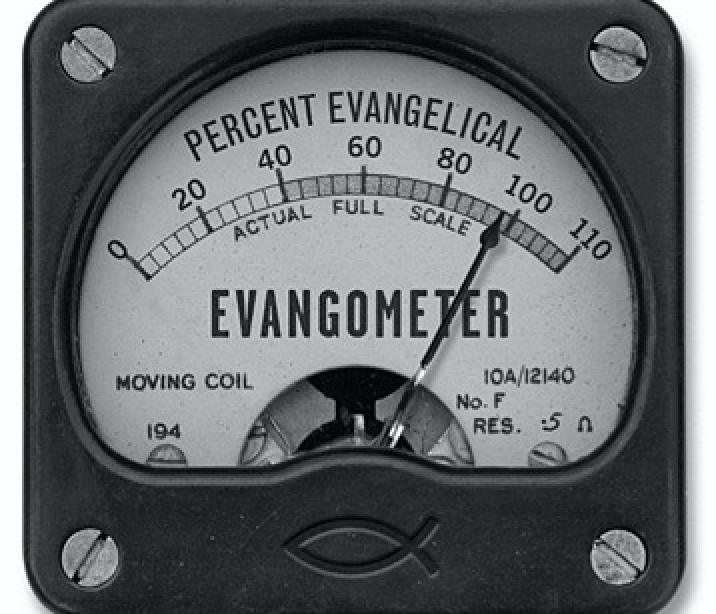
A related preliminary point: What is an "evangelical" anyway?


Please respect our Commenting Policy

Covering the Goyim Defense League: Does news about anti-Semitism inspire copycats?

Covering the Goyim Defense League: Does news about anti-Semitism inspire copycats?

Ahad Ha’am, considered the father of “cultural Zionism,” is quoted as saying: “More than Jews have kept Shabbat (Hebrew for “sabbath”), Shabbat has kept the Jews.”

Ha’am’s comment is a recognition of the cohesive power inherent in widely shared group traditions and tribal memories. Call it positive re-enforcement.

But similar sentiments have been expressed about anti-Semitism’s influence on Jews. In short, do communal fears over anti-Semitism also keep Jews connected to this day? After all, the enemy of my enemy is my friend — even if I utterly reject my newfound ally’s particular expression of Jewish religion, politics or lifestyle. Call it negative re-enforcement, if you will, but fear of persecution, and certainly death, is a powerful motivator of group cooperation.

Switching lanes now, here’s a journalistic question about anti-Semitism. Does giving anti-Semitism extensive coverage — warranted though it may be — prompt more anti-Semites to act out publicly? Does publicity embolden and thus spark potential copycat anti-Semitism?

I have no doubt that the current global upswing in reported anti-Semitic incidents — some deadly, some just irritating — requires heavy coverage.

Journalists have a responsibility to alert authorities to anti-Semitism’s illegal expression, to warn Jews about the dangers they face, and to try to educate those media consumers who know little about anti-Semitism’s impact and incubators.

This responsibility, of course, extends beyond Jews to cover all groups suffering discrimination or persecution. Hatred of Jews may be, as has been said, the oldest hatred, but all hatred is equally wrong and personally and communally destructive.

As journalists, we don’t just report the news. We help shape it, and civilization, by what we report.


Please respect our Commenting Policy

Was the Washington Post take on supposed FGM in Washington state really a national story?

Was the Washington Post take on supposed FGM in Washington state really a national story?

It sounded like a horrendous story, with a Muslim couple wrongly accused of practicing female genital mutilation. Which is why I wanted to read it, especially since it was in my state, albeit an isolated corner on one of the beautiful –- and remote -- islands in Puget Sound.

But the more I read this story, the more I wondered if the reporter was being manipulated into creating a national narrative where none exists.

Before we start, remember that the locale of this story, the bucolic San Juan Island, has all of 6,822 residents. It’s not a large place and you can only get there by plane or (during the Covid era) by increasingly erratic ferries.

This Washington Post story notes that there are no nearby mosques, as if to make out the various islands in the San Juan de Fuca Strait as bastions of white Christian supremacy. Well, there aren’t any nearby synagogues or Hindu temples, either. There are scattered churches, an Orthodox monastery, a Catholic convent and several Buddhist retreat houses.

SAN JUAN ISLAND, Wash. — On the afternoon of July 28, the Homeland Security Investigations tip line received a call about a sensitive matter on an island off the coast of Washington state: “the suspected female genital mutilation of an infant by her Turkish mother.”

A babysitter on San Juan Island had seen what she considered an “abnormality” while changing the girl’s diaper, according to law enforcement reports. The sitter enlisted a friend to also inspect the child’s vagina, without the parents’ knowledge or consent. That friend then called the tip line, allegedly telling authorities she was acting on the sitter’s behalf.

The women, according to reports from the San Juan County Sheriff’s Office and U.S. Homeland Security, worried that the girl had undergone female genital mutilation, or FGM, an ancient ritual defined by the United Nations as the removal of external female genitalia for nonmedical reasons. FGM is a federal crime, and women’s advocates across the globe are campaigning to end the practice, which causes trauma and health complications.

I think I would use other words to describe FGM other than “ancient ritual.”


Please respect our Commenting Policy

Cooper Kupp's spiritual vision: Well, it's hard not to pay attention to the Super Bowl MVP

Cooper Kupp's spiritual vision: Well, it's hard not to pay attention to the Super Bowl MVP

It’s hard not to pay attention to what the winner of the Most Valuable Player award has to say after the Super Bowl.

Thus, a few mainstream media features after the Los Angeles Rams’ victory focused on a bit of very personal testimony by superstar wide receiver Cooper Kupp. In a way, what he said resembled the kind of stereotypical Godtalk that filters into the news when believers are asked to express their first reactions after a major event — glorious or tragic — in their lives.

Long ago (pre-Internet), I interviewed the late, great Dallas Cowboys coach Tom Landry about all of this. People tend to think that believers pray to win football Games and either God hears them or not, he said. The reality is more complex than that and, most of the time, players and coaches are trying to make sense of these events — wins and loses — in the context of how God is working in their lives.

In the case of Kupp, this win in The Big Game linked into what he claimed was a vision after a Super Bowl loss. Here is the top of a story from The Athletic: “How the Rams’ Cooper Kupp’s quiet vision became reality in front of the whole world.” This is long, but essential:

INGLEWOOD, Calif. — The vision arrived with unbelievable clarity. Cooper Kupp long ago saw an unmistakable image of himself not only playing in and winning a Super Bowl but also earning the Most Valuable Player award.

But what was notable about this visualization was its peculiar timing. It came as Kupp was walking off the field at Mercedes-Benz Stadium in Atlanta after watching — not playing in — the Rams’ Super Bowl LIII loss to the Patriots. Kupp missed that game with a knee injury, but he says he received confirmation that night that he’d be back.

“What it was is just this vision that God revealed to me that we were going to come back and we were going to win it and somehow I was going to be the MVP of the game,” Kupp said. “I shared that with my wife because I couldn’t tell anyone else, obviously. But from the moment that this postseason started, there was such a belief in every game. It was written already, and I just had to play free knowing that I got to play from victory, not for victory.”

Kupp finally shared his vision with the world Sunday night. By then, the world had already seen the manifestation of it all. It was no longer was a vision. It was Kupp’s incredible reality.

Note this phrase: “I couldn’t tell anyone else, obviously.”


Please respect our Commenting Policy

Plug-In: No nostalgia -- some pandemic-weary souls want to reclaim Sunday as day of rest

Plug-In: No nostalgia -- some pandemic-weary souls want to reclaim Sunday as day of rest

In a hit song two decades ago, country music group Rascal Flatts offered banjo-tinged commentary on “the world spinning faster than it did in the old days.”

“Sunday was a day of rest,” the group proclaimed in its ode to a bygone era. “Now, it’s one more day for progress.”

Some of us are old enough to remember when most businesses — not just Chick-fil-A — closed on Sundays. It seems quaint now, but I did an Associated Press story in 2003 on Family Christian Stores — then the nation’s largest Christian retail chain — deciding to open on Sundays.

But in 2016, I was surprised during a reporting trip to North Dakota when I found an empty parking lot at a Bismarck Walmart — and then at Super Target — while looking to buy a few snacks and supplies before Sunday morning church.

I learned that for more than a century, the state had required most retailers to close from midnight to noon on Sundays. North Dakota finally became the last state to lift that ban in 2019.

I bring up this subject not just for nostalgia but because the day of rest — or the lack of it — is drawing renewed consideration nationally.

In a recent piece, Deseret News religion reporter Kelsey Dallas explains “why some political commentators and legal scholars are tweeting their support for taking a Sabbath”:

Even before the COVID-19 pandemic began, Americans were overworked and tightly wound. In the past two years, the situation’s only gotten worse.

Pandemic-related stress and a widespread desire for more time to rest are among the factors fueling the “Great Resignation.” They also help explain why some political commentators and legal scholars spent the weekend debating the Sabbath. …


Please respect our Commenting Policy

Maybe angry Christians should try chanting 'Pray for Biden' instead of 'Let's go Brandon'?

Maybe angry Christians should try chanting 'Pray for Biden' instead of 'Let's go Brandon'?

In the beginning, there was an obscene chant at the Talladega Superspeedway that NBC producers urgently needed to ignore during a live broadcast.

Interviewing winner Brandon Brown, reporter Kelli Stavast pretended the NASCAR crowd was chanting, "Let's go Brandon!" -- not cursing President Joe Biden.

The rest is history, as the wink-wink slogan soaked into political jargon and mass media. What shocked the Rev. Seth Carter -- a young Southern Baptist pastor in Kentucky -- was when church people began baptizing "Let's go Brandon!" into common speech.

"To be clear, I am no supporter of our president's actions or policies. In no way do I feel support for him welling up inside of me," he wrote, in a Baptist Press commentary.

"However, I recognize that my feelings can never be the proper guide of the attitude I am to have toward him. As a Christian and a believer in the inspired, inerrant and infallible Word of God contained in the Bible, the truth of God's Word is what ought to guide my attitude toward President Biden (or any other leader for that matter)."

Christians could try chanting, "Pray for Biden," he said. They need to see Biden the way the apostles Peter and Paul viewed "the evil emperor of their day, Nero."

Carter noted this First Peter passage: "Submit yourselves for the Lord's sake to every human institution, whether to a king as the one in authority, or to governors as sent by him for the punishment of evildoers and the praise of those who do right." Writing to the Colossians, Paul said: "Walk in wisdom toward outsiders, making the best use of the time. Let your speech always be gracious, seasoned with salt."

In response, the conservative Capstone Report website published an editorial claiming that "Baptist Pravda, err, Press" had demanded "submission to regime's lies."


Please respect our Commenting Policy