Elephant in sanctuary: Spot the news hooks in shocking changes facing Cincinnati Catholics

Elephant in sanctuary: Spot the news hooks in shocking changes facing Cincinnati Catholics

Let’s do the math. When discussing the future of the American Catholic Church, Joe Biden isn’t the biggest issue on the table. Biden’s liberal Catholicism may be a symptom of larger issues — and since it’s political, it’s easier to cover — but it isn’t the issue that’s going to lock the doors of many parishes from coast to coast, but especially in blue culture zones.

The big issue? Actually, it’s several connected issues — and the elephant in the living room (or sanctuary) is that links them. Hold that thought.

The obvious issues? The priest shortage. Declining enrollment rates in Catholic schools. Closed parishes. You can also add declining Mass attendance numbers in many, but clearly not all, parishes. I would add the collapse in the number of Catholics going to Confession.

This brings us to a very important Cincinnati Enquirer story with this headline: “'Change is difficult': Cincinnati Archdiocese launches shakeup that reaches almost every parish.” Here’s the overture:

The Archdiocese of Cincinnati … launched one of the most ambitious reorganizations in its 200-year history, potentially changing when and where almost a half-million Catholics attend Mass, school and other activities connected to their faith.

Known as Beacons of Light, the restructuring process will combine the archdiocese’s 208 parishes into 60 “families of parishes,” which will begin sharing priests and resources as early as next year.

Unlike past attempts to remake the archdiocese, which rarely got out of the planning stages, Beacons of Light is backed by Archbishop Dennis Schnurr and will in some way touch almost every Catholic and priest in the archdiocese’s 19 counties.

The goal, church officials say, is to eventually unite the 60 new parish families into single parishes.

So, the goal is 60 parishes instead of 208?


Please respect our Commenting Policy

How is SBC supposed to work? Executive Committee ignites firestorm with sex-abuse logjam

How is SBC supposed to work? Executive Committee ignites firestorm with sex-abuse logjam

Welcome to Nashville, Liam Adams.

Enjoy the journalistic whiplash.

Adams, The Tennessean’s new religion writer, has received quite an introduction to the Godbeat in Music City.

Upon starting his new job last week, Adams immediately found himself covering two days of high-profile meetings by the Southern Baptist Convention’s executive committee.

He’s back at it this week, reporting on the committee again delaying “action on a third-party investigation into the committee’s handling of sexual abuse claims.”

“So I’m going to take a guess that this isn’t normally what happens in the Southern Baptist Convention, right?” Adams joked on Twitter. “Asking for a friend who just so happens to be in his second week reporting the news on all of this.”

Elsewhere, Religion News Service’s Yonat Shimron and Bob Smietana report that the “presidents of all six Southern Baptist seminaries have issued statements or tweets expressing their dismay at the Executive Committee’s unwillingness to act at the convention’s direction.”

According to Baptist News Global’s Mark Wingfield, new details have emerged about the committee’s handling of the investigation, “as outrage mounts among other Southern Baptist leaders.”

Read additional coverage by The Associated Press’ Holly Meyer (Adams’ predecessor at The Tennessean) and Christianity Today’s Kate Shellnutt.

For more context, see our past Plug-ins — here, here and here — focused on the Southern Baptist controversy.


Please respect our Commenting Policy

Death of a post-theist shepherd: The unorthodox faith of Bishop John Shelby Spong

Death of a post-theist shepherd: The unorthodox faith of Bishop John Shelby Spong

Newark Bishop John Shelby Spong never stuck "Why Christianity Must Change or Die" on the doors of Canterbury Cathedral, since it was easier to post a talking-points version of his manifesto on the Internet.

"Theism, as a way of defining God is dead," he proclaimed, in 1998. "Since God can no longer be conceived in theistic terms, it becomes nonsensical to seek to understand Jesus as the incarnation of the theistic deity."

Lacking a personal God, he added, it was logical to add: "Prayer cannot be a request made to a theistic deity to act in human history in a particular way."

Spong's 12-point take on post-theism faith emerged after spending years on the road, giving hundreds of speeches and appearing on broadcasts such as "The Oprah Winfrey Show" and "Larry King Live." While leading the Episcopal Diocese of Newark, within shouting range of New York City, he did everything he could to become the news-media face of liberal Christianity.

By the time of his death at the age of 90, on Sept. 12 at his home in Richmond, Va., Spong had seen many of his once-heretical beliefs -- especially on sex and marriage -- normalized in most Episcopal pulpits and institutions. However, his doctrinal approach was too blunt for many in the mainline establishment, where a quieter "spiritual but not religious" approach has become the norm.

Spong called himself a "doubting believer" and said he had no problem reciting traditional rites and creeds because, in his own mind, he had already redefined the words and images to fit his own doctrines. He also knew when to be cautious, such as during Denver visit in the late 1980s -- an era in which the Diocese of Colorado remained a center for evangelical and charismatic Episcopalians.

After a lecture at the liberal St. Thomas Episcopal Church, I asked Spong if he believed the resurrection of Jesus was an "historic event that took place in real time."

"I don't think that I can say what the disciples believed they experienced. I'll have to think about that some more," he said, moving on to another question.


Please respect our Commenting Policy

Does church attendance reduce political polarization? Not among White conservatives

Does church attendance reduce political polarization? Not among White conservatives

There are some concepts in political science that have just become impossible to ignore. Whether it’s leading a classroom discussion, talking to a member of the media, or just chatting with friends about the current state of the world, I can’t help but bring it all back to political polarization.

Put simply, it’s the idea that American society has become more politically tribalized, with Democrats huddled in the far left corner of the political spectrum and Republicans doing the same on the right side of the scale with a huge chasm between the two. And, the two parties loathe each other — not just disagreeing, but believing that if the other party wins an election, it will lead to the end of the Republic.

Compromise becomes impossible in a world in which you see the other side not only as wrong, but also as the enemy. The inherent problem is that our democratic processes grind to a halt without a level of bi-partisan support.

There’s been a ton of great research done on measuring the level of polarization in the United States Congress by using DW-NOMINATE scores. The results indicate that both parties have moved away from the center, but that is more pronounced among the GOP than among the Democrats. This visual (it comes from this paper) is one I use in class to show just how bad it’s gotten.

But, I wanted to take a different approach here. I wanted to see just how much polarization is perceived by the average American, how that has changed over time, and how religion plays a role in that perception.

Here’s how I did it.

Since 2012, the CCES has asked respondents a battery of questions that require them to place the Democratic Party, the Republican Party, and themselves on an ideology scale running from 1 (very liberal) to 7 (very conservative), with the moderate option described as “middle of the road.” For my purposes someone has a polarized view of the world if they describe either the Democrats as “very liberal” or the Republicans as “very conservative.” In essence, they are saying: “that political party can’t get any more extreme.”


Please respect our Commenting Policy

New podcast: Yes, New York's governor urged church folks to be her 'apostles' backing vaccines

New podcast: Yes, New York's governor urged church folks to be her 'apostles' backing vaccines

Hey news consumers, remember that time when President Donald Trump stood in front of a church (sort of in an urban war zone), held up a Bible and the world went nuts?

Chances are good that you heard about it. However, as a refresher, here are 66,100,1000 Google references to this incident, as well as as an imperfect collection of other Trumpian news involving the word “Bible.”

Or remember that time when Trump — long-time member of the liberal Presbyterian Church (U.S.A.) and probably, in terms of private life, one of the most secular presidents in American history — went to Liberty University to court evangelicals and said this (care of an NPR report):

"We're going to protect Christianity. I can say that. I don't have to be politically correct," he thundered at the beginning of his speech at the conservative evangelical university.

Then he moved on to cite "Two Corinthians 3:17, that's the whole ballgame. ... Is that the one you like?" Trump asked. "Now the Lord is that Spirit: and where the Spirit of the Lord is, there is liberty."

Over at Google, there appear to be a mere 2,380,000 references to this “Two Corinthians” incident.

Truth is, politicians often say and do strange things while courting support in religious settings that are way outside their own cultural comfort zone.

This brings us to this week’s “Crossroads” podcast, which focuses on the coverage — actually, the lack of coverage — of the recent visit that New York Gov. Kathy Hochul paid to the Christian Cultural Center, a massive and very influential predominantly African-American megachurch in Brooklyn. Click here to get that podcast, or head over to Apple Podcasts.

Now, there was more to this political-religious event than the hilarious typo in the rushed transcript of the governor’s remarks produced, apparently, by a staff member. Check out the opening words here: “The phrase be to God, this is the day the Lord has made. Amen, amen.”

Let’s assume that the governor actually said “praise be to God.”


Please respect our Commenting Policy

Notable omission among liberal religious voices in phase 2 of Supreme Court abortion case

Notable omission among liberal religious voices in phase 2 of Supreme Court abortion case

The media are prepping for the U.S. Supreme Court's December 1 hearing on the strict Mississippi abortion law and the subsequent ruling.

In a prior Guy Memo on religious "friend of the court" briefs filed on the pro-life side, I promised a second rundown when pro-abortion-rights activists weighed in with their views. Now that second wave of religious arguments has landed — with a notable omission in those ranks that journalists will want to pursue.

To explain, we'll need some religion-beat history on this issue.

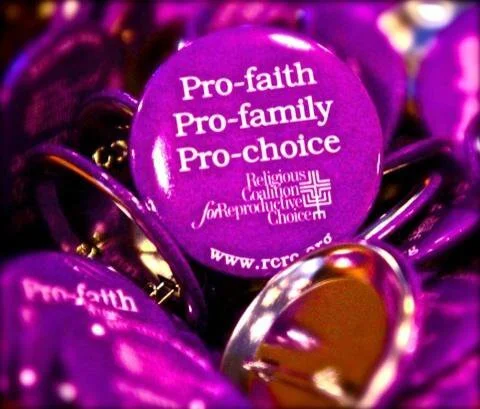
In 1967, two years before NARAL Pro-Choice America was founded, the 1,400-member Clergy Consultation Service formed to help women obtain abortions and fight legal barriers. After the high court legalized U.S. abortions in the 1973 Roe v. Wade decision currently at issue, the related Religious Coalition for Abortion Rights was founded to campaign for moral acceptance. (In 1994 it dropped the A-word and was renamed the Religious Coalition for Reproductive Choice or RCRC).

Founders included a significant chunk of "mainline" and liberal Protestantism, including the Episcopal Church, Presbyterian Church (U.S.A.) Mission Agency, United Church of Christ and several independent Protestant caucuses. The United Methodists' General Board of Church and Society hosted the founding, and the Methodist women's division also joined, but both later backed away. The Coalition also included major non-Orthodox Jewish organizations and the Unitarian Universalist Association (UUA).

In the new Court filings, abortion-rights law gets continued support from RCRC, UUA and Jewish organizations. But no Protestant denomination that favors abortion choice has joined to support Roe. Reporters should find out why they sidestepped this historic showdown. For example, have complex schism talks led to silence on the United Methodist left, as opposed to earlier debates (see YouTube video at the top of this post)?

The silence from "mainline" churches deprives the high court of in-depth moral thinking from pro-choice Christians that answers conservatives on issues that make abortion unusually difficult for public policy, among them: Does a genetically unique and developing human embryo or fetus have value? Why, or why not?


Please respect our Commenting Policy

Bonus podcast: 'What's next in Afghanistan?' Warning: this news topic involves religion

Bonus podcast: 'What's next in Afghanistan?' Warning: this news topic involves religion

Here is a truth claim that, over the years, I have heard (or seen) stated in a number of ways by journalists and mass-media professors: Without strong, or at least adequate, visual images a story doesn’t exist in television news.

Yes, there are exceptions. But the exceptions almost always take place when big stories break in print media and television producers are highly committed to getting them on air — somehow.

Now, in the smartphone era, there are lots of ways for visual images to emerge (ask Hunter Biden). However, in our era of partisan, niche news, it may not matter if images exist. What citizens cannot see (or read) will not hurt them?

This brings me back to a subject I addressed in this recent GetReligion essay: “What's next in Afghanistan? Press will have to face issues of religion, culture and gender.”

The big question: Where does the Afghanistan story go next and, frankly, will elite American media cover the religion elements of this story?

That question was at the heart of a recent Religion Unplugged podcast discussion that I had with a friend and, long ago, a former religion-beat colleague — Roberta Green. In recent decades, she is better known as the philanthropist and fine arts-maven Roberta Green Ahmanson (click here for a typical arts lecture).

This new podcast is entitled, “How Will Afghanistan's Next Chapter be Written?” Click here to head over to iTunes to tune that in. Meanwhile, here is a key chunk of the GetReligion essay linked to our discussion about religion, journalism, culture, politics and “nation building”:

Viewed through the narrow lens of Taliban doctrine, it doesn’t matter if Western governments were forcing open doors for the work of Planned Parenthood or Christian missionary/relief groups, the work of LGBTQ think tanks (or the American corporations that back them) or Islamic thinkers and clerics whose approach to the faith clashed with their own.


Please respect our Commenting Policy

Pope Francis lashes out at conservative Catholic press, calls its criticism 'work of the Devil'

Pope Francis lashes out at conservative Catholic press, calls its criticism 'work of the Devil'

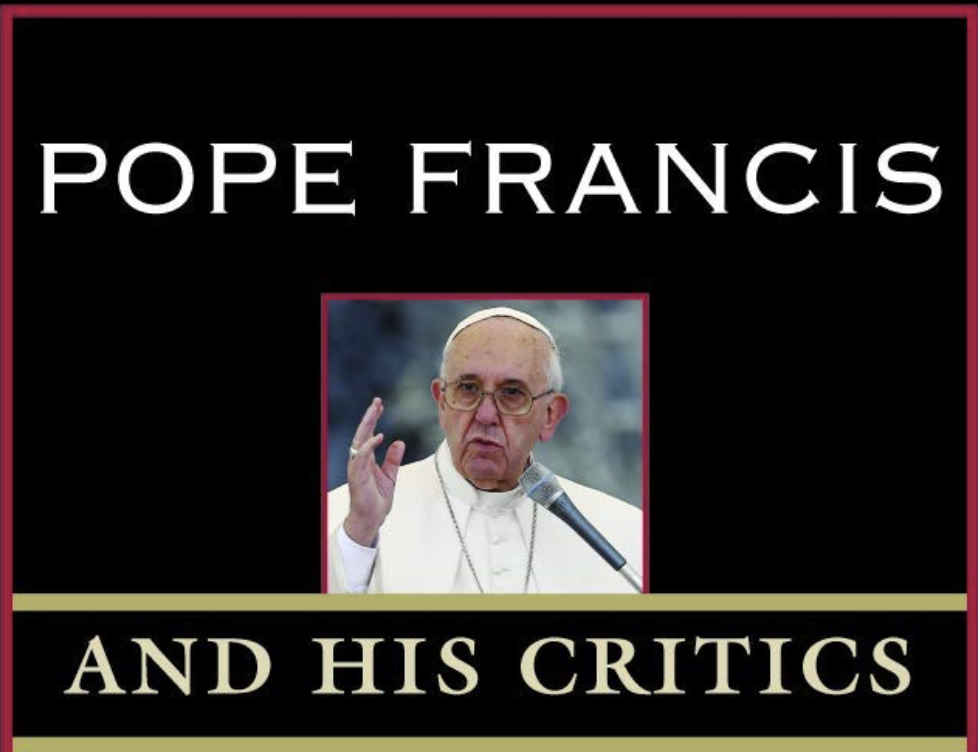
Pope Francis is no fan of press criticism — especially when it comes from Roman Catholic news outlets on the doctrinal right.

So here we go again, with another round of tensions in the growing world of Catholic media.

The 84-year-old Argentinian-born pontiff was caught in a candid moment during his recent trip to Slovakia when he was asked about his health after a recent operation.

“Still alive,” the pope replied, “even though some people wanted me to die.”

The shocking statement came in a meeting the pope had with 53 Jesuits from Slovakia on Sept. 12 in Bratislava. Antonio Spadaro, a priest and editor-in-chief of the Rome-based Jesuit magazine La Civiltà Cattolica, was present at the meeting and on Sept. 21 published the full transcript of the conversation.

The comments immediately sparked a Catholic media war that again highlighted how polarized Catholics have become during Francis’ papacy, as have the official and independent church media that a large swarth of parishioners choose to read.

Asked by another Jesuit at the same gathering how he felt by those who view him with suspicion, Francis replied:

There is, for example, a large Catholic television channel that has no hesitation in continually speaking ill of the pope. I personally deserve attacks and insults because I am a sinner, but the church does not deserve them. They are the work of the devil. I have also said this to some of them.

The TV channel to which he referred is EWTN, according to the National Catholic Reporter.

The Eternal World Television Network was founded in 1980 by a nun named Mother Angelica and began broadcasting a year later from a garage at the Our Lady of the Angels Monastery in Irondale, Alabama. Since then, it has grown to become one of the largest and most influential Catholic news organizations in North America and around the world.


Please respect our Commenting Policy

New York Times dares to interview Stephen Strang, a major player in Pentecostal media

New York Times dares to interview Stephen Strang, a major player in Pentecostal media

On the Sunday I was returning to the United States from an international trip, the New York Times ran a surprising story on a religion beat insider that, frankly, I never thought they’d touch.

All sorts of folks were sending me links to a business story on Stephen Strang, someone who is widely known in the charismatic universe but not so well known in wider Christian circles.

Yet, Times freelancer Sam Kestenbaum swooped down and delivered an informative, timely piece, which started as follows:

This spring, the media mogul Stephen E. Strang made an unusual apology to readers in the pages of his glossy magazine.

Mr. Strang presides over a multimillion-dollar Pentecostal publishing empire, Charisma Media, which includes a daily news site, podcasts, a mobile app and blockbuster books. At 70, he is a C.E.O., publisher and seasoned author in his own right. Despite all that, Mr. Strang worried something had gone awry.

“I’ve never been a prophet,” he wrote in a pleading March editor’s note. “But there were a number of prophets who were very certain that Trump would be elected.”

This had not come to pass. Mr. Strang continued, “I hope that you’ll give me the grace — and Charisma Media the grace — of missing this, in a manner of speaking.”

That was a back entrance into a story on the “Trump prophets,” which were dozens of well-known Pentecostal personalities who falsely prophesied that President Donald Trump would win a second term. Although a few apologized when it was clear Joe Biden would be taking the oath of office on Jan. 20, many refused, succumbing to fantasy theories that the election had been stolen.

(I’ve been covering the prophets story since late last year and earlier this year for GetReligion here, here and here, plus begging other religion writers to get up to speed with modern-day Pentecostalism and the way Pentecostals and their sister movement, the charismatics, was the spirituality of choice in the Trump White House.

Kestenbaum specializes in religion-news-of-the-weird pieces for the Times , and maybe, to him, Strang is weird. Oddly, the story (whose news hook is Strang’s newest book) ended up in the business section. My fav quote in the whole piece:

Mr. Strang seems to have discovered that one way to handle being publicly wrong is to change the subject and to pray readers stick around.

Yes, that’s what the whole prophecy movement has been doing since January. The next chunk of copy is the why-you-should-read-this part:

Beyond the spiritual test of unrealized prophecies, there are very earthly stakes here: Under Mr. Strang’s stewardship, Charisma had grown from a church magazine to a multipronged institution with a slew of New York Times best sellers, millions of podcast downloads and a remaining foothold in print media, with a circulation of 75,000 for its top magazine.

It is widely regarded as the flagship publication of the fast-growing Pentecostal world, which numbers over 10 million in the United States. With its mash-up of political and prophetic themes, Charisma had tapped a sizable market and electoral force. In 2019, one poll found that more than half of white Pentecostals believed Mr. Trump to be divinely anointed, with additional research pointing to the importance of so-called prophecy voters in the 2016 election.

His numbers are way too low; Pew Forum says charismatics and Pentecostals comprise about 23 percent (you heard that right) of the American population, so we’re talking about 65 million people. If that sounds like a lot of people, remember, this number includes charismatic Catholics.

As I read through the piece, I thought Kestenbaum hit it square on the nose many times.


Please respect our Commenting Policy