New podcast: The long, complex and mysterious life (and faith) of Prince Philip of Greece

New podcast: The long, complex and mysterious life (and faith) of Prince Philip of Greece

It’s a short scene from second season of “The Crown,” but certainly one the illustrates what the creators of the Netflix series thought of Prince Philip Mountbatten-Windsor — at least at one stage of his dramatic life.

In 1955, while the Rev. Billy Graham was in Scotland leading a crusade in Glasgow, the evangelist received a note from Buckingham Palace inviting him to preach on Easter morning in the private chapel at the Royal Lodge. It’s a poignant scene, especially when paired with another in which Graham visits the queen to discuss an important subject — the need to forgive others.

In the chapel, Graham discusses Christian faith in highly evangelical language, describing the need to have a personal encounter with Jesus Christ. Queen Elizabeth listens attentively. Prince Philip is clearly bored, upset, disturbed, offended, embarrassed or all of the above.

Was Prince Philip struggling with guilt linked to his rumored infidelities? What is happening in his head and heart? That was the starting point for this week’s “Crossroads” podcast, which focused on the mainstream press coverage of the prince after his recent death (click here to tune that in).

For millions of people, “The Crown” offered the dominant image of Prince Philip — the tall, handsome consort of the queen best known for his faults and weaknesses. He was an old-guard British man who went to war, who was known for blunt remarks many considered racist or sexist. Eventually, some would respect his progressive views on the environment.

But it was also obvious that something important happened during this royal couple’s 73 years of marriage. Somehow, they grew together, doing the best they could to handle the pressures of royal life and the searing spotlight on their four children and, eventually, their grandchildren and great-grandchildren.

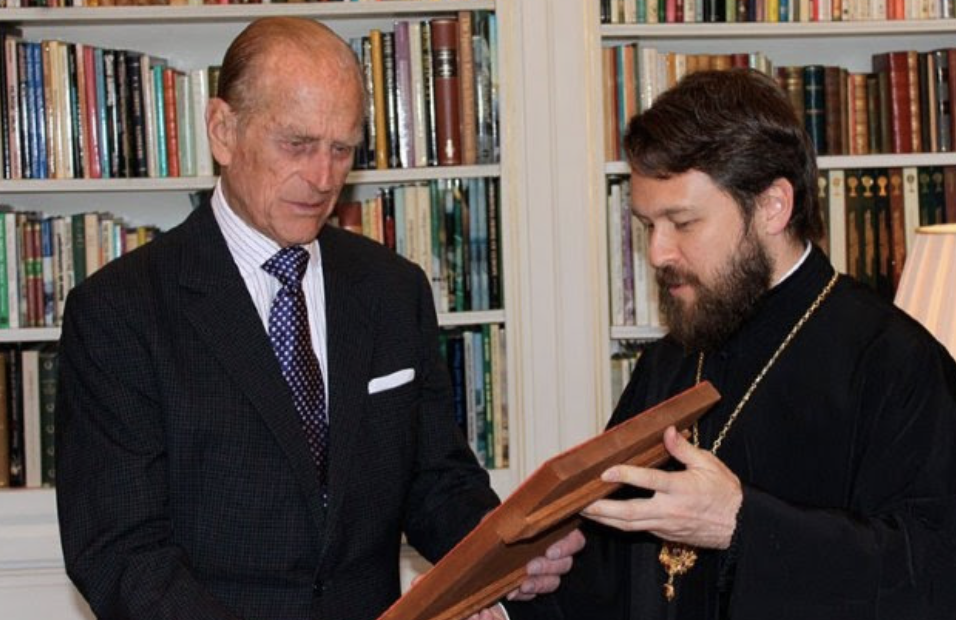
News consumers who dug into the fine details learned that Prince Philip was, in many ways, an outsider from the Greek wing of Europe’s complicated world of interlinked royal families. He was an Orthodox Christian, at least until he married Elizabeth and, on bended knee, honored her as the leader of the Church of England. He befriended Anglican clergy and was known to confront priests for intense discussions after their sermons.

Something else was going on as the prince aged and matured. There were signs that, spiritually, he was seeking the roots of his faith and his family.


Please respect our Commenting Policy

Despite China's vast religious and political repression, 2022 Olympic boycott still unlikely

Despite China's vast religious and political repression, 2022 Olympic boycott still unlikely

We’re rapidly approaching the inflection point on whether China will get to stage the 2022 Winter Olympics without some sort of concurrent international protest — such as a major boycott — prompted by Beijing’s often outrageous treatment of its Muslim Uighur, Tibetan Buddhist and underground Christian religious minorities, as well as its secular pro-democracy movement.

The question for me is: Will the international community — and in particular the United States and other democracy-espousing nations — punk out as it did with the Nazi-run 1936 Berlin Olympics. Or will the International community find some righteous backbone and either boycott the 2022 winter games, or make its opposition to Beijing’s policies known in another significant and unmistakable manner?

China, of course, has threatened retaliation against any nation that dares to challenge it by linking the Olympics and human rights.

When I last posted about the possibility of an international boycott of the upcoming China Games, — back in 2019 — I wrote off any boycott possibility as an extreme long shot.

As of this writing, I think a widespread boycott is still highly unlikely. But it’s no longer a completely dismissible long shot, I believe, because of changed circumstances — not the least of which is the ongoing coronavirus crisis and China’s oblique explanations of the pandemic’s Wuhan region origins.

Why still unlikely? Ironically, for the very same reason a protest is now slightly more conceivable, the coronavirus.

The U.S., without which no boycott can succeed, as well as its major pro-Western democratic allies, are all still deeply engaged in trying to halt the coronavirus.

We don’t know how much longer this fight will go on or what surprises are ahead. Regardless, the effort has left them economically vulnerable and politically drained. I’d say they lack the necessary additional emotional and intellectual bandwidth to take on another international crisis. Certainly not one they can avoid without triggering immediate dire consequences for their own citizens.

Forget the morality of the situation. Moral avoidance is a well-honed government strategy with a global heritage.


Please respect our Commenting Policy

Lots of Mississippi folks don't want COVID-19 vaccines: They're white evangelicals, right?

Lots of Mississippi folks don't want COVID-19 vaccines: They're white evangelicals, right?

One of the snarkiest things an editor can say to a reporter — after reading a story that has been turned in for editing — is this: You really need to read your own newspaper.

Most of the time, this means that a reporter has produced a story about a topic the newspaper has already covered, yet the new story failed to engage with some of the previously reported information. Maybe the new material even clashes with an earlier story. That may be good, but the earlier reporting still needs to be acknowledged.

I thought about this while reading a New York Times piece that ran with this double-decker headline:

Why Mississippi Has Few Takers for 73,000 Covid Shots

The good news: There are more shots available. The challenge is getting people to take them.

Now, what I’m about to say may sound strange, in light of what I argued in last week’s “Crossroads” podcast, the one linked to the post with this headline: “New podcast: Familiar splits among white 'evangelicals,' only now they're about vaccines.

That post/podcast focused, in large part, on a recent Times piece that claimed believers inside the dreaded white-evangelical monolith were America’s biggest pandemic problem, in terms of flyover-country people who are refusing to get their COVID-19 vaccine shots. A quotation linked to that thesis said:

“If we can’t get a significant number of white evangelicals to come around on this, the pandemic is going to last much longer than it needs to,” said Jamie Aten, founder and executive director of the Humanitarian Disaster Institute at Wheaton College, an evangelical institution in Illinois.

The story cited a poll indicating that 45% of white evangelicals planned to refuse their shots, while 55% planned to cooperate with anti-pandemic programs. I noted that these numbers were solid evidence of a DIVISION inside white evangelicalism, not a sign of unity in opposition to vaccines.

What is the big problem in Mississippi, where there are lots of empty slots on the lists where people sign up for appointments to get shots?


Please respect our Commenting Policy

Journalists get ready: Here comes the 'greatest celebration in all of history'

Journalists get ready: Here comes the 'greatest celebration in all of history'

Thinking long-term, a group of Christians has been quietly at work pulling together what they bill as "the greatest celebration in all of history."

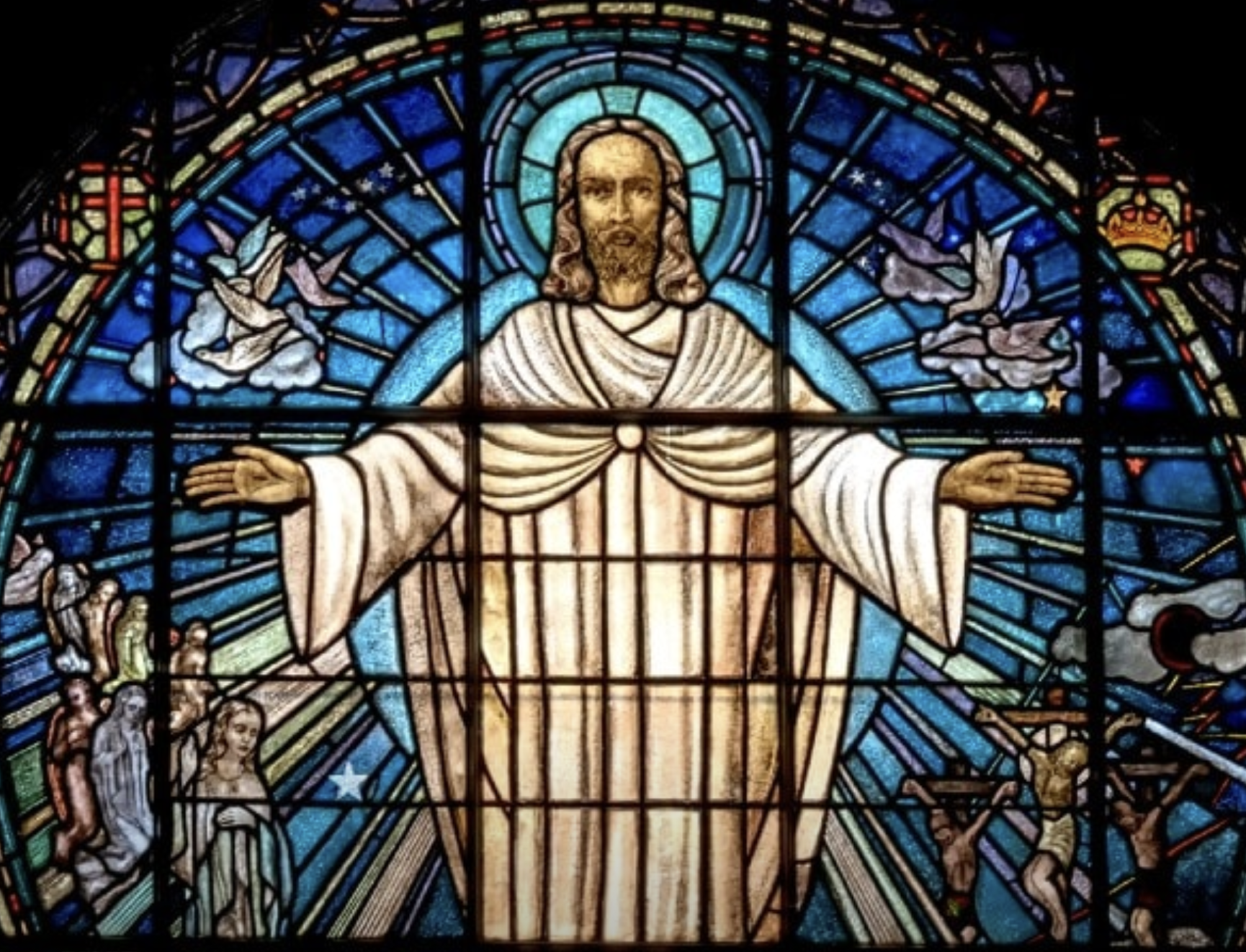
Yes, you read that right. The Big Idea is that all imaginable sorts of believers will join in events across 24 time zones on -- mark your calendars! -- Easter morning, Sunday, April 17, 2033. That will mark the ultimate in anniversaries, 2,000 years since Jesus Christ's resurrection from the dead. (That's necessarily a symbolic date since there's no consensus on the exact year.)

They call it Jesus Celebration 2033 or "JC2033."

Lest anyone freak out about the date, organizers assure us that "in no way whatsoever are we associating this jubilee with" the Second Coming of Christ. "He will return when the Father in heaven decides and it is not given to us to know when (Mark 13:32)."

Explanatory materials envision that "every disciple of Christ" on earth will participate in collective witness to show "we love each other in the Holy Spirit!"

That will take some planning. However, "Christians from all backgrounds and God seekers" will celebrate "spiritual unity, not a theological unity. We believe in unity in diversity." This is presented as "a historical opportunity to share in words and in actions the Love of God to the ends of the earth."

Christians will also be asked to join in "tangible demonstrations of God's love." Festivities are intended to be "joyful, artistic and creative." Gatherings would not only occur in churches but "stadiums, squares, parks, mountains, fields, beaches, homes and on the Internet!"

OK, editors, reporters, producers and other media planners, that's a dozen years off, and there’s no telling whether the dream will fizzle. But the concept is bold enough to invite features now.


Please respect our Commenting Policy

What is news? Apparently, strangers shooting at nuns in an American convent isn't news

What is news? Apparently, strangers shooting at nuns in an American convent isn't news

It’s a question journalists hear all the time from mystified readers: “What is ‘news’?”

At least, that was a question we used to hear when newspapers tried to appeal to all kinds of people in a community, including those on both sides of common cultural and political divisions.

Why are some stories big local, regional and national news stories, while others are not?

Years ago, a Charlotte megachurch pastor asked me why it was news when a downtown Episcopal parish replaced a window, but it wasn’t news when his church built a multi-million-dollar facility. Well, I explained, there was controversy about changing that window because it was part of a historic sanctuary. What I didn’t say is that editors tend to think that what happens downtown is, by definition, more important than what happens in suburbs.

I raise this issue because of events that unfolding in rural Missouri. But before we get to that, let me ask a few questions. Would it be local, regional and even national news if strangers kept shooting rifles at a:

* Mosque in the Bible Belt?

* Catholic parish with an LGBTQ+ rainbow flag?

* Baptist church at the forefront of local #BlackLivesMatter demonstrations?

Clearly, the answer would “yes” in all three cases, especially if that Baptist church was in Georgia.

Now let’s look at an example of a story that is NOT news, care of the Catholic News site called The Pillar: “Missouri nuns targeted in multiple ‘extremely disturbing’ shooting incidents, motive unknown.” Here is the overture on this recent story:

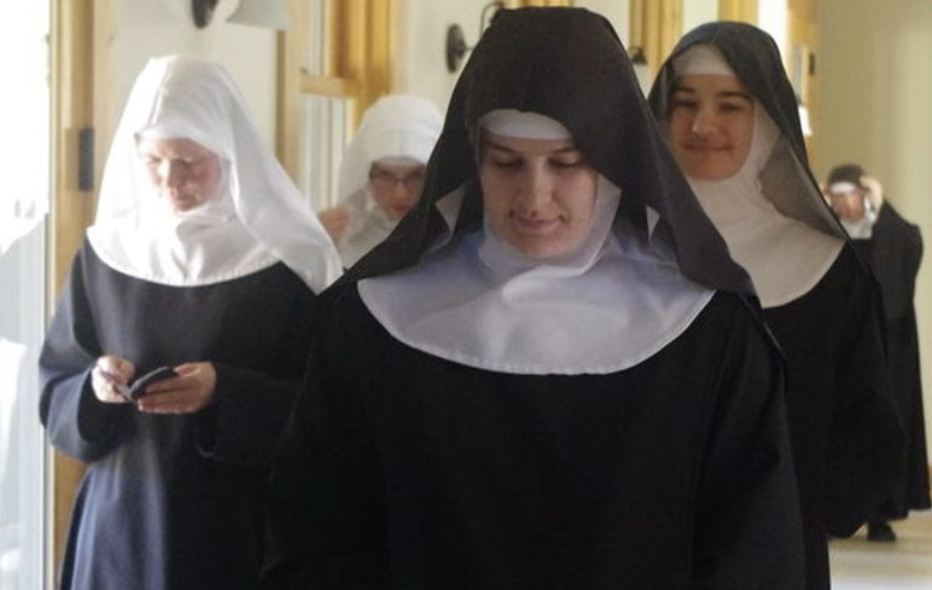
Shots have been fired at a rural Missouri abbey of nuns on several occasions this Lent, the sisters have said, with a bullet from one shooting lodging in the bedroom wall of the order’s superior. The nuns are fundraising for a security fence, while local law enforcement is providing extra security and investigating the shootings.


Please respect our Commenting Policy

Covering a life-and-death issue: Muslims driving changes in India's rapacious dowry custom

Covering a life-and-death issue: Muslims driving changes in India's rapacious dowry custom

In 2006, I was assigned a four-part series on the horrific gender discrimination against women in India and how the massive aborting of girls has resulted in skewed gender ratios (as low as 814 girls for every 1,000 boys resulting in a gap of 43 million when I was there). It ran in the Washington Times several months later.

Sabu George, an Indian activist who was passionately against the aborting of females, showed me where to go in India to report on this phenomenon. The first place he sent me was to a Sikh wedding (pictured above) several hours north of New Delhi.

There, I saw the stash of presents (a refrigerator, TV, clothes for the groom, DVD player and washing machine) for which the bride’s family had no doubt gone into debt to provide as a dowry for their daughter. More than one wedding can ruin a family financially and I began to see why Indians choose to abort a second daughter when they have the chance.

Medical clinics were very open about the practice, saying in their ads, “Better 500 rupees now (for an abortion) rather than 50,000 rupees later (for a dowry).”

Although dowry began as a Hindu custom, it’s evolved into something all religions take part in across India. And what happens if one family decides that the bride’s dowry wasn’t “good enough”? This has been known to turn into a life-and-death subject.

Which is why I was interested in Al Jazeera’s recent story about how Muslim Indians are finally saying “no.”

Here’s what ran April 2:

A prominent Muslim organisation in India has released new guidelines, asking the community to shun dowries and extravagant marriages after a woman recently died by suicide due to “dowry harassment”.


Please respect our Commenting Policy

Plug-In: Even with ailing digit, Bobby Ross, Jr., manages to cut and paste week's top stories

Plug-In: Even with ailing digit, Bobby Ross, Jr., manages to cut and paste week's top stories

Power Up: The Week’s Best Reads

1. Evangelical leaders are encouraging their congregants — many of whom are skeptical — to get the vaccine.

* Why "the pathway to ending the pandemic runs through the evangelical church" (by Kathryn Watson, CBS News)

* Love Your Neighbor' And Get The Shot: White Evangelical Leaders Push COVID Vaccines (by Sarah McCammon, NPR)

* White Evangelical Resistance Is Obstacle in Vaccination Effort (by Elizabeth Dias and Ruth Graham, New York Times)

* Vaccine skepticism runs deep among white evangelicals in US (by David Crary, Associated Press)

2. A Nashville church is planting a community garden to survive after the building was destroyed in tornadoes last year.

* A tornado destroyed their church. Now, faith takes root in a garden planted to serve the community (by Holly Meyer, The Tennessean)

* After 13 months apart, Easter service brings Watson Grove church members together again (by Cassandra Stephenson, The Tennessean)


Please respect our Commenting Policy

'Nothing in particular' is the growing American religion niche few are studying

'Nothing in particular' is the growing American religion niche few are studying

While working on the 1985 book "Habits of the Heart," the late sociologist Robert N. Bellah met "Sheila," who described her faith in words that researchers have quoted ever since.

"I can't remember the last time I went to church," she said. "My faith has carried me a long way. It's Sheilaism. Just my own little voice." The goal was to "love yourself and be gentle with yourself. … I think God would want us to take care of each other."

A decade later, during the so-called "New Age" era, researchers described a similar faith approach with this mantra -- "spiritual but not religious."

Then in the 21st Century's first decade, the Pew Research Center began charting a surge of religiously unaffiliated Americans, describing this cohort in a 2012 report with this newsy label -- "nones."

Do the math. "Nones" were 10% of America's population in 1996, 15% in 2006, 20% in 2014 and 26% in 2019. This stunning trend linked many stories that I have covered for decades, since this past week marked my 33rd anniversary writing this national "On Religion" column.

Obviously, these evolving labels described a growing phenomenon in public and private life, said political scientist Ryan Burge of Eastern Illinois University, author of the new book, "The Nones: Where They Came From, Who They Are, and Where They Are Going."

But hidden under that "nones" umbrella are divisions that deserve attention. For example, the 2018 Cooperative Congressional Election Study found that 5.7% of the American population is atheist, 5.7% agnostic and 19.9% "nothing in particular."

"When you say 'nones' and all you think about is atheists and agnostics, then you're not seeing the big picture," said Burge, who is a contributor at the GetReligion.org website I have led since 2004. "Atheists have a community. Atheists have a belief system. They are highly active when it comes to politics and public institutions.

"But these 'nothing in particular' Americans don't have any of that. They're struggling. They're disconnected from American life in so many ways."


Please respect our Commenting Policy

What can modern people (journalists even) know about biblical figures like Joshua?

What can modern people (journalists even) know about biblical figures like Joshua?

THE QUESTION (as raised by The New York Times):

What can we know about biblical figures, for instance Joshua?

THE ANSWER:

How do we know what we know, or think we know, or can know, or might know?

“Epistemology” is the branch of philosophy that ponders such matters. It may seem odd, but philosophers even ponder if there’s any basis for believing that anything we remember from before one second ago actually happened!

Back to earth, how do we assess what can be known about people and events from long ago that we ourselves did not witness? One approach is the ideology known as “logical positivism,’ which rules out supernatural claims in advance by definition and thus wipes out many assertions by the great world religions. That’s a simple method, but other philosophers say it’s far too simple.

Well, then, what can we know about the past, whether religious or not? The answer is almost entirely written records that have been passed down to us. This is obviously central with the biblical faiths of Judaism and Christianity, which center heavily upon historical narratives.

Which is why The Religion Guy continues to ponder eight words The New York Times found fit to print in a recent feature about Muslims in Iraq tending what they believe is the tomb of Joshua. Israelis say instead that the ancient patriarch is buried 20 miles north of Jerusalem.

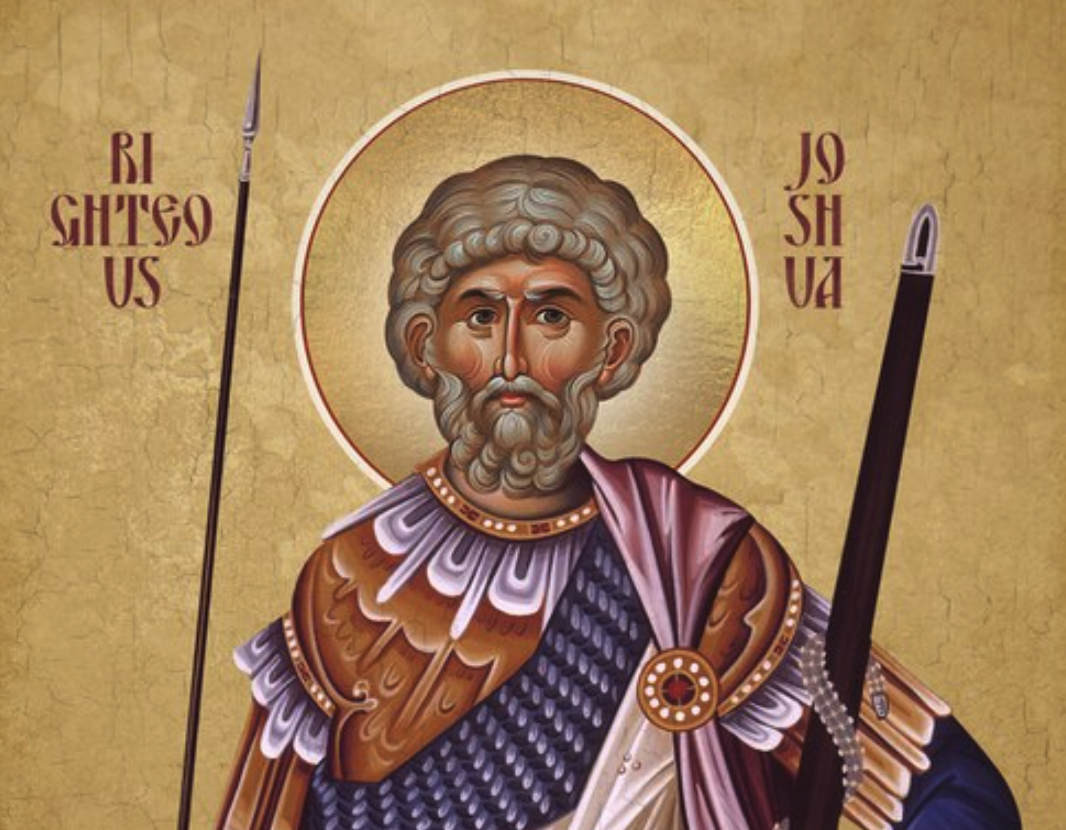
Both claimed locations invite skepticism. But the influential newspaper went much further, informing readers: “There is no historical evidence Joshua actually existed.”

This is not a particularly prudent thing to say in the Muslim world, where Joshua is revered as an actual prophet of God in the line that culminated with the Prophet Muhammad, had no doubt Joshua existed, this according to authoritative hadith texts. Joshua is also referred to in the Quran, though not by name (18:60). The earlier Jewish and Christian Scriptures depict Joshua as an actual person.

In effect, the Times writer and copy editors tell us the Jewish Bible contains nothing that should count as historical evidence. Think about that. Liberal university professors will often teach that a particular Bible section has flawed evidence, or mixes fact with myth, or even is pure fiction. But they do not dismiss all evidence that the Bible records.


Please respect our Commenting Policy