Hotter than inauguration! Christian financial guru Dave Ramsey burns religion-beat pro

Hotter than inauguration! Christian financial guru Dave Ramsey burns religion-beat pro

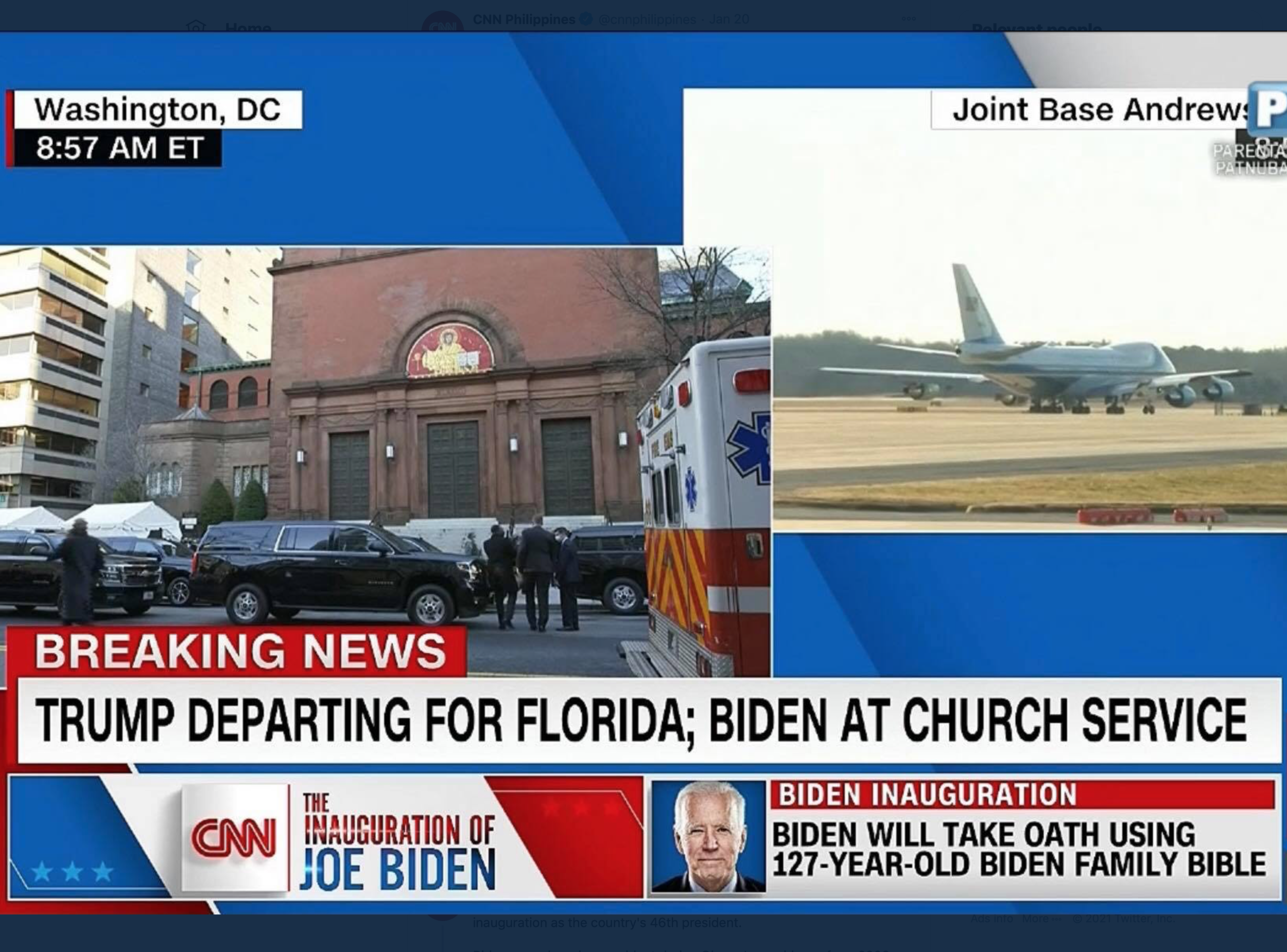
Joe Biden’s inauguration as America’s 46th president produced a ton of religion news. We’ll get to all that in a moment.

First, though, the most jaw-dropping Godbeat story of the week comes not from the Beltway but from the Bible Belt, courtesy of Religion News Service national writer (and gainfully employed) Bob Smietana.

Last Friday, RNS published Smietana’s 4,150-word investigative piece on the “cultlike environment” inside Christian financial guru Dave Ramsey’s $42 million headquarters in Franklin, Tenn., south of Nashville. That piece followed a December story by Smietana on Ramsey’s for-profit enterprise defying COVID-19 precautions such as wearing masks.

Ramsey Solutions didn’t take kindly to Smietana’s latest questions, responding with a sarcastic email that said, “Who would have guessed that an unemployed guy, oh I am sorry, a ‘freelance reporter’ would be the one to show us how horrible we are so we can change and to let the world know of our evil intent, secrets, and complete disregard for decency…..but YOU did it, you with all your top notch investigative skills have been able to weave together a series of half-truths to expose our evil ways. You are truly amazing.”

It’s unclear why Ramsey Solutions thinks one of the nation’s top religion correspondents is unemployed. But the statement proceeded to dox Smietana, sharing his email address, phone number and hometown with pastors, business leaders and the entire Ramsey team.

In a Religion Unplugged online panel discussion, Smietana talked about his coverage of Ramsey and the company’s response to him.

Also offering their insight were Cheryl Mann Bacon, retired journalism chair at Abilene Christian University; Meagan Clark, managing editor of Religion Unplugged; Holly Meyer, religion writer for The Tennessean; and Warren Cole Smith, president of Ministry Watch.

“If I were teaching PR Principles this semester, we would start with that as an example of how to never, ever, ever do public relations,” Bacon said of the email. “It just violated all of the basic principles of ethical public relations.”


Please respect our Commenting Policy

America remains bitterly divided: But is this country veering closer to another civil war?

America remains bitterly divided: But is this country veering closer to another civil war?

Call it the "Texit" parable.

America's new civil war begins with the Supreme Court overturning Roe v. Wade, creating an abortion-free zone in the Bible Belt and most heartland states.

Enraged Democrats pledge to end the U.S. Senate filibuster and expand the number of high-court justices. After restoring Roe, they seek single-payer health care, strict gun control and sweeping changes in how government agencies approach the First Amendment, with the IRS warning faith groups to evolve -- or else -- on matters of sexual identity. Big Tech begins enforcing the new orthodoxy.

Conservatives rebel and liberals soon realize that most of America's military, including nuclear weapons, are in rebel territory. Then federal agents kill Alabama's pro-life, Black governor -- while trying to arrest him as a traitor. That's too much for Gov. Francisco Gonzalez of Texas, who decides that it's time for a new republic.

David French fine-tuned this "Texit" vision early in 2020, while finishing "Divided We Fall: America's Secession Threat and How to Restore Our Nation." Best-known as a #NeverTrump conservative pundit, most of the Harvard Law graduate's career has focused on old-school First Amendment liberalism -- which in recent decades has meant defending conservative religious believers in religious liberty cases.

The book's first lines are sobering, especially after recent scenes on Capitol Hill.

"It's time for Americans to wake up to a fundamental reality: the continued unity of the United States cannot be guaranteed," wrote French. Right now, "there is not a single important cultural, religious, political, or social force that is pulling Americans together more than it is pulling us apart."

Americans are divided by their choices in news and popular culture. America remains the developing world's most religious nation, yet its increasingly secularized elites occupy one set of zip codes, while most traditional religious believers live in another. In politics, more and more Democrats are Democrats simply because they hate Republicans, and vice versa.

Ironically, cultural conservatives now find themselves hoping that the Supreme Court will protect them, said French, reached by telephone. Conservatives know they have lost Hollywood, academia, America's biggest corporations, the White House and both houses of Congress.

"I constructed the Texit scenario around court packing because that has become their last firewall," said French.


Please respect our Commenting Policy

Should elite European officials outlaw Jewish and Muslim ritual slaughter for meat?

Should elite European officials outlaw Jewish and Muslim ritual slaughter for meat?

THE QUESTION:

Should Europeans outlaw ritual slaughter for meat practiced by Judaism and Islam as cruelty to animals?

THE RELIGION GUY’S ANSWER:

With such unprecedented political mayhem, Americans can be forgiven for barely noticing important events overseas.

The Guy, who believes threats to religious freedom warrant especially close attention, highlights a Dec. 17 ruling by the Court of Justice, the highest tribunal in the European Union (which covers 27 member nations with the departure of Great Britain). Readers will want to check out this recent Ira Rifkin post on this topic: “EU hypocrisy? Foie gras and factory farming continue, but kosher and halal traditions nixed.”

The decision, on referral from Belgium’s Constitutional Court, approved a regional statute mandating that animals be stunned before they are slaughtered for meat. This requirement directly pits animal-welfare advocates against Judaism and Islam, in which long-standing tradition allows observant believers to eat only meat from ritual slaughter, which forbids such stunning. European Jews and Muslims plan to appeal the decision, which could influence policies in other nations.

The court acknowledged that religious liberty is important, but on balance stated that the crackdown in Belgium occurs in “an evolving societal and legislative context which is characterized by an increasing awareness of the issue of animal welfare.” Several European nations already require stunning before slaughtering. (In the United States, statutes require stunning but allow for religious exemptions.)

Adding to the emotions in Europe, this dispute brings to mind that in 1933 Germany’s new Nazi-influenced regime prohibited Jewish slaughter on grounds of the stunning problem. More recently, this argument has been employed by Islamophobes.

The Conference of European Rabbis, which represents believers in 40 nations, said such prohibitions “put Jewish life at risk.” Omer Yankelevitch, a member of Israel’s parliament and the government diaspora affairs minister, wrote similarly in the Jerusalem Post last week. He said the European Union is violating freedom of religion and “harms the viability of Jewish communities in Europe,” so intense diplomatic efforts will be undertaken to respect the age-old observance.

Those who enjoy eating meat may give barely a thought to the methods used to produce it, although perhaps some reflected on this reality when COVID outbreaks brought attention to slaughterhouse conditions.


Please respect our Commenting Policy

New podcast: Why the infamous 'McCarrick doctrine' haunted U.S. Catholic bishops this week

New podcast: Why the infamous 'McCarrick doctrine' haunted U.S. Catholic bishops this week

It was a great week to be a Cardinal Theodore McCarrick Catholic.

Now, before anyone gets mad, let me stress that the McCarrick mentioned during this week’s “Crossroads” podcast (click here to tune that in) was not the “Uncle Ted” McCarrick known for bunking with seminarians or the trusted priest or bishop accused of fondling teen-aged boys from families that trusted him.

No, it was Cardinal McCarrick, the consummate networker, trusted fundraiser, ecclesiastical kingmaker and media manipulator. This was the man who, as archbishop of Washington, D.C., created the so-called “McCarrick Doctrine” that protected national-level Catholic politicians whose faith was a crucial part of their lives and images, even if many ancient doctrines didn’t mesh well with their political agendas. This McCarrick also claimed — in a public speech — to have helped elect Pope Francis.

This was the McCarrick whose legacy helped shape the remarkable war inside the U.S. Conference of Catholic Bishops that jumped into clear view on Inauguration Day.

It was easy to see this coming. I wrote about it several weeks ago in this “On Religion” column: “Joe Biden and the U.S. Catholic bishops — Tensions remain about Holy Communion.” And Catholic-press veteran J.D. Flynn clearly knew something big was coming when, a day before the Biden inauguration, he wrote an analysis — “Biden and the bishops. This probably will not go well” — for his new (and essential) website called The Pillar. Check out this lede:

Shortly after President Joe Biden begins his term of office, the U.S. bishops will be derided as culture warriors and abortion obsessives, unwilling to find common ground with the administration of the second Catholic U.S. president.

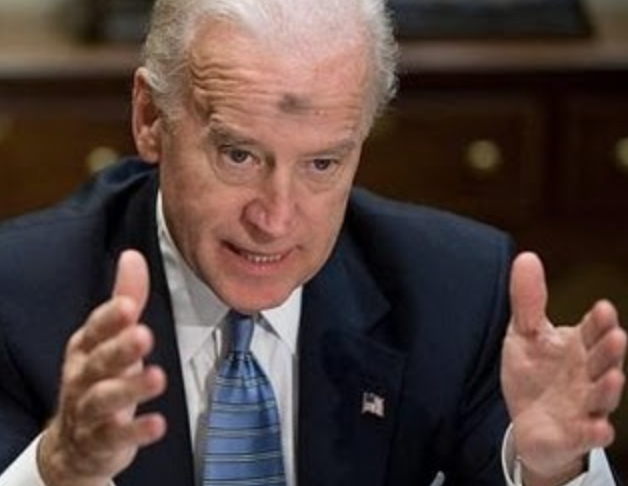
Sure enough, the elected leader of America’s Catholic bishops issued a letter (hold that thought) criticizing Biden’s actions supporting abortion rights, while hinting at clashes over religious liberty (Hello, Little Sisters of the Poor) and church doctrines on marriage and sex.

This drew an angry social-media response from Catholic progressives — including key men wearing red hats. Their outcry led to this headline in The Washington Post: “As Biden is sworn in, president of U.S. bishops assails him over abortion.”

In a bombshell report, The Pillar noted that the Vatican tried to ban the distribution of the USCCB statement by Gomez — at least until team Pope Francis could release a more politically nuanced letter. That headline: “Vatican intervened to spike US bishops’ Biden statement release.”

But back to the Post. The overture for that report says exactly what one would expect it to say:


Please respect our Commenting Policy

On the agenda until Inauguration Day 2025: Whither Trumpism and, thus, evangelicalism? 

On the agenda until Inauguration Day 2025: Whither Trumpism and, thus, evangelicalism? 

In a city locked down as an armed encampment, Joseph Biden and Kamala Harris were inaugurated without the disruptions many feared. There were prayers and familiar political calls for healing and unity.

References to the January 6th riot at the U.S. Capitol came early and often.

Regarding that historic day, much remains to be investigated but Wall Street Journal veteran Gerald Seib offered a brisk summary: "Mr. Trump sent a crowd of his supporters to the Capitol to stop the constitutional transfer of power to his elected successor. That crowd turned into a mob that ransacked the seat of American democracy and tried to hunt down its elected leaders." Senate Republican leader Mitch McConnell stated much the same Tuesday.

Seib added that in the melee, "mainstream Trump supporters were overshadowed by those swinging fire extinguishers at cops and a man wearing a 'Camp Aushwitz' sweatshirt." That is, the fringe dwellers, unhinged devotees and insurrection plotters emerged from a larger throng that obeyed the president's summons to attend his "Stop the Steal" rally and march upon the Capitol.

The same with a certain number of evangelical-style Protestants at the "Steal" protest and explicitly religious "Jericho" march. They were swept into the criminal rampage alongside violent extremists who trashed the symbolic citadel, spewed F-bombs, assaulted police (battering one to death) and chanted threats to assassinate America's #1 evangelical office-holder, Vice President Mike Pence.

Several top religion reporters publicized this unnerving aspect of the fray. In response, GetReligion editor Terry Mattingly questioned whether the rioting rabble truly represented elements of the power structures of the evangelical movement and its leadership, as some claimed.

The evangelical elite does not control many among the proletariat, as The Guy noted while pondering evangelicalism's future last July 29, and the gap has grown since then. Revulsion over Trump's words and deeds provoked some evangelical leaders to favor Biden but evangelical voters gave Trump a healthy margin (as always with Republican nominees, witness Romney, McCain, Bush). This is especially true among nondenominational, independent churches and among some self-proclaimed Pentecostal prophets (see this important Julia Duin post)

Whatever the numbers and stature of the those who waved Jesus banners, the day sullied evangelical Protestantism, and perhaps even religious faith in general, for the vast American citizenry that believes Trump and his disciples tried to steal the election from Biden.

Fairly or not, in the public mind and in the media, evangelicalism is now fused not just with the Republican Party but its dominant Trumpite wing.


Please respect our Commenting Policy

UK ready to welcome waves of Hong Kong residents (Yes, BBC ignored religion angles)

UK ready to welcome waves of Hong Kong residents (Yes, BBC ignored religion angles)

On the night of the Hong Kong handover to China, I walked through that great city’s old airport — noting the many residents who sat, passports in hand, preparing to leave. I was leaving after a small international gathering of journalists and academics focused, naturally, on religion and the news.

I talked to a few of the solemn people I saw that night in 1997. Some said they were leaving for good. Others said they were going abroad to explore the legal and economic hurdles they would need to clear if or when they decided to leave. I didn’t hear a single optimistic voice.

Like the people I interviewed for the two “On Religion” columns I researched during that stey, they said that they expected that, in a few years, the Chinese authorities would crack down on dissent, free speech and, yes, some mentioned freedom of religion. Here are those columns: “Silence and tension in Hong Kong” and “Hong Kong II: There’s more to life than $.”

I bring this up because of an important story that is unfolding, in slow motion, in the United Kingdom. Here is the top of a long BBC website story with this headline: “The Hong Kong migrants fleeing to start new lives in the UK.

The UK will introduce a new visa at the end of January that will give 5.4 million Hong Kong residents — a staggering 70% of the territory's population — the right to come and live in the UK, and eventually become citizens.

It is making this "generous" offer to residents of its former colony because it believes China is undermining Hong Kong's rights and freedoms.

Not everyone will come. Some of those eligible to leave have expressed their determination to stay and continue the fight for democracy.

In the end, Britain estimates that about 300,000 will take up the visa offer over the next five years.

As you would expect, the story introduces a family that is already in the UK, exploring their reasons for making the leap. Any signs of religion here?

Readers are told that Andy Li and his wife Teri Wong moved to York in October, just after the announcement of plans for this policy change. They said, no surprise, that they were thinking about their children, daughter Gudelia, 14, and son Paul, 11.

"We feel that the things we treasure about Hong Kong — our core values — are fading over time," said Mr Li. "So we decided we needed to provide a better opportunity for our children, not only for their education, but also for their futures."


Please respect our Commenting Policy

When covering the Trump prophets, listen up: 'Heavenly inauguration' is in the wings

When covering the Trump prophets, listen up: 'Heavenly inauguration' is in the wings

Well, today is Jan. 20 and, contrary to the assertions of many Pentecostal prophets, President Donald Trump is on his way out of the White House and did not win the 2020 election.

Last week’s post on the “civil war” between Pentecostals and charismatics over failed prophecies by leaders in their movement created lots of buzz, with good cause. We’re not just talking about the failed “Trump prophecies,” as they are now termed, but also the fact that none of these prophets predicted the historic January 6th assault on the U.S. Capitol.

For those of you who’ve been unplugged from the news in recent days, here’s a bit of a review: There are still millions of these folks who believed that God was somehow going to replace Biden with Trump before the inauguration — or sometime in the coming months — simply because a coterie of prophets said so. See Kat Kerr’s Jan. 19 video saying this.

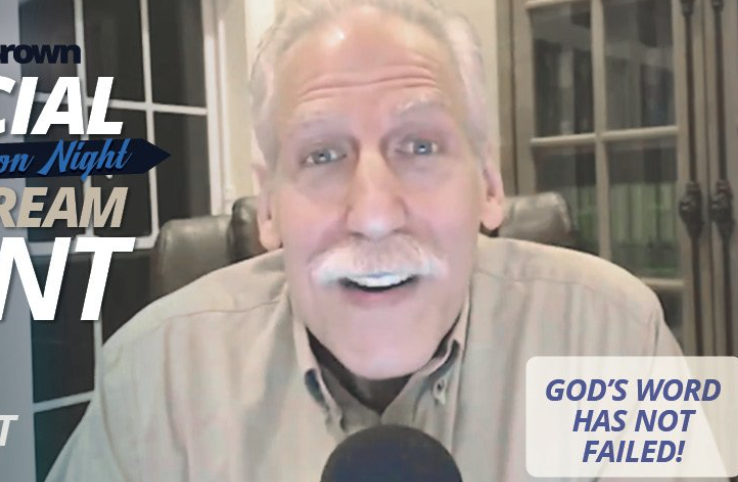
Now that this prophetic Hail Mary pass has failed, the recriminations are going to start. One leader in the movement, Michael Brown of 1990s Brownsville revival fame, has been calling out his fellow prophets to stand down for several weeks now and has established a ministry for disappointed charismatics. More on that in a moment. That’s a news story.

The prophets (and I won’t put that word in quotes like some say I should) range from Kat Kerr of Jacksonville, Fla. — who’s known for her flaming pink hair and tales of multiple trips to heaven –- to oldsters like Texas prosperity preacher Kenneth Copeland.

There’s also the Rev. Paula White, hailed as Trump’s pastor, who was holding out for a last-minute supernatural reprieve during December, but who’s been pretty silent of late. (News flash: See this video of her Jan. 17 Sunday sermon blaming other Christians for attacking her). Others, like Nebraska pastor Hank Kunneman, say that January 20th thing isn’t a factor now; when God wants to replace Biden with Trump, it will happen.

While researching a follow-up feature that ran the next day in ReligionUnplugged, I got to talk with a few scholars who follow this phenomenon –- and there aren’t many. One was Gordon Melton, now 78, who has helped religion reporters for decades with his encyclopedic knowledge of American religious history.

Now at Baylor University, he was telling me of how many –- of the top 40 people in the apostolic/prophetic movement that he’s tracking — are based close by. Not sure why the Lone Star state brings in all these folks, but Texas has always been an outlier, right?


Please respect our Commenting Policy

Catholic press braces for Biden presidency: How it will further polarization on doctrine

Catholic press braces for Biden presidency: How it will further polarization on doctrine

Inauguration Day this year comes two weeks after pro-Trump rioters descended on the U.S. Capitol before President-elect Joe Biden’s victory was certified by lawmakers. It was the latest — and most stark — demonstration of how our nation’s media ecosystem is in a state of decay and under attack.

Two weeks removed from that awful day, it’s worth taking stock in where we are, how we got here and, more importantly, what can we expected over the next four years under Biden.

This road, more than a decade in the making, was exasperated by Donald Trump’s presidential run and election in 2016. At the same time, citizens on the left and right have grown increasingly weary of institutions (the press being one of them) and that’s made violence an acceptable means for retribution.

As a result, the political, cultural and religious polarization that has taken place over the past four years, ignited further last year amid a pandemic and the presidential election, can’t be undone. The violence on Jan. 6 in Washington, D.C. is the latest tangible example of where we are as a country. The National Catholic Register made this observation in the wake of the riot:

The United States is troubled today by something deeper: At its core this is a spiritual and cultural crisis, even more than a political one.

The Founding Fathers worried about the same factionalism we saw on full and ugly display at the Capitol. But in the past, as Alexis de Tocqueville observed in Democracy in America, shared religious values have provided a glue that allowed for peaceful coexistence in our strikingly individualistic nation, while reminding us that politics was not ultimate.

Today, that is no longer the case. The system of Judeo-Christian values that grounded our political and civic life for more than two centuries has eroded and not been replaced. The ensuing vacuum means our national tendency toward factionalism has no “ballast” to steady the ship of state at turbulent moments, such as this disputed presidential transition.

The events of the last six months and how they have been covered by news organizations — spanning the COVID-19 lockdowns and #BlackLivesMatter protests to the presidential race and the attack on the Capitol — mark an end to an era in press history. It would appear that the American Model of the Press is dead and that reality has become mangled as Americans get their news through a prism of advocacy, partisan media sources.

This journalism earthquake has shaken Catholic media, as well. Hold on, because that’s where we are headed.


Please respect our Commenting Policy

Evangelical 'power' and U.S. Capitol rioting: What about Franklin Graham and Falwell Jr.?

Evangelical 'power' and U.S. Capitol rioting: What about Franklin Graham and Falwell Jr.?

As a rule, I don’t use GetReligion posts to respond to feedback from readers. But several people — in emails, for the most part — have raised two crucial, and valid, questions about last week’s “Crossroads” podcast and post: “New York Times says 'Christian nationalism' tied to white 'evangelical power'.”

Actually, it’s the same question asked in two different ways. Hold that thought.

In the podcast and post, I argued that a much-read New York Times piece (“How White Evangelical Christians Fused With Trump Extremism“) did a fine job while offering illustrations that conspiracy theories such as the QAnon gospel have soaked into many pews and a few pulpits, especially in independent (and often small) charismatic and evangelical churches. My question was whether the feature provided solid evidence for this thesis:

The blend of cultural references, and the people who brought them, made clear a phenomenon that has been brewing for years now: that the most extreme corners of support for Mr. Trump have become inextricable from some parts of white evangelical power in America. Rather than completely separate strands of support, these groups have become increasingly blended together.

The key word was “power,” as in “some parts of evangelical power” becoming “inextricable” from the “most extreme” forms of Trump support — which has to be a reference to those who planned, not the legal National Mall rally for Trump, but the illegal armed attack on the U.S. Capitol.

In response, I wrote:

… Anyone who studies “evangelicalism” — white or otherwise — knows that we are talking about a movement based on the work of powerful denominations (this includes megachurches), parachurch groups, publishers (and authors) and major colleges, universities and seminaries.

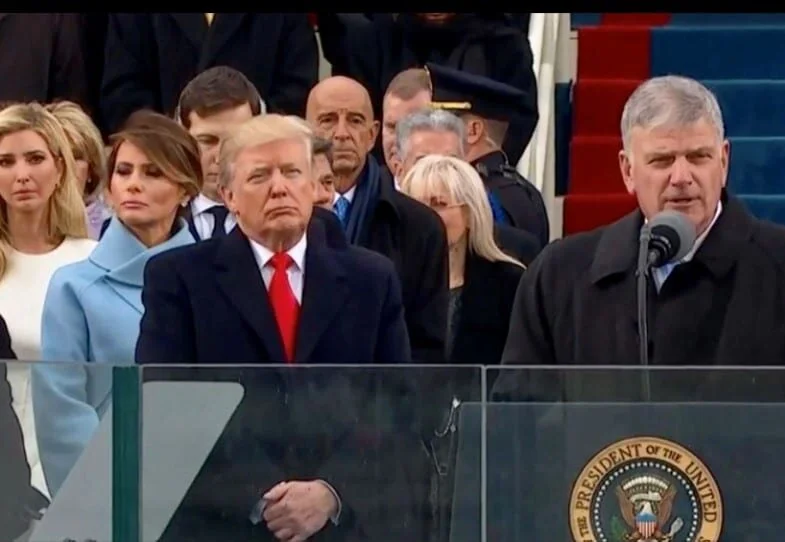
This led to several people asking this valid question: What about the Rev. Franklin Graham? Others asked: What about Jerry Falwell, Jr., and Liberty University?

These are certainly examples of evangelical brand names — Graham and Falwell.


Please respect our Commenting Policy