
There's a whiff of a tiff when the pros try to pick the past decade's top religion stories

What were the past decade’s top religion stories?

In the current Christian Century magazine, Baylor historian Philip Jenkins lists his top 10 in American Christianity and — journalists take note -- correctly asserts that all will “continue to play out” in coming years.  

His list: The growth of unaffiliated “nones,” the papacy of Francis, redefinition of marriage, Charleston murders and America’s “whiteness” problem, religion and climate change, Donald Trump and the evangelicals, gender and identity, #MeToo combined with women’s leadership, seminaries in crisis and impact of religious faith (or lack thereof) on low fertility rates.

Such exercises are open to debate, and there’s mild disagreement on the decade’s top events as drawn from Religion News Service coverage by Senior Editor Paul O’Donnell. Unlike Jenkins, this list scans the interfaith and global scenes.

The RNS picks:  “Islamophobia” in America (with a nod to President Trump), the resurgent clergy sex abuse crisis, #ChurchToo scandals, those rising “nones,” mass shootings at houses of worship, gay ordination and marriage, evangelicals in power (Trump again) as “post-evangelicals” emerge, anti-Semitic attacks and religious freedom issues.

You can see that the same events can be divvied up in various ways, and that there’s considerable overlap but also intriguing differences.

Jenkins  looks for broad “developments” and focuses on the climate and transgender debates, racial tensions, shrinking seminaries and low birth rates (see the Guy Memo on that last phenomenon).

By listing religious freedom, RNS correctly highlights a major news topic that Jenkins missed. RNS includes the U.S. legal contests over the contraception mandate in Obamacare and the baker who wouldn’t design a unique wedding cake for a gay couple. Those placid debates are combined a bit awkwardly with overseas attacks against Muslims in China, India and Myanmar, and against Christians in Nigeria. OK, what about Christians elsewhere?

Please respect our Commenting Policy

Journalism train wreck: Catholic scholar pours acid on news story about abortion and politics

In the summer of 2004, Cardinal Joseph Ratzinger wrote a confidential letter addressing one of the most controversial doctrinal issues involving Catholic faith and public life.

We are talking, of course, about whether it is wise for Catholic clergy to deny Holy Communion to Catholic politicians who consistently and openly reject centuries of church teachings on abortion, marriage and other hot-button doctrinal issues.

On one side of this fight are Catholics who say priests should take this stance in an attempt to encourage politicians to confess their sins and receive forgiveness. The goal is to save souls.

On the other side are Catholic progressives (for the most part) who say priests almost always use this tactic to punish Democrats who clash with the church on abortion, while declining to punish Republicans (for the most part) who clash with the church on issues such as the death penalty, immigration, etc., etc.

This is the tip of a giant iceberg, of course, and the cardinal who would then become Pope Benedict XVI has made other statements on this issue. It didn’t help that, at a key moment, then Cardinal Theodore McCarrick blurred (that’s putting things mildly) some of the details of Ratzinger’s 2004 letter.

Why bring this up? All of this is crucial background material for a spectacular online clash between a famous Catholic scholar and editors at The Providence Journal about a truly bizarre story (“Priest: No Communion for R.I. lawmakers who supported abortion law”).

Where to begin? First, let’s flash back to a 2007 National Catholic Reporter story about that Ratzinger letter — “Worthiness to Receive Holy Communion.”

“There may be a legitimate diversity of opinion even among Catholics about waging war and applying the death penalty, but not however with regard to abortion and euthanasia,” Ratzinger wrote.


Please respect our Commenting Policy

Election-year coverage should focus on Catholics as being ‘politically homeless'

We’re a month into 2020 and, as expected, it is a year where the presidential election will dominate news coverage. In dominating the news, politics is also — like it or not — the prism in which journalists look at most other issues in society. That includes news about entertainment, economics, sports and, yes, religion.

A few things happened in January that have set the mood for the Iowa caucuses that took place Monday, the official start of the primary season. One of the biggest took place about 1,000 miles east of Des Moines, in Philadelphia, when Archbishop Charles Chaput was replaced by Nelson Perez.

The decision by Pope Francis, although ultimately not a surprising one, was largely portrayed in the mainstream press as the replacement of a conservative cleric with a largely progressive one. In other words, discussions of doctrine were framed and discussed in political terms.

This is how The New York Times framed the decision:

Archbishop Chaput, who was appointed to the position by Pope Benedict XVI in 2011, has long been known as a theological and political conservative, often at odds with Francis’ mission to move beyond the culture wars dominated by sexual politics.

Francis recently acknowledged that a good deal of the opposition to his pontificate emanated from the United States, telling a reporter who handed him a book exploring the well-financed and media-backed American effort to undermine his agenda that it was “an honor that the Americans attack me.”

Archbishop Chaput’s departure was expected, as he had offered his resignation to Pope Francis when he turned 75 in September. Church law requires every bishop to tender his resignation at that age, but the pope can choose not to accept it, often allowing prelates to remain in office for several more years.

In this case, the pope did not wait long before saying yes.

A theological and political conservative. Really?

Theological absolutely if you mean Chaput upheld the teachings of the church. The accuracy of this political judgement is up for debate. Is a Catholic a political “conservative” if he backs Catholic doctrines on the death penalty, abortion, marriage, immigration and other hot-button issues?


Please respect our Commenting Policy

Trump and Buttigieg try to reach out to voters who -- to one degree or another -- are pro-life

Trump and Buttigieg try to reach out to voters who -- to one degree or another -- are pro-life

President Donald Trump and Democrat Pete Buttigieg recently offered radically different stands on abortion, as both attempted to reach out to Catholic and evangelical swing voters trapped between their parties.

Trump made history as the first president to speak in person at the national March for Life, which marks the anniversary of Roe vs. Wade. 

"All of us here understand an eternal truth: Every child is a precious and sacred gift from God. Together, we must protect, cherish and defend the dignity and the sanctity of every human life," said Trump, who for years backed abortion rights and Planned Parenthood. He insists that his views have evolved, like those of Republican hero Ronald Reagan.

"When we see the image of a baby in the womb, we glimpse the majesty of God's creation. ... When we watch a child grow, we see the splendor that radiates from each human soul. One life changes the world," he said.

While commentators stressed that Trump attended the march to please his conservative evangelical base, this massive event in Washington, D.C., draws a complex crowd that is hard to label. It includes, for example, Catholics and evangelicals from groups that have been critical of Trump's personal life and ethics, as well as his stands on immigration, the death penalty and related issues.

Videos of this year's march showed many signs praising the president, but also signs critical of his bruising brand of politics.     

A Facebook post by a Catholic priest -- Father Jeffrey Dauses of the Diocese of Baltimore -- captured this tension. Telling pro-lifers to "wake up," Dauses attacked what he called Trump's "callous disregard for the poor, for immigrants and refugees, for women. … This man is not pro-life. He is pro-himself."

Meanwhile, Buttigieg -- an openly gay Episcopalian -- did something even more daring when he appeared at a Fox News town hall in Iowa.


Please respect our Commenting Policy

Francis MacNutt's colorful life, controversial marriage and (now) death gets sparse coverage

A few weeks ago, a giant in the Catholic and charismatic Christian world died quietly in Florida at the age of 94. Francis MacNutt was a man who in his time was as radical as another Francis, the current pope, is today.

If you wish to understand the roots of the Catholic charismatic movement worldwide — and indeed the only thing keeping Latin America from going majority Protestant — you need to know the story of this former priest.

Back in the 1970s, few journalists understood how key this man was in getting the movement accepted by the Catholic rank and file. Thus, his life and work received very little mainstream press coverage.

So let’s move to the present.

MacNutt, whose memorial service is February 9 at St. John’s Episcopal Cathedral in Jacksonville, will probably not get significant honor from his fellow Catholics because, as a priest, he got married on February 9, 1980.

Yep, that memorial rite is set for 40 years to the day of his marriage.

What are the odds that this milestone in Catholic culture receives very little attention?

Since coverage of this man’s life is so sparse, I thought I’d fill in a few holes in explaining what a trendsetter he was.


Please respect our Commenting Policy

GetReligion isn't an entertainment blog: But entertainment and news often run together

Your GetReligionistas received an interesting note this week (via our comments pages) that reminded me that I haven’t offered an update on how things are going one month into GetReligion 4.0.

GetReligion 4.0? Well, GetReligion 1.0 was quite small, with me and co-founder Doug LeBlanc striving to get one or two items online day after day while doing other jobs. Then, in 2.0, I did the blog part-time for a decade while leading the Washington Journalism Center — with contributions from a wonderful pack of scribes, such as Daniel Pulliam, Elizabeth Eisenstadt Evans, M.Z. Hemingway, Sarah Pulliam Bailey, George Conger and others. The 3.0 version just ended, with me blogging and editing full-time with the members of the current gang contributing throughout the week.

With 4.0, I’m part-time, again and we’re part of the First Amendment work at the Overby Center at the University of Mississippi. The site has downsized a bit and we do need financial support from readers. We also share some content with the online magazine Religion UnPlugged.

Now, the following letter from reader Mark Gammon came in response to a recent piece by Catholic-news specialist Clemente Lisi that ran with this headline: “HBO's 'The New Pope' serves up lots of sinful sizzle, but no substance worth discussing.” Here is what Gammon had to say:

Oh no. Is this what this website is going to be now? I always appreciated reading about the press’ blind spots or unconscious hostility toward religion. As a theologian, I found it a valuable service.

This piece, on the other hand, is just whining about a TV show.


Please respect our Commenting Policy

Plug-In: Journalist's faith -- Memoir tells how justice prevailed n Civil Rights Era murders

“To the One who loves justice.”

That’s the simple dedication at the start of investigative reporter Jerry Mitchell’s long-awaited memoir, “Race Against Time,” which hits bookstores Tuesday.

It reflects the deep Christian faith of the veteran Mississippi journalist, whose stories helped put four Klansmen and a serial killer behind bars.

“God loves justice,” Mitchell, 60, told me in a telephone interview.

Mitchell, a 1982 journalism graduate of Harding University in Searcy, Ark., worked for The Clarion-Ledger newspaper in Jackson, Miss., for 33 years. He left in 2018 to found the Mississippi Center for Investigative Reporting, a nonprofit watchdog news organization.

Although Mitchell’s book is written in first person, he stressed that it’s not about him. (Nonetheless, at least one reviewer suggests that readers might conclude, rightly, that he is a “hero.”)

“It’s really about these families, about the journey to justice and what all took place,” Mitchell said. “To me, the larger story is what’s important.”

What is that larger story?

Bestselling author John Grisham put it this way in endorsing the book, published by Simon & Schuster:


Please respect our Commenting Policy

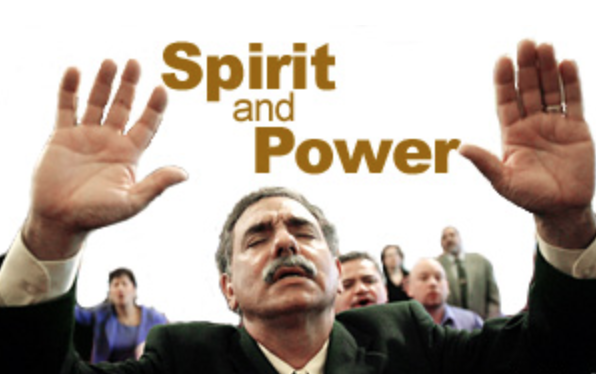
Thinker from David French: Does it matter if media elites don't 'get' Pentecostalism?

Thinker from David French: Does it matter if media elites don't 'get' Pentecostalism?

The other day I praised Religion News Service for jumping into the Twitter tornado caused by the Rev. Paula White’s wild sermon thundering about the powers of the “marine kingdom” and the miscarriage of “satanic pregnancies” and lots of other stuff.

It was just another day in America’s shattered and splintered public discourse.

Here’s the New York Times summary of what that Right Wing Watch clip unleashed:

The video shows part of a nearly three-hour-long service at the City of Destiny church in Apopka, Fla., on Jan. 5. In it, Ms. White can be seen talking about fighting witchcraft and demonic manipulation. She called for any “strange winds that have been sent to hurt the church, sent against this nation, sent against our president, sent against myself” to be broken.

“In the name of Jesus, we command all satanic pregnancies to miscarry right now,” Ms. White said. “We declare that anything that’s been conceived in satanic wombs, that it’ll miscarry. It will not be able to carry forth any plan of destruction, any plan of harm.”

As of Monday, the video had been watched more than eight million times.

It appeared that no one in this shouting match had the slightest interest in promoting understanding. Some commentators weren’t even interested in accurate, honest disagreements.

However, Adelle Banks and Bob Smietana wrote a short explainer that provided crucial information about what White was saying and, most importantly, what she was not saying. Click here to see my piece on that: “RNS pros offered crucial context for 'Satanic pregnancies' sound bite.”

Now I would like to do something that I rarely do: I want to point mainstream journalists and concerned readers to another explainer digging deeper into this topic. This one is by David French, a Harvard Law graduate and First Amendment expert who is one of the most quoted #NeverTrump conservatives in American political life.

In recent weeks, the former National Review star has been doing some brilliant religion-news analysis for his new publication — The Dispatch. His new piece (“Satanic Pregnancies, Explained”) is not an attempt — obviously — to support Paula White or her political master, President Donald Trump. However, it is an attempt to explain why White’s critics, especially scribes in the mainstream press, need to slow down and try to grasp what charismatic and Pentecostal Christians believe on the topic of fierce prayer and “spiritual warfare.”


Please respect our Commenting Policy

HBO's 'The New Pope' serves up lots of sinful sizzle, but no substance worth discussing

There is often a Hollywood fascination with all that’s morbid about religion. This has traditionally included a profane approach when it comes to the Catholic church — dramatizing reality into what can sometimes be an ugly trope.

This is exactly what we get with HBO’s new TV mini-series The New Pope. As is often the case, it’s also easy to see this entertainment as a form of semi-journalistic commentary about the state of the church.

As always, Bill Donohue of the Catholic League for Religious and Civil Rights spoke up: “We have been tracking what The New York Times and The Washington Post have been saying about the Catholic Church for decades, and it will shock no one to learn that they are not exactly our biggest fans. More proof was offered today with the reviews of the first episode of ‘The New Pope.’ What they said tells us as much about them as it does HBO, another media outlet that likes to stick it to the Church.”

This new series picks up from “The Young Pope,” starring Jude Law as the fictional (and very conservative) Pius XIII, that ran in 2016. That series ended with the young fictional pontiff deep in a coma. The second series, which premiered on January 13, gets even crazier — and more sacrilegious — with the introduction of a new pope, played in over-the-top form by John Malkovich as John Paul III.

The biggest issue with this new mini-series — coming on the heels of the fictionalized Netflix movie “The Two Popes” — is the total lack of respect there is for the church and faith. The Vatican and the men who run it appear to be more into power and greed than saving souls.

The first episode did pack plenty of drama and intrigue, but that ultimately isn’t enough in this case to sustain a meaningful series.


Please respect our Commenting Policy