
GetReligion isn't an entertainment blog: But entertainment and news often run together

Your GetReligionistas received an interesting note this week (via our comments pages) that reminded me that I haven’t offered an update on how things are going one month into GetReligion 4.0.

GetReligion 4.0? Well, GetReligion 1.0 was quite small, with me and co-founder Doug LeBlanc striving to get one or two items online day after day while doing other jobs. Then, in 2.0, I did the blog part-time for a decade while leading the Washington Journalism Center — with contributions from a wonderful pack of scribes, such as Daniel Pulliam, Elizabeth Eisenstadt Evans, M.Z. Hemingway, Sarah Pulliam Bailey, George Conger and others. The 3.0 version just ended, with me blogging and editing full-time with the members of the current gang contributing throughout the week.

With 4.0, I’m part-time, again and we’re part of the First Amendment work at the Overby Center at the University of Mississippi. The site has downsized a bit and we do need financial support from readers. We also share some content with the online magazine Religion UnPlugged.

Now, the following letter from reader Mark Gammon came in response to a recent piece by Catholic-news specialist Clemente Lisi that ran with this headline: “HBO's 'The New Pope' serves up lots of sinful sizzle, but no substance worth discussing.” Here is what Gammon had to say:

Oh no. Is this what this website is going to be now? I always appreciated reading about the press’ blind spots or unconscious hostility toward religion. As a theologian, I found it a valuable service.

This piece, on the other hand, is just whining about a TV show.

Please respect our Commenting Policy

Plug-In: Journalist's faith -- Memoir tells how justice prevailed n Civil Rights Era murders

“To the One who loves justice.”

That’s the simple dedication at the start of investigative reporter Jerry Mitchell’s long-awaited memoir, “Race Against Time,” which hits bookstores Tuesday.

It reflects the deep Christian faith of the veteran Mississippi journalist, whose stories helped put four Klansmen and a serial killer behind bars.

“God loves justice,” Mitchell, 60, told me in a telephone interview.

Mitchell, a 1982 journalism graduate of Harding University in Searcy, Ark., worked for The Clarion-Ledger newspaper in Jackson, Miss., for 33 years. He left in 2018 to found the Mississippi Center for Investigative Reporting, a nonprofit watchdog news organization.

Although Mitchell’s book is written in first person, he stressed that it’s not about him. (Nonetheless, at least one reviewer suggests that readers might conclude, rightly, that he is a “hero.”)

“It’s really about these families, about the journey to justice and what all took place,” Mitchell said. “To me, the larger story is what’s important.”

What is that larger story?

Bestselling author John Grisham put it this way in endorsing the book, published by Simon & Schuster:


Please respect our Commenting Policy

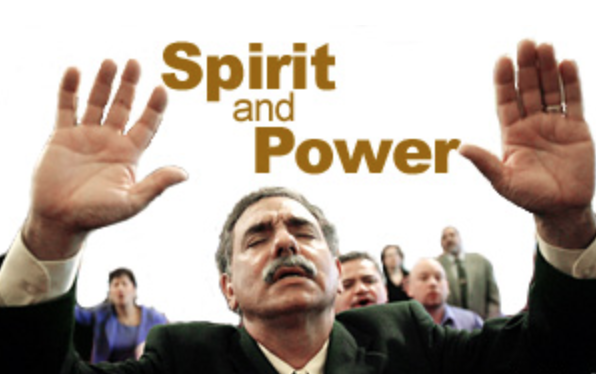
Thinker from David French: Does it matter if media elites don't 'get' Pentecostalism?

Thinker from David French: Does it matter if media elites don't 'get' Pentecostalism?

The other day I praised Religion News Service for jumping into the Twitter tornado caused by the Rev. Paula White’s wild sermon thundering about the powers of the “marine kingdom” and the miscarriage of “satanic pregnancies” and lots of other stuff.

It was just another day in America’s shattered and splintered public discourse.

Here’s the New York Times summary of what that Right Wing Watch clip unleashed:

The video shows part of a nearly three-hour-long service at the City of Destiny church in Apopka, Fla., on Jan. 5. In it, Ms. White can be seen talking about fighting witchcraft and demonic manipulation. She called for any “strange winds that have been sent to hurt the church, sent against this nation, sent against our president, sent against myself” to be broken.

“In the name of Jesus, we command all satanic pregnancies to miscarry right now,” Ms. White said. “We declare that anything that’s been conceived in satanic wombs, that it’ll miscarry. It will not be able to carry forth any plan of destruction, any plan of harm.”

As of Monday, the video had been watched more than eight million times.

It appeared that no one in this shouting match had the slightest interest in promoting understanding. Some commentators weren’t even interested in accurate, honest disagreements.

However, Adelle Banks and Bob Smietana wrote a short explainer that provided crucial information about what White was saying and, most importantly, what she was not saying. Click here to see my piece on that: “RNS pros offered crucial context for 'Satanic pregnancies' sound bite.”

Now I would like to do something that I rarely do: I want to point mainstream journalists and concerned readers to another explainer digging deeper into this topic. This one is by David French, a Harvard Law graduate and First Amendment expert who is one of the most quoted #NeverTrump conservatives in American political life.

In recent weeks, the former National Review star has been doing some brilliant religion-news analysis for his new publication — The Dispatch. His new piece (“Satanic Pregnancies, Explained”) is not an attempt — obviously — to support Paula White or her political master, President Donald Trump. However, it is an attempt to explain why White’s critics, especially scribes in the mainstream press, need to slow down and try to grasp what charismatic and Pentecostal Christians believe on the topic of fierce prayer and “spiritual warfare.”


Please respect our Commenting Policy

HBO's 'The New Pope' serves up lots of sinful sizzle, but no substance worth discussing

There is often a Hollywood fascination with all that’s morbid about religion. This has traditionally included a profane approach when it comes to the Catholic church — dramatizing reality into what can sometimes be an ugly trope.

This is exactly what we get with HBO’s new TV mini-series The New Pope. As is often the case, it’s also easy to see this entertainment as a form of semi-journalistic commentary about the state of the church.

As always, Bill Donohue of the Catholic League for Religious and Civil Rights spoke up: “We have been tracking what The New York Times and The Washington Post have been saying about the Catholic Church for decades, and it will shock no one to learn that they are not exactly our biggest fans. More proof was offered today with the reviews of the first episode of ‘The New Pope.’ What they said tells us as much about them as it does HBO, another media outlet that likes to stick it to the Church.”

This new series picks up from “The Young Pope,” starring Jude Law as the fictional (and very conservative) Pius XIII, that ran in 2016. That series ended with the young fictional pontiff deep in a coma. The second series, which premiered on January 13, gets even crazier — and more sacrilegious — with the introduction of a new pope, played in over-the-top form by John Malkovich as John Paul III.

The biggest issue with this new mini-series — coming on the heels of the fictionalized Netflix movie “The Two Popes” — is the total lack of respect there is for the church and faith. The Vatican and the men who run it appear to be more into power and greed than saving souls.

The first episode did pack plenty of drama and intrigue, but that ultimately isn’t enough in this case to sustain a meaningful series.


Please respect our Commenting Policy

New podcast: Was Trump preaching to an evangelical choir at the March for Life?

To start things off, please get yourself a map that includes Washington, D.C., and nearby states. If you have lived in that region, just pull one up in your mind’s eye.

Now, draw an imaginary 300-mile circle — or perhaps one bigger than that — around the Beltway kingdom.

If you were the principal of a Christian middle-school or high-school, how many hours would you allow students and some faculty members or parents to ride on a school bus to attend the March for Life that marks the anniversary of the U.S. Supreme Court’s Roe v. Wade decision? What if they were on a rented touring bus, with better seats and (most importantly) a better safety rating?

Would you let them drive for five hours to the march? How about eight? Now, to understand the topic discussed in this week’s “Crossroads” podcast (click here to tune that in), ask these questions:

(1) What are the key states touched by that big circle around D.C.? Obviously there’s Maryland and Pennsylvania and Virginia. But Ohio isn’t out of the question, is it?

(2) Thinking about religious schools and institutions, would there be more Catholic schools in this circle or evangelical Protestant? Think about the size of the Catholic populations in several of these states.

(3) Which of these states have significant clout in American politics, especially in White House races? Obviously, Ohio (think of all that history) and Pennsylvania would be at the top of that list.

So now, picture the massive crowds at the March for Life. You can understand why, year after year, it is dominated by waves of buses containing Catholic students of all ages — even though it is true that evangelical Protestants are now active in the Right to Life Movement. If you’ve attended or covered a March for Life, you know — to be blunt — that this is not an event dominated by white evangelicals.

Let’s add one more lens, as we look at media coverage of the 2020 march. It’s a political lens.

Name the key states that, in 2016, elected Trump to the presidency. Do white evangelicals dominate those states — the Rust Belt (especially Ohio and Pennsylvania) and Florida — or do Catholics of varying degrees of religious practice?

So here is my question: Was the main reason that advisors sent Trump to the March for Life to preach to his white evangelical Protestant base?


Please respect our Commenting Policy

What is 'religion news'? The Washington Post asked for feedback on that tricky question

I am sure every journalist who has ever worked on the religion beat for multiple years — let alone decades — has taken part in this exchange.

Q: So what do you do?

A: I’m a journalist who covers religion.

Q: So you’re a religious reporter. What kinds of things do you cover?

Yes, lots of people automatically turn “religion” into “religious,” but that’s a topic for another day.

But there’s the question for today: What kinds of things do we cover on the religion beat?

If you look, year after year, at the Religion News Association’s list of the Top 10 stories of the year, it’s pretty obvious that most of the big stories tend to fall into predictable patterns. Such as:

(1) Stories in which religion plays a role in partisan politics.

(2) Stories in which religious groups act like political parties and fight it out over hot-button doctrinal issues (often about sexuality) that most journalists define in political terms.

(3) Scandals that involve religious leaders (think sex and money) that play out like political dramas.

(4) Big, unavoidable events like terrorist acts, cathedrals burning, etc.

Am I being too cynical? Take a look at the 2019 list and see how many items fit into these kinds of patterns.

Long ago, I interviewed for religion-beat jobs at two major newspapers. At one, the editor admitted that he basically wanted news about scandals and politics. At the other, the editor (active in a mainline Protestant church) offered a broad approach to the beat that included culture, the arts, medical ethics, educational institutions, etc. I took that second job.

All of this brings me to a fascinating little memo that religion-beat veteran Michelle Boorstein circulated the other day in the “Acts of Faith” digital newsletter from The Washington Post. What was her goal?

In our extra-polarized times, I wanted to reach out to our most committed religion (spirituality/faith/ethics/meaning-making) readers and get a sense -- In your view, what are the most important topics in our realm for Washington Post journalists to cover?


Please respect our Commenting Policy

Mainstream journalists should pay attention if American Judaism gets into serious trouble  

How many articles have we read about the inexorable demographic slide of U.S. “mainline” Protestantism, difficulties lately hitting “evangelicals,” declining Mass attendance for Catholics and the growth of religiously unaffiliated people (“Nones”) who forsake all religious ties that bind?

There’s been far less media attention to the state of Judaism, the nation’s second-largest religion though Islam is moving up. It faces far worse prospects, according to premier chronicler Jack Wertheimer, a historian and former provost at Jewish Theological Seminary (JTS).

Reporters — if American Judaism is in serious trouble, that’s a big story by any definition.

This dire, developing story is a good example of the way scholarship that deserves media coverage can be mostly hidden for an extended period yet remain pertinent and newsworthy. Wertheimer’s “The New American Judaism” (Princeton), published two years ago, only caught The Guy’s eye when boss tmatt noted a review in the current edition of the Orthodox Union magazine Jewish Action. (The Guy has not yet read the book but that lengthy review provides ample substance and quotes.)

Wertheimer sees a “recession” — if not a great depression.

More than 2 million people of Jewish parentage “no longer identify as Jews.” Many others do not see themselves as part of the Jewish religion and define themselves only in cultural or ethnic terms. Rising intermarriage means fewer Jews tomorrow. Birth rates among the non-Orthodox are so low one wonders “who will populate Jewish religious institutions in the future.”

If the religion atrophies,  can non-religious communal life thrive?


Please respect our Commenting Policy

Spiritual warfare explainer: RNS pros offered crucial context for 'Satanic pregnancies' sound bite

No doubt about it: There are people who show up in religion-beat news who are hard to quote accurately and fairly.

It’s hard, for example, to find a punchy, bite-sized quotation in your typical papal encyclical, even when you’re dealing with the work of Pope Francis. It’s possible, of course, to rip something out of context that sounds like commentary on this or that political issue that’s already in the headline. Most of the time, that context-free approach sheds more heat than light.

Then there are the charismatic and Pentecostal preachers whose words are drenched in metaphors and images mixing biblical language with their own vivid (they would say “Holy Spirit inspired”) imaginations.

This brings me that Twitter storm the other day (sorry to be late on this) about a colorful (to say the least) sermon by the Rev. Paula White, the charismatic leader best known as a spiritual advisor to President Donald Trump. She has been known to unleash storm clouds of rhetoric that sound more like rock-music lyrics more than the traditional exegesis of scripture.

For example, what — precisely — is a “satanic pregnancy”? Come to think of it, what is a “satanic womb”?

If you yanked her words out of context, as legions of her critics did, it sounded like this sermon contained some inconsistent language about abortion.

Thus, I was glad when veterans Bob Smietana and Adelle Banks of Religion News Service quickly produced a short explainer that found some context to White’s wild words. In this case, that was a really big challenge. Here’s some key material at the top of that report (“Paula White’s sermon comment about ‘satanic pregnancies’ goes viral”).


Please respect our Commenting Policy

In the news? How Kobe Bryant's Catholic faith saved his marriage and turned his life around

Kobe Bryant means a lot of different things to many people. To most, the 41-year-old was the Los Angeles Lakers star and a five-time NBA champion who spent two decades wowing us on the basketball court. He may even be one of the best players to ever dunk a ball.

To others, he’ll forever be the cheating spouse, on trial in 2003 for allegedly raping a woman inside a Colorado hotel room, an encounter he claimed had been consensual. It should be noted that Bryant was married at the time. The case never made it to trial after the woman refused to testify, but she did filed a civil lawsuit against the basketball icon that was settled outside of court. Bryant later issued a public apology, saying he was ashamed for having committed adultery.

Was there more to that story, in terms of Bryant’s apology and his efforts to save his marriage? We will come back to that.

After his retirement, Bryant became known primarily as a doting father, largely shunning the chance to coach or work for the Lakers in some official capacity. It’s no surprise then that he died Sunday with his 13-year-old daughter Gianna, a budding basketball talent herself, on their way to one of her games.

All but forgotten — as well as underreported by the news media since Sunday’s tragic helicopter crash in Calabasas, Calif., that killed Bryant, his daughter and seven others — was his active Catholic faith and how his efforts to practice that faith made him a better man, husband and father.

Bryant had spent a chunk of his childhood in Italy, a majority Catholic country, and was raised in the faith. How devout was Bryant? He attended Mass regularly, including just two hours before he died.


Please respect our Commenting Policy