
Anti-clickbait 2.0: Warning! This post asks readers to think about messy life in Russia

Alas, it's true. As our own Bobby Ross Jr. mentioned earlier today, nothing seems to push readers away from a news-driven blog quicker than headlines about complex stories on the other side of the world.

Well, culture-wars readers on left and right might click to read something about a Pope Francis statement attacking President Donald Trump's refusal to put gender-neutral bathrooms at gateway facilities in a new border wall. Maybe. Just thinking out loud about that one.

So USA Today had an international story the other day that I ran into on Twitter, before I saw coverage of this topic elsewhere. The headline: "Russia parliament votes 380-3 to decriminalize domestic violence."

Now, that's a rather shocking headline, especially when we are talking about a culture that leans toward the authoritarian, to say the least. However, when I read the overture to the piece I found the details a bit more complex and nuanced than I expected.

Russia's parliament voted 380-3 ... to decriminalize domestic violence in cases where it does not cause "substantial bodily harm" and does not occur more than once a year.
The move, which eliminates criminal liability in such cases, makes a violation punishable by a fine of roughly $500, or a 15-day arrest, provided there is no repeat within 12 months. The bill now goes to the rubber-stamp upper chamber, where no opposition is expected. It then must be signed by President Vladimir Putin, who has signaled his support.
Kremlin spokesperson Dmitry Peskov told journalists that family conflicts do "not necessarily constitute domestic violence."

Now, I am no expert on Russia. Most of what I know is from books, from other Orthodox believers (my current parish includes more than a few Russians) and from an intense two weeks in Moscow a few days after the 1991 fall of the Soviet Union (click here for info on that).

When I read that lede, as opposed to the headline, I immediately had several reactions as a journalist:
Please respect our Commenting Policy

Anti-clickbait: This post won't mention YOU KNOW WHO. Warning! International news

On my iPad the other day, I was checking the top headlines on a major news organization's app. 

A certain influential national elected official/former reality TV star was everywhere. I must have counted his name in 15 headlines before I got to one that didn't include him. Then immediately after that came a half-dozen more that did.

Social media is even worse: Twitter and Facebook have become a vast wasteland of folks on the right and left who don't seem to realize the election was over three months ago. Apparently, these people eat, drink and sleep U.S. politics and intend to wage online war until Jesus returns. (Soon, please?)

Of course, I'm the last one who ought to be preaching on this overkill. I've lost count of how many stories, columns and blog posts I've written, just in the last few weeks, about HE WHO (JUST THIS ONCE) SHALL NOT BE NAMED.

Alas, news is news. I know that. And there's no doubt that the guy with the world's most interesting (that's not necessarily a compliment) haircut is big news. The biggest. Yuuuuuuuggge!!! 


Please respect our Commenting Policy

Gorsuch and the big scare-quote religion stuff? So far, little light shed on Supreme Court pick

What reporters have missed about Judge Neil Gorsuch, the President’s nominee for the Supreme Court, is that the Episcopal parish he attends in downtown Boulder is headed by a female priest.

Think about that for a moment. If this man is the frightening conservative that some on the Left are already alleging him to be, there’s no way he’d be Episcopalian, much less at a woman-priested church. It will be interesting to see if the Episcopal hierarchy issues any kind of formal reaction to this nomination. Watch this space: The Episcopal News Service.

The Episcopal Church, for anyone who’s not been following religion trends in recent decades, has been careening to the theological and cultural left for years and its membership statistics show it. Thousands have left TEC and joined alternative Anglican churches.

Not so this judge. A church in bluest of blue Boulder is not going to be a conservative hideout and this article notes that Gorsuch’s parish is pretty liberal. The place is St. John's, Boulder and for you trivia experts out there, it's the same church that JonBenét Ramsey's family attended. A Google search shows there’s an Anglican church in Boulder that the Gorsuch family could be attending if they so desired.

So, the fact that the judge and his family has remained at St. John’s says something.

So far, the mainstream press has missed all that and concentrated on his court rulings on hot-button topics, the kinds of subjects often framed in scare quotes. For example, while his precise views on abortion remain a mystery, he has written extensively on euthanasia -- producing a book on the topic ("The Future of Assisted Suicide and Euthanasia").

What the New York Times ran with is typical:

While he has not written extensively on several issues of importance to many conservatives, including gun control and gay rights, Judge Gorsuch has taken strong stands in favor of religious freedom, earning him admiration from the right.


Please respect our Commenting Policy

Snip, snip? The symbolic clout of Sikh man nodding approval for (a) Trump or (b) Schumer

Anyone who knows anything about America in the past half century or so knows that we live in a culture that is increasingly dominated by visual images and the emotions they produce.

Images were crucial as modern print journalism evolved. It goes without saying that images are crucial in visual storytelling in television, past and present. 

Today? While words matter in social media, nothing grabs people quite like that punchy, ironic, cute, infuriating or poignant image that seems to sum up (a) whatever is happening in the real world at the moment or (b) whatever we are consuming in order to be able to ignore whatever is happening in the real world at the moment.

Thus, a former GetReligionista sent the current team an email the other day -- with the simple headline, "Hmmmm" -- containing the item at the top of this post.

What's the point? The question has been asked many times: Why do so many people get confused and think that Sikhs are Muslims? Is there something compelling about the Sikh turban (the dastaar) that makes journalists think "foreign," "exotic," maybe "Arab" and, thus, "Muslim" or someone who would be accused of being a "Muslim terrorist"?

Ah, but the turban is VISUAL and it all but screams "diversity," "other world religions" and "multiculturalism."

At the moment, is the whole point -- in terms of journalism shorthand -- that a Sikh believer looks like the kind of man that the angry, fact-challenged, Islamophobic Donald Trump voter is supposed to want to (a) beat up and then (b) accuse of being a "Muslim" terrorist? 

Well, a few key facts are all wrong. But, hey, the point is to make a point. Right?


Please respect our Commenting Policy

5Q+1 interview: Why this pastor believes media misinterpreted Trump's order on refugees

OKLAHOMA CITY — Media coverage of President Donald Trump's executive order temporarily barring refugees from seven countries has displeased Bill Hulse, a Southern Baptist pastor in one of the reddest of the red states.

"I don’t think it was an attack on religion," said Hulse, senior pastor for the Putnam City Baptist Church in Oklahoma City. "I think he was pretty clear that this would be until we could vet who was coming in, that radical Muslim terrorists are our enemy right now."

The phrase "Muslim-majority countries" — describing Iran, Iraq, Syria, Sudan, Somalia, Libya and Yemen — has appeared in many, if not most, news reports on Trump's action.  

However, some — including the editor of the Wall Street Journal — see that terminology as "very loaded." It wrongly focuses, critics maintain, on religion instead of the potential terrorism threat posed by certain countries. Others dispute the notion that this is anything but a "Muslim ban."

Hulse serves a conservative congregation — theologically and politically — that averages Sunday attendance of about 700. The 53-year-old pastor expresses a desire to show Christian love and compassion to immigrants and refugees. But he's concerned, too, for the nation’s security.

Despite worries about Trump’s character, many members of Hulse’s church supported the brash billionaire’s winning presidential campaign. Trump’s opposition to abortion — including promising to appoint pro-life U.S. Supreme Court justices — and support for heightened border security were among the reasons why, the pastor said.


Please respect our Commenting Policy

Reporting Betsy DeVos: Journalists can't seem to get a handle on details of her faith

Betsy DeVos, who President Donald Trump has nominated to be education secretary, will be voted on Tuesday by a Senate committee. She has never been a household word in America and neither have her Calvinist roots, which have been tripping journalists up ever since she was nominated. 

Can this woman, who’s been an advocate of private Christian education and who’s never attended public school (nor have her children), be the new education secretary? A lot of people think not, including 700 students and alumni at Calvin College, her alma mater, according to this Washington Post piece. Others point out that former President Barack Obama never attended public school, either. 

In 2013, Philanthropy Roundtable interviewed her about school reform in a piece that didn’t mention Calvinism or her faith at all. But once she was nominated, everyone was suddenly intensely curious about her beliefs.

Is it true that she wants America’s schools to build “God’s kingdom,” as alleged in a Mother Jones piece? Or is the general media hyperventilating about DeVos’s 15-year-old comments, as our own Bobby Ross asked in December regarding a piece in Politico? 

Politico has circled back to write more on DeVos and even claims some expertise on the nominee as evidenced by the presence of one of its reporters on this talk show. But they've got some major blind spots as to any decent qualities this woman might have. Even the New York Times is saying that she's been sympathetic to gay marriage all along -- a factoid that Politico completely missed.

So, let’s turn to this lengthy profile which has the headline “How Betsy DeVos used God and Amway to take over Michigan politics.”

On election night 2006, Dick DeVos, the bronzed, starched 51-year-old scion of Michigan’s wealthiest family, paced to a lectern in the dim ballroom of the Sheraton Hotel in Lansing to deliver the speech that every candidate dreads.
The Michigan gubernatorial race that year had been a dogfight of personal attacks between DeVos, the Republican nominee, and Democratic Governor Jennifer Granholm. Gloomy, bleached-out b-roll of shuttered factories in anti-Granholm ads made the governor’s sunny economic promise that “You’re gonna be blown away” sound less like an aspiration than a threat. Anti-DeVos ads cut closer to the bone, with one depicting a cartoon DeVos cheering a freighter hauling Michigan jobs to China. It was an unsubtle reference to DeVos’ time as president of Amway, the direct-sales behemoth his family co-founded and co-owns, when he eliminated jobs in Michigan while expanding dramatically in Asia. DeVos ended up personally spending $35 million on the race—the most expensive campaign in Michigan history—and when the votes came in, lost by a crushing 14 points.

Then it zeroes in on the wife.


Please respect our Commenting Policy

Some thoughtful guidance for reporters interpreting era of the religious 'nones'

Some thoughtful guidance for reporters interpreting era of the religious 'nones'

How many barrels of printer’s ink (it's a metaphor these days) have been expended on the rise of the “nones,” Americans who tell pollsters they have no religious identification?

The following material may not be worth a story in itself, but provides perspective as reporters continue to interpret this important phenomenon. What are the patterns that suggest where this story came from and, thus, where it might be going next?

Pew Research surveys show “nones” have increased from 16 percent of American adults in 2007 to 23 percent in 2014, and are fully a third of young adults. (Young adults have always drifted away from religion, so the significant point is indications they’re not returning as they mature.)

Writing in the conversation.com, University of Southern California sociologist Richard Flory advises us that, first, “nones” are a mishmash of very different types and, second, most aren’t really anti-religion and often reflect certain religious traits. Those who call themselves flat-out atheists who reject gods and the supernatural, or devout agnostics, are very small segments.

From ongoing research by USC’s Center for Religion and Civic Culture, Flory sees such variants as the familiar “spiritual but not religious,” marginally interested non-attenders, occasional attenders, those generally open to the supernatural but uninvolved, and those vaguely spiritual but not devoted to any specific content.

We get much the same from Philip Jenkins of Baylor’s Institute for Studies of Religion, in a patheos.com blog written by historians.


Please respect our Commenting Policy

Big news report card: Five key questions about news coverage of March for Life

Last week, I noted -- and tmatt expounded upon -- President Donald Trump's comments concerning media coverage of the annual March for Life.

In cased you missed it, Trump cited concerns by pro-life demonstrators that "the press doesn't cover them." Unless you're new to GetReligion, you know that this journalism-focused website has raised that same issue for years.

Trump's statement prompted Washington Post religion writer Sarah Pulliam Bailey (a former GetReligionista) to note in a story:

The Washington Post has covered the March for Life every year for the past decade, according to archives.

Yes, but the issue media critics have debated for decades is how much news organizations covered the march and where they displayed that coverage, especially in comparison with similar events.

So how did major news organizations do in covering Friday's march? 

In the Fox News video above, a critic complains that the cable news attention focused on the event failed even to come close to that paid to the Women's March on Washington the previous week. I don't watch a lot of cable news, so I can't speak to that claim. Obviously, most media attention in recent days has focused on Trump's executive order concerning refugees -- and rightly so, I would argue. IIt should also be noted that the Washington Post offered a multi-layered package of coverage of the march that was, well, yuuuuuge.

I did want to review the written coverage of the March for Life by seven major news organizations -- and ask five questions that I believe will help highlight how those media outlets treated the story.

1. Does the media outlet shy away from use of the term "March for Life?"


Please respect our Commenting Policy

Weekend of #MuslimBan: Did it help for press to ignore key contents of executive order?

Weekend of #MuslimBan: Did it help for press to ignore key contents of executive order?

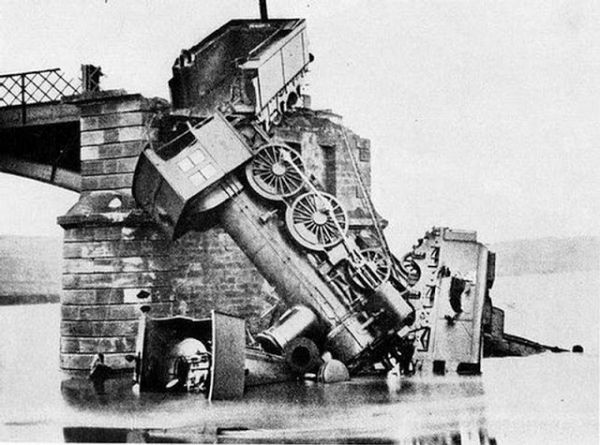
What a train wreck. There is really no way to dig into the thousands, maybe millions, of words that the mainstream press poured out over the weekend in coverage of President Donald Trump's rushed, flawed executive order creating a temporary ban on most refugees from lands racked by conflicts with radicalized forms of Islam.

My main question, in this post, does not concern the merits of order or the process that created it. That's clearly part of the train wreck and, as someone who was openly #NeverTrump (and #NeverHillary), I think mainstream reporters should go after that mess that with the same fervor they dedicated to the humanitarian impact of the previous administration's policies in Syria, Iraq, etc. We need to know who decided to rollout such a important executive order in such a slapdash, incompetent fashion -- especially whatever it did or didn't say about people in transit or those with green cards.

Now, I would like to focus on one question in particular related to this journalistic blitz that I think will be of special interest to GetReligion readers.

The hashtag for the day was clearly #MuslimBan, even though the order contained language specifically trying to protect many oppressed Muslims. The media also focused on Trump's statements pledging to protect oppressed Christians (I know it's hard to #IgnoreTrump, even when it's wise to do so), even though the text of the order said something else.

My question: Did journalists make this tragic crisis worse by ignoring or mangling some key contents of this order? Following the action on Twitter, it seemed that there are two stances on that.

The first was from Trump critics on the left, which included almost all elite media. It said: The news coverage of the executive order was fine. We all know what Trump meant, no matter what the order's words said. So there.

The second -- with very few exceptions -- was among conservative Trump critics (click here for essential National Review essay by #NeverTrump stalwart David French). I said: The EO was messed up and flawed, but press didn't help by ignoring the order's content. This, along with Trump sloppiness and ego, helped add to the panic and added to the firestorm that hurt real people.

It certainly did appear that, in many cases, panicky police and immigration officials acted like they were enforcing what press reports said the executive order said, rather than the text of the order (which was rushed out in a crazed, flawed manner). I hope there is follow-up coverage on that issue.

So, when considering these questions, what is the key passage of the #MuslimBan order?


Please respect our Commenting Policy