
History of religious cults in America's Northwest gets graphic-art treatment

When you search for religion news around the Pacific Northwest, what’s out there is definitely a mixed bag. The biggest religion story in years has been the break-up of Seattle's Mars Hill Church and the continuing saga of its one-time pastor, Mark Driscoll.

This week’s big story, broken by the Sydney Morning Herald, was that Driscoll’s invite to an Australian conference sponsored by the megachurch Hillsong had been rescinded. And so one alternative Seattle publication cribbed off the Driscoll angle by offering -- in graphic novel format -- a story titled “Predators and Prophets: A Comic History of Pacific Northwest Cults.” The subtitle: “Spiritually-motivated bioterrorism at Taco Time, 35 thousand year old Lemurian warrior gods in Yelm, LSD-fueled Queen Anne hippie cults, and much more.”

Figured I had to read that one, which begins thus:

The decline and disintegration of Mars Hill Church last year may have surprised some, but to others it was predictable, and not without precedent. The Pacific Northwest has been home to numerous utopian communes and fanatical religious groups, from the radical to the deeply conservative. Since the arrival of European Christianity and its normative pall, outsider and fringe belief has been a staple of the local culture. From Eastern philosophies to the syncretic, the Pacific Northwest has been a site of religious demagoguery for ages, and the present is no exception.

Please respect our Commenting Policy

Hey New York Times: Is North Carolina law really about 'curtailing same-sex unions,' or is religious freedom the issue?

The New York Times reports that North Carolina lawmakers passed a measure Thursday "aimed at curtailing same-sex unions."

Here's my pesky question for the Times: Can you provide any facts — any facts at all — to back up that claim?

Or is this new state law — as the supporters claim — about protecting religious freedom?

To give a little background, you'll recall that the Times previously ventured down to North Carolina and provided mediocre coverage on what it labeled "so-called religious freedom bills."

This is the lede on the latest story:

DURHAM, N.C. — Defying the governor, lawmakers on Thursday enacted a law that allows state court officials to refuse to perform a marriage if they have a “sincerely held religious objection,” a measure aimed at curtailing same-sex unions.


Please respect our Commenting Policy

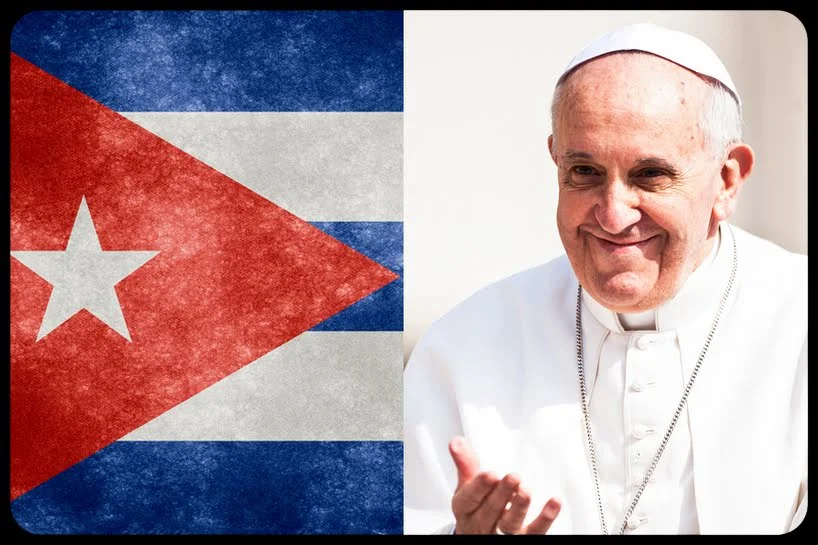
Religion in Cuba ahead of visit by Pope Francis: Think politics, politics, politics

Religion in Cuba ahead of visit by Pope Francis: Think politics, politics, politics

My fascination with Cuba began in my late teens when I discovered traditional Cuban dance music, which I much preferred to the bubble-gum rock that had supplanted the doo-wop sound, my first musical love. My friends and I -- middle class Jewish guys from New York City's outer boroughs -- referred to the music as "Latin;" today it's know as "salsa," a catch-all term that fails miserably, as did Latin, to do justice to the many musical forms that comprise the rhythmic complexity of the Cuban musical palate.

By the early 1960s, we were regulars on the New York Latin dance scene. One of our wider circle actually become one of salsa's biggest stars. That would be Larry Harlow, nicknamed El Judeo Maravilloso (the Marvelous Jew), who began life as Lawrence Ira Kahn. Go figure.

Our access to the music was greatly, if inadvertently, facilitated by Fidel Castro, who's revolutionary success in 1959 prompted many of Cuba's greatest musicians to flee to the U.S. for the artistic freedom that trumped any revolutionary zeal they harbored. 

I got to Cuba in 1998 to cover the visit of Pope John Paul II and I hope to return there later this year or next with three high school-era friends for a bucket-list musical tour of the island nation. In the meantime, I read all I can about contemporary Cuba, including this recent Washington Post piece that touted what was called a Cuban religious resurgence.

Here's a few graphs that convey the news feature's central point:


Please respect our Commenting Policy

Really? Sun says amazingly faith-free ministers visit the haunted streets in Baltimore

Oh ye Baltimore Sun editors, what will I do without your tree-pulp product landing in my front yard every morning?

This morning I picked up the paper and, as I chomped on my bagel, I read a cutline under the A1 featured photograph that showed the Rev. Alveda King, with the Rev. C.L. Bryant of Louisiana looking on, singing as she met with some people gathered near the Billie Holiday Memorial statue here in Baltimore. The photo appeared with a story that ran with this headline: "After unrest, GOP looks to make inroads in Baltimore."

I, of course, wanted to know what the niece of the Rev. Martin Luther King, Jr., was singing. There is a chance that it was, "God Bless the Child," but I would think the odds are higher that she was singing some kind of hymn. Ministers have been known to do things like that, from time to time. However, the content of her song was apparently not worthy of inclusion in the cutline or the story.

Come to think of it, I would also liked to have known something about what Alveda King and Bryant had to say while they were in town. But, alas, almost everything that they said was not relevant to this news story, or, at least, the religious content of their visit was not relevant.

Why? You see, this visit was a political visit -- period. I do not deny that politics was involved, of course, because the story goes out of its way to stress the GOP ties of these two ministers and the political nature of their visit. However, might the significance of their visit have been linked to their ability to speak to African-Americans in pulpits and pews? Might the religious content of their visit have been newsworthy, even as political content?

Apparently not. Here is the top of the story:


Please respect our Commenting Policy

Who wants a boring religious funeral when you can be remembered with a cocktail and a band?

Here at GetReligion, we've been talking about putting the "fun" in funeral since at least 2011.

So of course we were interested in a front-page story in Tuesday's Orlando Sentinel on how unique services are livening loved ones' tributes to the dead.

Let's start this funeral party at the top:

Before he died, a longtime Central Floridian asked to be remembered simply: with a cocktail party and a jazz band. That's exactly what he got.
To honor the dead, many now opt to have vibrant and distinct memorial services, whether it involves a film festival's stage or bringing a plow into a funeral home.
Jim Semesco, president of the Florida Cemetery Cremation and Funeral Association and area general manager of a Leesburg funeral home, said he has seen the change in services.
"Baby boomers, millennials, Gen Xers are not as traditional as their parents and grandparents," Semesco said. "I think for quite some time they weren't getting a lot out of funerals."
In his Leesburg funeral home, Semesco has seen many examples. To honor a farmer, loved ones surrounded themselves with fresh vegetables in the chapel, alongside a plow. To pay homage to a painter, 50 pieces of her artwork were displayed. To acknowledge a "Star Trek" fan, memorabilia was brought in for a themed service.
"You use it as a time to really get to know the person," Semesco said.

But why are many opting to go this direction when it comes time to remember a loved one? Is there — just possibly — a religion angle in this trend? Or, given the rise of the nones, an "absence of religion" angle?


Please respect our Commenting Policy

Philadelphia Inquirer runs a charming profile on a papal visit organizer

"Stuff." It's so easy to get wrapped up in the "stuff." Issues, arguments, religious "ghosts." Easy to forget that when you talk religion, you're talking about people.

Well, the Philadelphia Inquirer remembered, with a delightful feature on Donna Crilley Farrell, who is pulling together preparations for Pope Francis' visit in September.

The Inquirer presents Farrell as executive director of the World Meeting of Families, responsible for 15,000 who will attend the meeting -- and 10 times that many who will see the pope at an outdoor Mass. It presents her also as a personable 51-year-old who takes time for her twin children and, among other footwear, owns a pair of pink sneakers.

Although this is a profile, the article doesn't forget to show the size of Farrell's job:

Farrell leads a 15-committee organization with staff members and a corps of consultants who are overseeing every logistical component of the World Meeting of Families, set for Sept. 22-25, and Pope Francis' visit. The pontiff is scheduled to attend a family festival Saturday, Sept. 26, on the Benjamin Franklin Parkway and lead Sunday Mass the next day outside the Philadelphia Museum of Art.
The archdiocesan team is dealing with issues including transportation (5,000 buses may travel to the city), lodging (the team needs host families, one of Farrell's biggest concerns at the moment), communication (conference delegates from 150 nations are expected), the media (5,000 to 7,000 journalists are coming), and security (the Secret Service, in charge of security, meets daily with local, state, and federal government agencies).

Who is this live wire? Impressive professionally, as the story says: former TV reporter, former production assistant at NBC, with experience in corporate p.r. But it also teases out more personal details, like a "quick prayer and exercise in the morning," or continuing to speak smoothly after dropping a water bottle on camera.


Please respect our Commenting Policy

Seeing patterns here? ISIS keeps smashing some priceless artifacts and selling others

The tragic bottom line these days is that it is rarely news when the Islamic State blows stuff up -- including priceless antiquities that predate the rise of Islam.

This fact of life has become business as usual, to the point that many mainstream journalists no longer feel the need to include material in their reports noting why this is taking place. This is tragic and, frankly, an affront to the vast majority of the world's Muslims. This is yet another classic case of journalists needing to cover the doctrinal details of what ISIS believes -- it's take on Islamic doctrine and history -- in order to let readers understand that this is not the only or even the mainstream Islamic point of view.

Once this hard work is done, journalists can move on to another topic looming in the background: Why do Islamic State radicals destroy some parts of the region's past, while allowing others to be sold off to collectors? In other words, does ISIS hate all parts of the ancient past equally?

The latest news is that this battle as moved to Egypt, with some militants there pledging allegiance to the ISIS caliphate. Does this have anything to do with Islam? The Washington Post simply does not want to go there:

CAIRO -- Militants with explosives battled Egyptian security forces outside the famed ancient Karnak temple in Luxor on Wednesday, injuring at least four people in an attempt to strike another blow on Egypt’s fragile tourism industry.


Please respect our Commenting Policy

#DUH: Sarah Pulliam Bailey nails breaking news on evangelicals and same-sex marriage

Evangelicals + same-sex marriage = major headlines this week.

If you pay attention to religion news, you've undoubtedly noticed that.

Of course, tmatt posted Tuesday on the New York Times' front-page story on the sex debates and the quiet evangelical left. In that same post, he referenced breaking news involving a prominent evangelical progressive, Tony Campolo, who revealed Monday that he now supports "the full acceptance of Christian gay couples into the church." Also, tmatt said reporters should keep an eye on statements by former Christianity Today editor David Neff.

No surprise here, but Sarah Pulliam Bailey -- a former GetReligionista who now covers religion for the Washington Post -- pounced on Campolo's statement and related developments and produced an excellent breaking news report.

Bailey's meaty lede:


Please respect our Commenting Policy

Wanted: Critical distance in the mainstream press on overseas abortion stories

About six weeks ago, the story broke of the Nigerian army finding and freeing about 677 women and girls who’d been enslaved by Boko Haram in the Sambisa Forest in the northeastern part of the country. About 214 of them were pregnant. However, none of them were the girls from Chibok who had been kidnapped a year ago.

Last Thursday, a coalition of liberal religious groups seized the moment to demand that the Obama administration fund abortions for these women. A press conference at St. John’s Episcopal Church across Lafayette Park from the White House featured groups ranging from Catholics for Choice to Muslims for Progressive Values and the Central Conference of American Rabbis.

I will start with how the New York Times framed it:

WASHINGTON -- A starkly worded ad began appearing this week at bus stops near the White House. Next to a silhouette of President Obama’s back reads the words: “Don’t walk away from women and girls raped in conflict. Act now.”
A coalition of religious and human rights leaders on Thursday followed up the advertisement with demands that Mr. Obama support the financing of abortions for women raped during violent conflicts overseas by members of terrorist groups like the Islamic State and Boko Haram.
The leaders of several Jewish, Christian and Muslim groups accused the president of talk rather than action in addressing the grim fate of women and girls by refusing to direct the United States government to help pay for abortions in cases of rape in foreign countries.
“President Obama has spoken compassionately about women and girls raped in war and conflict, but has failed to act on that compassion,” the coalition said.


Please respect our Commenting Policy