Wait, not all home-schooling is stupid and harmful!?

Last summer, I did a GetReligion post titled “WPost: Virginia law highlights stupidity of home-schooling.” In that post, I characterized as “lousy journalism” the Post’s 2,500-word report on a Virginia religious exemption that allows families to opt entirely out of public education: The Post takes the absolute worst-case scenario — a family that goes the home-schooling route and apparently flubs it — and uses it as the overarching lens through which to view the issue. That’s unfortunate. And biased. And bad journalism.

I had no problem at all with the newspaper reporting on the negative side of home-schooling. That’s journalism. The issue was that the Post neglected entirely to tell the other side of the story, such as home-schoolers who make perfect scores on their college entrance exams.

Fast-forward to this week when I came across a Christianity Today blog post with this intriguing headline:


Please respect our Commenting Policy

The New York Times: Nuns, birth control and Obamacare

Believe it or not, I come not to bury the Great Gray Lady but to praise her. Before pushing the button that dropped the famed crystal ball in New York City’s Times Square to ring in 2014, U.S. Supreme Court Justice Sonia Sotomayor issued an eleventh-hour ruling that blocked a requirement of the nation’s new health-care law.

WASHINGTON — In temporarily blocking enforcement of the part of President Obama’s health care law that requires many employers to provide health insurance coverage for birth control or face penalties, Justice Sonia Sotomayor on Tuesday opened a second front in Supreme Court challenges to the provision.

The initial front opened in November, when the justices agreed to hear a pair of cases from for-profit companies challenging that provision. Now Justice Sotomayor has ordered the Obama administration to file a brief by Friday morning responding to a different kind of challenge, this one from groups affiliated with religious organizations.


Please respect our Commenting Policy

Are there any culture wars inside the Great Gray Lady?

Here’s a safe prediction for 2014: Look for another year with tough culture wars cases — whether from courthouses in Utah or your local Christian university or parachurch ministry — rolling toward the church-state crossroads at the U.S. Supreme Court. If that’s the case, journalists will continue to face a numbing barrage of stories in which they will be challenged to accurately and fairly report the views of activists on both the religious left and Religious Right.

With that in mind, consider this interesting Quora.com comment by elite columnist Nicholas Kristof, in response to this question: “What is the culture like at The New York Times?”

There isn’t really a simple answer to this question, because the culture of the Times varies by section and even time of day. In my part of the building, where the opinion columnists have their offices, it tends to be a bit more relaxed, even sleepy, while the metro desk at deadline on a big story will be frenetic and full of electricity. When I started at The Times in 1984, it was mostly male, and we wore jacket and ties; there was plenty of smoking and drinking. These days, the dress code is much more casual, and somewhat more earnest; not a lot of whiskey bottles hidden around today. There are also lots of women, which means there’s less of a locker room atmosphere. …


Please respect our Commenting Policy

Happy (religious) New Year, all year long, age after age

Happy (religious) New Year, all year long, age after age

Lacking a specific question from a reader, The Guy takes on his own chosen topic — aspects of time’s passage in world religion. The commonly observed times have notably religious origins. Years (e.g. 2014) are counted from an ancient and inaccurate guess on when Jesus Christ was born. Non-Christians often designate years as C.E. (“Common Era”) instead of A.D. (“Anno Domini” meaning “Year of the Lord”). Our Gregorian Calendar is a reform ordered by Pope Gregory XIII in 1582, which skipped past 10 days and devised the leap year system. Because of that Roman Catholic origin, Anglican Britain and its Protestant American colonies didn’t switch from the ancient Julian Calendar until 1752, and Greece, where the Orthodox Church dominates, held out until 1922!

CHRISTIANITY – As with most faiths, January 1 has no religious significance whatever, though some congregations do hold New Year’s Eve services. For many, the “church year” begins on the first of four Sundays in the Advent season that prepares for Christmas. Celebration of Christ’s birth on December 25 (or January 7 for “old calendar” Orthodox) is an arbitrary choice that took hold in the 3rd Century.

JUDAISM – Rosh Hashanah (“head of the year”) begins a 10-day period of spiritual and moral reflection, the Days of Awe, culminating in Yom Kippur (the Day of Atonement). The new year occurs in September or early October and, oddly enough, on the religious calendar’s 7th month, not the first month, determined by complex calculations. The years (5775 begins next September 24) are counted from the traditional time for God’s creation of Adam and Eve.


Please respect our Commenting Policy

Oklahoma news: A Christmas 'miracle' via the local atheists

News stories blending the miraculous with Christmas aren’t difficult to find: families reunited, poor children receiving presents, the homeless fed. A common denominator, though, is usually a denomination, most likely a Christian one. After all, it’s the Christians who connected charity to the whole thing to begin with, right? Well, things apparently are different in Chickasha, Oklahoma. While I fear to step onto the home turf of Sooner GetReligion duo Bobby and Tamie Ross, tread I must.

The Chickasha Express-News reported a”Christmas miracle” story, but this time, it was area atheists who saved the day, as opposed to reprising what others often view as their “Grinch” role:

CHICKASHA – A group of local atheists saved Christmas for a Chickasha woman after she and her baby were allegedly put through the ringer [sic] at a church’s toy give away.


Please respect our Commenting Policy

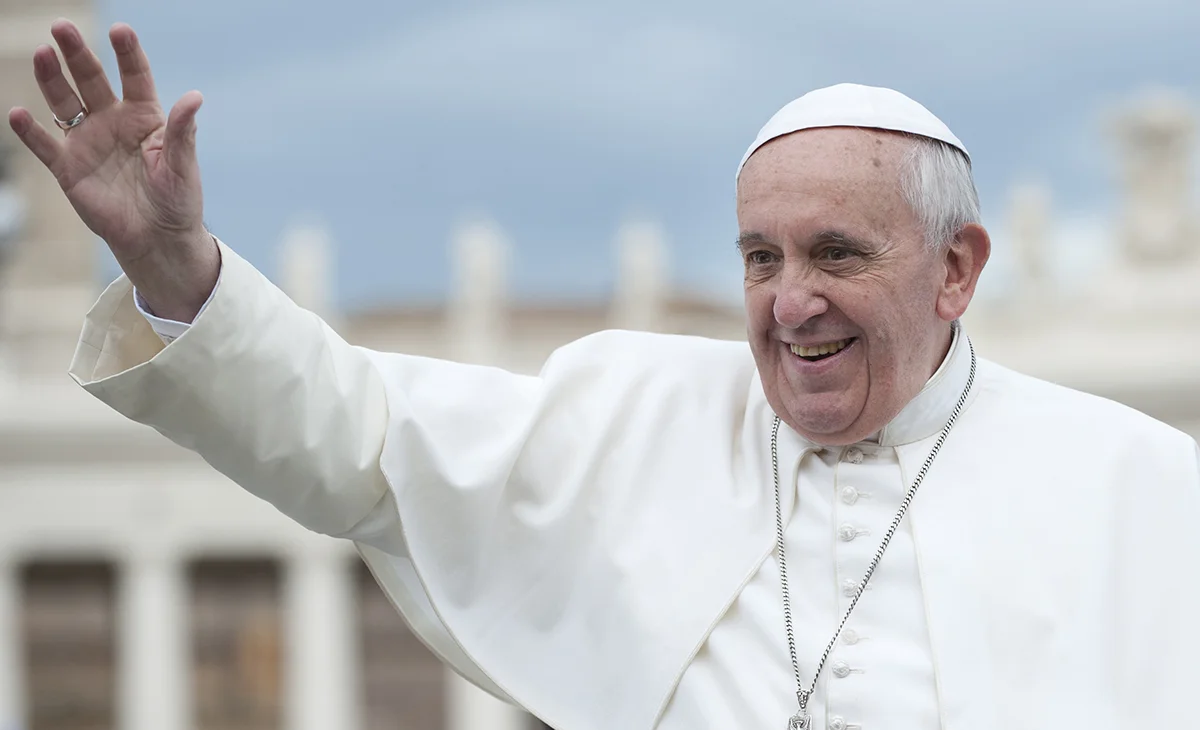
Does a 'Pope Francis effect' mean a Catholic growth trend?

Does a 'Pope Francis effect' mean a Catholic growth trend?

The best journalists report what they know — and what they don't. Given the flurry of positive press for Pope Francis in 2013, a journalist easily could produce a three-anecdotes-make-a-trend story on how the new pope with a sky-high approval rating has brought a numerical resurgence to the Roman Catholic Church.

But Peter Smith of the Pittsburgh Post-Gazette — one of our favorite Godbeat pros — didn't do that. He stuck to the facts (thank you, ma'am) in a recent story on Francis' impact on the church:

It's been called the "Pope Francis effect."

Priests locally and internationally say they're seeing a bump in interest in the church through the pope.

But while there are anecdotes of people joining or returning to the church under the influence of Francis, there's no proof yet that such anecdotes add up to a broad trend.

Pope Francis' name and @pontifex Twitter handle have become some of the most searched terms on the Internet. The pontiff has been named Time magazine's Person of the Year and he enjoys high popularity in polls -- rated favorably by four in five U.S. Catholics and more than half the American general public, according to the Pew Research Center. Italian priests tell researchers they see a rise in Mass attendance.

But since Francis became pope, there is no measurable increase in Americans either identifying themselves as Catholic (around 22 percent) or in reporting they're attending Mass more frequently (with about 40 percent continuing to say they attend weekly), according to Pew.

But isn't it a little early to see fluctuations in such statistics, you ask? Exactly.

Keep reading:


Please respect our Commenting Policy

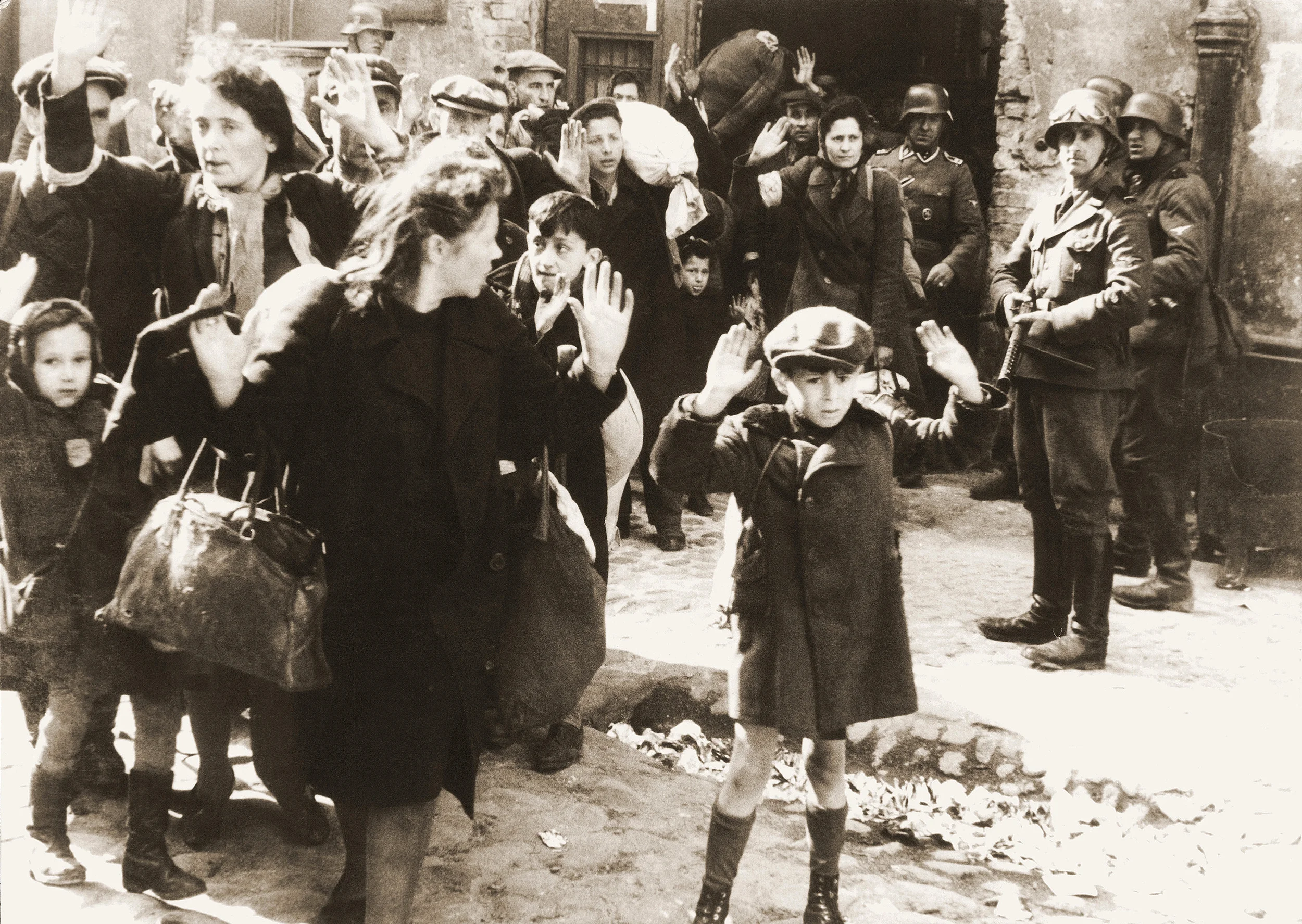
Haaretz and Jewish resistance to the Holocaust

Haaretz and Jewish resistance to the Holocaust

Do you remember Tom Lehrer, the composer/comedian/mathematician? I have long loved his music, which I discovered as a young boy when exploring my parent's record collection.

A recent article in the Israeli newspaper Haaretz set spinning in my head one of Lehrer's LPs this Christmas and to the embarrassment of my children I broke into song, serenading them with the refrain from Lehrer's satiric gem National Brotherhood Week (1965).

Oh, the Protestants hate the Catholics, And the Catholics hate the Protestants, And the Hindus hate the Moslems, And everybody hates the Jews.

My fertile mind however, added an additional line -- "And Haaretz does too!"

Hates the Jews that is.

How else can one explain this article, "The Myth of the Warsaw Ghetto" published last week in the leftist Israeli daily? Writing on the website of Commentary magazine, Eugene Kontorovich summarized the article's thesis, stating that Haaretz believed that if:


Please respect our Commenting Policy

Asking the nasty, logical question about that Utah judge

It's often like the force of gravity in American politics and it has been gaining power for about a quarter of a century. We're talking about the "pew gap," that mysterious X-factor that keeps showing up in surveys about the most controversial political and social issues in this land of ours. Simply stated, the more often a person sits in a pew inside a religious sanctuary, the more likely they are to vote for morally conservative candidates (in either party, but these days this tends to show up as a GOP bias).

So does his mean (a) that all moral conservatives are Republicans? The answer, of course, is "no," especially when you start hanging out with Latinos, African-Americans and people in blue-collar jobs and/or labor unions.

Does this mean that (b) all Republicans are moral conservatives? The answer, of course, is "no," especially when you are dealing with country-club members and people far outside the Bible Belt.

Does this mean that (c) cultural liberals are godless heathens who never go to church? Of course not, but they are a minority of those found in pews and they tend to be active in smaller, doctrinally progressive flocks of all religious brands.


Please respect our Commenting Policy

The New York Times: The Obamas and Christmas (no church in sight)

Christmas comes but once a year, the old saying goes. It's a federal holiday as well as a religious observance, so it's understandable that any president of the United States, regardless of faith, would take the day off. At the same time, most every POTUS has been a Christian of one stripe or another (questions exist about Jefferson and Lincoln, but that's for another time).

President Barack Obama professes Christian faith as well, something noted here just the other day.

But personal faith and public (or semi-public) practice are often two different things. Ronald Reagan's non-attendance at church (not to mention his wife's reported dabblings in astrology) drew barbs from some political opponents and pundits. George W. Bush often hosted worship services at Camp David but was not a frequent churchgoer when in Washington. (That said, Bush averaged 15 visits to churches each year, versus 3.6 per annum for Obama.)

The New York Timescaught this, and jumps in on what the president did -- and didn't -- do during his current, Christmastide sojourn in Hawaii:


Please respect our Commenting Policy