Worship

Repeat after me: White Catholics voting in 2004. White Catholics voting in 2024 ...

Repeat after me: White Catholics voting in 2004. White Catholics voting in 2024 ...

The topic of this Memo will not surprise readers.

It’s time to focus on the U.S. Catholic vote in 2024, following up a prior Memo assessing religion angles with Donald Trump’s prospects. The Guy once again advises journalists and other observers that Catholics are more pivotal politically than unbudgeable Democrats such as Black Protestants, non-Orthodox Jews and non-religious Americans.

Ditto with the long-running lockstep Republican loyalty among white evangelical Protestants and Latter-day Saints, in national-level elections when they are pushed into a two-party vise. As for America’s other major religious bloc, the more liberal “Mainline” Protestants, they are nearly split down the middle, usually with slim Republican majorities, and they are declining in influence as memberships shrink.

The past generation saw two U.S. political earthquakes. With one, many Southern white Protestants left the Democrats, effectively ending that party’s “Solid South” that dated from the Civil War, Reconstruction and the New Deal eras. Earthquake No. 2 was the move of white (that is, non-Hispanic) Catholics away from Democratic identity that originated in 19th Century immigration, reinforced in the presidential nominations of Al Smith and John F. Kennedy (who won 78% of Catholic voters in 1960, according to Gallup).

Today, this chunk of the broadly defines “Catholic vote” provides pretty consistent and modest but all-important Republican majorities. The Pew Research Center reports they were evenly split between the two parties as recently as 1994, the year Republicans finally won the U.S. House after four decades of failure. By 2019 they identified as Republican by 57% (and weekly Mass attenders moreso) even though the G.O.P. has never nominated a Catholic. (Could Florida’s Ron DeSantis be the first?)

Around two-thirds of Hispanic Catholics have consistently identified as Democrats, but the media will want to closely monitor their float toward the G.O.P in certain regions, especially pivotal parts of Florida and Texas. Note that Pew newly reports that 67% of Hispanics identified as Catholic in 2010 but only 43% in 2022. The cause was not Protestant inroads, but a remarkable jump from 10% to 30% over a mere dozen years in those who lack religious identity.
Please respect our Commenting Policy

Define 'evangelical,' 2023: What is a 'reconstructionist,' low-church Protestant?

Define 'evangelical,' 2023: What is a 'reconstructionist,' low-church Protestant?

Yes, here we go again.

Please consider the following an update on “Define ‘evangelical’,” “Define 'evangelical,' yet again,” “Define 'evangelical,' please,” “That same old question for 2016: What is an 'evangelical,' anyway?”, “Once again, journalists need to ponder this question: What is an 'evangelical'?” and lots of other GetReligion offerings on this topic over nearly 20 years.

Yes, this is tough work — but somebody has to do it.

In this case, former GetReligionista Mark Kellner sent me the following Duluth News Tribune story, while expressing “more than a little sympathy “ for the general-assignment reporter who got caught up in the whole “evangelical” self-definition puzzle. Here’s this complex, but vague, headline from the world of mainline Protestant decline:

New generation, denomination takes over Duluth church

Attendees of Westminster Presbyterian Church were dwindling over the years. They decided to gift their church to a younger crowd of Christians focused on inclusivity.

The clue that there are plot twists ahead? That would be the word “inclusivity.”

Think about it: More “inclusive” than a congregation in the liberal mainline Presbyterian Church (ISA)?

Hold that thought. Here is the overture:

DULUTH — It's not every day that an offer for a new church building lands in your lap.

But that's exactly what happened to Pastor Kris Sauter of Neighborhood Church in Cloquet. Sauter received a phone call from the Rev. Carolyn Mowchan, part-time pastor for Westminster Presbyterian Church in western Duluth.

"And I don't usually take cold calls," Sauter said. "But I happened to pick up this time and she was like, 'Hi Kris, I'm Carolyn. How would you like a free building?' And I was like ... 'Hi Carolyn, I'm Kris.' And that led to a really beautiful conversation and series of conversations about taking over the building."


Please respect our Commenting Policy

Some Catholics still embrace confession, while many more ignore this sacrament

Some Catholics still embrace confession, while many more ignore this sacrament

In the movies, the penitent enters a confession booth, kneels, and whispers to a priest behind a lattice screen: "Forgive me father, for I have sinned."

This drama was, for centuries, at the center of Catholic life. But in recent decades, the number of Americans who go to confession has plunged to a shocking degree that church leaders have struggled to explain.

But Father David Michael Moses knows what happened during Holy Week this year, when he spent 65 hours "in the box" at his home parish, Christ the Good Shepherd in Spring, Texas, and at St. Joseph near downtown Houston. In all, heard 1167 confessions.

"We are talking about a lot of sin, and lots of grace," he said. "It's about offering people help and hope. In the end, Jesus wins all the battles that people bring with them into confession. That's what confession is all about."

The 29-year-old priest began hearing confessions at 6 a.m. on April 4, as Catholics made their way to nearby office towers. He continued until midnight, with a parish volunteer noting there were 100 people in line at 8 p.m. Another priest arrived two hours later, and everyone had an opportunity for the Sacrament of Penance.

"You keep thinking: 'Do I go slow and just do my best? Do I try to speed things up?' What you can't do is let anyone feel that they were turned away," said Father Moses, a Houston native who is the son of a Baptist mother and Lutheran father who converted to Catholicism.

Hearing confessions "is hard. It's exhausting. But there is nothing in the world that I would rather be doing, right now. This is what it means to be a priest. This is about salvation and the care of souls."

As recently as the 1950s and 1960s, researchers said about 80% of American Catholics went to confession at least once a year. A clear majority said the went once a month.

Then the numbers began falling -- sharply.


Please respect our Commenting Policy

Black Americans are as likely to be 'nones' as other racial groups (but with a difference)

Black Americans are as likely to be 'nones' as other racial groups (but with a difference)

One of the most difficult things to describe to the average person about religious classification is Black Protestants.

In 2000, a group of scholars created the RELTRAD classification scheme which divided Protestants up into three categories — evangelical, mainline and Black Protestant. Why are Hispanic and white evangelicals grouped together, but Black Protestants get their own separate category? What about Black evangelicals, Black Pentecostals and Black mainline Protestants?

It’s not an easy question answer, really. 

Paul Djupe and I tried to answer that a few years ago in a post at Religion in Public. The answer will not shock GetReligion readers.

In short: politics. But, it’s a bit more than just how they vote on election day. Anyone who has ever worshipped with a predominantly Black congregation knows that it tends to be a bit different than how the United Methodists and lots of other folks do things on a Sunday morning.

I’ve always been fascinated by the role that the church plays in Black culture and was wondering if the rising tide of secularization had been blunted in a bit among African Americans — or if they were seeing the same trend lines as other racial groups.

In 2008, Black Americans were noticeably less likely to report no religious affiliation compared to their White counterparts. About one in five Black Americans were nones in 2008. That’s no different than Hispanics and three points less than White respondents.

But over the last few years, that gap has essentially disappeared.


Please respect our Commenting Policy

Plug-In: Does requiring a mail guy to work Sundays violate his religious freedom?

Plug-In: Does requiring a mail guy to work Sundays violate his religious freedom?

Surprise! I mentioned earlier that I’d be on an international reporting trip and unable to produce today’s Plug-in.

Alas, I ran into a visa issue, so here I am. So, today’s news includes:

Muslims celebrating the Eid al-Fitr holiday amid joy and tragedy, via The Associated Press’ Abby Sewell.

Conservative Anglican leaders calling for a break with the Archbishop of Canterbury over same-sex blessings, via the Wall Street Journal’s Francis X. Rocca.

An Iowa GOP event this weekend that represents a key test of former President Donald Trump’s hold on the U.S. religious right, via the Washington Times’ Seth McLaughlin.

That’s just the start of this week’s best reads and top headlines in the world of faith.

Let’s keep rolling!

What To Know: The Big Story

High court seeks compromise: The U.S. Supreme Court on Tuesday reviewed “the case of a part-time mail carrier who quit his U.S. Postal Service job after he was forced to deliver packages on Sundays, when he observes the Sabbath.”

A majority of justices “expressed interest … in a compromise intended to balance religious rights in the workplace with the burden they might impose on employers and co-workers,” the Washington Post’s Ann E. Marimow reports.

CNN’s Ariane de Vogue explains:

A lower court had ruled against the worker, Gerald Groff, holding that his request would cause an “undue burden” on the USPS and lead to low morale at the workplace when other employees had to pick up his shifts.

Not just Christians: Conservative Christians aren’t the only ones asking for accommodation in the mailman case, Religion News Service’s Yonat Shimron notes.

“Religious minorities — Jews, Hindus, Muslims, Sikhs and Seventh-day Adventists — have filed briefs asking the Supreme Court to overturn a ruling that gutted a civil rights statute’s protections for religious accommodation,” Shimron’s story points out.

Important context: The Washington Times’ Mark A. Kellner recently interviewed Larry Hardison, whose “name was chiseled into American legal history 46 years ago when the Supreme Court ruled against him in a landmark religious accommodation case.”

For more insight, see “A brief history of American Christians fighting Sunday mail” by Christianity Today’s Daniel Silliman.


Please respect our Commenting Policy

Hot megachurch question: 'Why have many worshippers stopped singing in church'?

Hot megachurch question: 'Why have many worshippers stopped singing in church'?

QUESTION:

“Why have many worshippers stopped singing in church?”

THE RELIGION GUY’S ANSWER:

The question in that headline accompanied a provocative article about U.S. Protestant church trends that The Guy will turn to in a moment. The answer is important, and it’s quite obvious to observers of the long-running “worship wars” that are about far more than guitars and drums supplanting pipe organs and hymnals.

(For Catholicism’s parallel debate, check out the lively book “Why Catholics Can’t Sing” in the revised edition subtitled “With New Grand Conclusions and Good Advice”(!). Author Thomas Day, retired music department chair at Rhode Island’s Salve Regina University, laments destructive inroads of popular culture.)

The headline question accompanied this April piece on GetReligion.org by its editor Terry “tmatt” Mattingly: That might suggest slant from a boyhood Southern Baptist turned (guitar playing) Eastern Orthodox. However, Mattingly was not promoting his own liturgical preference, but reporting concerns raised by Kenny Lamm, the worship strategist for the Southern Baptists’ North Carolina state convention, who leads workshops nationwide.

Lamm recently posed these issues on his website in response to a pre-Easter e-mail from a frustrated man who’s been searching for a new church to join and visited one possibility four weeks in a row. Here’s what he experienced there.

Programmed lighting that blinds the “audience” (notably, not “congregation” or “worshippers”) in a pitch black room so you cannot see your fellow Christians. Haze machines. Unfamiliar songs “we can’t follow” with “unmemorable” melodies that leap uncomfortably, and with a vocal range running so high “the average singer” cannot reach the notes (a la the National Anthem!). Amplified instruments so loud they bury the sloppily dressed singers on stage and far moreso those out in the seats, and make the ears hurt (earplugs are kindly provided in the lobby).

Result: “We did not see one person singing — not one.”


Please respect our Commenting Policy

Podcast: Can journalists and religious leaders learn how to talk about what 'news' is?

Podcast: Can journalists and religious leaders learn how to talk about what 'news' is?

Day after day, year after year (this week opened year 35 for my national “On Religion” column) I receive all kinds of “press releases” from people who want me to write columns about this, that or the other.

Some folks still send these printed on dead-tree pulp, if you can imagine that. The vast majority arrive via email or in press kits (mainly for books) via UPS, Fedex or the U.S. Postal Service.

I am happy to check out most of this material. However, about 90% or more of these offerings are sent by PR professionals who appear to have zero idea what I write about or the audience for my columns. They are simply throwing cheerful digital spaghetti at the wall and hoping something sticks.

In short, they do not understand “news” — what it is and what it is not.

What can religious leaders and/or organizations do to improve their success rates with reporters like me? That was half the equation that we discussed during this week’s “Crossroads” podcast (click here for temporary link to tune that in).

The other half? Just flip that reporter’s notebook around. How can reporters do a better job finding the right voices to include in their coverage of events and trends linked to religion? How can journalists convince clergy and other religious folks to cooperate with press coverage — especially when dealing with controversial topics and scandals?

The podcast was recorded while I was in Los Angeles for two forums hosted by the Poynter Institute under this title: “Telling the Stories of Faith and the Faithful.” The first forum was for reporters and editors, including quite a few who are not religion-beat specialists. The second day, yes, focused on talks with a small circle of religious leaders about understanding how journalists think and work.

We were talking about many of the same questions and issues on both days — only viewed from different sides of a reporter’s notebook (or smartphone, in this age). Here is a bite of the Poynter summary of the session with reporters:


Please respect our Commenting Policy

FBI war on 'rad trad' Catholics: Where's the outrage (or even fairness) in press coverage?

FBI war on 'rad trad' Catholics: Where's the outrage (or even fairness) in press coverage?

There are several factors that, when put together, make an event or trend a news story. 

The first is that it is new. It’s not a coincidence that the first three letters of the word news helps to form the word “new.”

Then there’s timing. Not just “what,” but also “when” something happens makes it newsworthy. “What” and “when” are essential to the five W’s (which also includes “where,” “who” and “why”) that reporters and editors worry most when determining news coverage.

The inability for certain types of stories to register with the secular press, especially legacy media, is yet another sign of the political, cultural and moral divisions in our society and the dying American model of the press. 

While this space is very much dedicated to critiquing news coverage of Catholic issues and those involving Catholics, it is very difficult to do so when there is little to no coverage of important Catholic stories by a very sizable chunk of the American media ecosystem. 

This takes us to a trio of stories involving the federal government and the Catholic church that took place during the first half of this month. At a time of year where the mainstream media is seeking Christian storylines to coincide with Lent, Holy Week and Easter Sunday (beyond photos of elaborate hats), the three stories I am about to dissect here drew very little mainstream media attention.

Instead, it was the Catholic press (once again!) and “conservative” secular media that did the bulk of the reporting on, for my first example, the issue regarding the decision by Walter Reed Hospital to drop a contract for Franciscan priests to provide pastoral care of patients and, instead, hiring a secular firm to oversee those same services going forward. Try to imagine “secular” Last Rites for Catholics?

The second was the decision by the Department of Justice to recommend zero jail time in a plea deal involving a suspect charged with destruction of property at a Catholic church in Washington last year.

Finally, there were, according to documents, traditional Catholics who were targeted by the FBI because they could be considered domestic terrorists.


Please respect our Commenting Policy

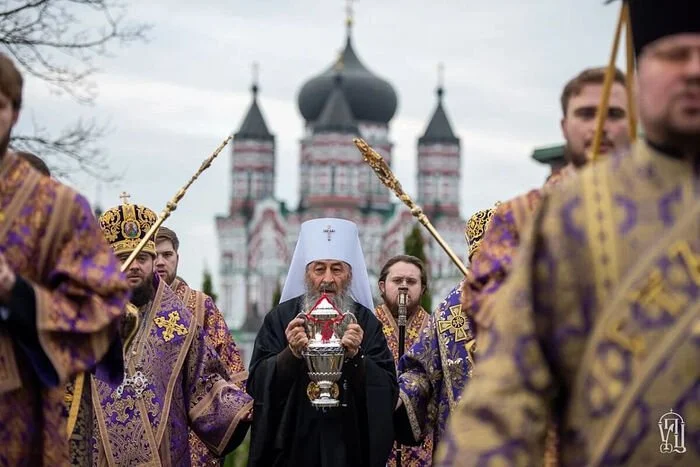
Pascha in Ukraine, 2023: That's a subject journalists view through a totally Western lens

Pascha in Ukraine, 2023: That's a subject journalists view through a totally Western lens

Ask faithful members of Eastern Orthodox churches to name the most important day of the Christian year and about 99.9% of them will say this — “Pascha.”

This is the ancient Orthodox term for the feast of the Resurrection of Jesus. As the OrthodoxWiki.org website notes, “Pascha” is “a transliteration of the Greek word, which is itself a transliteration of the Aramaic pascha, from the Hebrew pesach meaning Passover.”

Pascha rites around the world began just before midnight on Saturday and proceeded into the early hours of Sunday, followed by festivities to break the long, intense fast of Great Lent. Folks get home about 4 a.m.

Needless to say, this was not a normal Pascha in Ukraine. I was curious to see how mainstream newsrooms would cover the rites in the Ukraine, where two competing Orthodox bodies are united in their opposition to the Russian invasion of their land, but separated by decades of competing claims of which church represents the future of the faith in Ukraine (see this earlier post-podcast on that topic).

I was curious, as an Orthodox layman (this Pascha marked the 25th anniversary of my family’s conversion), how mainstream news organizations would cover Pascha 2023 in Ukraine — so I ran an online search for the terms Ukraine and “Pascha.” The result — zero 2023 news reports containing “Pascha.”

Ah, but what if journalists ignored Orthodox history, tradition and theology and only referred to this feast day as “Easter,” the Western Christian term?

What if your stories contained zero references to “Pascha” and only said “Easter”? That online search yielded some mainstream reports, which often mentioned “Orthodox Easter,” thus viewing the most important day in Eastern Orthodoxy through a totally Western lens. Try to imagine doing this with any other global faith group of 260 million members, Christianity’s second largest Communion. Imagine changing the name of “Passover,” “Ramadan” or even “Easter” (when covering Rome and Protestantism).

Of course, readers need to be told that “Pascha” is the ancient Christian term for the season that, in the dominant West, is known by the somewhat controversial (for some outsiders) term “Easter.” But shouldn’t coverage of Pascha at least include, you know, the word “Pascha”?

It’s hard to imagine a more fitting metaphor to describe most, if not all, of the warped mainstream press coverage of the role that Orthodox history and faith is playing in Ukraine. I have already written about this several times and I’m about to board an airplane to head to Los Angeles. So let me be as quick as possible.

If reporters had the slightest interest in the historic Ukrainian Orthodox Church — with 1,000 years of shared history with Slavic cultures — they would be paying attention to this church’s (a) ongoing attempts to sever, within the limits of Orthodox canon law, it’s remaining ties to the Russian Orthodox Church, (b) its leaders’ opposition, since Day 1, to the Russian invasion and (c) the criticisms of this church by leaders of the new, competing Orthodox Church of Ukraine, which is supported by the United States, the European Union, the current Ukrainian government and the tiny, but symbolic, Ecumenical Orthodox Patriarchate in Turkey. These criticisms have escalated into a full-tilt government attempt to crush the older Orthodox body.


Please respect our Commenting Policy