Worship

Thinking about AI and faith: Can a computer 'get' what it means to be truly human?

Thinking about AI and faith: Can a computer 'get' what it means to be truly human?

Every now and then, I get an email from Ira Rifkin, who for many years wrote “Global Wire” posts for GetReligion about journalism issues in international events and trends. He signed off about half a year ago with an edgy post called, “Ciao, GetReligion: Thanks, all, for my tenure. Critic that I am, though, here are some final thoughts.”

With his unique mix of Jewish and Buddhist disciplines, Rifkin was also a keen observer of new ideas and concepts linked to what mass media tends to call “spirituality,” as opposed to more conventional forms of religious faith.

Several weeks ago, he send me a URL for a Los Angeles Times feature that ran with this headline: “Can religion save us from artificial intelligence?

I immediately put it into my “think piece” file, but held on to it for a while to put some cushion between it and my podcast/post with this title: “When is preaching a 'news' story? Ah, the temptation of ChatGPT sermons.” Here is a byte of that:

Right now, one of the hot topics in the public square is the rise of artificial intelligence and, to be specific, the ChatGPT website. Thus, this week’s “Crossroads” podcast (click here to tune that in) focused on several “newsy” angles of the recent Associated Press story that ran with the headline, “Pastors’ view: Sermons written by ChatGPT will have no soul.”

During the podcast, I riffed on the whole issue that different kinds of technology can shape the content of communications in different ways. If ChatGPT sermons have a sense of “soul,” it would be a “soul” that is defined by the creator of the software and the tech platform.

The Los Angeles Times story that Rifkin sent me opens with an AI sermon hook — but the issue at the heart of the story is much, much bigger than that.

Nevertheless, it helps to start this “think piece” recommendation with that feature’s overture:

Sometimes Rabbi Joshua Franklin knows exactly what he wants to talk about in his weekly Shabbat sermons — other times, not so much. It was on one of those not-so-much days on a cold afternoon in late December that the spiritual leader of the Jewish Center of the Hamptons decided to turn to artificial intelligence.

Please respect our Commenting Policy

'The Nuns Who Left Brooklyn' -- How many religious details did this Times story need?

'The Nuns Who Left Brooklyn' -- How many religious details did this Times story need?

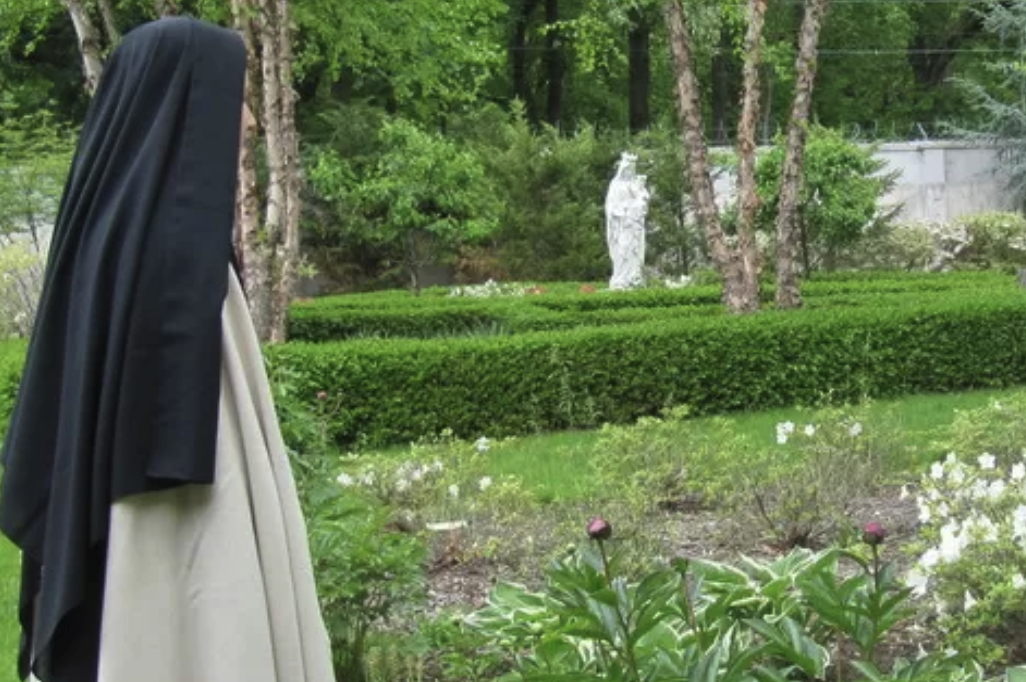
The headline of this New York Times story was totally “religion story” — “The Nuns Who Left Brooklyn.

Thus, I heard from people who wanted to know what your GetReligionistas thought of this religion story.

The content of this news feature was, quite frankly, totally “metro desk” (people who have worked in newsrooms will understand that term). This is, let me stress, not a complaint. The Times story is packed with relevant, even colorful local news details about a sad situation that developed in Brooklyn.

Also, religion-beat pros will not that it is hard to do a story about the details in the lives of cloistered Catholic women religious, since they are not going to sit down for interviews and talk about the details of their lives and beliefs. The story has some crucial details provided by others that tell readers some of what they need to know.

Would I have appreciated a few more details about this order and where it fits into the current drama of Catholic monastic life in America? Sure. Was that an essential part of this particular story? I’ll admit that the answer to that is: “Not really.” Hold that thought. Meanwhile, here is the overture:

The 10 Carmelite nuns of Cypress Hills, cloistered in Brooklyn for almost 20 years, decided to leave New York City after much contemplation.

As much as they tried, the sisters of the Monastery of Our Lady of Mount Carmel and St. Joseph, devotees of silence and prayer who rarely left the confines of the cloister, could no longer ignore what was going on outside. The loud celebrations in an adjacent park became a bit too much. And when a beloved lay volunteer was murdered, the sisters were shaken deeply.

The last straw came in 2020, that first pandemic summer, with the explosion of late-night partying on their street involving cars with powerful speakers, said Mother Ana Maria, who spoke on behalf of the monastery, which used to be on Highland Boulevard.

“Our walls shook and our windows shattered,” she said. The sisters wondered whether the blaring music well past midnight was aimed directly at them.

Shattered windows? That’s some loud partying. That leads to a poignant detail, care of the mother superior who spoke for the nuns.

Mother Ana Maria, who, along with her sisters, begins each day at 5 a.m. The nuns pushed their beds away from the walls of their cells — the small rooms where they slept — but still felt unsafe, she said.


Please respect our Commenting Policy

Plug-In: For two billion Muslims, the fasting season of Ramadan has begun

Plug-In: For two billion Muslims, the fasting season of Ramadan has begun

Good morning, Weekend Plug-in readers.

I’m back home in Oklahoma after a fulfilling time at the Religion News Association annual meeting in the Washington, D.C., area.

Who’s ready to check out the top headlines and best reads in the world of faith?

What To Know: The Big Story

Islam’s holy month: The new crescent moon Thursday marked the start of Ramadan, as the Washington Post’s Morgan Coates and Adela Suliman report:

Almost 2 billion Muslims around the world will observe a month of abstaining from food, drink, smoking, gossip and sexual relations during daylight hours — from dawn to dusk.

Pregnant, breastfeeding or menstruating women are exempt from fasting, as are the sick, elderly or those traveling. Children are also not expected to fast.

The Associated Press explains:

For the next 30 days, Muslims will refrain from eating or drinking anything — even the tiniest sip of water — from sunrise to sunset. Many will strictly observe prayers, read the Quran and donate to charity as they seek to draw closer to God. Family and friends will gather for joyful nightly feasts.

An important time: Ramadan began “as parts of the Middle East approached crucial junctures in high-stakes peace negotiations during the holy month, traditionally a time of reconciliation,” AP’s Jack Jeffery notes.

Schools and sports: Across the U.S., Muslim students are pushing to designate Eid al-Fitr, the festival that marks the end of Ramadan, as a school holiday, Religion News Service’s Alejandra Molina reports.

Meanwhile, two English sports leagues are helping Muslim athletes observe Ramadan this year, according to the Deseret News’ Kelsey Dallas.

Two more Ramadan reads: CNN’s Saeed Ahmed provides an etiquette guide for non-Muslims. The Deseret News’ Mya Jaradat asks, “Is corporate America ready for Ramadan?”


Please respect our Commenting Policy

Debates in England about free speech and religion veer into 'thoughtcrimes' zone

Debates in England about free speech and religion veer into 'thoughtcrimes' zone

Wherever he goes, Father Sean Gough prays for the people he encounters -- sometimes out loud and often silently.

This isn't unusual, since he is a priest in the Catholic Archdiocese of Birmingham, England. Gough was praying silently when he was arrested near an abortion facility in a Public Spaces Protection Order protected zone, while holding a "Praying for free speech" sign. His car was parked nearby, with a small "unborn lives matter" bumper sticker.

The priest was charged with "intimidating service users," although the facility was closed at the time. The charges were later dropped.

Officers also raised questions about his clothing.

"When interrogated by police for silently praying in the censorship zone, they challenged me for wearing a cassock," said Gough, on Twitter. "When do I normally wear one? Don't I realize it'll be perceived as intimidating? These are not questions a person should be asked under caution in a democracy!"

Clause 11 of a recent Public Order Bill -- waiting to be signed into law -- would criminalize all forms of "influence" inside a 15-meter "buffer zone" around every abortion facility in England and Wales. An amendment to permit silent prayer and consensual conversations failed by a 116-299 vote in Parliament.

After years of debates about religious liberty and freedom of speech, recent events in England have veered into what activists and politicos have described as "thoughtcrimes," a term used in George Orwell's dystopian novel "1984" to describe thoughts that violate ruling-party dogmas.

In the U.S. House of Representatives, eight Republicans circulated a letter claiming it's "imperative that the U.S. speak boldly and clearly to its friend when the U.K. has failed to protect unalienable rights." The document condemned policies that "persecute Christians and other pro-life citizens for thoughtcrimes."


Please respect our Commenting Policy

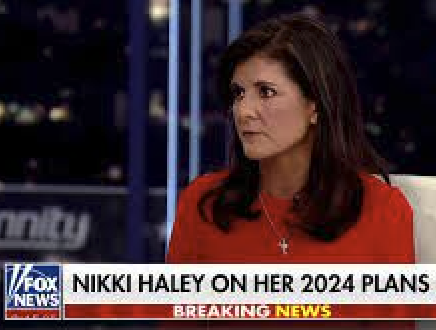
Religion in politics, again: What is Sikhism, candidate Nikki Haley’s one-time faith?

Religion in politics, again: What is Sikhism, candidate Nikki Haley’s one-time faith?

QUESTION:

What is Sikhism, candidate Nikki Haley’s one-time religion?

THE RELIGION GUY’S ANSWER:

Nikki Haley, who is challenging Donald Trump for the Republican presidential nomination, was raised in the religion of Sikhism  (“SEEK-ism”) by immigrant parents from India. But soon after both Sikh and Methodist weddings she converted to husband Michael’s Christianity.

During Haley’s first run for South Carolina governor in 2010, National Public Radio posted a notably nasty piece by a fellow Indian-American who said “I’m not buying” Haley’s “Christian bit,” noting that “serious churchgoers” and political opponents suspected a “conversion of convenience” in a heavily Protestant state. However, Haley adopted Christianity at age 24 and only entered politics eight years later.

Partners in mixed marriages do have to make religious choices. Haley has repeatedly professed that she is a Christian believer but respects her family and does not criticize its religious heritage. Though a Methodist churchgoer, she occasionally attends Sikh services and has visited the faith’s holiest sanctuary, the Temple of God in Amritsar, India (known as the Golden Temple because it’s covered in gold leaf).

As a journalist, The Guy has no business examining Haley’s soul, but sees her candidacy as a good opportunity for Americans to learn more about her former faith. Sikhism claims to be the fifth-largest world religion after Christianity, Islam, Hinduism and Buddhism, though it does not evangelize and counts only a modest 30 million adherents. Still, that’s double the global number for Judaism.

Sikhism is by far the youngest of the major world religions. Its homeland is the Punjab region of northern India and adjacent Pakistan. The founder, Guru Nanak (1469-1539), was a married accountant with two sons who had a dramatic encounter with God, whence he proclaimed “there is no Hindu; there is no Muslim” and gathered a following as a spiritual teacher.

Western scholars often depict Sikhism as a classic example of syncretism (blending of different religions) or a reforming “offshoot” of Hinduism.


Please respect our Commenting Policy

Podcast: Painful fighting inside Ukrainian Orthodoxy? Schism began long before the war

Podcast: Painful fighting inside Ukrainian Orthodoxy? Schism began long before the war

Nearly 15 years ago, I traveled to Kiev to speak during a forum with Ukrainian journalists, and a few activists, focusing on religion coverage in that already tense nation. I was there as a representative of the Oxford Centre for Religion & Public Life.

Obviously, this meant talking about the fractured state of Eastern Orthodox Christianity in Ukraine, with bitter tensions between the historic (in many ways ancient) Ukrainian Orthodox Church and new rival churches — including leaders who had previously been excommunicated from canonical Orthodoxy.

Again, let me stress that this was in 2009, during a time when the Ukrainian government was, basically, content to let global Orthodox leaders work this out — oh so slowly — as an Orthodox canon-law issue.

These conflicts were truly byzantine (small “b”) and Ukrainian journalists said it was obvious that most journalists from Europe and America knew next to nothing about the Orthodox splits and, frankly, didn’t care to learn the details.

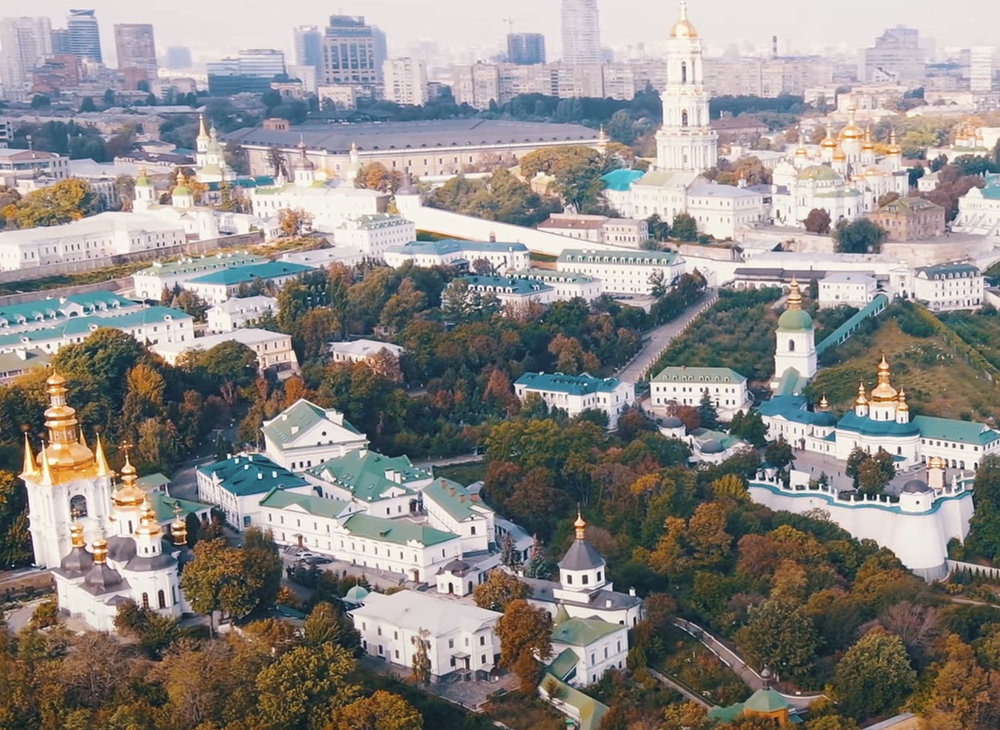
The Holy Dormition-Kiev Caves Lavra? That’s just a historic site. End of story.

Things have changed, sort of, but for all the wrong reasons.

With Vladimir Putin’s invasion of Ukraine, journalists now care about the state of Orthodoxy in this war. The question discussed during this week’s “Crossroads” podcast (click here to tune that in) is whether elite journalists have any interest in the centuries of facts behind the current Orthodox conflict. The church conflict is linked, of course, to the February 24, 2022, invasion — but also to earlier actions by leaders in the United States, the European Union, the current Ukrainian government and, last but not least, a strategic 2019 move by the Ecumenical Patriarchate in Istanbul.

Note: All of these events took place before the Russian invasion. The Orthodox schism in Ukraine predates the war — by decades.

Where to begin? Let’s start with some of what I learned, and described, 15 years ago, in a column with this title: “Religion ghosts in Ukraine.”


Please respect our Commenting Policy

How the press (mainstream and Catholic) chose to cover Francis' pontificate turning 10

How the press (mainstream and Catholic) chose to cover Francis' pontificate turning 10

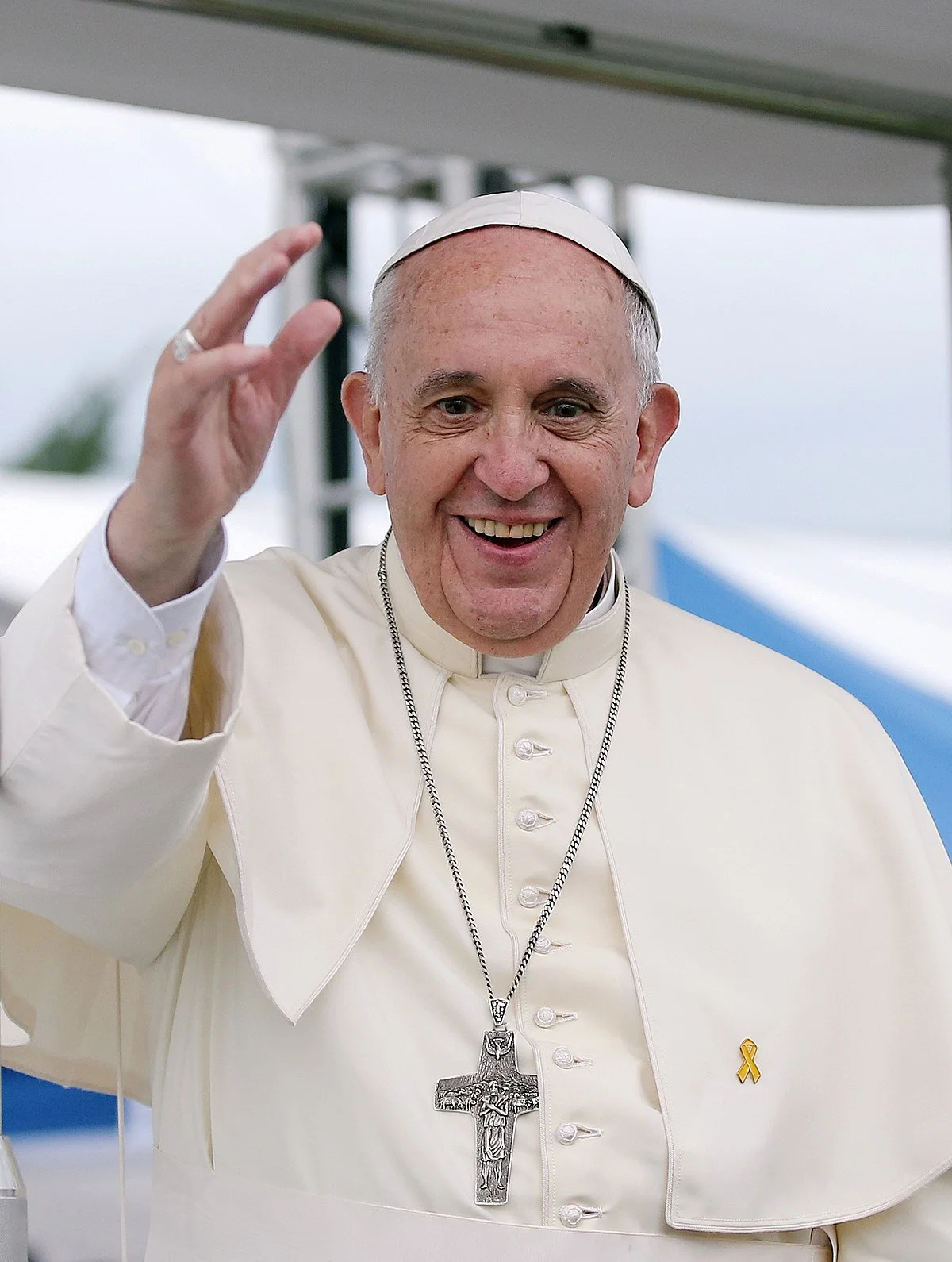
Pope Francis’ pontificate turned 10 years old last week and — like with an anniversary or milestone — became a time for the news media to reflect and reassess.

What will continue to matter — at least what I will be keeping an eye on — is how this pope will be covered both by the mainstream and Catholic press going forward. And, once again, news coverage of this pope often says as much about the journalists doing the coverage as it does about Pope Francis.

I wrote my own piece for Religion Unplugged on Francis reaching the milestone.

This is how I set up that feature:

The former Cardinal Jorge Mario Bergoglio, who was born in Argentina and is of Italian descent, was elected the 266th pope on March 13, 2013. It marked the first time a pontiff from South America has held the position. 

Following the resignation of Pope Benedict XVI in 2013, a papal conclave elected Bergoglio as his successor. He chose Francis as his papal name in honor of Saint Francis of Assisi.

Over that span of time, Catholics, especially in the West, have become much more polarized around political lines, a trend that has exacerbated divisions among Catholics. The 86-year-old Pope Francis, on a great number of issues, has been seen as a polarizing force for his progressive stances on several issues.

In fact, the “polarizing force” this papacy has brought with it was the major theme throughout the much of the coverage regarding Francis’ 10th anniversary as head of the Catholic church. The question? Was the force put to good use?

The narrative over the past 10 years has been that Francis’ papacy has largely steered the church leftward, in terms of doctrine and culture, after more than three decades of conservative leadership under Popes John Paul II and Benedict XVI.

But ambiguity has been the main issue with what this pope says, as opposed to what he does.


Please respect our Commenting Policy

Plug-In: News that had the attention of religion-beat pros last week (#RNA2023)

Plug-In: News that had the attention of religion-beat pros last week (#RNA2023)

BETHESDA, Md. — Greetings from just outside the nation’s capital.

The Religion News Association’s annual meeting was held last week, and I enjoyed the opportunity to connect with old friends and make new ones.

I attended my first RNA conference in Nashville, Tennessee, in the fall of 2002, just a few months after joining The Associated Press in that same city. I met the late, great Rachel Zoll — then one of AP’s two national religion writers along with the legendary Richard Ostling — at that meeting. What a blessing!

We’ll stick with the RNA theme as we jump into the best reads and top headlines in the world of faith.

#RNA2023: That was the hashtag to follow the highlights at the religion writers meeting.

Thursday’s program featured reports by academics and journalists on the Spiritual Exemplars project by the University of Southern California’s Center for Religion and Civic Culture. ReligionUnplugged.com published a dozen or so of the profiles produced as part of that ambitious project on engaged spirituality.

Godbeat topics: As the conference opened, Religion News Service’s Bob Smietana led a session on “The Future of Houses of Worship.” Plug-in readers may recall that Smietana is the author of “Reorganized Religion: The Reshaping of the American Church and Why It Matters.”

Another session I really enjoyed: The Associated Press’ Holly Meyer moderated a discussion on “Praying and Playing: The Role of Sports in Religion.” In recent months, Meyer covered the Super Bowl ad campaign touting Jesus and wrote about football fans who see prayer as a Hail Mary.

Power Up: The Week’s Best Reads

1. Sex abuse crisis: “These survivors felt betrayed by local SBC officials. What their stories say about reform.”

Once again — as I told him in person Thursday — The Tennessean’s Liam Adams has produced an important, enlightening story about the handling of sexual abuse allegations within the Southern Baptist Convention. His stories are must-reads heading into the SBC’s annual meeting in New Orleans in June.


Please respect our Commenting Policy

A Jewish book that Christian strategists (and reporters) should be reading right now

A Jewish book that Christian strategists (and reporters) should be reading right now

Much of organized Judaism in the U.S. is “crumbling” and destined to suffer even worse decline in coming years, contends Rabbi Danny Schiff in his new book “Judaism in a Digital Age: An Ancient Tradition Confronts a Transformative Era” (Palgrave Macmillan).

Christian strategists face much the same cultural upheaval and should pay attention to this examination, alongside Jews and religion-beat journalists. Echoes of the “Mainline” Protestant plight are especially noteworthy. And consider the stakes for Judaism when the United States has 70% of the world Jewish population.

Schiff, a scholar with the Jewish Federation of Greater Pittsburgh, focuses on the two branches that dominated U.S. Judaism over the past century. Reform Judaism is devoutly liberal, with broad individual choice on belief and practice. Conservative Judaism is more tradition-minded — but has lately floated in Reform’s direction. The book pays less notice to the faith’s growing third main branch, Orthodoxy, because it is relatively stable as it resists modern pressures.

Here’s the situation in a numerical nutshell: As of 1990, 73% of U.S. Jews identified with these two main non-Orthodox branches. By Pew Research Center’s major Jewish survey in 2020, their combined following was down to 54%, while 32% of Jews reported “no particular identity” in terms of religion. (The Orthodox were a 9% minority that will grow due to higher birth rates.)

For Schiff, the years around 1990 were the end of an era when “partial emancipation” from past social barriers and prejudice turned to “hyper-emancipation.” Antisemitism, though still existing, was extinct in polite society.

A related sign was the prevalence of intermarriage with non-Jews, once relatively rare. By the 2010-2020 decade, 72% of marriages by the non-Orthodox were with non-Jews. Inexorably, that lowered the odds that children would follow in Judaism as adults. Added problems were widespread divorce, less marriage and lower birth rates. Finally, “barriers to leaving Jewish life are virtually non-existent.”


Please respect our Commenting Policy