Worship

Plug-In: After the death of Benedict XVI -- questions about his legacy and his funeral

Plug-In: After the death of Benedict XVI -- questions about his legacy and his funeral

I’m your Weekend Plug-in columnist, and I’m excited to launch the fourth year of this newsletter.

Plug-in aims to highlight the best reads and top headlines in the world of faith. In 2023, we’re tweaking our format to make it even smarter and more concise.

Let’s jump right in!

What To Know: The Big Story

Pope Emeritus Benedict XVI died Saturday at age 95. Clementi Lisi recounts the life of the first pope in 600 years to resign.

Pope Francis presided over the funeral Mass for his predecessor, as Lisi reports. But some found fault with Francis’ brief homily for Benedict, according to The New York Times’ Jason Horowitz and Ruth Graham.

For more coverage from the Vatican, follow The Associated Press’ Nicole Winfield, the National Catholic Reporter’s Christopher White, Religion News Service’s Claire Giangravé and the Wall Street Journal’s Francis X. Rocca.

Looking ahead: Francis may have a freer hand after Benedict’s death, Rocca reports. But U.S. bishops’ rift with Francis is unlikely to ease, according to AP’s David Crary. At Crux, Elise Ann Allen explores whether Benedict’s death might open the door to new rules for retired popes.

More: Lisi presents “5 Catholic storylines you need to follow closely in 2023.”

Power Up: The Week’s Best Reads

1. Football and prayer: In America, the phrase “thoughts and prayers” is uttered frequently at painful times, as Poynter.org’s Al Tompkins notes.

But what happens when people actually pray?

Please respect our Commenting Policy

Flashback: The late, great Walter Cronkite did some thinking about religion news

Flashback: The late, great Walter Cronkite did some thinking about religion news

Did you know that the late, great CBS News anchor Walter Cronkite, one of the most important news icons of all kind, once worked as a “church editor” for a mainstream newspaper in Houston (apparently the old Houston Press)?

That was a detail from his life that I missed. I had read, long ago, that he was a “cub reporter” after his college years, yet before he broke into broadcasting. But time as a “church editor”? That’s a journalism title from the old, old days, one that is even more condescending than the more common and inaccurate label “religious editor (as opposed to “religion” editor.

Anyway, a religion-beat friend recently send me a photocopy of a 1994 interview with Cronkite that ran in The Christian Century, the influential mainline Protestant journal. I can’t find it online, although it was quoted by Religion News Service in an a short obit — “And that’s the way he was” — in 2009.

Encountering that “church editor” label reminded me of the old “Lou Grant” show episode that I used as the opening for my graduate project at the University of Illinois in Urbana-Champaign, which ran — in a much condensed form — on the cover of The Quill in 1983. The headline on that journal essay was: “The religion beat: Out of the ghetto, into the mainsheets.

The “ghetto”? That was the “church page.” The overture of that Quill piece is long, but it will provide some context for the Cronkite remarks that I will share here:

As was often the case, Lou Grant was working on two problems at once. At first the problems seemed unrelated.

The Los Angeles Tribune had lost its religion editor. City editor Grant had searched far and wide and, of course, no one was interested in the position. After all, what self-respecting journalist would want to be stuck with the religion beat?

Problem number two was how to get rid of lazy, often-drunk, no-good reporter Mal Cavanaugh. All through this episode of Lou Grant the management of the Trib had been trying to find a way to get Cavanaugh to resign.

Then, a spark of inspiration. The script is simple:

LOU: Congratulations, Mal. You're the Trib's new religion editor.


Please respect our Commenting Policy

Nondenominational era 2.0: What are America's biggest local Protestant churches?

Nondenominational era 2.0: What are America's biggest local Protestant churches?

THE QUESTION:

What are America’s biggest local Protestant churches?

THE RELIGION GUY’S ANSWER:

Through American history, Catholic parishes tended to have large memberships while local Protestant congregations were relatively small, with a few prominent exceptions. But beginning in the 1970s, the U.S. has entered a remarkable era with, by now, at least 1,750 Protestant “megachurches,” typically defined by average (pre-COVID-19) weekend attendance of 2,000 or more.

These flocks often say they’re simply “Christian,” but The Guy insists the “Protestant” label is truly accurate. Most are young and they’re overwhelmingly “evangelical” in belief and ministry. Which are the biggest of these “big box” churches?

Outreach magazine posts annual listings of the 100 largest, based on churches’ own reports, and also calculates the 100 fastest-growing congregations. Both rankings are available at this website. The stats are collected by the Southern Baptist Convention-linked Lifeway Research and the Hartford Institute for Religion Research. The key: Look for the word “nondenominational.”

Here are the top 20:

* Life Church, Edmond, Oklahoma (85,000 weekend attendance counting all off-site locations; affiliated with the Evangelical Covenant Church).

* Church of the Highlands, Birmingham, Alabama (60,000; nondenominational).

* Lakewood Church, Houston (45,000; nondenominational).

* Crossroads Church, Cincinnati (35,253; nondenominational)

* Christ’s Church of the Valley, Peoria, Arizona; (30,482; Independent Christian Churches — see explanation below)

* Saddleback Church, Lake Forest, California (28,000; Southern Baptist Convention)


Please respect our Commenting Policy

Podcast: Benedict XVI protected ancient doctrines, while looking into an ominous future

Podcast: Benedict XVI protected ancient doctrines, while looking into an ominous future

The passing of any pope unleashes waves of news commentary, frequently with supporters clashing with critics in an attempt to help shape the narrative heading into the conclave to pick the next occupant of the Throne of St. Peter.

What about the passing of a pope emeritus? That would make things simpler, since there the current pope was still alive and in charge. Right?

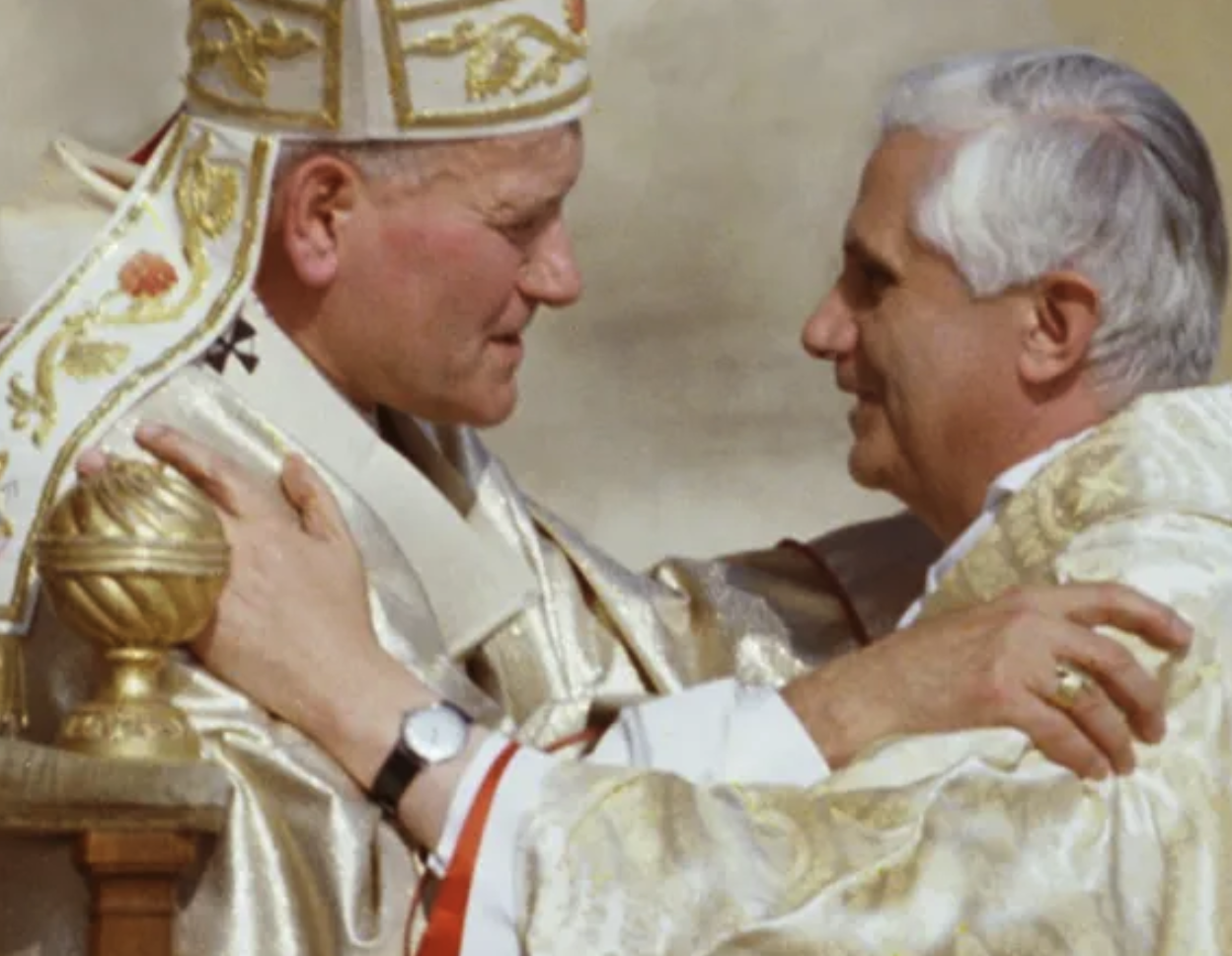
Apparently not. The death of Pope Benedict XVI, if anything, seemed to raise the stakes in many lingering debates in Catholic life. My takeaway is that it represented the final, formal close of the era of St. Pope John Paul II, as well as that of Pope Benedict XVI, who, as Cardinal Ratzinger, had played a crucial theological role in support of John Paul.

Thus, this event — for many on the Catholic right and left — marked the end of the “Veritatis Splendor” era, with John Paul II’s emphasis on the defense of transcendent truths, and the open door into the Synod on Synodality era, with its modern Jesuit emphasis on dialogue and evolving doctrine.

The complex nature of this transition provided the hook for this week’s “Crossroads” podcast (CLICK HERE to tune that in).

How complex? For a glimpse of the sweeping nature of this story, check this post from the Catholic listserv Big Pulpit — which circulates daily lists of URLs to news reports, blog posts, podcasts and other commentary on Catholic affairs.

The January 2 offering include a list of “The Top-10 Most Visited Links” about the death of Pope Benedict XVI. That was followed with the “Next-10 Most Visited Links.” Then there was “Another-10 Most Visited Links” and “The-Next-Another-10 Most Visited Links.” This went on and on for another screen or two, with a total of 80 must-read links for that day.

That’s all. Good luck reading all of that — plus countless other offerings in both the mainstream press and countless Catholic commentary sources.

GetReligion readers will not be shocked to discover that, for many journalists, the death of this orthodox theologian was primarily a political story.


Please respect our Commenting Policy

Clergy or spies? Concerning that New York Times update on accusations inside Ukraine

Clergy or spies? Concerning that New York Times update on accusations inside Ukraine

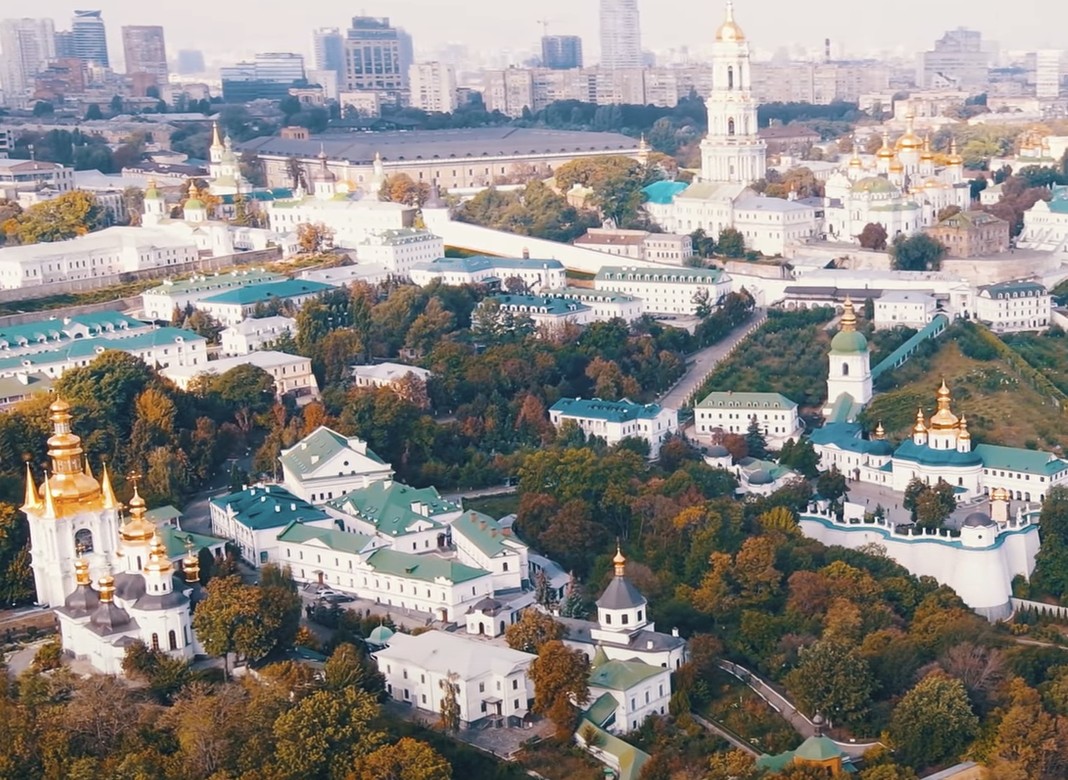
There are many, many facts about Orthodox church life in Ukraine that are hard to verify right now — for obvious reasons.

Civil wars create waves of fog that make it hard for reporters to do their job — if one assumes journalists have some responsibility to attempt to test the fact claims of armies on both sides.

All of this is relevant to that New York Times story that ran the other day with this headline: “Clergymen or Spies? Churches Become Tools of War in Ukraine.” Let me stress that this was an important story about an important topic. It would shocking if there were not divisions among Orthodox clergy and their parishes during a civil war.

Basically, this Times story is a press release built on evidence gathered by Ukrainian officials who want to shut down the historic Ukrainian Orthodox Church (UOC), which has for centuries had canonical ties to the Russian Orthodox Church. That church has done everything possible — under Orthodox polity — to cut its Moscow ties, while waiting for some kind of intervention from the world’s Orthodox patriarchs.

On the other side, the United States, the European Union and the Ecumenical Patriarchate in Istanbul have backed the creation of the new Orthodox Church in Ukraine (OCU) — which is, no surprise, backed by the current government of Ukraine.

So, before we get to the central claims of the Times story, let’s pause and ask a rather important question: How many Orthodox parishes, and clergy, are there in Ukraine these days? Yes, it complicates matters that some have been destroyed, by forces on both sides, and some have been closed or seized. How many parishes have been shut down or seized, and by whom? How many parishes have split? These are the kinds of questions that are hard to answer during a civil war.

Here is some interesting material from a source on the left side of Orthodox life here in the United States, the Orthodox Christian Studies Center at Fordham University in New York City. The headline on this blog post: “Which Orthodox Church in Ukraine is the Largest?” It was written by Thomas Bremer, a retired professor in Eastern Church studies at Münster University, Germany. Let’s walk through some key info:

Regarding parishes, the Ukrainian authorities have very thorough statistics. Every religious community that wants to exist legally in Ukraine has to register … and to provide data regularly about numbers of parishes, clergy, training institutions, etc.


Please respect our Commenting Policy

Top trends of 2022? There are plenty of political and religion stories in these tweets

Top trends of 2022? There are plenty of political and religion stories in these tweets

It’s certainly been a volatile year on social media (#DUH).

Twitter is my platform of choice. It does exactly what I need it to do because it’s such a visual medium.

Post a graph. Write 50 or 60 words and then wait a few minutes to see what happens.

In many ways, it’s the antithesis of what it means to be an academic. We are taught to qualify every statement, to never engage in hyperbole, to use 1,000 words when 500 would do. Twitter has been teaching me over the last five years about how to visualize data in the simplest manner possible. It’s taught me that if the average reader can’t understand the point I’m trying to make in 280 characters, then it’s probably not worth making.

Then, Elon Musk bought the whole company. I can’t say that I agree with every decision that he is making in steering the Blue Bird Site, but I honestly don’t have a great alternative. So, I will go down with the ship, I suppose.

But, the end of the year always offers a nice opportunity to pause and reflect on what “worked” on Twitter. Out of the nearly 1,400 tweets I sent this year, I wanted to take the opportunity to catalog the five tweets that got the most retweets in 2022. Here they are in reverse order.

5. Education and Religion

I swear I could post a variation of this one once a month and it would get a ton of attention. It’s a really simple bit of analysis, to be honest.

The conclusion is straightforward and widely known among quantitative scholars of American religion. Folks with a higher level of education are more likely to align with a religious tradition and less likely to say that they are a religious “none.”

This reality replicates in every dataset that I’ve ever seen. Yet, it comes as an absolute shock to people on Twitter. Why is that? Any thoughts?


Please respect our Commenting Policy

Hey! The Gray Lady noticed the Christmas on Sunday debates. Let's dig into that (again)

Hey! The Gray Lady noticed the Christmas on Sunday debates. Let's dig into that (again)

It’s almost Christmas.

At least, it’s almost Christmas if you are one of those strange people who think “Christmas” is the same thing as the feast of the Nativity of Our Lord Jesus Christ. However, thinking about this holy day in those terms requires negotiating a maze created by school calendars, travel, office parties, family traditions and, yes, worship services. And then there is the cultural steamroller called “The Holidays,” led by the powers that be in government, shopping malls and mass media.

I bring this up because of that New York Times story that ran a few days ago: “O Come All Ye Faithful, Except When Christmas Falls on a Sunday.” It’s a story well worth reading and we will get to it shortly.

However, if you follow the GetReligion podcast, you know that I’ve been expecting the hot social-media debates about the whole “Christmas on Sunday” kerfuffle to eventually bleed over into the mainstream press. Check out this “Crossroads” episode: “Is Christmas 'news'? Not really, unless it is a case of 'Christmas AND ...'

Before that, I wrote an “On Religion” column hooked to a new study by Lifeway Research. Here’s that headline: “When is Christmas? That depends on the person asking.” If you dig into those numbers, you’ll see a bright red line running between two different brands of Protestantism — those with roots in traditions that include some form of liturgical calendar and those that do not, especially the rapidly growing world of nondenominational evangelical and charismatic/Pentecostal churches. He’s a key chunk of that column:

In churches with centuries of liturgical traditions, the Nativity of Our Lord Jesus Christ is Dec. 25, following the quiet season of Advent (Latin for "toward the coming"). This year, Christmas falls on Sunday and, for Catholics, Anglicans and others, the Christmas Eve Midnight Mass is one of the year's most popular rites. This opens a festive season that continues through Jan. 6, the Feast of the Epiphany. Many Eastern Orthodox Christians follow the ancient Julian calendar and celebrate Christmas on Jan. 7, after Nativity Lent.

In the United States, some kind of Christmas Eve service remains the big draw, according to almost half (48%) of Protestant pastors contacted in a new study by Lifeway Research. The frequency of high-attendance church events builds until Christmas Eve, then declines sharply.


Please respect our Commenting Policy

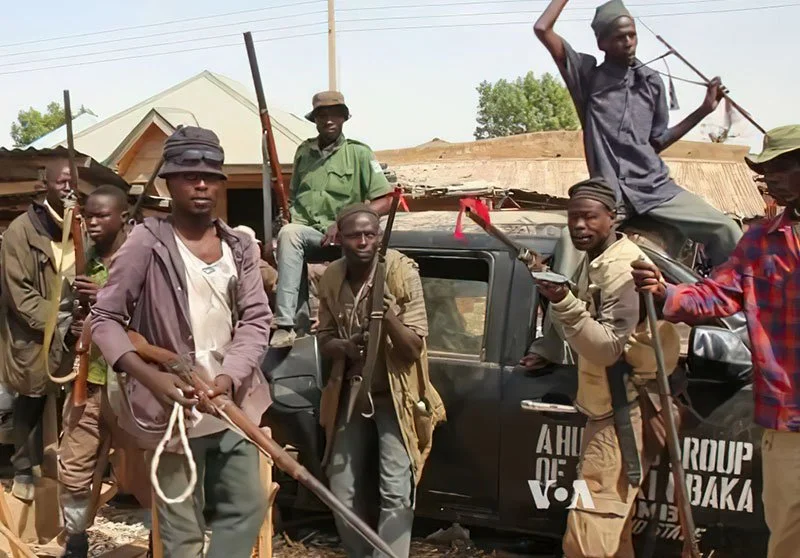
Buried story of 2022? The persecution of Christians keeps surging around the world

Buried story of 2022? The persecution of Christians keeps surging around the world

You want news?

The 2022 report from the Open Doors organization (CLICK HERE) says “persecution of Christians has reached the highest levels” since it began accumulating data for its annual “World Watch List” three decades ago. Hostile incidents have increased by 20% since just 2014, and some 360 million Christians, or 14% of the worldwide total, are said to have faced persecution, harassment, or discrimination.

Open Doors reports that it has documented the murders in one year’s time of 5,898 Christians for their faith (up 24% from the prior year); attacks on 5,110 local churches (up 14%); 3,829 abductions (a new high, up 124%); 6,175 victims held without trial; 24,678 subjected to beatings, death threats and other abuse; 6,449 with homes or businesses attacked; and 3,147 women targeted for rape or sexual harassment. 

Since that report was issued, the Nigeria-based civil rights group Intersociety reports that in just that one nation 4,020 additional killings and 2,315 abductions occurred from January through October, 2022.

The Memo therefore proclaims this international upsurge the Buried Story of the Year, a major, newsworthy global scourge widely featured by religious media — yet all but ignored by much of the “Mainstream Media.”

Journalists will have another peg for remedying this sin of omission when Open Doors issues its 2023 report early in the new year.

One noteworthy media exception, timed for Christmas a year ago, was a thorough New York Times survey of widespread harassment of Christians in India. Also, Reuters this month produced a massive investigation of 10,000 forced abortions conducted by the military in chaotic Nigeria, indicating rape is a widespread tactic used to terrorize Christian women.

On a broader time frame, the Center for the Study of Global Christianity estimates that 1 million Christian martyrs were killed in the first 10 years of the 21st Century.


Please respect our Commenting Policy

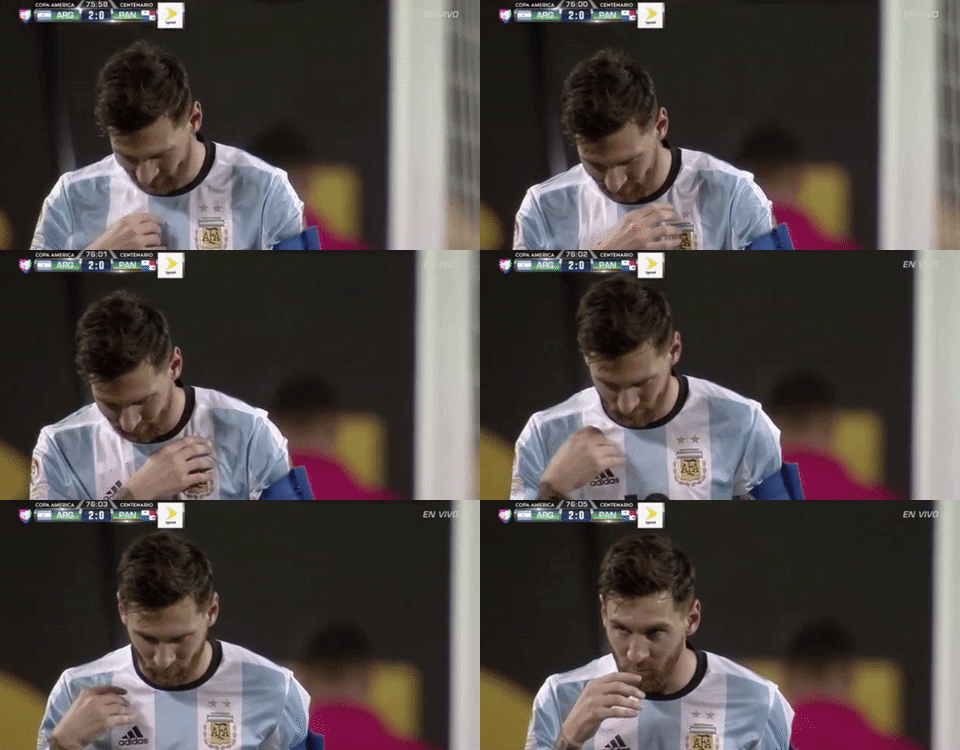
Soccer and God-talk: Lionel Messi's Catholic faith was part of epic World Cup drama

Soccer and God-talk: Lionel Messi's Catholic faith was part of epic World Cup drama

LUSAIL, Qatar — Soccer superstar Lionel Messi went out of his way to avoid a gaggle of French defenders throughout the World Cup final.

But Messi didn’t dodge the role that his Catholic faith played in Argentina’s epic win over France, praising God for his personal career success after the penalty-kick shootout in a World Cup final that will be remembered as the best in the tournament’s 92-year history.

“It’s just crazy that it became a reality this way,” Messi said. “I craved this for so long. I knew God would bring this gift to me. I had the feeling that this time was the one.”

Messi, a practicing Catholic, answered questions from reporters after Argentina’s victory at the 89,000-seat Lusail Stadium in the suburbs of the capital Doha. It was a game of ups and downs. Argentina twice squandered a lead (2-0 at halftime and 3-2 in extra time), but triumphed in the end on penalties after the game ended 3-3.

In leading Argentina to a third World Cup — after wins in 1978 and 1986 — Messi also replaced countryman Diego Maradona’s and even Brazilian legend Pele as the greatest player to have ever kicked a soccer ball.

Maradona, who died two years ago, is a global icon. In Argentina, he has enjoyed a status reserved for a deity. There’s even a church in which the faithful gather in his name. It’s impossible to avoid faith when talking about football in Argentina.

In an interview following the win against France, Messi, who typically makes the sign of the cross and points towards the sky after scoring goals, again mentioned God as the reason for the victory.

“I just said that God was going to give it to me,” Messi told TyC Sports, an Argentine sports TV channel, referring to the World Cup trophy. “I was sure I had a feeling that this was the moment. We suffered a lot — but now it’s time to enjoy it.”


Please respect our Commenting Policy