Worship

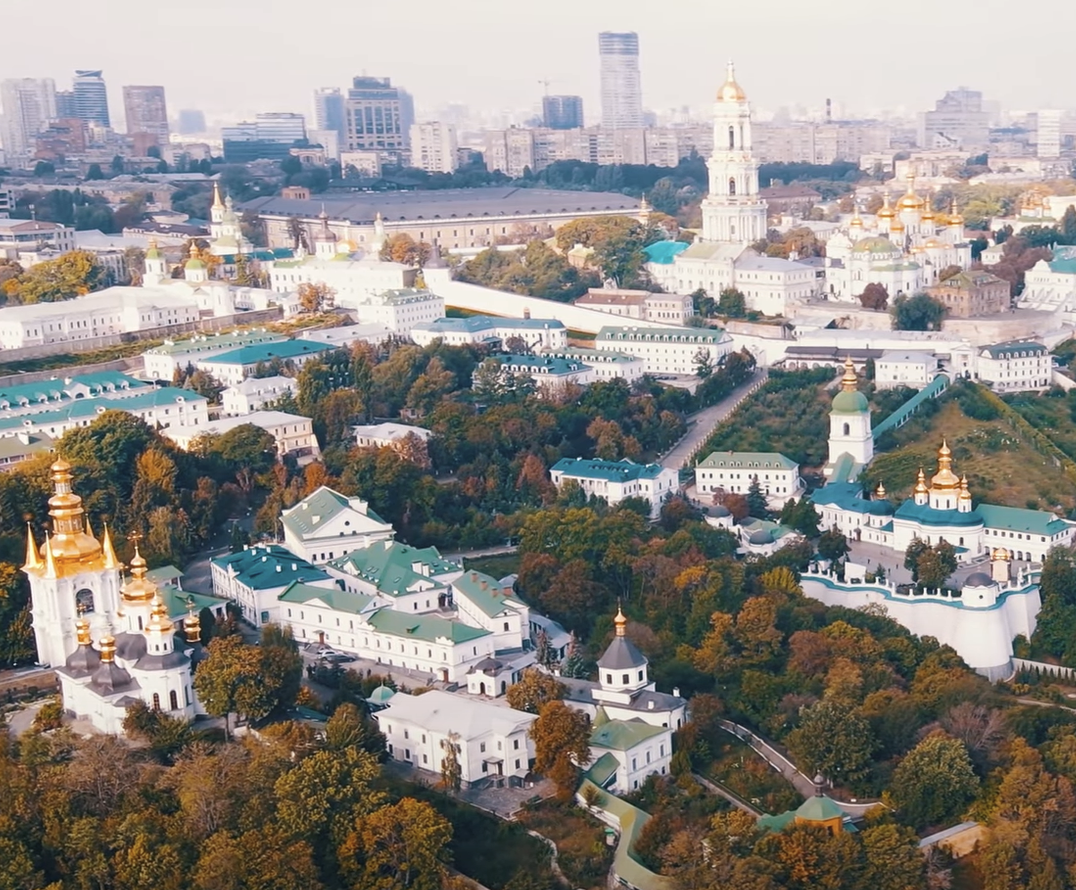
Machine guns in the Monastery of the Kiev Caves: Can reporters find sources for facts?

Machine guns in the Monastery of the Kiev Caves: Can reporters find sources for facts?

Let me begin with some personal remarks, since it would be valid for readers to raise these issues.

Yes, I am an Orthodox believer who has — twice — worshipped with the monks of the Monastery of the Kiev Caves. I have walked its matrix of underground sanctuaries, tombs and monastic cells. It’s hard for me to imagine something more horrifying than soldiers with machine guns inside the Lavra, passing the bodies of numerous saints. I confess that, for a decade, I have prayed that we would not see a military takeover of this sacred site by forces on either side of the divides inside Ukraine.

Yes, I saw the New York Times report with this headline: “Ukraine Raids Holy Site Amid Suspicion of Orthodox Church Tied to Moscow.” I have read a dozen or so other mainstream media accounts of the rising tensions about the current Ukrainian administration considering some kind of Lavra takeover.

All of these reports are based on information from government officials and the leaders of the new Orthodox Church of Ukraine, which was — depending on the sources cited —created by Western Ukrainian leaders, the U.S. State Department (under the administrations of Donald Trump and Joe Biden), the government of Turkey and/or the first-among-equals Ecumenical Patriarch who leads the tiny Orthodox body that remains based in Istanbul.

These reports continue to ignore or downplay the statements and actions of the historic Ukrainian Orthodox Church, led by Metropolitan Onuphry, which has — since the day of the Russian invasion — stressed its total opposition to this action of the Vladimir Putin government in Moscow. This church, the canonical church of Ukraine for many generations, has taken steps to cut its ties to Orthodox leaders in Moscow, even as its leaders have recognized they do not have the clear authority to do so. They appear to be pleading for the wider world of Orthodoxy (as in patriarches of multiple ancient churches, not just Istanbul) to intervene, somehow, in this crisis.

As a rule, mainstream journalists have expressed little interest in the actual Orthodox traditions and laws linked to this tragedy. In particular, the press has ignored the global voices of the Orthodox who oppose Putin, but support Metropolitan Onuphry and, thus, the monks of the Lavra.

Frankly, my head is spinning as I try to deal with the myriad journalism issues involved in covering this massive story. I am aware that most journalists are limited in what they can cover, due to language issues and the difficulty of on-site work in the midst of this conflict. I want to look at two issues in this Times report because — this is a positive — it includes some remarks from an actual monk from the Kievan Caves. Such as:

Father Hieromonk Ioan, a member of the Kyiv monastery, said that the clergy there were not loyal to Moscow but did not shy away from the close historic ties with Russia. “We have certain relations with Russia and it’s painful for us what is going on now,” he said in an interview outside the monastery. …

Please respect our Commenting Policy

Good froth and substance in RNS feature about fading church's jump into coffee shop life

Good froth and substance in RNS feature about fading church's jump into coffee shop life

There is a style of news-feature writing that I have heard described, over the years, in words that sound something like this: “Don’t tell me a story about 100,000 people who are wrestling with a big, complex problem. Tell me a story about one person who stands for those 100,000 people.”

For years, this was the style of feature writing that we saw over and over in the “column one” features at the Wall Street Journal and the Los Angeles Times. When used by a skilled reporter, this strategy can help readers understand complex trends and events through the eyes of a well-chosen symbolic person or organization.

One of the biggest religion-news stories out there right now is the slow death of thousands of shrinking churches that face painful questions about what to do with their buildings and the legacies of the believers who once filled the pews. Statistically speaking, most of these churches are old-school mainline Protestant or Catholic congregations in urban or small-town settings. But, truth be told, this is a trend that will torture everybody, sooner or later.

This brings me to a fine Religion News Service story that ran the other day with this double-decker headline:

A once-dying church hopes to reinvent itself with coffee and kindness

Embrace Church had two years left to live. Rather than wait for the end, the church sold its building, reinvented itself and invested in a local coffee house.

Literally, my only question about this story is whether the “summary” paragraph explaining the big picture could have been moved up a bit — somehow. That, gentle readers, is a tiny, tiny nit to pick. Here is the overture:

Community Covenant Church in Kirkwood, Missouri, had a problem common to thousands of churches around the country: an aging congregation, a shrinking budget, a too-big building that spent most of the week empty.

And the clock was ticking.


Please respect our Commenting Policy

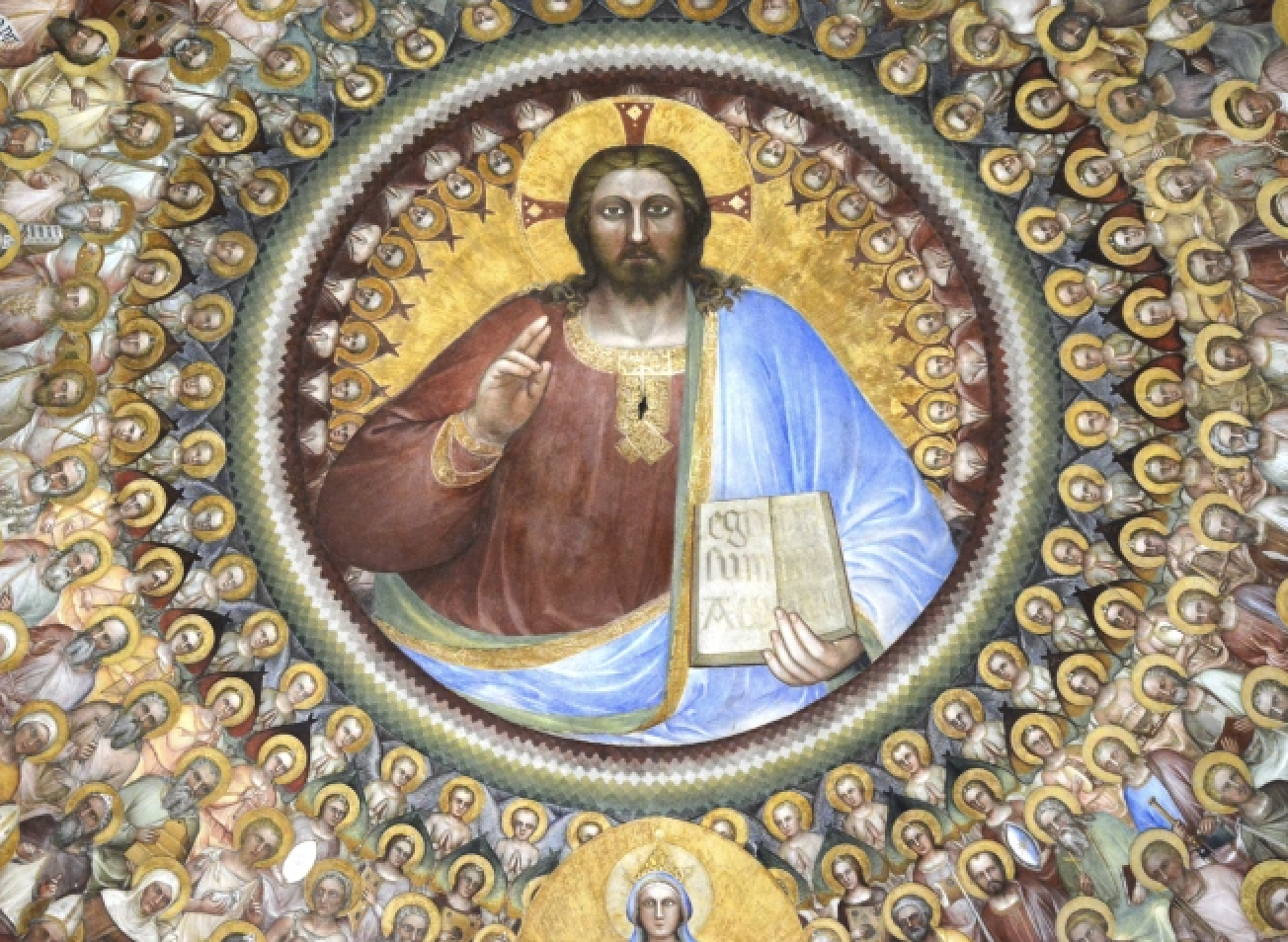
Why do ancient churches pray for the dead, while many modern churches do not?

Why do ancient churches pray for the dead, while many modern churches do not?

THE QUESTION:

“Why Do Catholics Pray for the Dead?”

THE RELIGION GUY’S ANSWER:

A Catholic News Agency feature for All Saints’ Day with the above headline was written by senior Rome Correspondent Hannah Brockhaus. One of The Guy’s colleagues immediately critiqued that wording because Eastern Orthodox Christians likewise pray for the dead — although in a different mode from Catholics, as we’ll see.

Perhaps the appropriate question should instead be: Why don’t Protestants pray for the dead when these other Christians have done so for many centuries?

There’s long-established history behind the practice of Christians during their earthly life praying to benefit fellow believers who are dead. This was commended by revered theologians of the early church.

By the early 5th Century, St. Augustine said “the whole Church observes this practice which was handed down by the Fathers.” He stated that through parishioners’ prayers, Masses, and donations, “there is no doubt that the dead are aided, that the Lord might deal more mercifully with them than their sins would deserve.”

The modern Orthodox catechism “The Living God” (St. Vladimir’s Seminary Press) teaches that just as Jesus and St. Stephen prayed for forgiveness even for the people who were executing them, so “the prayer of the righteous can also help to obtain forgiveness for a sinner even if he is already dead.”

At this point, Protestants will object that the Bible does not teach such a concept. Their founding principle of sola scriptura means Christian beliefs are defined solely by explicit teachings in Scripture and not by church traditions, even ones that are longstanding and deep-seated.


Please respect our Commenting Policy

Irish priest dares to preach on sex and sin -- creating a hellish media firestorm

Irish priest dares to preach on sex and sin -- creating a hellish media firestorm

For centuries, Irish Catholics heard priests deliver sermons about sin, hell, repentance, grace and heaven.

Times have changed and an 80-year-old priest in County Kerry didn't get the memo.

"How will people know that God wants to forgive them if we don't tell them?", said Father Sean Sheehy, preaching as a substitute priest at St. Mary's Church, Listowel. "How will people who are lost, be found, if we -- as God's people -- don't call them and say, 'Look, God loves you. He has come to call sinners. But he wants you to have life, and to have it to the full'? …That's what he wants. He wants you to live life to the fullest."

The problem was that Sheehy's October 30 sermon stressed ancient Catholic doctrines on behaviors many modern Catholics refuse to call "sins."

This caused a media storm, including this Irish Times headline: "Fr Sheen Sheehy's Listowel sermon was an uncomfortable reminder of who we really were." Also, Kerry Bishop Ray Browne apologized, after 20-plus parishioners walked out of the rite, and barred Sheehy from saying Mass until the parish priest returns to the altar.

During his sermon, Sheehy fiercely condemned core doctrines of the Sexual Revolution, while defending Catholic teachings on marriage and sex.

"What is so sad today is you rarely hear about sin but it's rampant. It's rampant," he said. "We see it, for example, in the legislation of our governments. We see it in the promotion of abortion. We see it in the example of this lunatic approach of transgenderism. We see it, for example, in the promotion of sex between two men and two women.

"That is sinful, that is mortal sin and people don't seem to realize it. … And we need to listen to God about it -- because if we don't, then there is no hope for those people."

In his public statement about the furor, Bishop Browne said it's crucial for Catholics to have "total respect for one another" and it was wrong for Sheehy to address these issues during a weekend Mass.

"I apologize to all who were offended," he said. "The views expressed do not represent the Christian position."


Please respect our Commenting Policy

Podcast: New York Times dwells (#surprise) on right-wing politics in the Latin Mass wars

Podcast: New York Times dwells (#surprise) on right-wing politics in the Latin Mass wars

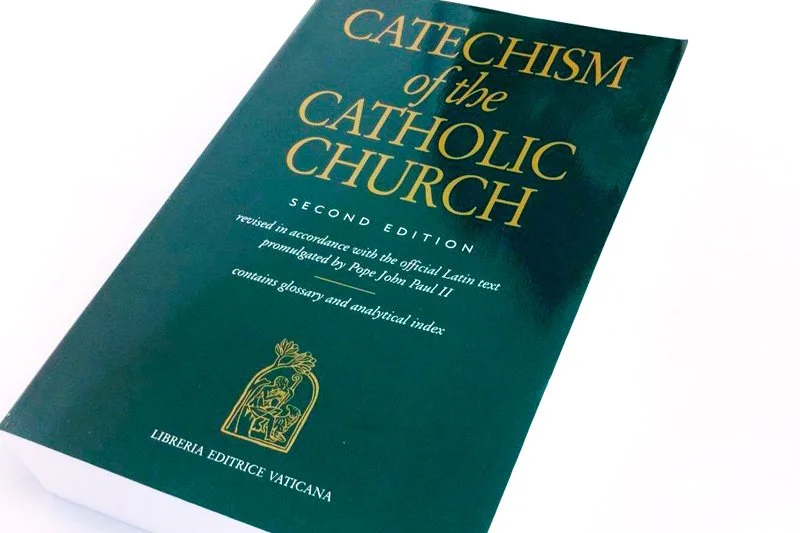
What do you call a Roman Catholic who believes the church’s teachings on centuries of moral theology, as in doctrines stated in great detail in the church’s official, and easily available, Catechism?

For journalists who do not trust the U.S. Conference of Catholic Bishops at this moment in time, here is the Vatican website copy of the Catechism.

According to the New York Times these pro-Catechism Catholics are part of a “rising right-wing strain within American Christianity as a whole” (I added bold text).

Then again, they might simply be “socially conservative and tradition-minded” folks. Or they may be people who support a “brand of new hard-right rhetoric and community” found in nasty corners of the Internet.

Then (yet) again, they may — this is the important part — be Donald Trump supporters.

But one thing they are not is normal Catholics. People who defend the stated teachings of the church are strange Catholics.

I raise this question because of a fascinating recent Times report that gained traction online for some obvious reasons. This feature was the hook for this week’s “Crossroads” podcast (CLICK HERE to tune that in). Here is the double-decker headline on what was, for me, a interesting but at times bipolar story:

Old Latin Mass Finds New American Audience, Despite Pope’s Disapproval

An ancient form of Catholic worship is drawing in young traditionalists and conservatives. But it signals a divide within the church.

What makes this story so strange?

First of all, it offers some interesting information and images about the waves of people — including many, many large young families — who are embracing the ancient Latin Mass. I would, however, note that just as many or more of these believers are choosing Catholic churches that use the modern Novus Ordo rite, but offer services packed with chants, incense, processions, traditional prayers and, yes, even the Latin form of the Vatican II text. Someone should check and see how many people are requesting Eastern Rite Catholic parishes, as well.

In other words, the current campaign by the Vatican and strategic cardinals (in some blue American zip codes, for example) against the Tridentine Mass and, in some cases, other traditional forms of worship, may be part of a broader story.


Please respect our Commenting Policy

Whenever Donald Trump Era ends, what will America's religion landscape look like?

Whenever Donald Trump Era ends, what will America's religion landscape look like?

“Trump is toast.”

So proclaimed National Review’s Andrew McCarthy after the most shocking Republican Party flop since, oh, 1948, which was followed by the least shocking Republican event imaginable, Donald Trump’s Tuesday announcement of a third run for president.

McCarthy joins a significant lineup of conservative pundits and media in blaming the GOP’s embarrassment on Trump and his demands for 2020 election denial with resulting candidate picks. Democrats took the Grand Rapids, Michigan, area by 12.8%, for goodness sake. The former federal prosecutor contends that Trump has not only surrendered his 2024 chances but is certain to face federal indictment.

Well, no matter what such elite conservatives suppose, Trump retains a massive grassroots following. However, the first post-election poll of Republicans and Republican leaners, from YouGov, put Florida Governor Ron DeSantis as the 2024 front-runner with 42% to Trump’s 35%. A month earlier YouGov gave Trump 45% vs. DeSantis’s 35%. A poll of Texas Republicans was similar.

An intriguing Wall Street Journal package recently offered scholars’ speculations on what Russia will look like in the long term whenever Vladimir Putin’s reign ends. The media could borrow the idea to explore what the American religion landscape might look like when Donald Trump no longer rules the Republicans, whether that’s in the primaries or Election Day 2024, or Inauguration Day 2029.

If you grab the theme, also run this one past your sources: Has this secularized, former Mainline Protestant and onetime “reality” TV personality had more impact on American religion than any member of the clergy during these years?

Other assorted post-election musings.

As GetReligion often observes, Catholics are the swing vote to watch, since white evangelicals are locked into lopsided Republican loyalty (this long before the Trump years).


Please respect our Commenting Policy

Mainstream news? Archdiocese of Washington cancels 2023 Youth Rally and Mass for Life

Mainstream news? Archdiocese of Washington cancels 2023 Youth Rally and Mass for Life

Once again, it’s time to play “Is this a mainstream news story?”

Actually, I don’t know if I have used that precise name in the past, but you get the idea. The goal is to discern why some events in the news are treated as important news stories — as opposed to being mere religion-market or even “conservative” stories — and others are not.

Let’s start here. With pro-abortion-rights and same-sex marriage performing Catholic Joe Biden in the White House, was this story big news? Here’s the Washingtonian headline, which was typical of many others: “Washington’s Cardinal Won’t Deny Biden Communion.”

Next question: After the fall of Roe v. Wade, were victories by pro-abortion-rights candidates and activists in “purple” states a big news story? Sample Washington Post headline: “Abortion rights advocates score major midterm victories across U.S.

Next question: What about the election to pick the new leaders of the U.S. Conference of Catholic bishops? The current New York Times headline proclaims, “U.S. Catholic Bishops Elect Leaders for Anti-Abortion Fight: The bishops said they would redouble efforts to end abortion; a new president and vice president are expected to continue the conservative leanings of the hierarchy.”

The answers to these three questions are “yes,” “yes” and “yes.”

Now, let’s look at a new development that — I would argue — could connect those stories. Here is the Catholic News Agency headline. “Archdiocese of Washington cancels Youth Rally, Mass for Life held at March for Life events.”

To cut to the chase: As I type this, I have not been able to find any mainstream news coverage of this story. Here is the CNA overture:

The Archdiocese of Washington, D.C., announced that its annual Youth Rally and Mass for Life, which both typically take place in conjunction with the national March for Life in Washington D.C., have been canceled.


Please respect our Commenting Policy

What kind of believers want to sit in pews surrounded by their political allies?

What kind of believers want to sit in pews surrounded by their political allies?

Just over half of churchgoing American Protestants went into the tense midterm elections believing that the people in the pews around them would vote the same way they did.

A Lifeway Research online survey in September found that 50% of those in its national panel agreed with the statement, "I prefer to attend a church where people share my political beliefs, while 55% agreed that "My political views match those of most people at my church." At the same time, 10% were not sure about the first question and 22% the second.

"What we are seeing is a pretty complex situation," said Scott McConnell, executive director at Lifeway Research. While churchgoers are divided on the need for political uniformity in their pews, there are enough believers who take that stance to prove that "this is not one or two people that pastors need to talk to and try to understand. This is a GROUP of people in most of our churches and that's something pastors have to deal with now."

This new survey began with questions used in 2017, he noted, and while the results are similar some new trends are clear. In the earlier survey, 51% of the respondents felt their church was politically homogenous, with only 11% "strongly" agreeing. Now, 21% strongly agree. Also, a rising number of believers assume they can predict the politics of others in their churches. In 2017, 30% were unsure if they shared the views of others in their congregations, but that number dropped to 22% this time.

In a survey result clashing with a popular stereotype, those with evangelical beliefs (44%) were less likely than non-evangelicals (54%) to say they wanted a church in which believers shared their political views. The survey defined "evangelical" in doctrinal terms, stressing beliefs such as, "The Bible is the highest authority for what I believe" and "Only those who trust in Jesus Christ alone as their Savior receive God's free gift of eternal salvation." Other significant results included:


Please respect our Commenting Policy

Revenge-return by Bishop Gene Robinson, seen from two radically different viewpoints

Revenge-return by Bishop Gene Robinson, seen from two radically different viewpoints

It’s been a long time since I stepped into The Falls Church, a historic edifice in the middle of the northern Virginia city of Falls Church, where I lived for 12 years. It’s a spacious, lovely place, with a circular seating arrangement for a large congregation.

Next door is what they call the “historic church,” a much smaller brick building that dates back to 1769. At one time, George Washington was on the vestry. In Beltway culture, this is really important.

It was a major center for the conservative wing of the Diocese of Virginia, the nation’s largest Episcopal diocese back in the first decade of this century,. Then, in December 2006, 11 parishes or missions announced they were leaving for for orthodox theological pastures. The 2003 election of the Rt. Rev. Gene Robinson as the denomination’s first gay bishop was the beginning of the end for these folks, after decades of tensions on other doctrinal issues.

The legal battle over these historic properties lasted for years and the conservatives basically lost everything, including the crown jewel of them all — The Falls Church building. That is the background for Robinson’s recent visit to the church, which is kingdoms apart from what it once was. Whereas it was crowded to the gills on Sundays, the sanctuary is barely one-quarter full and rector (senior pastor) is a gay man, a possibility that would have horrified its former parishioners.

Robinson’s visit was covered by a conservative mainline Protestant website and by a Washington Post reporter. Guess which report had the most information and insights into the status of the current congregation? Juicy Ecumenism posted a piece by Jeffrey Walton, headlined “Gene Robinson Takes Victory Lap at Falls Church Episcopal” — filled with insider knowledge. I’ll begin with Robinson’s reactions.

He also highlighted gratitude for an invitation to speak at a parish that had prominently opposed his election and consecration.

“Words fail me when I try to describe to you what an honor it is to be here,” Robinson exclaimed. “When I got this invitation from [TFCE Rector] Burl [Salmon] I could hardly believe my ears and all day yesterday. When I was here, I just kept pinching myself: ‘you’re actually at the Falls Church in Virginia, oh my God.’”


Please respect our Commenting Policy