Worship

Here we go again: With Catholic news, reporters should be careful with this word -- 'reform'

Here we go again: With Catholic news, reporters should be careful with this word -- 'reform'

Let’s pause for a moment and reconsider a very loaded and tricky word that shows up all the time religion-news coverage (as well as political coverage, of course).

That word is “reform.”

For really, really, loyal GetReligion readers, I will admit that I am, in part, flashing back to this 2008 GetReligion post: “Who gets to "reform" what?” Once again, let’s look at some of the language that shows up in online dictionaries when you search for that term. To “reform” an institution or a law means to:

* make changes for improvement in order to remove abuse and injustices; "reform a political system" * bring, lead, or force to abandon a wrong or evil course of life, conduct, and adopt a right one; "The Church reformed me"; "reform your conduct" ... * a change for the better as a result of correcting abuses; "justice was for sale before the reform of the law courts" ... * improve by alteration or correction of errors or defects and put into a better condition; "reform the health system in this country" * a campaign aimed to correct abuses or malpractices. ...

The key words in that digital cloud are these: “improve by alteration or correction of errors or defects …”

Also, let me remind readers that I am not a Roman Catholic. Some people seem to be confused about that. My views on this topic are based on decades of reporting (and a graduate-school readings class focusing on the church before and after Vatican II) about the very complex world of Catholic life and thought.

With that in mind, let’s look at the top of a recent Religion News Service story that ran with this headline: “Can Pope Francis make real change for women? Vatican women leaders assess his chances.

VATICAN CITY (RNS) — A panel of women who have attained leadership positions in the Catholic Church met … to discuss Pope Francis’ ambitious plan to reform the power structures in the church, raising questions about female ordination, the role of bishops and the need for women theologians.
Please respect our Commenting Policy

Painting or icon? That big hole in New York Times report on Catholic University controversy

Painting or icon? That big hole in New York Times report on Catholic University controversy

Let’s start here: There is nothing new about artists painting images of Jesus as a Black man.

A few of these images may have been controversial at the time of their creation, in part because of the political motivations of some (repeat “some”) artists. But the vast majority are clearly works of Christian devotion showing reverence for the Incarnation of Jesus Christ. For many Christians, these images are way less problematic than the omnipresent Warner Sallman “Head of Christ” painting from 1940, depicting Jesus with light, wavy hair and very European features.

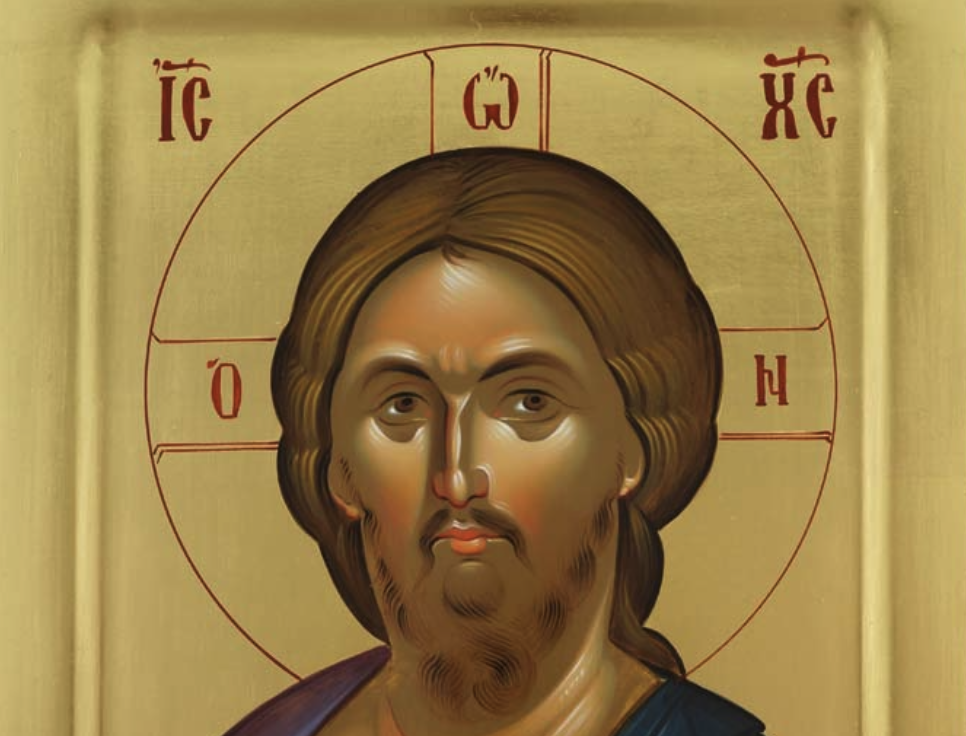
As an Eastern Orthodox Christian, the image of Jesus that I know best is the ancient Christ Pantocrator icon from St. Catherine’s Monastery at Mt. Sinai. It is a complex icon of Jesus that, well, would be hard to label as one of the “surfer Jesus” images in some contemporary churches.

This brings me to that New York Times story that ran the other day with this dramatic double-decker headline:

A Painting of George Floyd Roils Catholic University

At the Catholic University of America in Washington, conservative students called for a campus ban on further displays of an artwork that depicts Floyd as Jesus.

This story does a pretty good job of describing the timeline of this controversy — which is described as yet another clash over race, art and religion. It’s clear that, for the leaders of private schools, controversies of this kind are especially complex.

The problem, for me, is that the image in question — “Mama,” by Kelly Latimore — is consistently described as a painting based on the famous Pieta statue by Michelangelo.

Thus, what we have here is a “painting,” based on one of the most famous statues in Western Christian art, but is clearly meant to be interpreted as a holy icon in the Eastern Orthodox tradition.

Did you follow that? The journalism question here is whether the Times team did an adequate job of describing why the term “icon” — which does not appear in the story — is so important, if the goal is to understand the thinking of some of the Catholics (the story contains zero input from the Orthodox) who believe that this painting is blasphemous. Here is the overture:


Please respect our Commenting Policy

Still thinking about Latin Mass wars: With help from The Pillar and America magazine

Still thinking about Latin Mass wars: With help from The Pillar and America magazine

The Latin Mass story is not going away.

At this point, the question is where this emotional and more than symbolic conflict is going.

It’s clear that there is a small flock of traditional Catholics who view the familiar cadences of the Tridentine Rite Mass as an escape from the reforms — some would say modernization efforts — of the Second Vatican Council. But it also obvious that many bishops believe that this is not the case for the majority of the Catholics (especially young Catholics) who prefer the beauty of the Latin Mass.

Meanwhile, it’s clear that many powerful Vatican leaders, including Pope Francis, see use of the traditional Latin Mass as a powerful wedge issue that divides Catholics and they want to see it go away.

The question: Will the renewed efforts to crush the Tridentine create more dissenters, instead of smothering them?

This brings me to this weekend’s “think pieces” — drawn from two very different sources — the progressive Jesuit magazine America and The Pillar, a more conservative news and commentary site.

First, consider this essay at America: “I love Pope Francis’ commitment to dialogue — which is why his Latin Mass restrictions confuse me.”

Author Gregory Hillis begins by praising the Pope Francis encyclical “Fratelli Tutti,” focusing on its call for unity — built on “genuine dialogue rooted in love.”

The big question: Where is the loving dialogue about use of the Latin Mass?

We cannot be closed to others, Pope Francis taught, whether they be political or ideological opponents or whether they be people yearning to find a new life as immigrants. A “healthy openness never threatens one’s identity,” he wrote (FT 148). Too often we deny “the right of others to exist or to have an opinion,” and as a result, “their share of the truth and their values are rejected” (No. 15). Instead, Pope Francis urged us “to give way to a dialogic realism on the part of men and women who remain faithful to their own principles while recognizing that others also have the right to do likewise.” This, he continued, “is the genuine acknowledgment of the other that is made possible by love alone.”


Please respect our Commenting Policy

This is actually a doctrinal question: Did the infant Jesus cry?

This is actually a doctrinal question: Did the infant Jesus cry?

MARY (the appropriate name for person asking this question) ASKS: Did the infant Jesus cry?

THE RELIGION GUY'S ANSWER:

That’s a good one. A beloved Christmas carol says “the little Lord Jesus no crying he makes,” which would have been a tiny miracle.

But newborn reality -- and Christian doctrine -- are better expressed by Jesus' "tears" in “Once in Royal David’s City.” This charming children’s carol always begins the majestic “Festival of Nine Lessons & Carols" in King's College Chapel at Britain’s Cambridge University, sung by a choir of men and boys. As always, this service will be heard live at 10 a.m. (Eastern) Christmas Eve over U.S. public radio stations and internationally on the BBC.

Cecil Alexander's words:

For He is our childhood’s pattern; / Day by day, like us, He grew. / He was little, weak, and helpless; / Tears and smiles, like us, he knew. / And he feeleth for our sadness, / And He shareth in our gladness. …

The New Testament Gospels of Matthew and of Luke, which provide the earliest accounts of Jesus’ birth, tell us nothing about what his infancy or childhood were like, except for the incident of teaching in the Jerusalem Temple at age 12. But if pondered in terms of what Christianity has always believed, there’s every reason to assume the Babe of Bethlehem cried just like all other infants, and for the same physiological and emotional reasons.

That’s a solid inference from the faith’s central and mysterious belief that Jesus was God incarnate and at the same time fully a human being (“yet without sin”). The New Testament reports that just like everyone else the adult Jesus could be tired, hungry and perturbed, and experienced pain, grief and death.

In other words, truly and fully human, not inhuman.


Please respect our Commenting Policy

When is the Midnight Mass? All humor aside, there's history (and news) linked to this rite

When is the Midnight Mass? All humor aside, there's history (and news) linked to this rite

Once upon a time, before the creation of the Internet, there were these very, very powerful and all-knowing professionals known as “church secretaries.” Yes, I know that they have evolved into office managers and web czarinas.

But, long ago, if anyone needed to know something about church life, or really needed to reach the pastor (this is before smartphones, too), they called the “church secretary,” who basically served as an air-traffic-controller for everything happing in the church family.

Back in the 1980s, I wrote a news piece for The Rocky Mountain News (#RIP) about the question that church secretaries in Catholic parishes used to dread hearing over and over during the three or four days ahead of Christmas Eve. That question, of course, was: “When is the Midnight Mass?”

Honest. People would ask that and, truth be told, the Midnight Mass, in some parishes, doesn’t start at midnight. Hold that thought, because we will come back to it.

But this post, in the week before Christmas (for most Christians in America), is about the importance of the Midnight Mass and other Christmas Eve and Christmas services. You see, there are potential news stories here. Let’s discuss several of them, briefly.

First, there is an interesting fact that I learned long ago from the late Lyle Schaller, a Mainline Protestant maven who was an often-quoted expert on church growth and, as the Mainline world imploded, church survival. The easiest way to sum up the Christmas news angle that I learned from him is to share the top of a 2015 tribute column that I wrote about his work (“Lyle Schaller, the church fix-it man in rapidly changing times”):

All pastors know that there are legions of "Easter Christians" who make it their tradition to dress up once a year and touch base with God.

What can pastors do? Not much, said the late, great church-management guru Lyle Schaller, while discussing these red-letter days on the calendar. Rather than worrying about that Easter crowd, he urged church leaders to look for new faces at Christmas.


Please respect our Commenting Policy

So what is 'Christmas,' anyway? These days, Siri knows more than many believers

So what is 'Christmas,' anyway? These days, Siri knows more than many believers

This question rocks the Internet year after year: Is "Die Hard" a "Christmas movie"?

How about "Frosty the Snowman," "Home Alone," "Elf" or "A Bad Moms Christmas"? Is "A Christmas Story" really a "Christmas" story? What about those Hallmark Channel visions of romance, complicated families and wall-to-wall holiday decorations?

The answer to these questions, and many others, hinges on how Americans answer another question: What is "Christmas"?

Ask that question to an iPhone and Siri will quote Wikipedia: "Christmas is an annual festival commemorating the birth of Jesus Christ, observed primarily on December 25 as a religious and cultural celebration among billions of people around the world."

Most people know that much of the story, according to a new survey by Lifeway Research in Nashville. Nearly 75% of Americans say Jesus was born more than 2,000 years ago in Bethlehem and even more believe that Jesus is the Son of God the Father.

After that, things get fuzzy.

"Lots of people celebrate Christmas, but some have no interest in celebrating the birth of Jesus Christ," said Scott McConnell, executive director of Lifeway. "But even some of the people who do take the Christmas message seriously don't understand what it means. …

"This is a story that hasn't changed for 2,000 years, yet many people struggle to tell the story and get the details right. Many don't know why Jesus was born."


Please respect our Commenting Policy

New podcast: Baptisms are in the headlines, at the moment, for better and for worse

New podcast: Baptisms are in the headlines, at the moment, for better and for worse

Believe it or not, baptism is in the news.

In this case, we have some good news and some bad news.

What do you want to hear first, the good news or the bad news? In this week’s “Crossroads” podcast (click here to tune that in) we went with the good news first.

When I say “good news,” I am referring to a New York Times story that is kind of fun and contains tons of good information. However, this is a story that takes a trend in some of those giant, modernized evangelical megachurches and tries to turn it into a Big Idea piece. Hold that thought.

The headline: “Horse Troughs, Hot Tubs and Hashtags: Baptism Is Getting Wild.” Here is a big block of the thesis material:

Performing the age-old Christian ritual in a more informal style “conveys this isn’t your grandmother’s church,” said Drake Osborn, pastor of teaching and liturgy at Grace Church in Waco, Texas. His congregation moved into a former bowling alley in 2016 but never considered installing a built-in baptistery. Instead, Grace Church uses a foam model bought online for about $2,500.

The shift has taken place as many pre-21st-century symbols of church life have fallen out of fashion in evangelical culture, especially among churches that are expanding or building new facilities. Sanctuaries are now “worship centers,” and steeples and stained glass are out. Natural light is often eschewed in favor of a black-box theater aesthetic optimized for flashy audiovisual experiences and online streaming.

It is not just the architecture that is changing. Contemporary evangelical baptisms are often raucous affairs. Instead of subdued hymns and murmurs, think roaring modern worship music, fist pumps, tears and boisterous cheering. There are photographers, selfie stations and hashtags for social media. One church in Texas calls its regular mass baptism event a “plunge party.”

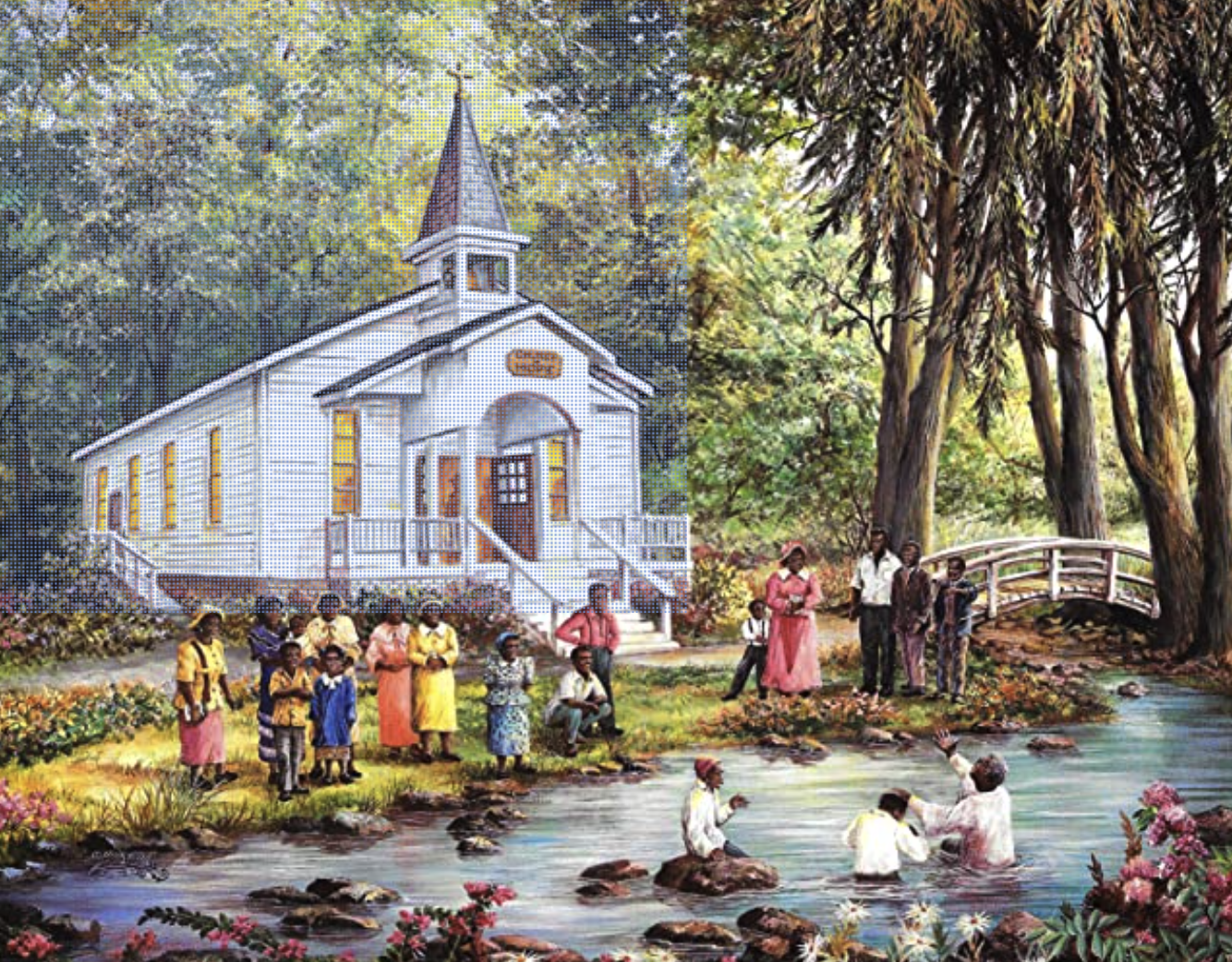
Well now. It may be true that “evangelical baptisms” are getting a little bit “raucous,” but that’s a rather strange statement to make in light of baptism traditions down the years in Black evangelical and Pentecostal churches.


Please respect our Commenting Policy

Tops in religion for 2021: Gallup spotlights America's downward Church Lurch

Tops in religion for 2021: Gallup spotlights America's downward Church Lurch

As Religion News Association colleagues vote on the top stories of 2021, here's The Guy's own pick for first place: Gallup spotlights the great downward Church Lurch in 21st Century America.

The polling organization, which is unmatched for data on trends that span decades — including a steady barrage of questions about religion — marked the Easter and Passover seasons by announcing that only a minority of Americans report membership in a religious congregation any longer.

Yes, yet again we confront those religiously unaffiliated "nones,” “nothing in particulars” and the long-emerging flock often called “spiritual, but not religious.”

The much-buzzed-about poll report, full details here, said membership rates held remarkably steady from the 73% in Depression-era 1937, when the question was first asked, through 70% in 2000. But now, self-reported affiliation has plummeted to 47% -- and a mere 36% for younger Americans in the Millennial generation. Equally significant, a three-year aggregate of 6,000 respondents in 2018-2020 also gave membership minority status at 49%.

This slump drew attention from media that rarely mention much less cover religion substantively. Assessing the many reactions, GetReligion boss Mattingly's post back in April — “Thinking with two key Southern Baptists: Concerning those scary Gallup Poll numbers” — astutely focused on two pieces by Baylor historian Thomas Kidd and the Rev. Russell Moore, who was soon to quit as president of the Southern Baptist Convention's Ethics and Religious Liberty Commission. They analyzed Protestantism with little specific to Catholicism or other faiths. Links to both articles are included in Mattingly's post.

Note that responses in 2000 would not capture the potential negative impact of COVID-19 — which was hurting attendance and donations — on future membership counts.

So, what's happening?


Please respect our Commenting Policy

Lessons learned from black-and-white visions of Christmas past -- movies from 1940s

Lessons learned from black-and-white visions of Christmas past -- movies from 1940s

It's a black-and-white movie Christmas, with snow falling as joyful families mingle on city sidewalks while window-shopping -- buying food, presents, decorations and fresh-cut trees for festivities that are only two days away.

For Americans, this scene represents the ghost of Christmas past, long before suburban malls, big-box scrums and Amazon.com. And as "The Bishop's Wife" opens, an angel -- a graceful Cary Grant -- enters this 1947 tableau, smiling at carolers and children and helping the needy and lost.

"Christmas is always in danger in Christmas movies -- we'd have no reason to make such movies otherwise," wrote critic Titus Techera, executive director of the American Cinema Foundation. In this classic movie, "we have a remarkable concentration of problems in one household: A man's faith, his family, community and church … are all tied together."

It isn't unusual to find miracles, tight-knit communities, glowing churches and parables about human choices, temptation, sin and redemption in old Christmas films, said Techera, contacted by Zoom while visiting Bucharest.

That's why Techera -- a native of Romania, before his work brought him to America -- has written four online essays about the lessons learned from watching '40s movies that were remade in the '90s. The other films in this Acton Institute series are "The Shop Around the Corner," "Miracle on 34th Street" and "Christmas in Connecticut."

There's a reason many modern Americans keep watching these movies, he said. Some yearn for a time before most Americans became so isolated, separated by jobs far from extended families, sprawling suburban neighborhoods and all the paradoxes built into digital networks that were supposed to keep people connected.

"What we see in these movies is a time when Christmas was a far less commercial celebration and there was quite a bit of continuity with traditions from the past. … For many, the church was part of that," he said. "Christmas was a family thing. It was a community thing. … Commerce was more subservient to ordinary life. Commerce had not taken over all of life, including Christmas."


Please respect our Commenting Policy