Worship

When a Catholic politician is denied Communion, why does Axios think he's heroic?

When a Catholic politician is denied Communion, why does Axios think he's heroic?

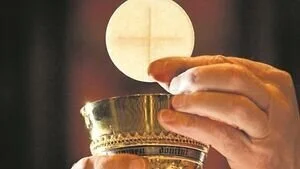
Ever since President Joe Biden took office, fellow GetReligionista Clemente Lisi has been writing articles about the new president’s inevitable clash with Catholic bishops over Communion, and how President Biden is regularly framed as a “devout” Catholic despite his major departure from said doctrine on life issues, not to mention religious liberty. The bishops, on the other hand, are framed as “right wing.”

The Communion conundrum has spread to a state where I used to live: New Mexico, home of the country’s largest annual pilgrimage of penitents who walk 30 miles every Good Friday from Santa Fe to the Chimayo sanctuary in the northern hills. New Mexico is drenched in Catholicism, starting around April 30, 1598, when Spanish explorers coming north from Mexico held a Thanksgiving Mass and dinner near the Rio Grande.

There are evangelical Protestants, Jews, Buddhists and other groups around the state, but the bulk of the populace is Catholic, so the Communion issue is going to matter there, which is why one bishop’s decision to bar a local Catholic politician from the altar makes waves. Here is how Axios framed it:

A New Mexico lawmaker denied Communion by a bishop over his vote to advance abortion protections told Axios exclusively he won't be bullied and looks forward to receiving Communion with President Biden one day.

Just for fun, I’ll also run the lede from the National Catholic Register just for comparison:

After a New Mexico state senator said he was denied Communion this weekend because of a political matter, his diocese responded that it had privately warned him he should not present himself for Communion, due to his obstinate support for a pro-abortion bill.

Two different takes, no? Back to Axios:

Why it matters: The example set by Sen. Joseph Cervantes, a Democrat, is drawing the attention of lawmakers around the country. Blue states are moving to protect abortion rights should the Supreme Court overturn or erode Roe v. Wade.

• "I won't have any problem finding to place to receive Communion," Cervantes said during an interview. "In fact, I look forward one day to receiving Communion at the same parish where President Biden does."

• He said other parishes and another diocese in New Mexico have offered to give him Communion, highlighting the split among U.S. Catholic bishops over elected officials and abortion.

The slant of this piece is a textbook example of why conservatives of all religious persuasions tend to loathe the media. The lede basically states takes Cervantes’ word for it that he is being “bullied,” without mentioning that Cervantes went out of his way to defy private exhortations from his spiritual overseers.

Please respect our Commenting Policy

Washington Post still thinks sin and repentance have nothing to do with Holy Communion

Washington Post still thinks sin and repentance have nothing to do with Holy Communion

For years now, quite a few mainstream journalists have made it pretty obvious that they think the bishops of the Catholic church have a moral and perhaps even legal obligation to let Catholics do whatever they want to do in public life while continuing to take Holy Communion.

All that matters, according this newsroom version of the evolving spirit of Vatican II, is that these Catholic individuals believe — as a matter of conscience — that they are good to go. Catholics who are on the right side of history even have the right to openly state, in word and deed, that they believe Catholic doctrine is wrong and should be changed. This used to be called Protestantism, but nevermind.

This brings us to yet another Washington Post report about the life and times of a Michigan judge named Sara Smolenski, her same-sex wife Linda and the East Grand Rapids parish in which she is not allowed to take Holy Communion. (For a flashback to earlier coverage, please see this Julia Duin post: “Press doesn't get why a Catholic priest would withhold Communion from outspoken gay judge.”)

This story does a great job of proving that progressive Catholics have strong views on this issue. The story also offers small bites of material from Catholics stating the church’s doctrinal stance on this matter. If you are looking for any sense of fairness and balance — such as Catholics explaining or defending church doctrine — then you are not going to find it in the Post coverage. Again.

One other key point: This story contains zero references to the role that Confession — the Sacrament of Penance — plays in Catholic teachings on sin, repentance, forgiveness, salvation and, thus, Holy Communion. Hold that thought, because we will return to that point.

The Post headline, this time around, states: “Bishops’ debate over Communion sparked by Biden seeps into holiest sacrament for Catholics.” Here’s the overture:

St. Stephen Catholic Church is the parish and school where Sara Smolenski grew up with her nine siblings, where her parents were married, where she worshiped on Sundays and served as a volunteer distributing Communion. It was also the place where the priest called in late 2019 to tell her she should no longer come up during Mass to receive the holy sacrament.

“He says: ‘I’m going to have to ask you not to take Communion because you’re married to Linda in the state of Michigan. He just kept saying: ‘Respect the church,’” said Smolenski, 63, a longtime District Court judge.


Please respect our Commenting Policy

Ticking United Methodist clock: Will the church's establishment Zoom to the left?

Ticking United Methodist clock: Will the church's establishment Zoom to the left?

As one of the founders of the United Methodist Centrist Movement, the Rev. Doug Damron spend years hiding his rejection of his church's rule that the "practice of homosexuality is incompatible with Christian teaching."

Centrists used a "perfectly delicious" theological platform defined by words such as "unity," "peace" and "moderate," he said, during a recent guest sermon at the historic Broad Church United Methodist Church in Columbus, Ohio. After decades of fighting about sex, many hoped "traditionalists" and "progressives" could keep "United" attached to "Methodist."

The goal was "compromise," he said, a "sweet word" that hid a "status quo of oppression." But there was "an institution to protect" and many clergy feared being honest. Thus, they didn't openly attack the denomination's Book of Discipline.

"By nature, I am a rule follower," he said. "I knew that such defiance may have cost me my clergy credentials."

Now it's time for candor and courage, said Damron. When United Methodists finally split, conservatives will build a church defined "by who they will exclude today and who they will exclude tomorrow." The question is whether progressives will act on their convictions.

"It is time to speak into existence, following the Spirit's leading, a church which fully welcomes, includes, affirms not only God's beloved gay and lesbian ones, but a host of other folks who have found the door of the church closed," he said. This would include embracing and ordaining "trans folks, bi folks, kink folks, poly folk, gender-fluid folk and others."

The United Methodist clock kept ticking this summer, even as COVID-19 realities delayed -- again -- votes on the "Protocol of Reconciliation and Grace Through Separation" negotiated by activists on the left and right. The General Conference will not meet until August 2022, since the UMC establishment has declined to take actions in virtual forums.


Please respect our Commenting Policy

Twist on familiar assimilation questions: Where are trends leading Islam in U.K. (and U.S.)?

Twist on familiar assimilation questions: Where are trends leading Islam in U.K. (and U.S.)?

THE QUESTION:

Where are current trends leading Islam in the U.K. (and what about the U.S.)?

THE RELIGION GUY'S ANSWER:

As in the United States, the Muslim minority population is growing steadily in the United Kingdom, up 107% since 2001 to exceed 3 million -- even as participation in many Christian churches declines.

The odds are good that British society will be reshaped by the inner workings among followers of the world's second-largest religion. That underscores the importance of the new book "Among the Mosques: A Journey Across Muslim Britain" (Bloomsbury) by Ed Husain.

This depiction of Britain is rather unnerving, though France apparently faces a more fraught situation. There the enforcement of "laicite," rigid separation of religion from the state originally aimed at Christianity, limits sensitivity to Muslim concerns and adds to long-running alienation and failure to assimilate. Current disputes, for instance, involve public schools' headscarf bans and unwillingness to provide alternatives to pork on cafeteria menus.

British author Husain is a practicing Muslim, political consultant and adjunct professor at America's Georgetown University. A sympathizer with militant "Islamism" in his younger days, he now advocates a tolerant and modernized form of the faith and that shapes his narrative.

Just before COVID-19 hit, Husain toured London and five other cities in England, two in Scotland, and one each in Wales and Northern Ireland, mingling with fellow believers and non-Muslims at the grass roots to discern trends. His knowledge of the faith, reputation as an author on Islam, study overseas and command of languages like Arabic and Urdu aided the sort of access denied to outside investigators.

While older British Muslims tended to assimilate, he found, many more recent immigrants are suspicious or hostile toward their adopted nation and their neighbors, isolating to create what's somewhat a country within a country.


Please respect our Commenting Policy

For media exploration: Does church decline underlie what's depressing many Americans? 

For media exploration: Does church decline underlie what's depressing many Americans? 

Here's an off-the headlines theme for media to explore: To what extent does the slide toward a Great Depression for churches since 2000 underlie America's ills?

Think about it. Surveys and pundits underscore the rampant pessimism and dissatisfaction among many citizens, the toxic political divide and the way anything from calls for COVID vaccinations to Simone Biles's Olympics withdrawal will now stir partisan furies.

Consider ills that occurred simultaneously with weakened churches, bemoaned last week by New York Times columnist David Brooks. Major depression among teens jumped 63% from 2013 to 2016. Suicides increased 33% in the two decades ending in 2019. Estrangement from a family member is reported by 27% of Americans. Since 1990, those saying they lack even one close friend have quadrupled.

Such concerns evoke the classic book "Bowling Alone" by Harvard Professor Robert Putnam, a much-mulled 2000 tome now available in an updated 2020 edition. Not just bowling leagues but hyper-individualism, minus personal fellowship, is shrinking local lodges, civic groups and charities as well as churches. This seems to be an old problem (see the video with this post) that is only growing more intense.

The 2012 National Council of Churches yearbook (the 80th and last edition before publication ceased) reported that groups representing 330,222 local congregations claiming 159.8 million members filed data (a big undercount that omitted scads of independent churches). That was well over 20 times the current U.S. outlets for McDonald's or Starbucks. Big numbers, high stakes.

Local churches' centrality in community decline and prospects for recovery was asserted by Matt Lewis, a Daily Beast conservative, in an Eastertime piece (“America’s Losing Faith, and That Makes the Next Trump All But Inevitable“) and a follow-up last week (“How Trumpists Prey on Loneliness, and Loneliness Preys on Trumpists: Frankly, We Did Join a Cult“).

Lewis describes himself as a churchgoer (no specifics revealed) and "a (very flawed) Christian" who constantly needs God's forgiveness.


Please respect our Commenting Policy

Devil is in the details, when covering battles inside the powerful McLean Bible Church

Devil is in the details, when covering battles inside the powerful McLean Bible Church

When I hear of a hostile takeover in a church, I think back to around 2006 when conservative Episcopalians were breaking free of their denomination, reclaiming the name “Anglican” and trying to take their church properties with them.

Usually they failed with conservative and liberal sides accusing each other of malfeasance. The lawyers got paid, of course.

This time around, the headlines are about conflict inside the largest evangelical church in the Washington, D.C., area and because it’s in northern Virginia, where so many inside-the-Beltway workers live, its problems have gotten a lot of press interest. It didn’t hurt that then-President Donald Trump visited the place on June 2, 2019, which stirred up lots of people.

Here’s a Washington Post piece that tries to explain what’s going on:

The leaders of McLean Bible, one of the D.C. region’s largest and most high-profile evangelical churches, are facing attempts from its own members to spread disinformation to take control of the church, Pastor David Platt warned the congregation in a sermon earlier this month.

Last month, the church was supposed to vote in new elders who oversee the church, and a group tried to shore up enough votes to block the appointed leaders. In a sermon on July 4, Platt said the group told other church members as they were walking into the meeting that the new elders would try to persuade church leadership to sell the church’s building in Vienna, Va. to local Muslims who would build a mosque.

McLean Bible — which is seen as a conservative evangelical congregation and once had more than 16,000 attendees — has long been an important church in Washington with four locations near the city. But threatening McLean now is a group that has spread all kinds of rumors, Platt said.

OK, so a local megachurch is having a catfight. How does one make such a story interesting to the rest of the world?

Simple: Make it about a greater issue, such as the generational conflict or politics, which is what NPR did in calling the place “a hub for Republican senators and Bush aides.”


Please respect our Commenting Policy

Plug-In: Worship gatherings are safe again? Alas, the Delta variant raises new concerns

Plug-In: Worship gatherings are safe again? Alas, the Delta variant raises new concerns

ORLANDO, Fla. — At the Equip Conference last weekend, most people saw no need to wear a mask.

Fully vaccinated myself, I enjoyed the feeling of normalcy as nearly 1,000 worshipers sang and prayed in a Central Florida hotel ballroom.

“It’s great, especially being vaccinated, to feel safe to shake hands with everyone, to give hugs, to talk and be in close proximity,” church planter Roslyn Miller told me at the regional gathering of Churches of Christ. “I’ve seen so many old friends and people I’ve known for years.”

Since then, concerns that vaccinated people may spread COVID-19’s highly contagious delta variant have kept rising.

“The war has changed,” according to an internal Centers for Disease Control and Prevention document cited Thursday night by the Washington Post and early today by the New York Times.

Oh boy, here we go again.

Houses of worship “are weighing the benefits and potential backlash of mandating masks again,” the Post‘s Sarah Pulliam Bailey reports. However, some religious leaders remain skeptical of the virus.

White evangelical Christians “are more resistant to getting the vaccine than other major religious groups,” the Wall Street Journal‘s Ian Lovett notes in a story on new survey data.

On the positive side, “America’s religious communities have played an important role in upping acceptance of vaccines designed to thwart COVID-19,” the Washington Times’ Mark A. Kellner explains, quoting the same Public Religion Research Institute study.

While some houses of worship contemplate a return to COVID-19 safety protocols, others never ceased such measures, The Oklahoman’s Carla Hinton points out.

In an open letter to fellow Christians, a Missouri church elder makes a biblical case for getting the vaccine.

When will this pandemic finally end?


Please respect our Commenting Policy

Old Southern Baptist stereotypes? Journalists need to update some information

Old Southern Baptist stereotypes? Journalists need to update some information

Anyone looking for Baptists should head to Greenville, S.C.

"People here say you can throw a rock in one direction and hit a Southern Baptist church and if you throw a rock in the other direction you'll hit an independent Baptist church," said Nathan A. Finn, provost of North Greenville University.

Finn's school -- with strong Southern Baptist ties -- isn't the only brand of "Baptist" life in town. There's the progressive Furman University, as well as the independent Bob Jones University, known for its rock-ribbed Baptist defense of fundamentalism.

The Baptist world is extremely complex and hard for many outsiders to navigate. Some of this confusion, said Finn, affects life inside the most prominent Baptist flock -- the Southern Baptist Convention -- and perceptions of SBC conflicts.

"Lots of people need to understand that Southern Baptists are far more diverse, ethnically and culturally, than they think we are," he said, in a telephone interview. "At the same time, we're more uniformly conservative that we often appear, especially since we spend so much time fighting with each other over some of the small points of theology on which we differ."

With some of these stereotypes in mind, Finn recently fired off a dozen Twitter messages describing different images of real "Southern Baptist" churches that are common today. The goal, he said, was to create "composites of what different kinds of SBC congregations look like" and he gave them "names that are common with certain types of real churches."

There is, of course, a "First Baptist Church" which Finn described as "a downtown church that runs 500 in worship. The church is affluent, which is reflected in their beautiful building. The worship service is traditional. There are lots of programs & committees" and the congregation is known for big donations to the SBC's shared "Cooperative Program" budget.

Then there is one of the megachurches that have dominated the American religious marketplace in recent decades. While the word "Baptist" is missing in its name, Finn noted: "CrossWay Church is a suburban church that runs 1400 in two services. The 'feel' of each service is laid back & contemporary. CrossWay has excellent recreational facilities" and its leaders are "considering launching a second campus."

These big churches frequently make headlines.


Please respect our Commenting Policy

Thinking about evangelicals and January 6: DIY independents are (still) not the whole story

Thinking about evangelicals and January 6: DIY independents are (still) not the whole story

How many Protestant denominations are there?

That’s a question I’ve been hearing as long as I have walked the religion beat. People used to toss around crazy numbers like 32,000 or 23,000, but no one takes those numbers seriously anymore. At the same time, a number like 200 sounds way low to me.

Denominations — large and small, formal and informal — remain an important part of the religion marketplace, but they are not really where the action is these days. Have you been reading the Julia Duin posts (start here and here) exploring the post-Donald Trump arguments among the Pentecostal and charismatic “prophets”? Is the clout of these emerging doctrinal tribes limited by their lack of historic brand names?

Hang in there with me for a moment. I am trying to connect an important moment in January 6th hearings on Capitol Hill with an important piece that former Southern Baptist leader Russell Moore wrote just after the riot (and has not re-upped on Twitter). Here is the crucial passage from a Washington Post report describing a key moment in the hearing that, with good cause, has provoked some debate.

In emotional testimony that recounted the abuse he received while defending the Capitol on Jan. 6, D.C. police officer Daniel Hodges said he was struck by the flags carried by members of the mob, whom he characterized as “terrorists.”

“To my perpetual confusion, I saw the thin blue line flag, a symbol of support for law enforcement more than once being carried by the terrorists as they ignored our commands and continued to assault us,” Hodges said.

He nodded to the conflict between the beliefs represented by the flags, and the actions of those holding them.

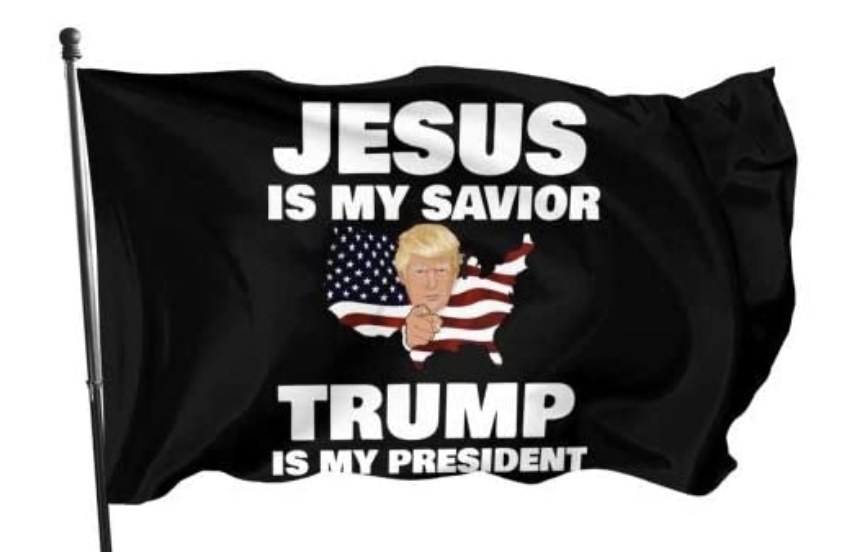
“It was clear the terrorists perceived themselves to be Christians. I saw the Christian flag directly to my front, another ‘Jesus is my savior.’ ‘Trump is my president.’ Another ‘Jesus is king,’ ” Hodges continued.

No doubt about it, lots of those marchers and the rioters who attacked the Capitol (two different groups, in terms of the legality of their actions) can accurately be called “white evangelicals” — in large part because “evangelical” has become a term with almost zero historic or doctrinal content.

The question, from the start, is whether evidence would emerge in trials indicating that any of these lawbreakers were linked to powerful evangelical Protestant denominations, ministries, schools, etc.


Please respect our Commenting Policy