Women

WHAT IS THIS? Looking for real news coverage of crisis pregnancy centers? This isn't it ...

WHAT IS THIS? Looking for real news coverage of crisis pregnancy centers? This isn't it ...

If you have been around newsrooms for several decades, especially after the arrival of the Internet, you know that Donald Trump didn’t invent the term “fake news.” Yes, he grabbed it and ran with it. Big time.

Basically, what Orange Man Bad wanted was news coverage that praised all things Trump and, whenever possible, attacked his enemies. This is the flip side of mainstream news offerings that conservatives criticized during the whole Barack “The One” Obama era, when some press people had a thrill-up-the-leg or messiah-esque approach to news.

This preach-to-the-choir ethos is, I believe, one form of “fake news” and I started hearing journalists expressing concerns about it back in the 1980s. Journalists also, as newspaper economics soured, began worrying out loud about news coverage of powerful businesses that resembled cheerleading for the home team. Many feared the line between news and public-relations was in danger.

Then there was the whole “news you can use” phenomenon. The idea is that newsrooms need to offer “news” that is, in reality, offers handy, cheerful, useful, positive guides to local services and worthy causes.

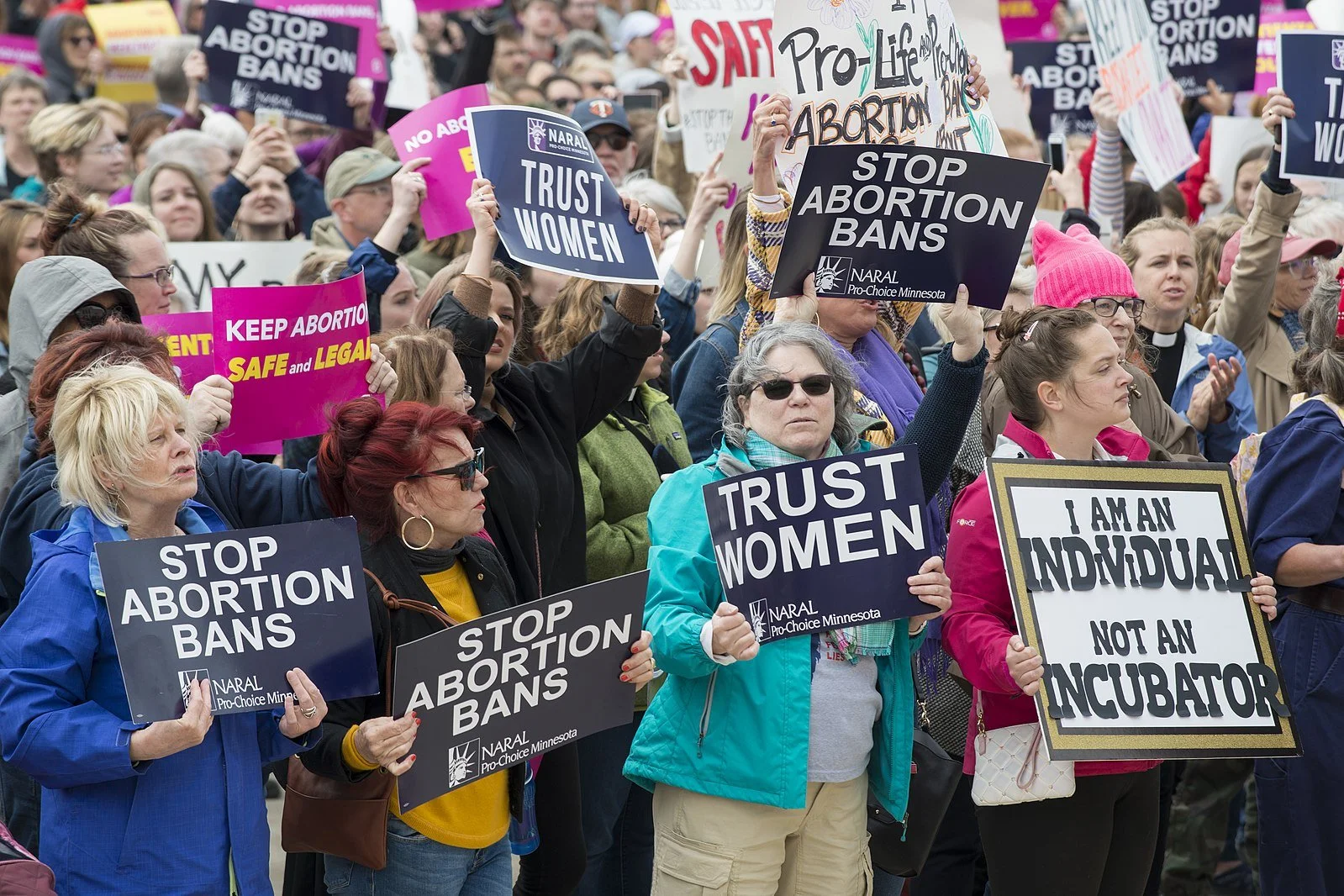
With all of that as a backdrop, let’s look at a recent headline in The Olympian, a mainstream McClatchy chain newspaper up in the deep-blue Pacific Northwest: “Anti-abortion ‘fake clinics’ exist throughout WA. Here’s what they are and how to spot them.”

Read this article and then ask: WHAT IS THIS?

While the scare quotes around ‘fake clinics’ provide a smidgen of editorial distancing, it’s clear — if you look at the sources for this article — that the newspaper is cheering for the pro-abortion-rights activists who are using that term.

But first, WHAT IS THIS? Here is what this article is NOT. It is not an editorial. It is not an opinion column. It is not even a news “analysis” feature.

I would argue that this is a “news you can use” feature for readers who want to attack — that word can be used in several ways — religious and nonprofit groups opposed to abortion and, in particular, crisis pregnancy centers. If you have scanned small headlines deep inside mainstream news outlets, you may know that some of these centers, and the churches that support them, have recently experienced vandalism and even arson.

Please respect our Commenting Policy

Dear religion-beat pros: Sometimes small religious denominations merit a bit of attention

Dear religion-beat pros: Sometimes small religious denominations merit a bit of attention

With American public space monopolized by furor over abortion and also about sexual abuse in the huge Southern Baptist Convention, it seems eccentric to mention small Protestant denominations. But sometimes these flocks produce news and highlight developing trends that may merit news attention.

Consider actions in recent days by the Presbyterian Church in America (PCA) and Christian Reformed Church (CRC). [Disclosure: The Religion Guy is a longtime CRC member though not directly involved in the matters at hand.] These two bodies, generally similar in terms of Calvinist theology, exercise influence in the wider American evangelical marketplace of ideas that far exceeds their modest numbers.

The CRC, founded in 1857, has declined to 205,000 members in the U.S. and Canada. The PCA, launched in a 1973 southern breakaway among Presbyterians has added northern go-getters to reach a U.S.-only membership of 378,000. More liberal “mainline” Presbyterians dropped from 4 million in 1970 to a current 1.2 million.

The CRC and PCA were the largest church bodies in the conservative North American Presbyterian and Reformed Council until 2002, when the council terminated CRC participation for allowing female pastors and lay officers. Both denominations remained members of the National Association of Evangelicals (NAE) until last week, when the PCA quit the cooperative organization. Oddly, NAE President Walter Kim (contact: walter.kim@trinitycville.org), a Harvard Ph.D., is a PCA minister who led an important PCA church in Charlottesville, Va., and is now its “teacher in residence.”

Politics is involved in all of this, of course.

The PCA cited Presbyterians’ Westminster Confession of 1646, which declares that church bodies deal only with internal religious issues and “are not to intermeddle with civil affairs” except in “extraordinary” cases. The NAE indeed addresses many societal topics. The PCA lamented its policy statements on the environment, immigration, the death penalty and, especially, support of proposed “Fairness For All” legislation to acknowledge LGBTQ legal protections in return for religious-liberty guarantees.

Yet the PCA itself has issued statements on abortion, AIDS, alcohol, child protection, education, homosexuality, medical insurance, nuclear power, pornography and race relations. Does PCA separation from NAE-style evangelicals move it toward what we used to call cultural and religious “fundamentalism”?


Please respect our Commenting Policy

Fallout from Supreme Court abortion decision: When reporters parrot partisan talking points

Fallout from Supreme Court abortion decision: When reporters parrot partisan talking points

With emotions running high, the Supreme Court’s reversal of Roe v. Wade marked a cataclysmic shift in the ongoing culture wars. What it means for the upcoming midterm elections and beyond has been the topic of much speculation since the ruling was handed down.

The decision was marked by joy on one side and anger on the other, with may reporters wearing their emotions on their faces and under their bylines. However, many people I know reacted with mixed emotions. Even conservatives were uneasy about the decision, mostly because they feared the violence that could be a part of the fallout. Indeed, the National Catholic Reporter’s news account put it best in its headline: “As Court overturns Roe v. Wade, Catholics react with joy, anger, trepidation.”

We do live in a time when political decisions often inspire violence.

Lose an election? Storm the Capitol Building.

Unhappy with police misconduct? Burn down stores.

Both sides are guilty of this, although the mainstream press — which has grown ever-partisan in the Internet age — hasn’t always been good about calling out both sides for such intimidation.

The fallout from the Dobbs decision? It’s only been a few days, but there was violence in some parts of the country from Rhode Island to Iowa to Arizona. The rhetoric was vile on Twitter, quickly aimed at Christians, and that was soon on display in the streets in a variety of forms.

Again, national legacy media have not always been good about giving proper background and context to the events of the recent past, especially in terms of coverage of violence against churches and crisis-pregnancy centers.

The fissures in American public life are real. So are the distorted realities partisan news organizations like to perpetuate these days.

Just two weeks ago, Gannett, the nation’s largest newspaper chain, argued that opinion pages are alienating readers and becoming obsolete. They doubled down by warning their reporters to refrain from using social media platforms to comment on the decision. However, take a look at this morning’s news summary from USA Today. Spot any patterns?


Please respect our Commenting Policy

Plug-In: Roe falls, plus the Supreme Court's four other biggest religion cases of 2022

Plug-In: Roe falls, plus the Supreme Court's four other biggest religion cases of 2022

It happened.

The U.S. Supreme Court overturned Roe v. Wade, the landmark 1973 ruling that legalized abortion nationwide.

The Associated Press’ Mark Sherman reported:

WASHINGTON (AP) — The Supreme Court has ended constitutional protections for abortion that had been in place nearly 50 years in a decision by its conservative majority to overturn Roe v. Wade. Friday’s outcome is expected to lead to abortion bans in roughly half the states.

The decision, unthinkable just a few years ago, was the culmination of decades of efforts by abortion opponents, made possible by an emboldened right side of the court that has been fortified by three appointees of former President Donald Trump.

The ruling came more than a month after the stunning leak of a draft opinion by Justice Samuel Alito indicating the court was prepared to take this momentous step.

Read the full opinion in Dobbs v. Jackson Women’s Health Organization.

• • •

I haven’t always paid close attention to the Supreme Court. But lately I do.

On days the nation’s high court releases new opinions, I vow find myself refreshing — again and again — the justices’ home page.

The court’s five biggest religion cases of 2022 have piqued my interest. The Dobbs decision, highlighted above, was not specifically about religion. But religious voices on both sides are a major part of the debate.

Here is where the other four religion cases stand:


Please respect our Commenting Policy

'Forced' to bear twins: Washington Post offers morality tale about reluctant teen mom in Texas

'Forced' to bear twins: Washington Post offers morality tale about reluctant teen mom in Texas

When I saw the headline to the Washington Post story: “This Texas teen wanted an abortion. Now she has twins,” I thought, “Here we go again.“

We were going to read about Texas, the state that had the nerve to limit abortions to around the sixth week of pregnancy and the many women who are now being forced to bear children.

There’s so many problems with this story, it’s hard to know where to start. I’ll try.

The narrative begins with a scene from the life of Brooke Alexander, who is trying to nurse two three-month-old twins in a run-down apartment with blankets as curtains. We learn quickly that she’s living in the home of her boyfriend after her heartless mother has kicked her out. This is the same mother who encouraged her to continue with the pregnancy in the first place.

Brooke found out she was pregnant late on the night of Aug. 29, two days before the Texas Heartbeat Act banned abortions once an ultrasound can detect cardiac activity, around six weeks of pregnancy. It was the most restrictive abortion law to take effect in the United States in nearly 50 years.

For many Texans who have needed abortions since September, the law has been a major inconvenience, forcing them to drive hundreds of miles — and pay hundreds of dollars — for a legal procedure they once could have had at home. But not everyone has been able to leave the state. Some people couldn’t take time away from work or afford gas, while others, faced with a long journey, decided to stay pregnant.

Nearly 10 months into the Texas law, they have started having the babies they never planned to carry to term. Texas offers a glimpse of what much of the country would face if the Supreme Court overturns Roe v. Wade this summer. …

Did the couple use birth control? Did they care? It appears that the reporter never asked many basic questions. We do know that Brooke’s dad has been missing for much of her life; she talks about feeling that she is unattractive and all of a sudden here’s this guy paying attention to her.

Here we have two teens, both 17, who have unprotected sex apparently on the first or second date. She ignores obvious signs (two missed periods) until it’s too late; the Heartbeat Law is going into effect.

Sometimes Brooke imagined her life if she hadn’t gotten pregnant, if Texas hadn’t banned abortion just days after she decided that she wanted one. She would have been in school, rushing from class to her shift at Texas Roadhouse, eyes on a real estate license that would finally get her out of Corpus Christi. She’d pictured an apartment in Austin and enough money for a trip to Hawaii, where she’d swim with dolphins in water so clear she could see her toes.

Ah, the freedom that abortion brings. And the villains in this story? We will get there in a moment.


Please respect our Commenting Policy

Plug-In: Sexual-abuse reforms top Southern Baptist actions in dramatic annual meeting

Plug-In: Sexual-abuse reforms top Southern Baptist actions in dramatic annual meeting

In terms of making history, 1979 was a highly consequential year for the direction of the Southern Baptist Convention.

So was 1985. And 2021, come to think of it. No doubt I’m missing other important years.

Where might 2022 rank? For the second year in a row, the high-profile annual meeting of the nation’s largest Protestant denomination produced major news.

Five key takeaways from this week’s proceedings in Anaheim, California:

1. Sex abuse reforms

In response to last month’s bombshell report on sexual abuse in the denomination, delegates “voted overwhelmingly Tuesday to create a way to track pastors and other church workers credibly accused of sex abuse and launch a new task force to oversee further reforms,” as The Associated Press’ Deepa Bharath and Peter Smith report.

See related coverage by the Houston Chronicle’s John Tedesco and Robert Downen, two of the journalists whose 2019 “Abuse of Faith” investigation spurred the reforms.

2. Apology to victims

A day after that important vote, the Southern Baptists “approved a resolution Wednesday apologizing to abuse survivors and asking for forgiveness,” as Religion News Service’s Bob Smietana and Adelle M. Banks report.

See related coverage by The Tennessean’s Liam Adams and the Memphis Commercial Appeal’s Katherine Burgess.

3. New president

In “another win for abuse reform,” the Baptists elected Bart Barber, the pastor of a relatively small congregation in rural Texas, to lead the denomination’s crucial next steps, as Christianity Today’s Kate Shellnutt reports.

See related coverage by the Arkansas Democrat-Gazette’s Frank Lockwood and the Washington Times’ Mark A. Kellner, a former GetReligion team member.


Please respect our Commenting Policy

What happens after Anaheim '22? That will unfold in pulpits, pews and big SBC institutions

What happens after Anaheim '22? That will unfold in pulpits, pews and big SBC institutions

Before the Southern Baptists Convention's strong vote to approve what supporters called "bare minimum" sexual-abuse reforms -- with victims in the crowd weeping with relief -- there was a strategic amendment to the recommendations.

Rather than stay with the independent Guidepost Solutions organization, the Abuse Reform Implementation Task Force would seek to use "best practices in keeping with Southern Baptist church polity," while a "Ministry Check" website tracking those "credibly accused" of abuse would be "established and maintained by an independent contractor."

Activist Rachel Denhollander pleaded, before the vote: "Institutions must be held accountable. It doesn't matter who they are. Justice and truth are always what we should pursue."

Afterwards, the attorney and #ChurchToo abuse survivor posted another challenge on Twitter: "It is the first, most basic steps. But it is a testament to the survivors who fought so long and so hard. I am grateful. Now let's keep working."

That work will depend on the cooperation of pastors and church leaders in the SBC's 47,000 local churches, as well as the administrators and trustees of agencies, boards, seminaries and other institutions at the state and national levels.

The bottom line: In Southern Baptist "polity" -- with sprawling structures of autonomous congregations that, to varying degrees, fund state, national and global ministries -- there are no leadership structures resembling local Presbyterian presbyteries, regional annual conferences among United Methodists or the powerful diocesan structures of Catholics, Episcopalians and others. Local churches ordain, hire and fire clergy.

Outsiders often struggle to understand the theological and practical implications of Baptist polity, said Thomas Kidd, who teaches church history at Midwestern Baptist Theological Seminary and Baylor University.

"Many people continue to think that the SBC can make its churches do this or that or the other and that simply isn't true," he said.


Please respect our Commenting Policy

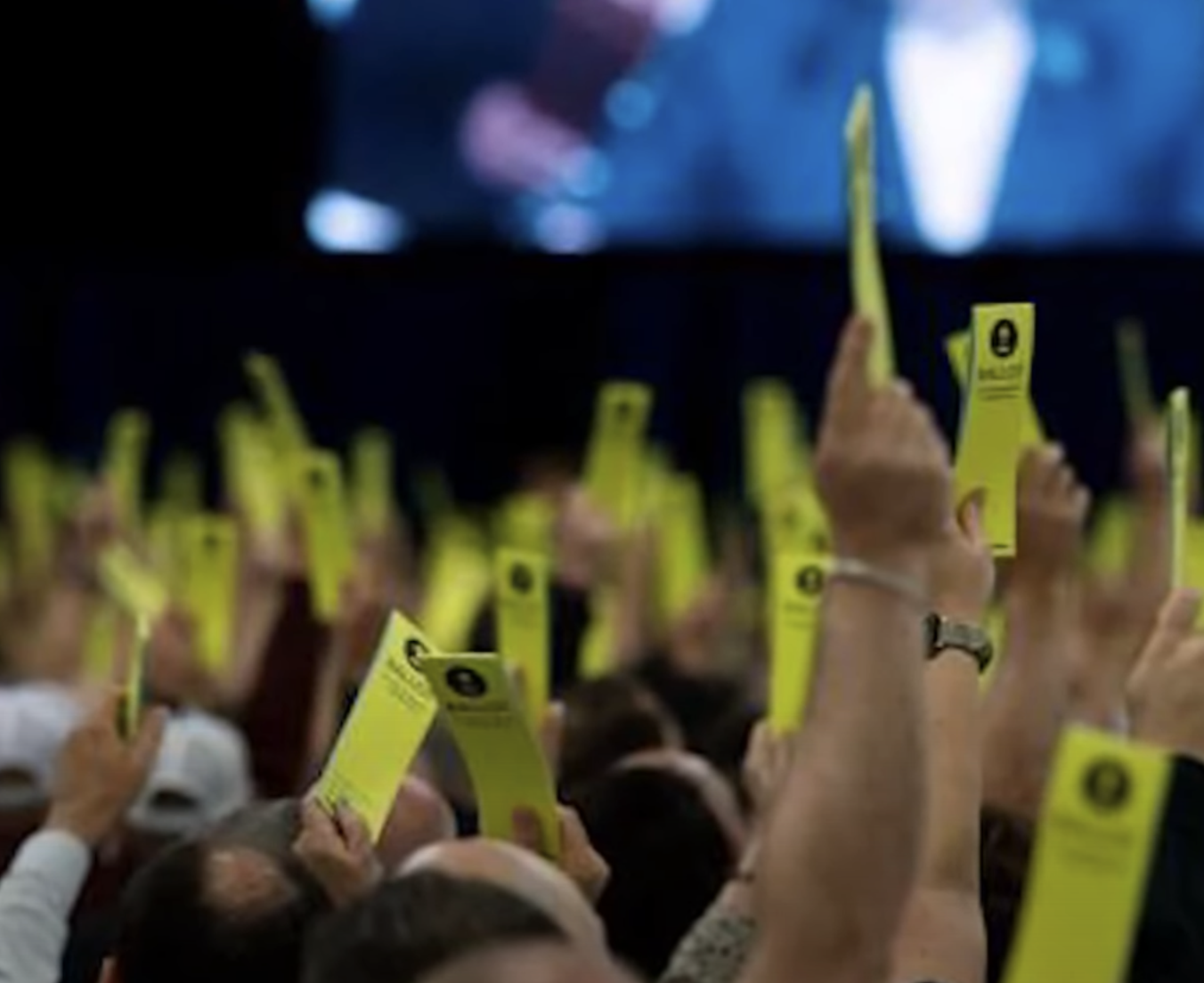
Podcast: Now what, after SBC 'messengers' have waved their yellow voting cards?

Podcast: Now what, after SBC 'messengers' have waved their yellow voting cards?

Here’s a warning to reporters who are preparing for future national meetings of the Southern Baptist Convention: Never call these folks “delegates.”

They are not delegates at some kind of political event. They are “messengers” from their local autonomous churches. You see, this isn’t some kind of cocktail-hour mainline Protestant denominational whatever, and many Baptists don’t like the word “denomination,” either. This is a “convention” and it only meets for three days each year.

Use the wrong language and Southern Baptists will give you a steely gaze and then say something nasty, like “Well, bless your heart.”

Quite a few journalists attended this year’s SBC meeting because there were headline-worthy — from their editors’ point of view — topics on the agenda, like clergy sexual abuse, Critical Race Theory and an election to determine if some new-breed conservative “pirates” (that was their term from 2021) were going to wrest the wheel of the ship away from the allegedly “woke” establishment conservatives.

As you would imagine, host Todd Wilken and I dug into all of this during the “Crossroads” podcast this week (CLICK HERE to tune that in). One of the big themes was that the hard-news coverage of this convention — especially by “Location, location, location” pros from major SBC centers, like Houston and Nashville — was top-notch.

Veteran GetReligion scribe Bobby “Positive” Ross, Jr., will offer pages of URLs in his Plug-In feature this week, so I will not try to do that (I’ll post a link when it goes public). But this is what happens when major newsrooms send religion-beat professionals to cover a major event. Readers don’t have to agree with every single thing that they saw in the #SBC2022 coverage, but what we had here was a tsunami of serious coverage from professionals, backed by the skilled Baptist Press team running the on-site newsroom.

With that in mind, let me note a Big Ideas from this podcast.

* If you study attendance numbers at previous “hot” SBC meetings, you will notice a logical trend linked to a map of the Bible Belt. In this online list, note the 1985 Dallas convention drew 45,519 messengers and the 1986 Atlanta convention drew 40,987.

Yes, these were the pivotal years in the historic “conservative resurgence” in SBC life. But, truth is, those numbers also reflect how far ordinary messengers can drive in one day jammed into the buses or vans owned by “ordinary” SBC congregations.


Please respect our Commenting Policy

As Roe clock ticks, press avoids news about another big story -- attacks on Catholic churches

As Roe clock ticks, press avoids news about another big story -- attacks on Catholic churches

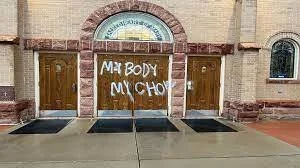
There have been at least 41 incidents of attacks against churches and crisis-pregnancy facilities since the May 2 leak of the Supreme Court draft decision that revealed the potential fall of Roe v. Wade.

The attacks have included property theft, vandalism, arson and property destruction.

How do we know this? A front page New York Times investigation this past Sunday?

No.

A round-up story in The Washington Post, USA Today, the Associated Press? Coverage on CBS, CNN or another major network?

No, no, no and, alas, no.

We know this because of The Washington Stand, which is described as the Family Research Council’s “outlet for news and commentary from a biblical worldview.” In other words, these events are “conservative” niche news (as opposed to, let’s say, attacks on “sanctuary movement” churches because of their activism on immigration).

This awful trend should come as no surprise. At least it wasn’t to me. I wrote a story recently at Religion Unplugged on the rash of vandalism — especially acts against Catholic churches — throughout this spring. I opened my news account with the theft of a tabernacle at a Brooklyn, N.Y., church (see this related GetReligion piece). Here’s an excerpt from my piece:

The desecration was the latest in a string of incidents across the United States, triggering fears of future vandalism given the supercharged political climate around abortion, LGBTQ rights and bishops denying politicians Communion.

The vandalism may not necessarily be tied to one or more of these factors — rising crime rates is also a possibility in the wake of the pandemic — but church officials remain vigilant as the summer approaches. While the motivations remain a mystery, the outcome has rattled Catholic churches across the country. Some have resorted to increased security measures, like locking doors when Masses aren’t taking place, installing security cameras and even erecting barbed wire and fences to avoid being targeted.

As we await a final Supreme Court ruling, we could be in for a long summer of violence and vandalism.

My criticism here is not in the news coverage this issue has received. Instead, it’s the lack of coverage.


Please respect our Commenting Policy