Women

Notable omission among liberal religious voices in phase 2 of Supreme Court abortion case

Notable omission among liberal religious voices in phase 2 of Supreme Court abortion case

The media are prepping for the U.S. Supreme Court's December 1 hearing on the strict Mississippi abortion law and the subsequent ruling.

In a prior Guy Memo on religious "friend of the court" briefs filed on the pro-life side, I promised a second rundown when pro-abortion-rights activists weighed in with their views. Now that second wave of religious arguments has landed — with a notable omission in those ranks that journalists will want to pursue.

To explain, we'll need some religion-beat history on this issue.

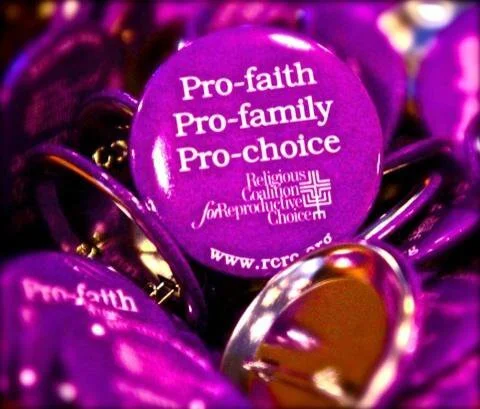
In 1967, two years before NARAL Pro-Choice America was founded, the 1,400-member Clergy Consultation Service formed to help women obtain abortions and fight legal barriers. After the high court legalized U.S. abortions in the 1973 Roe v. Wade decision currently at issue, the related Religious Coalition for Abortion Rights was founded to campaign for moral acceptance. (In 1994 it dropped the A-word and was renamed the Religious Coalition for Reproductive Choice or RCRC).

Founders included a significant chunk of "mainline" and liberal Protestantism, including the Episcopal Church, Presbyterian Church (U.S.A.) Mission Agency, United Church of Christ and several independent Protestant caucuses. The United Methodists' General Board of Church and Society hosted the founding, and the Methodist women's division also joined, but both later backed away. The Coalition also included major non-Orthodox Jewish organizations and the Unitarian Universalist Association (UUA).

In the new Court filings, abortion-rights law gets continued support from RCRC, UUA and Jewish organizations. But no Protestant denomination that favors abortion choice has joined to support Roe. Reporters should find out why they sidestepped this historic showdown. For example, have complex schism talks led to silence on the United Methodist left, as opposed to earlier debates (see YouTube video at the top of this post)?

The silence from "mainline" churches deprives the high court of in-depth moral thinking from pro-choice Christians that answers conservatives on issues that make abortion unusually difficult for public policy, among them: Does a genetically unique and developing human embryo or fetus have value? Why, or why not?


Please respect our Commenting Policy

Bonus podcast: 'What's next in Afghanistan?' Warning: this news topic involves religion

Bonus podcast: 'What's next in Afghanistan?' Warning: this news topic involves religion

Here is a truth claim that, over the years, I have heard (or seen) stated in a number of ways by journalists and mass-media professors: Without strong, or at least adequate, visual images a story doesn’t exist in television news.

Yes, there are exceptions. But the exceptions almost always take place when big stories break in print media and television producers are highly committed to getting them on air — somehow.

Now, in the smartphone era, there are lots of ways for visual images to emerge (ask Hunter Biden). However, in our era of partisan, niche news, it may not matter if images exist. What citizens cannot see (or read) will not hurt them?

This brings me back to a subject I addressed in this recent GetReligion essay: “What's next in Afghanistan? Press will have to face issues of religion, culture and gender.”

The big question: Where does the Afghanistan story go next and, frankly, will elite American media cover the religion elements of this story?

That question was at the heart of a recent Religion Unplugged podcast discussion that I had with a friend and, long ago, a former religion-beat colleague — Roberta Green. In recent decades, she is better known as the philanthropist and fine arts-maven Roberta Green Ahmanson (click here for a typical arts lecture).

This new podcast is entitled, “How Will Afghanistan's Next Chapter be Written?” Click here to head over to iTunes to tune that in. Meanwhile, here is a key chunk of the GetReligion essay linked to our discussion about religion, journalism, culture, politics and “nation building”:

Viewed through the narrow lens of Taliban doctrine, it doesn’t matter if Western governments were forcing open doors for the work of Planned Parenthood or Christian missionary/relief groups, the work of LGBTQ think tanks (or the American corporations that back them) or Islamic thinkers and clerics whose approach to the faith clashed with their own.


Please respect our Commenting Policy

Southern Baptist sexual-abuse puzzle: Can Executive Committee act on its own legal authority?

Southern Baptist sexual-abuse puzzle: Can Executive Committee act on its own legal authority?

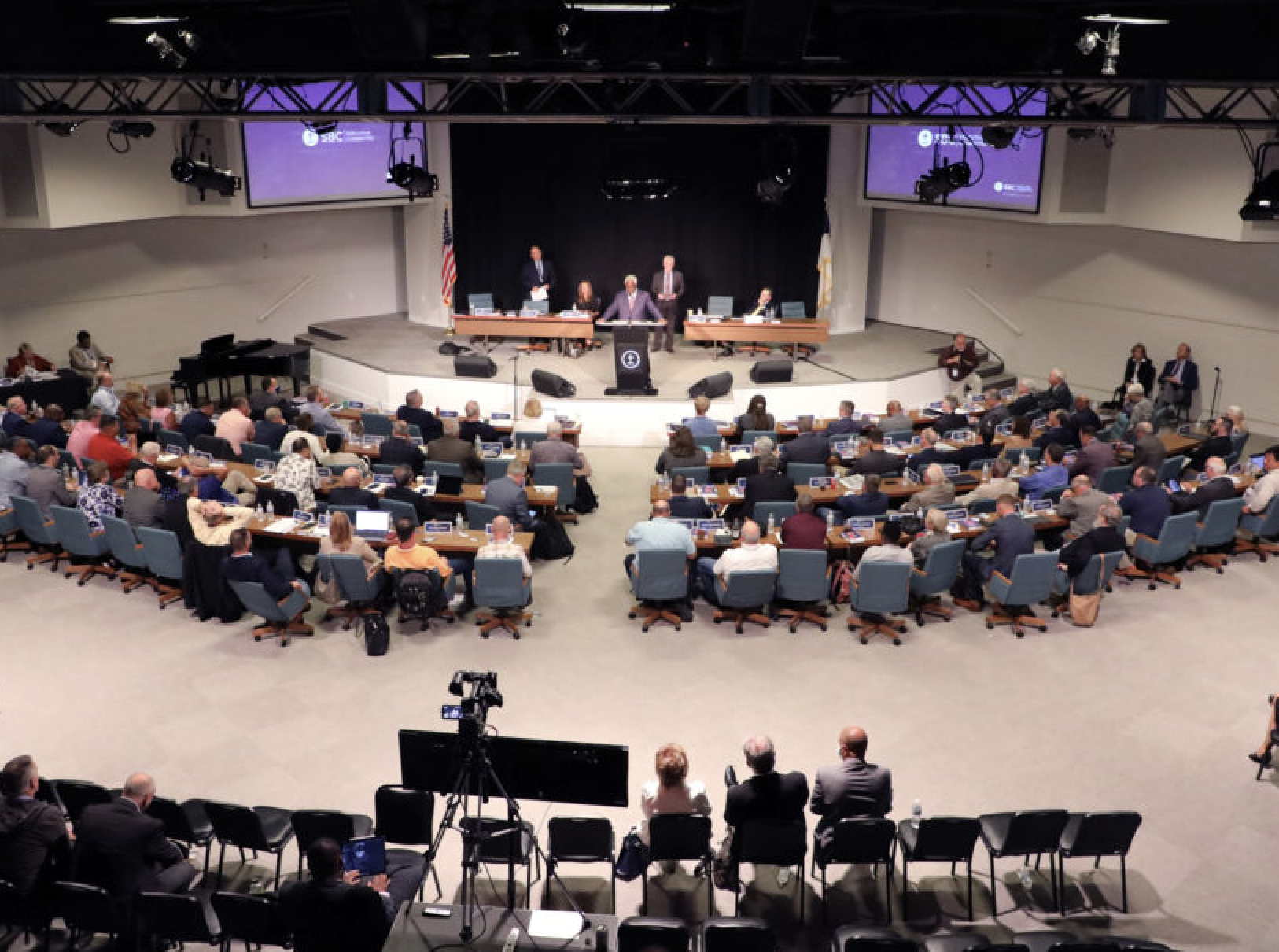
I do not envy the journalists who are attempting to cover the current meetings of the Southern Baptist Convention’s Executive Committee.

The financial and moral stakes are huge. Many of the questions being debated have, from a congregational polity point of view, theological as well as legal implications. You have some activists who want the SBC to take steps that, under its system of governance, it can’t really take. You also have SBC leaders who don’t appear willing to take the actions that they can take, in order to be transparent on sexual-abuse cases.

This may sound strange, but I think it may help to look at the top of the Baptist Press report covering the opening day of the meetings in Nashville. Yes, Baptist Press is an SBC operation and its leaders report directly to the Executive Committee. That makes one statement here even more important:

NASHVILLE (BP) — In its first meeting since messengers to the June 2021 Southern Baptist Convention Annual Meeting called for an independent, third-party review of the SBC Executive Committee, the EC responded to several routine motions and moved to fund the independent review but declined to waive attorney-client privilege for the time being.

After a three-hour extra session Tuesday afternoon, the Executive Committee ultimately rejected a proposal from its officers and instead adopted a temporary measure to move the sexual abuse review forward leaving the details to be hashed out between the officers and the Sex Abuse Task Force within seven days. One of the most significant undecided details was whether or not the EC will agree to waive attorney-client privilege as Guidepost Solutions, the independent firm chosen by the task force to conduct the review, has requested. In the motion passed SBC messengers in June, the EC was instructed to abide by the recommendations of the third-party firm, up to and including the waiver of attorney-client privilege.

Did you catch that last sentence? That’s one of the most important facts in this standoff. The Executive Committee is charged with carrying on the work of the SBC when the national convention is not in session. However, in terms of authority, the EC’s powers come from the local church “messengers” attending the annual SBC national convention.

It appears that a majority of the Executive Committee think they get to debate whether or not to approve the waiver of attorney-client privilege as part of a third-party investigation of how the EC, or some of its leaders, handled accusations of sexual abuse. However, “messengers” at the national convention already voted to approve that step.


Please respect our Commenting Policy

Thinking with Ryan Burge (and one of his critics) about abortion and evangelical voting

Thinking with Ryan Burge (and one of his critics) about abortion and evangelical voting

If you follow political scientist Ryan Burge on Twitter (which you should do, of course), then you know that he sends out waves of poll information, creatively sifted, in the form of charts.

From time to time, people have been known to bounce questions back to him, seeking clarification or more specific numbers on some strange angle of the topic at hand. I confess that I have been known to do that.

Burge is relentlessly helpful in that online setting. However — imagine this — there are people who argue with him? On Twitter, of all places! Some disagree with his interpretations. On Twitter!

I’m being sarcastic, to make a point linked to this weekend’s pair of “think pieces.” I’m one of those guys who disagrees with Burge from time to time. That happens, when someone is delivering and then interpretting lots of information in a public forum. The difference with Burge is that he is relentlessly candid, even when dealing with numbers and trends that challenge lots of common news templates.

Recently, Burge wrote a commentary piece — backed with some of his charts — for Religion News Service, flashing back to some polling from 2018. The piece ran with this double-decker headline:

Abortion just isn’t the motivating issue for evangelicals it once was

Studies show white evangelicals, by and large, do not have a hard-line approach to abortion — other issues like immigration and race are taking priority over advocating for the unborn.

Whatever your stance on “life” issues, don’t you want to read more about that claim? Here is a key (and quite long) section of that:


Please respect our Commenting Policy

What's next in Afghanistan? Press will have to face issues of religion, culture and gender

What's next in Afghanistan? Press will have to face issues of religion, culture and gender

The headline on the National Catholic Register story is simple and timely: “Trapped by the Taliban, Praying for Escape from Afghanistan.

The reporting is simple, as well, as long as the journalists involved have established contacts with people inside Kabul who have smartphones and there are functioning cell towers and satellites. The story is built on people describing what they claim is going on around them, especially events affecting their families and friends.

These people are U.S. citizens, Afghans with U.S. “green cards” and others who cooperated with Western governments and agencies, including religious groups, during the 20 years of “nation building” in the war-torn land of Afghanistan.

The question is whether the contents of this story remain newsworthy, since Afghanistan has, for now, moved off the front burner in elite newsrooms. What happened? Clearly, Republicans and centrist Democrats had “pounced” on the topic while blasting President Joe Biden and his White House team.

But is this NCR piece news? Yes, it is. Also, this is a story journalists can study while looking for clues about realities, and news, at ground level in the Taliban’s new-old Afghanistan. Here is the overture:

For two decades, Sher Shah had worked alongside U.S. and Afghans to build a democratic country free from the Taliban and war. He had established a new life with his family in the U.S. with the help of Catholic Charities and a Catholic sponsor family, but briefly returned to Afghanistan this summer to attend his father’s funeral.

Now, he’s a man trying to escape the Taliban and get back home to the U.S.

More? Here is a claim — let me stress this is a CLAIM — coming from this source. But the Register report has other anonymous voices making similar statements in what appear to be telephone interviews or contacts via email.

U.S. Secretary of State Anthony Blinken has stated approximately 100 U.S. citizens and lawful permanent residents remain in Afghanistan. …

But Sher Shah said he has heard nothing from the State Department since Aug. 26 — and he made use of the State Department’s information posted on its website for U.S. citizens and lawful permanent residents stuck in Afghanistan.

“There are thousands of Americans still in Afghanistan,” he said. “And I’m one of them.”

The reality that emerges, in this stories and others, is that the United States and other Western forces were not engaged in 20 years of “nation building,” as in building an Afghanistan government that looked to the nation’s past — its monarchy, for example. It would be more accurate to say the goal was building a new culture, one that incorporated elements of modernity and even postmodernity in America and Europe.


Please respect our Commenting Policy

New podcast: Where is the elite news coverage of tensions between Pelosi and her bishop?

New podcast: Where is the elite news coverage of tensions between Pelosi and her bishop?

Here is a political science question for you, but it’s relevant to an important religion-beat story.

The vice president of the United States is No. 2, in terms of the presidential line of succession, just ahead of the Speaker of the House of Representatives. But in terms of real, day-by-day power, who has more clout in America’s system of government, the vice president or the speaker?

If you have lived and worked on Capitol Hill (as I did for a decade or more), I think you would agree the speaker has more dollars-and-cents clout, as opposed to the largely symbolic “one heartbeat away” status given to the vice president.

With that in mind, let’s turn to an important news story that ran in July at Crux, under this headline: “SF Archbishop says Pelosi can’t call herself a ‘devout Catholic’.” This story was at the heart of the discussion during this week’s “Crossroads” podcast (click here to tune that in). Here is the overture of that piece:

NEW YORK – Archbishop Salvatore Cordileone of San Francisco, the home archdiocese of House Speaker Nancy Pelosi, has insisted that “devout Catholics” can’t support abortion, just after Pelosi had described herself in precisely those terms.

“Let me repeat: No one can claim to be a devout Catholic and condone the killing of innocent human life, let alone have the government pay for it,” Cordileone said in a statement. “The right to life is a fundamental — the most fundamental ­— human right, and Catholics do not oppose fundamental human rights.”

Hours earlier, at her weekly press conference, Pelosi stated her support for repealing the Hyde Amendment, which prohibits federal funding of abortion, “because it’s an issue of health for many women in America,” and she also emphasized her Catholic faith.

“As a devout Catholic and mother of five in six years, I feel that God has blessed my husband and me with our beautiful family,” Pelosi said. “But it’s not up to me to dictate that’s what other people should do, and it’s an issue of fairness and justice for poor women in our country.”

This leads us to that op-ed by Cordileone that ran the other day at The Washington Post, with this headline: “Our duty to challenge Catholic politicians who support abortion rights.

Here is the top of that piece. Read carefully and look for an important term that is showing up in more and more statements by some, repeat “some,” U.S. Catholic bishops:


Please respect our Commenting Policy

In the news media storm about the Texas abortion bill: Outrage -- 1, objectivity -- 0

In the news media storm about the Texas abortion bill: Outrage -- 1, objectivity -- 0

If I had to sum up last week’s media maelstrom on Texas’ new abortion regulations, it’s this: 95 percent of the quotes was from those who opposed it. Maybe 5 percent was from those who favored it. And of that 5 percent, how many of them were inserted near the top of the piece rather than strung together near the end?

We’re talking about the Texas Heartbeat Act, aka S.B. 8, which bans abortions after a fetal heartbeat can be detected (usually around six weeks). Individuals who learn of violations can sue the clinics involved and anyone who helps women get abortions.

Which could your friendly Uber or Lyft driver, which is why both companies, according to CNBC, have offered to cover legal fees for any driver caught transporting a woman to a clinic.

Probably the most thoughtful dispatch was Emma Green’s piece in The Atlantic. It was a Q&A more than an essay, but at least it was an interview with the Other Side, which has been lambasted everywhere else for introducing a real-life Handmaid’s Tale situation into the Lone Star state. The lead sentence began:

Sometimes, the Supreme Court does the most when it does nothing. Last night, the justices denied an emergency petition by abortion providers in Texas seeking to block S.B. 8, a law banning pregnancy terminations after roughly six weeks’ gestation.

A 5–4 majority of the justices argued that they had no power to stop the law from going into effect, since none of the citizens who are now empowered under the law to sue abortion clinics for providing the procedure has yet attempted to do so.

Hold that thought. What’s new in Texas is something called “private enforcement,” by which any citizen -– and I mean anyone –- can report -– or sue -– someone trying to sneak an abortion past them. It’s a stunning legal strategy that evades the lawsuits that groups like Planned Parenthood use to quash their opponents.

Some on the pro-life side, like conservative pundit David French, aren’t happy with it at all, feeling that it’s bad law that will end up biting pro-lifers in the end. He is not the only abortion opponent who feels this way but there was zero reporting out there on the mixed feelings in his camp. Back to The Atlantic:

Legal challenges likely lie ahead. But abortion opponents see this as a victory, however temporary. For now, at least, abortion clinics in Texas are largely suspending their work and abiding by the ban.

The article continues as an interview with John Seago, the legislative director of Texas Right to Life who, more than anyone, contributed to the success of this law. Right away, Green jumped to the crux of the law; people reporting on other people. His answer:

There are two main motivations. The first one is lawless district attorneys that the pro-life movement has dealt with for years. In October, district attorneys from around the country publicly signed a letter saying they will not enforce pro-life laws. They said that even if Roe v. Wade is overturned, they are not going to use resources holding the abortion industry to account. That shows that the best way to get a pro-life policy into effect is not by imposing criminal penalties, but civil liability.

The second is that the pro-life movement is extremely frustrated with activist judges at the district level who are not doing their job to adjudicate conflicts between parties, but who in fact go out of their way to score ideological points—blocking pro-life laws because they think they violate the Constitution or pose undue burdens.

For anyone wishing to understand why Texans went to this “private enforcement” stratagem is because they’ve tried everything else for the 48 years that Roe v. Wade has been in effect. And with a legal system set against them no matter what they do, it was time to come up with something else. And they did.


Please respect our Commenting Policy

Everything the media will cover about Afghanistan is bound up with a rigid form of Islam

Everything the media will cover about Afghanistan is bound up with a rigid form of Islam

Two weeks ago, the Religion Guy looked at the future of world Islam and the media after Afghanistan's Taliban takeover. Herewith a look backward with a bit of historical and cultural perspective for writers covering this turbulent and tormented land.

As University of Washington political scientist Anthony Gill commented in the Wall Street Journal, "Despite the seeming irrelevance of religion in the secular West, policy-makers and military strategists would do well to understand its power elsewhere in the world." In the case of Afghanistan, one good source for that is "Holy Wars: The Rise of Islamic Fundamentalism" (Routledge, 1989, reissued 2014) by British journalist Dilip Hiro, a native of Pakistan.

A big theme emerges: Anything and everything that has occurred and will occur is bound up with an especially rigid form of Islam that dominates Afghan culture. In rural villages across the countryside, where most live, mullahs with rudimentary schooling are part of the influential elite establishment.

Time and again over the past century, monarchs tried to tame the clergy and impose a somewhat flexible form of Islam only to be defeated by populist rancor. Among the issues: whether to educate girls, child marriage, modern dress vs. the veil and burqa, whether women can leave their houses without male chaperones or hold down jobs, women voting, alcohol prohibition, polygamy rules and whether to permit banks when the religion bans charging of interest.

Hiro writes that Afghanistan was "a landlocked society which clung to medieval Islam and tenaciously resisted modernization well into the last quarter of the 20th Century." The media have well and amply surveyed the following eruptions since a 1973 military coup abolished the monarchy.

Soviet troops invaded to prop up a Marxist regime and produced the militant Muslim movement (1979). U.S.-aided Mujahideen forces won Soviet withdrawal (1989). The Taliban emerged from the resulting confusion to impose harsh theocracy (1996). Western powers and Afghan allies expelled Taliban rulers for harboring the 9/11 plotters (2001). The Taliban rapidly regain power (August, 2021).


Please respect our Commenting Policy

Plug-In: Is Afghanistan a religion story? If so, it may be the year's biggest religion story

Plug-In: Is Afghanistan a religion story? If so, it may be the year's biggest religion story

A few weeks ago, realizing how quickly 2021 was racing toward 2022, I made a mental note of the year’s top religion stories so far.

On my quick list: Christian nationalism at the Jan. 6 Capitol riot. Battles over pandemic-era worship restrictions. Faith’s role in vaccine hesitancy. The biggest Southern Baptist Convention annual meeting in many years. The Communion drama between President Joe Biden and U.S. Catholic bishops. Jewish connections to the Florida condo collapse.

Nowhere in my mind: Afghanistan.

But now — especially after the suicide bombings in Kabul on Thursday — it’s looking as if news (much of it tied to religion) in that war-torn nation will dominate headlines for weeks and even months.

As I noted last week, it’s impossible to keep up with all the rapid-fire developments, but these stories delve into compelling religion angles:

Stranded at the airport (by Mindy Belz, World)

Taliban follow strict Islamic creed that doesn’t change with the times, scholars say (by Mark A. Kellner, Washington Times)

Taliban’s religious ideology has roots in colonial India (by Sohel Rana and Sumit Ganguly, ReligionUnplugged.com)

Who is ISIS-K, the group officials blame for the Kabul airport bombings? (by Jack Jenkins, Religion News Service)

Desperate Afghan Christians turned away at airport, aid groups say (by Alejandro Bermudez, Shannon Mullen and Matt Hadro, Catholic News Agency)

Kabul airport attacks strand Afghan contacts of Christian humanitarians (by Cheryl Mann Bacon, Christian Chronicle)


Please respect our Commenting Policy