Women

'I Love Jesus, But I Want to Die' -- A sobering message to church leaders on mental health

'I Love Jesus, But I Want to Die' -- A sobering message to church leaders on mental health

The first time Sarah J. Robinson tried to kill herself was eight months after she became a born-again Christian.

She had struggled with suicidal thoughts since elementary school. She would imagine jumping into highway traffic or fill her hand with pills and consider swallowing them. But her depression only deepened after she was baptized as a teen and poured herself into Bible studies and upbeat youth-group projects.

She felt like a failure. Finally, she pressed a knife harder and harder into her skin -- but she couldn't force herself to end it all on the kitchen floor. Looking back, she wrote: "I didn't want my family to find me there, so I got up and put the knife away. I climbed into bed, put on a worship CD, cursed God and went to sleep."

Robinson kept stacks of journals and they provided crucial material for "I Love Jesus, But I Want to Die," a book written during three years of struggle and research. Her battles with depression have continued, even during her years working as a youth minister.

Images of handwritten pages appear in the book, including this 2007 plea: "Lord, I'm struggling. I need your help. This week has been really rough -- I've been sad & lonely & angry & numb. I cut myself and berated myself, wished for the end, tried so hard to hide it. I'm not just empty -- I've become a vacuum, taking on more and more of the absence of your presence. … God, please don't let me be lost."

It was hard to be that vulnerable, said Robinson, reached by telephone in Nashville. But including actual journal pages "seemed like a no-brainer" if the goal was to "let other people who are hurting know they are not alone. I wanted them to know that I've been there -- in that kind of midnight."

Among secular researchers, it's common to find two views of mental-health issues, said Robinson, citing the work of Stanford University researcher Carol Dweck. The first is a "fixed mindset" that assumes these conditions are predetermined and unchangeable. Thus, "setbacks and failures reveal who we really are and will always be," said Robinson." The second is a "growth mindset" that says individuals can adapt and change.

In pews and pulpits, many believers simply assume all mental-health struggles represent a lack of faith. Strugglers will be healed if they dedicate themselves to Bible study and prayer, while turning away from their sins. Church-based "pastoral counseling" is an option.

"The idea is that if I put the right things into the spiritual vending machine, then I'll get the right things out," said Robinson.


Please respect our Commenting Policy

Vague doctrine at for-profit company? Tennessean nails key issue in new Ramsey lawsuit

Vague doctrine at for-profit company? Tennessean nails key issue in new Ramsey lawsuit

Get ready for more stories in which religious believers clash with the increasingly woke doctrines proclaimed, and enforced, by the Human Resource personnel in modern corporations.

Can your company fire you for declining to use a colleague’s preferred pronouns? What happens if (a) someone declines to remove a study Bible from his or her desk or (b) some believers refuse to hang LGBTQ+ rainbow solidarity posters in their offices? What if an employee marches in a right-to-life parade? Battles continue, in some workplaces, over crosses, beards, headwear and other religious symbols.

That’s one side of the HR culture wars. Meanwhile, it’s clear — pending the outcome of the Equality Bill debates — that faith-defined nonprofits have the right to create lifestyle and doctrinal covenants for the people who chose to sign them and, thus, work in these ministries.

But what about for-profit companies led by executives who want to maintain faith-friendly images? What are the limits on their policies?

For example, Hobby Lobby won its U.S. Supreme Court case after rejecting the Obamacare requirement that contraceptives be included in employee benefits packages. But what if for-profit company leaders said that, for faith-based reasons, they could investigate and fire employees who USED contraceptives?

This brings us to another fascinating dispute inside the Ramsey Solutions empire. The Tennessean headline asks: “Can you be fired over your sex life? Dave Ramsey thinks so.” Here is the overture:

While a former employee has accused Ramsey Solutions of terminating her because of her pregnancy, the company disputes the claim. Company lawyers said in court filings the employee was fired for premarital sex and so were a dozen other employees.

Former administrative assistant Caitlin O'Connor, who was employed by Ramsey Solutions for over four years and never disciplined, said when she announced she was pregnant in June and requested paperwork for maternity leave, she was terminated for her pregnancy since she isn't legally married to her longtime partner, the baby's father.

Lawyers for Ramsey Solutions, owned by Dave Ramsey — a conservative financial titan who made headlines when he hosted a giant Christmas party during the pandemic and refused to let his employees work from home — said O'Connor wasn't fired because she was pregnant. She was terminated for having premarital sex.


Please respect our Commenting Policy

Purity culture questions: A friendly, but crucial, dialogue between two evangelical thinkers

Purity culture questions: A friendly, but crucial, dialogue between two evangelical thinkers

The purity culture wars continue over on Twitter, where a crucial question — from a journalism perspective — can be seen in the following sequence.

There is no question that some church leaders went too far with purity culture themes and rites, including hellish actions by abusive men. Can anyone deny that? However, can journalists (and their academic and activist sources) assume that because evil happened in some cases means that it happened in all cases? And, to be specific, do journalists have on-the-record evidence that the alleged shooter in Atlanta was, in fact, warped by abusive people at an abusive church?

GetReligion published two posts linked to these debates. Check out Julia Duin’s post here: “Panning purity culture: What the press doesn't get about basic Christian doctrines on sex.”

Then, I raised other basic journalism questions here: “Wait a minute: How is a sermon on the Second Coming linked to shootings in Atlanta?

Before we get to this weekend’s two “think pieces” on this topic — by religious-liberty activist David French and Crossway books executive Justin Taylor — here is a flashback to a key passage in my post, which is linked to some of Taylor’s constructive criticism of the French piece.

It’s not enough to say that this or that conservative congregation, or counseling center, or parachurch ministry is “evangelical” and, thus, the public can assume that Christian doctrines were used in manipulative ways. …

Ponder this equation: Journalists cannot assume that a specific evangelical flock advocates dangerous doctrine X, simply because there are experts (progressive evangelicals even) who insist that all evangelicals teach dangerous doctrine X and, thus, we know that dangerous doctrine X causes broken, manipulated individuals to do hellish things.

At some point, journalists need to find specific people advocating specific ideas and actions — using research methods that are deeper than second-hand reports and the convictions of hostile experts on one side of fights about the Sexual Revolution.

This brings us to French’s must-read piece:


Please respect our Commenting Policy

Catholic journalists are must-read sources for those seeking reality of Cuomo scandals

Catholic journalists are must-read sources for those seeking reality of Cuomo scandals

It was just two months ago, in the aftermath of the U.S. Capitol riot, that an idea was floated that could help stop all the misinformation in our society: a “reality czar.”

It was a New York Times piece by tech columnist Kevin Roose (his new book “Futureproof is a must read if you’re interested in automation replacing you at work) on Feb. 2 that quoted experts who floated ideas to stop what the paper called the “scourge of hoaxes and lies.”

Roose’s piece threw out some interesting solutions — although “reality czar” is Orwellian, a Soviet-style solution to misinformation.

The harsh reality is that news consumers will need to read a wider variety of news sources if they are interested in finding solid facts, on-the-record sources and some sense of balanced reporting. On issues linked to religion, culture and politics, that will mean paying more attention to independent religious publications — including Catholic websites — that are now punching way above their weight. Hold that thought, because we will come back to it.

The truth is reality used to be what journalism purported to report on.

That’s no longer true given how polarized the news media has become over the past decade, a progression that sped up during the Donald Trump years and following the proliferation of partisan news sources during the internet age.

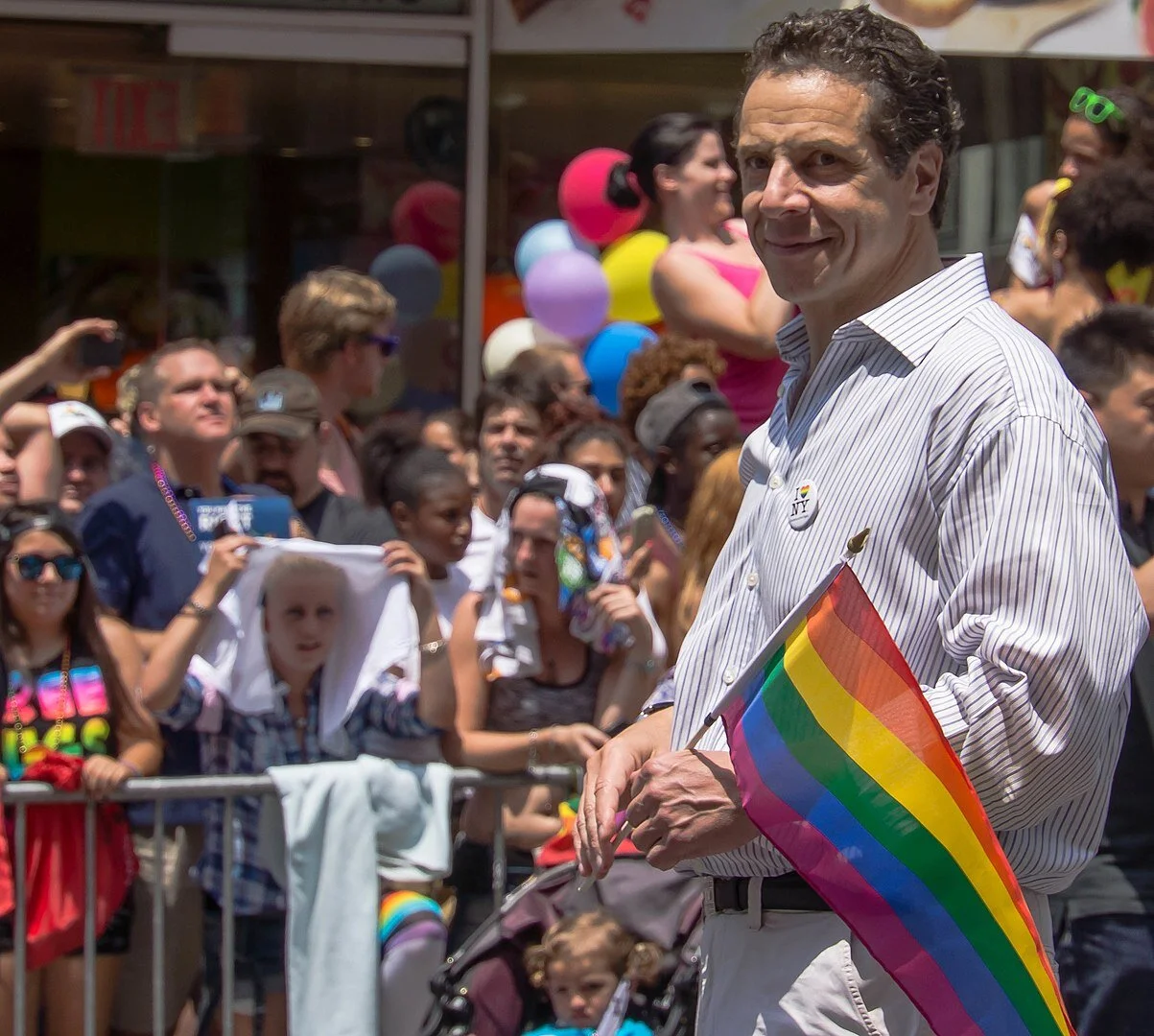
From a political standpoint, this brand of one-sided journalism has allowed politicians to earn cover from many mainstream newsrooms for alleged wrongdoings. On the left, New York Gov. Andrew Cuomo, embroiled in dual scandals regarding nursing home deaths during COVID-19 and growing claims of sexual harassment, is a prime example of this phenomena.

At this time last year, professionals at news organizations were fawning all over his press conferences as the country plunged into the pandemic. Many journalists considered Cuomo the coronavirus reality czar.

Why? Cuomo, a Democrat, served as the counterweight to then-President Trump.


Please respect our Commenting Policy

Wait a minute: How is a sermon on the Second Coming linked to shootings in Atlanta?

Wait a minute: How is a sermon on the Second Coming linked to shootings in Atlanta?

The hellish shootings in Atlanta have unleashed fierce debates combining questions about sex, sin, salvation, repentance, race and various combinations of all of those hot-button topics.

The debates center, of course, of statements by Robert Aaron Long — the suspect in the killing of eight people, including six Asian women — and his complicated and troubled history as a young member of Crabapple First Baptist Church in Milton, Ga., a Southern Baptist congregation.

Eventually, court testimony will provide hard facts about this case. At this point, all the evidence is that Long was raised as a conservative Christian, was active in his church youth group and that he abandoned his faith and then, quite literally, all hell broke loose in his personal and family life. Long has said that a “sex addiction” drove him to frequent massage parlors and his family, apparently, sent him to a Christian counseling center for treatment. His conservative Christian parents “threw him out of the house” the night before the shootings, according to reports in the Washington Post and elsewhere.

Like I said, on-the-record details will emerge. Right now, I want to raise a journalism question or two about coverage of the SBC congregation that is involved in this story. What do we know about this church and, well, how do we know what we know? One Post story notes the following, quoting a solid, factual source:

The evangelical congregation’s minister, the Rev. Jerry Dockery, is an energetic preacher who advocated for a socially conservative brand of Christianity that, as the church bylaws put it, views “adultery, fornication, homosexuality, bisexual conduct, bestiality, incest, polygamy, pedophilia, pornography, or any attempt to change one’s sex, or disagreement with one’s biological sex” as “sinful and offensive to God.”

This isn’t shocking material, if you know anything about traditional forms of Christianity. It would be easy to find specific quotations from recent Catholic popes — including Pope Francis — condemning behaviors such as these, and more.

This congregation is also connected to several doctrinally conservative organizations or movements linked to SBC life, such as the Founders Ministries. All of this leads me to a specific sermon reference discussing the end of the world and Christian teachings about the second coming of Jesus Christ. Oh, and if you stop and think about it, this includes the church’s pastor — indirectly — offering a warning about Christians worshipping political leaders such as Donald Trump.

Say what?


Please respect our Commenting Policy

Plug-in: Debates about race, religion follow shooting of eight, Including six Asian women

Plug-in: Debates about race, religion follow shooting of eight, Including six Asian women

Was race a motive in Tuesday’s killings of eight people — including six Asian women — at three Atlanta-area massage parlors?

Was religion?

These are among the questions after the arrest of a White suspect with ties to a Southern Baptist church.

Despite police downplaying the role of race, the shootings have stirred national fear amid “reported record numbers of hate crimes and incidents of harassment” against Asian Americans, note the Los Angeles’ Times’ Jaweed Kaleem and Richard Read.

The first details concerning 21-year-old suspect Robert Aaron Long’s faith background were vague, with the Daily Beast indicating that “he was big into religion.”

But then Washington Post religion writer Sarah Pulliam Bailey interviewed his youth pastor:

As a teenager, Long would stack chairs and clean floors at Crabapple First Baptist Church in Milton, Ga., said Brett Cottrell, who led the youth ministry at Crabapple from 2008 to 2017. Long’s father was considered an important lay leader in the church, Cottrell said, and they would attend morning and evening activities on Sundays, as well as meetings on Wednesday evenings and mission trips.

“There’s nothing that I’m aware of at Crabapple that would give approval to this,” Cottrell said in an interview, referring to the shootings. “I’m assuming it’s as shocking and numbing to them as it has been to me.”

Today, a front-page story by a team of New York Times reporters, including religion writer Ruth Graham, focuses on Long’s battle against a “self-described sex addiction”:


Please respect our Commenting Policy

Surrounded by lions: Is there a backstory to Beth Moore's divorce from Southern Baptists?

Surrounded by lions: Is there a backstory to Beth Moore's divorce from Southern Baptists?

So far, 2021 has been pretty hospitable for some good religion stories, beginning with a Jan. 6 assault on the U.S. Capitol that included some conservative religious folks. On the heels of that story was an exposé on Christian finance guru Dave Ramsey written by Bob Smietana, the former Religion News Service editor-in-chief-turned-national-reporter .

Smietana had spent several years writing for the Southern Baptist-owned Lifeway Research. Someone (there?) tipped him off about a March 3 tweet by Lifeway’s biggest author, Beth Moore, saying she had cut her ties with the organization. Naturally, he wondered if there was more to it. According to several of his tweets, a spokeswoman for the sometimes reclusive Moore called him, asking if he’d like an interview.

Moore was fleeing the ship and Smietana was the lucky scribe who got to break the story.

Since then, the news has been pounced on by the religion-writing teams at the New York Times and Washington Post, industry publications such as Christianity Today and a variety of Southern Baptist outlets. Why? Because it’s not just about one celebrity Christian pulling up the stakes.

Rather, it’s become a judgment on an entire denomination about how it’s handled women’s issues, sexual abuse and former President Donald Trump.

Let’s begin with the actual RNS story, which begins with how Moore was considered the model Southern Baptist because of her powerful Bible studies that ministered to millions, but didn’t cross paths with the denomination’s strictures against women preaching. She also fulfilled other unwritten rules for popular women’s speakers on the Christian circuit: She was attractive, slim, married and a mom.

Then came President Trump.

Moore’s criticism of the 45th president’s abusive behavior toward women and her advocacy for sexual abuse victims turned her from a beloved icon to a pariah in the denomination she loved all her life. …

Because of her opposition to Trump and her outspokenness in confronting sexism and nationalism in the evangelical world, Moore has been labeled as “liberal” and “woke” and even as being a heretic for daring to give a message during a Sunday morning church service.


Please respect our Commenting Policy

Plug-in: Beth Moore, Southern Baptist trolls and a scoop that stunned Godbeat Twitter

Plug-in: Beth Moore, Southern Baptist trolls and a scoop that stunned Godbeat Twitter

In a little-noticed, late-night Twitter conversation on March 3, prominent author and speaker Beth Moore indicated that her Living Proof Ministries had ended its longtime partnership with Lifeway Christian Resources, a Southern Baptist Convention publishing house.

“Adored them but SBC baggage got to be too much,” Moore tweeted, matter-of-factly. “It was heartbreaking.”

A tip about the social media posts to Religion News Service national reporter Bob Smietana set in motion one of the year’s biggest religion news scoops.

Smietana called and set up an interview with Moore, who told him March 5 — last Friday — that she is “no longer a Southern Baptist.” After talking to Moore, the veteran religion writer then spent a nervous few days doing additional research and reporting — hoping no other journalist would learn about his in-depth exclusive.

When RNS published Smietana’s piece Tuesday, traffic quickly overwhelmed the wire service’s website, and the story became a trending topic on Twitter.

By Thursday, the Trump critic’s split with Southern Baptists was front-page news in the New York Times (read the story by Ruth Graham and Elizabeth Dias) and just missed the front page of the Washington Post (see the A2 coverage by Sarah Pulliam Bailey and Michelle Boorstein).

Other interesting follow-up coverage includes Holly Meyer’s report for USA Today, Kate Shellnutt’s story for Christianity Today and Ashlie D. Stevens’ analysis for Salon.

P.S. Kudos to RNS’ Emily McFarlan Miller for her front-page photo of Moore in the New York Times.


Please respect our Commenting Policy

'Total Woman' redux: Obscure white evangelical says stupid things and it's national news

'Total Woman' redux: Obscure white evangelical says stupid things and it's national news

About the time that I started teaching journalism in Washington, D.C., I saw a movie in which Beltway professionals (including speechwriters) played a rather cynical bar game. I think the movie was “Speechless,” with Michael Keaton and Geena Davis.

If my memory is correct, the game was called “Spot the soundbite.” The goal was to watch a long, complicated political speech and then to accurately predict the tiny, often sensational 5-10 second “bite” that would make it into television news reports.

The message, of course, was that substance and nuance didn’t mean much in public life. Emotions and feelings linked to a fleeting soundbite — which could be funny or emotional or whatever — were what mattered. All together now: “Where’s the beef!” It was also clear that it was easy for journalists to pick good, sharp soundbites from “good” candidates and bad, stupid soundbites from “bad” candidates.

This brings us to this week’s “Crossroads” podcast (click here to tune that in), in which host Todd Wilken and I discussed the latest example of a preacher getting caught, in the age of YouTube and social media, failing to understand the rules of “Spot the soundbite.”

I heard about this epic news story when a former student — who has national print and television experience — sent me a wry email that said: “It’s weird that this random preacher’s sermon merits an NBC News story, no?” Indeed. In the world of short attention spans and tiny online news reports, this sermon by an unknown preacher, in a tiny church, in the middle of nowhere, in an obscure denomination, deserved a 900-word report.

My witty former student knew, of course, why this sermon received lots of national news coverage — including staff (not wire service) coverage in The New York Times (we will get to that shortly).

Yes, this preacher said some genuinely bizarre and disturbing stuff about women and marriage, especially when viewed through a #ChurchToo lens. However, was it national news that an unknown pastor said these things? Well, it is if the sermon contains the word “Trump” and this pastor can be turned into an archetypal symbol of white evangelicals in flyover country, the rubes many journalists blame for electing Orange Man Bad in the first place.

This preacher did not understand how to play “Spot the soundbite.”


Please respect our Commenting Policy