Terry Mattingly

Podcast: Can journalists imagine 'mirror' cases in which 303 Creative protects liberals?

Podcast: Can journalists imagine 'mirror' cases in which 303 Creative protects liberals?

If you follow Robert P. George in social media, you probably know several things about this legal scholar.

(1) He is a political philosopher and professor of jurisprudence at Princeton University.

(2) George is a doctrinally conservative Roman Catholic.

(3) He is a skilled Americana musician (think folk, gospel and bluegrass) who plays the banjo and a 12-fret acoustic guitar (I’m a big fan of the latter).

(4) In the public square, he is relentlessly irenic, seeking ways to view issues through the lens of those with whom he disagrees. This approach has been demonstrated during years of joyful and informative pro-tolerance dialogues with his close friend Cornel West, a liberal’s liberal known for decades of provocative classroom work at Princeton, Harvard and Union Seminary.

From a GetReligion point of view, it’s also important that — based at Princeton — George lives right on the edge of what could be called the Archdiocese of The New York Times and he pays close attention to mainstream news coverage of religion and public life.

This is why George played a key role in this week’s “Crossroads” podcast (click here to tune that in), which was a follow-up to my recent post with this headline: “After 303 Creative: Can readers find Twitter voices (hello David French) that help us think?”

After the latest wave of U.S. Supreme Court decisions, George posted a Mirror of Justice commentary in which he noted that Times editors seemed remarkable unaware of the actual contents of the majority opinions. The headline on the Gray Lady’s initial 303 Creative story was, in GetReligion terms, a classic: “Web Designer Wins Right to Turn Away Gay People.

The problem was that Justice Neil Gorsuch — author of the court’s landmark Bostock decision (.pdf here) backing trans rights — said the opposite of that in his 303 Creative majority opinion (.pdf here).

Please respect our Commenting Policy

Double-thinking about atheists: What's up with their role in America's hot public square?

Double-thinking about atheists: What's up with their role in America's hot public square?

I live in Southern Appalachia, which is in Bible Belt territory on anyone’s map of America.

Then again, I live near the Oak Ridge National Laboratory — a place where the nerdy PhD’s per-square-foot count is the same or higher than, well, the California Institute of Technology or the University of California, Berkeley. In other words, it’s surprisingly easy to run into local atheists and agnostics just about anywhere one engages in conversation (take the gym, for example).

Are these unbelievers hostile? Let’s just say that the real people I meet in this niche religious group (#ducking) are different from those I encounter in cyberspace. Maybe there’s something about the Southern Highlands that attracts friendly atheists-agnostics?

I thought about this phenomenon when I saw this recent Graphs about Religion headline from political scientist (and GetReligion contributor Ryan Burge: “Just How Much Do Americans Dislike Atheists?

This new Burge piece reminded me of his earlier piece: “No One Participates in Politics More than Atheists — Even White Evangelicals.” Remember these reflections on the Cooperative Election Study question: “Have you done any of the following activities in the previous month?”

The group that is most likely to contact a public official? Atheists.

The group that puts up political signs at the highest rates? Atheists.

HALF of atheists report giving to a candidate or campaign in the 2020 presidential election cycle.

And while they don’t lead the pack when it comes to attending a local political meeting, they only trail Hindus by four percentage points.

Anyway, I stashed these Burge URLs in my growing “Thinker piece” file — along with a very interesting (and I would argue, related) Pew Research Center post with this headline: “One-in-six Americans have taken steps to see less of someone on social media due to religious content.”

Let’s try to connect a few dots.


Please respect our Commenting Policy

After 303 Creative: Can readers find Twitter voices (hello David French) that help us think?

After 303 Creative: Can readers find Twitter voices (hello David French) that help us think?

It’s been a scary couple of days for post-liberals in America, with two major Supreme Court decisions (one of them unanimous) defending old-liberal concepts of religious liberty and free speech.

When the 303 Creative LLC decision hit the headlines (click here to read the majority opinion), I did something that’s quite rare in my household — I turned on the television and tried to watch mainstream cable-TV news.

Let’s face it: I struggle to understand why we have journalists who want the state to have the power to compel speech (intellectual content in general) in the work of writers, artists, video professionals, etc. But this post isn’t about the content of the news coverage of these decisions.

No, this is a post that I was requested to write after a recent luncheon with clergy, students, faculty and others at the Overby Center at Ole Miss. We kept coming back to a crucial question for news consumers: How do we find a compelling mix of news and commentary — representing different points of view — in an age in which most newsrooms embrace business models in which they tell paying customers exactly what they want to hear?

Here is another way of stating that: How do we find news and commentary that helps us understand the views of people what we need to respect (or at the very least truly tolerate), even when we disagree with them?

This led me to Twitter. I told folks that, when the 303 Creative decision was released, they needed to read whatever First Amendment specialist David French wrote about it. Why? Because I was convinced that he would find a way to parse the opinions and offer insights that made people on both sides of the decision very uncomfortable.

This is, frankly, why I have followed his work for several decades. This is why he is on a short list of people that I follow on Twitter when digging into major news trends and events. Hold that thought, because I will share my current version of that list at the end of this post.

But back to French and the headline on his New York Times column about this SCOTUS decision: “How Christians and Drag Queens Are Defending the First Amendment.”

Told ya.


Please respect our Commenting Policy

New York City has evolved into a complex, tense 'post-secular' cultural chess board

New York City has evolved into a complex, tense 'post-secular' cultural chess board

Early in his church-planting work in New York City, the Rev. Tim Keller focused on what he called the Center City, which started in lower Manhattan, near Wall Street, and extended past Central Park.

The Presbyterian Church in America seminary professor camped in the old Tramway Diner under the 59th Street Bridge at 2nd Avenue, asking New Yorkers probing questions about their lives. He dug into the socialist Dissent Magazine to learn the city's secular lingo.

But New York was already evolving in 1989, when Redeemer Presbyterian Church opened its doors two weeks after Easter, said Tony Carnes, leader of the "A Journey through NYC Religions" website.

Changes began in the 1970s in the city's boroughs "with more internationals arriving from all over," including Global South cultures in which "no one doubts that faith is an important part of life," he said, reached by telephone. "It took time to see these changes affect Manhattan, but they did."

In 2000, Carnes' team found -- through a face-to-face census with church leaders -- 120 evangelical congregations in the Manhattan Center City. That number reached 197 a decade later, 251 in 2014, 308 in 2019 and are expected to near 370 in 2024.

"We know there are others, because we hear things all the time," said Carnes. "We just haven't found them all -- yet."

For decades, researchers considered New York City a lab for the brand of secularism defined by Harvard Divinity School historian Harvey Cox, author of the influential "The Secular City" in 1965. In a famous quotation, he noted: "Secular Humanism is opposed to other religions; it actively rejects, excludes, and attempts to eliminate traditional theism from meaningful participation in the American culture."

However, at sidewalk level it's obvious that there are "two New Yorks," noted Carnes. While secularism remains dominant in mass media, academia and other parts of the cultural establishment, the reality is more complex in Queens, Brooklyn, the Bronx, Staten Island and now parts of Manhattan.


Please respect our Commenting Policy

Podcast: Can New York City's arts avengers save a tiny, but ultra-valuable, mainline church?

Podcast: Can New York City's arts avengers save a tiny, but ultra-valuable, mainline church?

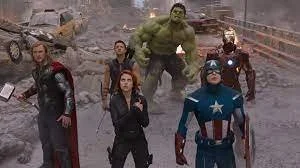
I was stunned (I kid you not) that editors at The New York Times didn’t find a way to slip the word “hulk” or even “avengers” into the Gray Lady’s latest feature on politics and the wild, wild world of Manhattan real-estate. Oh, and there is some religion news in here, somewhere.

What am I talking about?

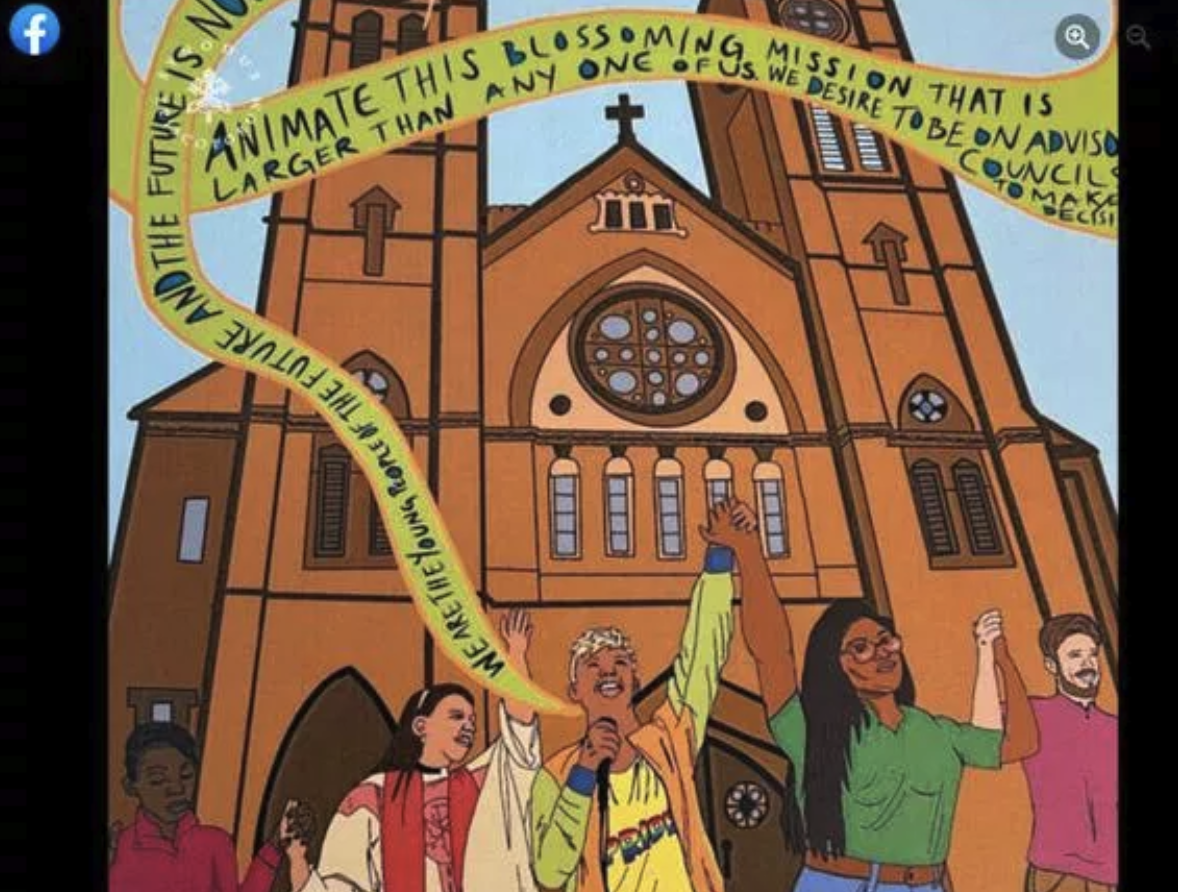
Well, this week’s “Crossroads” podcast (click here to tune that in) focused on a story that ran with this dry, wordy, double-decker headline: “Why Mark Ruffalo and Wendell Pierce Are Fighting for a Crumbling Church — Congregants of the West Park Presbyterian Church, a Manhattan landmark, want it torn down and replaced by condos. Celebrities are joining the fight to save it.”

In the sprawling Marvel Comic universe, Ruffalo played that Big Green Guy. But you probably knew that.

Let’s work our way through this story, looking for evidence of the religion-beat story — it appears that zero religion-beat personnel were involved — that is at the heart of this story that the Times prelates see as a conflict about money, politics and, maybe, culture. Religion? Not so much.

In the podcast, I also noted that versions of this story are unfolding in urban areas around America, linked to the catastrophic decline of America’s mainline Protestant and the more Americanized versions of Roman Catholic life. What happens to their strategically located and very valuable urban sanctuaries?

The overture, which builds up to the sermon-esque thesis statement:

For years, a conflict over whether to tear down one of New York City’s historic churches, a 19th-century Romanesque Revival building on the Upper West Side, has been cast in epic terms, as a battle between the little people and big business.

In this case, however, those who see themselves as representing the little people include a growing list of New York celebrities.

And big business? That would be a real estate firm working with the tiny congregation of the West Park Presbyterian Church, which says it cannot afford to fix up the deteriorating building and hopes to sell it to a developer to build new luxury apartments on the site.


Please respect our Commenting Policy

Has the doctrinal DNA of the Southern Baptist Convention changed that much?

Has the doctrinal DNA of the Southern Baptist Convention changed that much?

After decades as America's most famous Sunday school teacher, Jimmy Carter decided to cut the symbolic ties binding him to the Southern Baptist Convention.

The former president remained active at Maranatha Baptist Church in Plains, Georgia, and didn't renounce his faith. His 2000 letter to 75,000 American Baptists explained that he rejected a revision of the SBC's Baptist Faith and Message document, months earlier, to oppose the ordination of women.

"I have been disappointed and feel excluded by the adoption of policies and an increasingly rigid SBC creed," wrote Carter, who is now 98 years old and in hospice care. He stressed that, with his wife Rosalynn, he would cooperate with "traditional Baptists who share such beliefs as separation of church and state, servanthood of pastors, priesthood of believers, a free religious press, and equality of women."

From Carter's point of view, the SBC had evolved from a convention of autonomous churches -- with individuals claiming "soul competency" when choosing their own beliefs -- into a denomination that defines orthodoxy on doctrines.

The issue isn't who is a Baptist and who is not. Church historians struggle to count the number of organized Baptist groups and thousands of Baptist churches are totally independent. The question is whether the SBC's DNA has changed in ways that will affect local churches, as well as agencies, boards and seminaries at the state and national levels.

The Rev. Rick Warren -- an American evangelical superstar -- urged the recent national convention in New Orleans not to "disfellowship" congregations that ordain women, such as the giant Saddleback Church he founded in 1980.

"For 178 years, the SBC has been a blend of at least a dozen different tribes of Baptists," said Warren, during floor debates. "If you think every Baptist thinks like you, you're mistaken.


Please respect our Commenting Policy

Podcast: Are on-the-record statements by Cardinal Hollerich relevant to his synod role?

Podcast: Are on-the-record statements by Cardinal Hollerich relevant to his synod role?

Unless there is a papal election in the near future, the Vatican Synod on Synodality (#VATICAN3) will be one of the most important religion-beat stories of 2023 and 2024 (click here for the dates).

One of the first defining documents of this process was released the other day — “Instrumentum Laboris. A document of the whole Church.” Apparently this was a “religion” story, the kind of inside-baseball development that was covered by Catholic publications on the doctrinal left and right.

That surprised me, since — normally — anything about the Vatican, LGBTQ+rights and women’s ordination makes headlines. Thus, I was glad that Religion News Service published, well, a very typical RNS news story about this document. See if you can spot the big ideas in this double-decker headline:

Vatican confirm synod topics will address questions of LGBTQ+ and women deacons

The document addresses inclusivity toward LGBTQ+ faithful, the issue of female ordination and welcoming toward divorced, remarried or polygamous couples

This story include a massive gap, in terms of essential content (that’s my opinion, of course) and that provided the hook for this week’s “Crossroads” podcast (click here to tune that in). Before we go there, let’s look at a low-key document overview from The Pillar:

The document … acknowledges tensions in the synodal process, saying, “We should not be frightened by them, nor attempt at any cost to resolve them, but rather engage in ongoing synodal discernment. Only in this way can these tensions become sources of energy and not lapse into destructive polarizations.”

The goal of synodality, the document says, is to create “a Church of sisters and brothers in Christ who listen to one another and who, in so doing, are gradually transformed by the Spirit.”

A synodal Church, it says, is one marked by a willingness to listen, encounter, and dialogue, as well as by the humility to ask forgiveness for faults. It is a Church that celebrates unity in diversity and welcomes all people, while not shying away from speaking the truth in love.

For journalists who have covered decades of mainline Protestant life, terms such as “dialogue” and “unity in diversity” — perhaps even doctrinal diversity — will sound familiar.


Please respect our Commenting Policy

What's up with the Rev. Bart Barber's easy win as SBC president? Don't ask the Gray Lady

What's up with the Rev. Bart Barber's easy win as SBC president? Don't ask the Gray Lady

One of the most interesting stories from the 2023 meeting of the Southern Baptist Convention was the easy win by the Rev. Bart Barber, a low-key Texas Baptist who was elected to a second term as president.

Under normal conditions, SBC presidents are elected to a second term without opposition.

However, words like “normal” do not apply to Southern Baptist life in the Internet age — in which there are ordinary conservative Southern Baptists and then there are those gathered in the Conservative Baptist Network tent.

Barber faced opposition from the right, which was a newsworthy fact in and of itself. I would say that the opposition came from the “theological” right, but I haven’t seen strong evidence that this conflict is about theology.

Still, Barber’s easy win in the New Orleans convention was a blow to the rebel conservatives and a win for the establishment conservatives. I found it interesting that some in the elite press didn’t seem to realize this, or appeared predestined to ignore it.

Check out the top of the New York Times wrap-up report on the SBC meeting. The massive double-decker headline tells the readers what really matters:

Southern Baptists’ Fight Over Female Leaders Shows Power of Insurgent Right.”

Moves this week to oust women from church leadership in the nation’s largest Protestant denomination offer an early look into the psyche of evangelical America ahead of 2024.

Whoa. “Ahead of 2024?” Is this a reference to the next SBC election or a suggestion that what happened in New Orleans is important because it was some kind of symbolic foretaste of what really matters to the religion-desk at the Times — which is the 2024 White House race?

As always, remember: Politics is what is real. Religion? Not so much.

That journalism question, once again: Is this Times sermon “analysis” or “news”?


Please respect our Commenting Policy

The Rev. Pat Robertson -- a charismatic broadcaster who preached to his own choir

The Rev. Pat Robertson -- a charismatic broadcaster who preached to his own choir

The Pat Robertson for President advance team made it clear that journalists were barred from its campaign rally in a church near Denver.

The candidate wanted friendly faces. As one volunteer said: "What Pat might have to say to a group of pastors … might not be the kinds of things he'd want mainstream Republicans to read in the press."

The faithful inside that 1988 event raised their hands in praise to God and sang familiar choruses with a true believer that they knew shared their embrace of miracles, prophecy and "speaking in tongues." That kind of trust fueled Robertson's media-driven career, which ended on June 8 with his death at age 93.

Yes, I was on the outside of that door, researching my very first syndicated "On Religion" column. Before Robertson arrived, supporters prayed for a "special anointing" of God's power on their candidate. There is the kingdom of heaven, and there is the kingdom of the earth, one man prayed. "We thank you for men of courage, like Pat Robertson, who are working to bring these two kingdoms closer together," he added.

Robertson avoided blunt faith language when facing the press during that high-wire political campaign. However, he kept blending subtle biblical references into remarks about economics, foreign policy and hot cultural issues. He knew fans of his daily 700 Club broadcasts could break the code.

"Robertson had his own program. He knew he could say whatever he wanted to say there," said Kenneth Woodward, known for decades of work at Newsweek and books such as "Getting Religion: Faith, Culture and Politics from the Age of Eisenhower to the Era of Obama."

On one level, "he didn't need to talk to the press because he could talk straight to his own people. But that doesn't always work in politics, when you need to reach other people in order to succeed," said Woodward, reached by telephone.

Once Robertson veered into politics, his critics paid closer attention to what he said, about almost anything.


Please respect our Commenting Policy