Terry Mattingly

Thinking about post-Christian Europe? The Pillar looks for God in the Netherlands

Thinking about post-Christian Europe? The Pillar looks for God in the Netherlands

There is this old saying that when America sneezes, Europe catches a cold — or something like that.

That’s true, these days, when it comes to many issues in economics and politics.

But I have always thought that this equation works the other way around when it comes to issues of culture, morality and faith. The trends we see in the European Union seem to make it across the Atlantic sooner or later. If this is true, European trends in Catholicism, and other faiths, are worth watching.

This brings us to another “think piece” for journalists (and news consumers), this time care of The Pillar, a must-follow independent news and commentary site covering many things Catholic. The headline: “Finding God in the Netherlands.”

But, before we get there, let’s pause to recall a famous 1969 radio interview, or sermon, offered by Father Joseph Ratzinger, who would eventually become Pope Benedict XVI. Readers will often find the full text under this title, “What Will the Church Look Like in 2000?” Here are two large chunks of this famous, many would say prophetic, material:

From the crisis of today the Church of tomorrow will emerge — a Church that has lost much. She will become small and will have to start afresh more or less from the beginning. She will no longer be able to inhabit many of the edifices she built in prosperity. As the number of her adherents diminishes, so it will lose many of her social privileges. In contrast to an earlier age, it will be seen much more as a voluntary society, entered only by free decision. As a small society, it will make much bigger demands on the initiative of her individual members.

There’s more, a few lines later:

The Church will be a more spiritual Church, not presuming upon a political mandate, flirting as little with the Left as with the Right. It will be hard going for the Church, for the process of crystallization and clarification will cost her much valuable energy. It will make her poor and cause her to become the Church of the meek. The process will be all the more arduous, for sectarian narrow-mindedness as well as pompous self-will will have to be shed. One may predict that all of this will take time.

This brings us to the long feature at The Pillar written by Edgar Beltran, a philosopher and political scientist from Maracaibo, Venezuela, who is doing Philosophy of Religion graduate work at Radboud University in Nijmegen, the Netherlands.

Please respect our Commenting Policy

Podcast: What's going on with Southern Baptist decline? Count the news hooks ...

Podcast: What's going on with Southern Baptist decline? Count the news hooks ...

Back in the early 1980s, the Southern Baptist Convention was enduring the crucial years of its civil war over — here’s the term headline writers hated — “biblical inerrancy.”

I was at the Charlotte News and then the Charlotte Observer back then, in a city in which one of the major roads was named after Billy Graham. The SBC spectrum in Charlotte ranged from hard-core conservatives to “moderates” who were basically liberal mainline Protestants with better preaching.

During that time, a moderate church welcomed the the late Rev. Gardner C. Taylor of Brooklyn to its pulpit for a series of sermons (“moderates” don’t have “revivals”). Taylor would make just about anyone’s list — Top 100 or even Top 10 — of that era’s most celebrated preachers. In 1980, Time magazine hailed him as the “the dean of the nation’s black preachers.” That’s saying something.

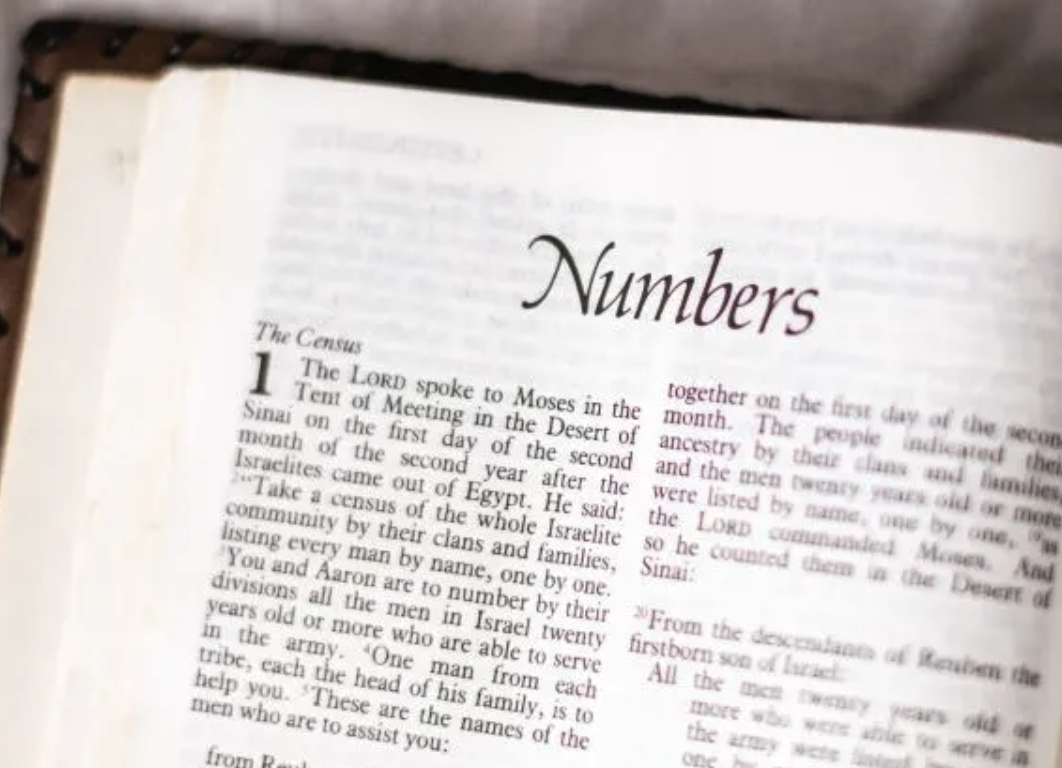
During one sermon, Taylor briefly addressed the SBC wars and added, with a slight smile, that he always thought that the primary book in the Bible that Southern Baptists “considered inerrant was the Book of Numbers.”

Southern Baptists have always loved their statistics (I grew up in Texas, the son of a Southern Baptist pastor) and, for decades, those statistics made their leaders smile.

Things are a bit more complex, right now, as seen in this RNS headline: “Southern Baptists lost nearly half a million members in 2022.” That story, and some other related online materials, provided the hook for this week’s “Crossroads” podcast (click here to tune that in).

Before we get to that solid news piece, by religion-beat veteran Bob Smietana (a scribe in Nashville for years), let’s grab some context from a new Substack post by chart-master Ryan Burge, a GetReligion contributor (and former Southern Baptist), with this headline: “The 2022 Data on the Southern Baptist Convention is Out.”

Check out these numbers from the past 80 years, a period in which the SBC’s rise “is just unmatched.”


Please respect our Commenting Policy

Celebrities, monarchs, politicos, clergy and sacramental ghosts in coronation of Charles III

Celebrities, monarchs, politicos, clergy and sacramental ghosts in coronation of Charles III

If you read the main Associated Press report about the coronation of King Charles III then you know, in summary material near the top, that the rites were attended by “celebrities including Judi Dench, Emma Thompson and Lionel Richie.”

You would not, however, know that — for the first time in history — the monarch processed into Westminster Abbey behind a new Cross of Wales which, because of a recent gift from Pope Francis — contained two fragments from the “true cross” of Jesus discovered in 312 A.D. by the Empress Helen, mother of Constantine. We are talking about a relic reverenced by the early church and, ever since, by the ancient churches of East and West.

I know. It’s all about priorities. Was the coronation of Charles III a religious rite, a political ceremony or a mega-watt event in mass pop culture?

The obvious answer to this question is "Yes.” The issue, as usual, is which angle received the most accurate and informed attention in the AP report. Want to guess?

Before we go on, let me make a confession. I am, at the moment, high in the mountains of North Carolina and access to solid WiFi is, to be blunt, near zero. I drive into a small town about once day. Thus, I am going to focus on the religion details (and lack thereof) in the AP report alone — since that is what will be read by most news consumers in Middle America and elsewhere.

I will end with some questions about the rite that I have not been able to answer, questions linked to the ecumenical and interfaith content of the ceremony — details that appear to be close to the heart of the new king (background here from TheConversation website). But first, here is the overture:

LONDON (AP) — King Charles III was crowned … at Westminster Abbey, in a coronation ceremony steeped in ancient ritual and brimming with bling at a time when the monarchy is striving to remain relevant in a fractured modern Britain.

In displays of royal power straight out of the Middle Ages, Charles was presented with an orb, a sword and scepter and had the solid gold, bejeweled St. Edward’s Crown placed atop his head as he sat upon the 700-year-old oak Coronation Chair.

In front of world leaders, foreign royals, British aristocrats and stars, Charles declared: “I come not to be served but to serve.”


Please respect our Commenting Policy

Global South Anglicans make big effort to start cutting Canterbury ties that bind (Part I)

Global South Anglicans make big effort to start cutting Canterbury ties that bind (Part I)

After a half-century of decline, the U.S. Episcopal Church has 1.5 million members, and its average weekly attendance was just above 500,000 before COVID-19 and 300,000 afterwards.

After decades of explosive growth, the Anglican Church of Nigeria claims about 18 million members (others say 8 million), and the Center for Global Christianity near Boston estimates it has 22 million active participants in worship.

Caught in the middle of these two trends is the Most Reverend Justin Welby, by Divine Providence the 105th Lord Archbishop of Canterbury, Primate of All England and the "first among equals" among bishops in the 42 churches in the Anglican Communion. While his own flock claims 26 million baptized members, about 600,000 attend weekly services.

Now, Global South church leaders -- representing about 75% of Anglicans who frequent pews -- have decided that it's time to start cutting ties between the "Canterbury Communion" and the rest of the Anglican Communion.

“We have no confidence that the Archbishop of Canterbury nor the other Instruments of Communion led by him … are able to provide a godly way forward that will be acceptable to those who are committed to the truthfulness, clarity, sufficiency and authority of Scripture," warned the Global Anglican Future Conference, which met April 17-21 in Kigali, Rwanda. GAFCON IV drew 1,302 delegates from 52 nations, including 315 bishops.

Meeting together, leaders of GAFCON and the Global South Fellowship of Anglican Churches said they "can no longer recognize the Archbishop of Canterbury as an Instrument of Communion, the 'first among equals' of the Primates. The Church of England has chosen to impair her relationship with the orthodox provinces in the Communion."

While this gathering in Africa drew little or no coverage from Western news organizations, Lambeth Palace released a brief response, noting that the Kigali Commitment statement echoed many previous claims about Anglican governance.


Please respect our Commenting Policy

Podcast: Religion ghosts in Pornhub's battle with Utah, Louisiana and red-state America?

Podcast: Religion ghosts in Pornhub's battle with Utah, Louisiana and red-state America?

When I first encountered David French, roughly two decades ago, he was a First Amendment expert known for his defense of religious liberty — for all kinds of people, including evangelicals in blue zip codes.

That was “conservative,” back then. Today, French has moved to the op-ed pages of The New York Times. I guess, in the ongoing Donald Trump era (#ALAS), that makes him what some would call a “New York Times conservative.” That isn’t a compliment.

I don’t always agree with French, but he remains a voice that old-school First Amendment liberals — folks who are often called “conservative” these days — will need to follow as conflicts continue to escalate on issues of free speech, religious liberty and freedom of association.

This brings me to a byte of French material that I inserted into this week’s “Crossroads” podcast (CLICK HERE to tune that in). These are the first two sentences of French’s must-read 2020 book “Divided We Fall: America’s Secession Threat and How to Restore Our Nation.” Here we go:

“It’s time for Americans to wake up to a fundamental reality: the continued unity of the United States cannot be guaranteed. At this moment in history, there is not a single important cultural, religious, political, or social force that is pulling Americans together more than it is pulling us apart.”  

A few lines later he adds this material, to which I alluded in the podcast (and in my recent Religion & Liberty essay on the state of American journalism):

“We lack a common popular culture. Depending on where we live and what we believe, we watch different kinds of television, we listen to different kinds of music, and we often watch different sports.

“We increasingly live separate from each other. … The geography that a person calls home, whether it is rural, exurban, suburban, or urban, is increasingly predictive of voting habits.”

The Internet, however, is everywhere. So is digital pornography.

Some people are more concerned about that than others and, yes, the level of concern seems to have something to do with religion and culture (and, thus, zip codes). This brings us to the Axios headline that inspired this podcast: “Pornhub blocks access in Utah in protest of new age verification law.”

The religion angle? Well, we are talking about politics in Utah. Here is some of that Axios news-you-can-use information:

Driving the news: Pornhub.com now opens on devices in Utah with a message that states the company has "made the difficult decision to completely disable access to our website in Utah."


Please respect our Commenting Policy

Define 'evangelical,' 2023: What is a 'reconstructionist,' low-church Protestant?

Define 'evangelical,' 2023: What is a 'reconstructionist,' low-church Protestant?

Yes, here we go again.

Please consider the following an update on “Define ‘evangelical’,” “Define 'evangelical,' yet again,” “Define 'evangelical,' please,” “That same old question for 2016: What is an 'evangelical,' anyway?”, “Once again, journalists need to ponder this question: What is an 'evangelical'?” and lots of other GetReligion offerings on this topic over nearly 20 years.

Yes, this is tough work — but somebody has to do it.

In this case, former GetReligionista Mark Kellner sent me the following Duluth News Tribune story, while expressing “more than a little sympathy “ for the general-assignment reporter who got caught up in the whole “evangelical” self-definition puzzle. Here’s this complex, but vague, headline from the world of mainline Protestant decline:

New generation, denomination takes over Duluth church

Attendees of Westminster Presbyterian Church were dwindling over the years. They decided to gift their church to a younger crowd of Christians focused on inclusivity.

The clue that there are plot twists ahead? That would be the word “inclusivity.”

Think about it: More “inclusive” than a congregation in the liberal mainline Presbyterian Church (ISA)?

Hold that thought. Here is the overture:

DULUTH — It's not every day that an offer for a new church building lands in your lap.

But that's exactly what happened to Pastor Kris Sauter of Neighborhood Church in Cloquet. Sauter received a phone call from the Rev. Carolyn Mowchan, part-time pastor for Westminster Presbyterian Church in western Duluth.

"And I don't usually take cold calls," Sauter said. "But I happened to pick up this time and she was like, 'Hi Kris, I'm Carolyn. How would you like a free building?' And I was like ... 'Hi Carolyn, I'm Kris.' And that led to a really beautiful conversation and series of conversations about taking over the building."


Please respect our Commenting Policy

What's missing from that 'conservatives pounce' New York Times sermon on trans fights?

What's missing from that 'conservatives pounce' New York Times sermon on trans fights?

At this point in journalism history, does anyone expect to read New York Times coverage of events and trends on the Religious Right and find a single sentence that presents interesting, provocative information — drawn from interviews with cultural conservatives — that supports that point of view?

OK, #TriggerWarning. This post assumes that, when dealing with hot-button issues, journalists should present information that accurately represents the views of people on both sides of those debates. Here is another way of stating that: Stories about controversial, divisive issues should contain information that make people on each sides uncomfortable.

This brings us to that recent Times piece with this headline: “How a Campaign Against Transgender Rights Mobilized Conservatives.” This is a classic case of the “conservatives pounce” trend in which news stories are defined in terms of conservative responses to a national trend, with next to zero discussions of the origins and nature of the trend itself.

Before we get to the Times sermon on this topic, let’s back up a bit and consider some background information. Here is a byte from a Reuters report:

In 2021, about 42,000 children and teens across the United States received a diagnosis of gender dysphoria, nearly triple the number in 2017, according to data Komodo compiled for Reuters. Gender dysphoria is defined as the distress caused by a discrepancy between a person’s gender identity and the one assigned to them at birth.

Overall, the analysis found that at least 121,882 children ages 6 to 17 were diagnosed with gender dysphoria from 2017 through 2021.

Here’s another look at the general trend, which includes a few hints at the wider debates:

The number of young people who identify as transgender has nearly doubled in recent years, according to a new report that captures a stark generational shift and emerging societal embrace of a diversity of gender identities.

The analysis, relying on government health surveys conducted from 2017 to 2020, estimated that 1.4 percent of 13- to 17-year-olds and 1.3 percent of 18- to 24-year-olds were transgender, compared with about 0.5 percent of all adults. Those figures illustrated a significant rise since the researchers’ previous report in 2017, though the analyses used different methods.


Please respect our Commenting Policy

Thinking about Bari Weiss, Twitter, evangelicals and New York Times op-ed doctrines

Thinking about Bari Weiss, Twitter, evangelicals and New York Times op-ed doctrines

Here’s a question for you: When it comes to defining the doctrines of blue-zip-America, which is more important — the news pages of The New York Times or the newspaper of record’s op-ed pages?

In the old days, I would have said the op-ed pages.

But that was back when most of the Times news desks were, to one degree or another, still part of (to one degree or another) the American Model of the Press (background in this .pdf file). That was certainly the case in the era of the late, great A.M. Rosenthal.

At this moment in time, there are signs of actual diversity — even tension — in the op-ed pages and maybe, just maybe, signs of a few glowing embers of editorial independence in the news papers.

But let’s still assume — as I argued in my Religion & Liberty essay, The Evolving Religion of Journalism — that the Times news operation is still operating as a niche-news, advocacy journalism publication anxious to please the new liberal, maybe illiberal, readers who pay cash for its content.

Let’s assume that the July, 2020, resignation letter posted by Bari “The Free Press” Weiss remains a must-read “think piece” for all news consumers. For those who need a refresh, as part of this “think piece” doubleheader, here are two key passages from that shot over the bow of the Gray Lady’s principalities and powers:

… [A] new consensus has emerged in the press, but perhaps especially at this paper: that truth isn’t a process of collective discovery, but an orthodoxy already known to an enlightened few whose job is to inform everyone else.

Twitter is not on the masthead of The New York Times. But Twitter has become its ultimate editor. As the ethics and mores of that platform have become those of the paper, the paper itself has increasingly become a kind of performance space. Stories are chosen and told in a way to satisfy the narrowest of audiences, rather than to allow a curious public to read about the world and then draw their own conclusions. I was always taught that journalists were charged with writing the first rough draft of history. Now, history itself is one more ephemeral thing molded to fit the needs of a predetermined narrative.

Here is another essential passage from this “read it all” classic. This comes after Weiss — a gay, Jewish, old-school First Amendment liberal — describes the in-house digital bullying that made her hit the exit door:


Please respect our Commenting Policy

Podcast: What role did God-talk play in Tucker Carlson's fall at Fox News? Good question

Podcast: What role did God-talk play in Tucker Carlson's fall at Fox News? Good question

Rod “Live Not By Lies” Dreher has shared the following anecdote many times, but it’s especially interesting that he used it, once again, in this Substack post: “Tucker Fired Because Of Religion.”

I am using it to open this podcast post because this week’s “Crossroads” discussion (CLICK HERE to tune that in) isn’t really about Tucker Carlson’s forced exit from Fox News — it’s about whether Carlson was a very good fit with the Fox News political and cultural worldview in the first place.

My theory is that Carlson is a conservative populist — as opposed to being a D.C. Beltway Republican — and that his religious beliefs (especially after he stopped drinking) are part of that mix. This created tension with the dominant Fox News management culture, which is rooted in the Page 3 Libertarian Republican beliefs of titan Rupert Murdoch and the network’s original mastermind, the now disgraced Roger Ailes.

This brings me back to Dreher’s anecdote:

I have long wondered why Fox News doesn’t have much religious reporting, or cover things including a religious angle, even though many of their loyal viewers are religious. Now I know. And you should know too. You might recall my telling the story about how the freelancers Fox hired to cover the 2002 Catholic bishops’ meeting in Dallas, the first one after the scandal broke, asked me to brief them on who the players were, and what the issues were. They took copious notes, but when I told them about the homosexual clerical networks, and their roles in the scandal, they told me to stop. “Orders from the top of the network: stay away from that stuff,” I was told. I told them that you couldn’t understand the scandal without that factor. Maybe so, they said, but we are ordered not to touch it.

Thus, Dreher argues that Carlson’s forced exit should open the eyes of Fox News-hooked religious and cultural conservatives.

Whatever Rupert Murdoch’s internal motivations, the fact is — well, to be precise, what I confidently believe to be the truth — that Tucker Carlson gave an extraordinary speech about the theological aspect of the cultural crisis we are enduring. He talked bluntly, to an audience at Washington’s leading conservative think tank, about the fundamentally spiritual nature of the fights we’re in. And he encouraged his audience to pray for our country.

Several days later, he was fired.

As you would expect, this brings us to the much-discussed Vanity Fair feature that ran with a headline proclaiming, “Tucker Carlson’s Prayer Talk May Have Led to Fox News Ouster: “That Stuff Freaks Rupert Out.


Please respect our Commenting Policy