Terry Mattingly

Weeks before the attack, Covenant's pastor preached on death, grief and the tears of Jesus

Weeks before the attack, Covenant's pastor preached on death, grief and the tears of Jesus

The Bible's shortest verse -- "Jesus wept" -- is also one of its most important.

That was the message delivered by the Rev. Chad Scruggs in a March 5 sermon -- "Death's Conqueror" -- as the faithful at Nashville's Covenant Presbyterian Church continued their Lenten journey toward Holy Week and Easter's promise of new life after death.

"How do we face death in our world," he asked, "especially untimely deaths, without the pain and confusion of death leading us to despair?"

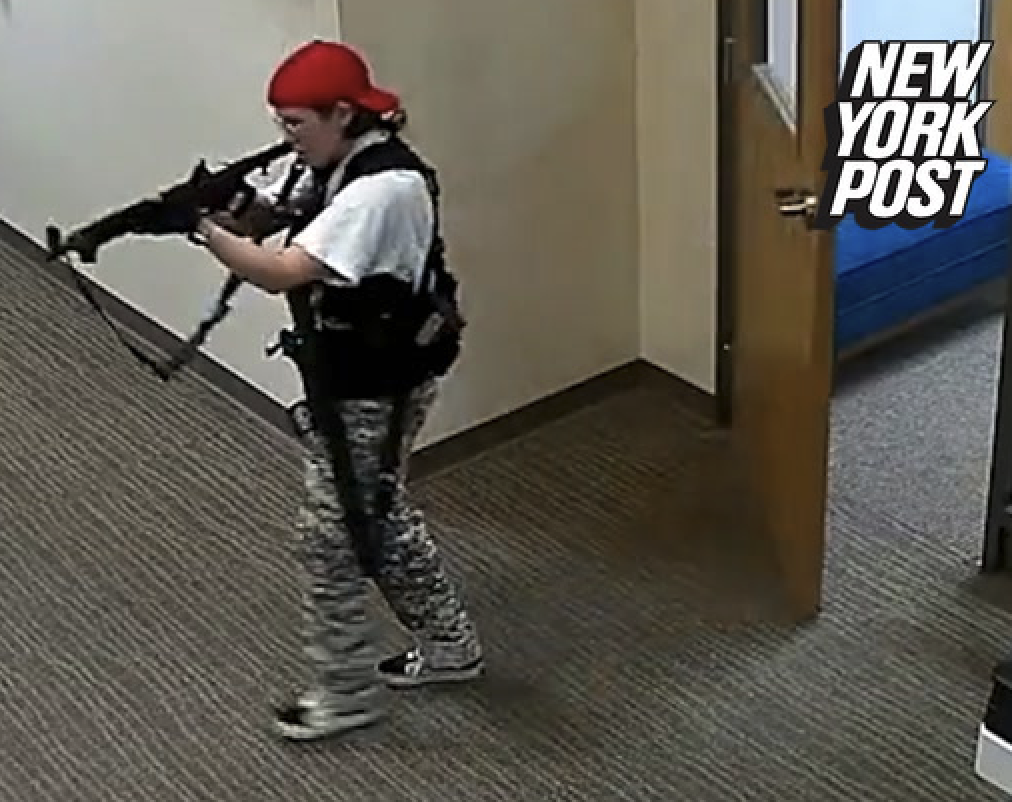
That was three weeks before a gunman crashed through the glass doors of his church's Covenant School and killed three staff members and three 9-year-old students -- including the pastor's daughter, Hallie Scruggs. Police fatally shot the attacker, 28-year-old Audrey Hale, a former Covenant student who had taken the name "Aiden" and male pronouns online

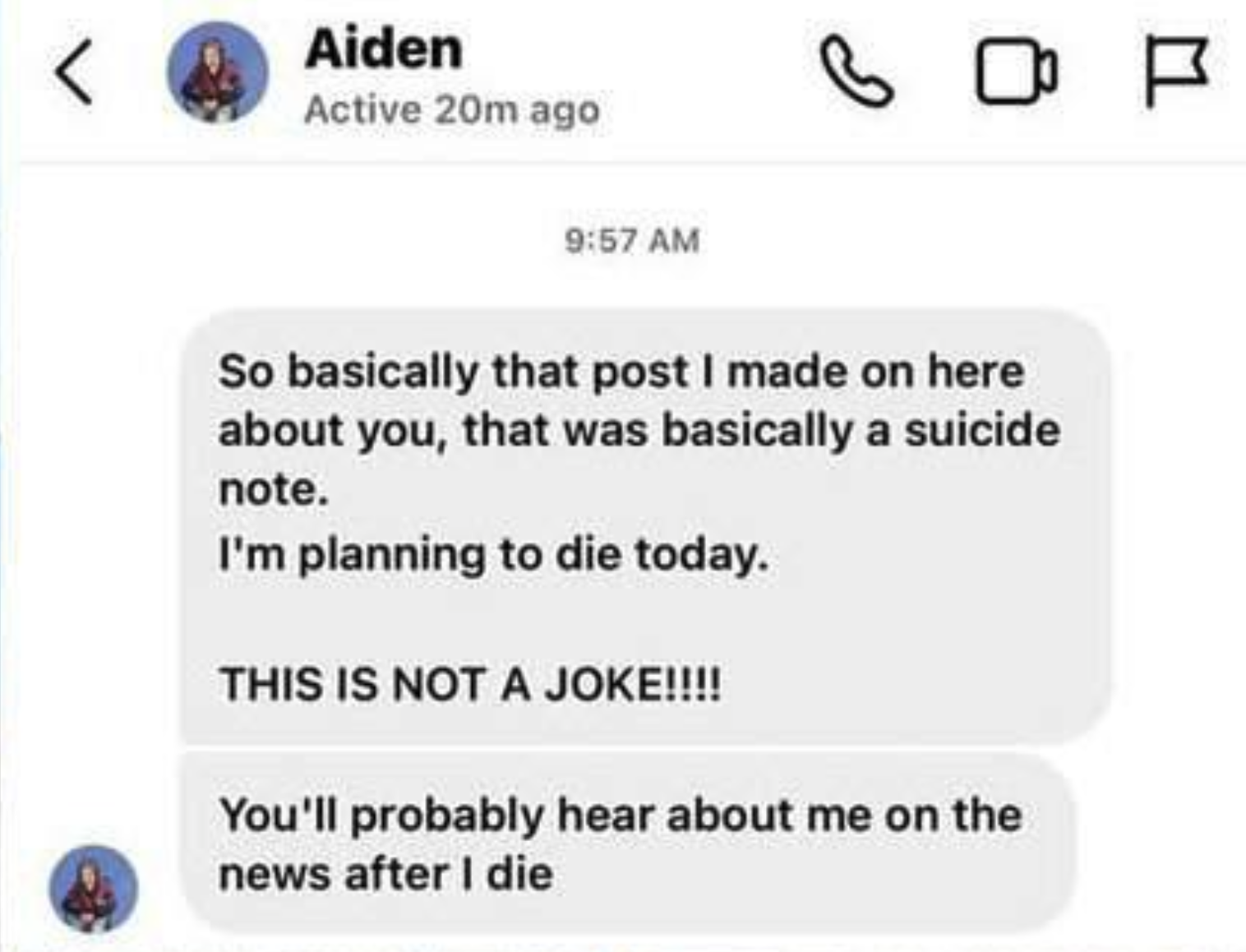
Police confirmed that Covenant had been targeted. But Nashville officials and the FBI have declined to release a "manifesto" referenced in Hale's final social-media warning: "One day this will make more sense. I've left more than enough evidence behind."

The families of those killed have mourned in private, even as solemn Holy Week rites flowed toward Easter (April 9) -- surrounded by a whirlwind of familiar arguments about gun control and a mental-health crisis that has shattered so many lives.

In his sermon before the attack, Scruggs had already plunged into deeper, ancient, mysteries -- stressing that believers can trust that God understands the grief, anger and confusion caused by violence and death.

When meeting the grieving family of his friend Lazarus, Jesus responded with anger, as well as compassion. Thus, the importance of the Gospel of John's blunt words: "Jesus wept."


Please respect our Commenting Policy

Podcast: Do readers need to know the 'why' factor in the Covenant School shootings?

Podcast: Do readers need to know the 'why' factor in the Covenant School shootings?

Before returning to mainstream news coverage of the attack on Covenant Presbyterian Church and its school, let’s look at a story that raises similar issues — in Colorado Springs, Colorado. Consider this new information linked to this week’s “Crossroads” podcast (click here to tune that in).

The headline on a KRDO report: “Manifesto details former student’s plans to carry out multiple Colorado Springs school shootings.” Yes, note the word “manifesto.”

In this case, police are dealing with threats, not actions. However, journalists covering this story face some familiar questions about content and emphasis. Let’s pick this up at the second paragraph.

According to the 18th Judicial District Attorney’s Office, 19-year-old William Whitworth - who identifies as “Lilly”- was charged after an investigation into "threats involving schools in Colorado Springs Academy District 20."

The context for this story is Colorado Springs. What do we know about that “conservative” city, in terms of its media profile? Here is an interesting headline from The Guardian: “Colorado Springs: a playground for pro-life, pro-gun evangelical Christians.

Back to the very low-key Colorado news report:

Once inside [the home], deputies noted in the affidavit two holes that appeared to be punch marks in the wall. The door to a bedroom was off its hinges and lying beside the opening. … The sister identified herself as Lilly, but further investigation determined her birth name is William Whitworth.

Once again, readers face that familiar, but suddenly controversial, question from the old-school journalism equation “who,” “what,” “when,” “where,” “why” and “how.”

A dozen or so paragraphs and news-you-can-use bullet lists into the story, readers finally learn:

When asked if she was going to shoot up a school, the affidavit states Whitworth "visibly shook her head and down indicating yes." When asked why she'd do that, Whitworth stated, "Why does anyone do it." …

While waiting for the fire department, Whitworth was asked how much she had been planning the school shooting. She stated she was "about a third of the way from doing it," verifying again that Timberview Middle School was one of the "main targets" currently and other targets were churches.

There’s some (#triggerwarning) anti-Donald Trump material in this troubled young person’s writings, as well. But it would be interesting — since Colorado Springs is internationally known as a haven for evangelical ministries — to know just a bit more (as in anything) about the targeted “churches.”


Please respect our Commenting Policy

Tremors in a 'fundamentalist' empire: What kind of news story is unfolding at Bob Jones U?

Tremors in a 'fundamentalist' empire: What kind of news story is unfolding at Bob Jones U?

Attention religion-beat journalists: What we have here is a chance to use the hot-button word “fundamentalist” in way that is consistent with years of guidance from the Associated Press Stylebook.

Honest. Give it a try.

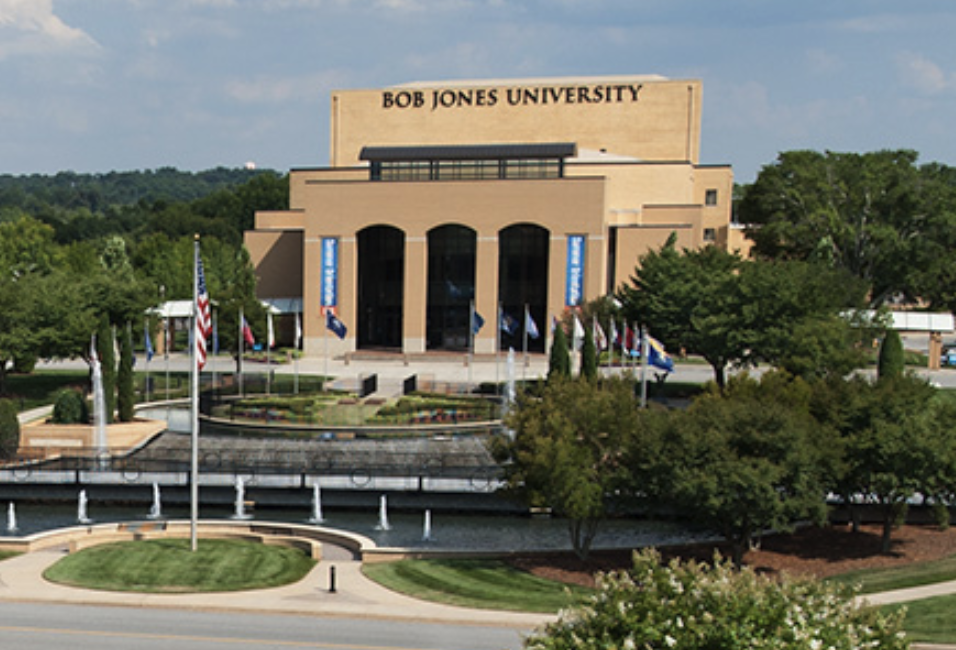
I am referring to news coverage of a rather mysterious power struggle at Bob Jones University in Greenville, S.C. At this point, there has been next to zero national coverage of this inside-baseball conflict, perhaps because it’s a fight between conservative Christians that does not appear to involve the words “Donald Trump.”

But there has been quite a bit of coverage at the regional level and in “Christian market” news, because this is a powerful and symbolic institution in the Bible Belt. You can see some major-league buzz words in the overture of the main story at The State: “SC Christian university president resigns, cites problems with governing board.” This is long, but essential:

The president of Bob Jones University has resigned amid long-simmering disagreements with the chairman of the board and grandson of the university’s founder over the discretion of the fundamentalist Christian school in Greenville.

Steve Pettit was named president in 2014, the first non-Jones family member to hold the job since the school was founded by Bob Jones Sr. in 1927. He was succeeded by Bob Jones Jr., Bob Jones III and then his great-grandson, Stephen Jones. Bob Jones IV elected not to work at the school.

In a four-page letter to the board, Pettit said board chair John Lewis had created disunity on the board, held a meeting without telling staff and was not taking seriously a comment made by a board member that “female students’ clothing and female student athlete uniforms accentuate their ‘boobs and butts.’”

Pettit said he had heard the board member took photos of women without their permission. He said he did not know if the information was true, but by law should have been turned over to the Title IX coordinator for investigation.

Ah, a Title IX fight. For those who have followed Bob Jones trends, that would lead straight into the crucial issue of whether this school will play ball with government agencies or outside educational authorities of any kind.

A big word here is “separatism,” along with “ultra-separatism” (click here for background). The key is the degree to which true “fundamentalist” would work with mere evangelicals who have associated, in any way, with liberal and modern trends in Christian faith.


Please respect our Commenting Policy

LSU's always controversial Kim Mulkey offers a highly personal quote (#crickets)

LSU's always controversial Kim Mulkey offers a highly personal quote (#crickets)

I always watch the final March Madness games in the women’s tournament, because of the high quality of the playing and coaching and, yes, because as a Baylor University alum and legacy guy, it was hard not to watch coach Kim Mulkey’s teams in the dynasty years.

That said, I was one of the Baylor fans who were miffed when the administration either (a) smiled and let her hit the exit door for a few more dollars from her home-state school or (b) sort of pushed her toward that exit because she was too flashy, too conservative (however one wants to define that), too private or too willing to step on the toes of powerful men and women.

Mulkey is not a woman who knows her place.

So I paid attention to the stunningly improbable LSU run to the national title — at the end of Mulkey’s second year at that job, after arriving at a school in or near the SEC cellar.

I wondered, frankly, if she was going to say one of those things that she says that the press kind of has to look away and pretend that she didn’t say. I wasn’t expecting it to be a quote about religion.

With a minute to go in the game, Mulkey was shown crying — almost weeping — on the sideline when the dagger three-pointer hit the net to defeat a great Iowa team. The Tiger queen was still fighting to control her emotions during her first post-game comments to ESPN. Struggling to speak, and wiping away tears, she finally managed to answer the inevitable “How do you feel?” question from reporter Holly Rowe.

“Coaches coach for a lifetime. This is the fourth time that I’ve been blessed,” Mulkey said to Holly Rowe postgame. “Never in the history of LSU basketball, men or women, have they ever played for a championship. And to win it? I think my tears are tears of joy. I’m so happy for everybody back home in Louisiana.”

“Blessed” is, of course, deep-Bible Belt talk.

That’s from a Sam Gillenwater post at the On3 website: “Kim Mulkey 'blessed' after leading LSU to program's first national championship.” It’s the quote that ended the interview that caught my attention.


Please respect our Commenting Policy

New question in the worship wars: Why have many worshippers stopped singing in church?

New question in the worship wars: Why have many worshippers stopped singing in church?

Anyone who has visited a shopping mall understands the Big Idea behind a food court.

"If you want Mexican food, you go here. … If you want pizza, you go over there," said Kenny Lamm, the worship ministry strategist for the Southern Baptist state convention in North Carolina. "Then we sit together and eat whatever we want. …

“The question is whether a food-court approach works if you are seeking unity while leading worship in a church."

In the latest wrinkle in what researchers have long called the "worship wars," some church leaders are asking a blunt question about the decision to trade traditional hymnals for contemporary Christian music. That question: Has the typical Sunday service become a semi-professional concert instead of a communal worship experience for all believers?

As part of his work, Lamm hears from many pastors, musicians and church members. One recent letter -- which he posted while keeping the writer anonymous -- combined many hot-button issues in this debate.

After four weeks of visiting a church, the writer noted that he was constantly distracted during worship by "haze machines," "programmable lights that blind the audience," concert-level darkness in the auditorium, as well as musicians wearing "ball caps," skinny jeans, "Chuck Taylor" tennis shoes and other "stage" apparel.

Many of the new songs seemed to confuse the congregation.

"The melody is unmemorable. Very few in the audience seem to know the songs either; indeed as we looked around during one of the songs, we did not see one person singing -- not one," noted this visitor. "Some of the songs are so high I cannot sing them. I wish the leaders would consider the average singer! … Why does just about every praise and worship song go up an octave and double in volume halfway through, then die back down at the end?"


Please respect our Commenting Policy

Thinking about AI and faith: Can a computer 'get' what it means to be truly human?

Thinking about AI and faith: Can a computer 'get' what it means to be truly human?

Every now and then, I get an email from Ira Rifkin, who for many years wrote “Global Wire” posts for GetReligion about journalism issues in international events and trends. He signed off about half a year ago with an edgy post called, “Ciao, GetReligion: Thanks, all, for my tenure. Critic that I am, though, here are some final thoughts.”

With his unique mix of Jewish and Buddhist disciplines, Rifkin was also a keen observer of new ideas and concepts linked to what mass media tends to call “spirituality,” as opposed to more conventional forms of religious faith.

Several weeks ago, he send me a URL for a Los Angeles Times feature that ran with this headline: “Can religion save us from artificial intelligence?

I immediately put it into my “think piece” file, but held on to it for a while to put some cushion between it and my podcast/post with this title: “When is preaching a 'news' story? Ah, the temptation of ChatGPT sermons.” Here is a byte of that:

Right now, one of the hot topics in the public square is the rise of artificial intelligence and, to be specific, the ChatGPT website. Thus, this week’s “Crossroads” podcast (click here to tune that in) focused on several “newsy” angles of the recent Associated Press story that ran with the headline, “Pastors’ view: Sermons written by ChatGPT will have no soul.”

During the podcast, I riffed on the whole issue that different kinds of technology can shape the content of communications in different ways. If ChatGPT sermons have a sense of “soul,” it would be a “soul” that is defined by the creator of the software and the tech platform.

The Los Angeles Times story that Rifkin sent me opens with an AI sermon hook — but the issue at the heart of the story is much, much bigger than that.

Nevertheless, it helps to start this “think piece” recommendation with that feature’s overture:

Sometimes Rabbi Joshua Franklin knows exactly what he wants to talk about in his weekly Shabbat sermons — other times, not so much. It was on one of those not-so-much days on a cold afternoon in late December that the spiritual leader of the Jewish Center of the Hamptons decided to turn to artificial intelligence.


Please respect our Commenting Policy

Podcast: Was the attack on a conservative Presbyterian school in Nashville a religion story?

Podcast: Was the attack on a conservative Presbyterian school in Nashville a religion story?

Was the attack on the elementary school at Nashville’s Covenant Presbyterian Church a religion-news story?

Of course it was, for at least four reasons that we discussed during this week’s “Crossroads” podcast (click here to tune that in).

(1) It was an attack on a conservative Christian school at a conservative Presbyterian church in a city that is often called the buckle fn the Bible Belt (although locals know that the Nashville establishment, especially in media, is left of center).

(2) Religious groups have played a major role in Tennessee debates about parental rights, education and LGBTQ issues. What does that have to do with the shooting? Hold that thought.

(3) Religious groups have played a major role in discussions of gun-control legislation in Tennessee and, in this case, it is important to avoid political labels such as “liberal” and “conservative” in that discussion.

(4) The young adult who attacked the Covenant School was a former student there. Audrey Hale had recently identified as Aiden Hale in social media, with male pronouns. Hale was still living in a conservative Christian home, with a mother who both was a strong advocate of gun control and on the staff of Village Chapel in Nashville.

What else do news readers know about the shooter? That depends — in this new age of partisan, advocacy media — on which news organizations a reader follows. In most mainstream coverage, even in Nashville, questions about the life and beliefs of the shooter have all but vanished.

Consider this short paragraph late, late in a Religion News Service follow-up report: “Grief, fear haunt Nashville as residents gather to mourn in wake of Covenant shooting.”

Very little is known about the shooter, a former student at Covenant who was killed by police. The shooter reportedly left a manifesto that has not been made public. 

Really? “Very” little?


Please respect our Commenting Policy

Heeding the Nashville shooter's own voice: Do journalists want the 'manifesto' released?

Heeding the Nashville shooter's own voice: Do journalists want the 'manifesto' released?

Once again, we return to that mantra from old-school journalism — “who,” “what,” “when,” “where,” “why” and “how.”

When covering the murders at Nashville’s Covenant Presbyterian Church private school, journalists already know that the shooter wanted the public to know the answer to the “why” question.

Moments before shooting open the school’s doors, the person previously known as Audrey Hale, who chose the name “Aiden” in social media, sent a haunting and strategic message to a friend. Some timelines suggest that the shooter sent this message while parked in the church’s parking lot.

The contents of the message are highly relevant to news coverage of the shootings. Readers: Have you seen these words quoted in your local, regional and national news sources? Hale wrote:

“This is my last goodbye.

“I love you (heart) See you again in another life Audrey (Aiden)”

Later, Hale added:

“My family doesn’t know what I’m about to do

“One day this will make more sense. I’ve left more than enough evidence behind

“But something bad is about to happen.”

Public officials have made it clear that the shooter left behind a “manifesto,” as well as highly detailed plans for the attack on the school (school leaders have said Hale attended 4th and 5th grade there). The manifesto text is almost certainly what Hale was describing with the words, “One day this will make more sense. I’ve left more than enough evidence behind.”

Under normal circumstances, journalists would be doing everything that they can to answer the “why” question in this case, including calling for the release of Hale’s manifesto text and other materials linked to the attack. But these are not normal circumstances.


Please respect our Commenting Policy

'The Nuns Who Left Brooklyn' -- How many religious details did this Times story need?

'The Nuns Who Left Brooklyn' -- How many religious details did this Times story need?

The headline of this New York Times story was totally “religion story” — “The Nuns Who Left Brooklyn.

Thus, I heard from people who wanted to know what your GetReligionistas thought of this religion story.

The content of this news feature was, quite frankly, totally “metro desk” (people who have worked in newsrooms will understand that term). This is, let me stress, not a complaint. The Times story is packed with relevant, even colorful local news details about a sad situation that developed in Brooklyn.

Also, religion-beat pros will not that it is hard to do a story about the details in the lives of cloistered Catholic women religious, since they are not going to sit down for interviews and talk about the details of their lives and beliefs. The story has some crucial details provided by others that tell readers some of what they need to know.

Would I have appreciated a few more details about this order and where it fits into the current drama of Catholic monastic life in America? Sure. Was that an essential part of this particular story? I’ll admit that the answer to that is: “Not really.” Hold that thought. Meanwhile, here is the overture:

The 10 Carmelite nuns of Cypress Hills, cloistered in Brooklyn for almost 20 years, decided to leave New York City after much contemplation.

As much as they tried, the sisters of the Monastery of Our Lady of Mount Carmel and St. Joseph, devotees of silence and prayer who rarely left the confines of the cloister, could no longer ignore what was going on outside. The loud celebrations in an adjacent park became a bit too much. And when a beloved lay volunteer was murdered, the sisters were shaken deeply.

The last straw came in 2020, that first pandemic summer, with the explosion of late-night partying on their street involving cars with powerful speakers, said Mother Ana Maria, who spoke on behalf of the monastery, which used to be on Highland Boulevard.

“Our walls shook and our windows shattered,” she said. The sisters wondered whether the blaring music well past midnight was aimed directly at them.

Shattered windows? That’s some loud partying. That leads to a poignant detail, care of the mother superior who spoke for the nuns.

Mother Ana Maria, who, along with her sisters, begins each day at 5 a.m. The nuns pushed their beds away from the walls of their cells — the small rooms where they slept — but still felt unsafe, she said.


Please respect our Commenting Policy