Terry Mattingly

Thinking about those sad, old Vatican II 'fundamentalists' -- such as Pope Benedict XVI?

Thinking about those sad, old Vatican II 'fundamentalists' -- such as Pope Benedict XVI?

If religion-beat journalists looked carefully enough, they could see an interesting question lurking inside the rhetoric of the current Latin Mass wars.

That question: What does it mean to be “pro-Vatican II”? If reporters flip that question around it turns into this: What does one need to do to be “anti-Vatican II”?

For example, see this language at the top of a Catholic News Agency report this past summer with this headline: “Pope Francis: There are many ‘restorers’ in the US who do not accept Vatican II.

There are many “restorers” in the United States who do not accept the Second Vatican Council, Pope Francis said. …

Speaking to the editors of Jesuit journals, he criticized what he called “restorationism” in the Church, which he defined as the failure to accept Vatican II, the ecumenical council held from 1962 to 1965. He said: “Restorationism has come to gag the Council. …”

Note the tension between “accept the Council” and “gag the Council.” What, precisely, does it mean to “gag” the Second Vatican Council? Let’s keep reading:

“The problem is precisely this: in some contexts, the Council has not yet been accepted. It is also true that it takes a century for a Council to take root. We still have 40 years to make it take root, then!”

Pope Francis cited opposition to Vatican II when he issued the motu proprio Traditionis custodes in July 2021, limiting celebrations of the Traditional Latin Mass.

This leads to a logical question: What ARE the teachings of Vatican II? Are they the actual contents of the Council documents or are these teachings an evolving body of work with current and future Catholic leaders deciding what the Council meant to say? Yes, note how these questions echo decades of academic warfare about, well, everything from the U.S. Constitution to the New Testament.

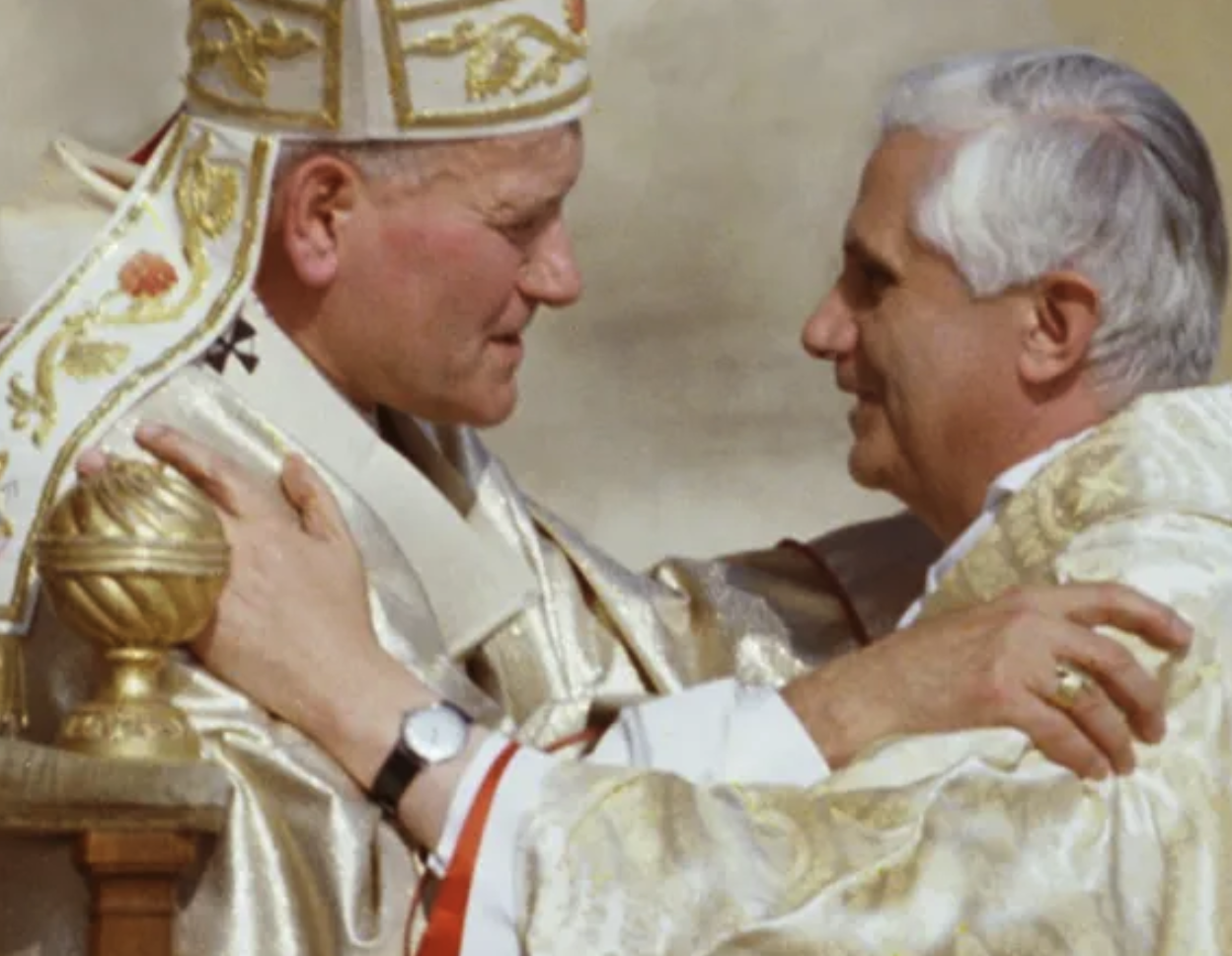
This is a timely subject, in light of the recent death of Pope Benedict XVI — one of few remaining Vatican intellectuals who, as an advisor to a cardinal in the Vatican II sessions, had direct exposure to the debates that led to its final documents. Benedict stressed a strict reading of the contents of Council’s teachings on a host of subjects — such as liturgy and the future role of Catholic tradition.

That leads us to a Religion News Service think piece written before shortly before the death of Benedict XVI. The author, Jesuit Thomas Reese, is a priest who for decades has been one of the most powerful voices (think “usual suspects”) shaping news coverage of American Catholicism.

Please respect our Commenting Policy

Here we go again: Hollywood doesn't 'get' America, so maybe religion is part of that?

Here we go again: Hollywood doesn't 'get' America, so maybe religion is part of that?

Every decade or so, power players in Hollywood discover that there are millions of Americans who do not mind buying tickets to see movies that contain overtly religious symbols, themes and even characters.

I’ve been covering this story since the 1980s. It’s fascinating how new generations of reporters manage to work up a sense of culture shock about this.

For example, consider that much-discussed Atlantic feature back in 2005 that ran with this headline: “Can Jesus Save Hollywood?

Another five or six years later, the discussion of niche-Christian entertainment was still creating buzz. The conservative interfaith journal First Things ran a provocative piece with this headline: “Is ‘Christian’ the new ‘Gay’?” Sociologist D. Michael Lindsay, at that time the president of Gordon College, responded to a question about that equation:

This comes from a quote that one woman who I interviewed in Hollywood recounted to me a story that she had where the conversation basically was a Hollywood producer telling her that it had become new and interesting for committed Christians to “come out” in Hollywood. And they actually used that language of “coming out” where one publicly identifies in this way. I think what it really reflects is although historically Christianity has been a very powerful force in this country, within the pockets of elite cultural life — in Hollywood, at universities like Harvard and Yale and the rarefied heights of arts and entertainment — being a deeply committed person of faith, whatever that faith tradition may be, is seen as unusual or odd. There’s pressure when you’re in those high positions not to be too public about your faith and certainly not a faith that is evangelistic in approach because that’s seen as overbearing or narrow-minded.

Like I said, this is “old” news. This trend will go on and on — because America is basically a red v. blue puzzle these days and it’s hard to ignore the evidence that “pew gap” statistics play some role in that.

That David French guy — much hated by Trumpian conservatives and lots of illiberal progressives — had a provocative summary of the situation in his must-read book “Divided We Fall: America's Secession Threat and How to Restore Our Nation.” Here is a summary of that French thesis from a new essay I wrote for the journal Religion & Liberty about the death of the old-school American Model of the Press:

The bottom line: Americans are divided by their choices in news and popular culture, choosing to live in protective silos of digital content. America remains the developing world’s most religious nation, yet its secularized elites occupy one set of zip codes, while most religious believers live in another. These armies share no common standards about "facts," "accuracy" or "fairness." 

 “It's time for Americans to wake up to a fundamental reality: the continued unity of the United States cannot be guaranteed,” wrote French. At this moment, “there is not a single important cultural, religious, political, or social force that is pulling Americans together more than it is pulling us apart.”

This brings me to a new City Journal piece with this headline: “Can Capitalism Save Hollywood? The gulf between elites and audiences is eroding profits throughout entertainment and news media — but signs of correction are emerging.”


Please respect our Commenting Policy

Correction? Washington Post on the 'religious event' that marked passing of Benedict XVI

Correction? Washington Post on the 'religious event' that marked passing of Benedict XVI

Once upon a time, it was relatively clear when a news organization did or did not need to publish a correction about an error in one of its reports.

But then the World Wide Web came along and reporters at major organizations began writing what were, in effect, news reports that evolved during or just after an important event — rather like the “write-thru” story updates that wire services had for decades sent to newsrooms.

In the old days, however, there was a definitive moment when ink hit paper and readers and journalists could consider a news report “published.” If there was an error of fact in that published story, then everyone (within reason) knew that there needed to be an ink-on-paper correction.

What is supposed to happen when a news report is merely published online? Is a story in digital bytes as “real” as the old ink-on-paper version? That’s the kind of issue journalists have been debating ever since professionals began “breaking” stories online or producing early versions of news reports that, eventually, merged into final reports that were “published.”

This brings me to an interesting sentence that ran, sort of, in a Washington Post foreign-desk (as opposed to the religion desk) story about the funeral Mass for Pope Emeritus Benedict XVI. Here is that sentence, which has circulated in screen shots taken of the Post website:

At the religious event, sometimes called the Eucharist, the faithful receive the sacrament, normally consecrated bread like wafers and wine, symbolizing the body and blood of Jesus.

I have done quite a bit of searching for that material online — especially the “symbolizing the body and blood of Jesus” reference — and I can only find fragments of digital material that show that it once existed. Maybe I have missed it, somehow. If so, I would welcome a correction and a working URL.

Meanwhile, check out, this wispy reference found in this online search file.


Please respect our Commenting Policy

Flashback: The late, great Walter Cronkite did some thinking about religion news

Flashback: The late, great Walter Cronkite did some thinking about religion news

Did you know that the late, great CBS News anchor Walter Cronkite, one of the most important news icons of all kind, once worked as a “church editor” for a mainstream newspaper in Houston (apparently the old Houston Press)?

That was a detail from his life that I missed. I had read, long ago, that he was a “cub reporter” after his college years, yet before he broke into broadcasting. But time as a “church editor”? That’s a journalism title from the old, old days, one that is even more condescending than the more common and inaccurate label “religious editor (as opposed to “religion” editor.

Anyway, a religion-beat friend recently send me a photocopy of a 1994 interview with Cronkite that ran in The Christian Century, the influential mainline Protestant journal. I can’t find it online, although it was quoted by Religion News Service in an a short obit — “And that’s the way he was” — in 2009.

Encountering that “church editor” label reminded me of the old “Lou Grant” show episode that I used as the opening for my graduate project at the University of Illinois in Urbana-Champaign, which ran — in a much condensed form — on the cover of The Quill in 1983. The headline on that journal essay was: “The religion beat: Out of the ghetto, into the mainsheets.

The “ghetto”? That was the “church page.” The overture of that Quill piece is long, but it will provide some context for the Cronkite remarks that I will share here:

As was often the case, Lou Grant was working on two problems at once. At first the problems seemed unrelated.

The Los Angeles Tribune had lost its religion editor. City editor Grant had searched far and wide and, of course, no one was interested in the position. After all, what self-respecting journalist would want to be stuck with the religion beat?

Problem number two was how to get rid of lazy, often-drunk, no-good reporter Mal Cavanaugh. All through this episode of Lou Grant the management of the Trib had been trying to find a way to get Cavanaugh to resign.

Then, a spark of inspiration. The script is simple:

LOU: Congratulations, Mal. You're the Trib's new religion editor.


Please respect our Commenting Policy

Podcast: Benedict XVI protected ancient doctrines, while looking into an ominous future

Podcast: Benedict XVI protected ancient doctrines, while looking into an ominous future

The passing of any pope unleashes waves of news commentary, frequently with supporters clashing with critics in an attempt to help shape the narrative heading into the conclave to pick the next occupant of the Throne of St. Peter.

What about the passing of a pope emeritus? That would make things simpler, since there the current pope was still alive and in charge. Right?

Apparently not. The death of Pope Benedict XVI, if anything, seemed to raise the stakes in many lingering debates in Catholic life. My takeaway is that it represented the final, formal close of the era of St. Pope John Paul II, as well as that of Pope Benedict XVI, who, as Cardinal Ratzinger, had played a crucial theological role in support of John Paul.

Thus, this event — for many on the Catholic right and left — marked the end of the “Veritatis Splendor” era, with John Paul II’s emphasis on the defense of transcendent truths, and the open door into the Synod on Synodality era, with its modern Jesuit emphasis on dialogue and evolving doctrine.

The complex nature of this transition provided the hook for this week’s “Crossroads” podcast (CLICK HERE to tune that in).

How complex? For a glimpse of the sweeping nature of this story, check this post from the Catholic listserv Big Pulpit — which circulates daily lists of URLs to news reports, blog posts, podcasts and other commentary on Catholic affairs.

The January 2 offering include a list of “The Top-10 Most Visited Links” about the death of Pope Benedict XVI. That was followed with the “Next-10 Most Visited Links.” Then there was “Another-10 Most Visited Links” and “The-Next-Another-10 Most Visited Links.” This went on and on for another screen or two, with a total of 80 must-read links for that day.

That’s all. Good luck reading all of that — plus countless other offerings in both the mainstream press and countless Catholic commentary sources.

GetReligion readers will not be shocked to discover that, for many journalists, the death of this orthodox theologian was primarily a political story.


Please respect our Commenting Policy

NYTimes editors ask, 'When does life begin?' and (bravo) include religious and legal responses

NYTimes editors ask, 'When does life begin?' and (bravo) include religious and legal responses

You never know what newsroom professionals will decide is a “holiday” story, of one kind or another.

For example, major publications have through the years run a wide variety of bizarre and even offensive stories that were, somehow, supposed to be linked to Easter. That season is problematic since it is so explicitly Christian, as in the faith’s most important holy day.

Christmas is a different matter, since the season is a cultural steamroller at the level of pop culture, big business and church-state warfare (a drag queens and you are on A1, for sure). Toss in the need for valid year-end features and lots of staff taking vacations and things can get pretty complex for editors.

All of that was an introduction to what I think was a totally valid Christmas-Yearender feature that ran at The New York Times with this big-issue headline: “When does life begin? The question at the heart of America’s abortion debate is the most elemental — and the most complicated.”

Talk about a complex, yet absolutely essential, topic to address after the fall of Roe v. Wade, and it’s absolutely essential that the editors assigned this one to the religion desk. That made sense because it’s impossible to draw a bright red line between the spiritual and legal issues in this debate. As if that isn’t enough, a reporter then has to deal with valid debates on this issue among scientists, and religious leaders (think popes) commenting on those debates.

Thus, this is a story that will draw few cheers from activists on either side of America’s abortion wars. That’s a compliment, with this kind of story. Here is a large chunk of its summary-thesis material:

When does life begin?

In the months since the Supreme Court overturned Roe v. Wade, it has become unavoidable, as activists and politicians try to squeeze concrete answers from an eternal question of human existence.

Lawmakers and judges from Arizona to South Carolina have been reviewing exactly which week of development during pregnancy the procedure should be allowed. Some states draw the line at conception, or six weeks or 15 or around 40. Many others point to viability, the time when a fetus can survive outside the uterus. The implication is that after the determined time, the developing embryo or fetus is a human being with rights worth protecting.

Over the summer, when lawmakers in Indiana fought over passing a law banning most all abortions from conception, Republicans argued at length that a fertilized egg was a human life, at times citing their Christian principles — that “human life begins at conception” and “God our creator says you shall not murder.” A Democrat pointed to another answer found in Title 35-31.5-2-160 of the Indiana code: “‘Human being’ means an individual who has been born and is alive.” A disagreement over abortion policy became a fight over what it means to be human, the tension between conception and birth, church and state.

Like I said, that’s just the start.


Please respect our Commenting Policy

Clergy or spies? Concerning that New York Times update on accusations inside Ukraine

Clergy or spies? Concerning that New York Times update on accusations inside Ukraine

There are many, many facts about Orthodox church life in Ukraine that are hard to verify right now — for obvious reasons.

Civil wars create waves of fog that make it hard for reporters to do their job — if one assumes journalists have some responsibility to attempt to test the fact claims of armies on both sides.

All of this is relevant to that New York Times story that ran the other day with this headline: “Clergymen or Spies? Churches Become Tools of War in Ukraine.” Let me stress that this was an important story about an important topic. It would shocking if there were not divisions among Orthodox clergy and their parishes during a civil war.

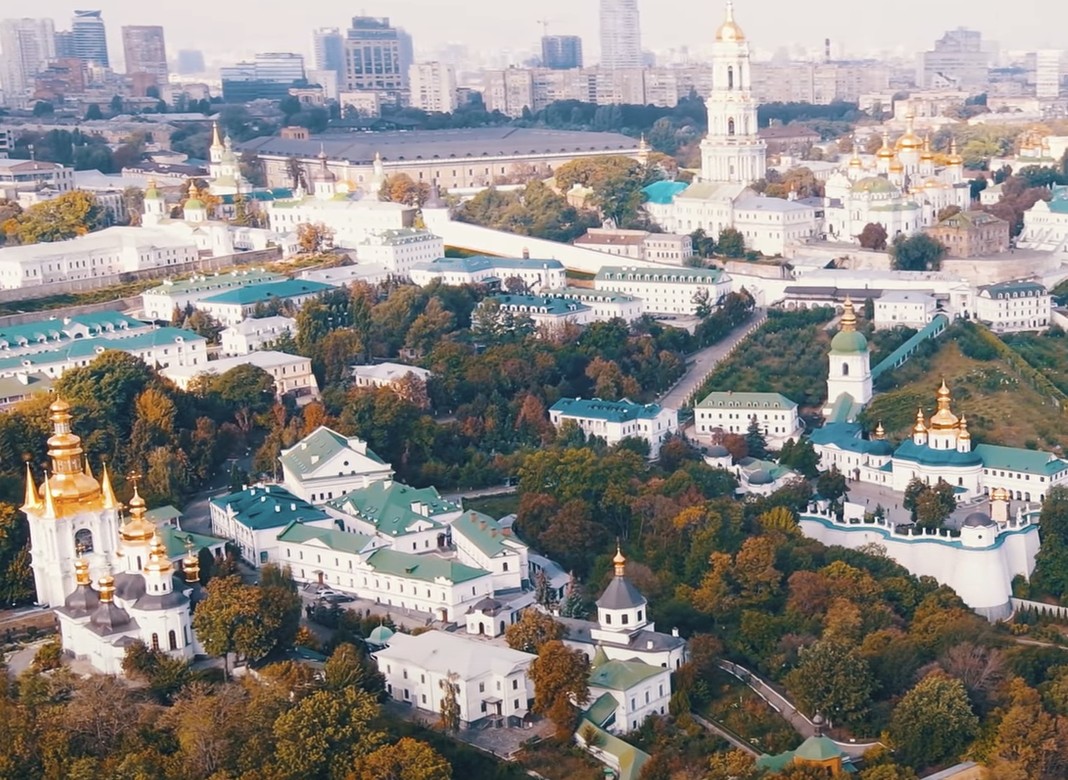
Basically, this Times story is a press release built on evidence gathered by Ukrainian officials who want to shut down the historic Ukrainian Orthodox Church (UOC), which has for centuries had canonical ties to the Russian Orthodox Church. That church has done everything possible — under Orthodox polity — to cut its Moscow ties, while waiting for some kind of intervention from the world’s Orthodox patriarchs.

On the other side, the United States, the European Union and the Ecumenical Patriarchate in Istanbul have backed the creation of the new Orthodox Church in Ukraine (OCU) — which is, no surprise, backed by the current government of Ukraine.

So, before we get to the central claims of the Times story, let’s pause and ask a rather important question: How many Orthodox parishes, and clergy, are there in Ukraine these days? Yes, it complicates matters that some have been destroyed, by forces on both sides, and some have been closed or seized. How many parishes have been shut down or seized, and by whom? How many parishes have split? These are the kinds of questions that are hard to answer during a civil war.

Here is some interesting material from a source on the left side of Orthodox life here in the United States, the Orthodox Christian Studies Center at Fordham University in New York City. The headline on this blog post: “Which Orthodox Church in Ukraine is the Largest?” It was written by Thomas Bremer, a retired professor in Eastern Church studies at Münster University, Germany. Let’s walk through some key info:

Regarding parishes, the Ukrainian authorities have very thorough statistics. Every religious community that wants to exist legally in Ukraine has to register … and to provide data regularly about numbers of parishes, clergy, training institutions, etc.


Please respect our Commenting Policy

Of course the fall of Roe was 2022's top religion-beat story (including those church attacks)

Of course the fall of Roe was 2022's top religion-beat story (including those church attacks)

In the years before Roe v. Wade, one of America's largest Christian flocks struggled to find a way to condemn abortion, while also opposing bans on abortion.

A 1971 resolution said: "Some advocate that there be no abortion legislation, thus making the decision a purely private matter between a woman and her doctor" while others "advocate no legal abortion," permitting it "only if the life of the mother is threatened." Thus, it backed legislation allowing "abortion under such conditions as rape, incest, clear evidence of severe fetal deformity, and carefully ascertained evidence of the likelihood of damage to the emotional, mental, and physical health of the mother."

After the 1973 Roe decision, the same body stressed the "limited role of government" in abortion questions, while supporting a "full range of medical services and personal counseling" for expectant mothers.

That was the Southern Baptist Convention -- before its conservative wing gained control, creating a powerful cultural force against abortion rights.

Churches were always active in abortion debates, with some embracing centuries of doctrine on the sanctity of human life, while overs became strategic abortion-rights supporters. Thus, journalists in the Religion News Association named the Supreme Court decision to overturn Roe v. Wade as the year's top American religion-news story. Now churches -- left and right face -- face the challenge of proclaiming certainties while many states seek compromise.

Stressing politics, the RNA stated: "The Supreme Court overturns the 1973 Roe v. Wade precedent and says there is no constitutional right to abortion, sparking battles in courts and state legislatures and driving voters to the November polls in high numbers. More than a dozen states enact abortion bans, while voters reject constitutional abortion restrictions in conservative Kansas and Kentucky and put abortion rights in three other states' constitutions."

This poll avoided other religion-news elements of this story, such as acts of violence against churches -- especially Catholic parishes -- and crisis pregnancy centers, ranging from vandalism to arson, from the interruption of sacred rites to the destruction of sacred art. Protestors marched at the homes of SCOTUS justices and police arrested an armed man who threatened to invade the house of Justice Brett Kavanaugh.

This year, the RNA added an international list, selecting Russia's war against Ukraine as the top story, in part because of bitter tensions between the Russian Orthodox Church and the new Orthodox Church of Ukraine, backed by the United States and the Orthodox Ecumenical Patriarchate in Turkey.


Please respect our Commenting Policy

Funny press release or valid news? Becket team salutes its 2022 public-square Scrooge

Funny press release or valid news? Becket team salutes its 2022 public-square Scrooge

Religion-beat reporters (and columnists) get lots of strange press releases and letters from folks trying to get their pet issues covered.

My all-time favorite, during my Denver years, was a 50-page (at least) handwritten treatise on why superstar Barbara Streisand was the Antichrist. That created a steady stream of amused editors to my desk. I should have had the courage to write about it.

Most press releases are written by people who have absolutely no idea what newsrooms consider to be news or even what topics the reporter/columnist targeted with the release has written about in the past.

Christmas is a HUGE time for religion-beat press releases. This is logical because some newsrooms — those without religion-beat pros, ironically — struggle to find holiday story angles, year after year after year.

This year, I received one release that made me laugh out loud, in a good way. It came from a legal think tank that has made lots of news, in recent decades, with successful arguments at the U.S. Supreme Court. I have, for a decade-plus, received variations on this release from The Becket Fund for Religious Liberty, but this one (#GASP) really should have received some coverage.

It was about this year’s winner of the “Ebenezer Award,” saluting the “most outrageous and scandalous offenders of the Christmas and Hanukkah season.” This year’s winner: The government powers that be in King County, Washington. (Click here for previous winners.)

Here’s some of the press-release background:

King County's "Workforce Equity Manager" for the Department of Human Resources, Gloria Ngezaho, recently authored and issued a memo, titled "Guidelines for Holiday Decorations for King County Employees," where she states that workers may not "appear to support any particular religion" and bans them from displaying religious symbols in any "virtual workspace." …

King's County has refused to back down on their outlandish efforts to squash the religious expression of their employees during one of the most sacred times of the year for people of faith.

Did this story receive any mainstream press coverage?


Please respect our Commenting Policy