Terry Mattingly

Thinking about 'bothsidesism' and sad changes in American politics and journalism

Thinking about 'bothsidesism' and sad changes in American politics and journalism

This is Holy Week for those of us in the ancient churches of the East. Thus, I am spending lots of time at my local parish as we march through many hours of ancient prayers, scriptures and liturgy. Yes, we are hearing more than a few prayers for peace in Ukraine and for the victims of that hellish fratricidal conflict. Will there, at the very least, be a ceasefire for Pascha (Easter)?

At the same time, my “Crossroads” partner — Todd Wilken of Lutheran Public Radio — was on the road to attend a funeral, so we didn’t record the podcast at our usual time. That should go live here at GetReligion tomorrow (mid-day Saturday).

Thus, I would like to point readers to a “think piece” that I have had in the hopper for some time now. It’s an opinion essay by Damon Linker that ran at The Week with this headline: “The noble and needful philosophical tradition of bothsidesism (no, really) — A call for equanimity in a polarized time.”

The term in question — “bothsideism” — is closely linked with another hot-button word that is frequently used as a semi-curse in social media. That would be “whataboutism.” Click here to read Merriam-Webster on that.

My interest in “bothsideism” is rooted in journalism theory, as opposed to pure political science.

During my days leading the Washington Journalism Center, two of the key lectures focused on four models of the press that dominate journalism debates in religious circles. For some people these days, discussions of balance, fairness and even accuracy — think the “American model of the press” — are one jump away from “bothsideism.” Here is a bite of an essay based on those lectures (.pdf here):

The American Model fit well with other American values — promoting a lively public square in which citizens could believe that their views would be treated with respect. It was possible, reading coverage over a period of time, to see which newsrooms were striving to be accurate and fair-minded. This approach meshed with a liberal approach to the First Amendment, as well.

Yes, this is a challenge for journalists as they do their work. I’ll be blunt. I think the most important skill in journalism is the ability to accurately report the views of a person with whom you disagree. Journalists are supposed to strive to show respect to people on both sides of hot- button debates.

This brings us to Linker.

Please respect our Commenting Policy

Washington Post seeks brave, skilled reporter to venture into mysterious heart of Jesusland

Washington Post seeks brave, skilled reporter to venture into mysterious heart of Jesusland

Is there anyone out there who remembers fax machines?

There was a time when sending faxes played a crucial role in the news process and, from time to time, journalists even received crucial story tips and sort-of-anonymous tips via fax.

If you know your religion-beat history, for example, you may remember this quotation from a job notice posted in the newsroom at the Washington Post back in 1994, when editors were seeking a reporter to fill the religion-news desk. Someone in the newsroom faxed it to other scribes.

Here’s a note about that, via Julia Duin (who has written on this topic many times) and, well, a book quote from moi. Duin’s whole post (with lots of URLs) is here: “Here we go again: The New York Times can't admit it needs theologically astute writers.”

The Post’s job announcement said in part, “The ideal candidate is not necessarily religious nor an expert in religion.” … It was a Washington Times columnist, John McCaslin, who broke the story about that Post job announcement and a lot of protest followed.

As our own tmatt put it in the 2008 book, “Blind Spot: When Journalists Don’t Get Religion” phrased the problem in this way:

“Post editors are correct are correct in that the ‘ideal candidate’ is ‘not necessarily religious.’ What is controversial is the statement that the ‘ideal candidate’ is not necessarily ‘an expert in religion.’ They were, in effect, arguing that a lack of expertise and experience can be a plus — a virtue — when covering religion news.”

Why do I bring this up? Well, there is a long history of newspaper managers trying to find fresh, new, innocent reporters to send into dangerous, foreboding parts of America — think religious sanctuaries full of believers — in which news stories Just. Keep. Happening. The result, frequently, reads like those in-depth National Geographic features about strange cultures on the other side of the world.

This brings us, in a roundabout way, to a headline that ran the other day atop a short David Harsanyi item at National Review. The headline: “Washington Post Seeks Seasoned Anthropologist to Observe the Indigenous Tribes of Waco.”

Maybe religion plays a role in this hiring drama? What do you think?


Please respect our Commenting Policy

Left and right cheer together, for a change, as U.S. Supreme Court defends religious liberty

Left and right cheer together, for a change, as U.S. Supreme Court defends religious liberty

Before putting his neck on the chopping block, King Charles I turned to his chaplain seeking personal peace after the chaos of the English Civil Wars.

The king was, on that infamous 1649 day, pondering heaven, hell and forgiveness.

“To show you that I am a good Christian," the king said, pointing to London Bishop William Juxon, "I hope there is a good man that will bear me witness that I have forgiven all the world, and even those in particular that have been the chief causers of my death. Who they are, God knows, I do not desire to know. God forgive them."

This isn't the kind of theology that ordinarily shapes U.S. Supreme Court decisions. Nevertheless, it was part of a litany of historical references during debates preceding a recent decision requiring Texas to grant a convicted murderer his Baptist pastor's audible prayers and comforting touch during his execution.

This was a rare moment in which activists on both sides of America's culture wars cheered for "religious liberty," a freedom that until recently didn't require cynical "scare quotes" that suggest uncertainty. This trend in First Amendment discourse has, for me, become the most important story I have covered during the third of a century -- as of this week -- in which I have written this national "On Religion" column.

The big question: Why did appeals to centuries of tradition work this time?

The condemned prisoner, John Ramirez, told the court he believed his pastor's "laying on of hands on him as he dies, and the vocalization of prayers and scripture, will assist his passing from life to death and will guide his path to the afterlife."

In his decision, Chief Justice John Roberts saluted the "rich history" of evidence supporting this prisoner's request "to have his pastor lay hands on him and pray over him during the execution. Both are traditional forms of religious exercise."


Please respect our Commenting Policy

Podcast: Thoughts on a third of a century as a columnist (and a symbolic SCOTUS ruling)

Podcast: Thoughts on a third of a century as a columnist (and a symbolic SCOTUS ruling)

This week marked a rather symbolic anniversary for my national “On Religion” column, which I have been writing now for (#GULP) a third of a century.

As you would imagine, I spend some time thinking about the subject for this week’s column: “Why 'religious liberty' has ended up inside quotation marks.” This column was also the hook for this week’s “Crossroads” podcast (CLICK HERE to tune that in).

Anyone who has followed my work with GetReligion and “On Religion” will not be surprised that I chose to write about the First Amendment and and a highly symbolic religious liberty case (no scare quotes there) at the U.S. Supreme Court.

But hold that thought. I’d like to walk through what are, for me, four symbolic columns I have written in the past, as I head into year No. 34.

That first column in 1988 was rather newsy: “Pat Robertson, evangelicals and the White House.” Here’s the lede on that:

On the morning before Easter, Pat Robertson stood in a pulpit under an American flag and a banner that read, "King of Kings, Lord of Lords."

Alas, change the name of the candidate and that still sounds rather relevant, considering the state of warfare inside American evangelicalism these days (see this must-read Richard Ostling post).

On the 10th anniversary of the column — that seemed like a long time, back then — I focused on a classic book by sociologist James Davison Hunter (“Culture Wars: The Struggle to Define America”) that has greatly influenced my work as a journalist and as a professor. The column opened by describing an interesting trend at political and religious rallies at that time:


Please respect our Commenting Policy

That missing piece, again: Why edit the faith factor out of Scheffler's win at the Masters?

That missing piece, again: Why edit the faith factor out of Scheffler's win at the Masters?

I’m sorry, but there will be no apologies here.

Yes, I realize that it has only been a week or so since I wrote a piece asking why mainstream sportswriters ignore the spiritual component in global-level events — even when the winner at the press-conference microphone openly discusses the role that faith plays in his life. Here’s that previous post: “What happened when this 2022 Final Four hero was asked to explain his heart, mind and soul?”

To add insult to injury, that post even opened with me waving a non-apology flag:

OK, faithful GetReligion readers, you know the drill.

Especially those of you who are among the small circle of our readers who join millions and millions of ordinary Americans in caring about sports news and personalities.

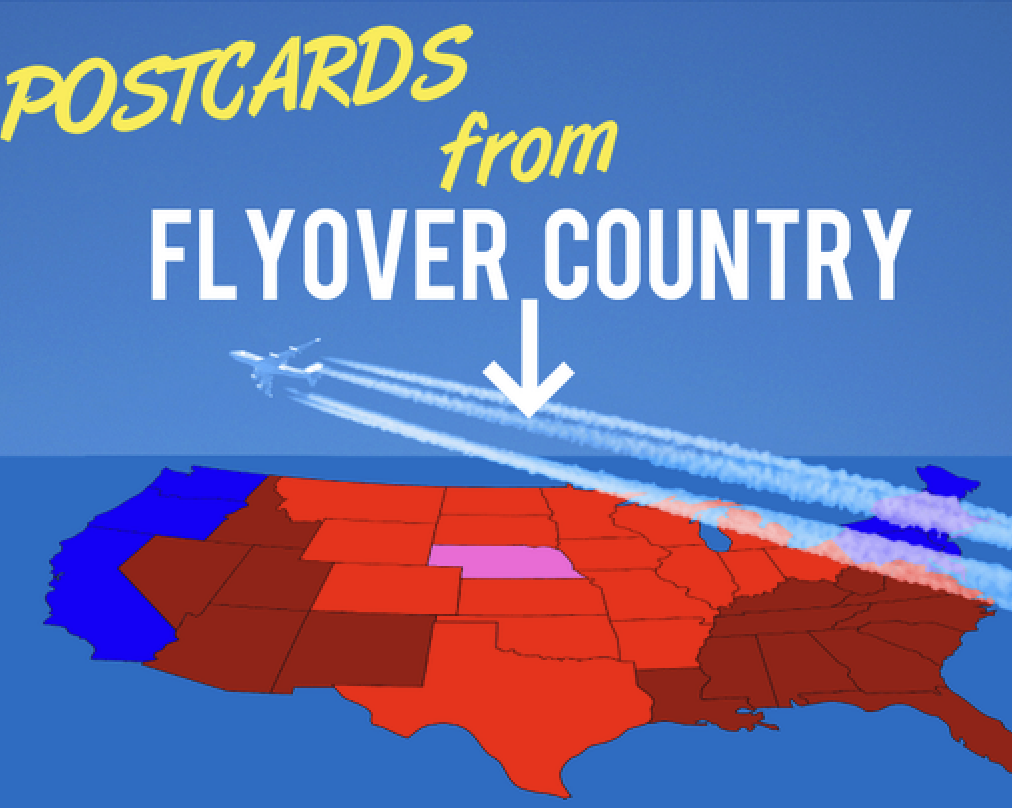
Why keep writing about this issue? Frankly, I think this is one of the biggest signs (and there are many) of the gap between elite journalists and ordinary people (sports fans included) in flyover country. The key, once again, is this journalism question: When probing what makes a superstar tick, why not heed what this athlete says when asked questions about precisely that question?

This time around, we are talking about the Masters and young Scottie Scheffler’s stunning rise to become the No. 1 ranked golfer in the world. Facing the world’s press, he offered this response to a question about his goals and motivations:

“The reason why I play golf is I’m trying to glorify God and all that He’s done in my life,” he said. “So for me, my identity isn’t a golf score. Like Meredith told me this morning, ‘If you win this golf tournament today, if you lose this golf tournament by 10 shots, if you never win another golf tournament again,’ she goes, ‘I’m still going to love you, you’re still going to be the same person, Jesus loves you and nothing changes.’ All I’m trying to do is glorify God and that’s why I’m here and that’s why I’m in this position.”

As one would expect, that is a quote from a story at the religion-market Sports Spectrum website.


Please respect our Commenting Policy

White evangelicals, again: New York Times urgently probes praise music on political right

White evangelicals, again: New York Times urgently probes praise music on political right

At this point, it’s safe to say that some New York Times editors are still engaged in a passionate quest to find a large group of Americans to blame for the 2016 general-election victory of Donald Trump of Queens.

There’s an obvious answer: White evangelicals. And it’s certainly true that independent and, especially, Pentecostal Protestants played a strategic role in the shocking rise of Orange Man Bad. It’s also true that independent evangelicals, fundamentalists, charismatics and Pentecostal believers have played high-profile roles in video-friendly pro-Trump events, including the January 6th attack on the U.S. Capitol to hunt down Vice President Mike Pence — a mainstream White evangelical if there ever was one.

However, White evangelical voters were not the crucial Rust Belt voters that put Trump in the White House, although Latino evangelicals and charismatics were a major force in Florida

Therefore, what are discerning religion-beat readers supposed to make of that long, vague Times sermon that ran the other day with this dramatic double-decker headline? (Sorry for the delay getting to this piece, but surgery slowed me down last week.)

The Growing Religious Fervor in the American Right: ‘This Is a Jesus Movement’

Rituals of Christian worship have become embedded in conservative rallies, as praise music and prayer blend with political anger over vaccines and the 2020 election.

Here is one strong opinion that is drawn — with his permission — from an email I received from Kenneth Woodward, for decades the religion-beat pro at Newsweek and the author of “Getting Religion: Faith, Culture, and Politics from the Age of Eisenhower to the Ascent of Trump.”

This is the most naive religion story I’ve read in decades and illustrates precisely why the Times still does not get religion. … Only the Times could publish a piece as misinformed as this one.

Why does Woodward think that? To some degree, he is blaming a newspaper story for lacking the kind of depth seen in interpretive magazine pieces produced during the glory years of religion-beat work at Newsweek and at Time by GetReligion patriarch Richard Ostling. For a short period of time, Emma Green was allowed to do similar work at the Atlantic.

Depth is an issue here. But this Times feature is quite long and has lots of room for anecdotes, when what is missing is a hard skeleton of facts that link (if this is possible) these vague trends and illustrations to actual denominations, publishing houses, parachurch groups, think tanks and academic institutions at the heart of American evangelicalism.


Please respect our Commenting Policy

Podcast: Can the AP Stylebook team slow down the creation of new Godbeat 'F-bombs'?

Podcast: Can the AP Stylebook team slow down the creation of new Godbeat 'F-bombs'?

Words matter, especially when covering a topic as complex as religion.

That concept has, of course, been one of the core doctrines of GetReligion for nearly 20 years and it was the hook for this week’s “Crossroads” podcast (CLICK HERE to tune that in). This episode discussed a few of the religion-language changes in the evolving Associated Press Stylebook — an update project that involved both Godbeat patriarch Richard Ostling and Bobby “Are the Rangers playing today?” Ross, Jr.

I am gung-ho about making stylebook improvements. Carry on!

But I have my doubts about whether these changes will have a major impact, when it comes to the butchering of religious language, information and history when complex religion subjects are covered by reporters (especially political-desk stars) with zero training and experience on this beat. After all, we already know that religion-news coverage radically improves when editors hire qualified writers and editors.

Thus, The Big Question, for my entire career, has been: Why don’t more newsroom managers show respect for religion news by hiring religion-beat pros?

So, will the improved AP bible help? Well, consider the many GetReligion posts over the years praising the stylebook entry for “fundamentalist,” while noting that way too many reporters ignore that advice. Why does this happen? Here is some material from an “On Religion” column I wrote on the topic (“Define fundamentalist, please”). First, the classic stylebook language:

"fundamentalist: The word gained usage in an early 20th century fundamentalist-modernist controversy within Protestantism. ... However, fundamentalist has to a large extent taken on pejorative connotations except when applied to groups that stress strict, literal interpretations of Scripture and separation from other Christians.

"In general, do not use fundamentalist unless a group applies the word to itself."

Alas, for reporters and academics, one person’s "evangelical" is another's "fundamentalist” and “fundamentalist” is basically and F-bomb.


Please respect our Commenting Policy

Naw! Nobody in the Title IX wars is asking LGBTQ questions about religious schools

Naw! Nobody in the Title IX wars is asking LGBTQ questions about religious schools

Every now and then, I finish reading a major-media news story and I think: Wait a minute. There’s a massive hole here (and one that’s going to produce all kinds of news headlines). Didn’t anyone notice?

In this case, we are talking about another story involving a head-on collision between the First Amendment and the evolving doctrines of the Sexual Revolution. The battleground is the hyper-tense world of higher education. The Washington Post headline, in this case: “New Title IX rules set to assert rights of transgender students.”

We will get to the overture in a moment. But can you spot the “hole” that is sort-of mentioned in this background paragraph which is buried way down in the Post report?

Title IX is a 1972 law that bars discrimination on the basis of sex in any educational program or activity that receives federal money. Schools found in violation risk losing federal aid. Advocates have long held that this definition rightfully includes discrimination on the basis of sexual orientation or gender identity.

OK. Does “any educational program or activity that receives federal money” include student-loan programs?

If so, maybe this story should have at least mentioned the 7,000 or so religious colleges and universities in this land? I mean, is there any chance that LGBTQ activists are going to challenge the religious liberty claims of these schools, many of which are explicitly doctrine-defined voluntary associations?

With that in mind, read the top of this feature at The Conversation: “What is the religious exemption to Title IX and what’s at stake in LGBTQ students’ legal challenge?”

While federal law shields most U.S. students from gender and sexual orientation discrimination, an estimated 100,000 LGBTQ students at religious institutions do not have the same protections.

Under a religious exemption provision, scores of colleges and universities can – and do – discriminate on the basis of someone’s sexual orientation, gender identity or gender expression.

A class action lawsuit now challenges that discrimination.


Please respect our Commenting Policy

What happened when this 2022 Final Four hero was asked to explain his heart, mind and soul?

What happened when this 2022 Final Four hero was asked to explain his heart, mind and soul?

OK, faithful GetReligion readers, you know the drill.

Especially those of you who are among the small circle of our readers who join millions and millions of ordinary Americans in caring about sports news and personalities. In this case, we are talking about March Madness, the NCAA hoops festival that — taken as a whole — is a much more symbolic and emotional sports event than that whole SuperBowl thing.

Sure enough, the final act of this year’s tournament features a sports hero-coach who wasn’t supposed to be there, at least not this year, at this stage of his career. Here is the top of a typical news story about him, care of the always secular USA Today team:

NEW ORLEANS — Kansas coach Bill Self had a positive opinion of Hubert Davis long before North Carolina staged a thrilling run to the national championship game.

Self ran into Tar Heels' All-American big man Armando Bacot when both teams were in Fort Worth two weeks ago for the first two rounds of the NCAA Tournament.

"I went up to Armando and said, 'congratulations: are you having fun?' And the first thing he said: 'I love playing for Coach Davis.' That's the first thing he said to me," said Self, who had a relationship with Bacot from coaching him on the FIBA U18 team back in 2018. "So I think right there is a testament to how good (Davis) is, how special, and the relationship he has with his guys."

On April 5 of last year, Davis was named as the replacement to legendary UNC coach Roy Williams. For parts of 2021-22, it looked as if it would take time for Davis to transform the blue-blood back into a perennial power. Then the Tar Heels found another gear – starting with a March 5 road upset of rival Duke, an outcome they replicated in this Final Four to send Blue Devils coach Mike Krzyzewski into retirement.

So what makes this man unique? What does he have to say when he is asked to explain who he is, why he does what he does and what Makes. Him. Tick. as a man and a coach?

Consider this quote, in one of those high-profile press conferences before the Final Four:

"My faith and foundation is firmly in my relationship with Jesus. It just is.


Please respect our Commenting Policy