Terry Mattingly

Thinking about Ukraine: Mearsheimer talks secular power, but religion ghosts loom nearby

Thinking about Ukraine: Mearsheimer talks secular power, but religion ghosts loom nearby

Reporters collect quotes. Often we hear people say things that are so haunting that the quotations stick in our minds and refuse to leave.

Let me share one of the quotes that has haunted me for more than a decade. It’s from an interview that I did with Victor Yelensky, a sociologist of religion from the Ukrainian National Academy of Sciences, during a June 2009 forum in Kiev about religion and politics in Ukraine. I was one of the speakers, along with another colleague — the late Arne Fjeldstad — of the Oxford Centre for Religion & Public Life.

Here is that quotation, which I used to close this “On Religion” column: “Religion ghosts in Ukraine.” Yelensky said:

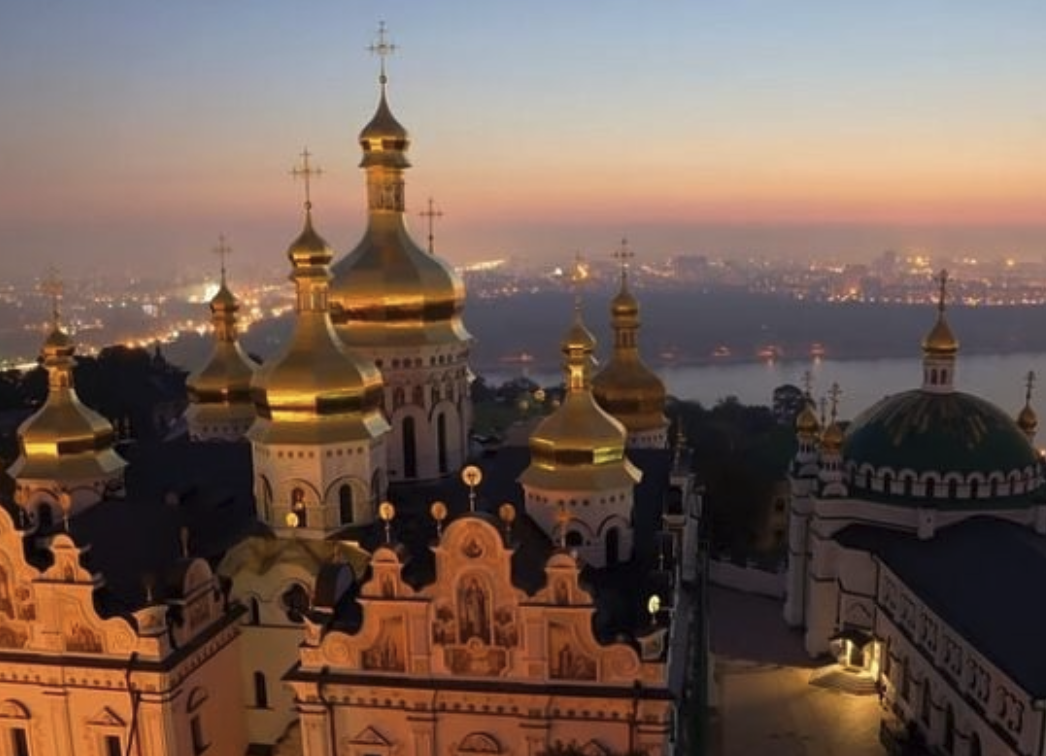
"For many Orthodox people in western Ukraine, it is simply unacceptable to live in any way under the leadership of the Moscow Patriarchate. At the same time, for many Orthodox in eastern Ukraine, it is simply unacceptable to not to be associated and in communion with the Moscow Patriarchate. In the middle are places like Kiev. ...

"This is a division that is inside Ukrainian society. Is it based on religion? No. Is religion right there in the heart of it? Yes."

Again, that was 2009. There has been all kinds of speculation about the degree to which Orthodox tensions in Ukraine did or did not influence Vladimir Putin’s arrogant, egotistical, truly sinful decision to unleash hell on the citizens of Western and Eastern Ukraine.

If you want more background on that subject, may I recommend my earlier post (“Eastern Orthodox thinking on Ukraine? Reporters can't settle for the predictable voices”) and the massive Plug-In feature by Bobby Ross, Jr. (“Why some experts insist Vladimir Putin is motivated by history and religion”). No one needs to agree with all of the voices featured in Bobby’s round-up, because they are all part of cacophony we are hearing, right now. I offered my own take in this week’s “On Religion” column for the Universal syndicate: “Will Russia listen to Orthodox prayers for cease-fire?” Here is how that column ends:

… Inside Russia, numerous Orthodox priests and abbots -- 200-plus early this week, speaking "each on our own behalf" -- began signing an online petition calling for the "cessation of the fratricidal war in Ukraine" and negotiations. "We respect God-given human freedom, and we believe that the people of Ukraine should make their choice independently, not at gunpoint, without pressure from the West or the East," said the text.

Please respect our Commenting Policy

Podcast: Return of the SBC civil war? That'd be a huge development in American religion

Podcast: Return of the SBC civil war? That'd be a huge development in American religion

In the early 1980s, the Religion Newswriters Association (now the Religion News Association) held many of its annual meetings in the days just before the Southern Baptist Convention’s big national gatherings .

With good cause: The SBC was in the midst of a spectacular, painful civil war — “moderates” fighting the armies of “biblical inerrancy” — for control of America’s largest non-Catholic flock Big headlines were a certainty, year after year. Religion reporters knew their editors — back in the days when more newsrooms had travel budgets for this sort of thing — would pay to get them to the SBC front lines.

Thus, the trip was a twofer. Religion-beat pros arrived early and started work during the meetings that preceded the actual convention, such as the Pastors’ Conference (a preaching festival featuring rising SBC stars) and the Women’s Missionary Union. The RNA would work its own seminars into the gaps.

One of my favorite memories was in New Orleans in 1982. Religion-beat patriarch Russell Chandler of the Los Angeles Times and some other scribes got into a convention-hotel elevator, carrying a box of wine and liquor for an RNA social hour. The elevator was packed with WMU women, who didn’t like the looks of that box.

When the RNA folks got off the elevator, one of the women said, under her breath: “Well, they’re not here for the Southern Baptist Convention.” Over his shoulder, Chandler replied: “Oh, yes we are.”

I bring this up because there’s plenty of evidence that the Southern Baptists are about to have a second civil war. As I argued during this week’s “Crossroads” podcast (CLICK HERE to tune that in), that would be a big news story for at least three reasons.

Before we get to those, here’s a few key passages from a Religion News Service story by Bob Smietana describing a big SBC domino that tipped over this week: “SBC President Ed Litton won’t run again — to focus on racial reconciliation instead.” Here’s the overture:

Saying he wants to spend his time focusing on racial reconciliation, Southern Baptist Convention President Ed Litton announced via video Tuesday (March 1) that he would not seek a second term in office.

Litton will become the first SBC president in four decades to not seek reelection after his first one-year term.


Please respect our Commenting Policy

The New York Times fails to ask a key 'parental rights' question linked to Texas trans wars

The New York Times fails to ask  a key 'parental rights' question linked to Texas trans wars

No one in his or her right (or left) mind would expect the college of journalism cardinals at The New York Times to write a balanced story about one of the latest battles in Texas over core doctrines of the Sexual Revolution.

In this case, I am not referring to Gray Lady coverage of the state’s efforts to ban most abortions after unborn children have detectable heartbeats, which is about six weeks into pregnancies.

No, I am referring to a massive new story about Gov. Greg Abbott call for child-abuse investigations of parents who back appeals by their children and teens to begin medical efforts to transition to another gender. The double-decker headline is rather restrained, when one considers the level of outrage among the vast majority of Times-persons.

Texas Investigates Parents Over Care for Transgender Youth, Suit Says

The investigations by the state’s Department of Family and Protective Services started last week with an employee of the agency, according to the suit, after Gov. Greg Abbott called for such inquiries.

As I said, no one would expect the Times to do a balanced story on this kind of subject, one that is so close to the newspaper’s doctrinal heart.

I was, however, surprised that this story didn’t include (a) some kind of reference to the newspaper’s involvement in an important discussion of a related topic by two of America’s leading trans activists and medical professionals and (b) some input from religious conservatives — major players in Texas life — discussing whether Abbott’s actions limit parental rights in decisions affecting their children. Religious conservatives have been very concerned, in the past, about government efforts (see this ongoing Canada case) to punish parents who oppose transition efforts by their children (usually backed by a former spouse).

Back to the Times report. Here is some crucial material:

The investigations by the state’s Department of Family and Protective Services, which have not been previously reported, were started in response to an order from Mr. Abbott to the agency, the lawsuit says. The order followed a nonbinding opinion by the Texas attorney general, Ken Paxton, that parents who provide their transgender teenagers with puberty-suppressing drugs or other medically accepted treatments — which doctors describe as gender-affirming care — could be investigated for child abuse.


Please respect our Commenting Policy

Eastern Orthodox thinking on Ukraine? Reporters can't settle for the predictable voices

Eastern Orthodox thinking on Ukraine? Reporters can't settle for the predictable voices

For the past week or so, I have been getting quite a few emails and messages from people wanting to understand what “the Orthodox” think about the invasion of Ukraine.

That’s a massive question. In my experience, the Orthodox are praying for a ceasefire and negotiations, seeking a Ukraine that is militarily independent of the United States-European Union and, certainly, Vladimir Putin’s Moscow regime.

At this point, no one should be surprised that Orthodox leaders aligned with USA-EU and Turkey are releasing fierce statements against Putin’s arrogant and evil invasion of Ukraine. At the same time, no one should be surprised that Patriarch Kirill of Moscow has tried to call for peace, while avoiding any language that openly clashes with the autocrat next door. You end up with language such as:

As the Patriarch of All Russia and the primate of a Church whose flock is located in Russia, Ukraine, and other countries, I deeply empathize with everyone affected by this tragedy.

I call on all parties to the conflict to do everything possible to avoid civilian casualties. I appeal to the bishops, pastors, monastics, and laity to provide all possible assistance to all victims, including refugees and people left homeless and without means of livelihood.

The Russian and Ukrainian peoples have a common centuries-old history dating back to the Baptism of Rus’ by Prince St. Vladimir the Equal-to-the-Apostles. I believe that this God-given affinity will help overcome the divisions and disagreements that have arisen that have led to the current conflict.

Note this meek language — “I call on all parties to the conflict to do everything possible to avoid civilian casualties” — that still manages to condemn the current actions of Russia’s leaders.

Anyone seeking the “Orthodox mind” on this matter needs to remember that Eastern Orthodoxy, no matter what Western media think, has no pope and that its (I should candidly say “our”) conciliar approach to settling disputes moves very slowly, with good cause.


Please respect our Commenting Policy

Behind #MeToo headlines: Denhollander keeps advising church leaders about sexual abuse

Behind #MeToo headlines: Denhollander keeps advising church leaders about sexual abuse

In this age of small-group ministries, most pastors would know how to handle a crisis that affected significant numbers of believers in their pews.

"If you had one in four members of your congregation actively battling cancer or one in four members … experiencing being widowed or losing a spouse, chances are that you would have some level of intentional ministry to those individuals," said Rachel Denhollander, in a recent Trinity Forum event focusing on how churches respond to sexual abuse. "Maybe you would have a support group or a Bible study for them. You would have meal trains to help provide for their physical needs."

But many sexual-abuse victims hesitate to speak out, she said, because churches act as if they don't exist. Thus, they have little reason to believe the sins and crimes committed against them will be handled in a way that offers safety and healing. Far too many religious leaders act as if they haven't grasped the magnitude of this crisis.

"There is an astonishing perception gap and it's really inexcusable at this point in time," she said, speaking to victims, clergy and activists online -- including participants in 24 nations outside the United States. "We've had the data, literally, for decades. … Even what we know is dramatically undercounted.

"The statistic has stayed right around one in four women, for sexual violence, by the time they reach age 18. … The rate continues to rise and there really isn't any excuse, at this point in time, for not knowing that data. But sometimes, it's emotionally easier to not know that data and all of us have that intrinsic desire to not have to see the darkness that's around us."

Sexual abuse is a hot-button issue everywhere, from small fundamentalist flocks to the Roman Catholic Church. Revelations from #MeToo scandals have rocked the careers of A-list players in entertainment, politics, sports, academia and business.


Please respect our Commenting Policy

Podcast: What's the SCOTUS story? New Colorado case focuses on free speech, not religious liberty

Podcast: What's the SCOTUS story? New Colorado case focuses on free speech, not religious liberty

Here we go again?

That’s a logical question, in light of the news that — once again — church-state activists on left and right are preparing for more U.S. Supreme Court arguments involving the state of Colorado, a traditional Christian believer, LGBTQ rights and the First Amendment.

That was the news hook for this week’s “Crossroads” podcast (CLICK HERE to tune that in). But to understand that conversation, it really helps to dig into a key passage or two in the majority decision in that 2019 SCOTUS case focusing on Masterpiece Cakeshop and the Colorado Civil Rights Commission (full text .pdf here).

So, all rise. The writer is, of course, then Justice Anthony Kennedy:

The laws and the Constitution can, and in some instances must, protect gay persons and gay couples in the exercise of their civil rights, but religious and philosophical objections to gay marriage are protected views and in some instances protected forms of expression. While it is unexceptional that Colorado law can protect gay persons in acquiring products and services on the same terms and conditions as are offered to other members of the public, the law must be applied in a manner that is neutral toward religion.

The result was one of those narrow decisions much beloved by Chief Justice John Roberts.

Then, what you hear in this next passage is the sound of Kennedy punting the crucial religious-liberty decision in this First Amendment case into the mists of the future:

The outcome of cases like this in other circumstances must await further elaboration in the courts, all in the context of recognizing that these disputes must be resolved with tolerance, without undue disrespect to sincere religious beliefs, and without subjecting gay persons to indignities when they seek goods and services in an open market.


Please respect our Commenting Policy

Texas couple survives journey through COVID hell, apparently without clergy help of any kind

Texas couple survives journey through COVID hell, apparently without clergy help of any kind

One of my closest friends is a veteran doctor in a town deep in the Bible Belt. I’ve had lots of conversations with him about this experiences during the coronavirus pandemic. He has had COVID and so have I.

One common theme in our conversations has been a sense of mystery that medical professionals, from the beginning, have had about this evolving disease. They understand why COVID hits some people hard, especially older patients and people who, for various reasons, have respiratory problems. The mystery is why this disease strikes with deadly force in some cases — but clearly not all — involving young, healthy adults. And why does COVID attack some hearts and not others?

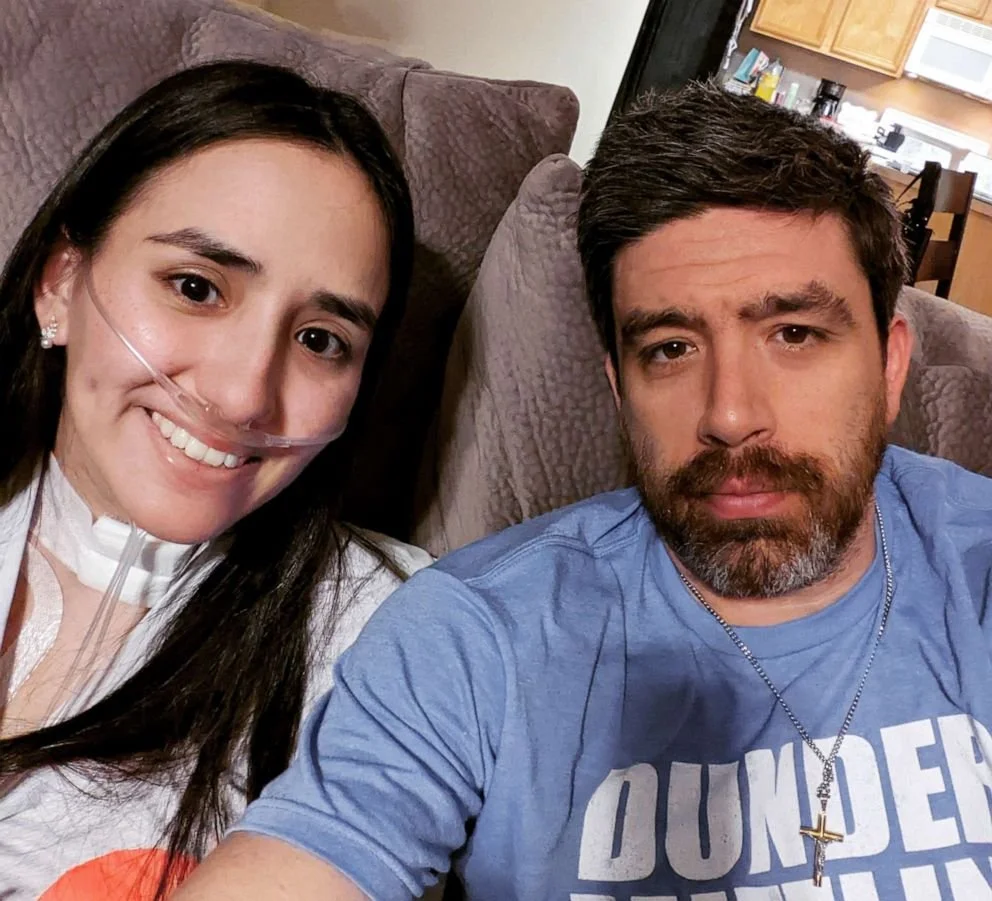
Readers will collide with some of these mysteries while reading a stunning Washington Post story about a family’s 139-day hospital drama that has received quite a bit of attention in social media and the mainstream press. The headline: “Chris Crouch was anti-vaccine. Now his pregnant wife had covid, and he faced a terrible choice.” Here is the overture:

KINGWOOD, Tex. — Chris Crouch had had low expectations for online dating. He was a police officer in his 30s, almost a year out from a painful divorce, and, he said, the women he had met had been “playing games” in ways that left him dispirited.

Then he met her.

Diana Garcia Martinez was 24 and a busy single mom whose sister had set up her profile without her knowing. She was intelligent, empathetic and upfront, and by the third date, he was in love. “It was just a feeling. … I felt like I knew her my whole life,” he recalled explaining to his cousin Gilbert, knowing it was a cliche but also true.

What role does religious faith play in this story? That’s a complex question.

I mean, we are talking about people in Texas. No one should be surprised by frequent Godtalk and references to prayer.

However, as the son of a Texas Baptist pastor (who spend the last decade of his ministry as a hospital chaplain), I was very surprised that the word “church” is missing. Did this couple really go through this medical hell alone, without a pastor or friends who share a pew with them? Maybe this couple is in the “Nothing in particular” demographic, but I have my doubts.


Please respect our Commenting Policy

NPR report: Americans are 'sorting' themselves into red vs. blue zones (religion ghost alert)

NPR report: Americans are 'sorting' themselves into red vs. blue zones (religion ghost alert)

I absolutely love specific, symbolic details in Big Picture stories based on trends in statistics and culture.

During what we could call America’s “Divided We Fall” era (let’s hope that it passes), there are all kinds of ways to illustrate the tensions between blue citizens and red citizens. NPR recently did a feature — “Americans are fleeing to places where political views match their own“ — that had a great cultural detail way down in the script that suggested there’s more to this divide than politics.

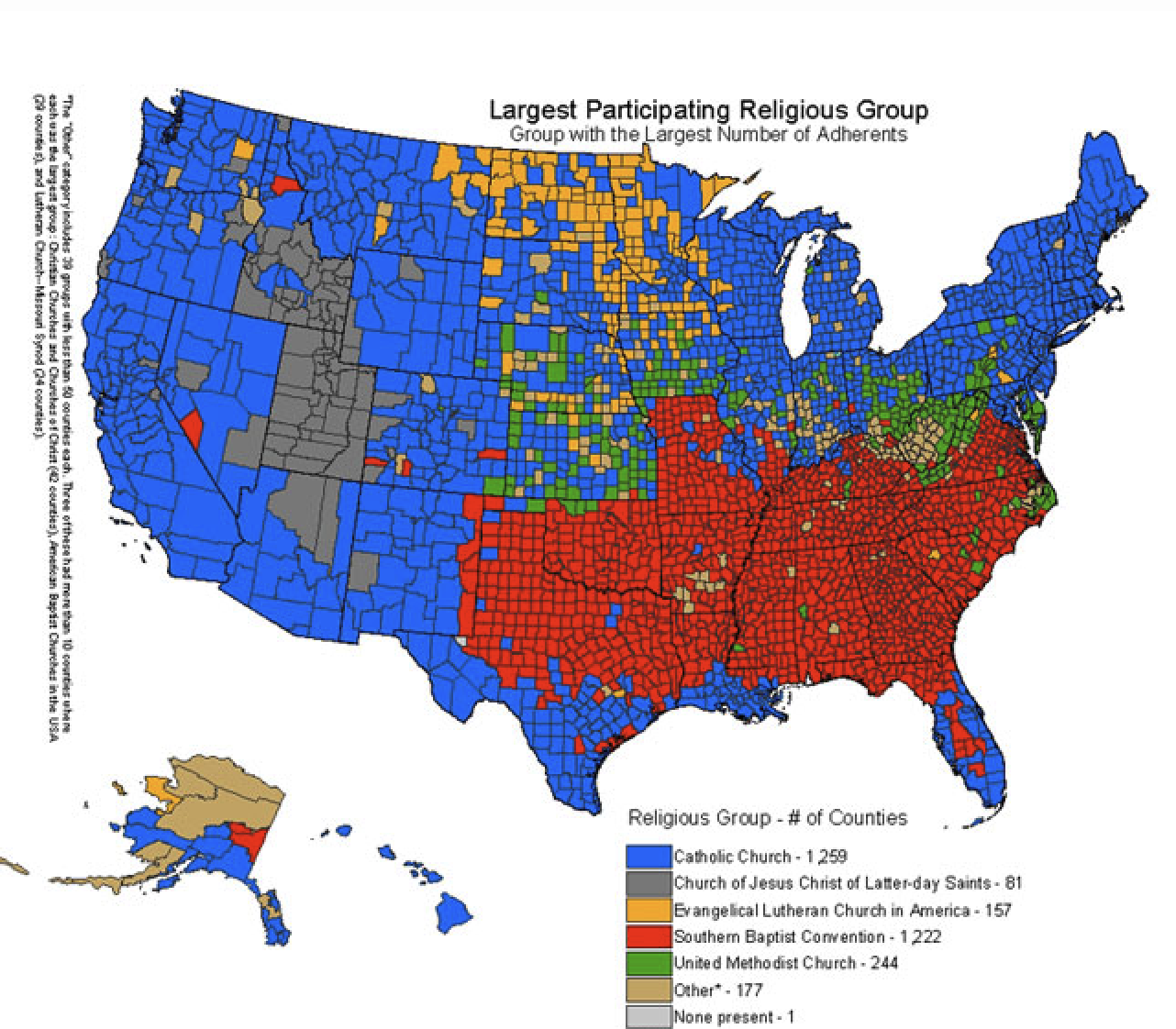
The key fact: In the 2020 election, Joe Biden “won 85% of counties with a Whole Foods and only 32% of counties with a Cracker Barrel.”

What was missing in this fine, must-read story? It’s that issues of faith, morality and culture have just as much to do with America’s blue-red schism as politics. As the old saying goes, partisan politics is downstream from culture. If you have doubts about that, check out this GetReligion commentary on the classic 2003 “Blue Movie” essay in The Atlantic. Author Thomas B. Edsall observes:

Early in the 1996 election campaign Dick Morris and Mark Penn, two of Bill Clinton's advisers, discovered a polling technique that proved to be one of the best ways of determining whether a voter was more likely to choose Clinton or Bob Dole for President. Respondents were asked five questions, four of which tested attitudes toward sex: Do you believe homosexuality is morally wrong? Do you ever personally look at pornography? Would you look down on someone who had an affair while married? Do you believe sex before marriage is morally wrong? The fifth question was whether religion was very important in the voter's life.

Respondents who took the "liberal" stand on three of the five questions supported Clinton over Dole by a two-to-one ratio; those who took a liberal stand on four or five questions were, not surprisingly, even more likely to support Clinton. The same was true in reverse for those who took a "conservative" stand on three or more of the questions.

Note the religion question in that mix. Thus, the Big Idea in this Edsall essay?

According to Morris and Penn, these questions were better vote predictors—and better indicators of partisan inclination—than anything else except party affiliation or the race of the voter (black voters are overwhelmingly Democratic).

The new NPR piece, while stressing politics, does contain a few killer cultural details. The religious elements of the story? There are hints, but that is all.


Please respect our Commenting Policy

Yes, a cardinal with strong Pope Francis ties said church doctrines on LGBTQ issues are wrong

Yes, a cardinal with strong Pope Francis ties said church doctrines on LGBTQ issues are wrong

It isn't every day that a prince of the Roman Catholic Church, and a strategic Jesuit ally of the pope, openly rejects centuries of Christian teachings that clash with core doctrines of the Sexual Revolution.

"The Church's positions on homosexual relationships as sinful are wrong," said Cardinal Jean-Claude Hollerich of Luxembourg, in a recent interview with KDA, a German Catholic news agency. "I believe that the sociological and scientific foundation of this doctrine is no longer correct. It is time for a fundamental revision of Church teaching, and the way in which Pope Francis has spoken of homosexuality could lead to a change in doctrine. …

"In our archdiocese, in Luxembourg, no one is fired for being homosexual, or divorced and remarried. I can't toss them out, they would become unemployed, and how can such a thing be Christian? As for homosexual priests, there are many of these, and it would be good if they could talk about this with their bishop without his condemning them."

The latest unorthodox proclamations by Cardinal Hollerich commanded attention because he leads the Commission of the Bishops' Conferences of the European Union, as well as being the pope's choice as "relator general" for the October 2023 global Synod of Bishops, helping shape its work to weigh the church's future.

"This Cardinal seems to be claiming a private revelation which is contrary to scripture & the Catechism of the Catholic Church," tweeted Bishop Joseph Strickland, an outspoken conservative who is Bishop of Tyler, Texas. "Any private revelation that contradicts public revelation must be condemned."

However, the recent "Synodal Way" meetings of German Catholic leaders voted to approve draft texts that affirmed some of Cardinal Hollerich's beliefs, including overwhelming approval for a document entitled "Blessing celebrations for couples who love each other." Support was just as strong for a "Magisterial reassessment of homosexuality" text stating that official church teachings on chastity and homosexuality "should be revised."


Please respect our Commenting Policy