Terry Mattingly

Give the charismatic world's 'new prophets' more ink? Julia Duin still says 'yes' (updated)

Give the charismatic world's 'new prophets' more ink? Julia Duin still says 'yes' (updated)

Surely you’ve heard of the “new prophets” in the rowdy world of charismatic Christianity?

In terms of hooks for news, these folks have everything.

We’re talking about lots of energy and egos, with the kind of on-camera talent that produces megachurches and social-media outbursts that go viral. There are also plenty of links to the powers that be around Donald Trump. This is “charisma” in every sense of that word.

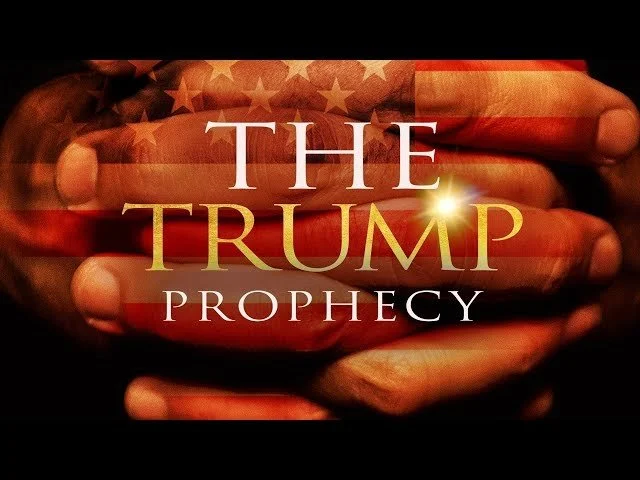
Julia Duin has been sounding this horn here at GetReligion for years, long before the events surrounding January 6th caught the attention of Big Media. Here is a chunk of a 2018 post: “Religion News Service — Movie claims 'red tsunami' will vindicate Donald Trump in November.”

… (S)ecular America doesn’t get how vehemently many people believe that God orchestrated President Trump’s 2016 victory. And what’s more, many of those people believe God has mandated another victory for Trump in 2020.

You’ve not heard this? Folks, you’re not reading the right websites. …

It’s not so much evangelical Protestants who are pushing this idea, but a daughter movement made up of charismatics and Pentecostals (linked up with Liberty University film people). I’ve been amazed over the years how few religion reporters follow these folks, even though this demographic was instrumental in getting Trump elected. Plus, a growing percentage of world Christianity is Pentecostal/charismatic (see this classic major Pew Forum study). Visit Brazil, if you don’t believe me. And much of Africa.

You want more? How about this piece early in 2020: “About Todd Bentley and 2020 prophecies: How are reporters supposed to cover this stuff?

Julia was back with more information and news hooks linked to the this new generation of self-proclaimed prophets (and the people who warned about getting tied up in politics) months later with this piece: “Who's covering this? Are charismatics and Pentecostals behind Trump's refusal to concede?

Everyone remembers that viral “strike and strike and strike” rap from the Rev. Paula White-Cain.

Please respect our Commenting Policy

Religion news 2021: Which story was No. 1? Return of Taliban or Jan. 6 riot at U.S. Capitol?

Religion news 2021: Which story was No. 1? Return of Taliban or Jan. 6 riot at U.S. Capitol?

For journalists who braved the chaos, the Jan. 6th riot on Capitol Hill offered a buffet of the bizarre -- a throng of Proud Boys, QAnon prophets, former U.S. military personnel and radicalized Donald Trump supporters that crashed through security lines and, thus, into history.

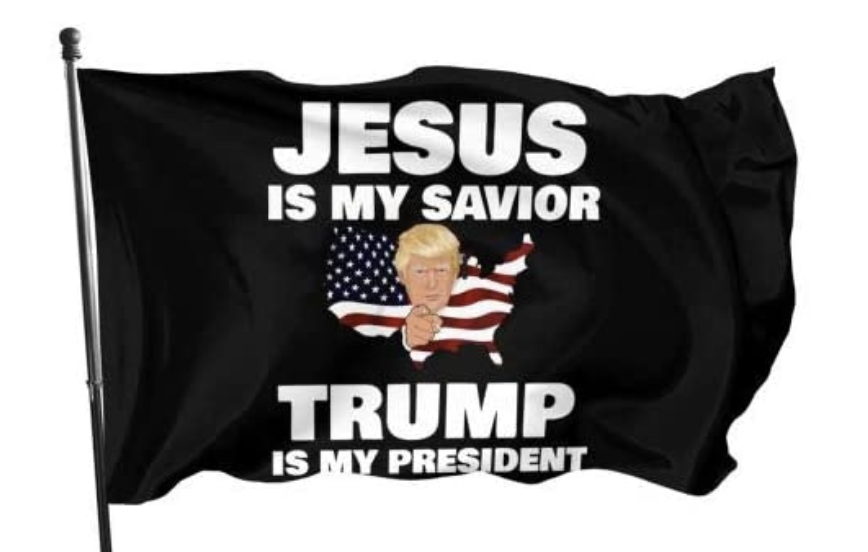
Many protestors at Trump’s legal "Save America" rally carried signs, flags and banners with slogans such as "Jesus is my Savior, Trump is my president" or simply "Jesus 2020." In this context, "Jesus saves" took on a whole new meaning.

Some of that symbolism was swept into the illegal attack on the U.S. Capitol.

In its poll addressing major religion events in 2021, members of the Religion News Association offered this description of the top story: "Religion features prominently during the Jan. 6 assault on the U.S. Capitol by pro-Trump insurrectionists. Some voice Christian prayers, while others display Christian or pagan symbols and slogans inside and outside the Capitol."

Consider, for example, Jacob Anthony Chansley -- or Jake "Yellowstone Wolf" Angeli. With his coyote-skin and buffalo-horns headdress, red, white and blue face paint and Norse torso tattoos, the self-proclaimed QAnon shaman, UFO expert and metaphysical healer became the instant superstar of this mash-up of politics, religion and digital conspiracy theories.

"Thank you, Heavenly Father … for this opportunity to stand up for our God-given inalienable rights," he said, in a video of his U.S. Senate remarks from the vice president's chair. "Thank you, divine, omniscient, omnipotent, omnipresent Creator God for filling this chamber with your white light and love. Thank you for filling this chamber with patriots that love you and that love Christ. …

“Thank you for allowing the United States of America to be reborn. Thank you for allowing us to get rid of the communists, the globalists and the traitors within our government."

That was one loud voice. A big question that must be answered, in future trials and the U.S. House investigation, is whether it's true -- as claimed by the New York Times -- that the "most extreme corners of support for Mr. Trump have become inextricable from some parts of white evangelical power in America."


Please respect our Commenting Policy

Here we go again: With Catholic news, reporters should be careful with this word -- 'reform'

Here we go again: With Catholic news, reporters should be careful with this word -- 'reform'

Let’s pause for a moment and reconsider a very loaded and tricky word that shows up all the time religion-news coverage (as well as political coverage, of course).

That word is “reform.”

For really, really, loyal GetReligion readers, I will admit that I am, in part, flashing back to this 2008 GetReligion post: “Who gets to "reform" what?” Once again, let’s look at some of the language that shows up in online dictionaries when you search for that term. To “reform” an institution or a law means to:

* make changes for improvement in order to remove abuse and injustices; "reform a political system" * bring, lead, or force to abandon a wrong or evil course of life, conduct, and adopt a right one; "The Church reformed me"; "reform your conduct" ... * a change for the better as a result of correcting abuses; "justice was for sale before the reform of the law courts" ... * improve by alteration or correction of errors or defects and put into a better condition; "reform the health system in this country" * a campaign aimed to correct abuses or malpractices. ...

The key words in that digital cloud are these: “improve by alteration or correction of errors or defects …”

Also, let me remind readers that I am not a Roman Catholic. Some people seem to be confused about that. My views on this topic are based on decades of reporting (and a graduate-school readings class focusing on the church before and after Vatican II) about the very complex world of Catholic life and thought.

With that in mind, let’s look at the top of a recent Religion News Service story that ran with this headline: “Can Pope Francis make real change for women? Vatican women leaders assess his chances.

VATICAN CITY (RNS) — A panel of women who have attained leadership positions in the Catholic Church met … to discuss Pope Francis’ ambitious plan to reform the power structures in the church, raising questions about female ordination, the role of bishops and the need for women theologians.


Please respect our Commenting Policy

Painting or icon? That big hole in New York Times report on Catholic University controversy

Painting or icon? That big hole in New York Times report on Catholic University controversy

Let’s start here: There is nothing new about artists painting images of Jesus as a Black man.

A few of these images may have been controversial at the time of their creation, in part because of the political motivations of some (repeat “some”) artists. But the vast majority are clearly works of Christian devotion showing reverence for the Incarnation of Jesus Christ. For many Christians, these images are way less problematic than the omnipresent Warner Sallman “Head of Christ” painting from 1940, depicting Jesus with light, wavy hair and very European features.

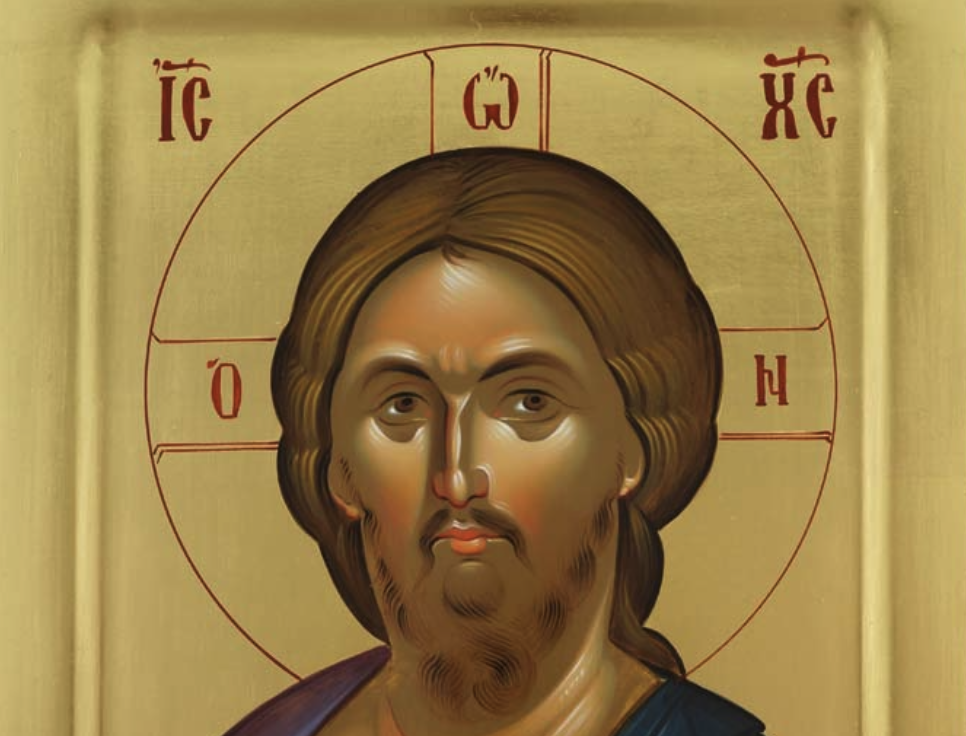
As an Eastern Orthodox Christian, the image of Jesus that I know best is the ancient Christ Pantocrator icon from St. Catherine’s Monastery at Mt. Sinai. It is a complex icon of Jesus that, well, would be hard to label as one of the “surfer Jesus” images in some contemporary churches.

This brings me to that New York Times story that ran the other day with this dramatic double-decker headline:

A Painting of George Floyd Roils Catholic University

At the Catholic University of America in Washington, conservative students called for a campus ban on further displays of an artwork that depicts Floyd as Jesus.

This story does a pretty good job of describing the timeline of this controversy — which is described as yet another clash over race, art and religion. It’s clear that, for the leaders of private schools, controversies of this kind are especially complex.

The problem, for me, is that the image in question — “Mama,” by Kelly Latimore — is consistently described as a painting based on the famous Pieta statue by Michelangelo.

Thus, what we have here is a “painting,” based on one of the most famous statues in Western Christian art, but is clearly meant to be interpreted as a holy icon in the Eastern Orthodox tradition.

Did you follow that? The journalism question here is whether the Times team did an adequate job of describing why the term “icon” — which does not appear in the story — is so important, if the goal is to understand the thinking of some of the Catholics (the story contains zero input from the Orthodox) who believe that this painting is blasphemous. Here is the overture:


Please respect our Commenting Policy

Still thinking about Latin Mass wars: With help from The Pillar and America magazine

Still thinking about Latin Mass wars: With help from The Pillar and America magazine

The Latin Mass story is not going away.

At this point, the question is where this emotional and more than symbolic conflict is going.

It’s clear that there is a small flock of traditional Catholics who view the familiar cadences of the Tridentine Rite Mass as an escape from the reforms — some would say modernization efforts — of the Second Vatican Council. But it also obvious that many bishops believe that this is not the case for the majority of the Catholics (especially young Catholics) who prefer the beauty of the Latin Mass.

Meanwhile, it’s clear that many powerful Vatican leaders, including Pope Francis, see use of the traditional Latin Mass as a powerful wedge issue that divides Catholics and they want to see it go away.

The question: Will the renewed efforts to crush the Tridentine create more dissenters, instead of smothering them?

This brings me to this weekend’s “think pieces” — drawn from two very different sources — the progressive Jesuit magazine America and The Pillar, a more conservative news and commentary site.

First, consider this essay at America: “I love Pope Francis’ commitment to dialogue — which is why his Latin Mass restrictions confuse me.”

Author Gregory Hillis begins by praising the Pope Francis encyclical “Fratelli Tutti,” focusing on its call for unity — built on “genuine dialogue rooted in love.”

The big question: Where is the loving dialogue about use of the Latin Mass?

We cannot be closed to others, Pope Francis taught, whether they be political or ideological opponents or whether they be people yearning to find a new life as immigrants. A “healthy openness never threatens one’s identity,” he wrote (FT 148). Too often we deny “the right of others to exist or to have an opinion,” and as a result, “their share of the truth and their values are rejected” (No. 15). Instead, Pope Francis urged us “to give way to a dialogic realism on the part of men and women who remain faithful to their own principles while recognizing that others also have the right to do likewise.” This, he continued, “is the genuine acknowledgment of the other that is made possible by love alone.”


Please respect our Commenting Policy

New podcast: Top Godbeat story of 2021? Look for Jan. 6 religion hooks (#DUH)

New podcast: Top Godbeat story of 2021? Look for Jan. 6 religion hooks (#DUH)

beat stories.

Trust me, I understand that preparing the ballot for this poll is a thankless job. One of the hardest tasks is finding a way to describe some of the broader trends during any given year. It’s easier — most of the time — to describe singular events.

During this week’s “Crossroads” podcast (CLICK HERE to tune that in), host Todd Wilken asked me to describe some of the patterns that I have seen in the RNA poll results through the decades.

Trend No. 1 is clear: Name the biggest political story of the year and look for a religion angle. After all, politics is the true religion of many folks who run newsrooms.

Trend No. 2 works about 76% of the time: What did the pope do this year, especially if it has any implications for U.S. political fights over moral and social issues (see trend No. 1).

Trend No. 3 comes and goes: What did liberal leaders of the Seven Sisters of Mainline Protestantism proclaim about sex and did it cause new revolts that might split their churches? Every now and then, the Southern Baptists slip in with battles over sex, race or politics (newsworthy topics, in other words).

In light of these trends, it was easy to predict that the RNA poll’s top story for 2021 would be:

Religion features prominently during the Jan. 6 assault on the U.S. Capitol by pro-Trump insurrectionists. Some voice Christian prayers, while others display Christian or pagan symbols and slogans inside and outside the Capitol.

That’s actually a careful wording and, in particular, note that the RNA leaders refrained (this must have been hard) from including a reference to “white evangelicals.”

The key, in this description, is the tension between “prominently” and “some,” as in the folks saying “Christian” prayers. It’s safe to assume that this is the rebel that they had in mind (as quoted in one of my “On Religion” columns):


Please respect our Commenting Policy

When is the Midnight Mass? All humor aside, there's history (and news) linked to this rite

When is the Midnight Mass? All humor aside, there's history (and news) linked to this rite

Once upon a time, before the creation of the Internet, there were these very, very powerful and all-knowing professionals known as “church secretaries.” Yes, I know that they have evolved into office managers and web czarinas.

But, long ago, if anyone needed to know something about church life, or really needed to reach the pastor (this is before smartphones, too), they called the “church secretary,” who basically served as an air-traffic-controller for everything happing in the church family.

Back in the 1980s, I wrote a news piece for The Rocky Mountain News (#RIP) about the question that church secretaries in Catholic parishes used to dread hearing over and over during the three or four days ahead of Christmas Eve. That question, of course, was: “When is the Midnight Mass?”

Honest. People would ask that and, truth be told, the Midnight Mass, in some parishes, doesn’t start at midnight. Hold that thought, because we will come back to it.

But this post, in the week before Christmas (for most Christians in America), is about the importance of the Midnight Mass and other Christmas Eve and Christmas services. You see, there are potential news stories here. Let’s discuss several of them, briefly.

First, there is an interesting fact that I learned long ago from the late Lyle Schaller, a Mainline Protestant maven who was an often-quoted expert on church growth and, as the Mainline world imploded, church survival. The easiest way to sum up the Christmas news angle that I learned from him is to share the top of a 2015 tribute column that I wrote about his work (“Lyle Schaller, the church fix-it man in rapidly changing times”):

All pastors know that there are legions of "Easter Christians" who make it their tradition to dress up once a year and touch base with God.

What can pastors do? Not much, said the late, great church-management guru Lyle Schaller, while discussing these red-letter days on the calendar. Rather than worrying about that Easter crowd, he urged church leaders to look for new faces at Christmas.


Please respect our Commenting Policy

So what is 'Christmas,' anyway? These days, Siri knows more than many believers

So what is 'Christmas,' anyway? These days, Siri knows more than many believers

This question rocks the Internet year after year: Is "Die Hard" a "Christmas movie"?

How about "Frosty the Snowman," "Home Alone," "Elf" or "A Bad Moms Christmas"? Is "A Christmas Story" really a "Christmas" story? What about those Hallmark Channel visions of romance, complicated families and wall-to-wall holiday decorations?

The answer to these questions, and many others, hinges on how Americans answer another question: What is "Christmas"?

Ask that question to an iPhone and Siri will quote Wikipedia: "Christmas is an annual festival commemorating the birth of Jesus Christ, observed primarily on December 25 as a religious and cultural celebration among billions of people around the world."

Most people know that much of the story, according to a new survey by Lifeway Research in Nashville. Nearly 75% of Americans say Jesus was born more than 2,000 years ago in Bethlehem and even more believe that Jesus is the Son of God the Father.

After that, things get fuzzy.

"Lots of people celebrate Christmas, but some have no interest in celebrating the birth of Jesus Christ," said Scott McConnell, executive director of Lifeway. "But even some of the people who do take the Christmas message seriously don't understand what it means. …

"This is a story that hasn't changed for 2,000 years, yet many people struggle to tell the story and get the details right. Many don't know why Jesus was born."


Please respect our Commenting Policy

Think pieces: Why are evangelicals evolving on doctrines linked to LGBTQ issues?

Think pieces: Why are evangelicals evolving on doctrines linked to LGBTQ issues?

Yes, this is an unusual “think piece,” in part because it is best to consider it an online debate between two major voices shaping debates in contemporary evangelicalism.

One one side is the Rev. Denny Burk, a biblical studies professor at Boyce College, which is linked to the giant Southern Baptist Theological Seminary in Louisville.

On the other side is historian and gender-studies specialist Kristin Kobes Du Mez of Calvin University, who is best known as the author of the much-discussed book “Jesus and John Wayne: How White Evangelicals Corrupted a Faith and Fractured a Nation.”

Let’s start with a short comment from Burk, who posted:

… I had an important exchange with Kristin Kobes Du Mez on social media. I won’t rehash the entire back and forth here. Some of it is linked below for your reference if you are interested in following the threads. If you boil it all down, she asked me a question, and I asked her one. She asked me whether I thought her book Jesus and John Wayne contains false teaching (to which I answered “yes”), and I asked her if she believes that homosexuality is sinful (to which she answered that she doesn’t know yet).

Hers is my question: What does it mean to state that “homosexuality is sinful”? Is this a discussion of homosexual orientation or of sexual behavior?

In other settings, people have been arguing about whether it is sinful, or perhaps simply spiritually dangerous, for celibate LGBTQ Christians to publicly and enthusiastically proclaim a gay identity. Thus, their sexual behavior does not violate centuries of Christian doctrine.

There are important lines between each of these stances and, frankly, other variations on these themes.


Please respect our Commenting Policy