Terry Mattingly

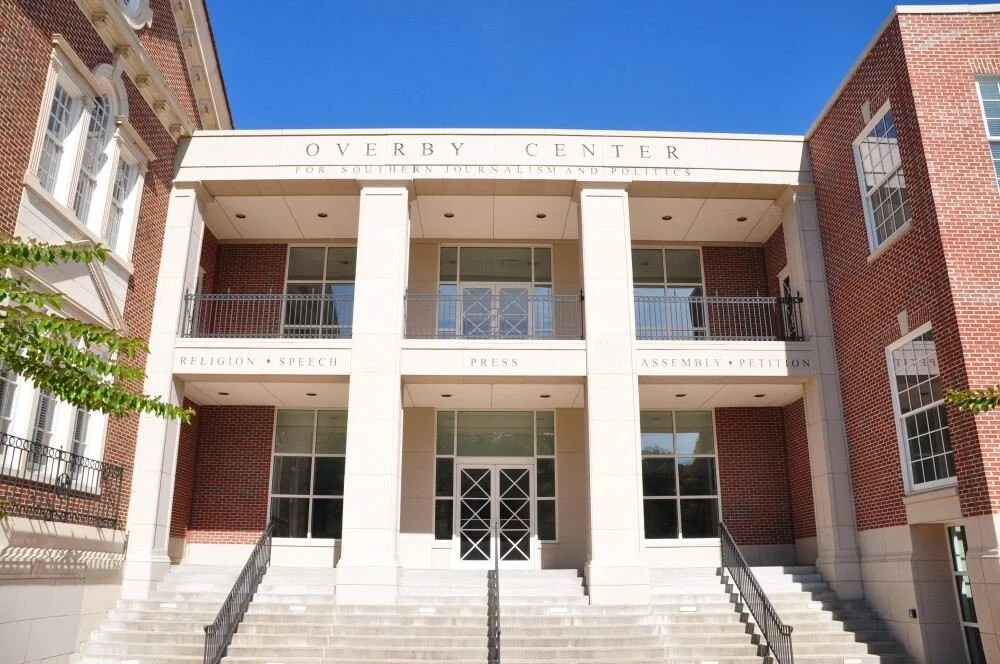
Finally, another Overby Center program: Why religion was one big factor in vaccine wars

Finally, another Overby Center program: Why religion was one big factor in vaccine wars

I have strong memories, to say the least, of the first Overby Center program in which I was able to participate, as a senior fellow for the center and as editor of GetReligion.

The topic was the role that religion would play in the 2020 presidential election. Religion-beat patriarch Richard Ostling was there and both of us stressed that, while journalists were pouring oceans of ink into coverage of (#TriggerWarning) white evangelicals, Catholic voters would play the pivotal role in swing states. I also noted the little-covered 2016 impact of Latino evangelicals and, especially, Pentecostal believers in Florida. I didn’t think to predict a starring 2020 role these Latino voters in Texas.

When was that program? Here’s a clue. As I drove home, I stopped for lunch in Jackson, Tenn. As I pulled back onto the interstate headed east, I heard a radio report noting that the mysterious virus that was causing havoc in Wuhan, China, had now been detected in Europe and, perhaps, in New York City.

Days later, the whole world turned upside down.

With social-distancing, masks and vaccines in mind, we recently gathered in Oxford for a forum addressing a logical topic — why religion was a key factor (but not the only one or even the dominant one) in America’s wars over COVID-19 vaccines. Click here to watch the event on YouTube.

In addition to Center founder Charles Overby, I was joined by three logical voices on this subject.

First, political scientist (and GetReligion contributor) Ryan Burge Zoomed in with several crucial charts full of relevant info. Take this post, for example: “Thinking about white evangelicals, COVID-19 vaccines and VERY popular headlines.” Then there was Marquita Smith of the University of Mississippi faculty, a journalist I came to know while she was teaching at John Brown University on the edge of the Ozarks. She is now the assistant dean of graduate programs at the Ole Miss J-school.

The final panelist was the Rev. Daniel Darling, who was recently named director of the Land Center for Cultural Engagement at Southwestern Baptist Theological Seminary in Fort Worth, Texas.

Then again, Darling may be better known in religion-beat circles because of this New York Times headline: “Fired After Endorsing Vaccines, Evangelical Insider Takes a Leadership Role.”

Please respect our Commenting Policy

Tough question? Some obits included how priestly sexual abuse shook Phil Saviano's faith

Tough question? Some obits included how priestly sexual abuse shook Phil Saviano's faith

If you have seen the movie “Spotlight” — especially if you are a journalist — you know that it’s one of the two or three best films ever made about the picky, high-stakes work involved in investigative journalism.

But there was another layer to this film that I found especially powerful.

Obviously, the subject of clergy sexual abuse is painful and divisive. Every now and then, I still hear from angry readers who believe this whole hellish scandal — which began creeping into headlines in 1984 with the Gilbert Gauthe case in Louisiana — was a media plot against the Church of Rome. It’s important to note that there were conservative Catholics who dug down to the roots of this scandal (see the scathing book “Sacrilege” by Leon Podles), along with the efforts of many Catholic liberals and many ex-Catholics.

The scandal affected many people in different ways. The movie “Spotlight” stressed how the shock and anger unleashed by this scandal affected the faith of some of the Boston Globe journalists. Then there were the shattered victims. It’s amazing that any of them emerged with their faith intact. Some did. Many did not.

This brings me to some of the major-media obituaries for Phil Saviano, a victim who became one of the most important activists who tirelessly worked for justice. Saviano served as a consultant for the “Spotlight” screenwriters and his character appeared in the movie, played by actor Neal Huff.

As I read the coverage, I kept wondering: Would anyone include information about Saviano’s faith? Did he leave Catholicism? Did he convert to another faith?

As you would expect, the Globe obituary is long and detailed. I thought this detail was exceptionally powerful:

When the advent of protease inhibitors to treat HIV/AIDS prolonged Mr. Saviano’s life, he kept speaking out until the end through a series of health issues. Not least among them was a crisis on that night in 2016 when “Spotlight,” the movie based on the Globe’s clergy sex abuse coverage, won the Academy Award for best picture.


Please respect our Commenting Policy

Queen Elizabeth II offers clear, personal sermon -- even while absent from public stage

Queen Elizabeth II offers clear, personal sermon -- even while absent from public stage

Close watchers of the British Monarchy have recently become concerned about two words describing life in Windsor Castle -- "new stage."

First there was Queen Elizabeth II's unexplained overnight hospital stay in October for "tests." Then the 95-year-old monarch missed the recent National Day of Remembrance service for Britain's war dead. She did, however, attend christening rites at All Saints Chapel for her two newest great-grandsons.

All of this represents a "new stage" in her very public life.

"She's alright, thank you very much," said Prince Charles, responding to a Sky News enquiry. "Once you get to 95, it's not quite as easy as it used to be."

The Queen has not, however, been silent. Her recent message to Church of England's General Synod -- her first absence from this gathering -- was strong and personal. It was read by her youngest son, Prince Edward, the Earl of Wessex, who rarely seeks the public spotlight.

"It is hard to believe that it is over 50 years since Prince Philip and I attended the very first meeting of the General Synod," said the prince, reading the Queen's words. "None of us can slow the passage of time; and while we often focus on all that has changed in the intervening years, much remains unchanged, including the Gospel of Christ and his teachings.

"The list of tasks facing that first General Synod may sound familiar to many of you -- Christian education, Christian unity, the better distribution of the ordained ministry. … But one stands out supreme: 'To bring the people of this country to the knowledge and the love of God.' "


Please respect our Commenting Policy

Podcast: It's time to pay attention to debates about girls, Instagram and mental-health woes

Podcast: It's time to pay attention to debates about girls, Instagram and mental-health woes

If you have followed GetReligion for a decade or so, you know that our religion-beat patriarch Richard Ostling writes a “Memo” post every week in which he focuses on religion trends and future events to which journalists should be paying attention.

This week’s Memo focused on why religious and secular debates about Death with Dignity laws will not be fading away anytime soon. As always, Ostling’s Memo posts are packed with links to relevant interest groups, experts and online resources to aid reporters.

This brings me to this week’s “Crossroads,” which — for a change — does not focus on a religion-news story in the mainstream press (click here to listen to the podcast). Instead, you can think of this feature as a kind of Mattingly Memo, in which host Todd Wilken and I discussed the news (and religious) implications of a new Atlantic Monthly essay by Jonathan Haidt that ran with this dramatic double-decker headline:

The Dangerous Experiment on Teen Girls

The preponderance of the evidence suggests that social media is causing real damage to adolescents

On its face, this essay was not a “religion news” piece at all. From my point of view, that was kind of the point.

One of the themes Haidt stressed was that teen-aged girls are pretty much alone, when it comes to wrestling with the moral, emotional and even medical side effects of addiction to social media — the invasive visual-image wonderland of Instagram, in particular. The article includes a depressing file of research slides on this mental-health issue from the Wall Street Journal (click here for that .pdf). Note, in particular, that teens believe their parents have next to zero understanding of what is going on.

If parents are tuned out, where does that put clergy? Should religious leaders be playing some kind of role in public-square (and personal) discussions of this issue?

These questions made me think of an “On Religion” column that I wrote in 2017 about the efforts of some Colorado teens — reacting to several suicides linked to cyber-bullying — to help their friends examine the impact of social-media programs on their lives.


Please respect our Commenting Policy

Complex doctrinal story or mere politics? Hmmm ... What shaped news about U.S. bishops?

Complex doctrinal story or mere politics? Hmmm ... What shaped news about U.S. bishops?

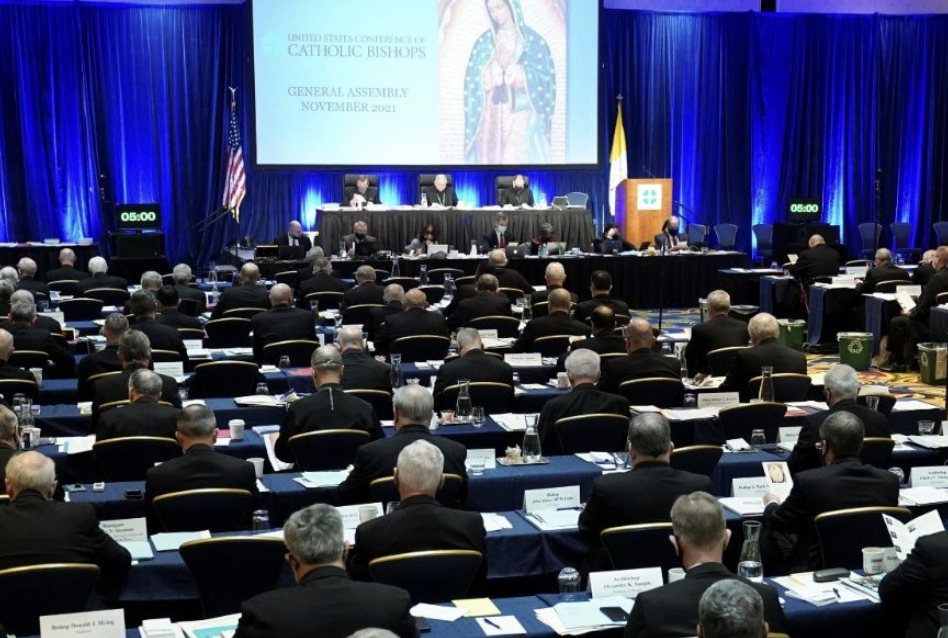
Let’s face it. This Baltimore meeting of the United States Conference of Catholic Bishops was a classic example of what kind of stories drive front-page news in the mainstream press.

For starters, you had a complicated story about a doctrinal, moral and institutional crisis in Roman Catholicism today — the collapse of Catholic beliefs and practice related to sin, confession, forgiveness and Holy Communion.

Then you had a political story that, for journalists, pitted the satanic hordes of conservative bishops linked, somehow, to Donald Trump against the wise, progressive, nuanced shepherds who sympathize with ordinary Catholics like President Joe Biden.

Guess which story framed most of the coverage? Consider this headline from the journalistic college of cardinals at The New York Times: Catholic Bishops Avoid Confrontation With Biden Over Communion.” And here’s the overture:

BALTIMORE — The Roman Catholic bishops of the United States backed away from a direct conflict with President Biden …, approving a new document on the sacrament of the eucharist that does not mention the president or any politicians by name.

At issue was the question of which Catholics, under which circumstances, are properly able to receive communion, one of the most sacred rites within Christianity. For some conservative Catholics, the real question was more pointed: Should Catholic politicians who publicly support and advance abortion rights be denied the sacrament?

For some of the most outspoken critics of Mr. Biden and other liberal Catholic leaders, the document represented a strategic retreat.

OK, here is a blunt question about that last statement: Is there any evidence that ANY DRAFT of this document — "The Mystery of the Eucharist in the Life of the Church" (.pdf here) — included a single reference to Biden, the White House or the presidency? If conservatives drove the process that led to this document, as assumed in the news coverage, isn’t it logical that references of this kind would have made it into digital ink at some point?


Please respect our Commenting Policy

From Off Broadway to movie screens: The complicated conversion story of C.S. Lewis

From Off Broadway to movie screens: The complicated conversion story of C.S. Lewis

While historians argue about what C.S. Lewis did or didn't say, it can be stated with absolute certainty that the Oxford don never patted down his rumbled, professorial tweed jacket before exclaiming, "Where's my phone?"

That line occurs at the start of "The Most Reluctant Convert," as actor Max McLean enters a movie set preparing for the first scene. Seconds later, the camera follows him into the real Oxford, England, where Lewis was a scholar and tutor at Magdalen College.

At first, the famous Christian writer explains how he became an atheist. When he walks into the real White Horse pub, he orders two pints of beer, with one for the viewer. Soon, scenes from his memories spring to life, with Lewis striding through them as a narrator.

"Lewis is in his imagination. He's personified in his thoughts. … I do think that the structure emerged out of the fact that Lewis had a lot to say," said McLean, laughing.

Thus, director Norman Stone -- a BAFTA winner for BBC's "Shadowlands" -- let the "voice of Lewis articulate his struggle, his passion. He is one of those rare individuals where one's intellect, one's emotions and one's spirituality are completely intertwined," said McLean.

All of this is second nature to McLean since the film covers much of the same territory as his own "C.S Lewis Onstage." This was a one-man show at the Fellowship for Performing Arts in New York City, an off-Broadway company McLean founded and guides as artistic director. It has staged other Lewis works, such as "The Screwtape Letters" and "The Great Divorce," drawing warm reviews from The New York Times and other major publications.

The first-person narration, explained McLean, was primarily drawn from Lewis' autobiography, "Surprised by Joy," and the many volumes of his personal letters.

The jump from stage to screen, of course, allowed the film's creators to seek permission to film in some of the most important sites linked to Lewis' life.


Please respect our Commenting Policy

Podcast: Why was the New York Times so interested in Marvin Olasky? Take a guess ...

Podcast: Why was the New York Times so interested in Marvin Olasky? Take a guess ...

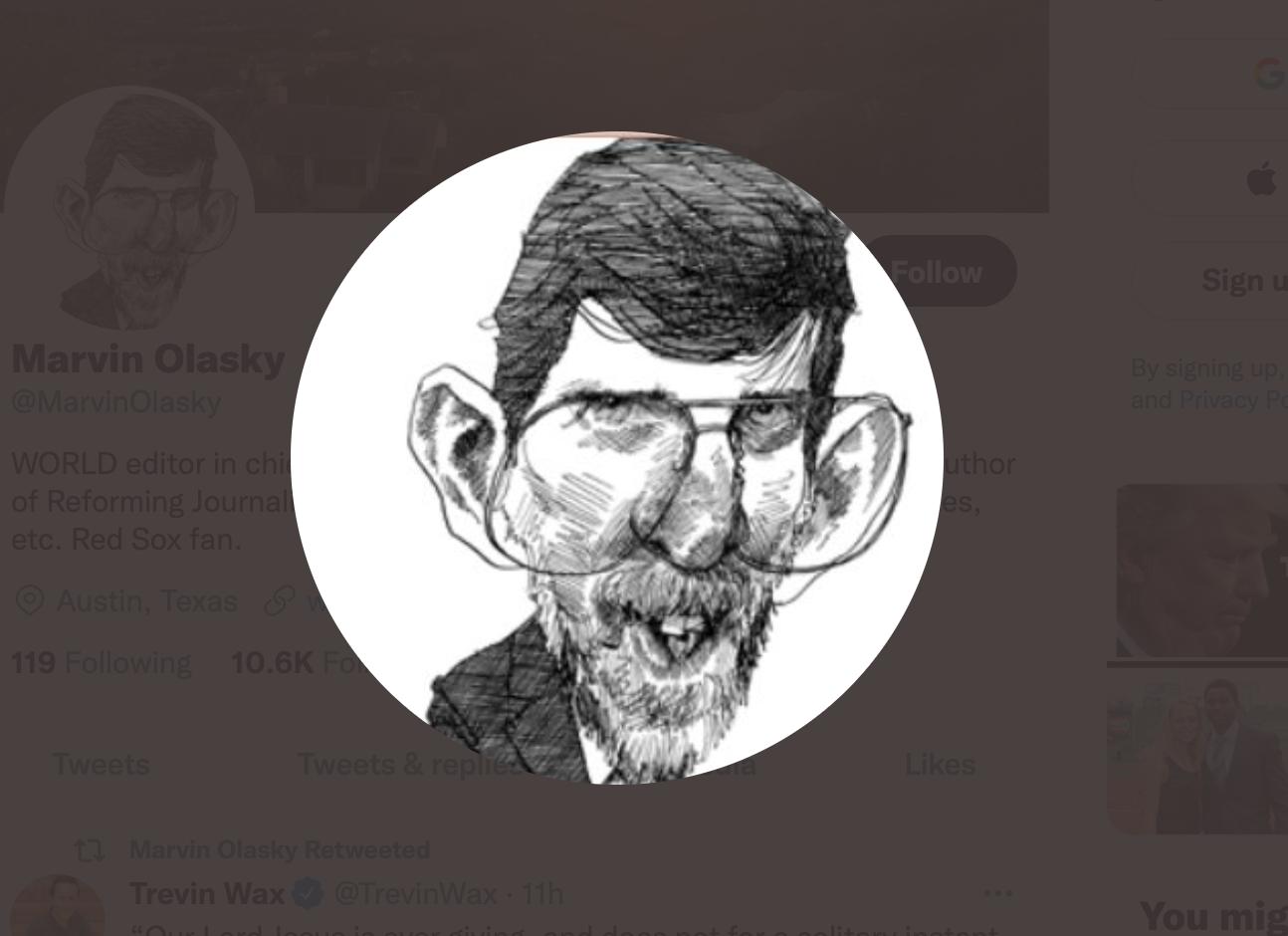
Why was The New York Times so interested in Marvin Olasky and his views on journalism and Christian faith?

That’s a question that I heard several times this week from readers and others.

Actually, the Times published a previous article on Olasky, which I mentioned in a post here earlier this week (“Wut happened? Tensions behind World's move to push Olasky out of his editor's chair”). So let’s tweak that question a bit, to get to the point that host Todd Wilken and I discussed in this week’s “Crossroads” podcast (click here to listen to it).

Why was the Times team so interested — it’s a long, complex feature — in Olasky right now?

Actually, the answer to that question is pretty clear. Read the headline: “His Reasons for Opposing Trump Were Biblical. Now a Top Christian Editor Is Out.” Now,. read the thesis statement:

At one level, Mr. Olasky’s departure is just another example of the American news media sinking deeper into polarization, as one more conservative news outlet, which had almost miraculously retained its independence, is conquered by Mr. Trump.

It also marks the end of a remarkable era at a publication that has shaken evangelical churches and related institutions with its deeply reported articles. … At a time when hot takes get the clicks, these articles offered something old-fashioned and hard for any community to take: accountability reporting.

That’s actually two answers, isn’t it.

Answer No. 1: Trump, Trump, Trump, Trump. Answer No. 2: Olasky has built a magazine known for producing hard-news articles. That’s rare, in today’s digital world dominated by a quick-click business model that loves opinions and commentary work. The editorial approach at World was shaped by cultural, religious conservatism, more than partisan politics.

Think of this magazine as an evangelical version of the late, great New Republic.


Please respect our Commenting Policy

Wut happened? Tensions behind World's move to push Olasky out of his editor's chair

Wut happened? Tensions behind World's move to push Olasky out of his editor's chair

First things first: Readers need to know that Marvin Olasky has been a friend of mine for yearly three decades. If I was dangling off a cliff, I’d trust Olasky to hold the rope.

Through the years, Marvin and I have disagreed on many journalism issues and had some stimulating debates. For example: He was dead right when, in the first years of Internet life, he predicted that life in the digital world — think social media in particular — would undercut old-school standards of balance and objectivity in journalism. In GetReligion terms, think “Kellerism” and much of today’s New York Times.

Back to the present, and a pretty solid Times piece that is lighting up Twitter. Here’s the double-decker headline:

His Reasons for Opposing Trump Were Biblical. Now a Top Christian Editor Is Out.

A clash over culture and politics comes to World, a groundbreaking journalistic institution that covers evangelical Christians.

There is, of course, no way to leave Donald Trump out of this story, with Olasky submitting his resignation (he was planning to retire next summer) after a coup in the World board after several years of tensions. Among the hot-button issues, readers learn, were COVID-19 masks and voter fraud (#DUH).

As I said, the story is pretty good, with Olasky — rare, this — portrayed in the elite press as a good guy. However, there is one statement that I need to challenge right up front:

At one level, Mr. Olasky’s departure is just another example of the American news media sinking deeper into polarization, as one more conservative news outlet, which had almost miraculously retained its independence, is conquered by Mr. Trump.

Has the newsroom at World been “conquered by Trump”?

I would say that we do not know that, yet. It’s clear that the World board signed off on the creation of an ambitious World-branded commentary website — without Olasky’s approval as editor. But do we know that the news team will not bravely carry on with its work?

We do not know that, do we?


Please respect our Commenting Policy

Private conversations, public debates: Concerning bishops, Joe Biden and Holy Communion

Private conversations, public debates: Concerning bishops, Joe Biden and Holy Communion

Asked if he discussed abortion with Pope Francis during their recent Vatican summit, President Joe Biden said: "No, it didn't. It came up -- we just talked about the fact he was happy that I was a good Catholic, and I should keep receiving Communion."

The next day, the Associated Press noted that Biden received Holy Communion at St. Patrick's Church in Rome.

Asked to validate the president's second-hand quotation, Vatican spokesman Matteo Bruni told reporters: "I would consider it a private conversation."

What do U.S. bishops think? That has remained a hot topic as the United States Conference of Catholic Bishops braces for its fall 2021 meetings next week (Nov. 15-18) in Baltimore -- its first in-person assembly since the start of the coronavirus pandemic.

What is labeled as "draft 24" of a proposed USCCB statement on "Eucharistic coherence" flashes back to an earlier controversy about Catholic politicians, Holy Communion and an atmosphere of "scandal" among the faithful.

"We repeat what the U.S. bishops stated in 2006: 'If a Catholic in his or her personal or professional life were knowingly and obstinately to reject the defined doctrines of the Church, or knowingly and obstinately to repudiate her definitive teaching on moral issues, he or she would seriously diminish his or her communion with the Church," said this draft from late September -- first obtained by The Pillar, a Catholic news website.

The quote continued: " 'Reception of Holy Communion in such a situation would not accord with the nature of the Eucharistic celebration, so that he or she should refrain.' "

As insiders have predicted, this draft of "The Mystery of the Eucharist in the Life of the Church" doesn't mention debates about the sacramental status of Catholic politicians who have consistently served as advocates for abortion rights, such as Biden or House Speaker Nancy Pelosi.

It does, however, connect some dots on this subject, while drawing from the writings of Pope Francis.


Please respect our Commenting Policy